Mom's Best Recipes
Recipe

Crispy Pork Belly Chicharrones

Bubbly, shatter-crisp pork belly chicharrones with a reliable oven method, optional skillet crisping, and big flavor from simple seasoning.

Author By Matt Campbell
4.8
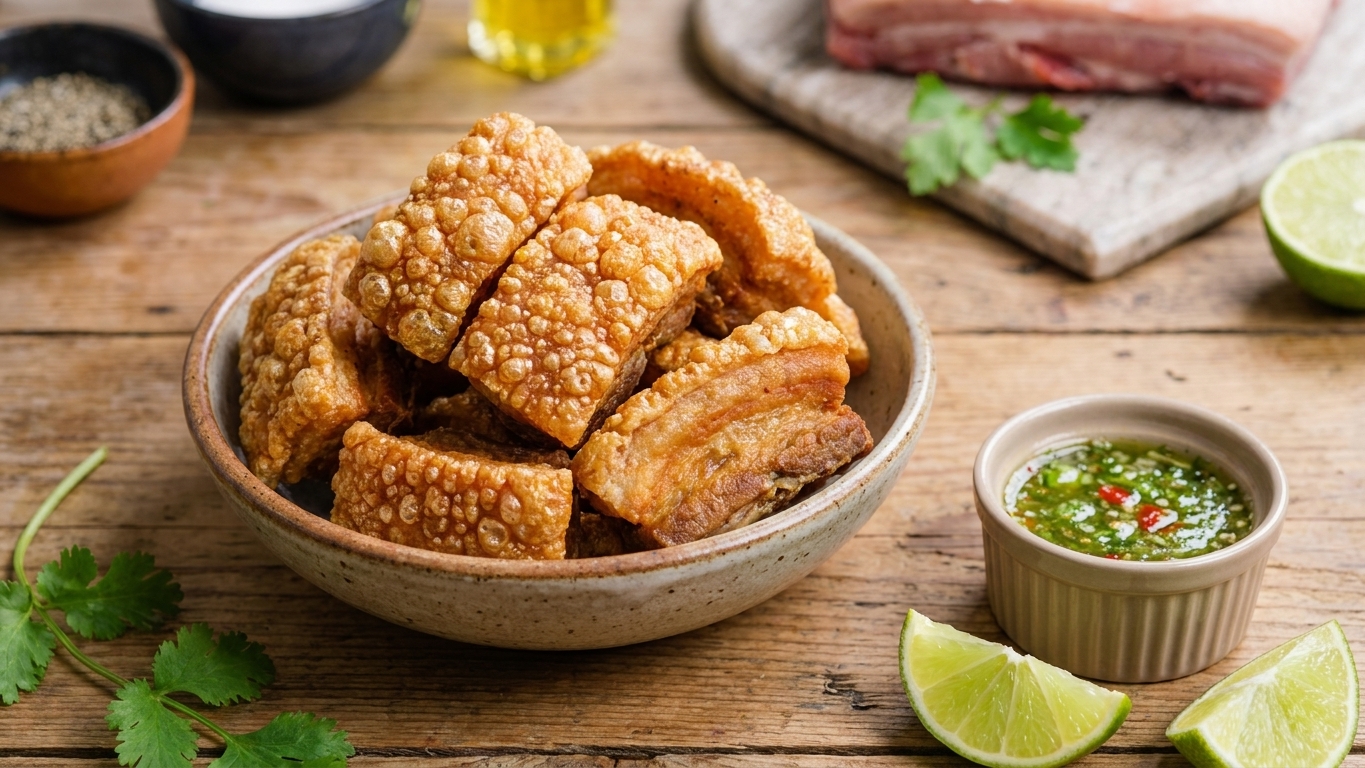
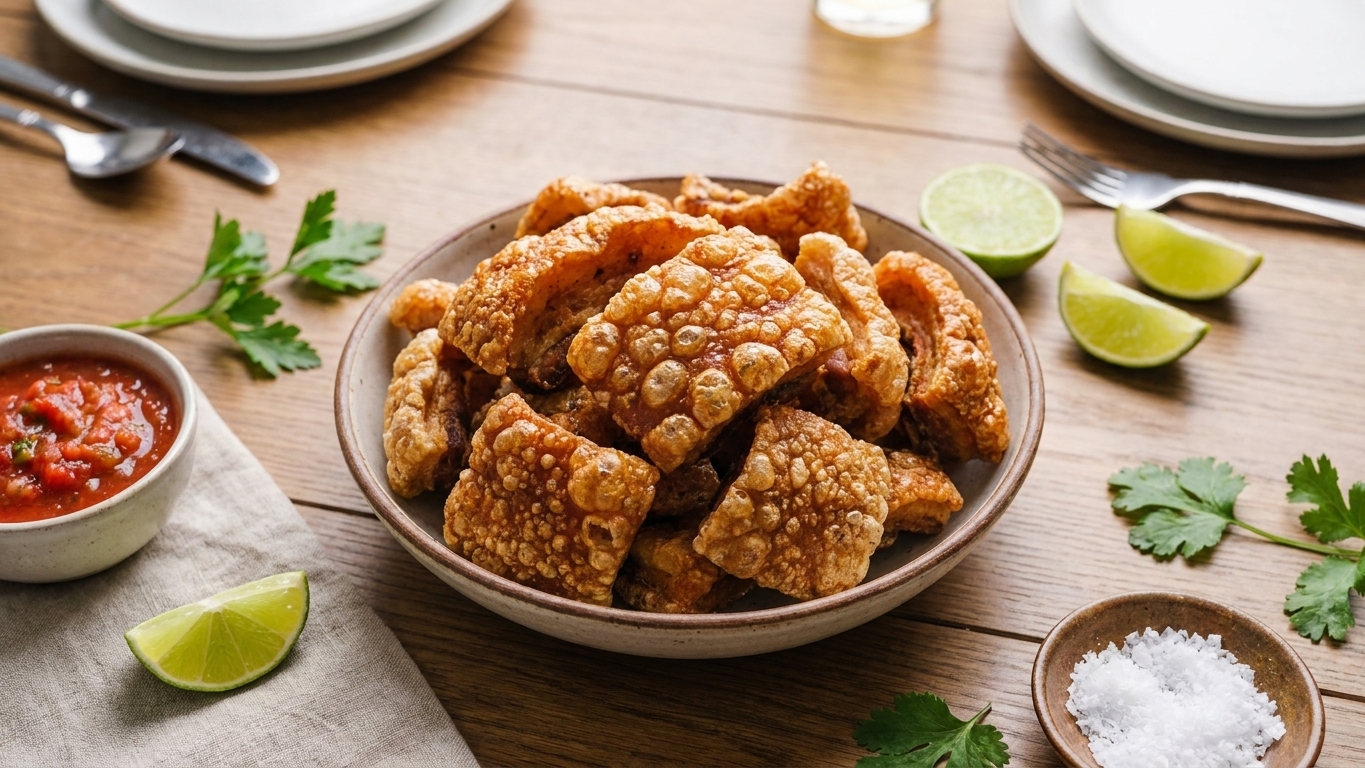
A bowl of golden, bubbly pork belly chicharrones piled high on a wooden table with a small ramekin of lime and chili dipping sauce, warm kitchen lighting

Chicharrones are one of those foods that make you feel powerful as a home cook. You take a humble slab of pork belly and, with time and a little heat management, turn it into crunchy, blistered nuggets that crackle when you bite in. The best part is you do not need a fryer or a restaurant setup. You just need patience, a sharp knife, and permission to taste-test aggressively.

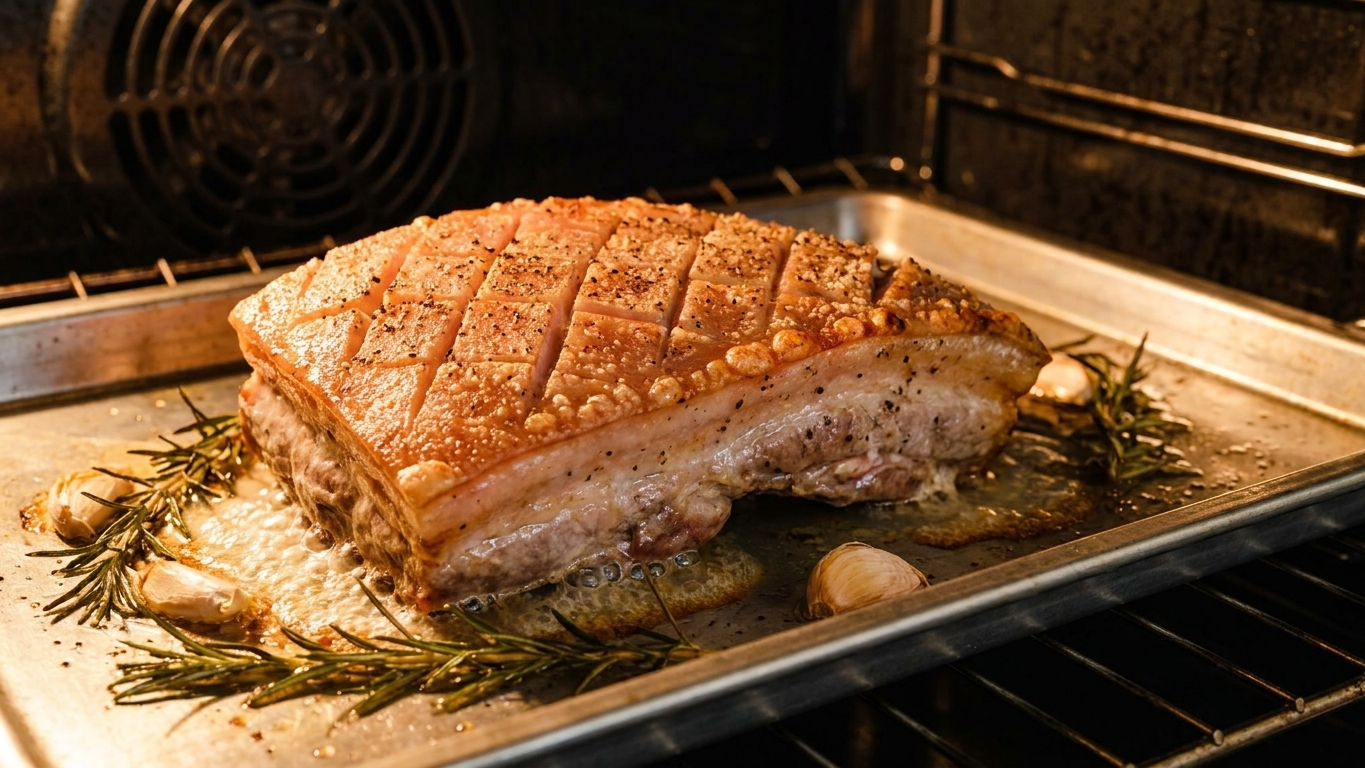
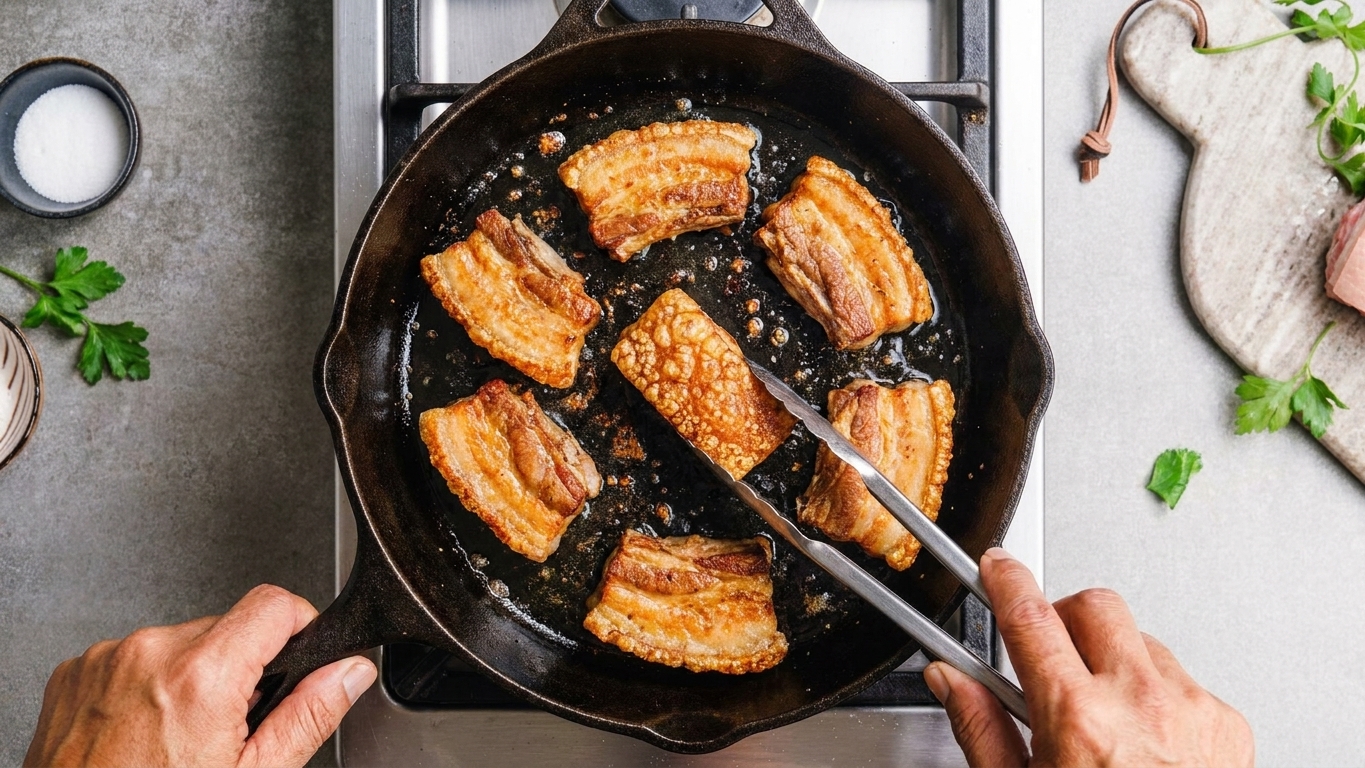
This recipe leans on a steady oven bake to render the fat slowly (low drama), then finishes hot for that glassy crunch. If you want extra crisp edges, there is an optional quick skillet step at the end. I also included a few seasoning paths, because plain salted chicharrones are perfect, but chile lime chicharrones are the kind of snack that mysteriously disappears.

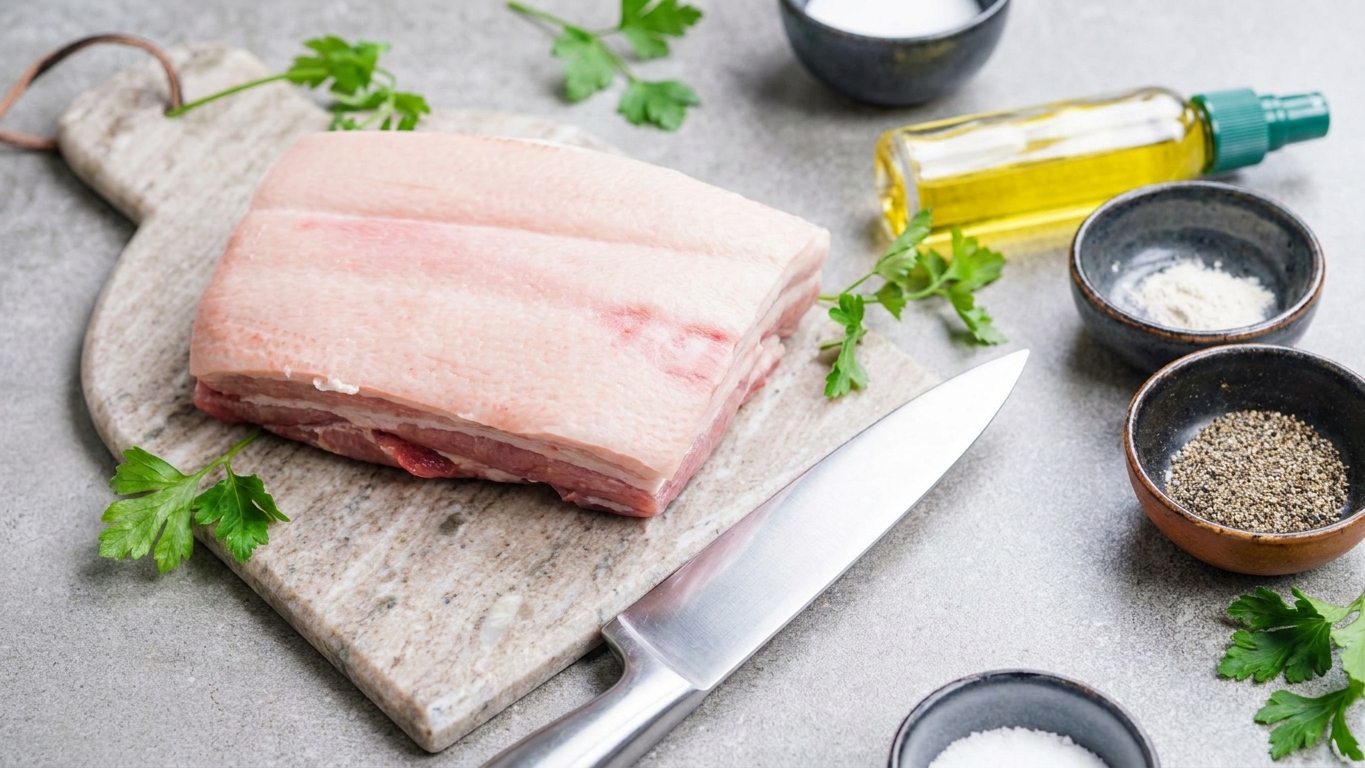
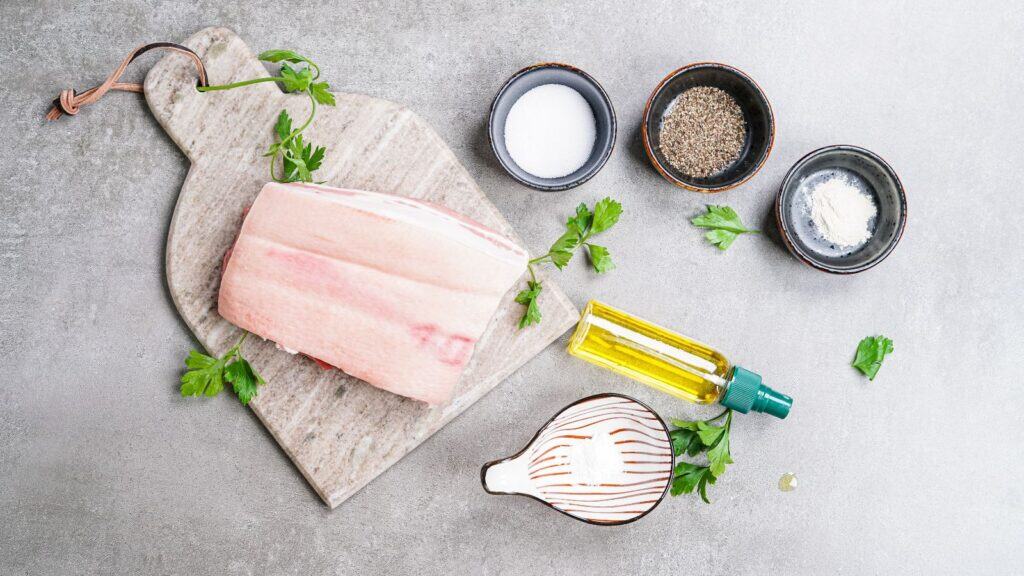
A slab of skin-on pork belly on a wooden cutting board with a sharp chef’s knife and small bowls of salt and spices on a kitchen counter

Why It Works

  • Slow render first, crisp later. Starting low gives the fat time to melt out so the skin can dry and blister instead of turning chewy.
  • Dry skin equals loud crunch. Patting the skin dry and salting it helps pull out moisture, which is the enemy of bubbles. An uncovered fridge rest makes it even better.
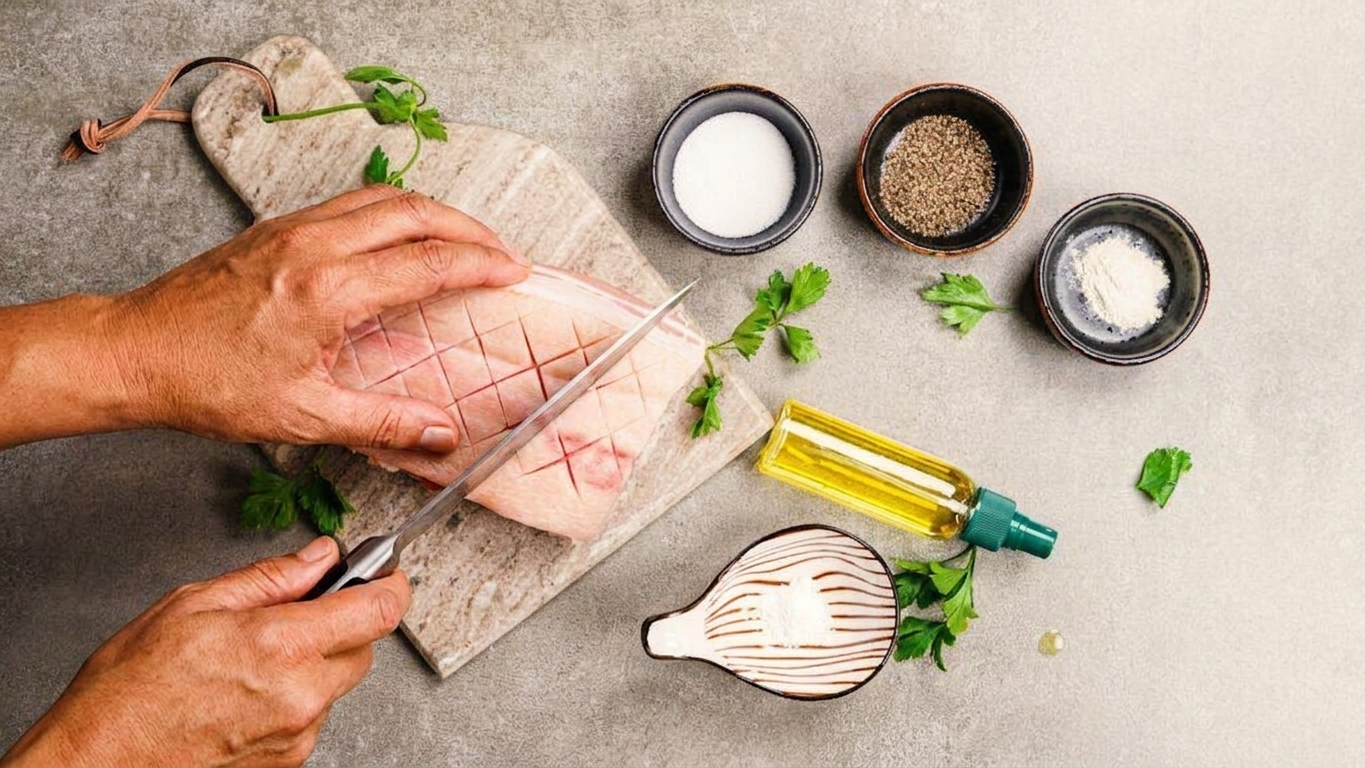
  • Score for maximum surface area. Shallow scoring gives the skin more edges to puff and crisp, and it helps seasoning stick.
  • Finish heat is where the magic happens. A final blast at high temp turns almost into cannot stop eating.

Pairs Well With

Storage Tips

Chicharrones are at their absolute best the day you make them, but you can keep leftovers crisp-ish with a couple of tricks.

Short term

  • Cool completely before storing. Warm chicharrones trapped in a container will steam and soften fast.
  • Food safety note: Because this is cooked pork belly (meat and fat), refrigerate within 2 hours if you are holding leftovers, especially if your kitchen is warm or humid.
  • If you are snacking the same day: You can leave them loosely covered at room temperature for a few hours so the skin stays crisp. For longer holding, refrigerate, then re-crisp before serving.

Re-crisping

  • Oven: 400°F for 5 to 8 minutes on a sheet pan until the skin re-crackles.
  • Air fryer: 375°F for 3 to 5 minutes, check often.

Freezing

I do not love freezing fully cooked chicharrones because the texture takes a hit. If you want a make-ahead move, prep the pork belly through the low render stage, chill, then finish crisping later.

Common Questions

What are chicharrones?

Chicharrones are crispy pork pieces, usually made from pork skin with some fat attached. Different regions make them different ways. Some are airy and puffy like chips, others are meaty with crunchy skin. This recipe is the meaty, pork belly style with blistered skin and tender bites underneath.

Do I need pork belly with skin?

For classic bubbly chicharrones, yes. The skin is where the puff and crackle come from. If you can only find skinless pork belly, you can still roast it into crispy pork bites, but it will be more like pork belly cubes than true chicharrones.

How do I pick the right pork belly?

  • Look for even thickness: It cooks more predictably.
  • Skin should look intact: Smooth, not overly scarred, and not damp or slimy.
  • Ask the butcher if needed: They can trim odd bits of cartilage and any stray tough pieces so scoring is easier.

Why did my skin turn chewy instead of crispy?

  • Too much moisture: Pat the skin very dry and salt it. If you have time, do an uncovered fridge chill to dry it out further.
  • Not enough time rendering: The fat needs time to melt out.
  • Heat not high enough at the end: The final high-heat phase is what crisps and blisters.
  • Crowded pan: Give pieces space so steam can escape.
  • Scored too deep: If you cut into the meat, juices can bubble up and soften the skin. Try to stay in the skin and just into the fat.

How do I know it is cooked?

Visually, the meat should be tender and the fat should look well-rendered (lots of melted fat in the pan after the low roast). If you like numbers, an instant-read thermometer in the thickest part should read at least 145°F for safety, and closer to 190 to 200°F if you want that very tender, bite-through belly texture before the final crisp.

Can I make these in an air fryer?

You can, but pork belly renders a lot of fat, so it can get smoky. If you want to try it: render at a lower temp first (around 300°F) until much of the fat has melted, then increase to 400°F to crisp. Work in batches and drain fat carefully.

What should I serve with chicharrones?

They are amazing with salsa verde, pico de gallo, guacamole, or a quick lime crema. I also love them chopped over beans, tucked into tacos, or crushed on top of a salad like the world’s best croutons.
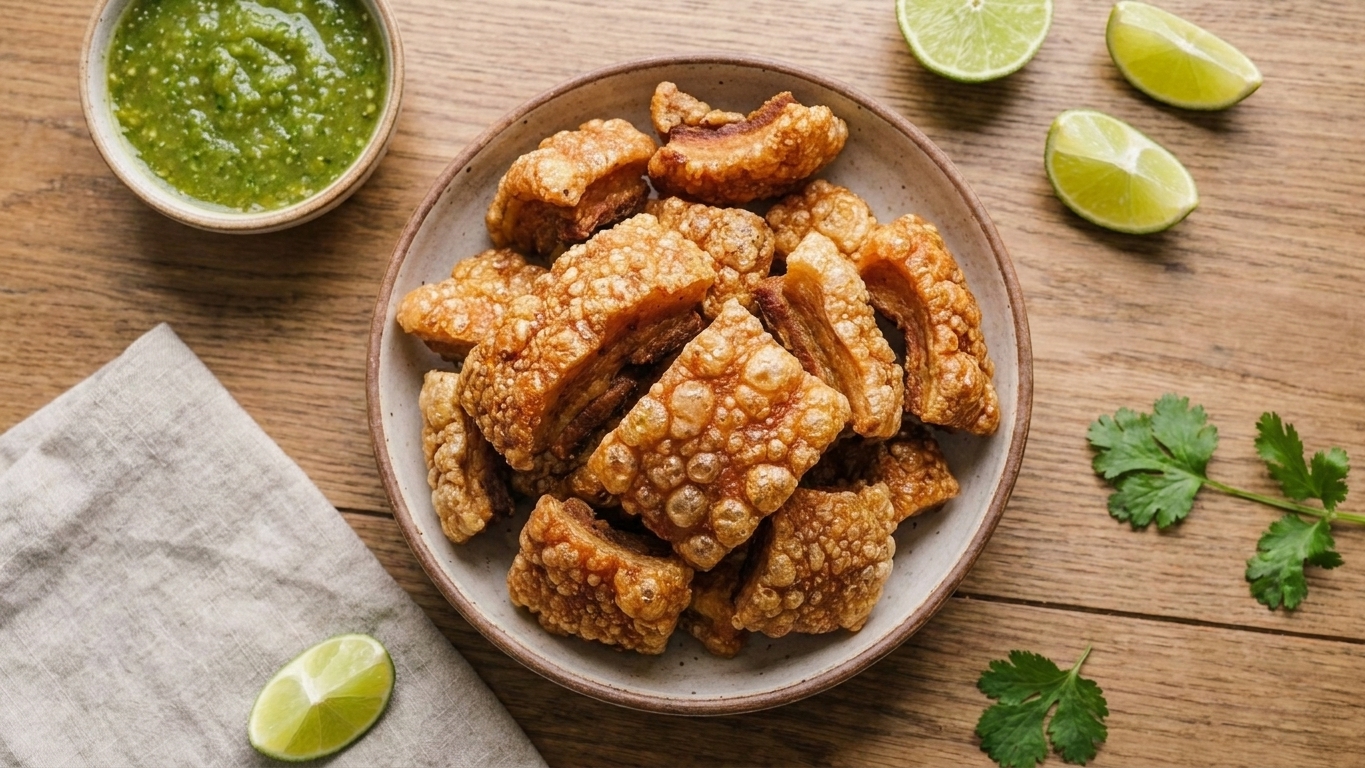

Crispy pork belly chicharrones served on a plate with a small bowl of salsa verde and lime wedges on a simple wooden table

The first time I tried making chicharrones at home, I treated it like a sprint. High heat, lots of confidence, zero patience. The result tasted great and chewed like a rubber doorstop. Lesson learned. Now I do it the slow way first, then the hot way, and it feels like cheating because it works every time. Also, if you hear me checking for doneness every two minutes, mind your business. That is quality control.