What cut of pork should I use for pernil?
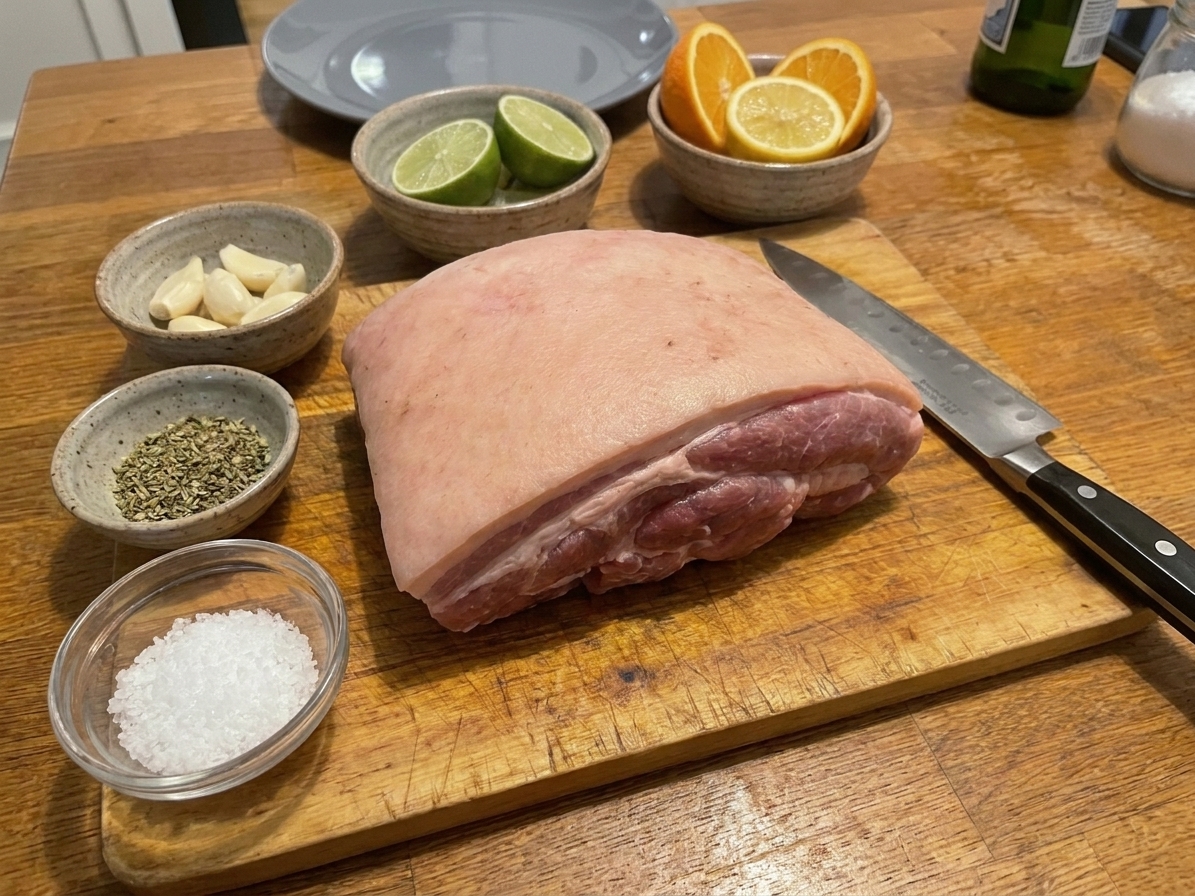
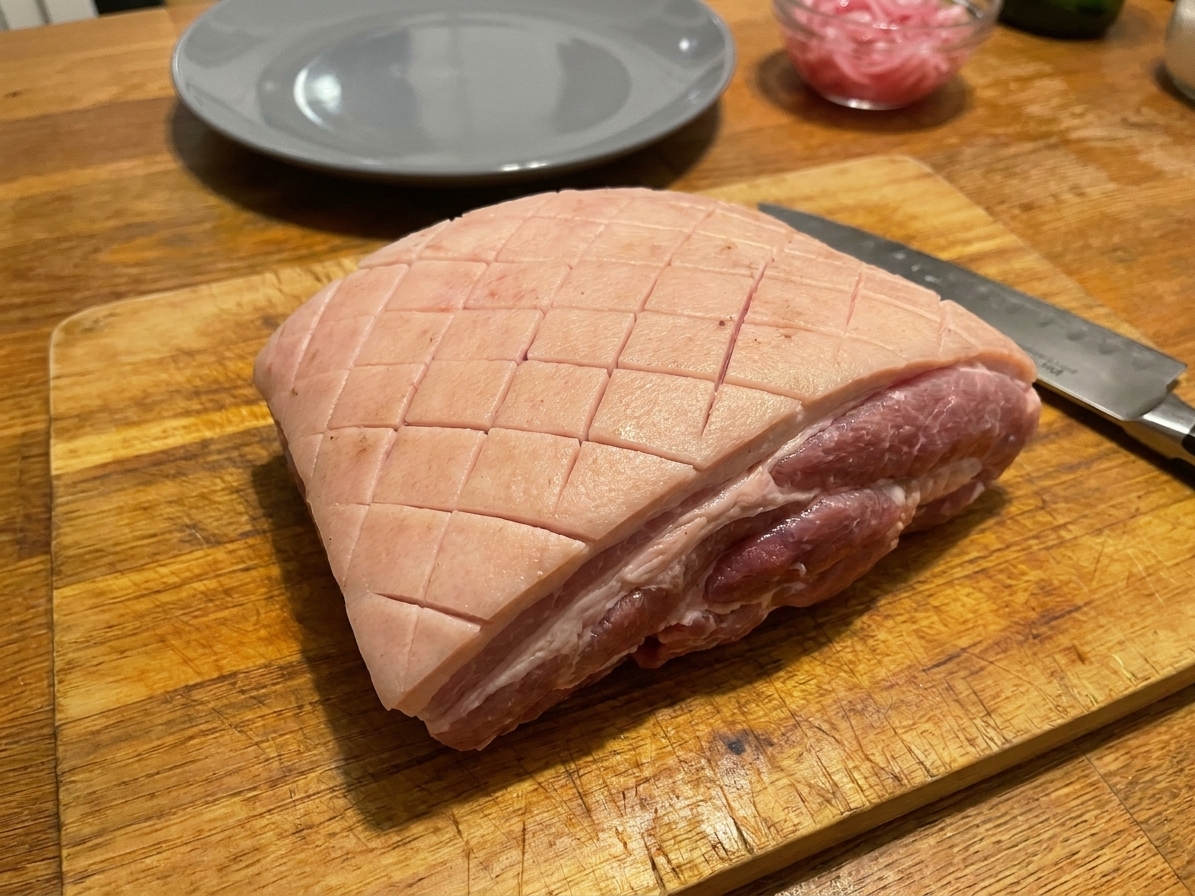
Pork shoulder is the move for most home ovens because it stays juicy and turns shreddable. For classic pernil with crispy cuerito, look for skin-on, which is most commonly sold as a picnic shoulder (lower shoulder) or a whole shoulder. In many US stores, a Boston butt (pork butt) is usually sold skinless, so if you want skin, ask the butcher specifically for skin-on shoulder.
Can I make pernil without skin?
Yes. You will still get incredible flavor and tenderness, you just will not get cuerito. If your shoulder is skinless, you can still build crisp edges by uncovering during the last 30 to 45 minutes and letting the exposed spots caramelize.
How long should pernil marinate?
Overnight is ideal, and 24 hours is even better. If you are in a rush, give it at least 4 hours. The flavor will still be great, just a little less deep.
What internal temperature is pernil done?
Pork shoulder is a tough cut that gets tender as collagen breaks down, so temperature is about texture.
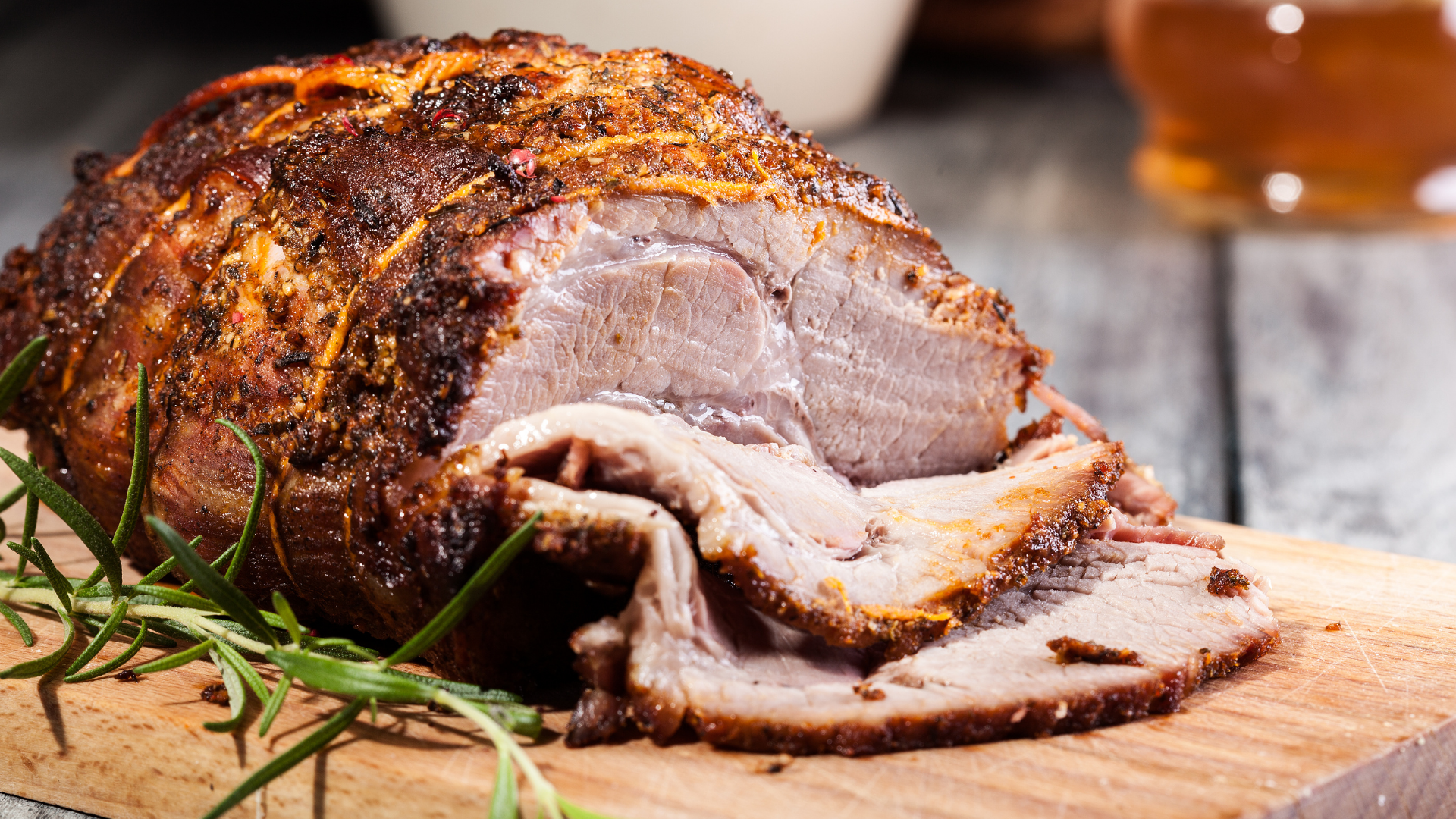
- Sliceable (still juicy, more structured): start checking around 170°F to 180°F. Some roasts can still feel a bit tight here, so go by feel too.
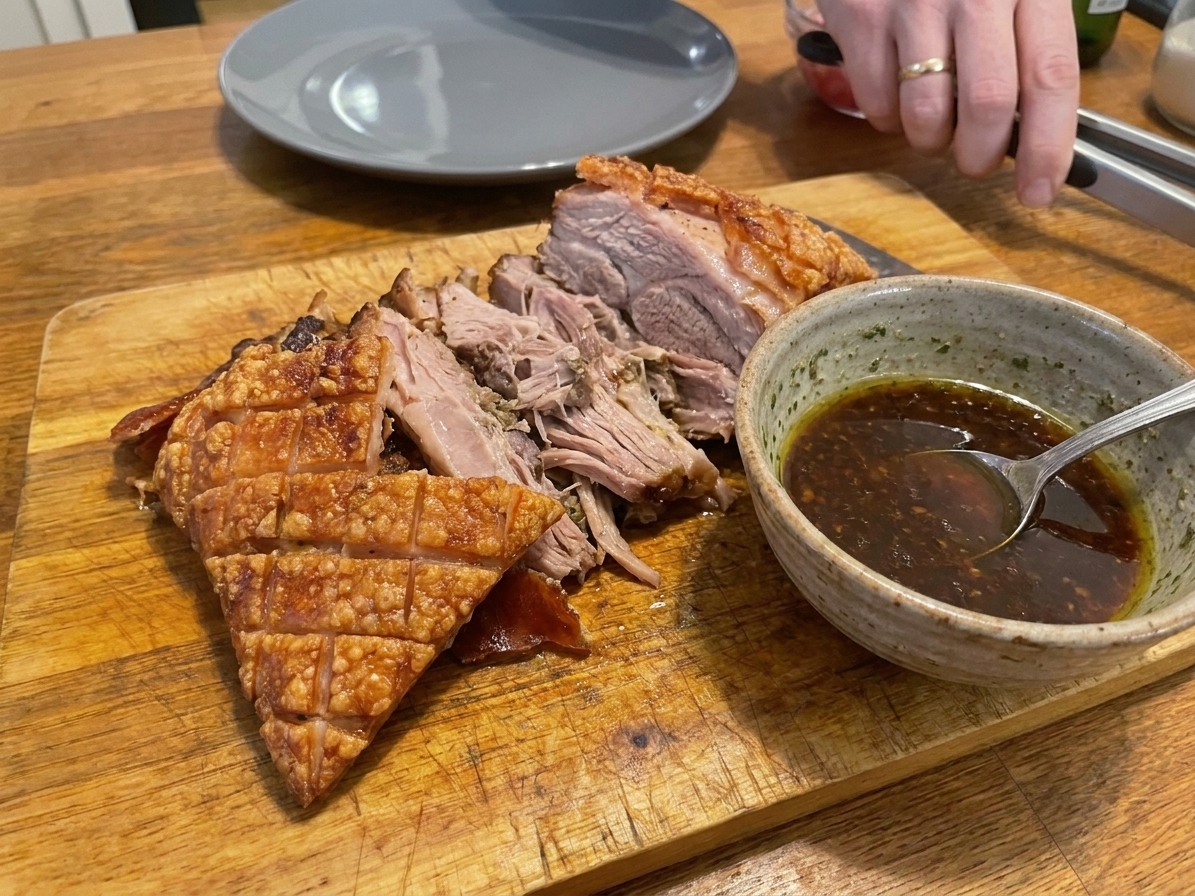
- Shreddable (fall-apart): aim for 195°F to 203°F, then rest it so the juices settle.
If you hit the number but it still feels firm, keep going. The thermometer tells you heat, but tenderness tells you the truth.
Why is my pernil not crispy on top?
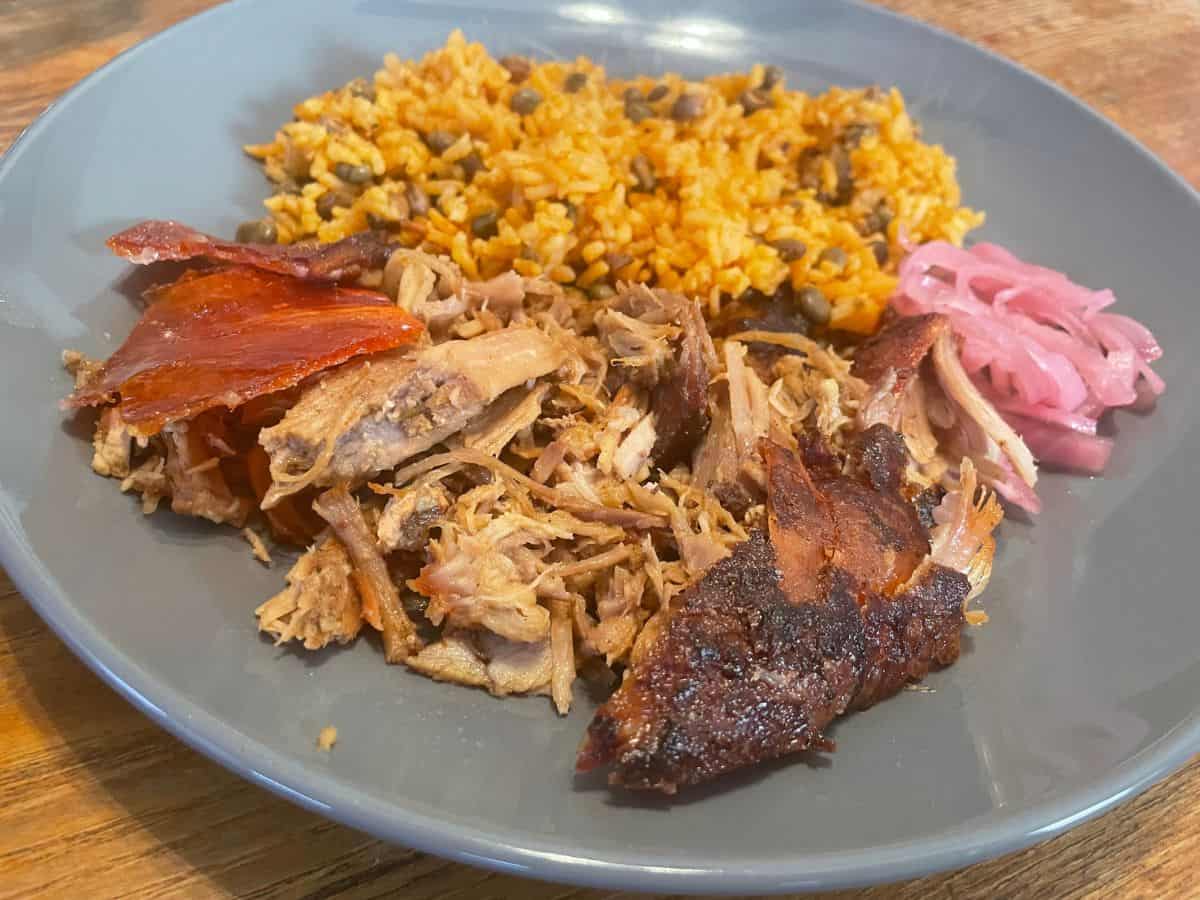
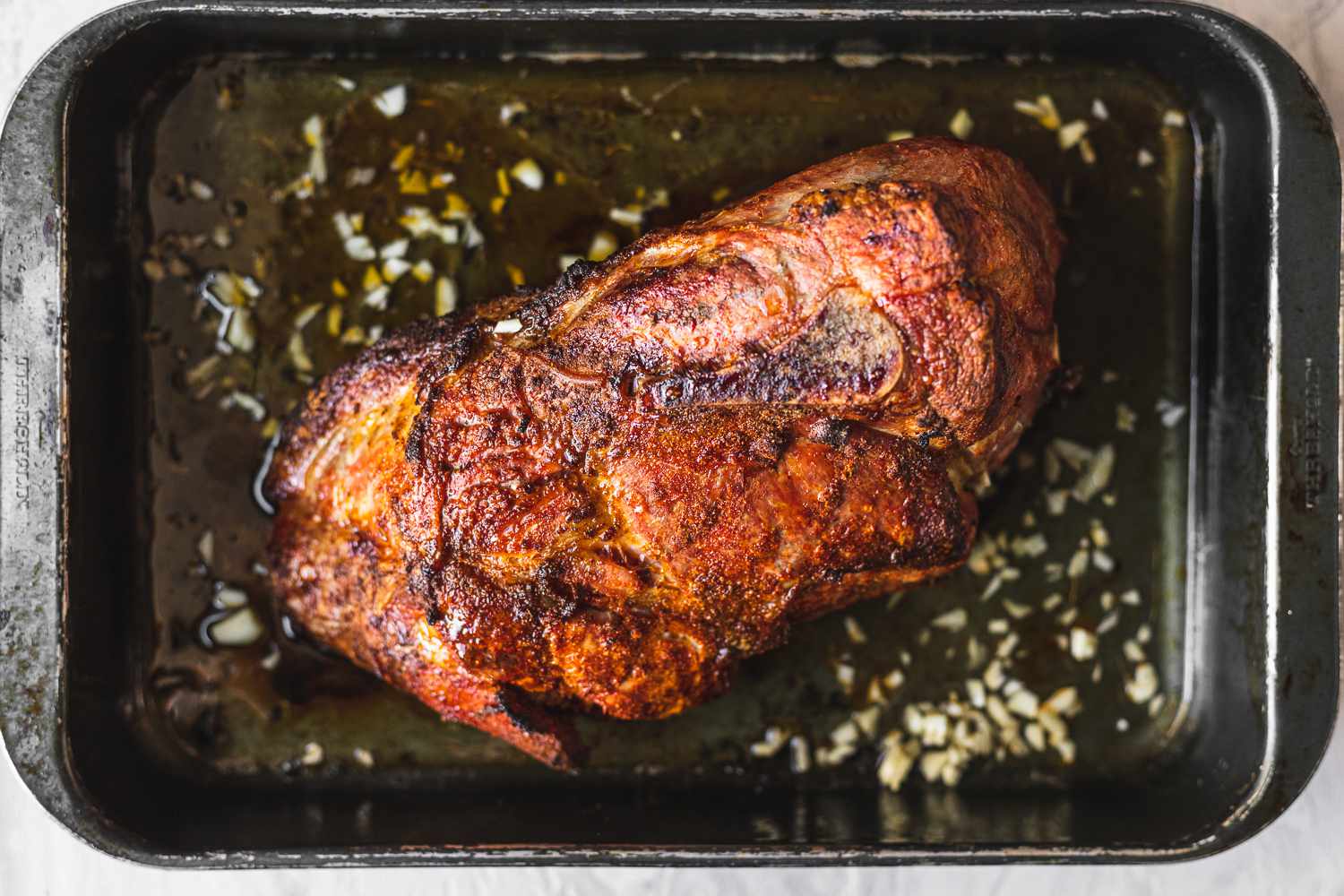
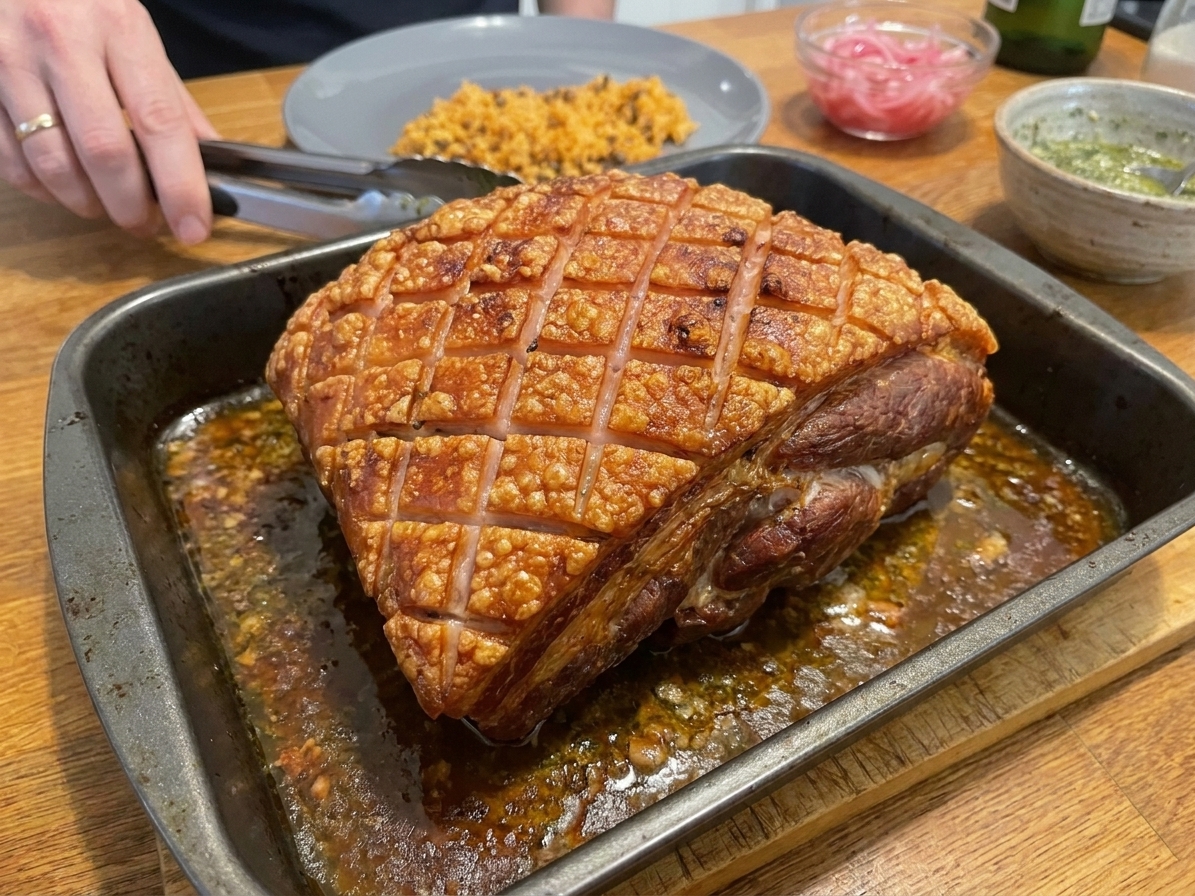
Usually one of three things: the skin was wet, the oven was not hot enough at the end, or the skin got coated in juices. Pat the skin very dry, salt it, and finish at 450°F to 475°F until blistered. Also, avoid basting over the skin.
Do I need sour orange?
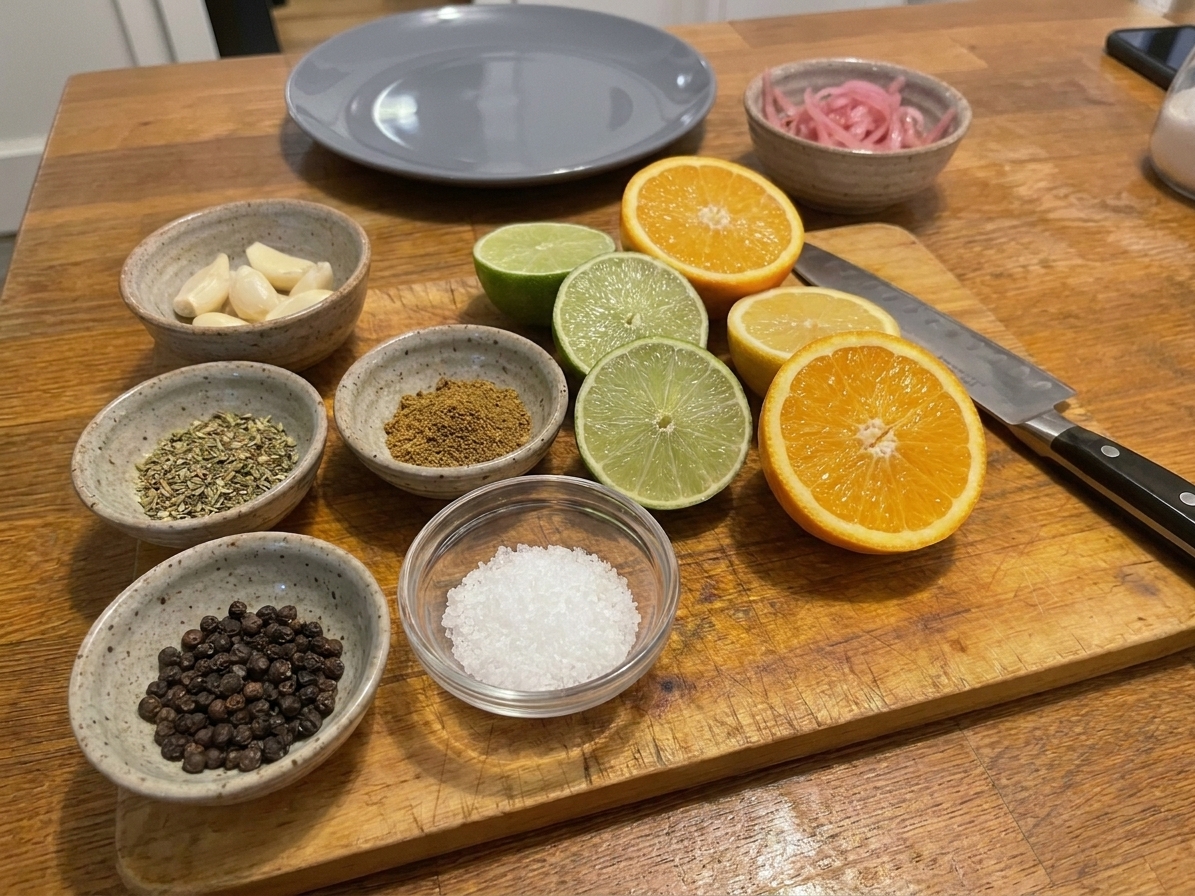
It is traditional, but not required. A mix of orange juice + lime juice gives you that bright, slightly bitter-sweet vibe and it is easy to find anywhere.
How salty is this with adobo?
Adobo blends vary a lot. If yours is salty, either skip it or cut the kosher salt a bit. If you can, measure salt by weight for consistency (see ingredients note).