What Cuisinart bread maker setting should I use?
Use the Basic (or White) program for a standard loaf. Choose 1.5 lb and Medium crust the first time. Cuisinart model menus vary, so if yours labels it differently, pick the standard white or basic loaf cycle that matches closest to 1.5 lb.
Do I have to use bread flour?
No, but it helps. Bread flour gives you a taller loaf and a chewier bite. If you only have all-purpose, use it. The loaf will be a little softer and may not dome as high. Because all-purpose flour can absorb liquid a bit differently, just watch the dough during kneading and adjust with a tablespoon of milk or flour if needed.
Why is my bread dense in a bread maker?
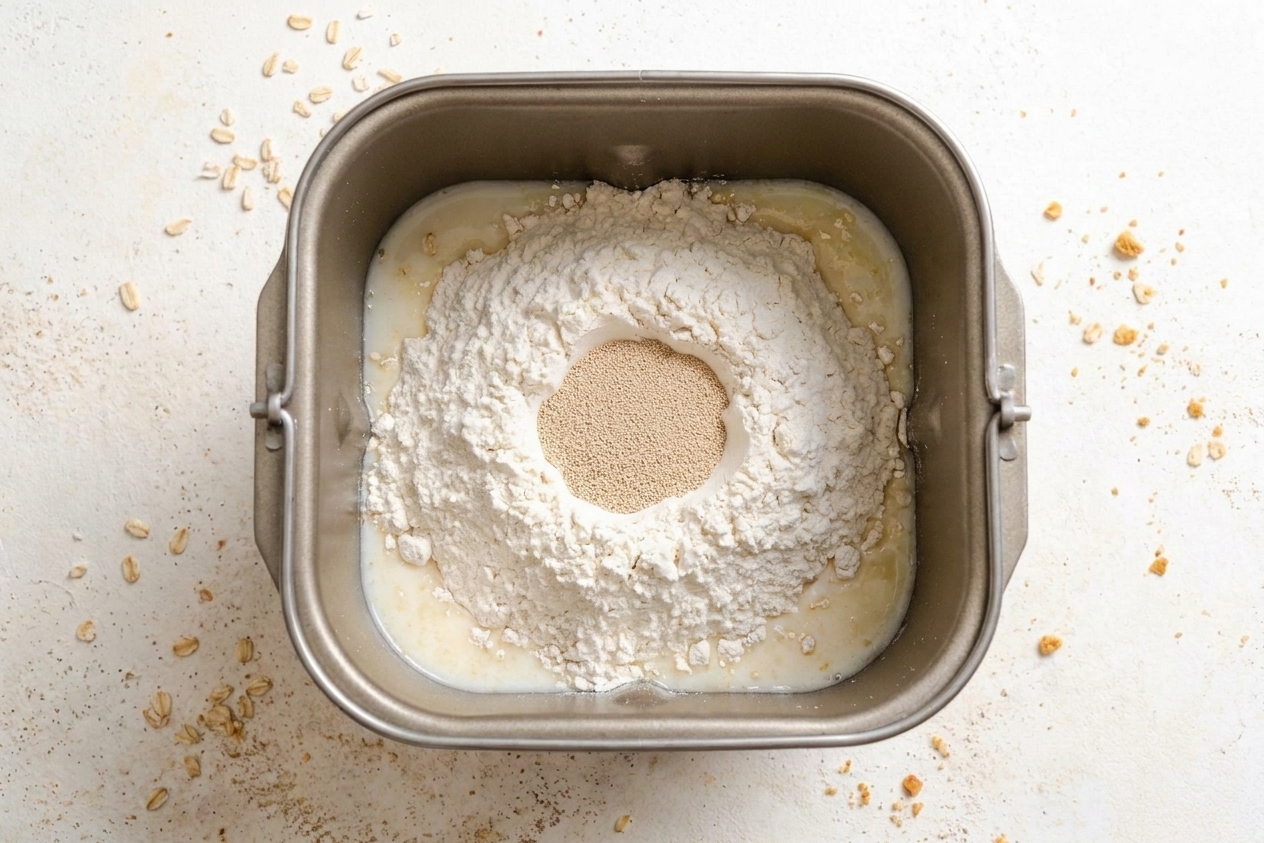
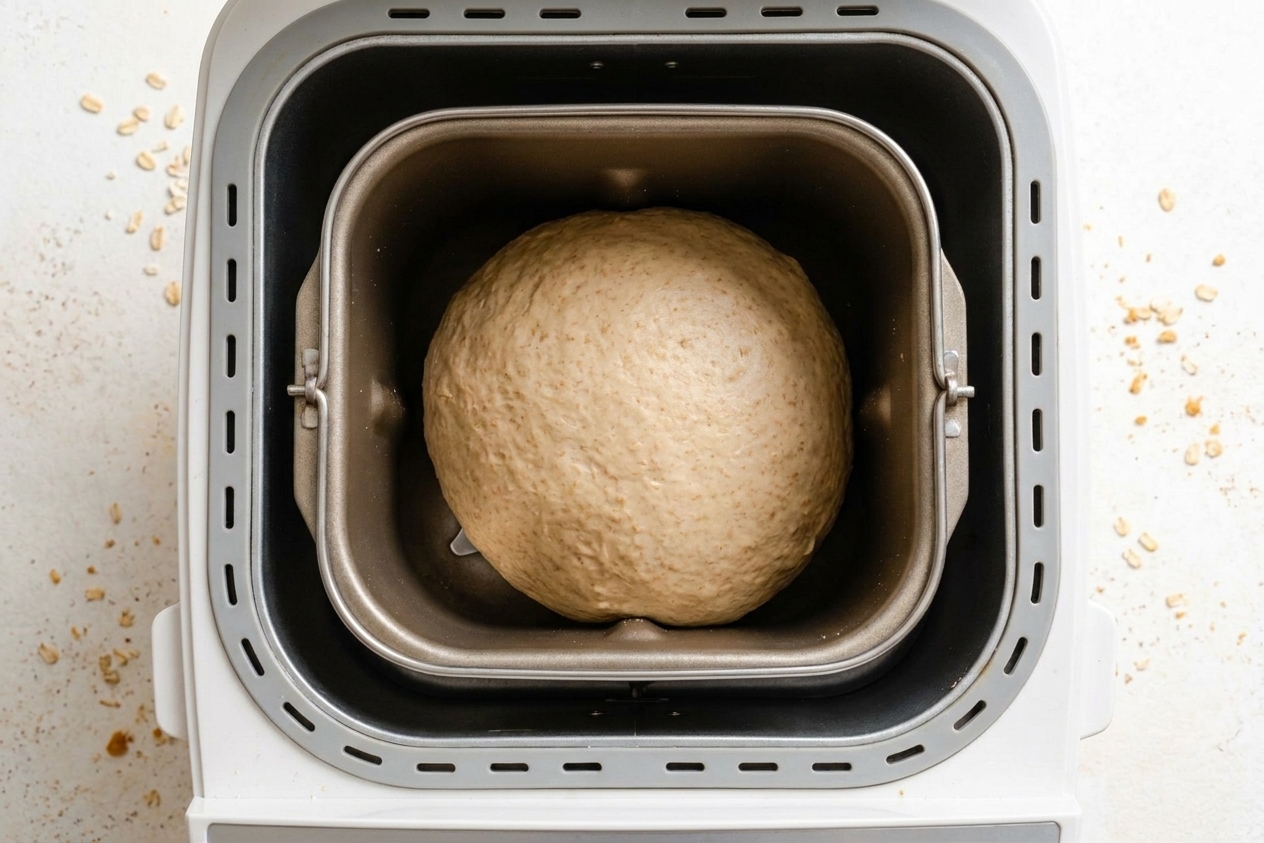
Three usual suspects: the yeast is old, the flour was packed too tightly (especially if you scoop straight from the bag), or the dough was too dry. During the first knead, peek inside. You want a smooth dough ball that looks slightly tacky. If it is shaggy or crumbly, add milk 1 tablespoon at a time until it comes together.
Why did my loaf collapse on top?
That is usually too much liquid or too much yeast, or the loaf overproofed in a warm kitchen. Next time, hold back 2 tablespoons of milk and add only if the dough needs it. Also measure yeast carefully and use the 1.5 lb size setting.
Can I use quick oats instead of rolled oats?
Yes. Rolled oats give a slightly nicer texture, but quick oats work fine here.
Can I make this dairy-free?
Yes. Use unsweetened oat milk or almond milk (they are typically a 1:1 swap). For the butter, you can use plant-based butter or a neutral oil. Start 1:1, then watch the dough during kneading and adjust with a tablespoon of milk or flour if needed, because oil can make the dough feel a little different than butter.
What internal temperature should the loaf be when it is done?
If you are using a thermometer, aim for about 190°F to 200°F in the center of the loaf. For the most reliable, non-gummy crumb, I usually pull it closer to 195°F+.
Do I need to proof the yeast first?
Not usually. Bread machine yeast or instant yeast can go straight in. Active dry yeast also works well in this recipe, but if you have had trouble with rise in your kitchen, you can proof it first by stirring it into the warm milk with the honey and letting it sit until foamy, then add it with the liquids.
Does the egg need to be room temperature?
Nope. A room-temp egg mixes a bit faster, but a cold egg straight from the fridge is totally fine in a bread machine. The dough will warm up as it kneads.