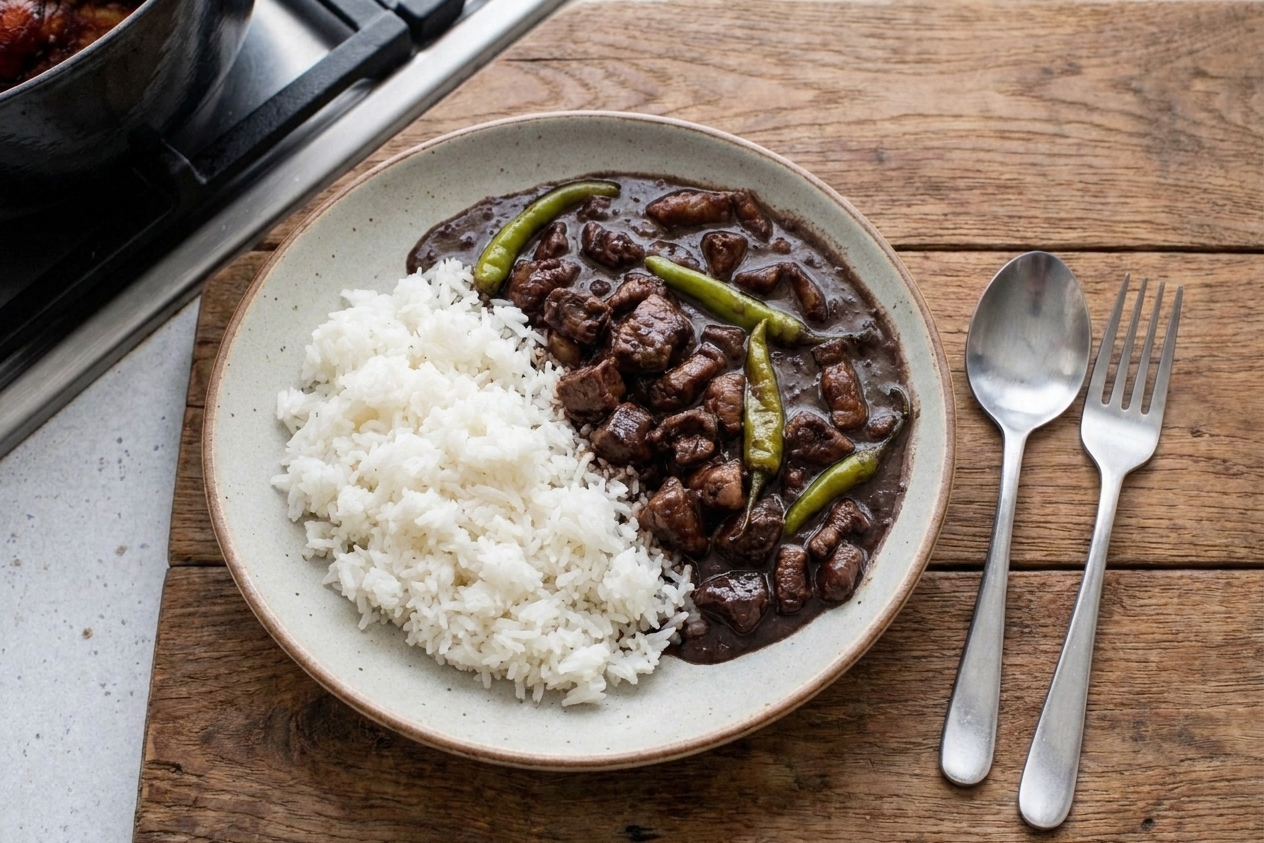
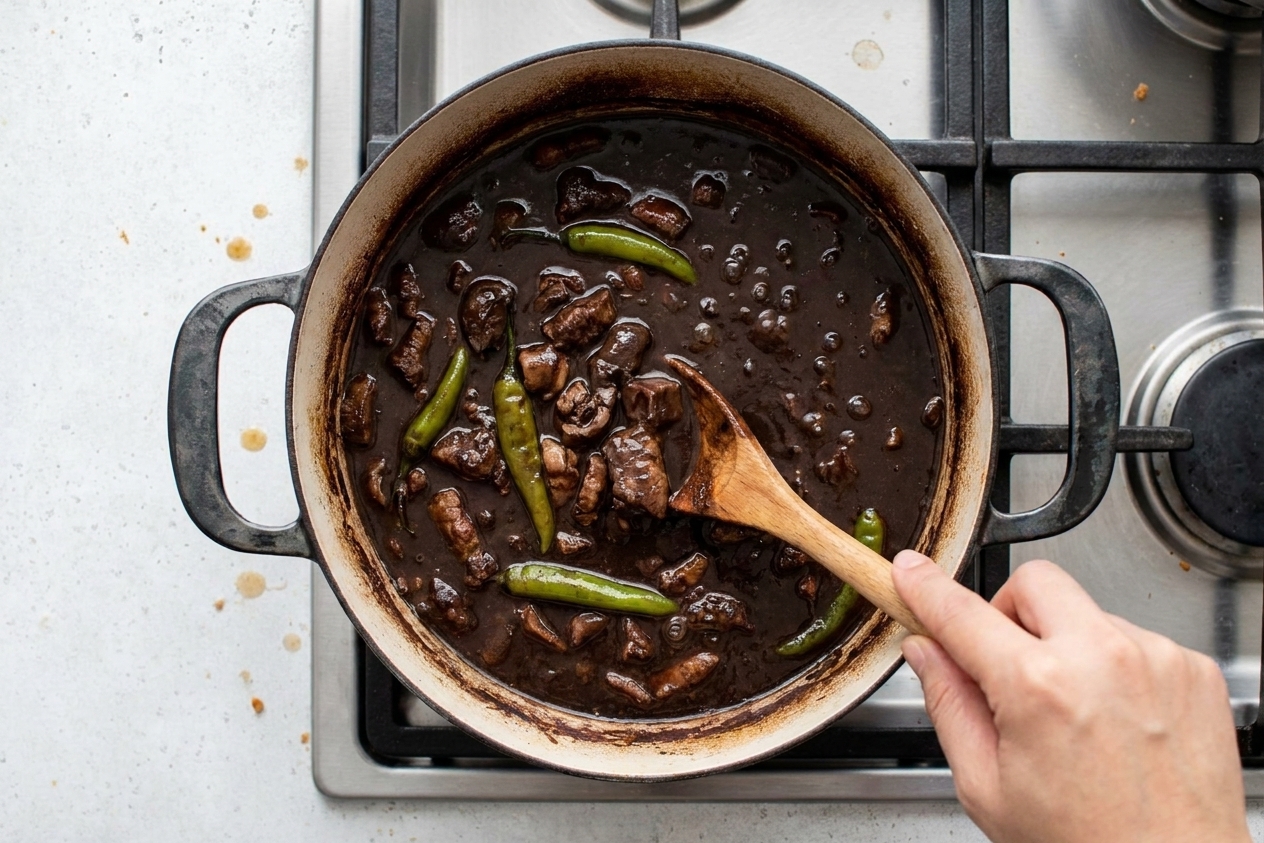
What does dinuguan taste like?
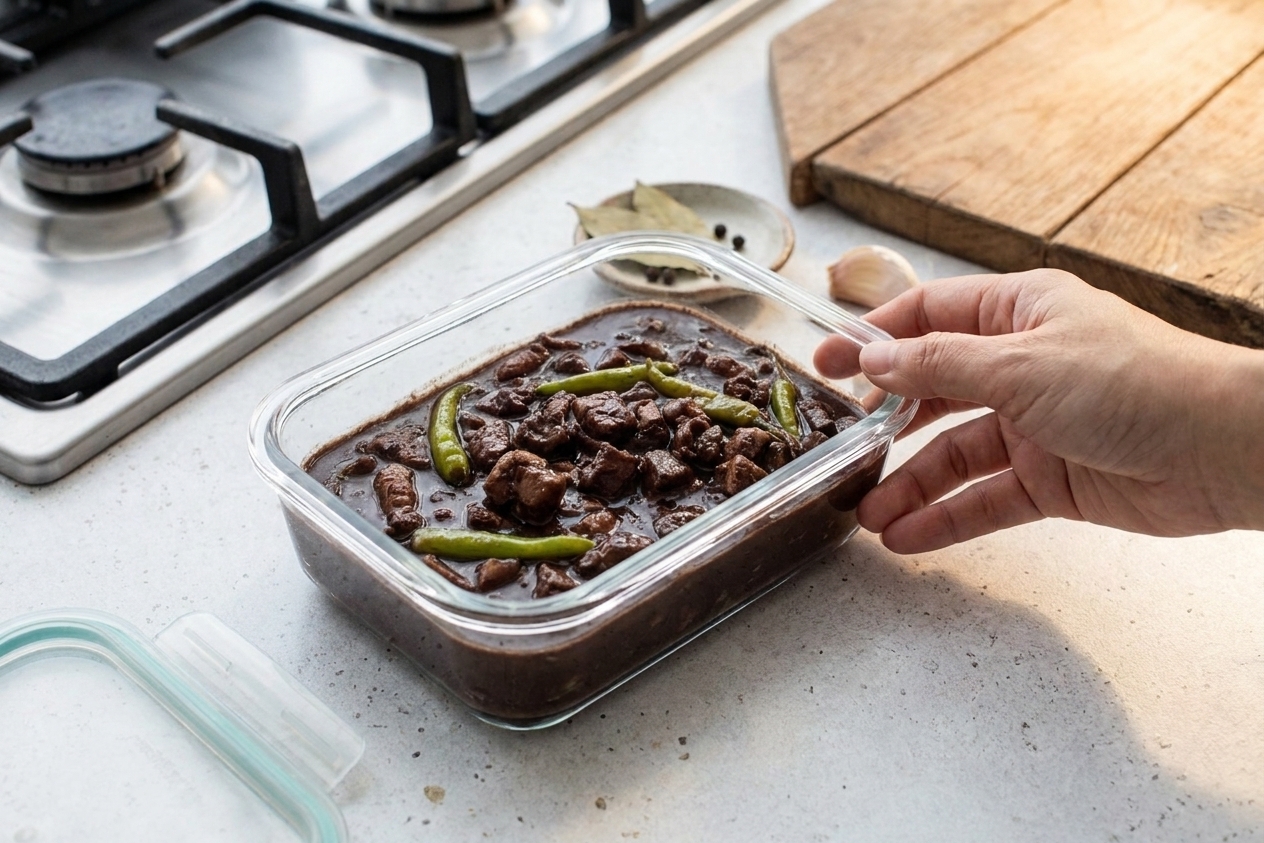
It is savory and porky, with a tangy vinegar bite and a lightly spiced, garlicky backbone. Think stew meets adobo energy, but with a deeper, richer gravy.
Is dinuguan safe to eat?
Yes, when prepared properly. Use fresh, food-grade pork blood from a trusted source, keep it refrigerated until you are ready to use it, and do not leave it sitting out at room temperature. Cook the pork until it is tender and cooked through, then keep the finished stew at a gentle simmer after adding the blood. When reheating leftovers, warm it until steaming hot throughout.
Why did my dinuguan turn grainy or curdled?
Most of the time it comes down to heat. If the pot is boiling or even aggressively simmering when the blood goes in, the proteins can seize and turn grainy. Keep the heat low and never let it boil hard after adding the blood. Vinegar timing matters too. Let the vinegar simmer for 2 to 3 minutes before stirring, then proceed, so the flavor mellows and the pot stays calm.
Can I make dinuguan without innards?
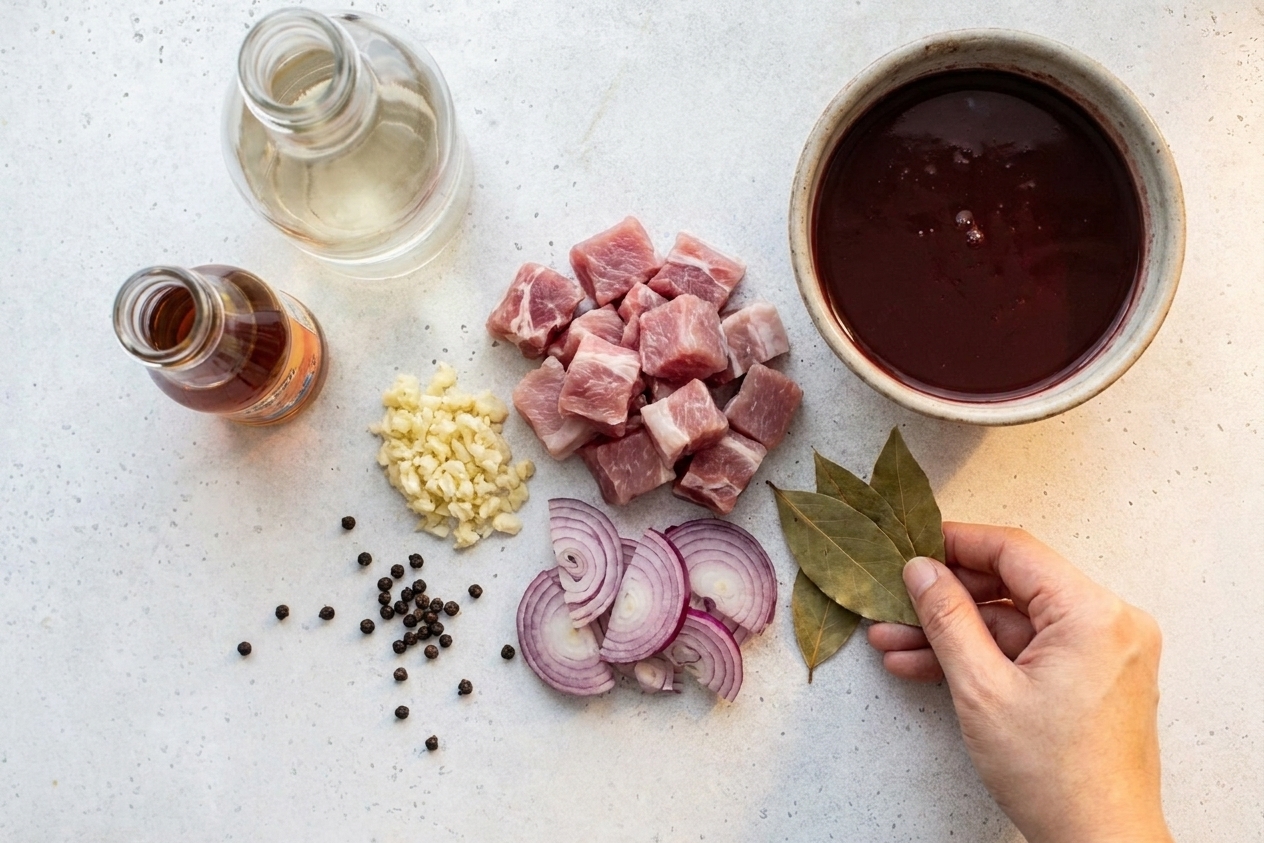
Absolutely. This recipe uses pork shoulder (and optional pork belly) only. Traditional versions sometimes include offal, but you do not need it for a great pot of dinuguan.
What should I serve with dinuguan?
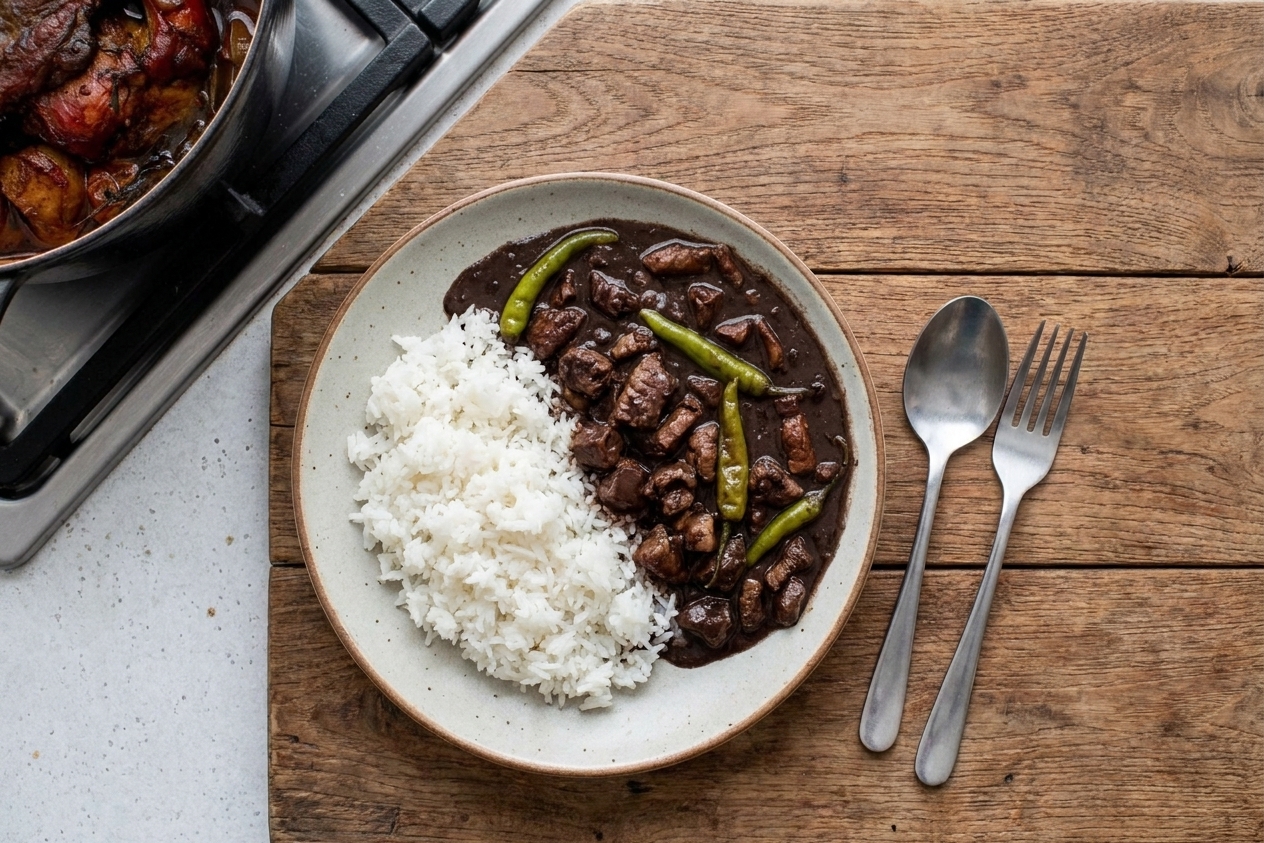
Steamed rice is the classic. Puto is also iconic for a reason. If you want a simple side, try sliced cucumbers or a quick tomato and onion salad to keep things fresh.