Mom's Best Recipes
Recipe

Easy Pear Jam

A bright, cozy pear jam with lemon and vanilla, cooked down into a glossy spread that is perfect for toast, yogurt, and cheese boards.

Author By Matt Campbell
4.8
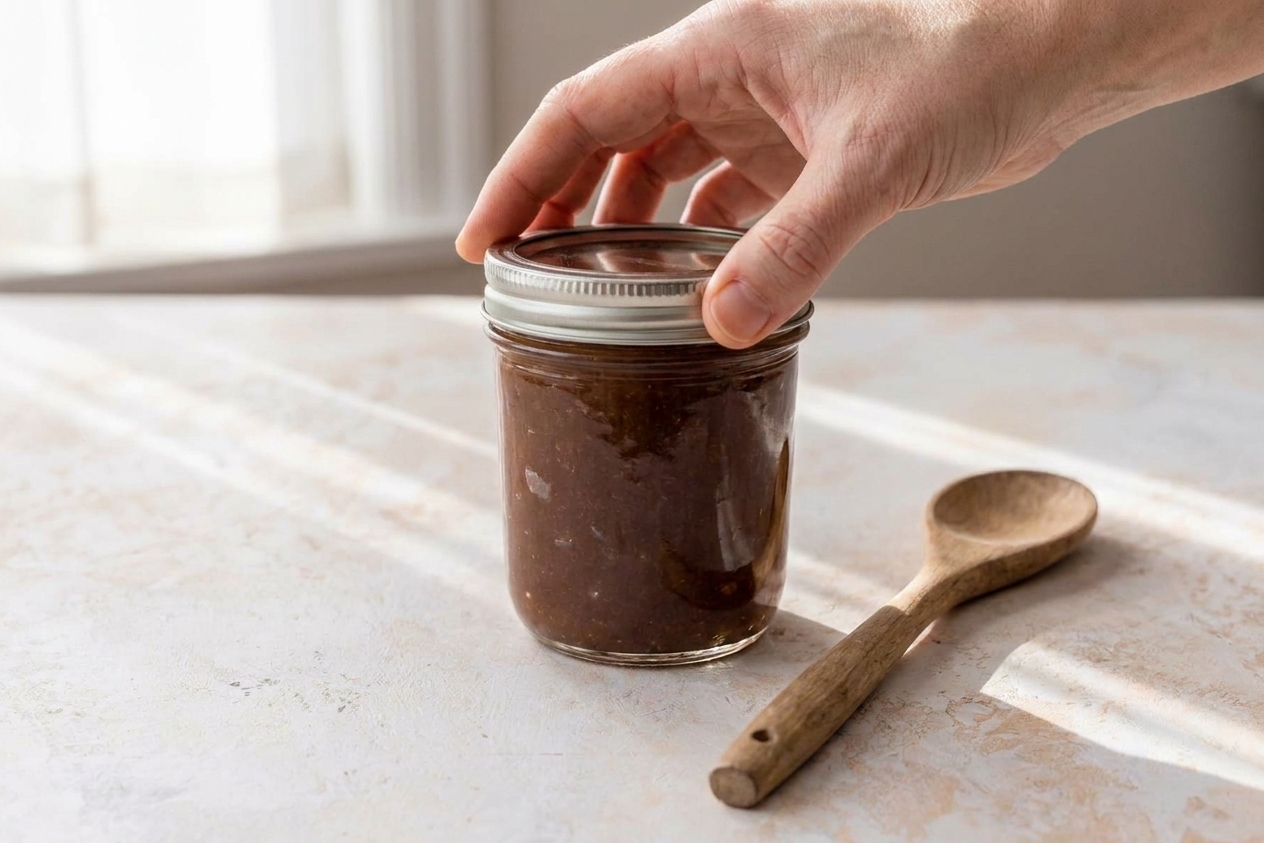
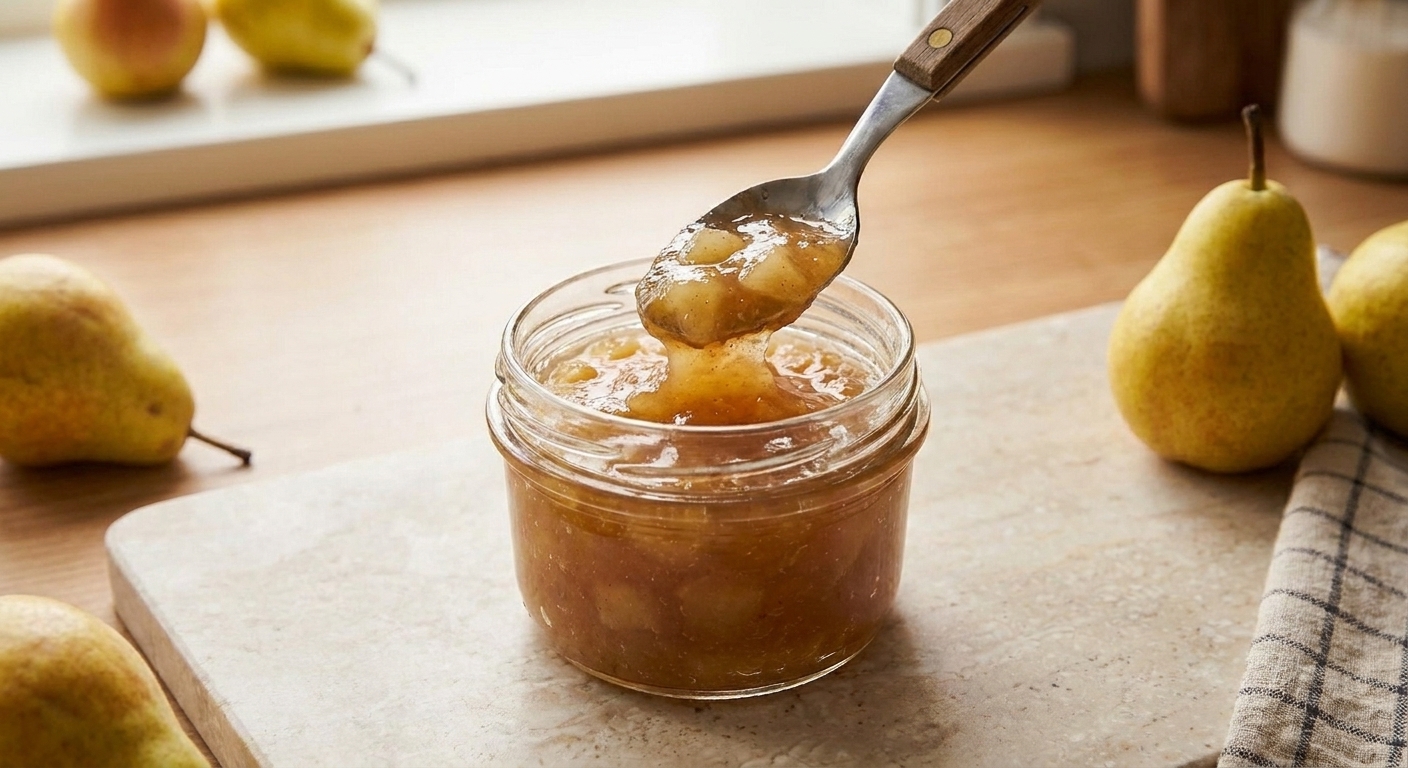
A small glass jar of homemade pear jam on a light stone countertop with a spoonful showing the glossy texture, soft natural window light

Pear season always makes me feel like I should be wearing a flannel and pretending I have my life together. Reality: I am in the kitchen with sticky fingers, a cutting board full of pear peels, and a pot that smells like lemon, vanilla, and warm fruit. And honestly, that is the vibe.

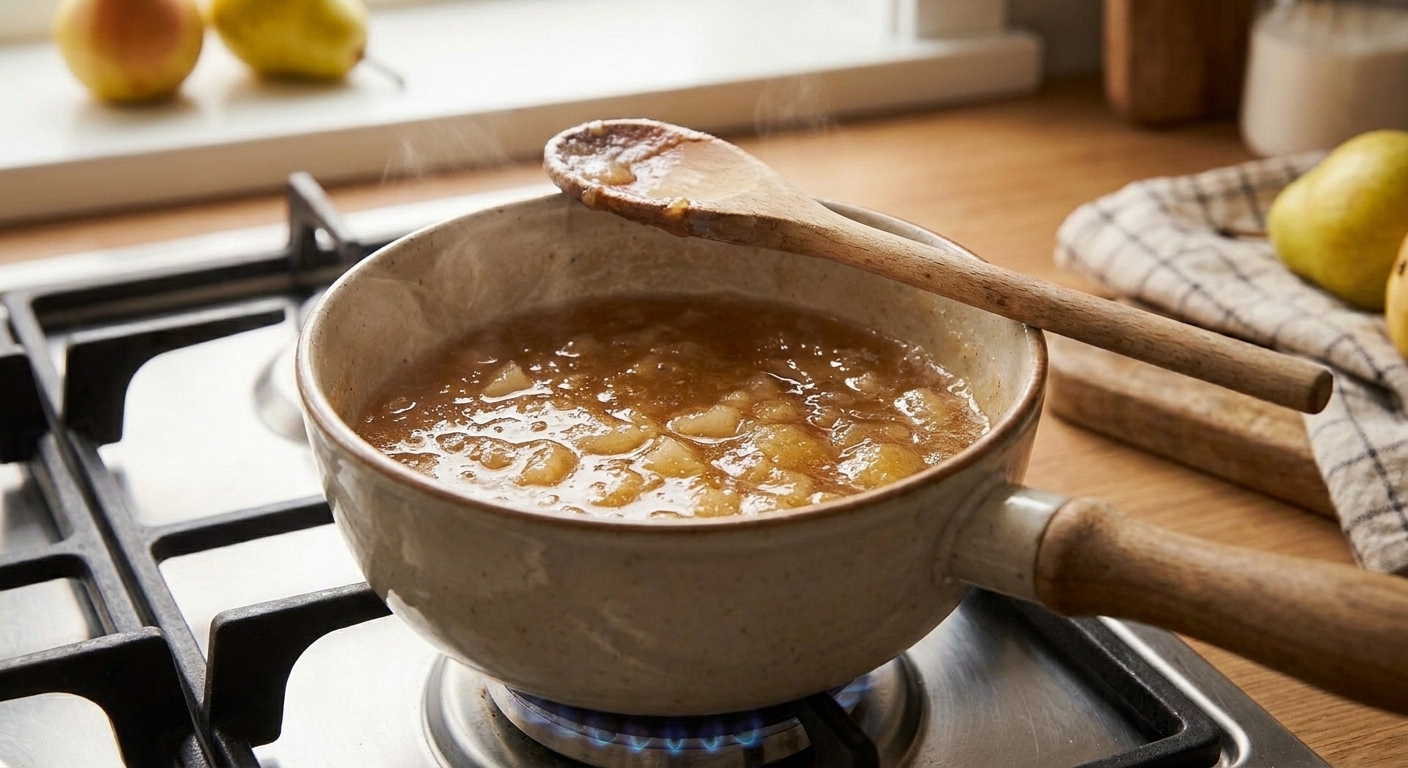
This pear jam is small-batch, low-drama, and built for real life. No special pectin needed most of the time. Just ripe pears, sugar, lemon, and a little patience while it bubbles into something you want to swipe off the spoon. It lands in that sweet spot between bright and cozy, with crisp citrus edges and a soft, caramel-y pear finish.

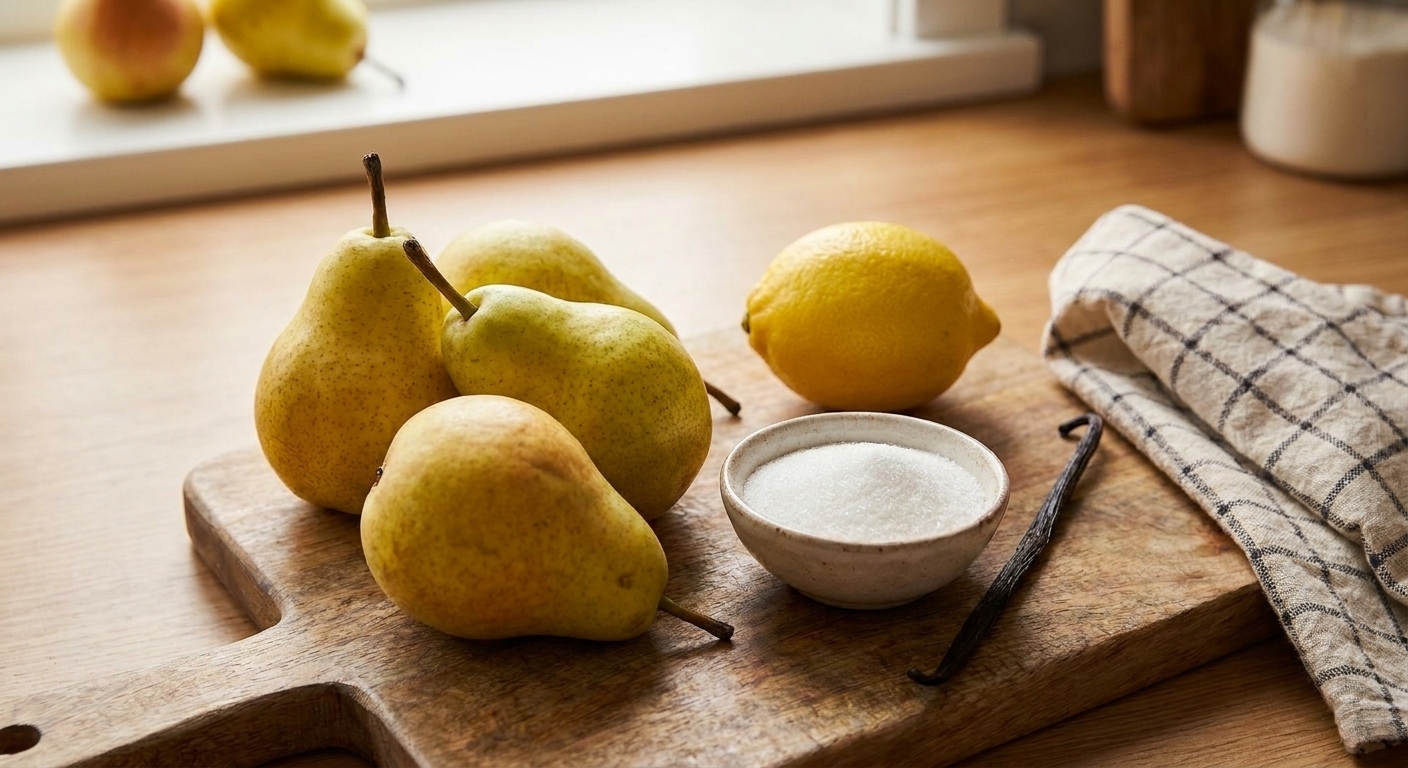
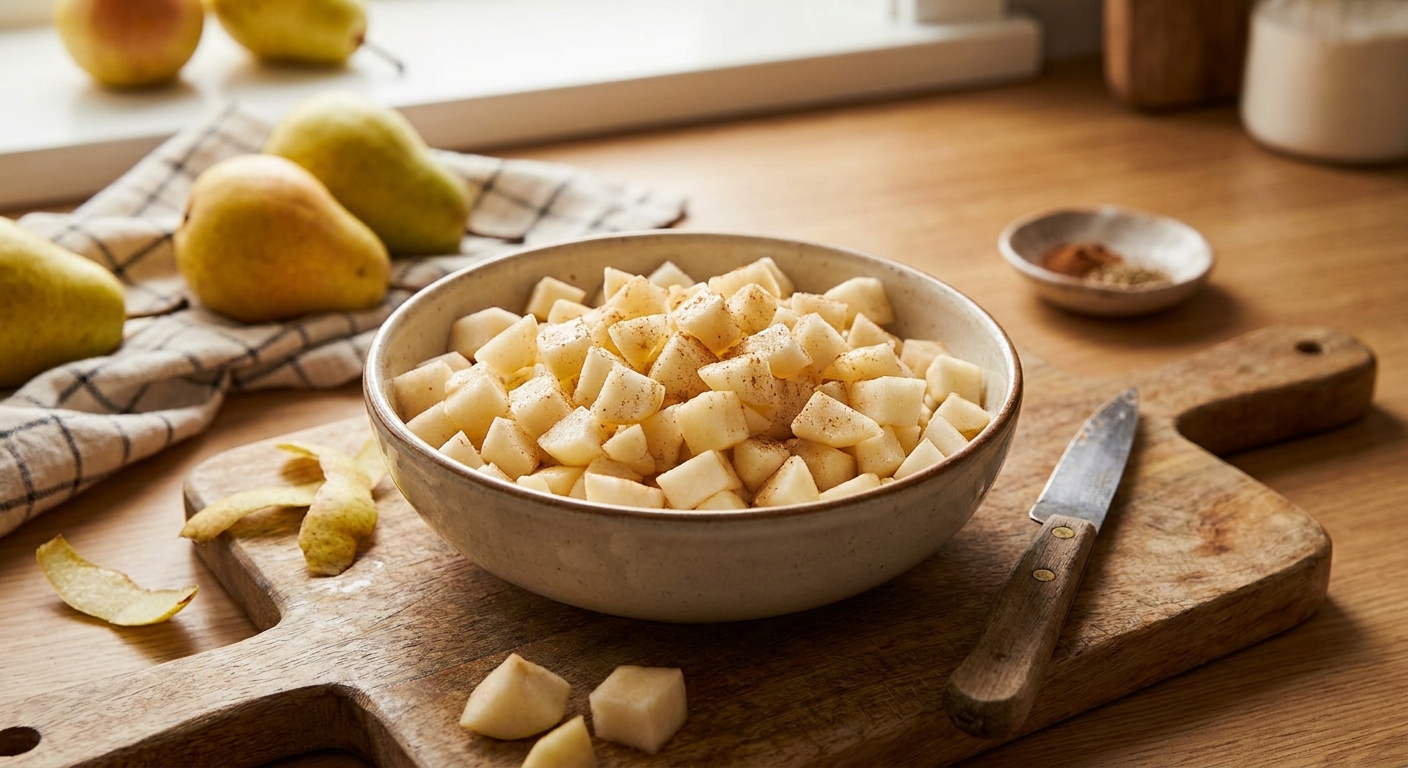
Whole ripe pears, a lemon, a bowl of sugar, and a vanilla bean on a tidy kitchen counter under warm natural light

Why It Works

  • Big pear flavor, not just sweetness. We cook the fruit gently first so it breaks down, then simmer to concentrate without scorching.
  • No boxed pectin required. Pears have natural pectin, and lemon juice helps the jam set while keeping the flavor lively. If your pears are extra-juicy or very ripe, you may just need a little more simmer time.
  • Flexible texture. Leave it chunky, mash it rustic, or blend part of it for a smoother spread.
  • Built-in “save it” tips. If it looks thin, you can simmer longer. If it tastes flat, you can add lemon or a pinch of salt. Jam is forgiving.

Pairs Well With

Storage Tips

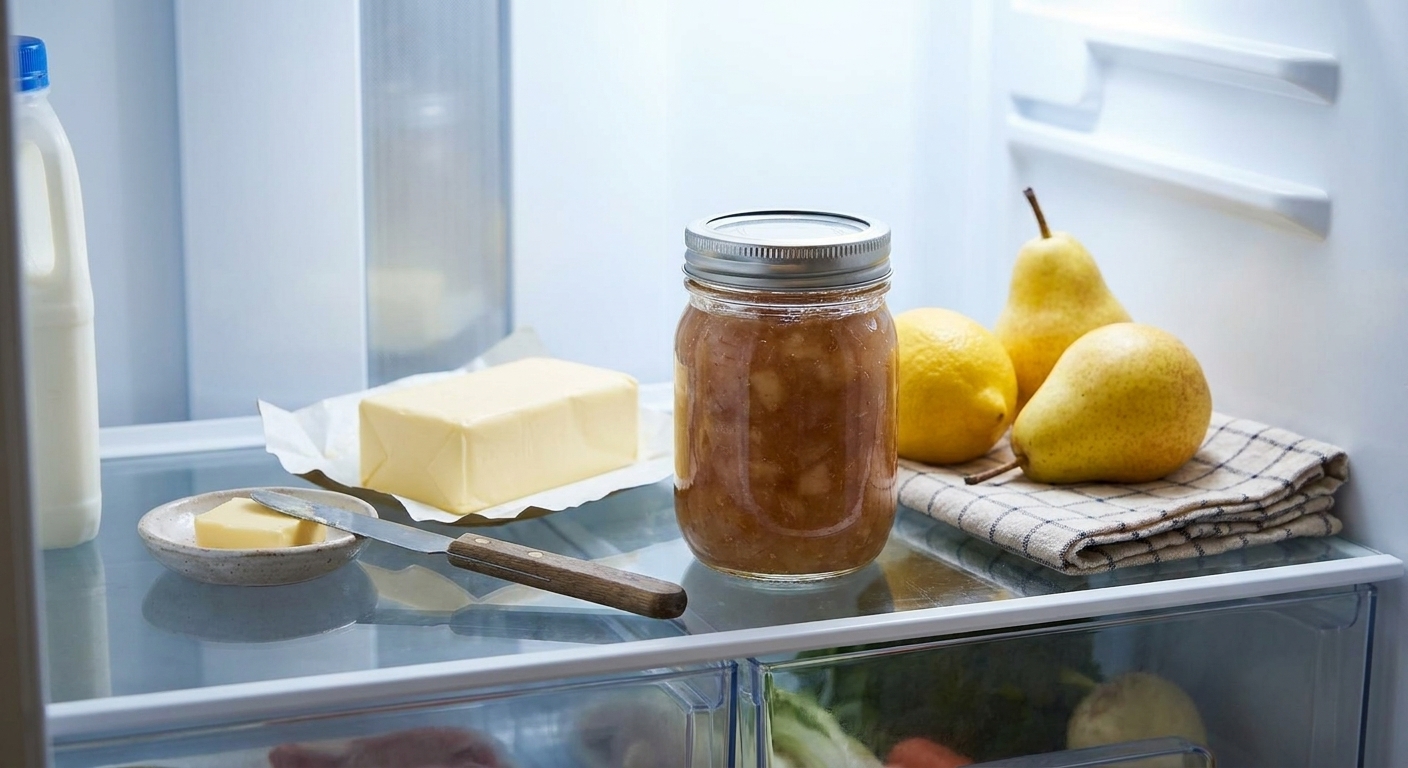
Refrigerator: Store pear jam in clean jars or containers with tight lids for up to 2 to 3 weeks. Keep it cold, use a clean spoon each time, and discard if you notice mold, bubbles/foam, or an off smell.

Freezer: Freeze in freezer-safe jars or containers for up to 6 months. Leave about 1 inch of headspace since jam expands as it freezes. Thaw overnight in the fridge.

Water bath canning (optional): You can can this jam using proper water bath canning practices and clean, hot jars. Since safe canning depends on acidity, jar size, headspace, and processing time, follow a trusted, tested canning resource for pear jam before shelf-storing.

A sealed jar of pear jam sitting on a refrigerator shelf next to butter and fresh fruit, lit by the fridge light

Common Questions

Do I need pectin for pear jam?

Usually, no. Pears contain natural pectin, and lemon juice helps the jam set. That said, pears vary a lot by variety and ripeness, so setting can be a little unpredictable. If your jam seems loose, just simmer a bit longer and test again.

How do I know when pear jam is done?

Three easy checks: spoon test, plate test, and temperature. For the spoon test, dip a spoon in, lift it, and let the jam drip. When it falls in slower sheets instead of watery drops, you are close. For the plate test, put a small plate in the freezer for 10 minutes, then drop a teaspoon of jam on it. Wait about 30 seconds so the blob cools, then push it lightly with your finger. If it wrinkles, it is set. If you like temperature as a guide, aim for about 220°F/104°C at sea level (go a little lower at higher altitude).

Why is my pear jam runny?

It usually just needs more time at a steady simmer. Pears also vary in water content. Simmer 5 to 15 minutes longer, stirring more often as it thickens. If you blended it very smooth, it can look looser while hot but will tighten as it cools.

Can I reduce the sugar?

You can, but sugar does more than sweeten. It helps with set and preservation. If you reduce it a lot, expect a looser jam and a shorter fridge life.

Should I peel the pears?

I recommend peeling for the smoothest texture. If you love a rustic jam, you can leave some peel on, especially if you plan to blend it.

What pears work best?

Bartlett, Anjou, and Comice are all great. You want pears that are ripe and fragrant but not fermented or mushy. Super crisp pears can work, but they may need a little more cook time to break down.

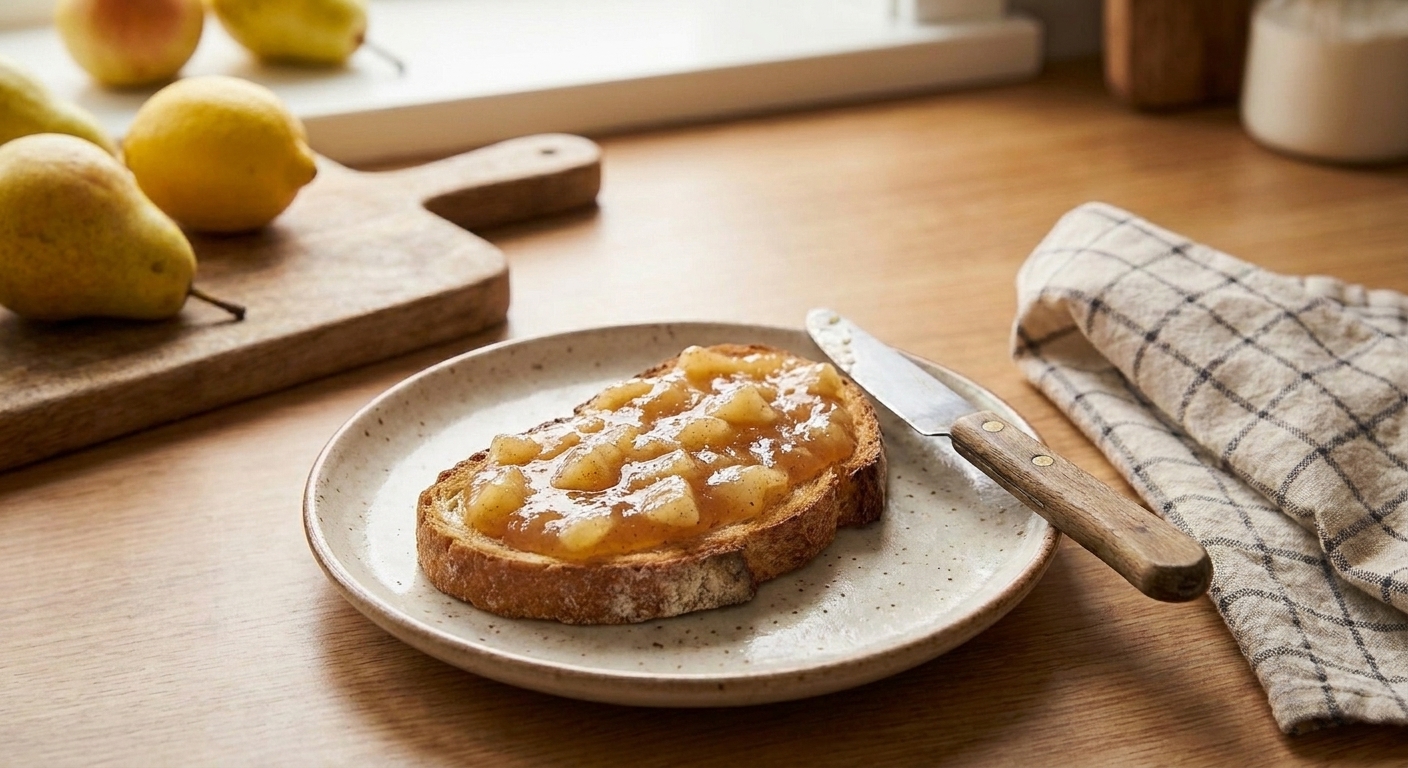
I started making pear jam because pears are the quiet kid in the fruit drawer. Apples get the pie fame, berries get the summer romance, and pears just sit there being politely sweet. Then one day I cooked a few down with lemon and a splash of vanilla, tasted it, and had that mid-bite pause. Pears are not boring. They are subtle in a way that turns into something seriously luxurious once you concentrate them.

Now I make this when I want my kitchen to smell like I have a plan. I stir the pot, I “accidentally” taste it ten times, and I end up with a jar that makes a plain piece of toast feel like a real breakfast.