Mom's Best Recipes
Recipe

Easy Pho Broth

A fragrant, restaurant-style pho broth with toasted spices and charred aromatics, written for real life kitchens.

Author By Matt Campbell
4.8
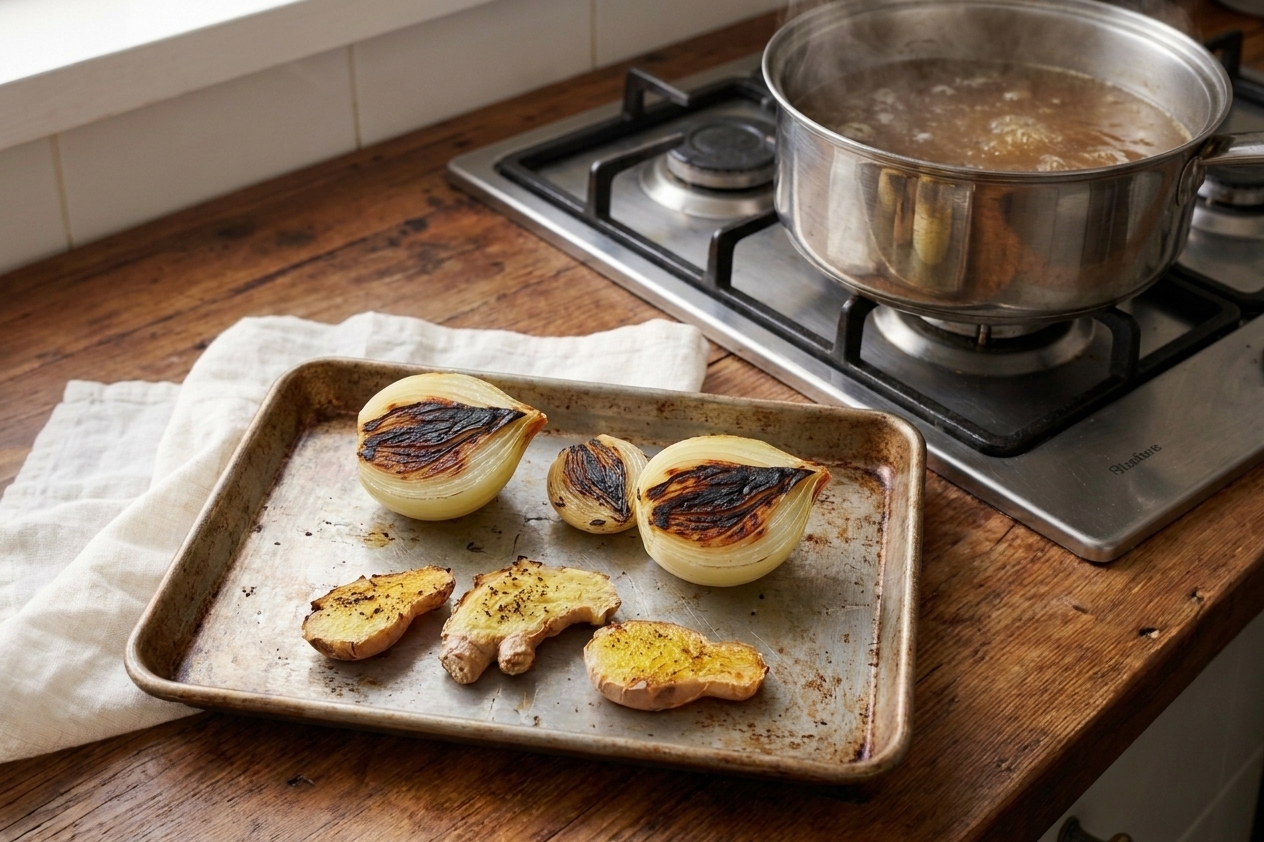
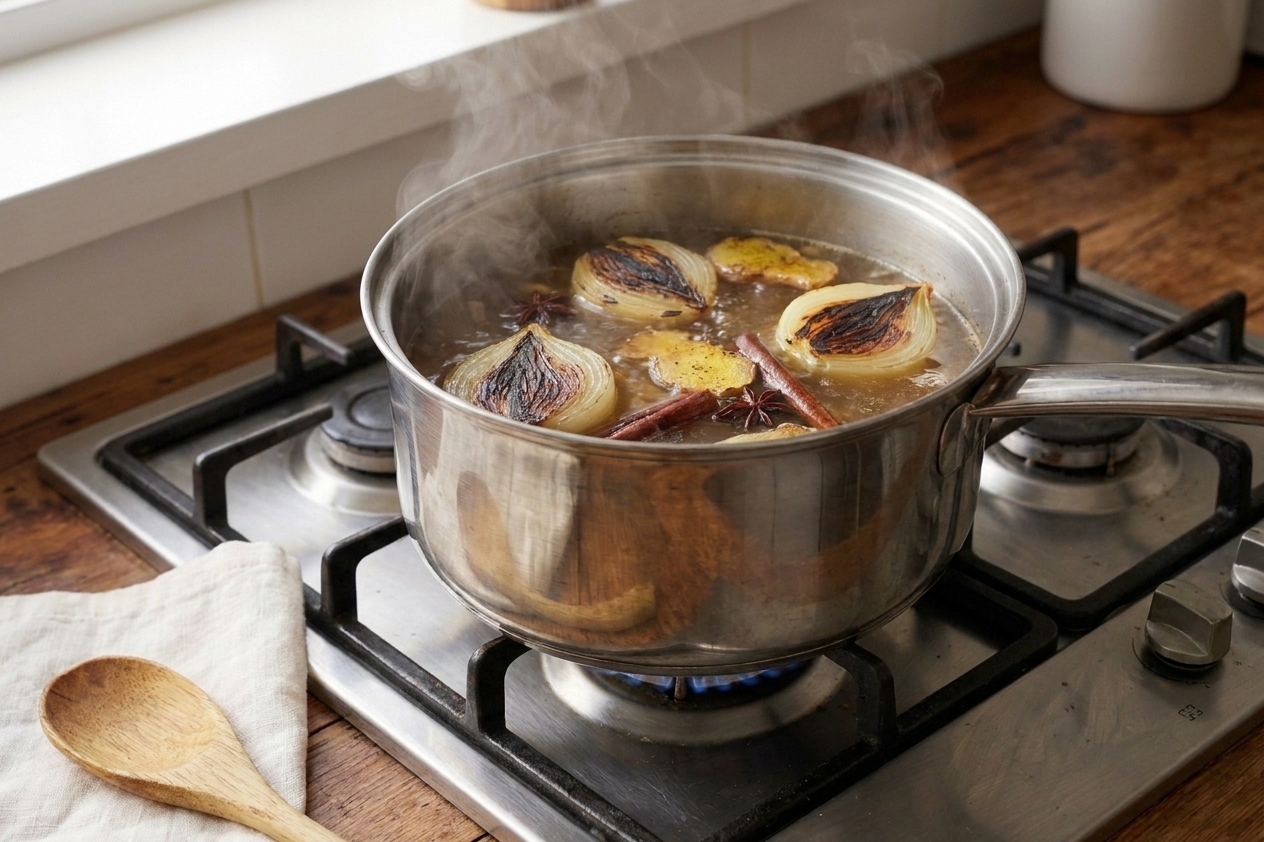
A large stockpot of clear amber pho broth simmering on a stovetop with charred onion and ginger visible near the surface, warm kitchen lighting

Pho broth is one of those magic tricks that looks complicated until you realize it is mostly patience, a few smart steps, and tasting like you mean it. We are building a broth that is clear, deeply savory, and perfumed with spices, not muddy or weirdly sweet. The big moves are simple: char the aromatics, toast the spices, and keep the simmer gentle.

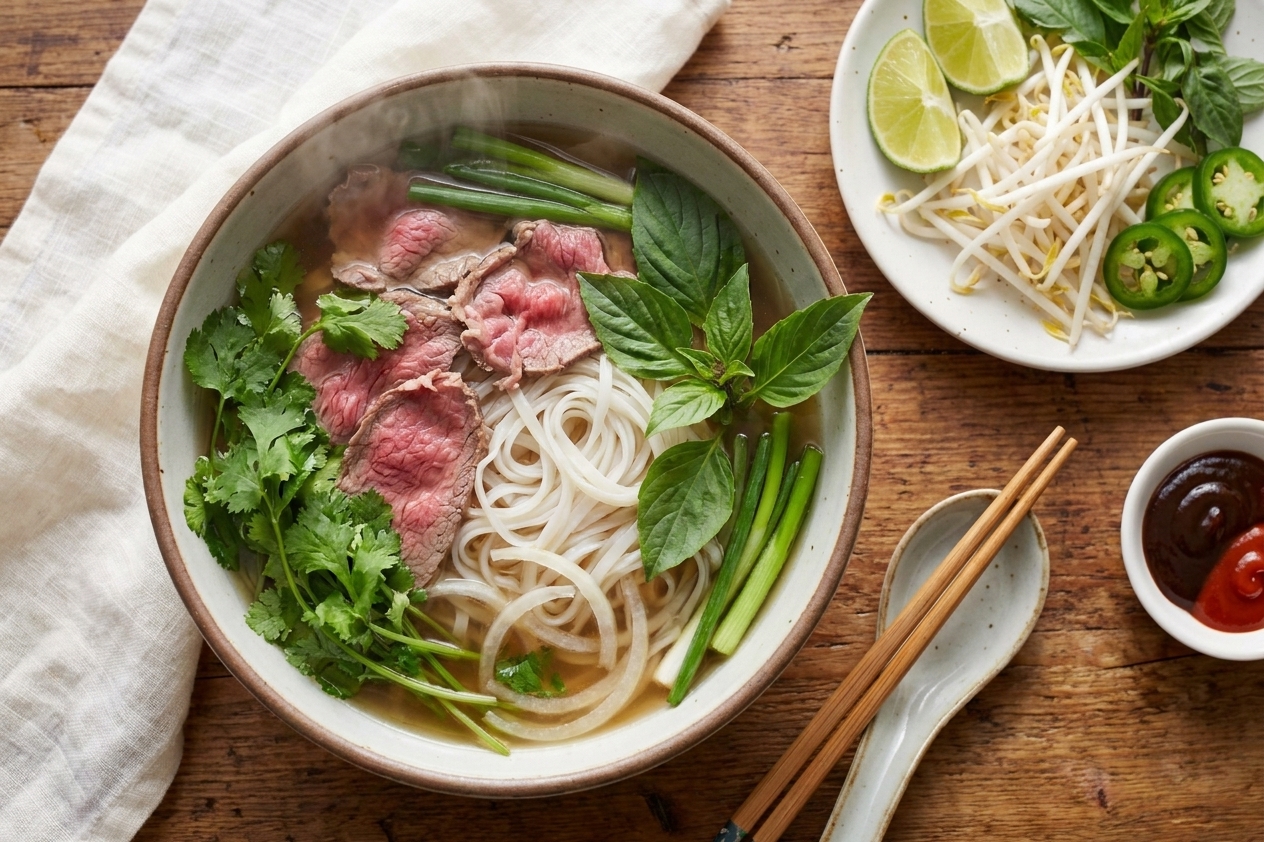
This recipe gives you a beef version (classic, rich, weekend vibes) and a chicken version (lighter, faster, still absolutely worth slurping). Either way, you will end up with a broth that makes rice noodles feel like a warm blanket and a bright squeeze of lime taste like a spotlight.
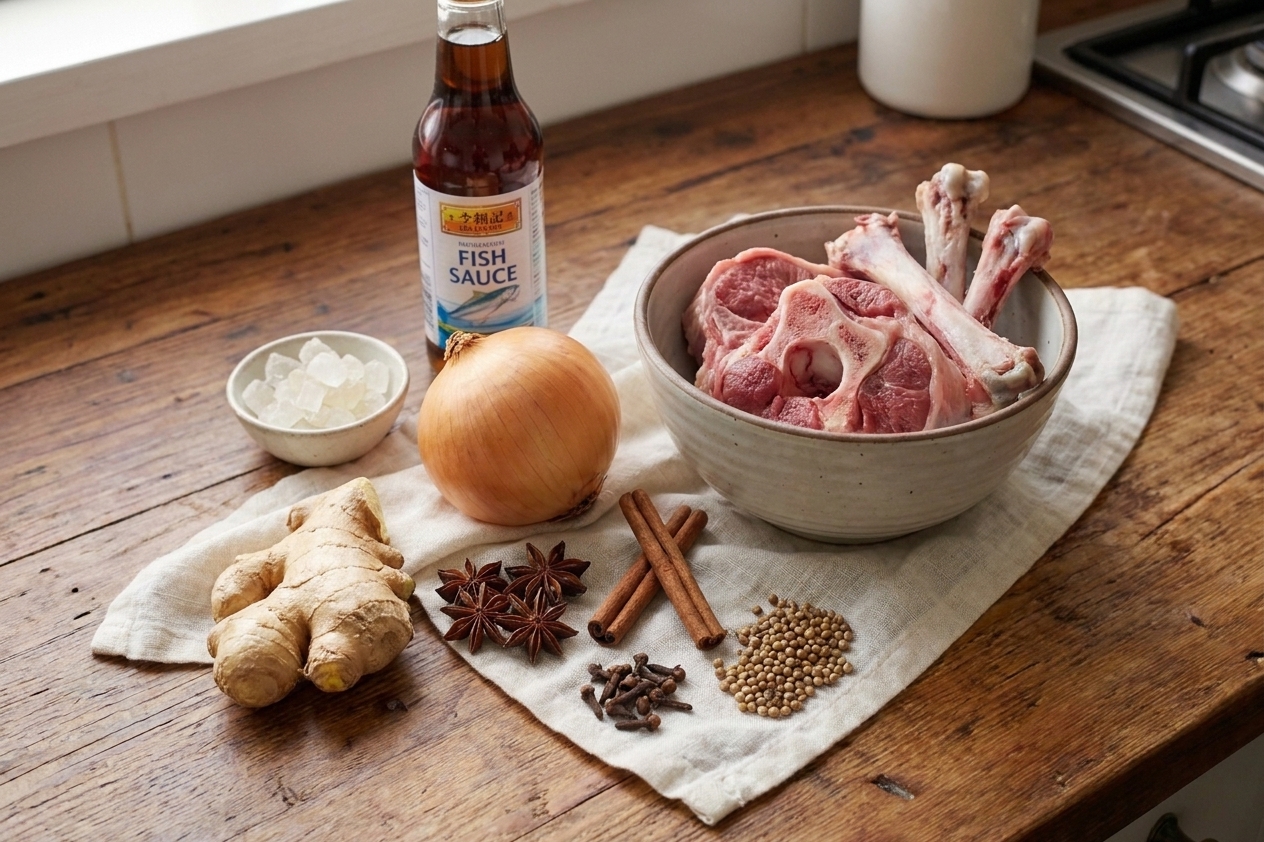
Pho broth ingredients arranged on a kitchen counter including onions, ginger, cinnamon sticks, star anise, cloves, coriander seeds, fish sauce, sugar, and beef or chicken bones

Why It Works

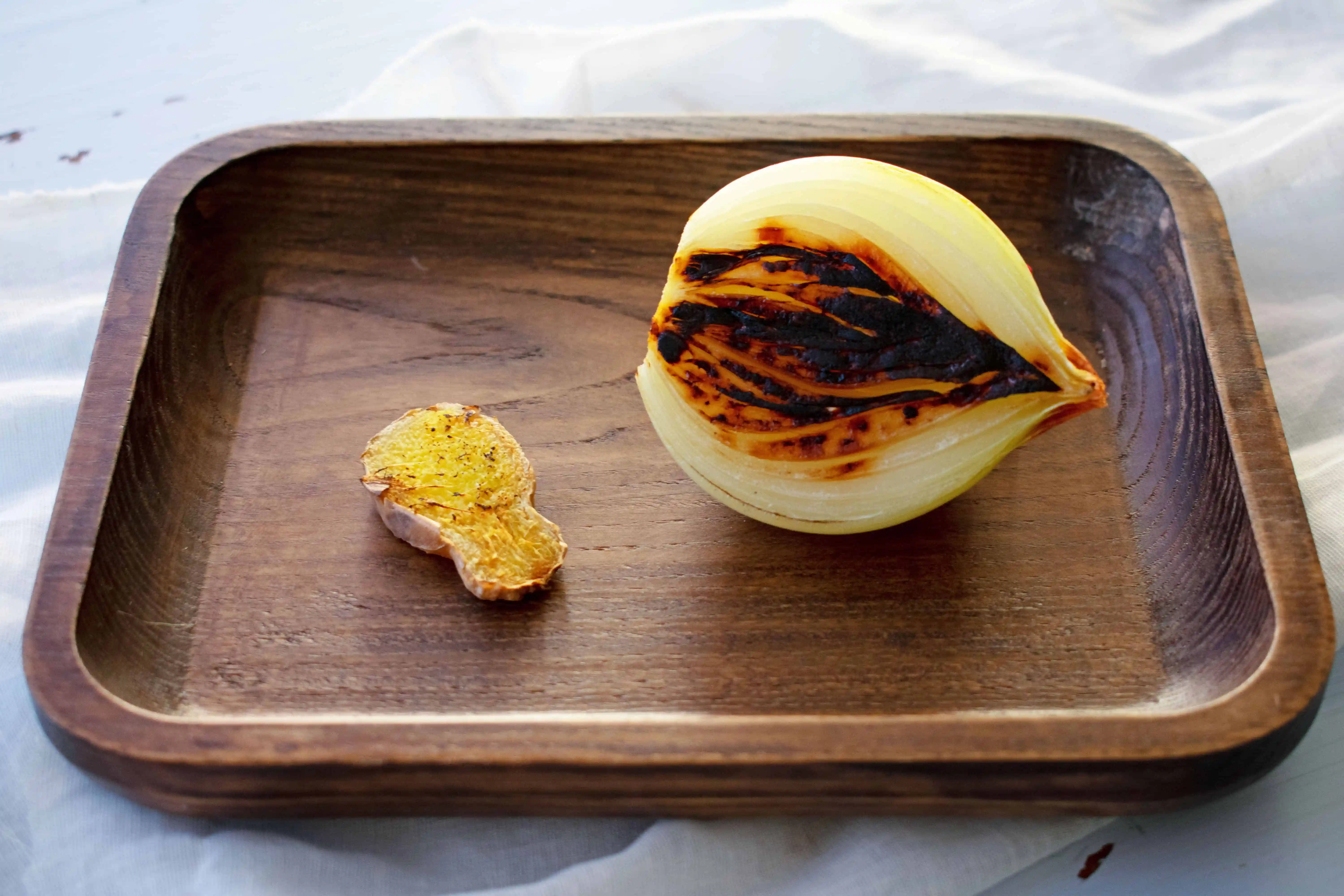
  • Big aroma, clean finish: Charring onion and ginger adds smoky sweetness without making the broth taste sugary.
  • Toasted spice control: You get that signature pho perfume without the pot turning bitter.
  • Clear broth: A brief blanch (beef) and a low simmer keep the liquid bright instead of cloudy.
  • Flexible and weeknight-friendly: Make a big batch, freeze it, and future-you gets pho on demand.

Pairs Well With

Storage Tips

Cool fast: Strain the broth, then set the pot in a sink of ice water and stir to cool it down quickly before refrigerating. For best food safety, refrigerate within 2 hours.

  • Fridge: Store in airtight containers for up to 4 days. The fat will solidify on top. You can lift it off for a cleaner broth, or keep a little for richness.
  • Freezer: Freeze for up to 3 months. I like portioning into 2-cup containers so you can build a bowl or two without thawing a whole batch.
  • Reheating: Bring to a full boil, then taste and adjust with fish sauce, a pinch of salt, or a tiny bit of sugar if needed.

Pro tip: If you plan to freeze, go a touch lighter on the fish sauce and adjust when reheating. The flavor can concentrate a bit after freezing.

Common Questions

What makes pho broth taste like pho?

It is the combo of charred onion and ginger plus toasted warm spices like star anise, cinnamon, clove, coriander, and fennel. Fish sauce adds savory depth. A small amount of sugar balances the salt and spices.

How do I keep pho broth clear?

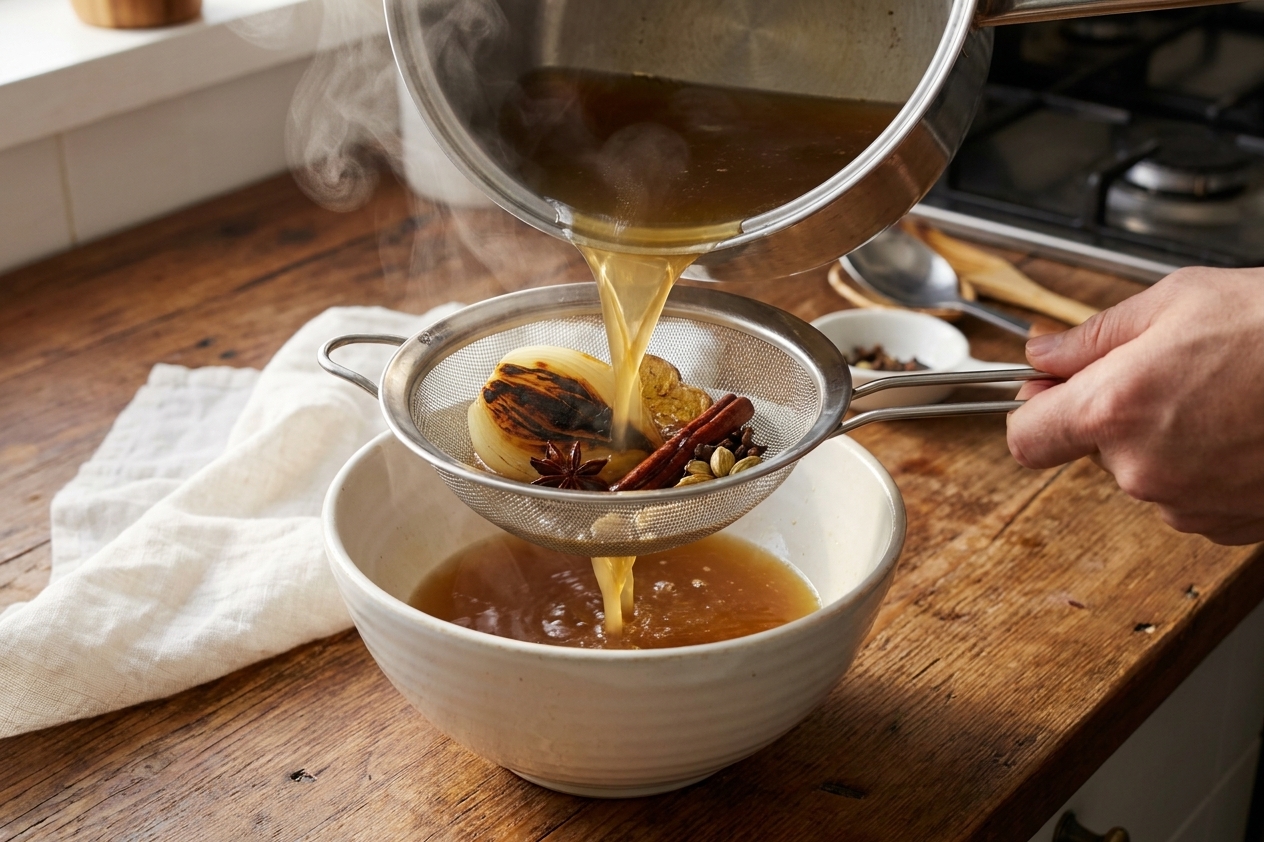
Blanching beef bones, skimming early, and keeping the pot at a bare simmer are the main tricks. If it is boiling hard, it can emulsify fat and proteins into the liquid and go cloudy. Cloudiness can also come from not blanching (for beef) or stirring aggressively early on.

Can I make this in an Instant Pot?

Yes. You still want to char aromatics and toast spices first. Pressure cook beef bones for 60 to 120 minutes (many people land around 90 minutes) with a natural release, depending on bone size and how rich you want it. For chicken, try 25 to 45 minutes with a natural release, depending on whether you are using a whole chicken or parts. Then strain and season to taste until it tastes like a pho shop.

Is fish sauce required?

It is strongly recommended for authentic flavor, but you can substitute soy sauce in a pinch. Start with less, taste, and adjust. The broth will be good, just a little less “pho shop”.

Why does my broth taste bitter?

Most often, spices were toasted too aggressively. Toast until fragrant, not dark. Also, if you prefer a lighter spice profile, remove the spice bag after about 45 minutes to 1 hour. Many cooks simmer spices longer without bitterness, so treat that timing as a dial you can turn.

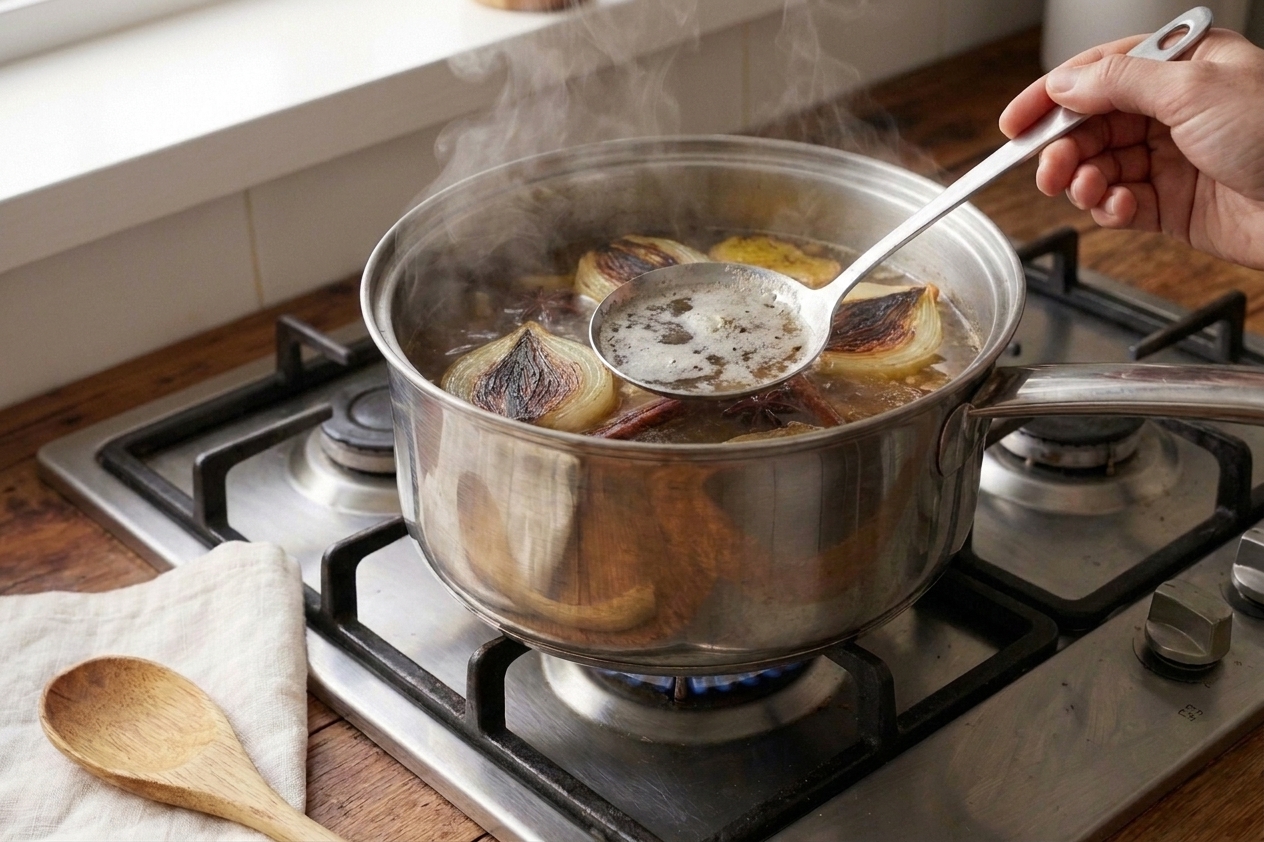
A hand using a shallow ladle to skim foam from the surface of simmering pho broth in a large pot on the stove

The first time I tried to make pho broth, I treated the pot like a crockpot commercial. I dumped everything in, cranked the heat, and walked away like I had unlocked some kind of secret. I did not. I made a cloudy, confused soup that tasted like cinnamon had beef with my taste buds.

Now I do it the calmer way. Quick char. Quick toast. Gentle simmer. Skim like you are polishing a story. It is still a project, but it feels like the fun kind, the kind where your kitchen smells so good you start inviting people over before the noodles even hit the water.

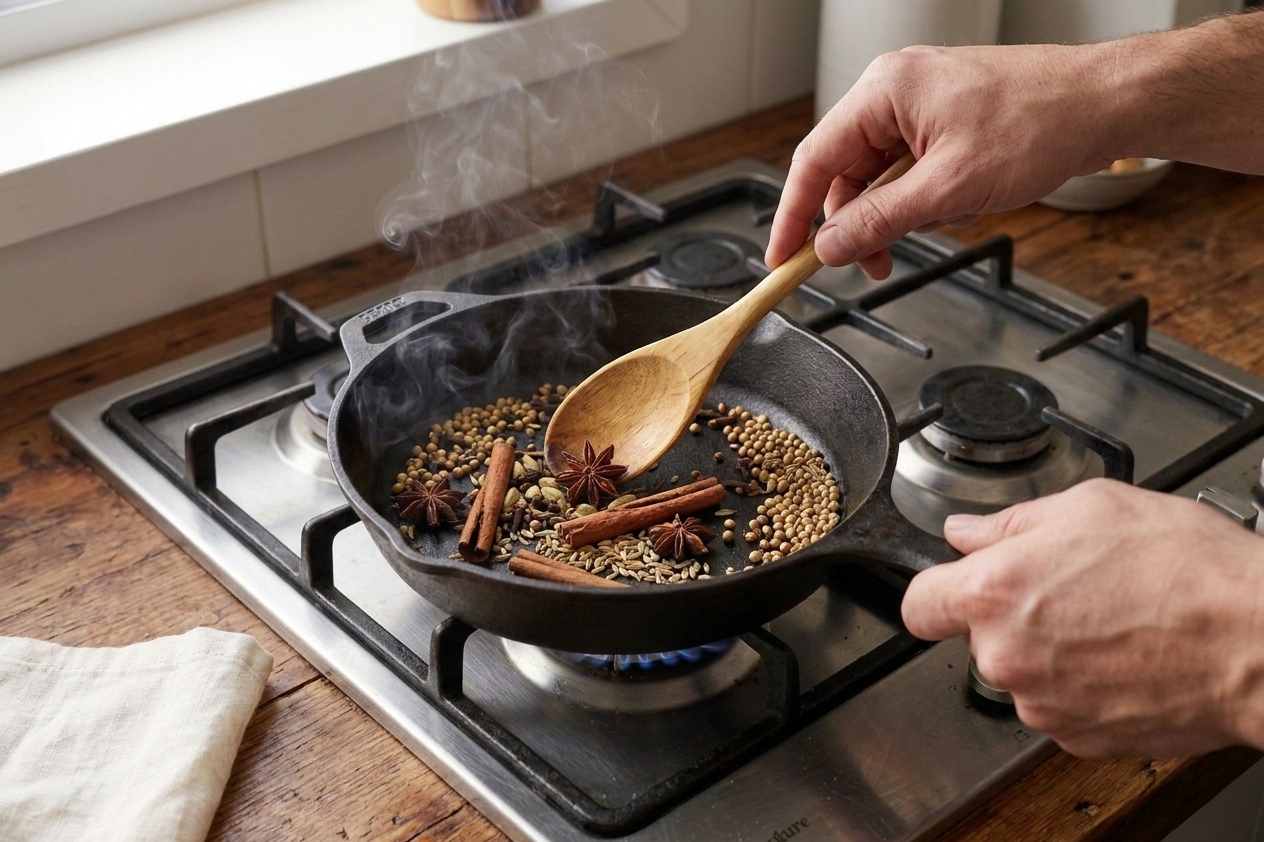
A pair of hands toasting star anise, cinnamon sticks, cloves, coriander, and fennel seeds in a dry skillet on a stovetop