Common Questions
Do I need pectin for raspberry jam?
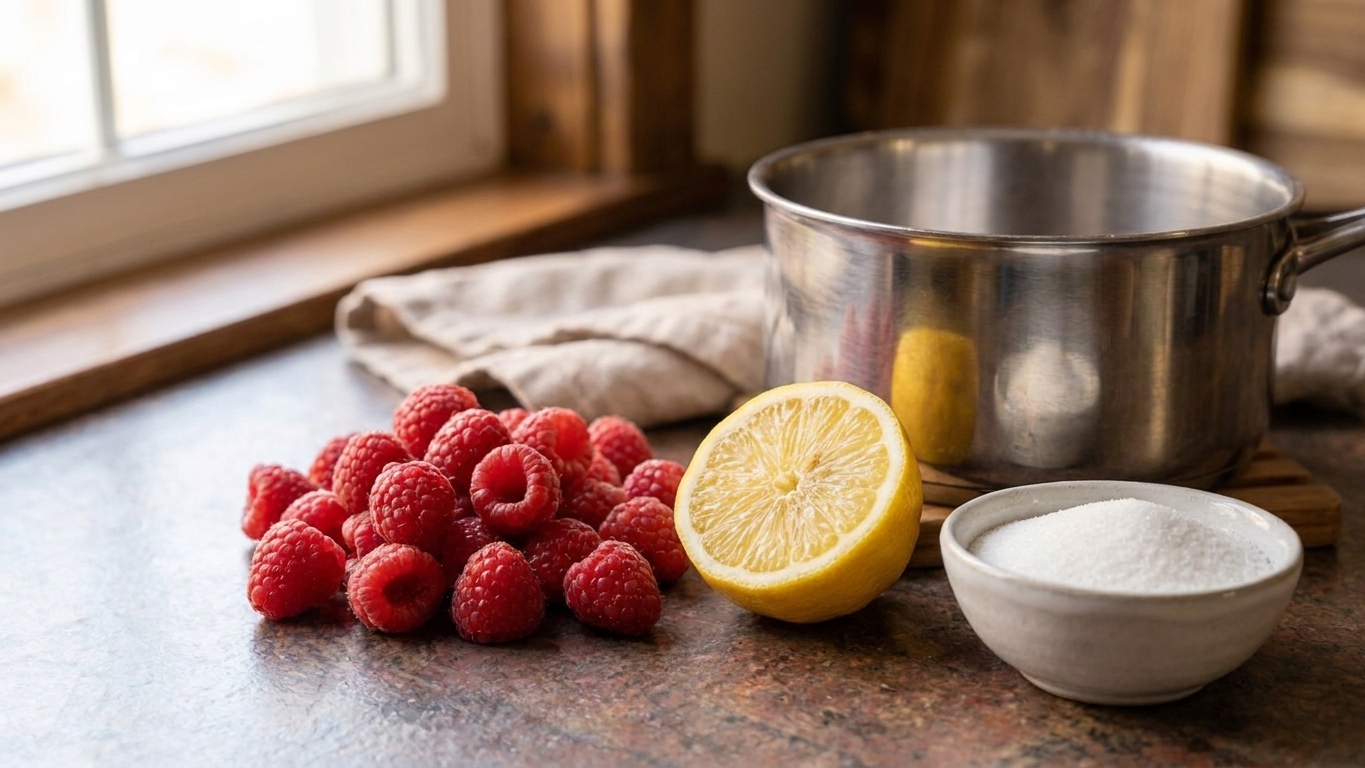
No. Raspberries and lemon juice can set into a soft jam as you simmer and reduce. Pectin gives you a more reliable set with less cooking time, which can keep the flavor extra fresh. Pick your adventure.
How do I know when jam is done?
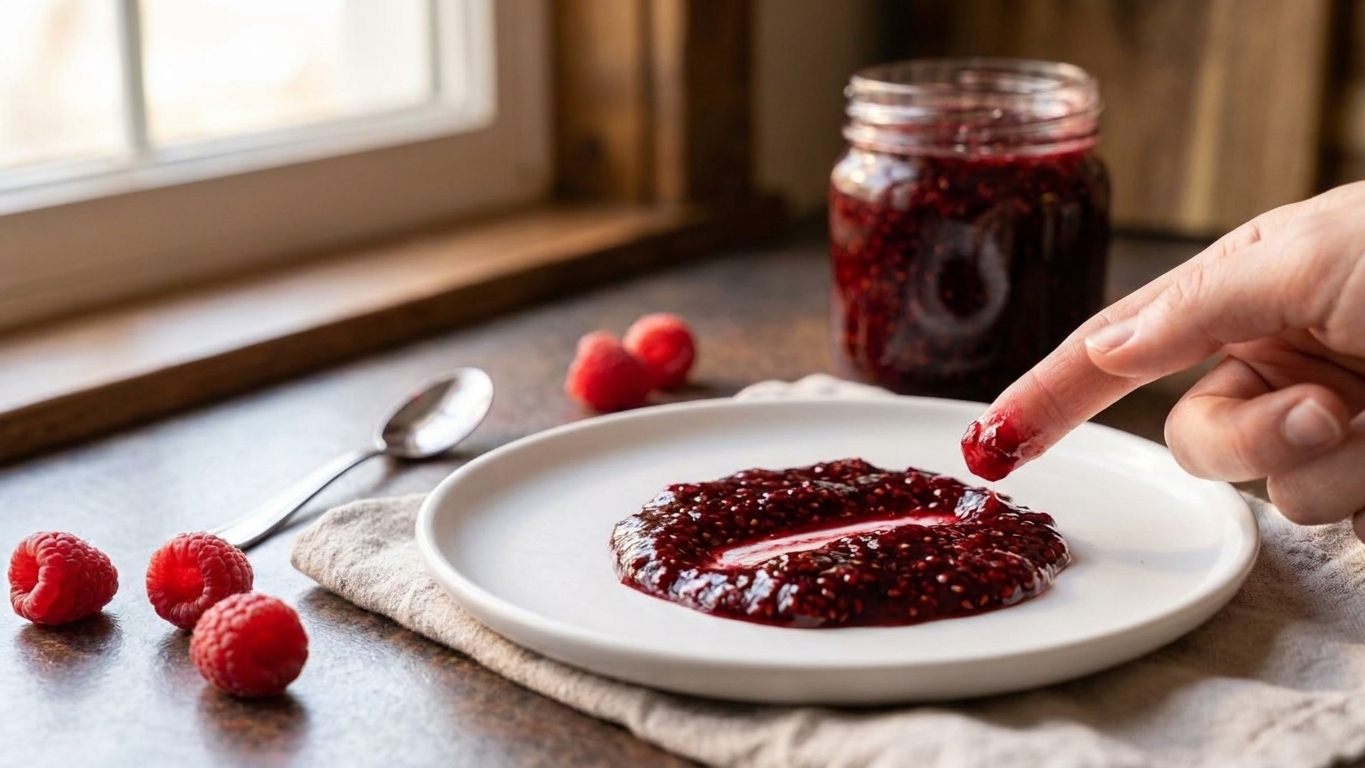
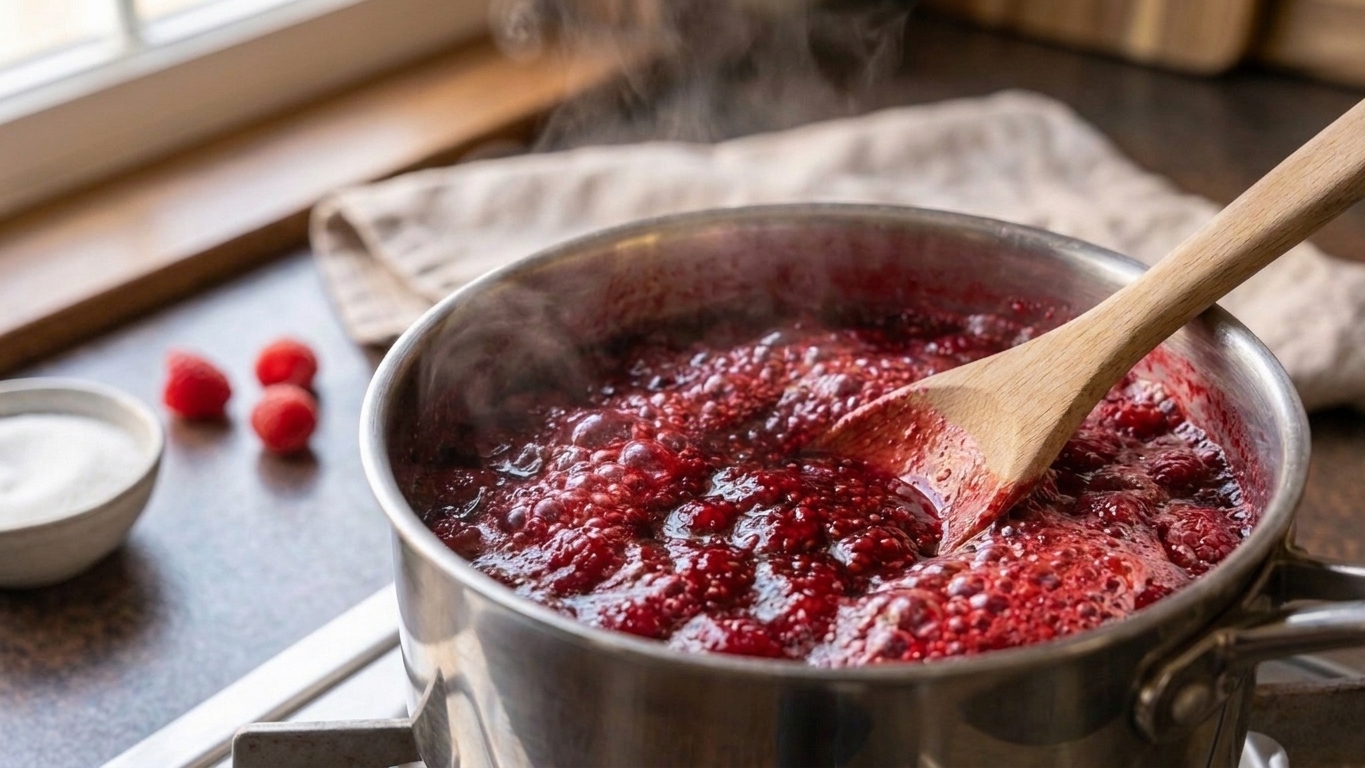
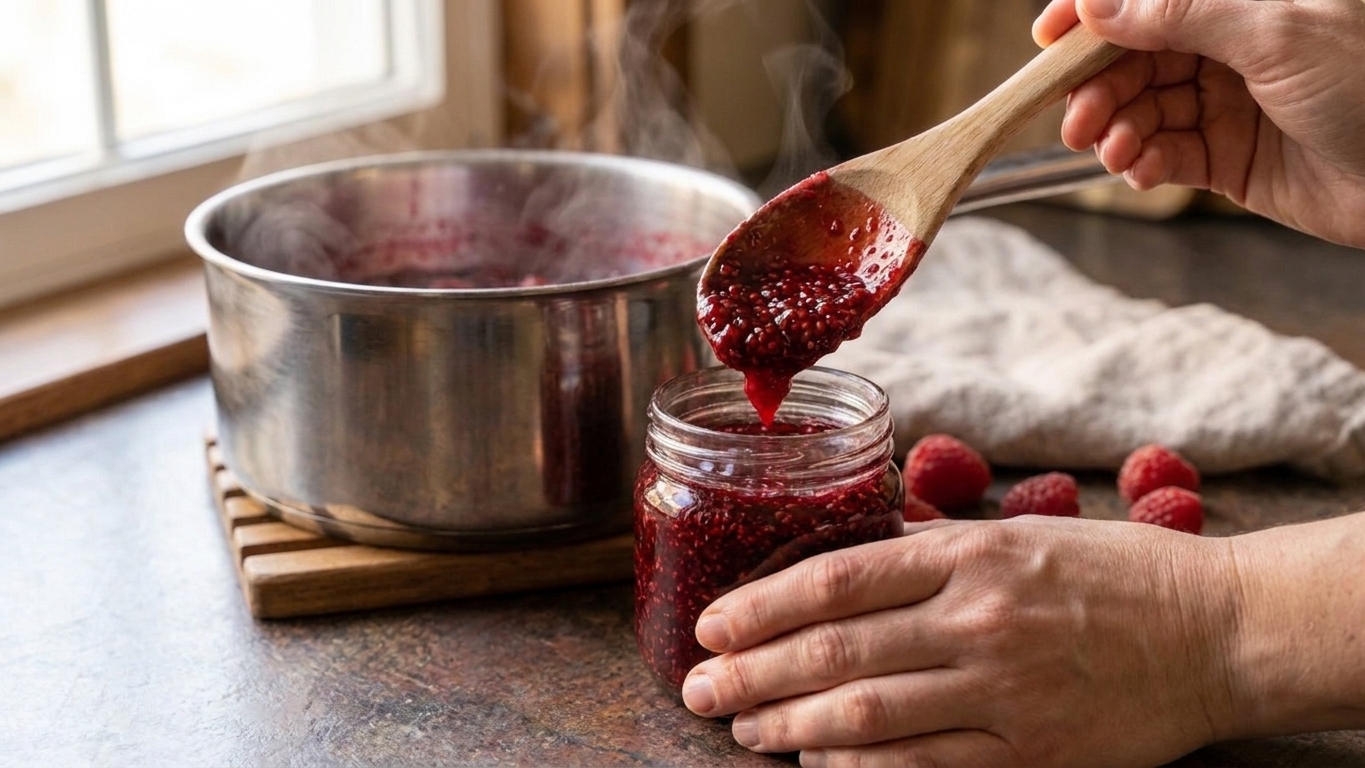
Use the freezer plate test: chill a small plate in the freezer. Spoon a little hot jam onto the plate, wait 30 seconds, then drag your finger through it. If it wrinkles and holds a line, you are in jam territory. You can also use a thermometer. Jam typically sets around 220°F / 105°C at sea level (adjust a bit lower at higher altitude). Finally, watch the bubbles. When the bubbles look thick and slow and the jam coats a spoon, it is close.
Why is my jam runny?
Most often it just needs more cooking time. Put it back in the pot and simmer 3 to 8 minutes, then test again. Also remember jam firms up as it cools, especially after a night in the fridge.
Why is my jam too thick?
You reduced it a little too hard, which happens fast near the end. Warm in a small pot with a splash of water, stir, and loosen to your preferred consistency.
Can I use frozen raspberries?
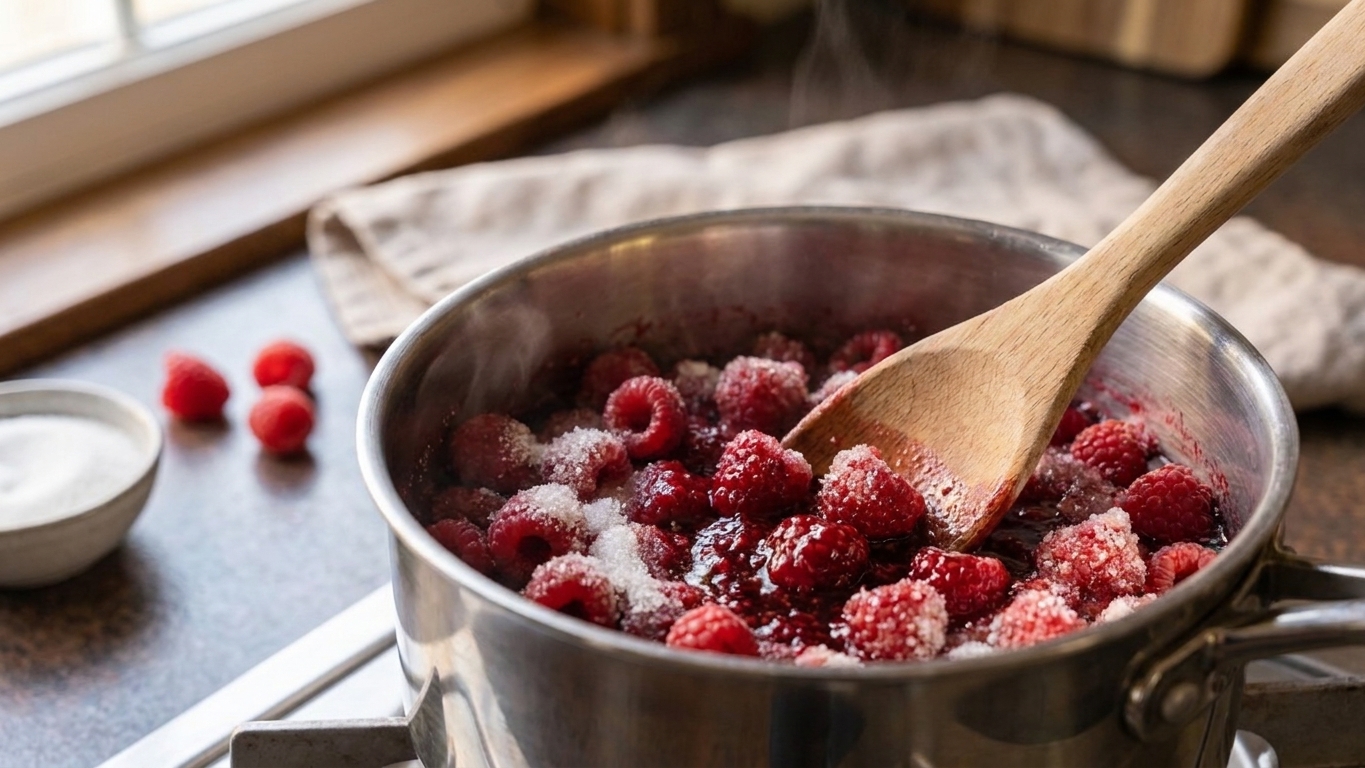
Yes. Do not thaw. Toss them straight into the pot. They will release more liquid, so you may need an extra couple minutes of simmering to reach the set.
Can I make it seedless?
Yes, but do it strategically. Cook the berries first, then press through a fine-mesh sieve to remove seeds. Return the strained puree to the pot, add sugar and lemon, and finish cooking. Seedless jam usually needs a bit more reduction to thicken.