Mom's Best Recipes
Recipe

Easy Sourdough Bread

A beginner-friendly sourdough loaf with a crackly crust, chewy interior, and clear, flexible steps you can actually follow on a real-life schedule.

Author By Matt Campbell
4.8
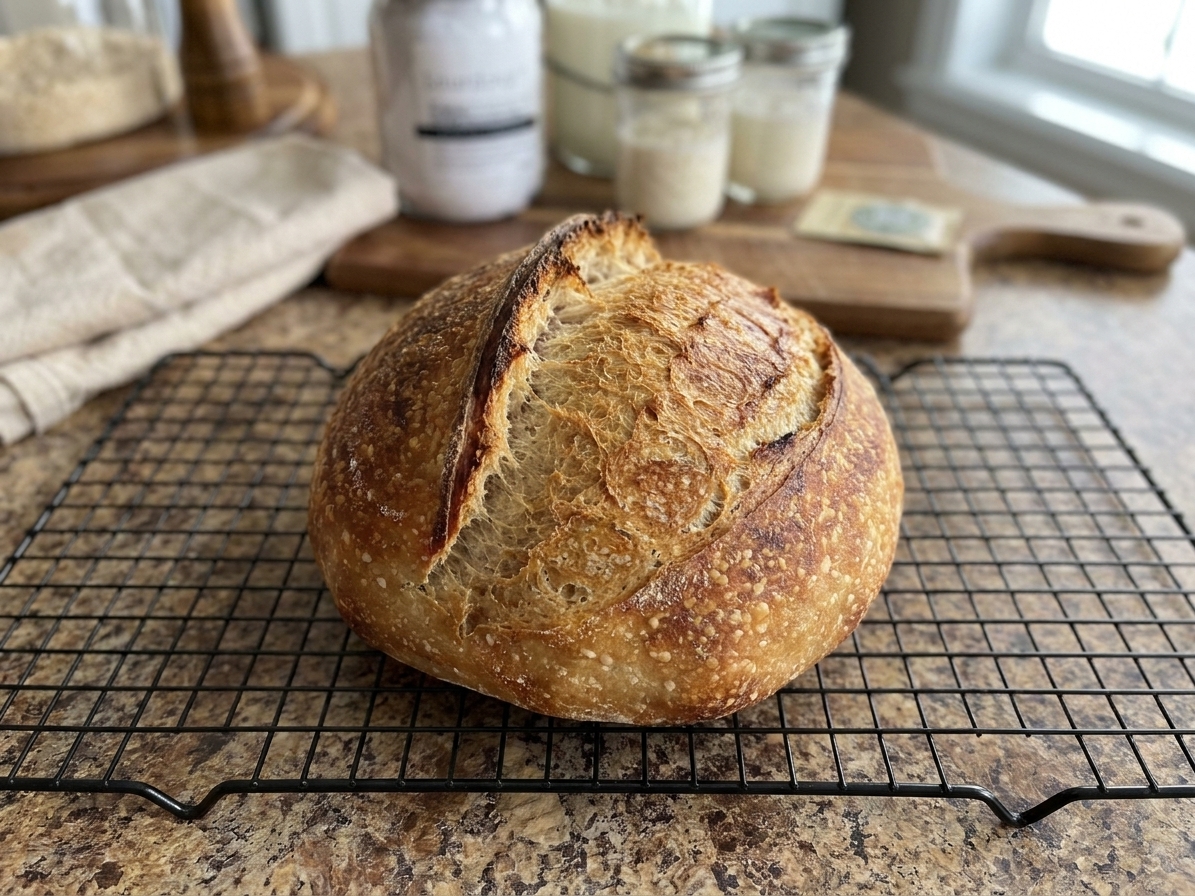
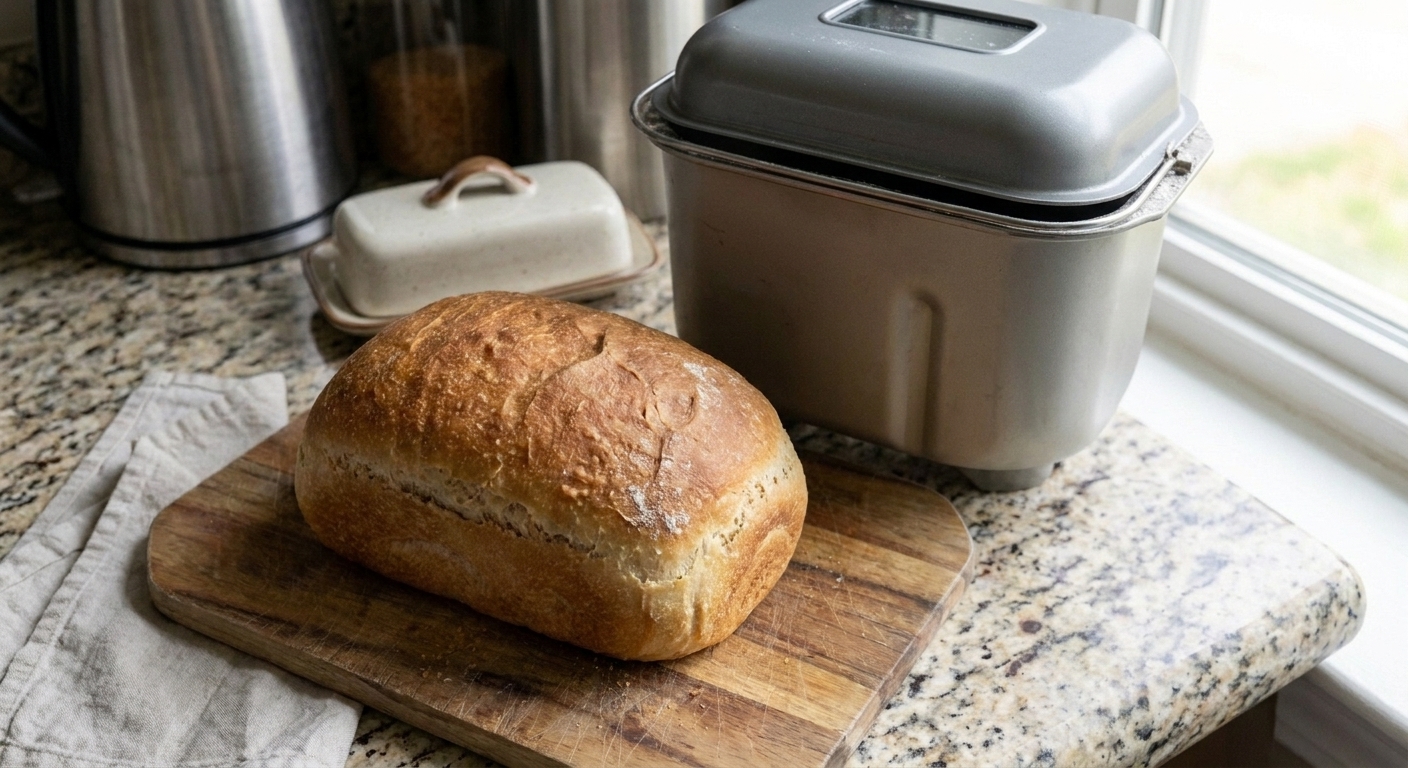
A single golden-brown sourdough boule with a bold score and crackly crust cooling on a wire rack on a bright kitchen counter

Sourdough bread has a reputation for being high-maintenance. Like it needs a mood board, a spreadsheet, and a starter named Gerald who gets fed better than you do. But here’s the truth: once you learn what the dough should feel like, sourdough gets a lot more chill.

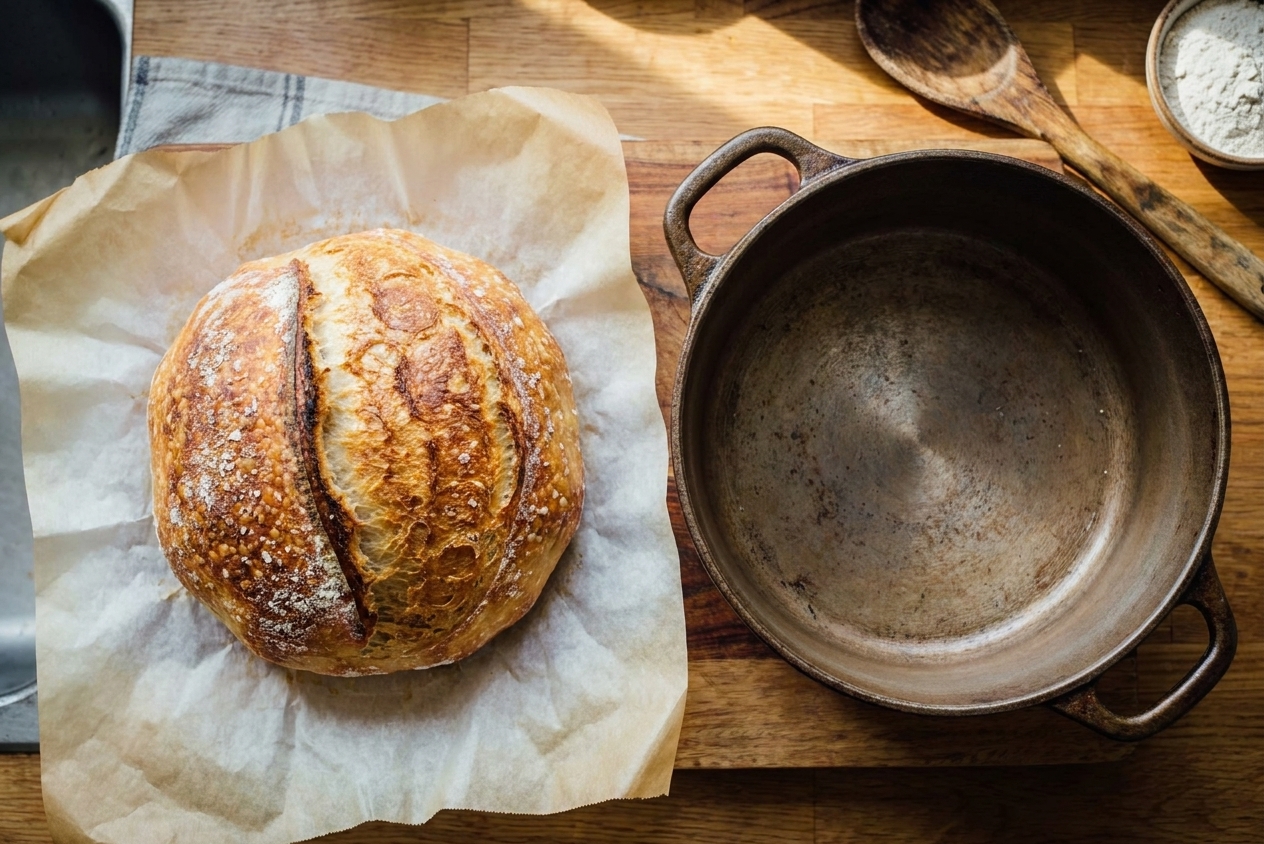
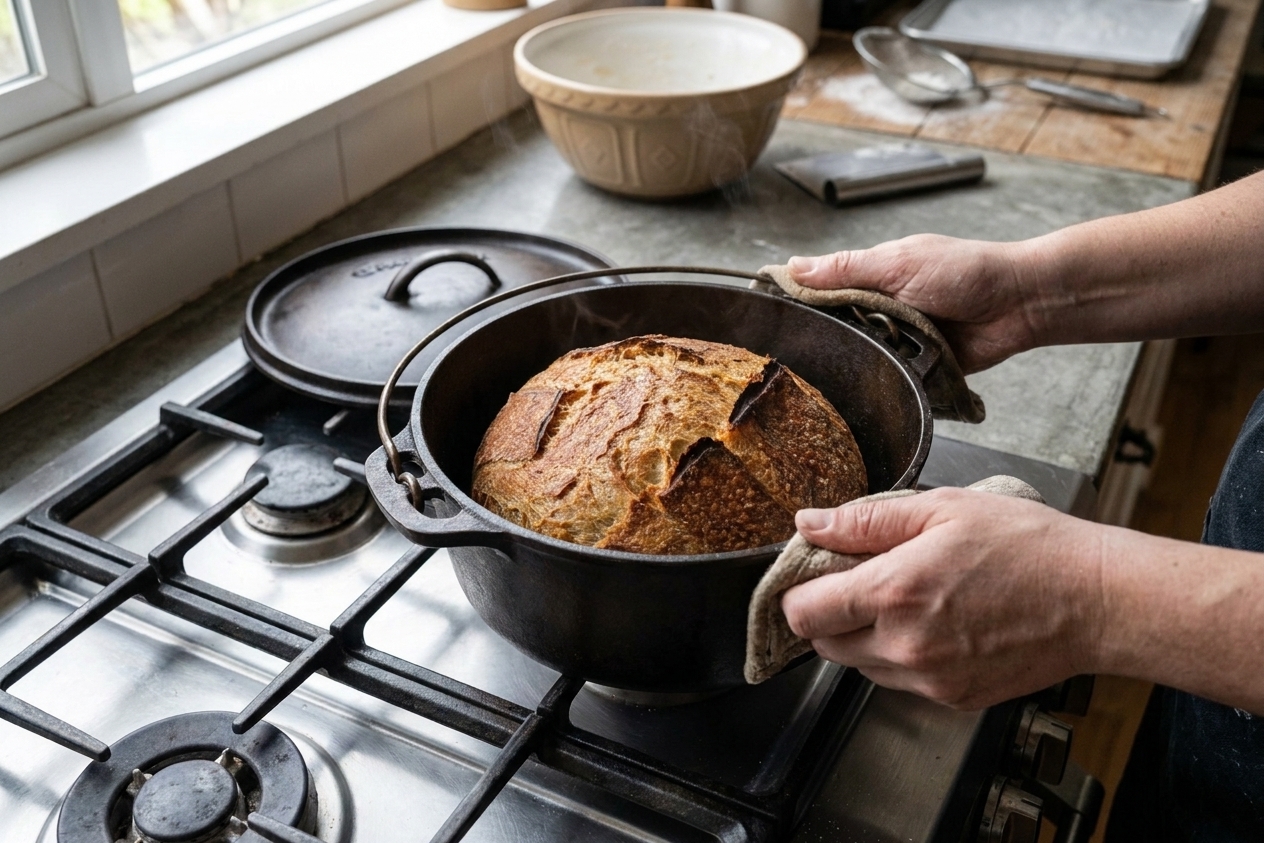
This loaf is my go-to when I want big crust energy, a soft, chewy crumb, and a process that fits around real life. We are keeping ingredients simple, instructions clear, and the fun fully intact. You will stretch and fold a few times, let time do the heavy lifting, then bake it hot in a Dutch oven for that bakery-style crust.

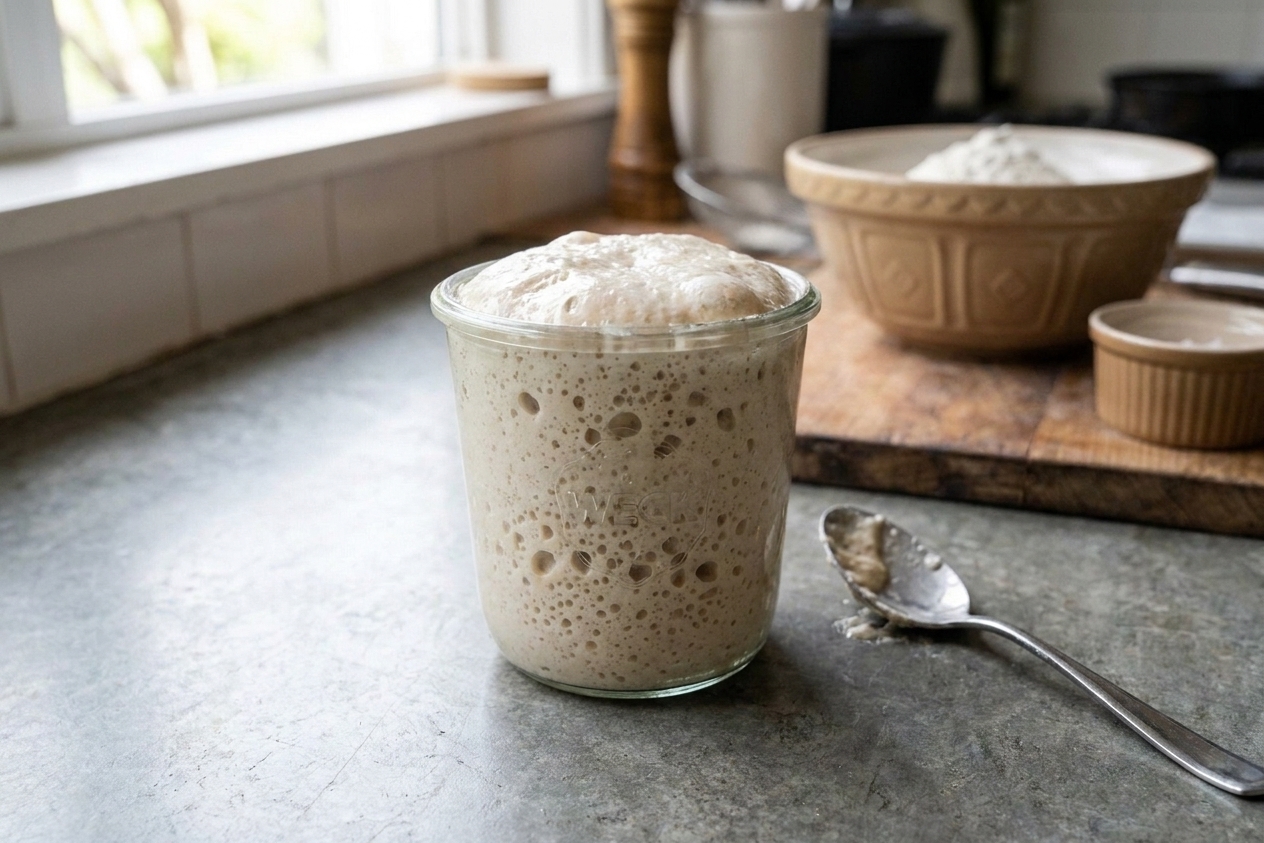
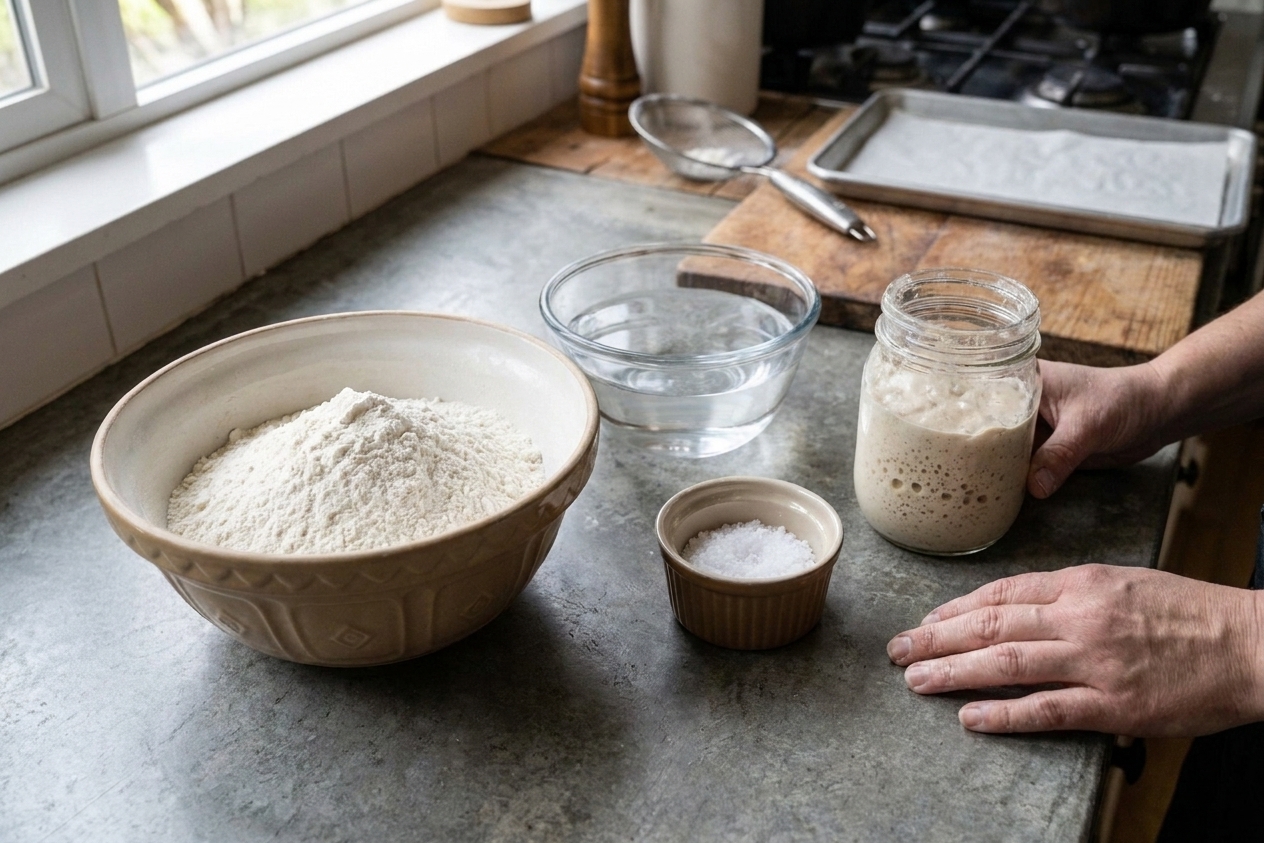
A bubbly, active sourdough starter in a glass jar on a kitchen counter with a spoon resting nearby

Why It Works

What You’ll Get

  • A crackly, deep-golden crust from baking in a preheated Dutch oven.
  • A chewy, tender crumb that holds up to butter, soup, and sandwiches.
  • Flexible timing with an overnight cold proof option for better flavor and easier scoring.
  • No fancy flour required. Bread flour helps, but all-purpose works with a small adjustment.

Don’t Panic Rules

  • Watch the dough, not the clock. Fermentation changes with room temp, starter strength, and flour.
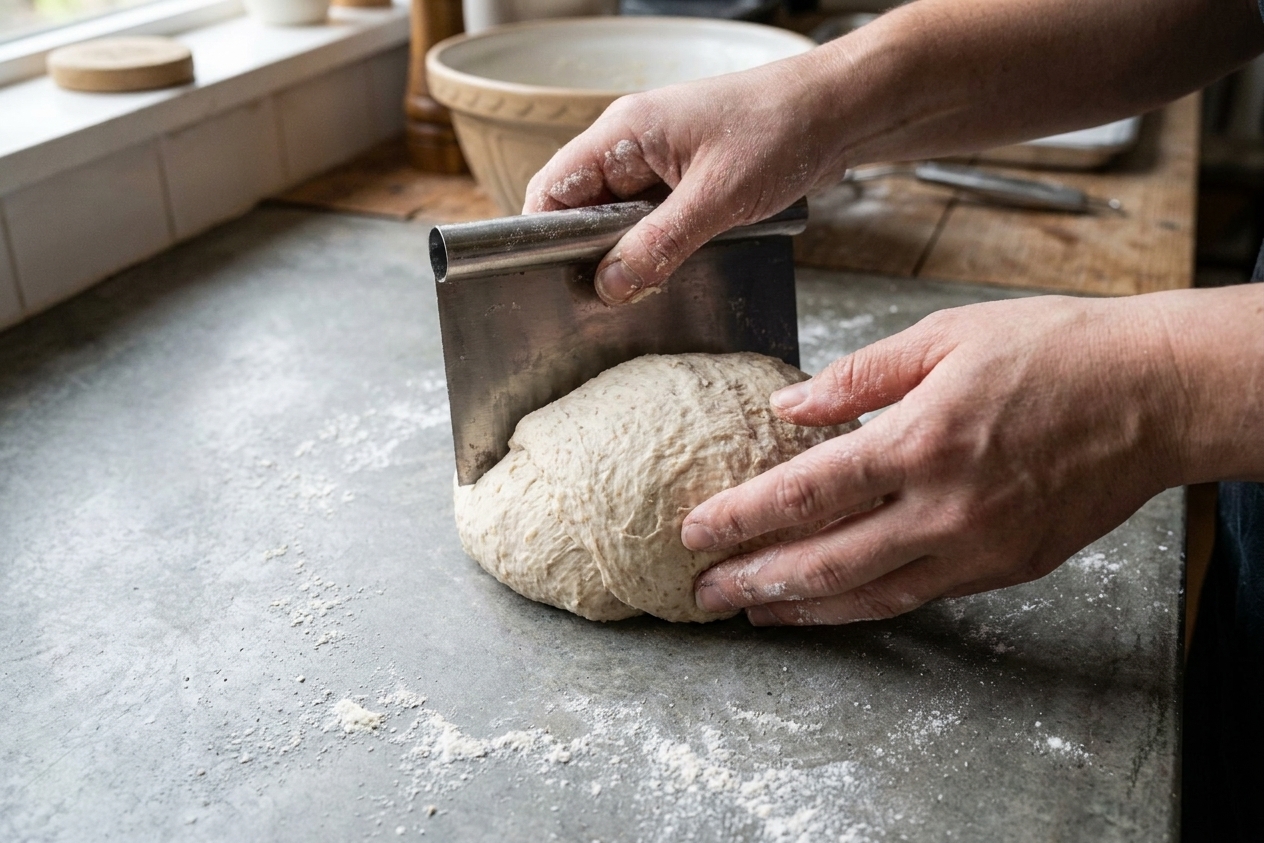
  • Hands slightly wet beats extra flour. Use water to prevent sticking during folds and shaping.
  • Underproofed bakes up tight, overproofed spreads. Aim for pillowy and airy, not fragile.

Pairs Well With

Storage Tips

Day 1 and 2: Store the loaf cut-side down on a cutting board, or in a paper bag. This keeps the crust crisp.

After day 2: Move to an airtight bag or container to prevent it from drying out. The crust will soften, but you can revive slices in a toaster or a hot skillet.

Freezer (best option): Slice the loaf once fully cooled, then freeze slices in a zip-top bag. Toast from frozen for instant “fresh bread” vibes.

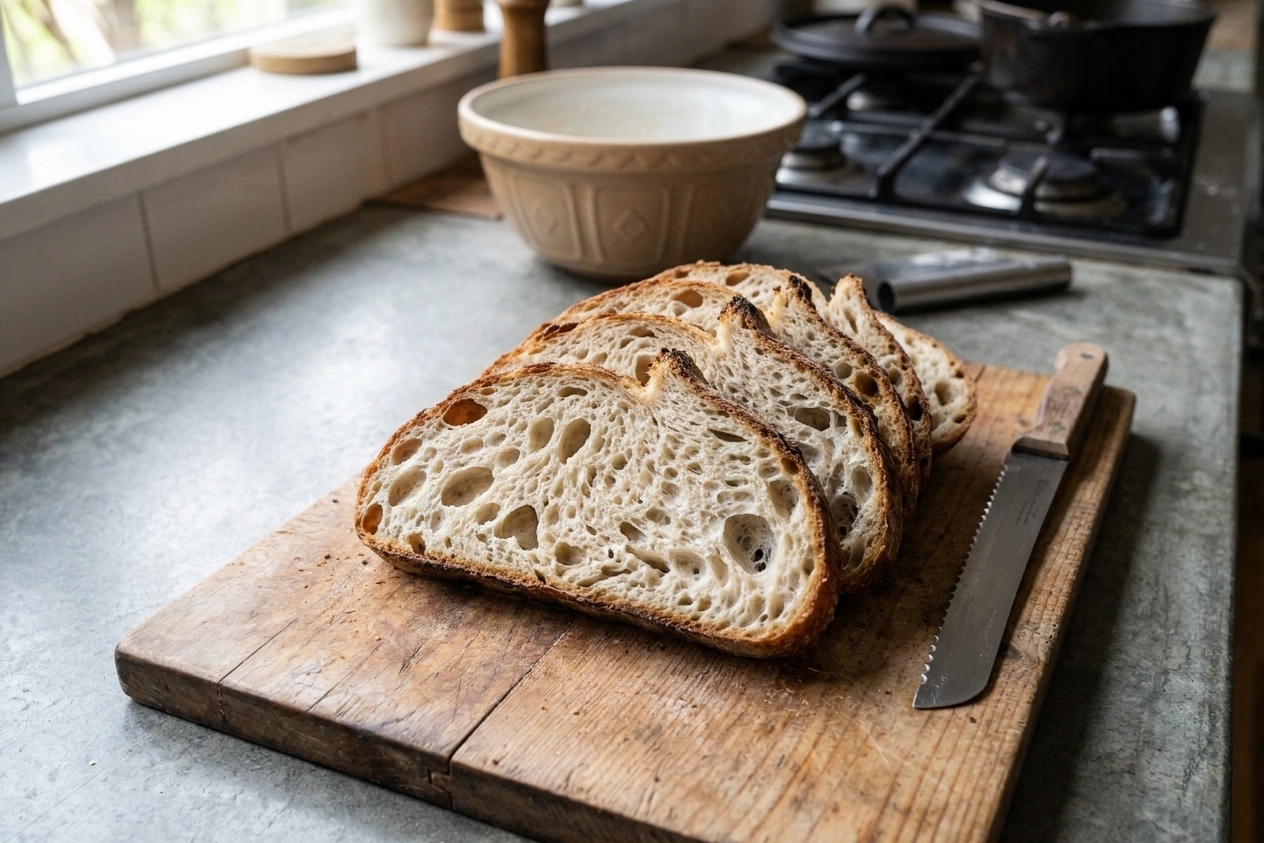
Several slices of sourdough bread fanned on a wooden cutting board with visible open crumb texture

Common Questions

Do I need bread flour?

No, but it helps. Bread flour has more protein, which usually means a taller loaf and chewier crumb. If using all-purpose flour, start with about 310 to 325 g water since AP flour often absorbs a little less.

How do I know my starter is ready?

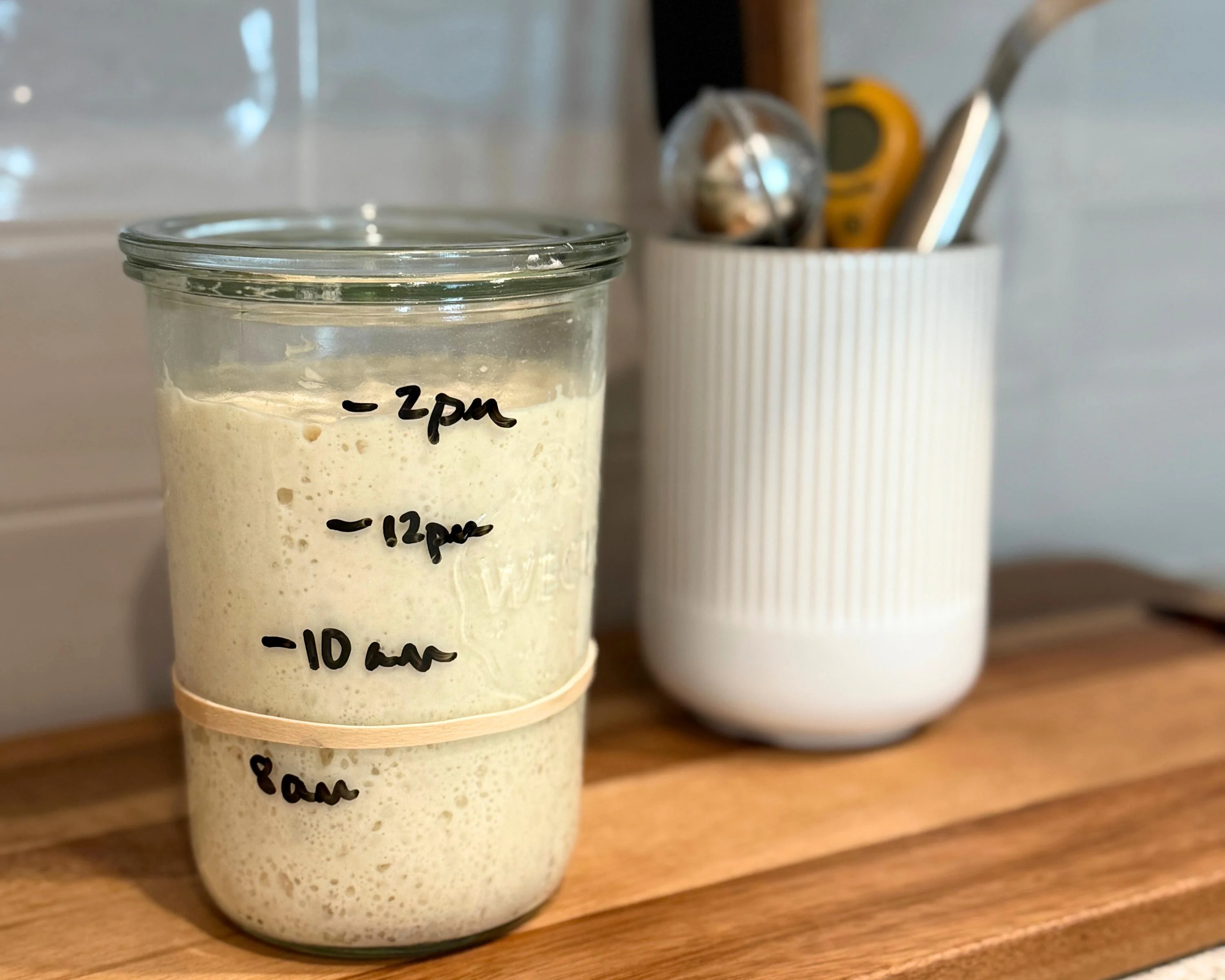
Use your starter when it is active, bubbly, and at or near peak. A simple test: after feeding, it should roughly double in 4 to 8 hours (timing depends on temperature). It should smell pleasantly tangy, not harshly boozy or like nail polish remover.

What “100 g active starter” means: Feed your starter and use it when it is domed on top, full of bubbles, and still rising or just starting to level off. If you want a simple feeding example, try 1:1:1 (starter:water:flour by weight) and use it at peak.

Does starter hydration matter?

Yes, a little. This recipe assumes a 100% hydration starter (equal weights flour and water). If yours is stiffer or more liquid, your dough hydration will change. Keep going and use the dough cues, or adjust by adding a little extra water or flour during mixing to match the feel described.

My dough feels sticky. Did I ruin it?

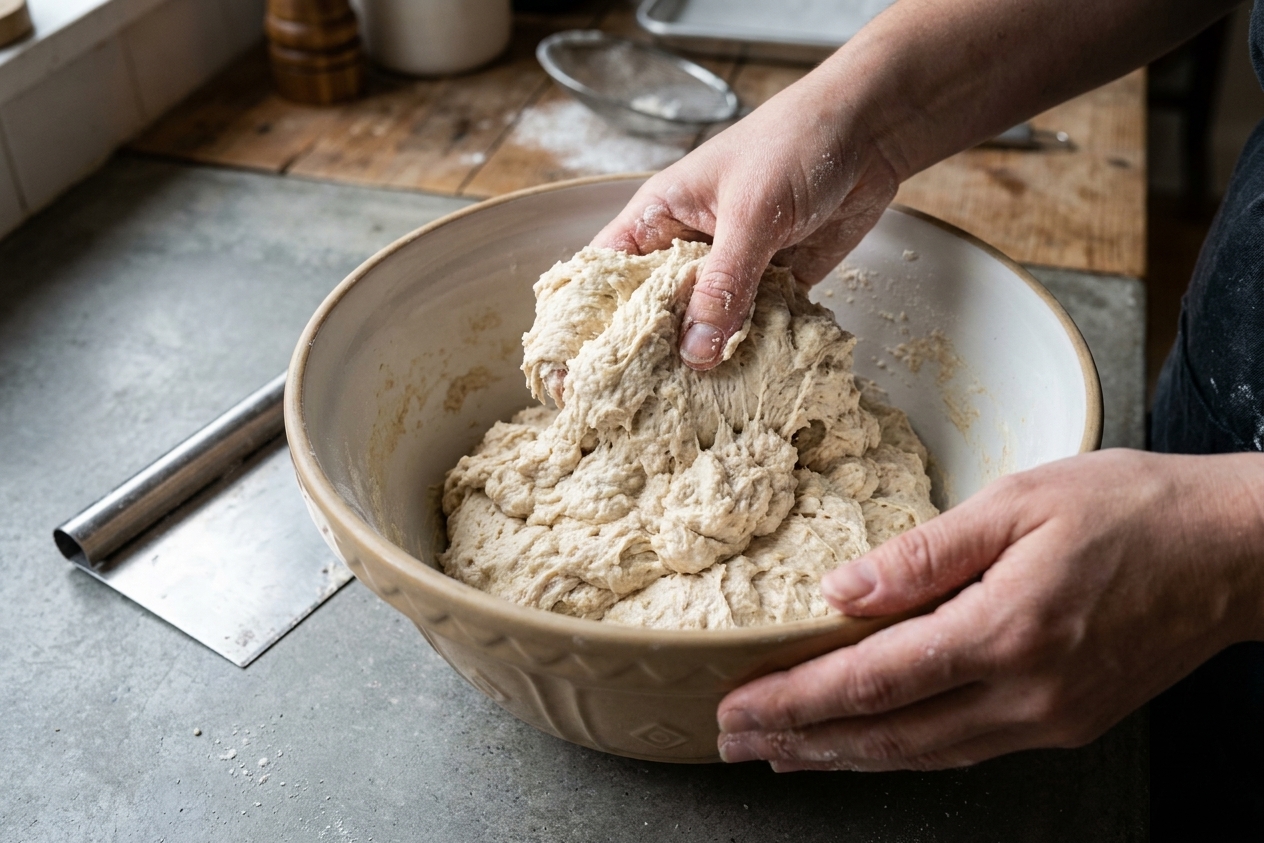
Probably not. Higher hydration dough is sticky early on. With each stretch and fold, it gets smoother and stronger. Keep your hands damp, and resist adding lots of flour, which can make the loaf dense.

Can I bake without a Dutch oven?

Yes. Use a heavy lidded oven-safe pot if you have one. If not, bake on a preheated stone or sheet pan and create steam by placing a metal pan on the bottom rack and pouring in hot water right after the bread goes in. The crust may be a little less dramatic, but it still works.

Why did my loaf turn out flat?

Common culprits: overproofing (dough fermented too long), weak shaping (not enough surface tension), or starter not strong enough. The overnight fridge proof helps a ton with structure and scoring.

Why is my crumb gummy?

Most often: it needed more bake time or it was sliced while warm. Let it cool at least 1 hour, ideally 2. Also make sure the center hits around 205 to 212°F if you are using a thermometer.

Can I bake straight from the fridge?

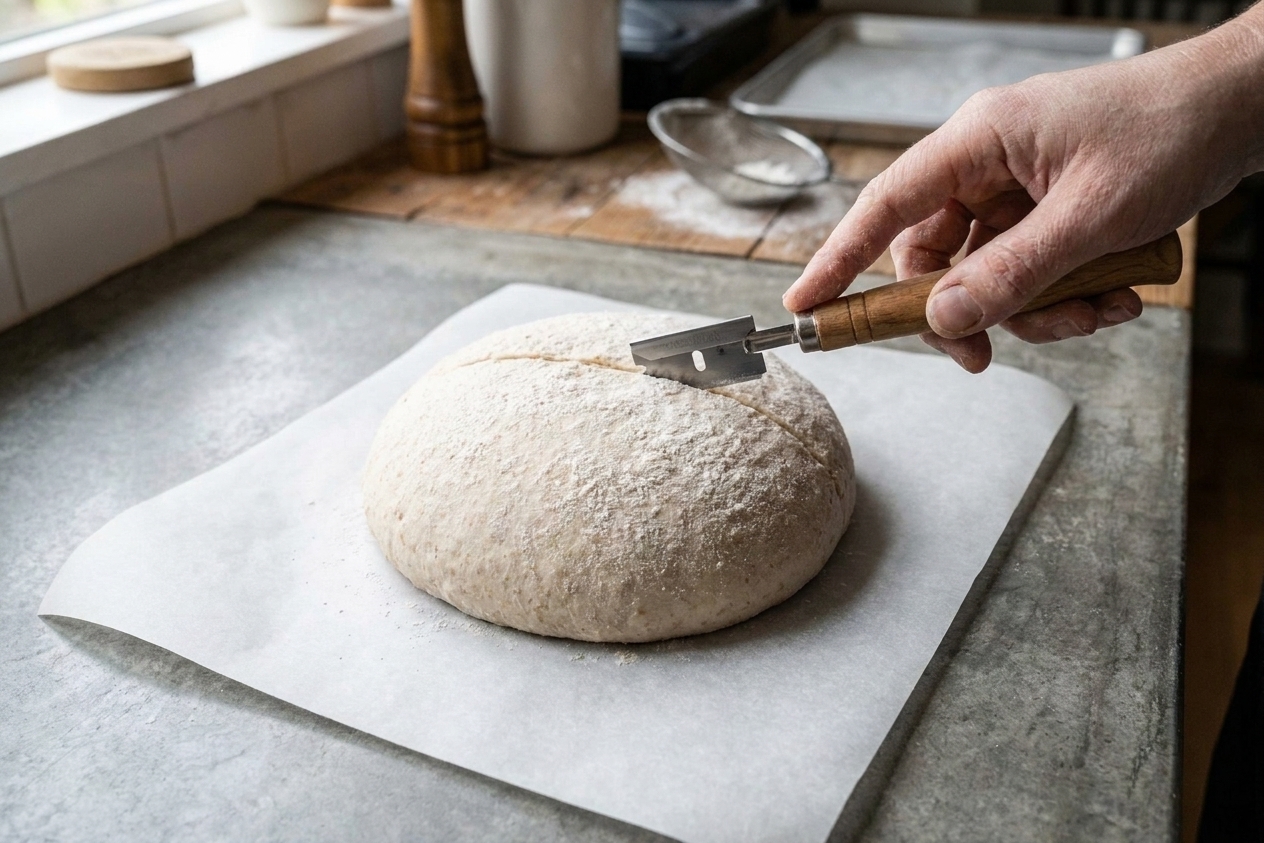
Yes. Cold dough is easier to score and tends to hold its shape better. If your loaf looks very tight and not puffy after the cold proof, let it sit at room temp for 30 to 60 minutes before baking, then score and bake as directed.

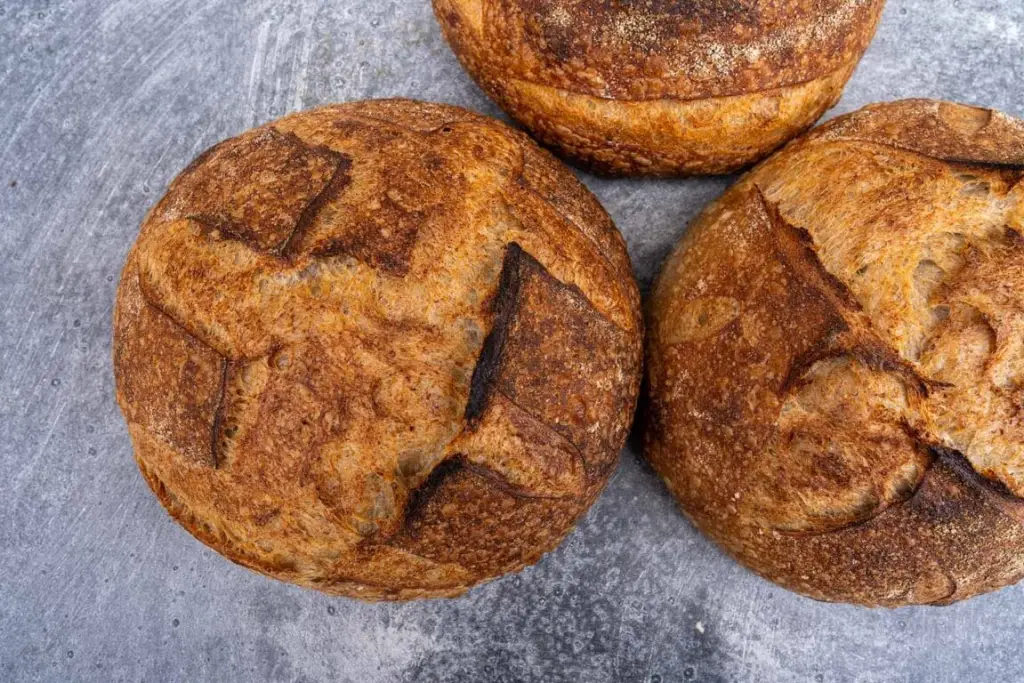
The first time I tried sourdough, I treated my starter like a science project and my dough like it might file a complaint. Then I realized the whole thing is basically: mix, wait, fold, wait, shape, wait, bake. The “skill” is learning what good fermentation looks like in your kitchen on a random Tuesday. Now I make this loaf when I want something cozy that still feels like a little flex. The crust crackles, the kitchen smells like toast and possibility, and I always cut the first slice too early even though I know better.