Mom's Best Recipes
Recipe

Sourdough Starter

A low-drama, flour-and-water starter you can bake with, keep alive, and actually enjoy maintaining.

Author By Matt Campbell
4.8
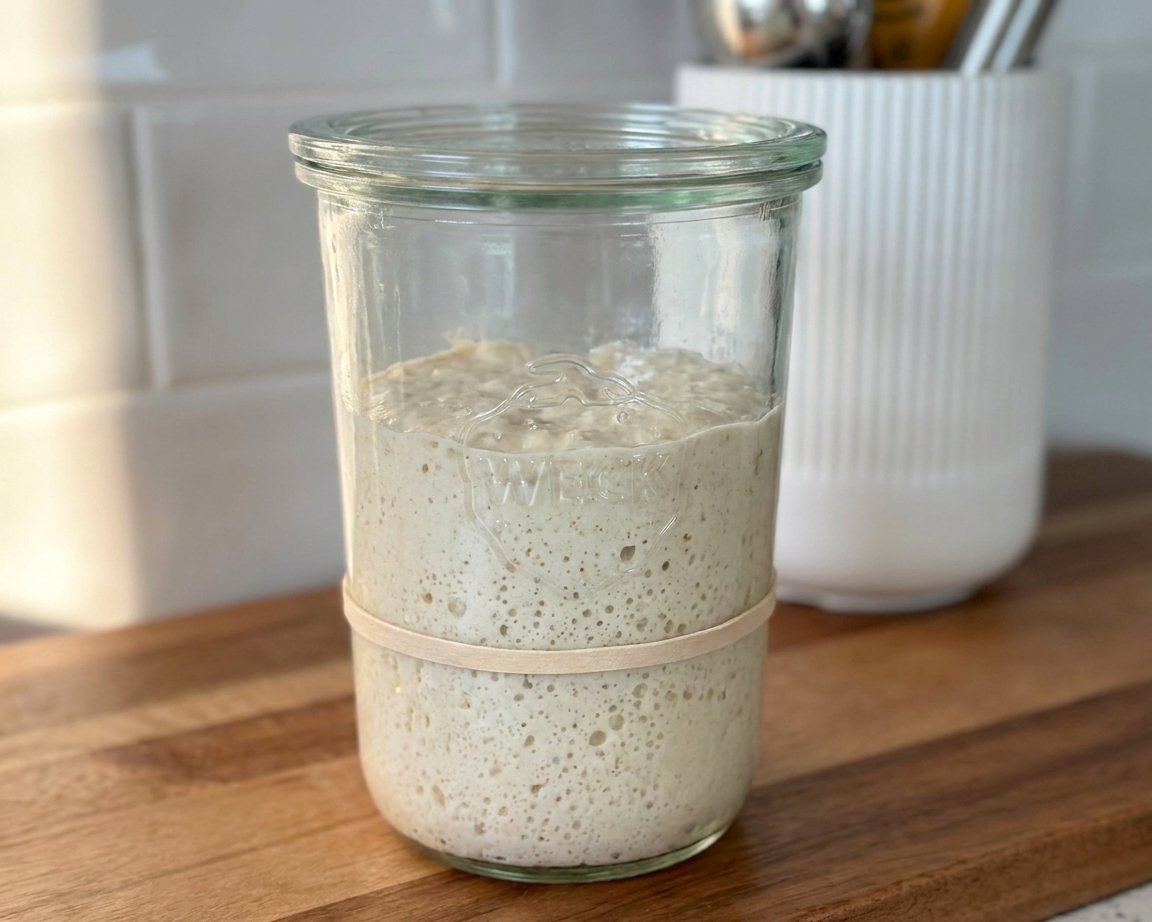
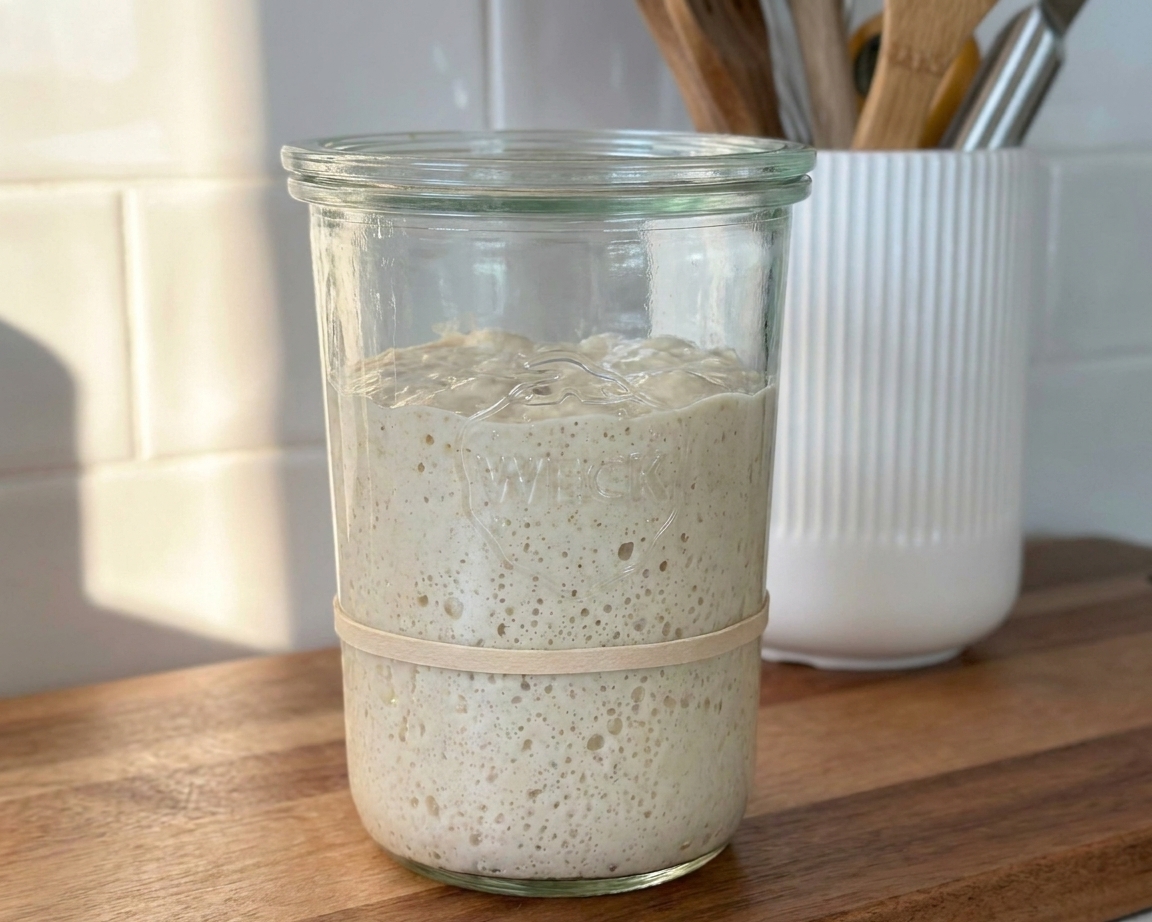
A glass jar of bubbly sourdough starter on a bright kitchen counter with a loose lid and a rubber band marking the rise line

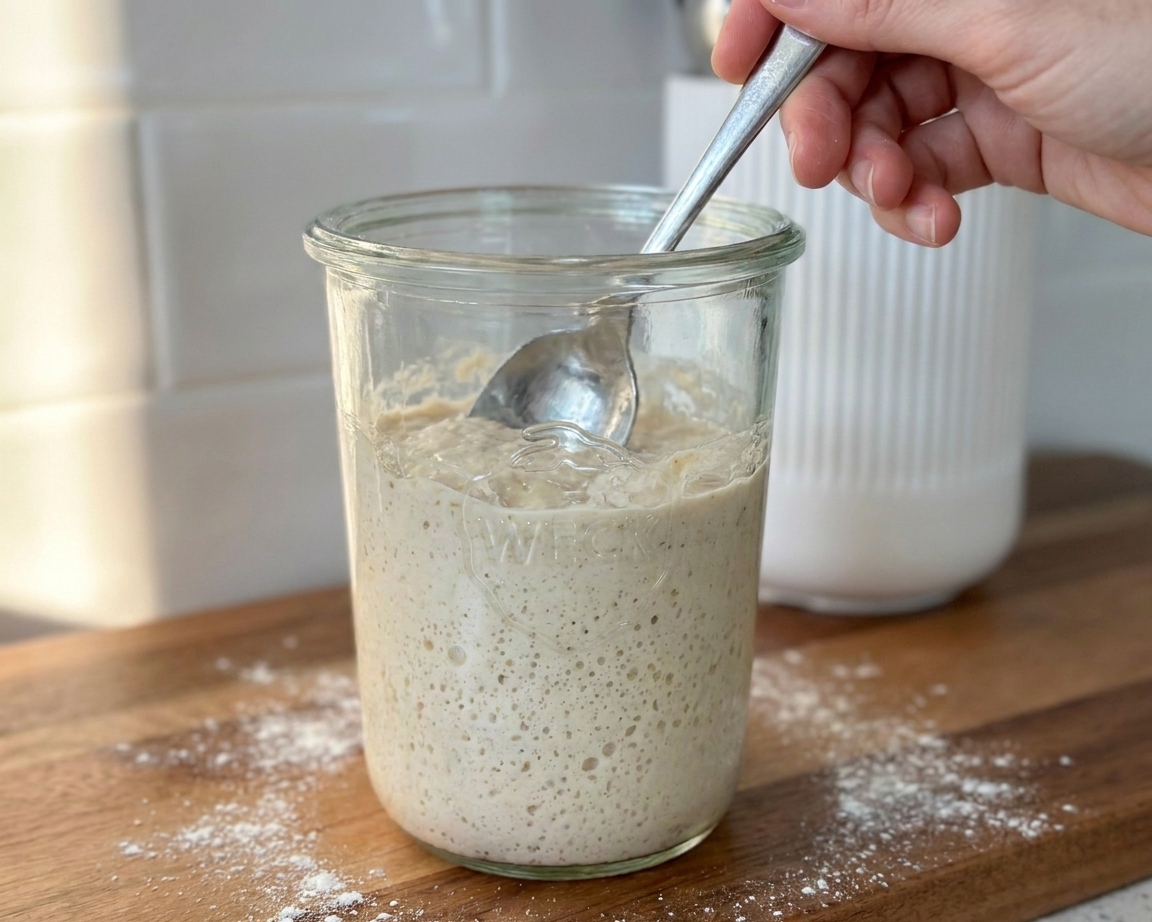
Sourdough starter is basically the world’s most useful kitchen pet. You feed it flour and water, it gets bubbly and a little feral, and then it helps you bake bread with flavor that tastes like you tried harder than you did.

This recipe is the starter I recommend when you want simple ingredients, clear steps, and no weird rules. You do not need grapes, pineapple juice, or a PhD in microbes. You just need a jar, a spoon, and the willingness to check in once a day like you are watering a plant that also wants carbs.

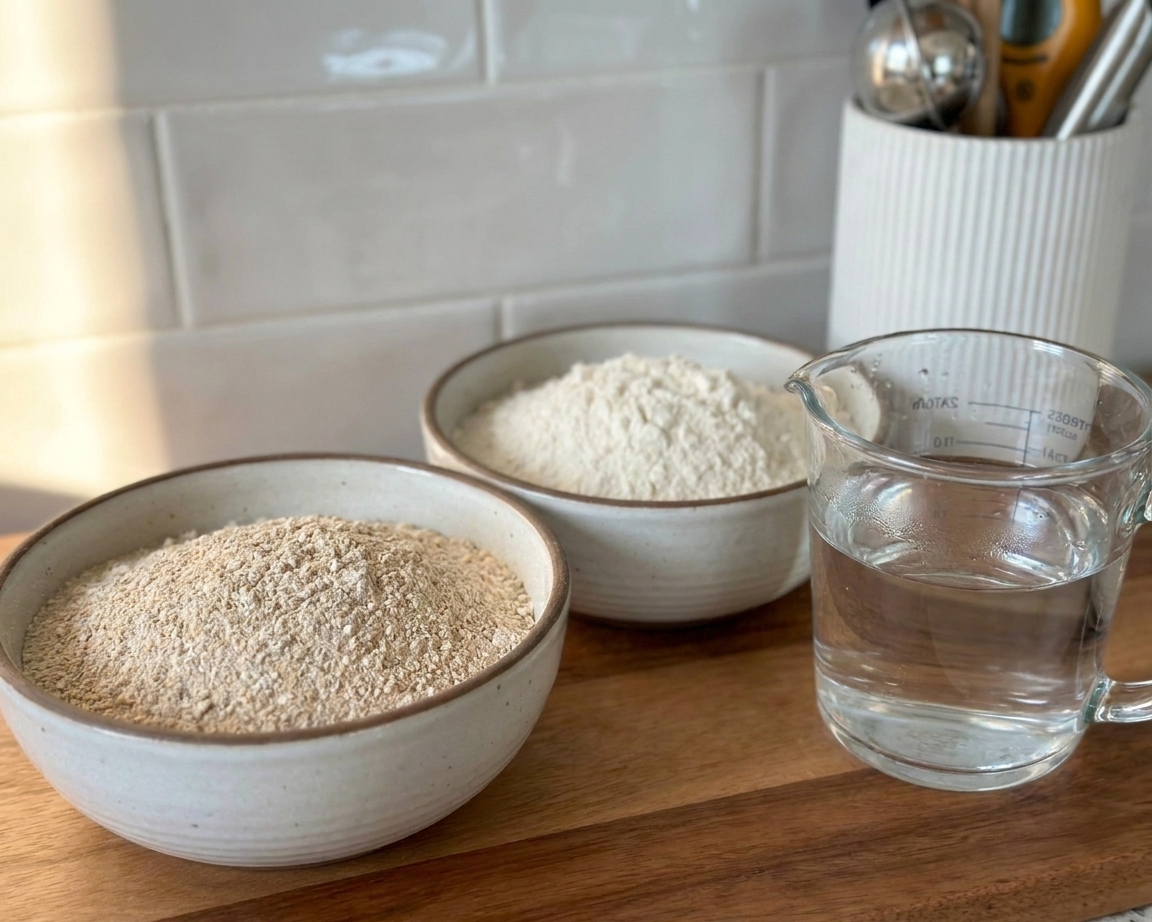
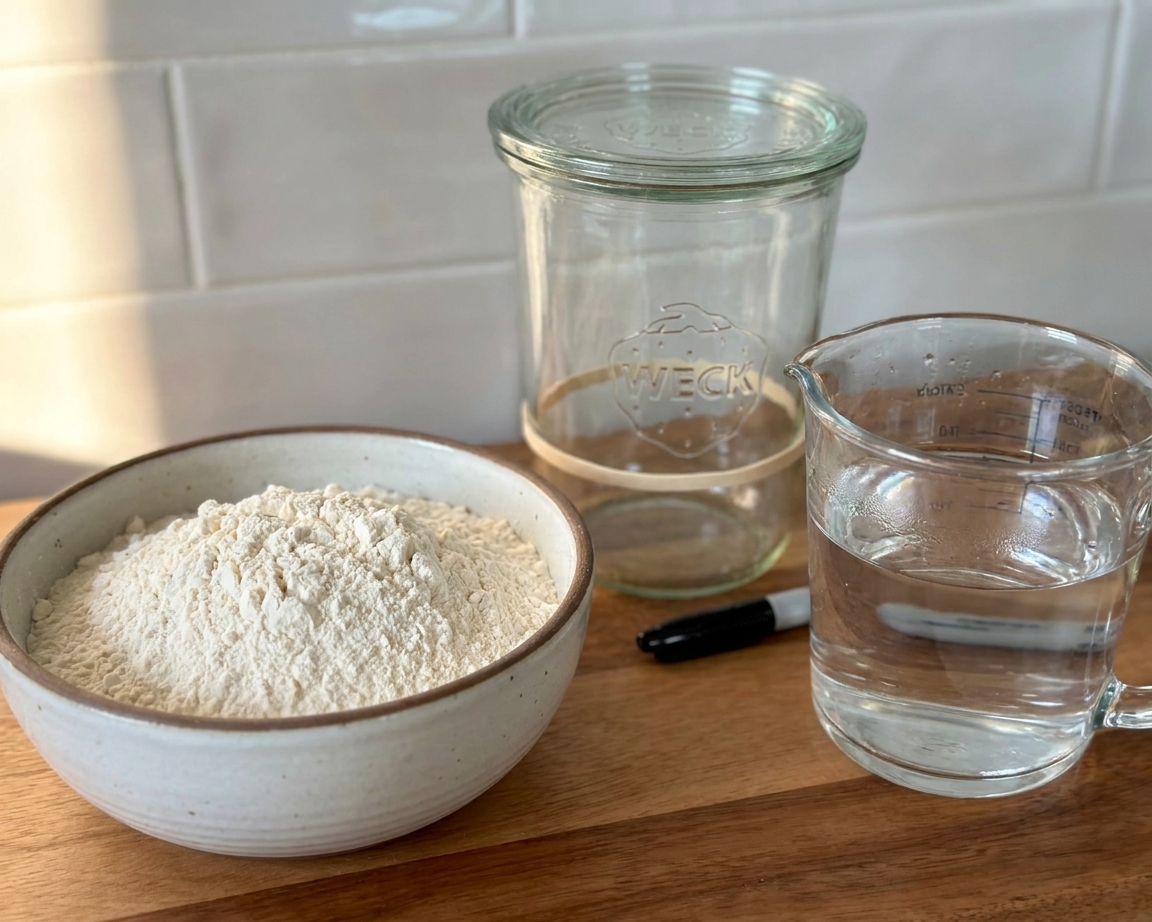
Bowls of whole wheat flour and bread flour next to a small pitcher of water on a clean kitchen counter

Why It Works

  • Accessible method: flour + water, measured by weight for consistency, with a simple no-scale volume option that uses the right flour-to-water balance.
  • Predictable timeline: a day-by-day plan so you know what “normal” looks like, including the awkward quiet days.
  • Reliable strength: we use a little whole wheat early on to kickstart activity, then switch to bread flour for a sturdy starter.
  • Real-life flexibility: room temp or fridge maintenance, plus what to do if you miss a feeding.

Pairs Well With

Storage Tips

Store Your Starter

At room temperature (daily baking): Keep your starter in a jar with the lid set on top (not tightly sealed). Feed it every 24 hours. If your kitchen is very warm and it peaks fast, you may need to feed every 12 hours.

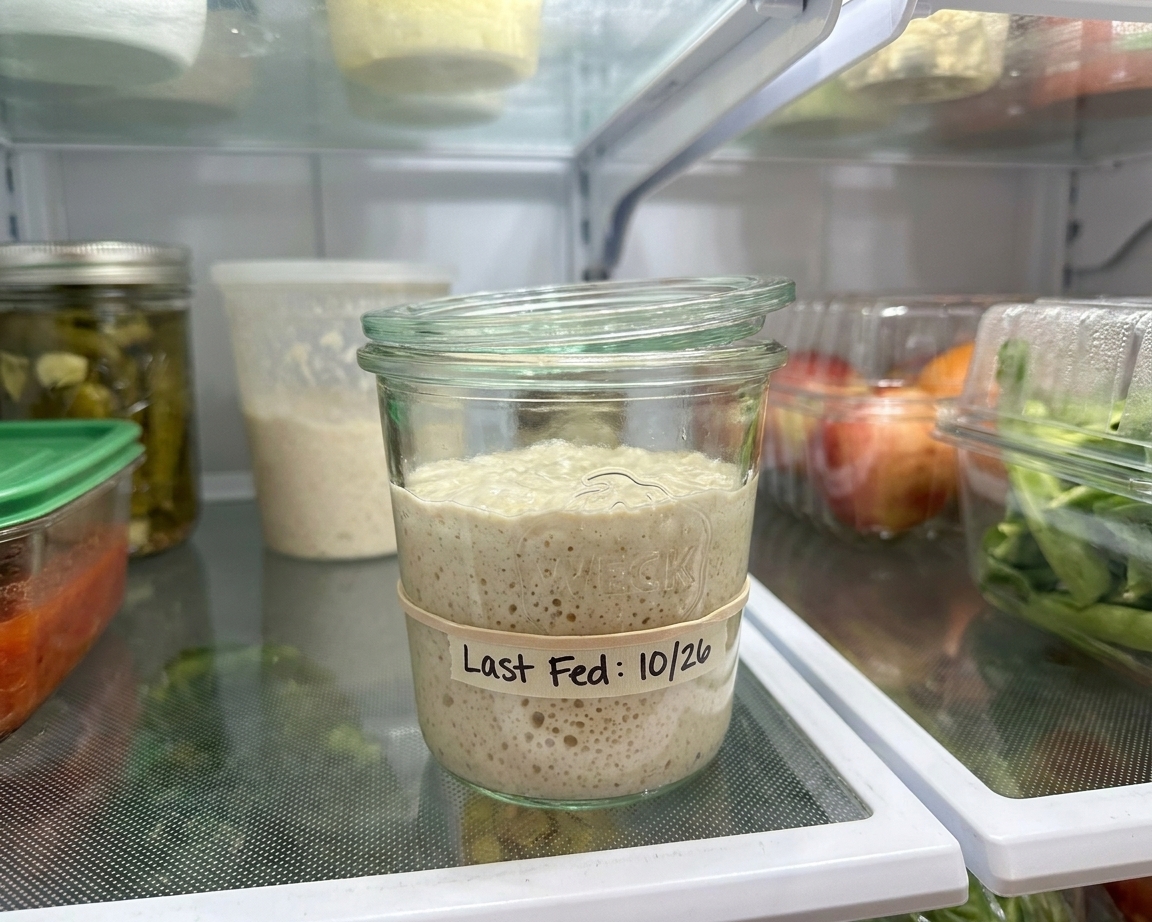
In the fridge (weekly baking): Feed your starter, let it sit at room temperature for 1 to 2 hours to get a little active, then refrigerate. Feed it about once a week (or at least every 1 to 2 weeks). When you want to bake, pull it out and do 1 to 2 room-temperature feedings until it doubles reliably again.

To pause longer: Spread a thin layer of starter on parchment, let it dry completely, then crumble and store airtight.

To revive dried starter: Stir together equal weights dried starter flakes and water (for example, 10 g flakes + 10 g water). Let it soften for 30 to 60 minutes, then feed with equal weights flour and water. Keep it at room temp and feed daily for a few days until it starts rising strongly again.

A small jar of sourdough starter on a refrigerator shelf with a loose lid and a label showing the last feeding date

Common Questions

Common Questions

How do I know my starter is ready to bake with?

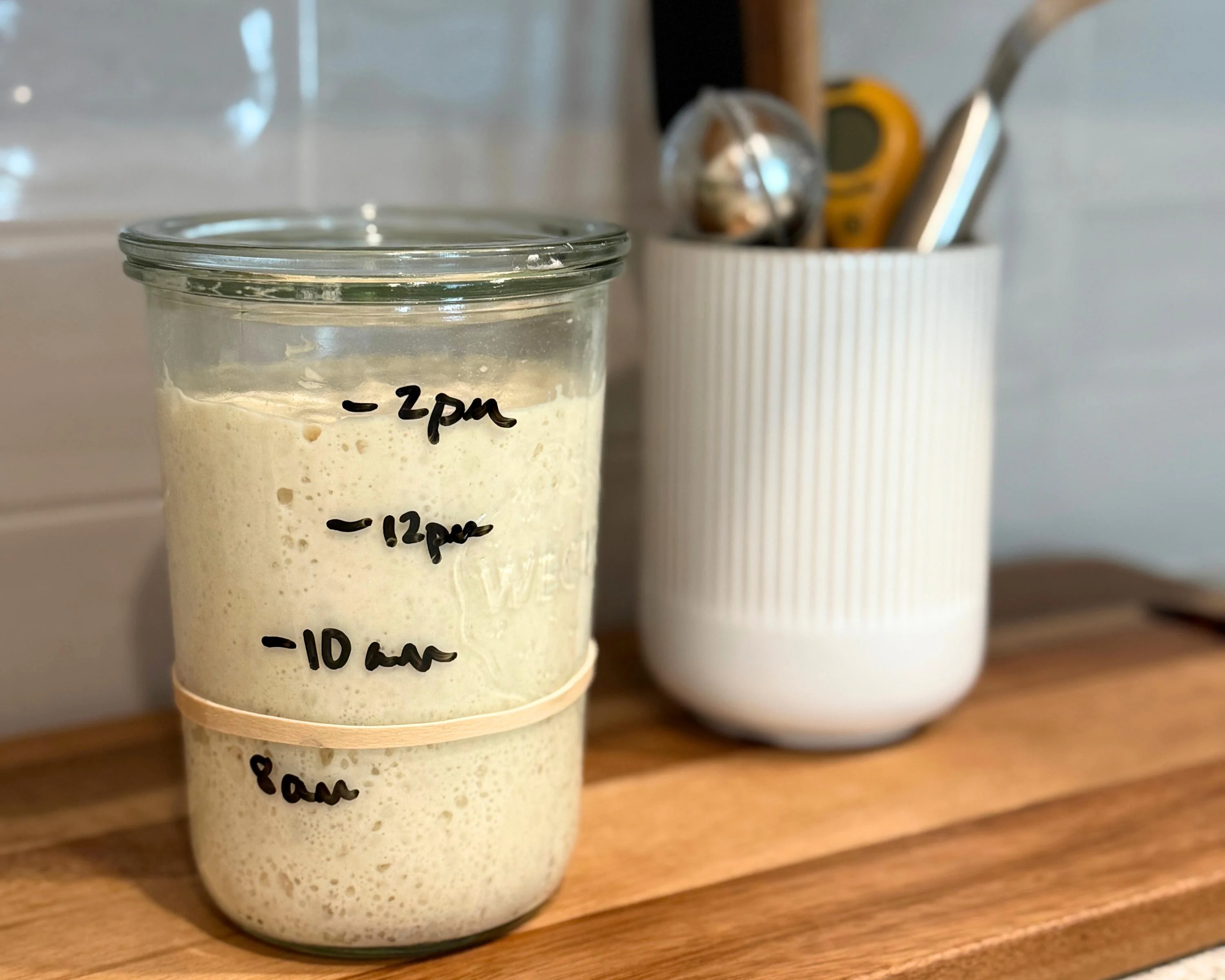
Your starter is ready when it doubles in volume in about 4 to 8 hours after a feeding at room temperature, with lots of bubbles and a pleasantly tangy, lightly yeasty smell. For a clean benchmark, look for doubling at roughly 1:1:1 (starter:water:flour by weight) at 70 to 75°F. The calendar matters less than the behavior.

My starter bubbled like crazy on day 2, then stopped. Did I kill it?

Nope. Early big bubbling is common and often comes from a temporary wave of bacteria. Keep feeding. Days 3 to 5 can feel quiet, then yeast activity ramps up again.

What flour should I use?

Use whatever you can keep consistent. I like whole wheat for the first couple days (more nutrients, faster activity), then bread flour for strength. All-purpose works too. Rye is a powerhouse if you have it.

Do I have to use filtered water?

If your tap water tastes strongly of chlorine, filtered water helps. Letting water sit out for a few hours can reduce chlorine, but it does not do much for chloramine (common in many cities). If your municipality uses chloramine, go filtered (carbon filter) or use bottled water.

What is the liquid on top?

That grayish liquid is called hooch. It means your starter is hungry. If it smells very boozy or sharp, pour it off, then feed. If it smells fine, you can stir it in and feed, but expect a slightly more sour vibe.

When is mold a deal-breaker?

If you see fuzzy growth (white, green, pink, black) or it smells like rotten garbage instead of tangy, toss it and start over. A little dark liquid (hooch) is not mold.

Can I keep a smaller starter?

Yes. You can maintain as little as 20 g starter by feeding with the same ratio. Small starter = less discard = happier you.

When is discard safe to use?

For the early days, treat discard like an experiment and compost it or toss it. Once your starter is reliably rising and falling and can double within 4 to 8 hours after a feeding (often around day 7 or later), discard is generally fine to use in cooked recipes like pancakes, crackers, or waffles.

What lid should I use?

Use a loose lid (resting on top) or a cloth cover with a rubber band. You want airflow, but not a tight seal. If your starter’s surface keeps drying out, switch from cloth to a loose lid.

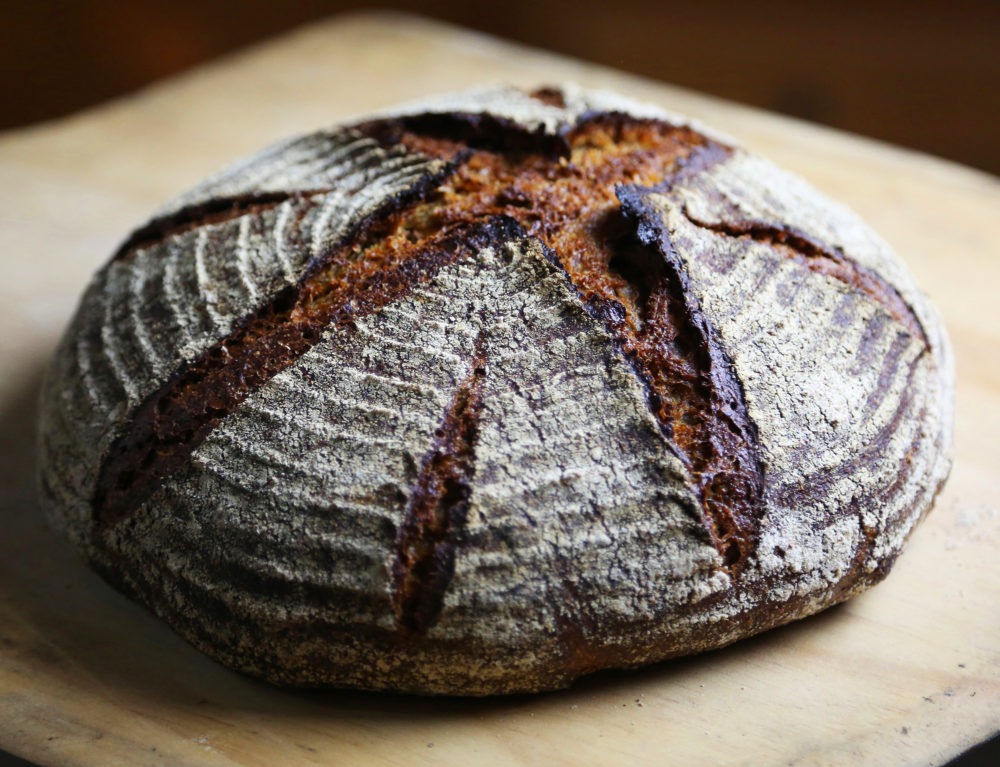
The first time I made a starter, I treated it like a science project and a new roommate. I stared at it. I sniffed it. I gave it pep talks. Then on day three it went quiet and I assumed I had ruined everything. Classic.

Turns out, starters have a personality arc. They get loud, then moody, then they finally figure out who they are. Now I keep mine like a chill friend in the fridge and wake it up when I want a baking weekend. It is forgiving, a little wild, and it makes even a plain slice of toast feel like a flex.