Can I make it 100 percent whole wheat?
You can, but it will be denser and the rise can behave a little differently from batch to batch. If you want to try it, replace the bread flour with whole wheat flour and add 2 to 4 tablespoons extra milk as needed to keep the dough soft. Watch the dough, not the clock, and proof until puffy.
Why does my whole wheat bread turn out dry?
Usually one of three things: too much flour during kneading, not enough proof time, or overbaking. Use a scale if you can, let the dough rise until truly puffy, and pull the loaf when the center hits about 190°F to 200°F (I aim for the lower end for a softer slice).
Do I need a stand mixer?
Nope. It is totally doable by hand. It is a bit of a workout, but in a satisfying way, like you are earning your toast.
Can I make this dairy-free?
Yes. Use warm unsweetened oat milk or almond milk and swap the butter for a neutral oil or dairy-free butter. The crumb will be slightly less rich, but still soft.
How do I know it is proofed enough for the oven?
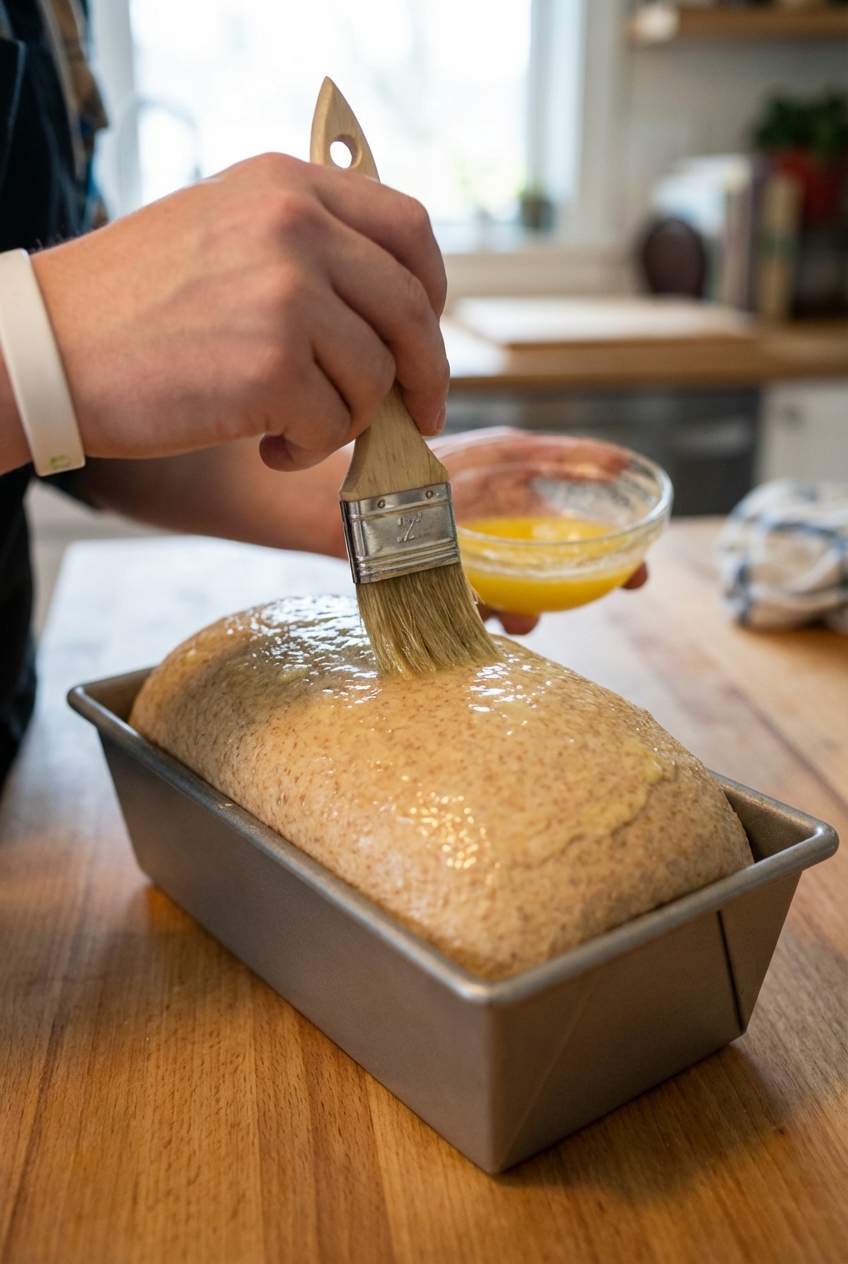
Use the gentle poke test. Flour a finger, press the dough about 1/2 inch. If it springs back slowly and leaves a slight dent, you are ready. You can also look for a nice dome about 1 inch above the pan rim.
Can I use instant yeast instead of active dry?
Yes. Use the same amount. You can skip the blooming step and mix the instant yeast into the dry ingredients. Rise times may move a little faster, so keep an eye on the dough.