Are Cornish game hens just baby chickens?
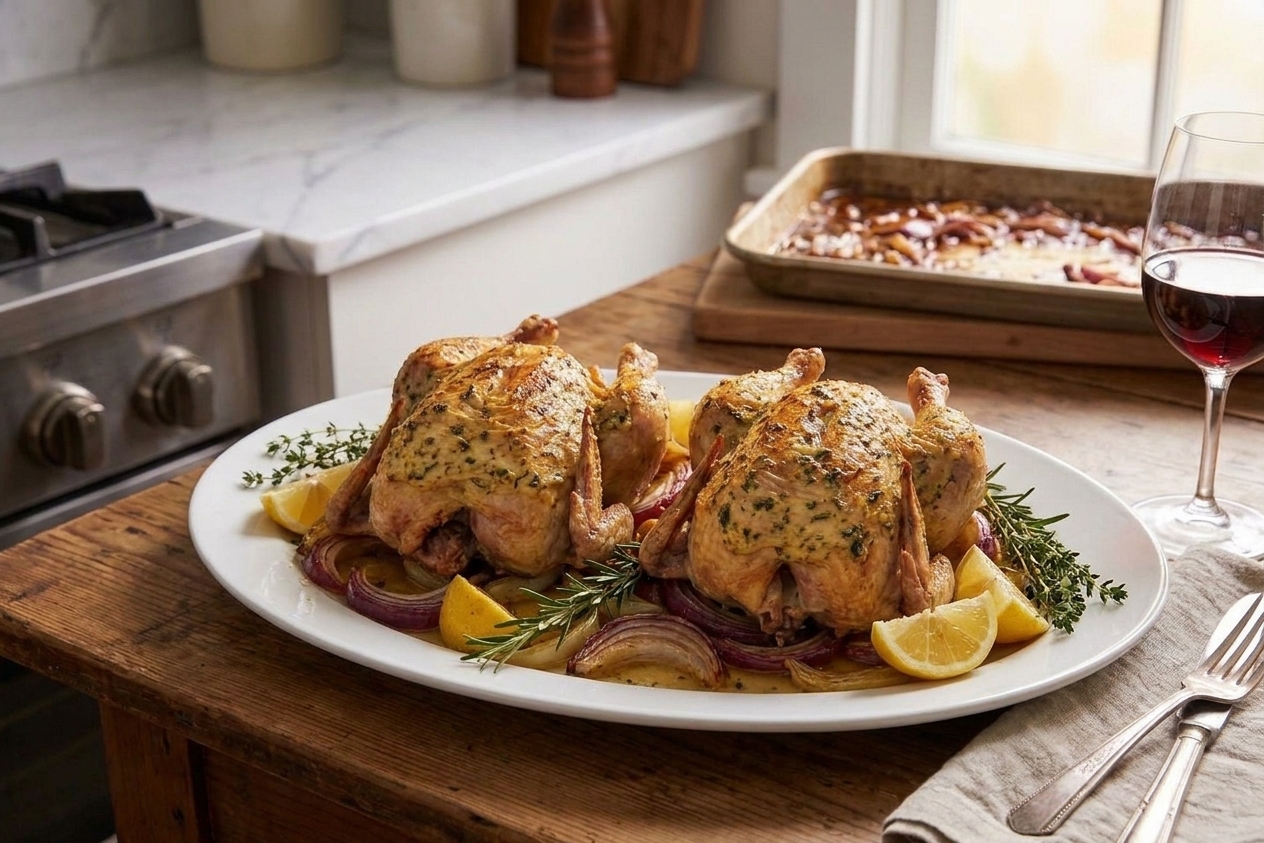
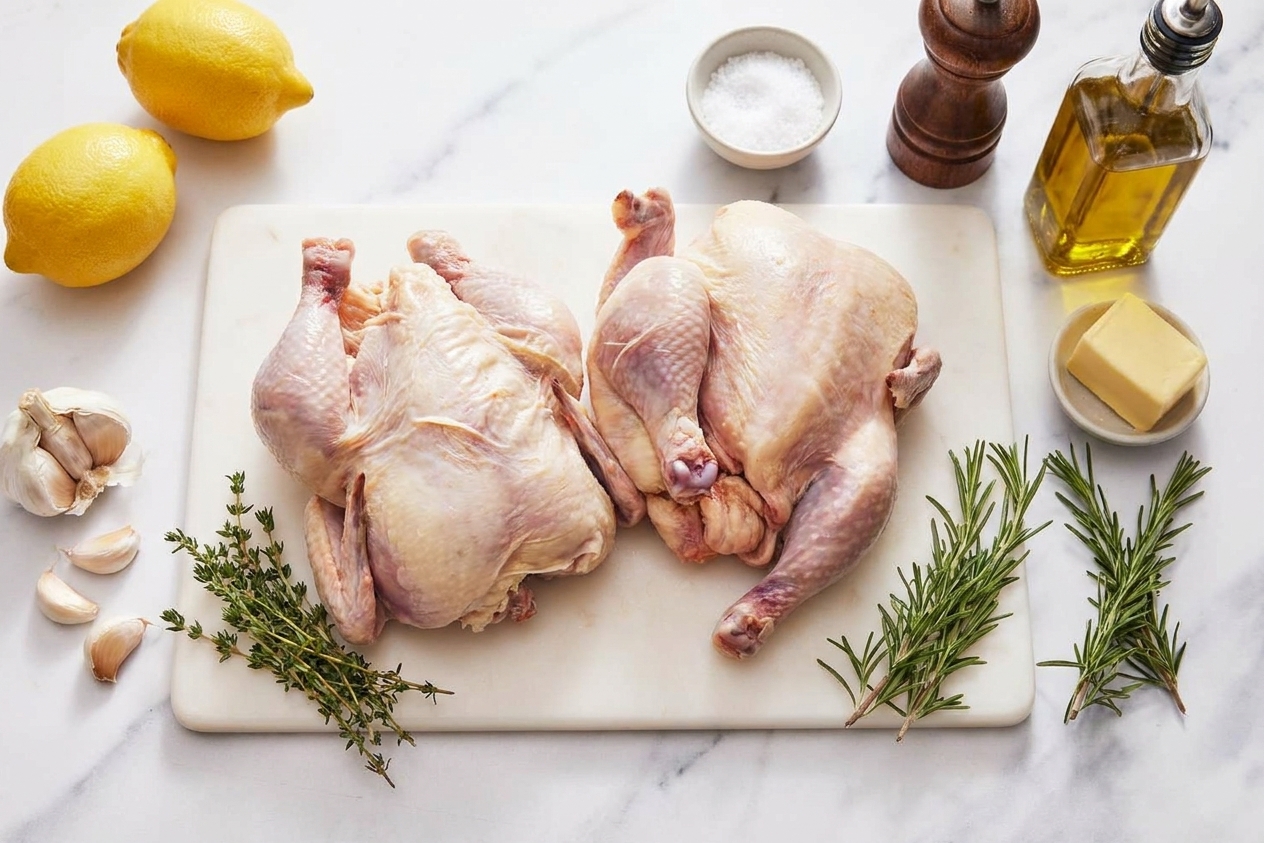
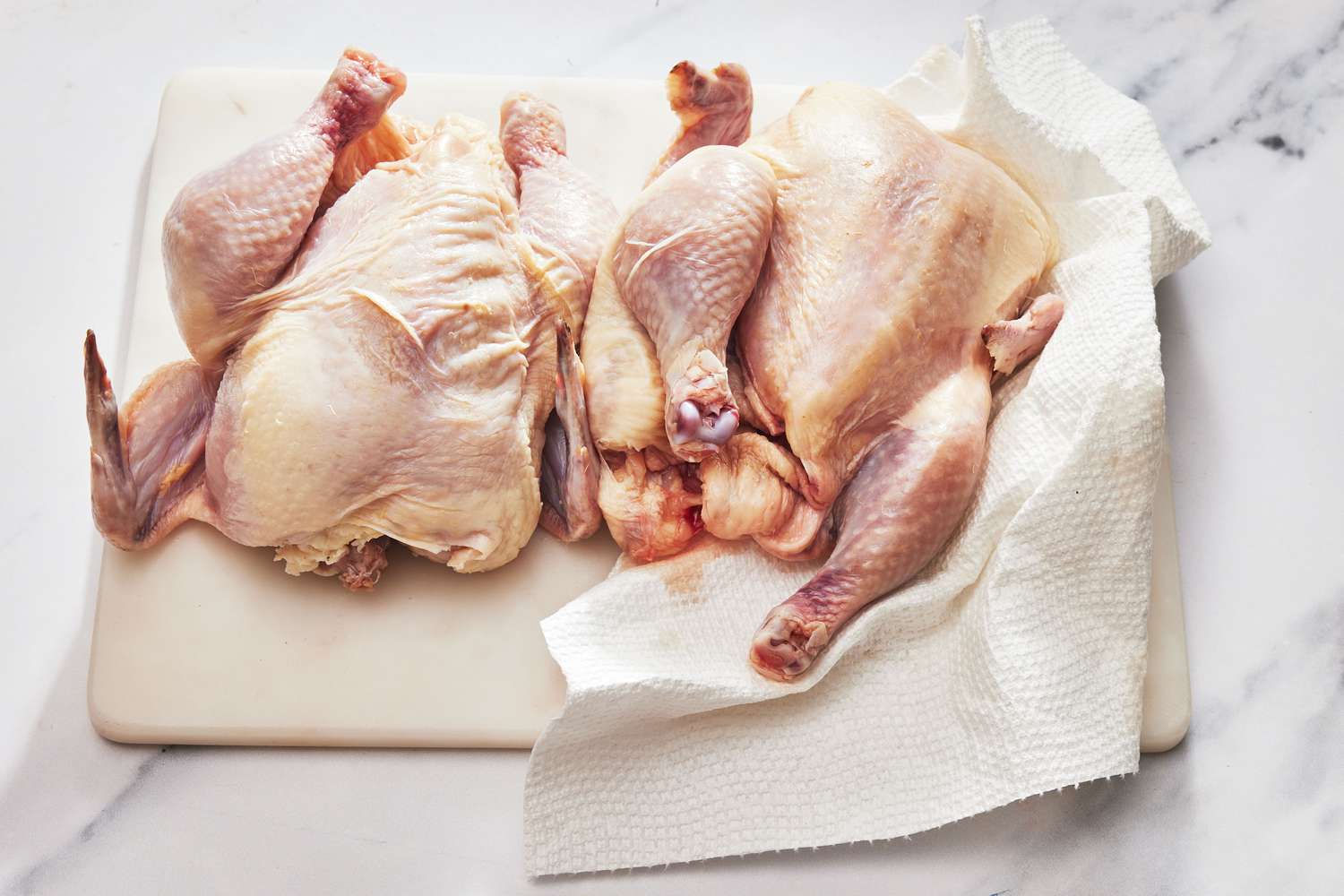
Not exactly. Cornish game hens are small young broiler chickens, often a Cornish Cross type, marketed at about 1 to 2 pounds each. They are not actually “game,” but they do cook faster than a whole roaster and feel extra special because everyone gets their own.
How do I know when a Cornish hen is done?
Use an instant-read thermometer and cook to at least 165°F in the thickest part of the meat (breast and thigh). For best texture, I start checking around 40 minutes and pull them once the breast hits 165°F and the thigh is usually 170°F to 175°F. Resting helps the juices settle, but it is not a substitute for hitting a safe temp.
Why is my skin not crispy?
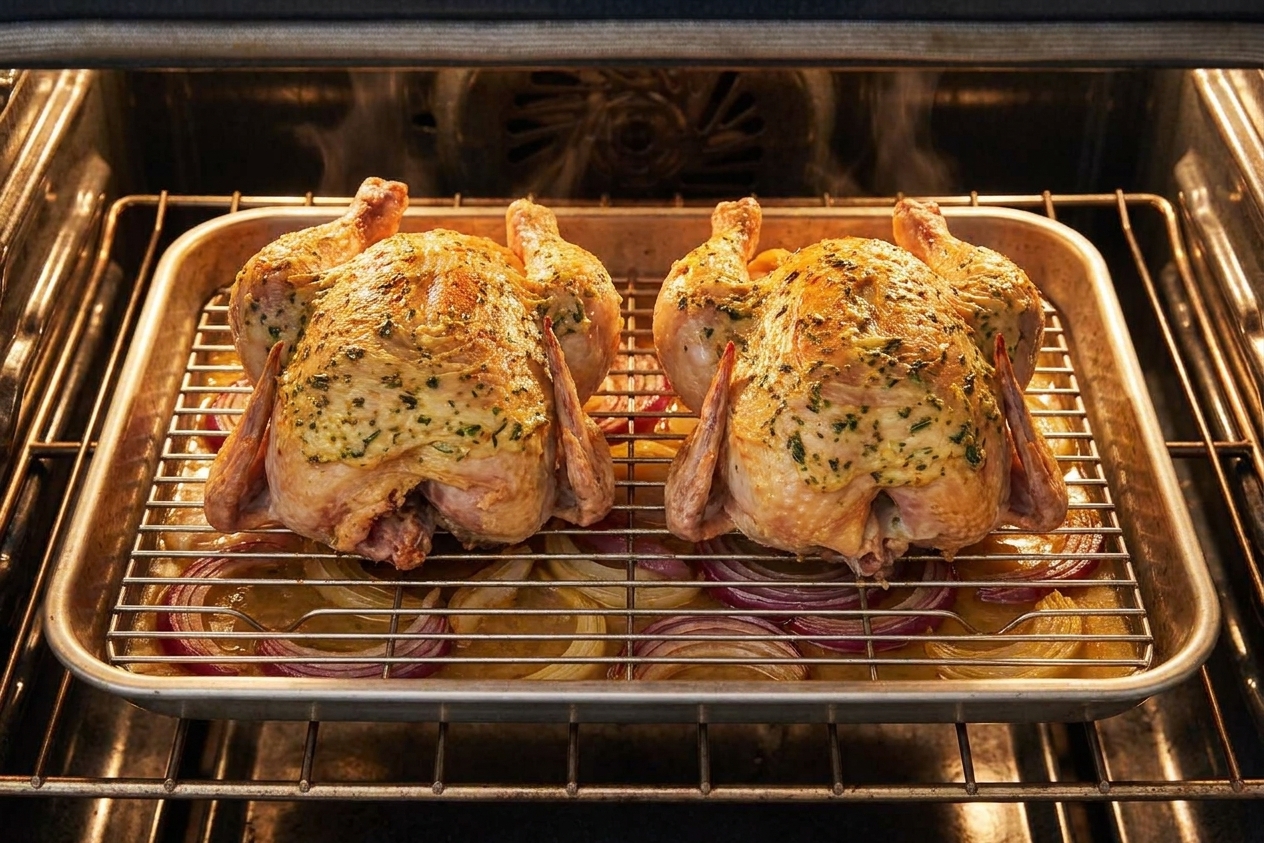
The usual culprits: the hens were not dried well, the oven was not hot enough, or the pan was crowded and steaming the birds. Pat them dry, roast on a rack if you have one, and give them space.
Can I make these ahead?
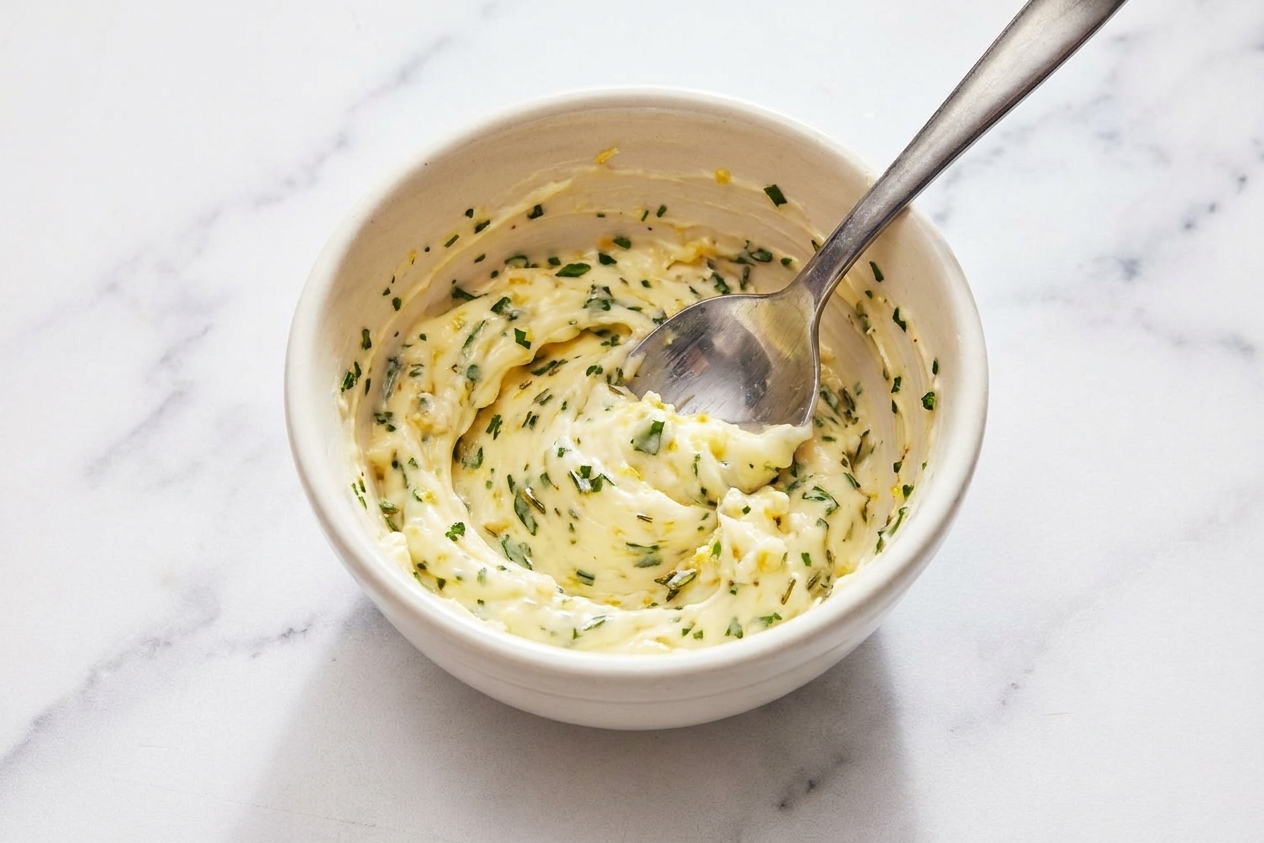
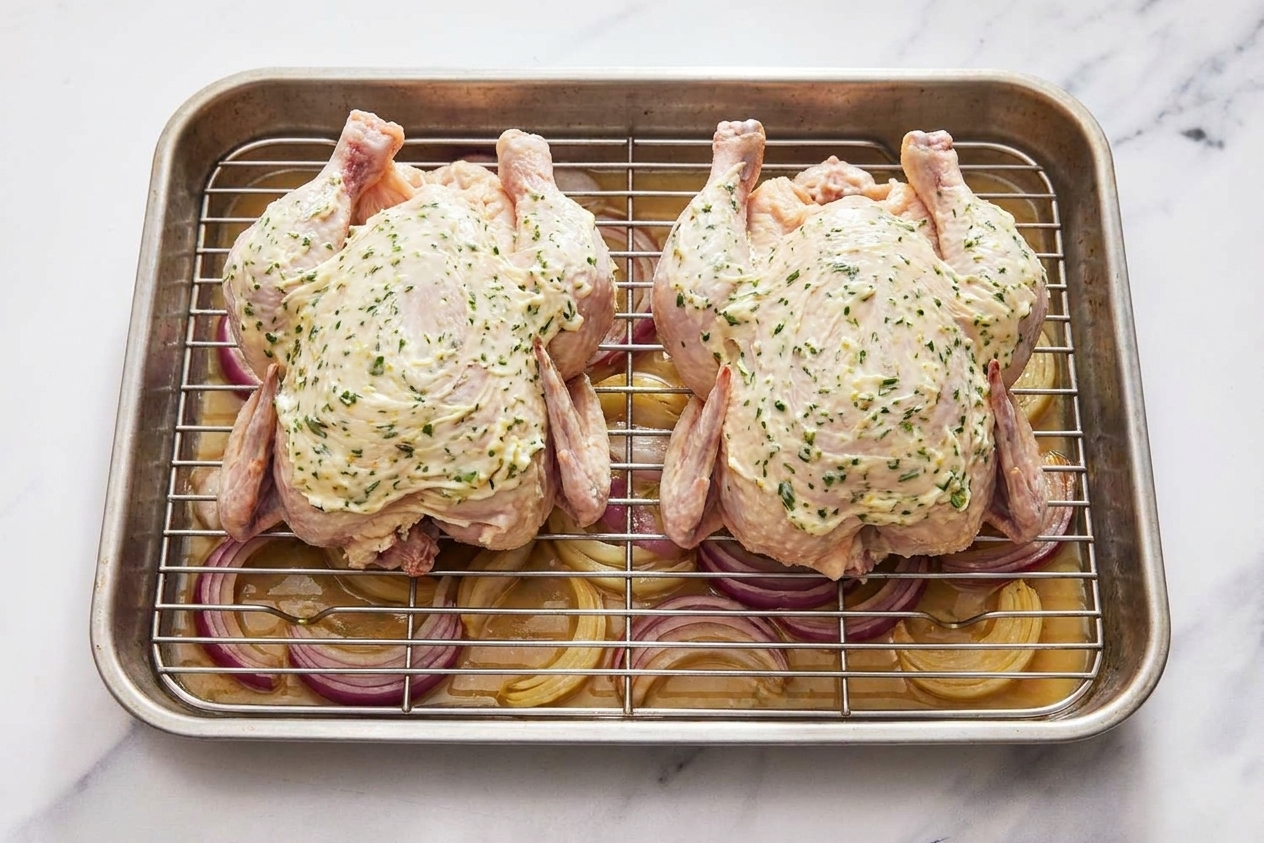
You can season the hens (salt, pepper, and the herb butter) up to 24 hours ahead and keep them uncovered on a sheet pan in the fridge. That dry air is basically a crisp-skin assistant.
Do I have to truss the legs?
No, but it helps the hens cook more evenly and keeps the breast from drying before the thighs catch up. If you do not have kitchen twine, just tuck the wing tips under and call it good.
What if my pan drippings burn?
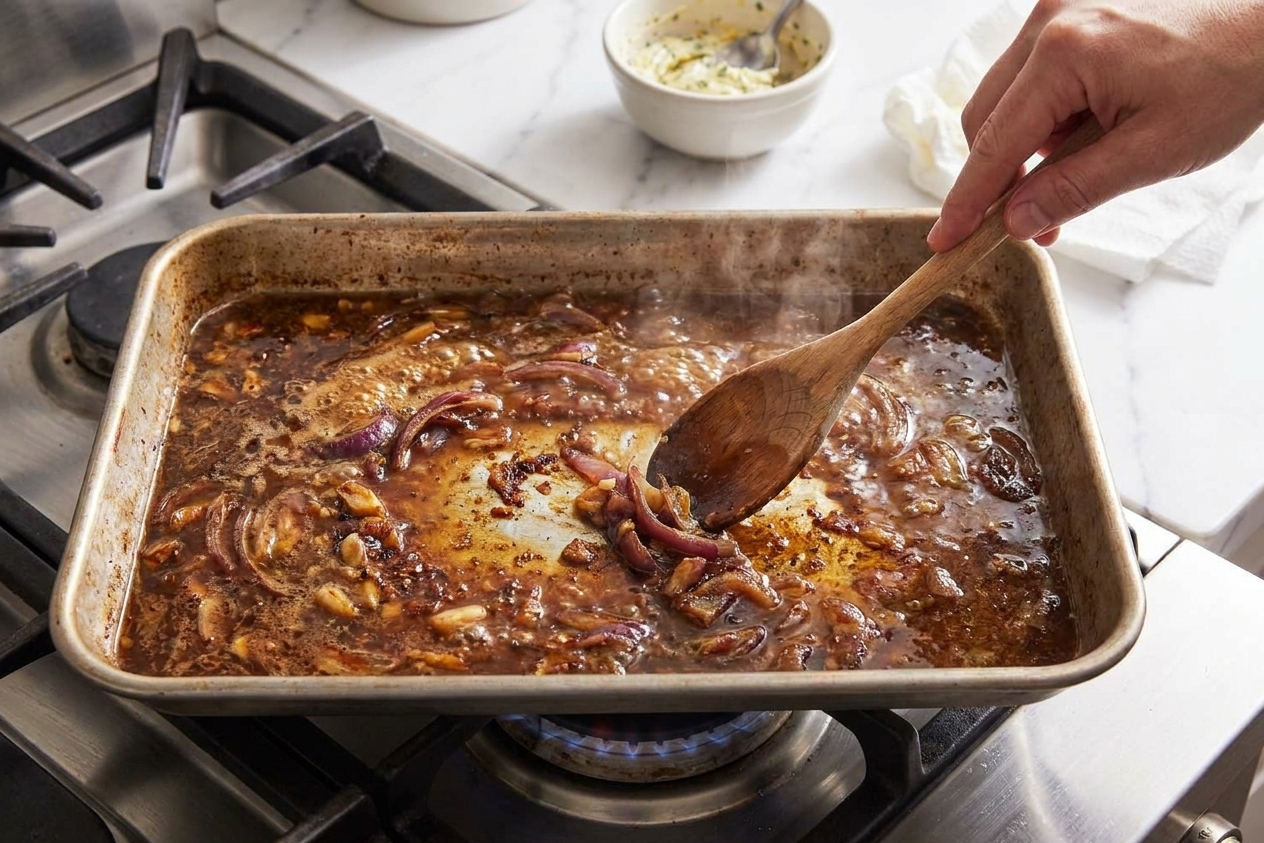
Add a splash of broth or water to the pan if things look too dark. If you are roasting at high heat, a small amount of liquid in the pan helps keep the drippings from scorching while still letting the skin get properly bronze.
What is the safest way to thaw Cornish hens?
Thaw them in the fridge on a rimmed tray. Small birds thaw pretty quickly, usually overnight. (Counter thawing is a no from me.)