Mom's Best Recipes
Recipe

Garlic Lemon Baked Halibut

A tender, flaky baked halibut recipe with a bright garlic lemon butter sauce and crisp edges, ready in about 20 minutes.

Author By Matt Campbell
4.8
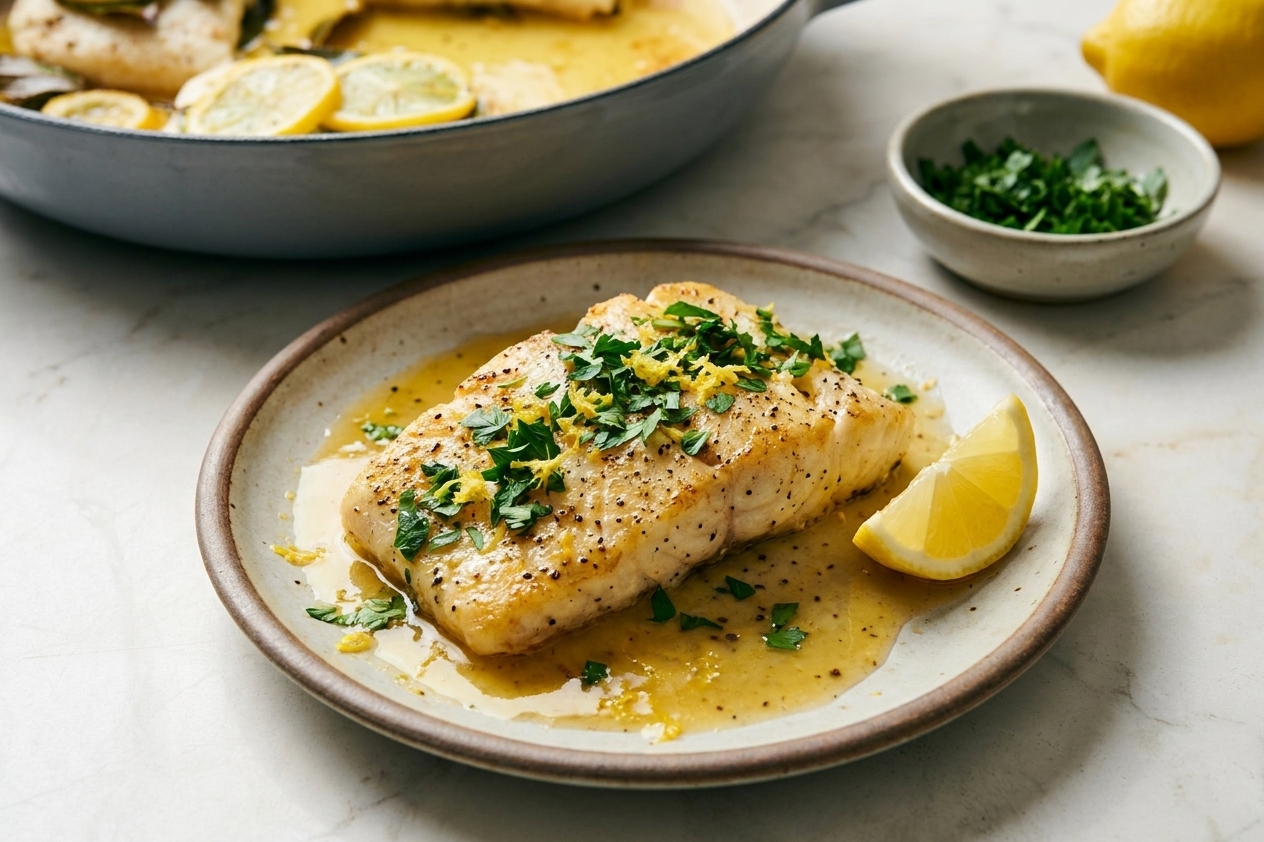
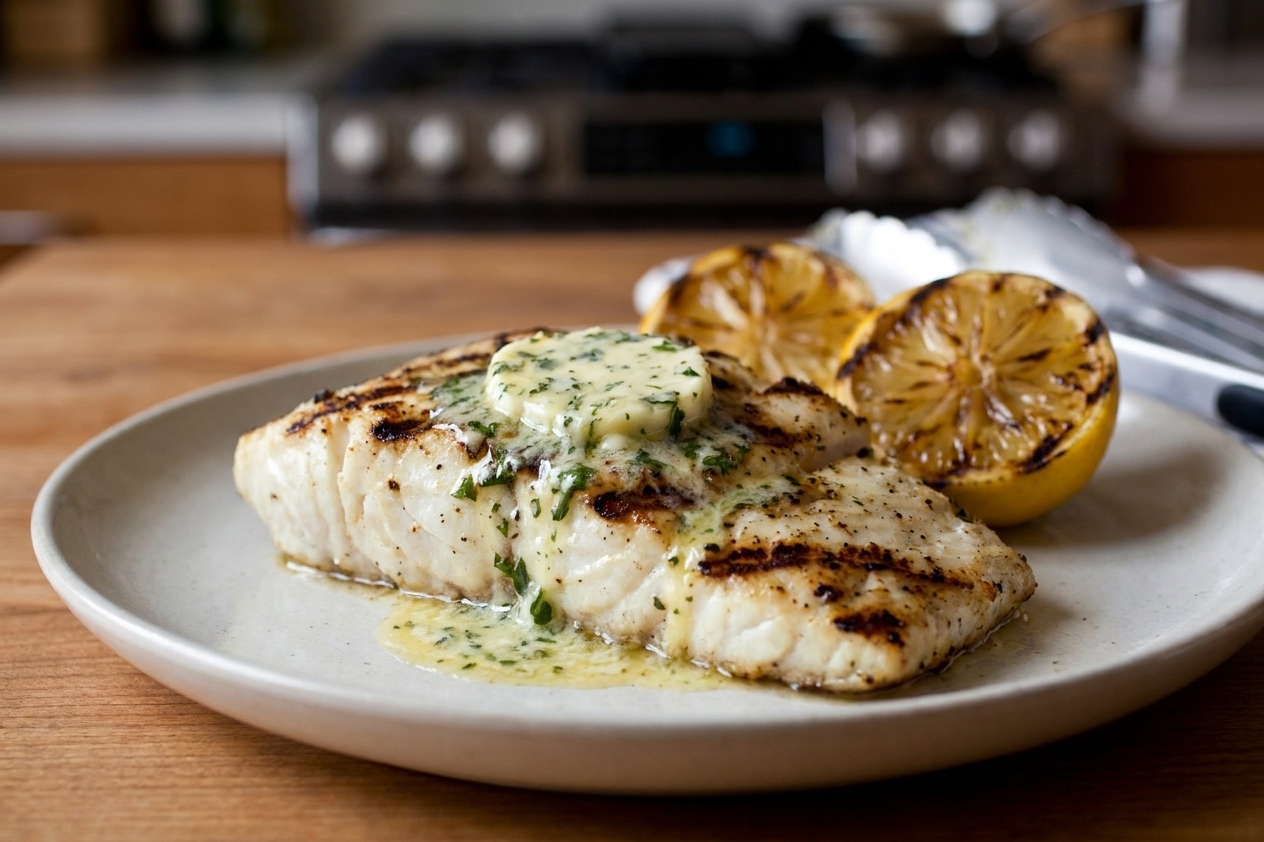
A plated piece of baked halibut topped with glossy garlic lemon butter sauce and chopped parsley, served on a white plate with lemon wedges on a wooden table

Halibut is one of those fish that feels restaurant-fancy… until you realize it basically wants to be left alone. A hot oven, a little fat, a little acid, and you are suddenly eating tender, flaky fish that tastes like you planned your life.

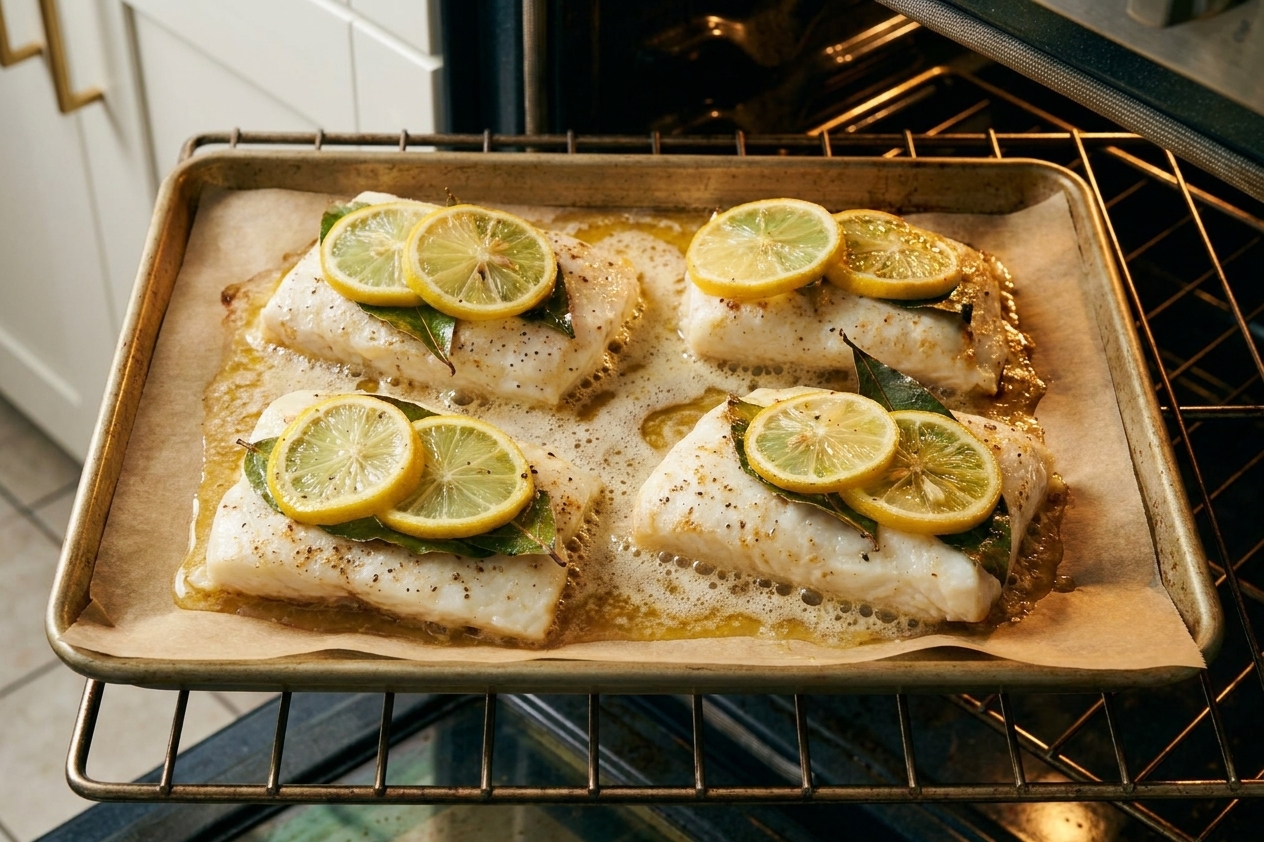
This baked halibut is my go-to when I want bright sauce, cozy vibes, and zero drama. We do a quick garlic lemon butter situation right on the pan, which means the fish bastes itself while it cooks. Your job is to not overthink it and to pull it before it dries out. That is the whole game.

If you want the simplest path to success, use fillets that are similar in thickness, give them a little breathing room on the pan, and check early. Halibut is polite until it is not.
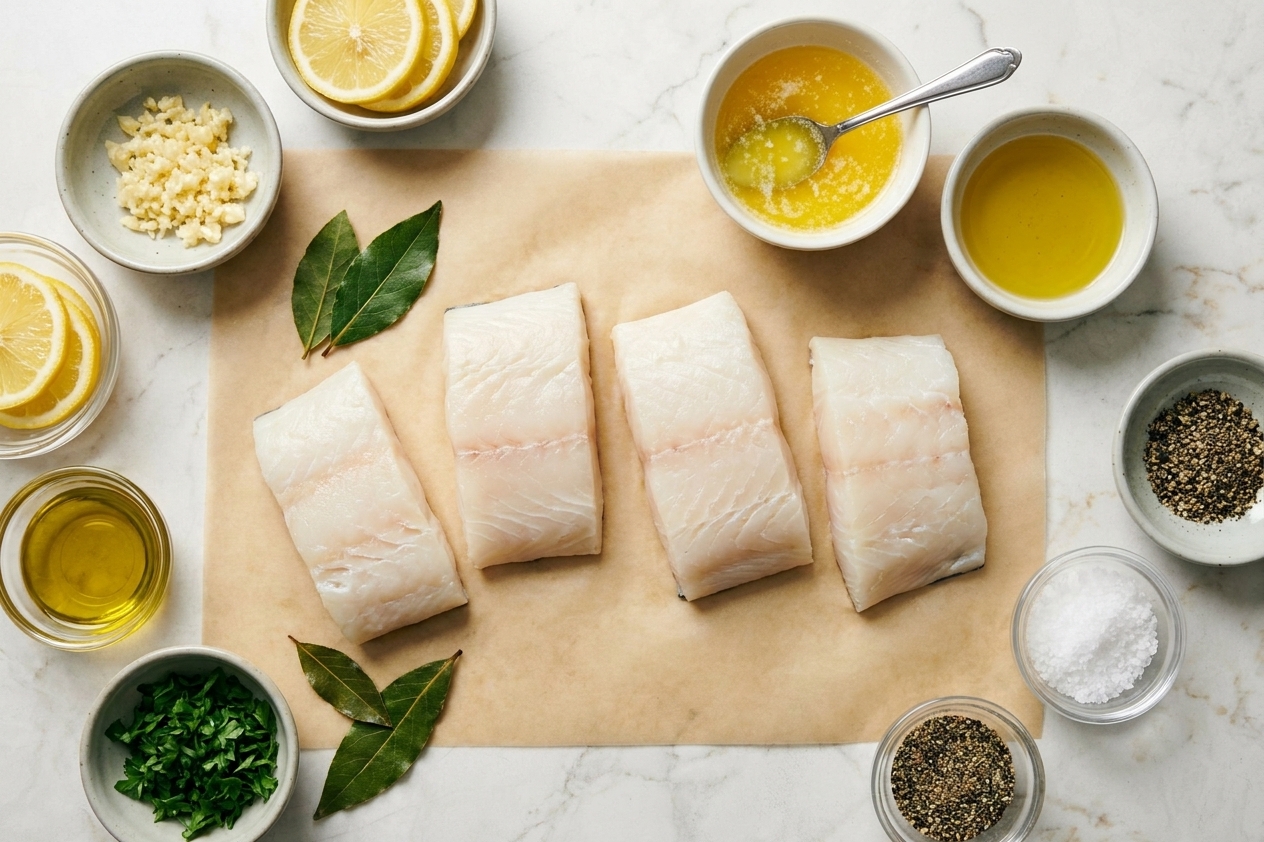
Raw halibut fillets on parchment with small bowls of minced garlic, lemon slices, melted butter, olive oil, salt, pepper, and chopped parsley on a bright kitchen counter

Why It Works

  • Moist, flaky halibut: The butter plus olive oil combo helps protect the fish in the oven, so it stays juicy.
  • Big flavor with basic ingredients: Garlic, lemon, and a pinch of paprika make it taste way more exciting than the effort required.
  • A built-in pan sauce: The juices, butter, and lemon turn into a spoonable sauce you can pour over the fish and anything else on the plate.
  • Fast cook time: Most fillets bake quickly, and the timing guidance is based on thickness so you do not have to guess.

Pairs Well With

Storage Tips

Refrigerate

Store leftover halibut in an airtight container in the fridge for up to 2 days. Spoon a little of the pan sauce over the top before sealing it up so it stays moist.

Reheat without drying it out

  • Oven method (best): Put halibut in a small baking dish, add a splash of water or broth plus any leftover sauce, cover with foil, and warm at 275°F for 10 to 15 minutes.
  • Microwave method (fast): Use 50% power in short bursts. Stop as soon as it is warmed through.

Freezing

You can freeze cooked halibut, but it will lose some of that delicate texture. If you do it, wrap tightly and freeze up to 1 month. Thaw overnight in the fridge and reheat gently.

Common Questions

How do I know when halibut is done?

Halibut is done when it turns opaque and flakes easily with a fork. If you have a thermometer, many cooks pull it at 125°F to 130°F for tender, juicy fish, then let carryover cooking finish the job as it rests. For the FDA guideline, cook fish to 145°F.

What temperature should I bake halibut at?

I like 400°F. Hot enough for a little edge color, not so hot that the outside dries out before the center is ready.

Why is my baked halibut dry?

Usually one of three things: the fillet was thin and overbaked, the oven ran hot, or the fish did not have enough fat around it. This recipe uses butter and olive oil to help, but the real fix is pulling it early. Halibut goes from perfect to dry quickly.

Can I use frozen halibut?

Yes. Thaw it overnight in the fridge, then pat it very dry before baking. Extra surface water will dilute the sauce and can make the fish steam instead of bake.

Can I swap the halibut for another fish?

Totally. This method works great with cod, haddock, striped bass, or sea bass. Adjust bake time based on thickness.

The first time I cooked halibut at home, I treated it like a chicken breast. I blasted it too long, congratulated myself for being “safe,” and ended up eating expensive, flaky cardboard. Lesson learned. Now I cook halibut like it is a delicate friend: I keep it cozy with butter, wake it up with lemon, and I pull it early. The payoff is that moment when the fork slides in and the fillet breaks into big, pearly flakes, and you realize you did not need a restaurant to eat like this.