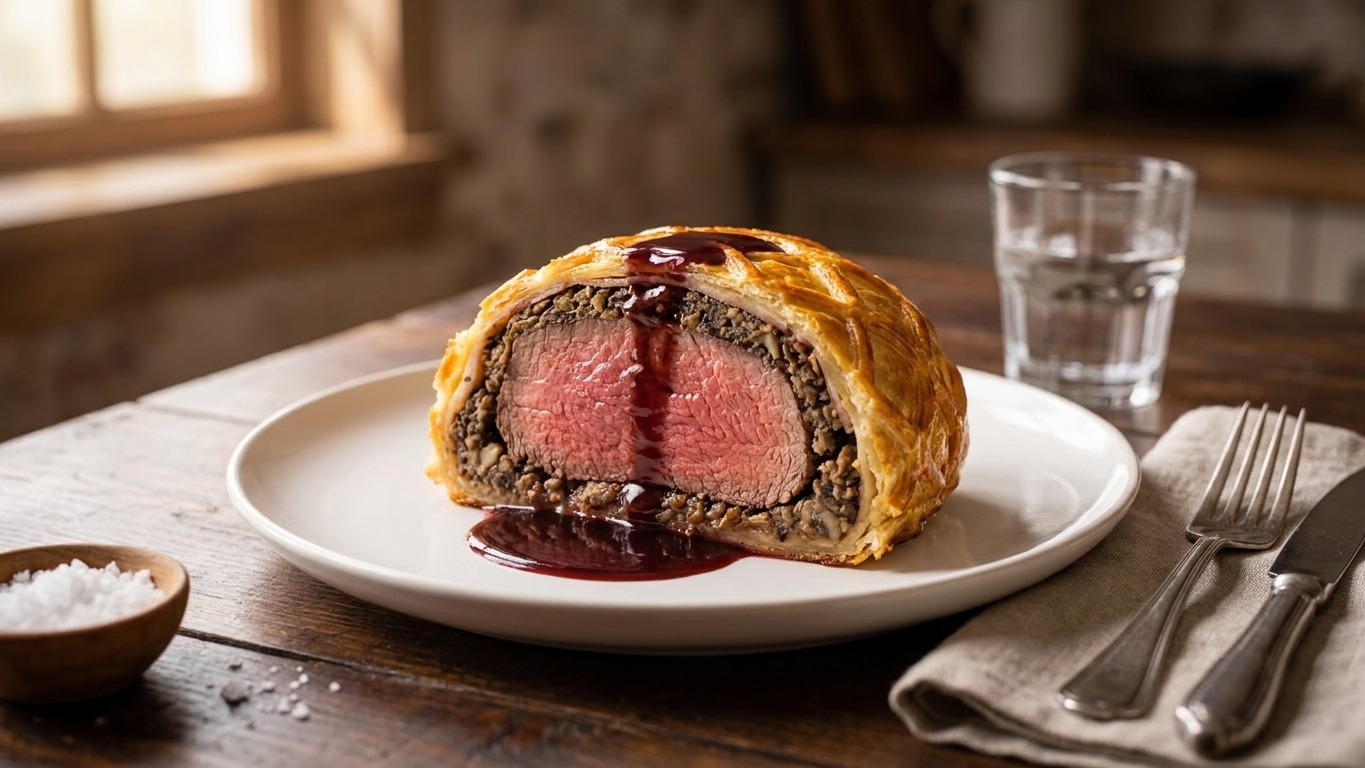
What cut of beef is best for Gordon Ramsay-style Wellington?
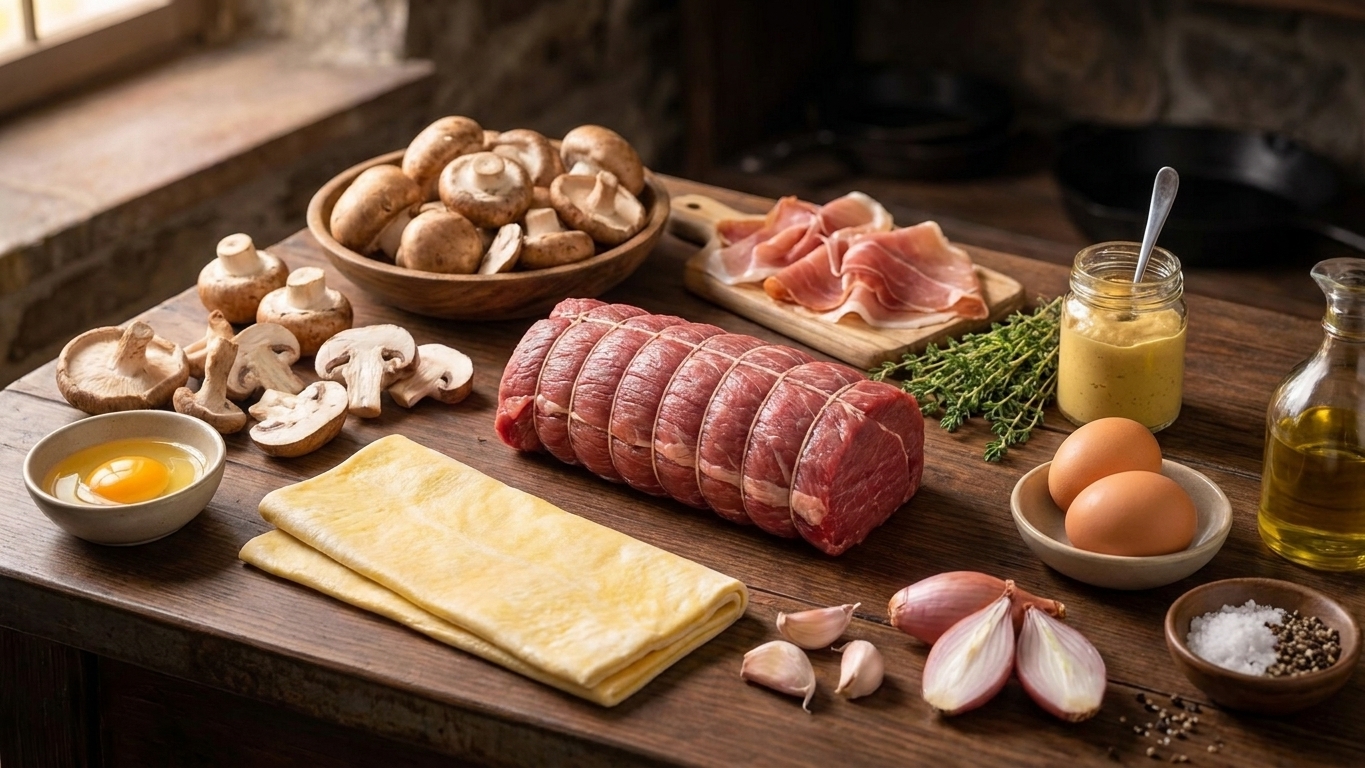
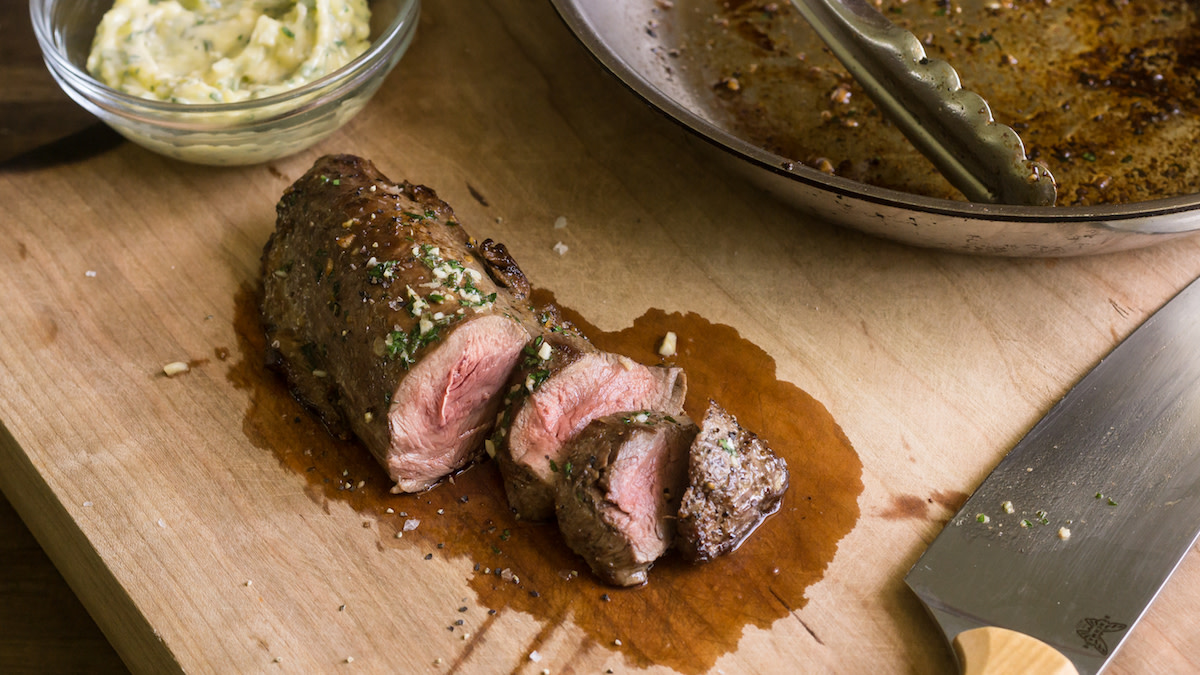
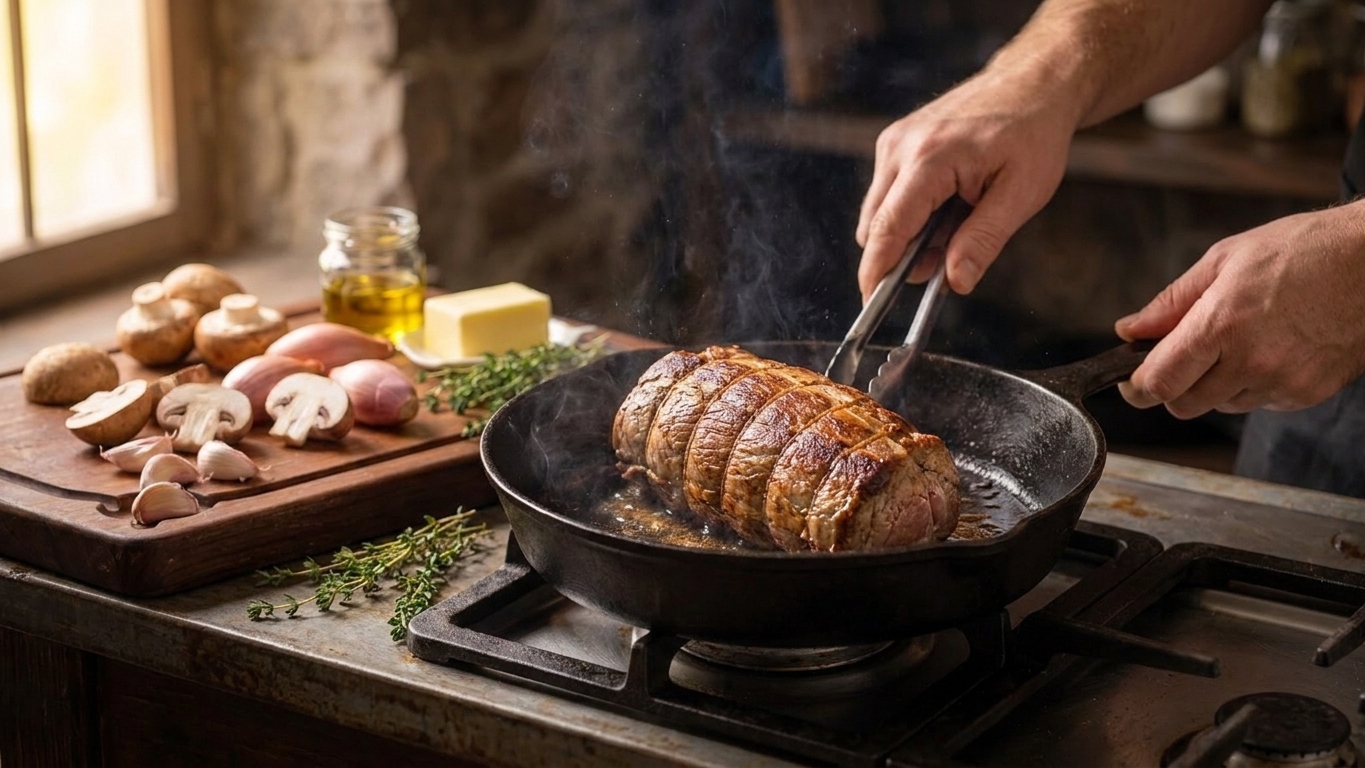
Center-cut beef tenderloin is the classic. Look for an even thickness so it cooks evenly. If your tenderloin has a thinner tail, tuck it under and tie it so you get a more uniform cylinder.
Do I have to use prosciutto?
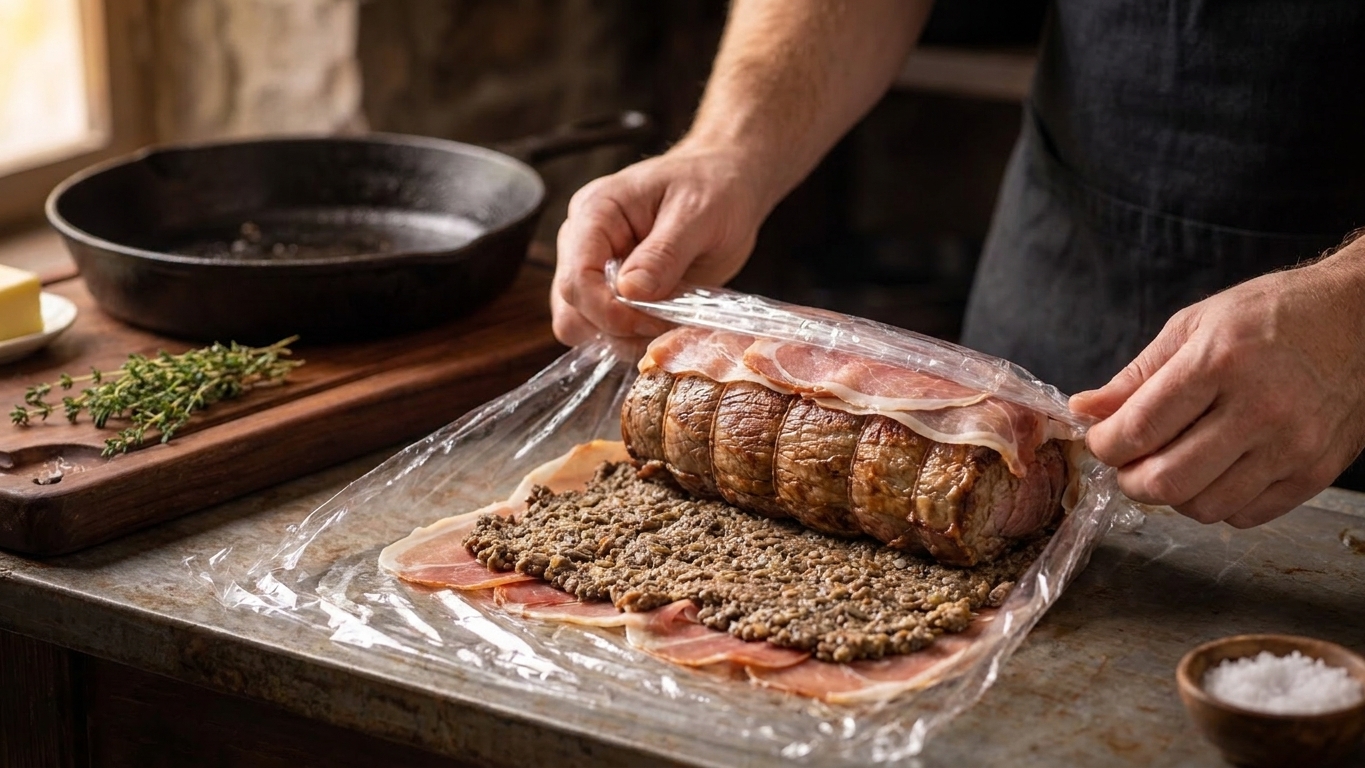
It is traditional in this style because it adds a salty layer and helps protect the pastry from moisture. If you cannot find prosciutto, thinly sliced speck or even good deli ham can work. Just keep it thin and overlap it well.
How do I keep the bottom from getting soggy?
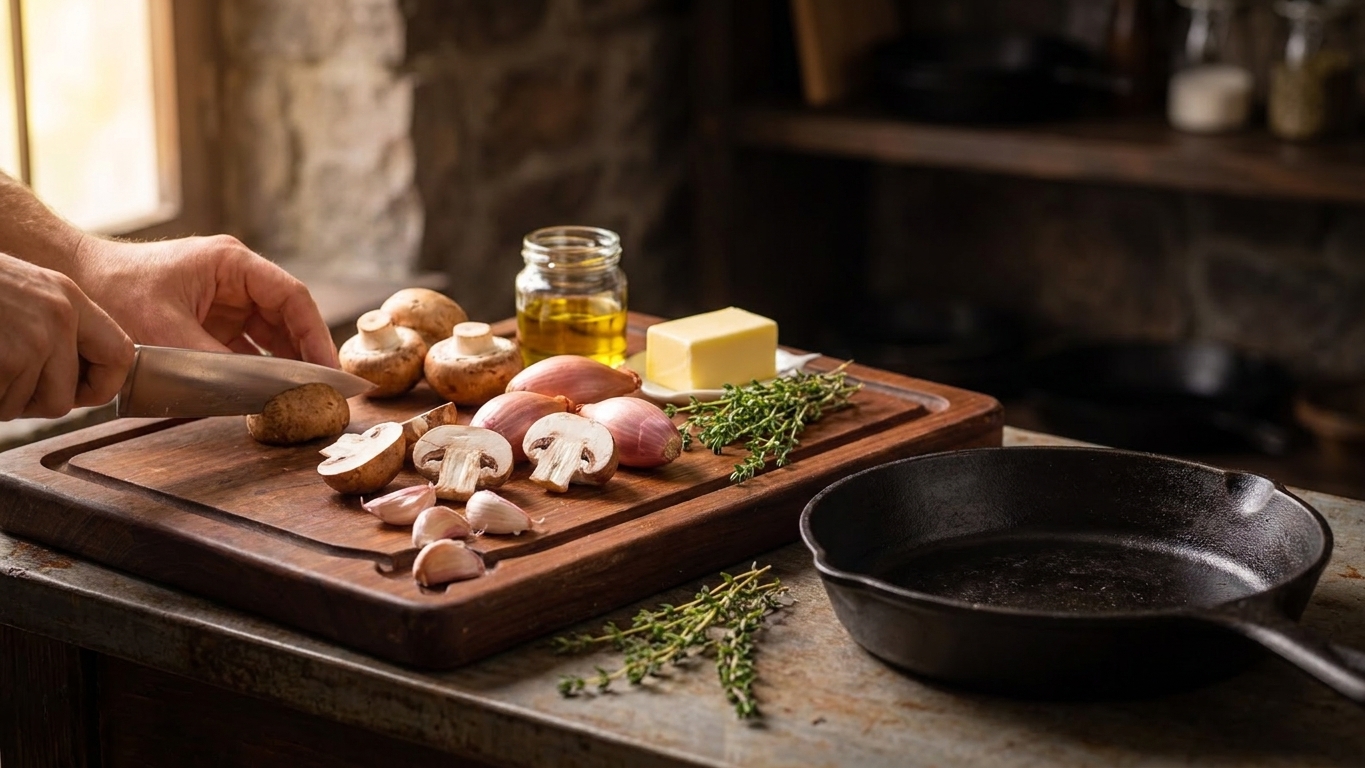
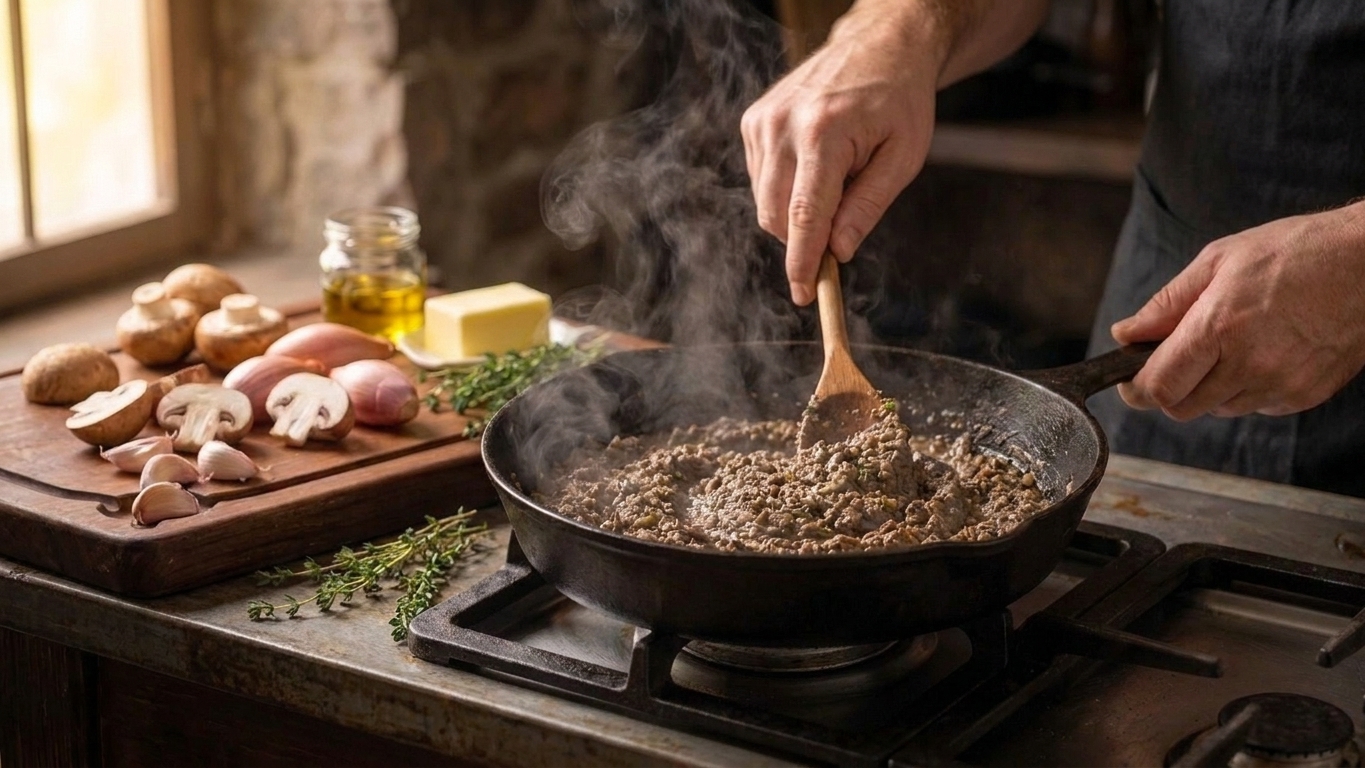
- Cook the duxelles until it is very dry.
- Chill the wrapped log before adding pastry.
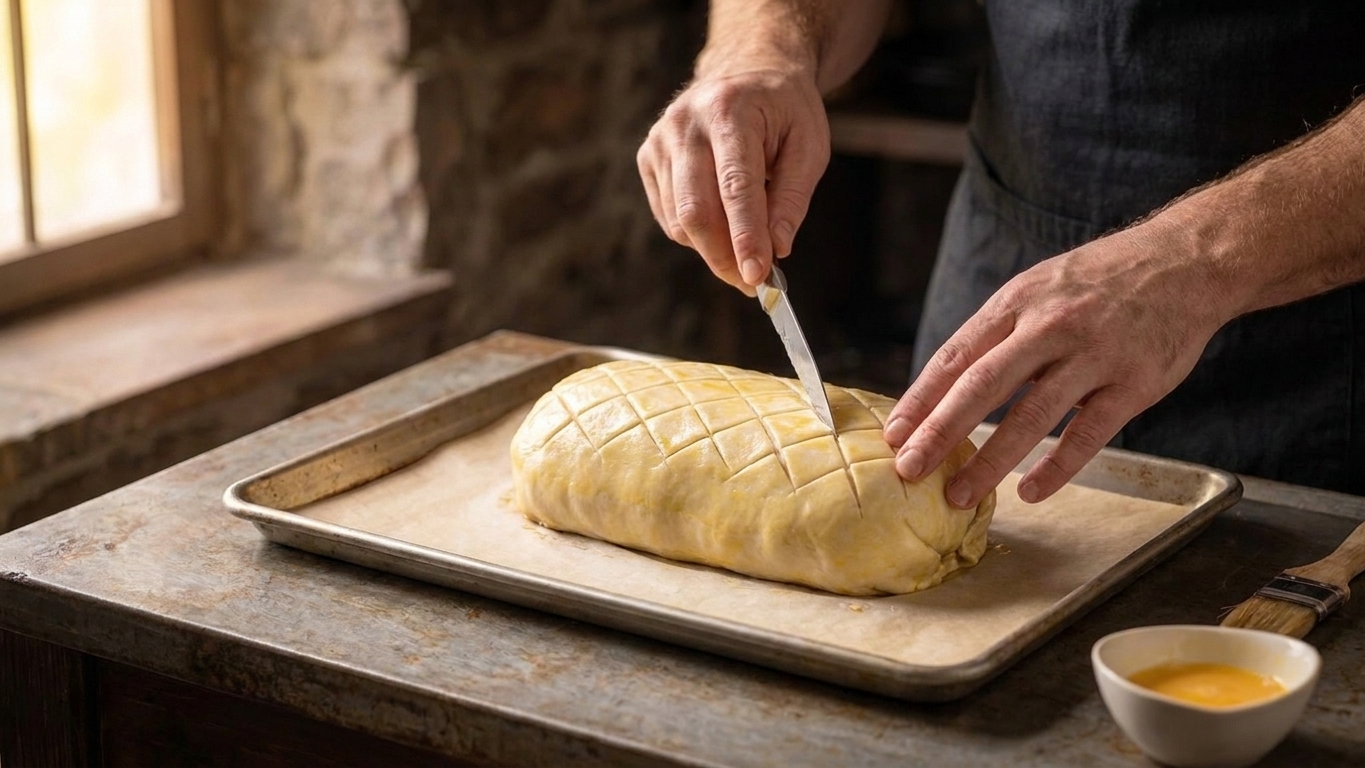
- Bake on a preheated sheet pan so the bottom starts crisping immediately.
What internal temperature should I aim for?
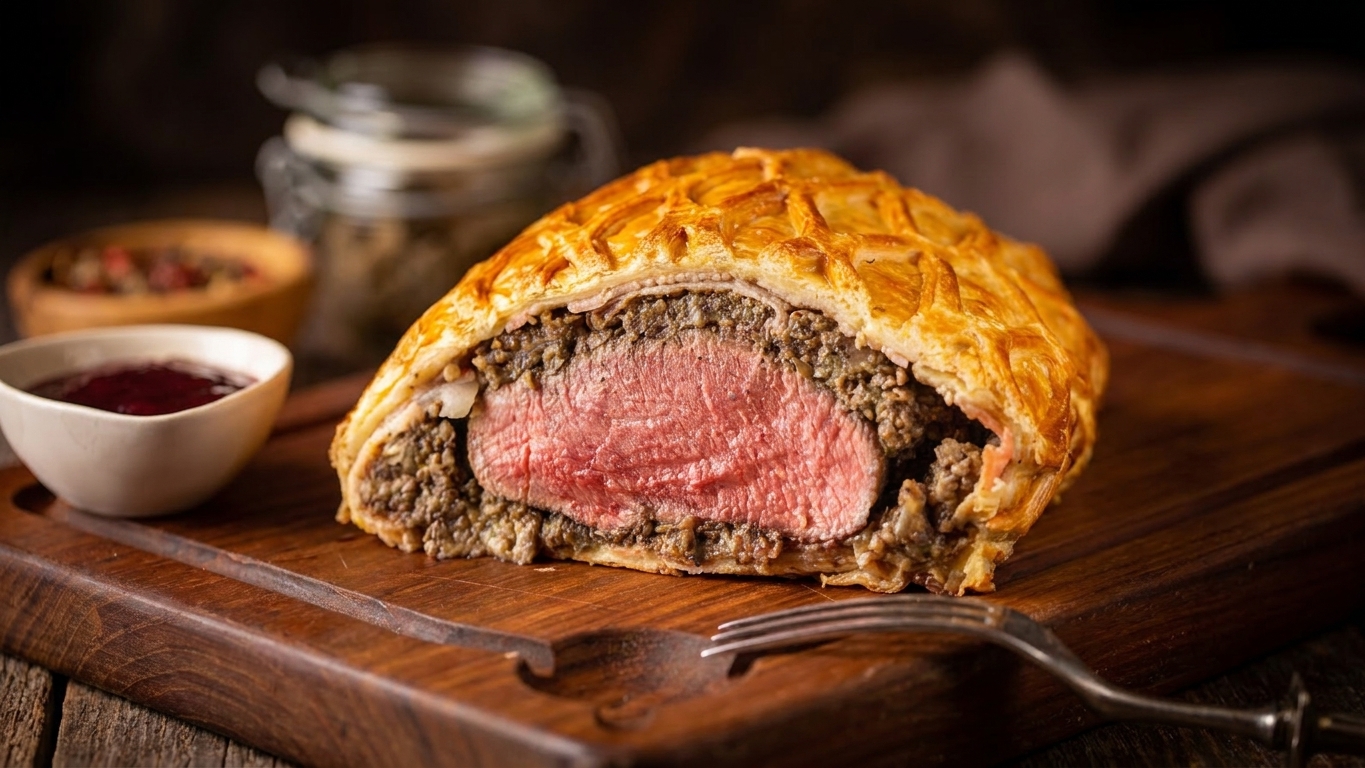
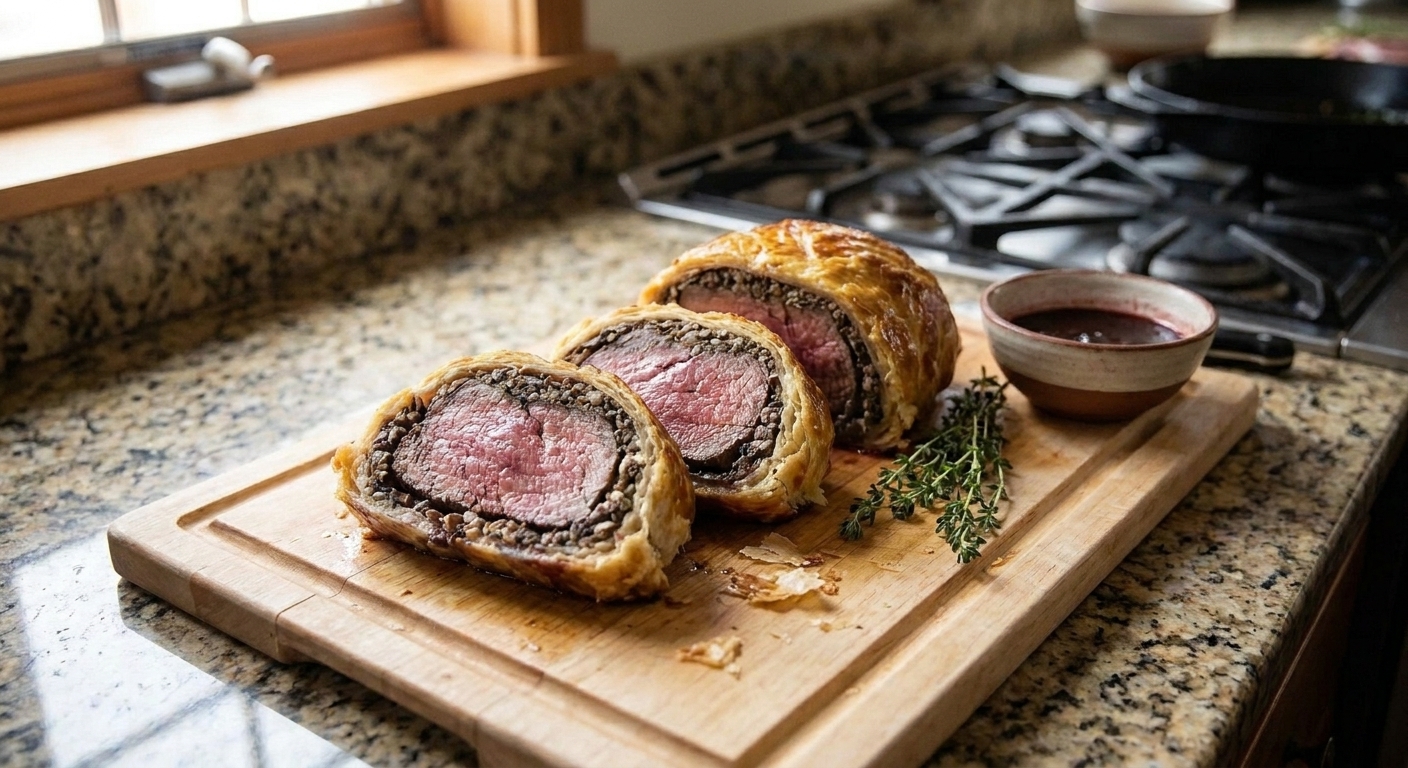
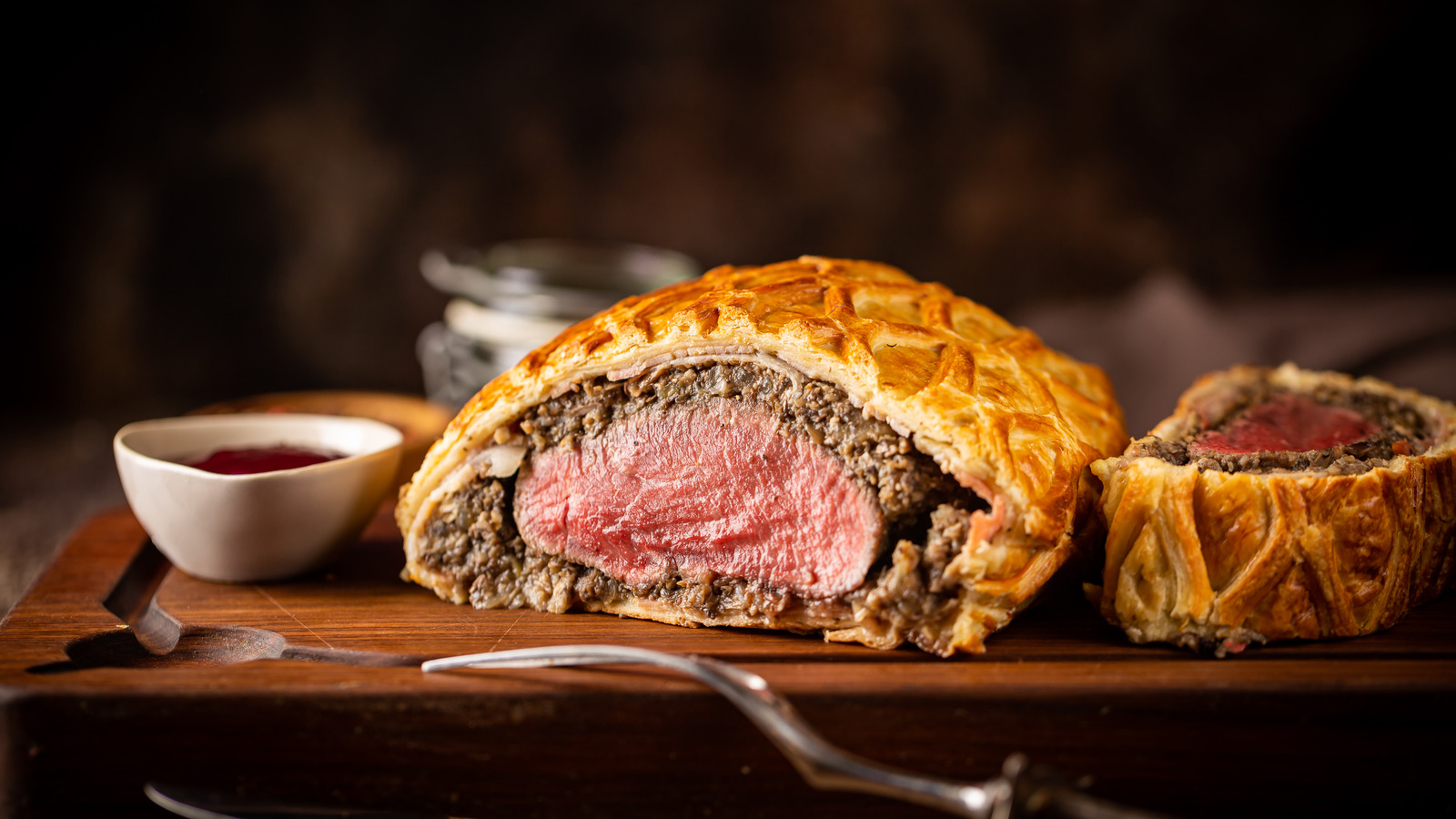
For a classic medium-rare center, aim to pull the Wellington when the thickest part reads 120 to 125°F, then rest 10 to 15 minutes. Carryover varies in Wellington (it is insulated by duxelles and pastry), so use this as a guide and trust your thermometer. If you like it rarer, start checking early and consider pulling closer to 115 to 120°F. If you prefer medium, pull closer to 128 to 130°F.
Can I assemble Beef Wellington ahead of time?
Yes, and it is a sanity saver. You can assemble through the prosciutto and duxelles wrap, then chill overnight. You can also wrap in pastry and chill for a few hours. If you fully wrap in pastry a day ahead, the pastry can soften a bit, so I prefer doing the final pastry step the day of when possible.
Any extra insurance if I always get soggy pastry?
Two classic options: add a thin crepe layer between the prosciutto and pastry, or a very thin smear of pâté under the duxelles. Totally optional, but helpful if your mushrooms run juicy or your kitchen runs warm.
What sauce goes with it?
Ramsay often serves Wellington with a rich sauce. At home, a quick pan sauce with red wine, beef stock, and a knob of butter is perfect. Even a spoon of horseradish cream is a fun, punchy move.