Mom's Best Recipes
Recipe

Gordon Ramsay Style Beef Wellington

A classic Beef Wellington you can actually pull off: deeply seasoned beef tenderloin, tight mushroom duxelles, prosciutto wrap, and shatteringly crisp puff pastry.

Author By Matt Campbell
4.8
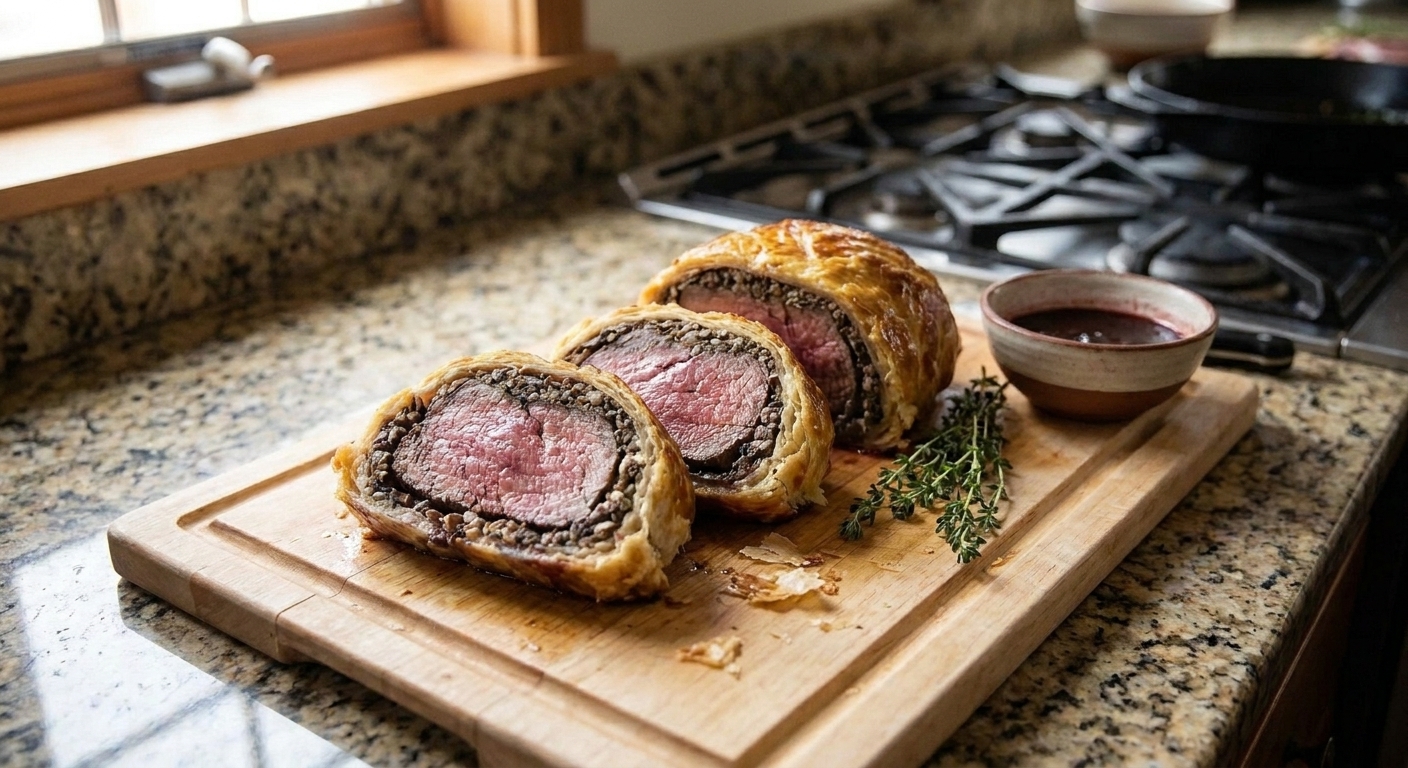
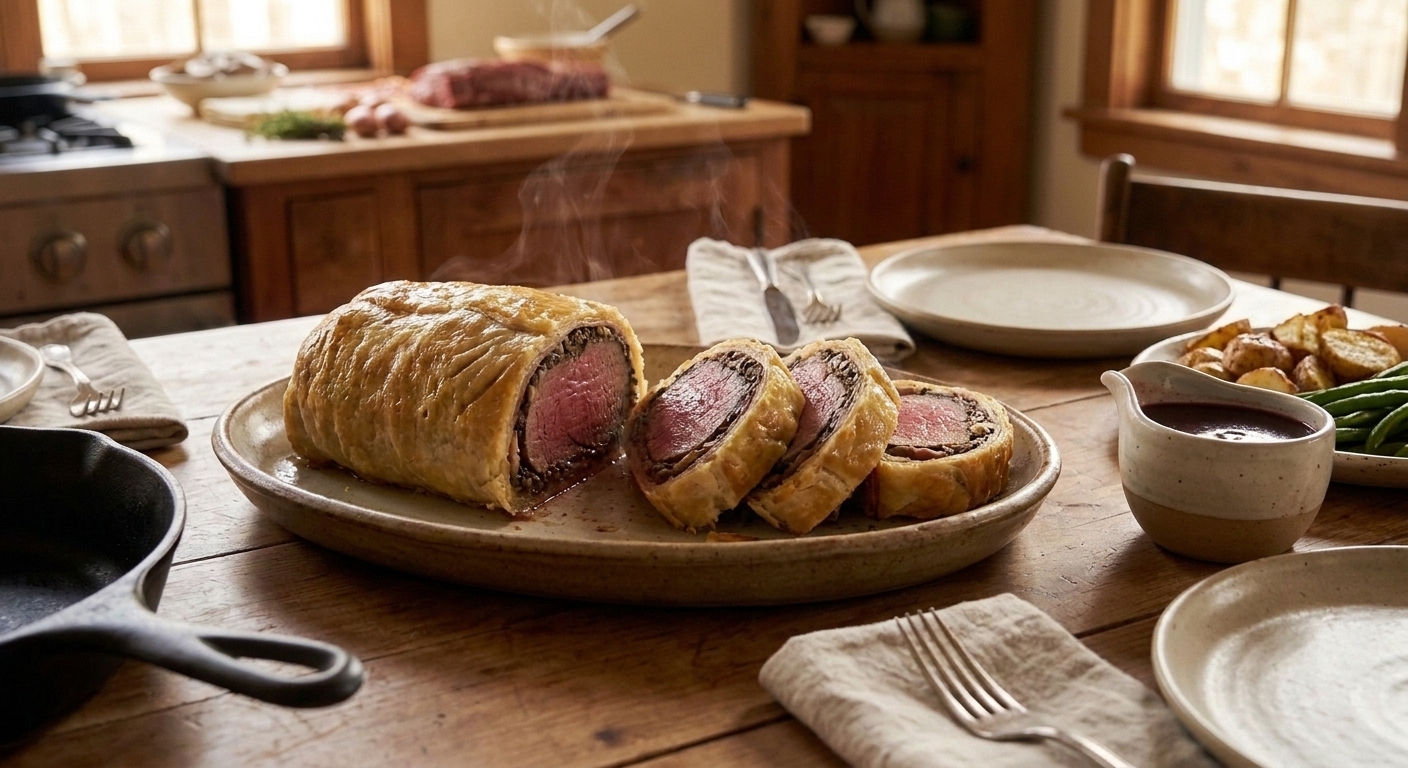
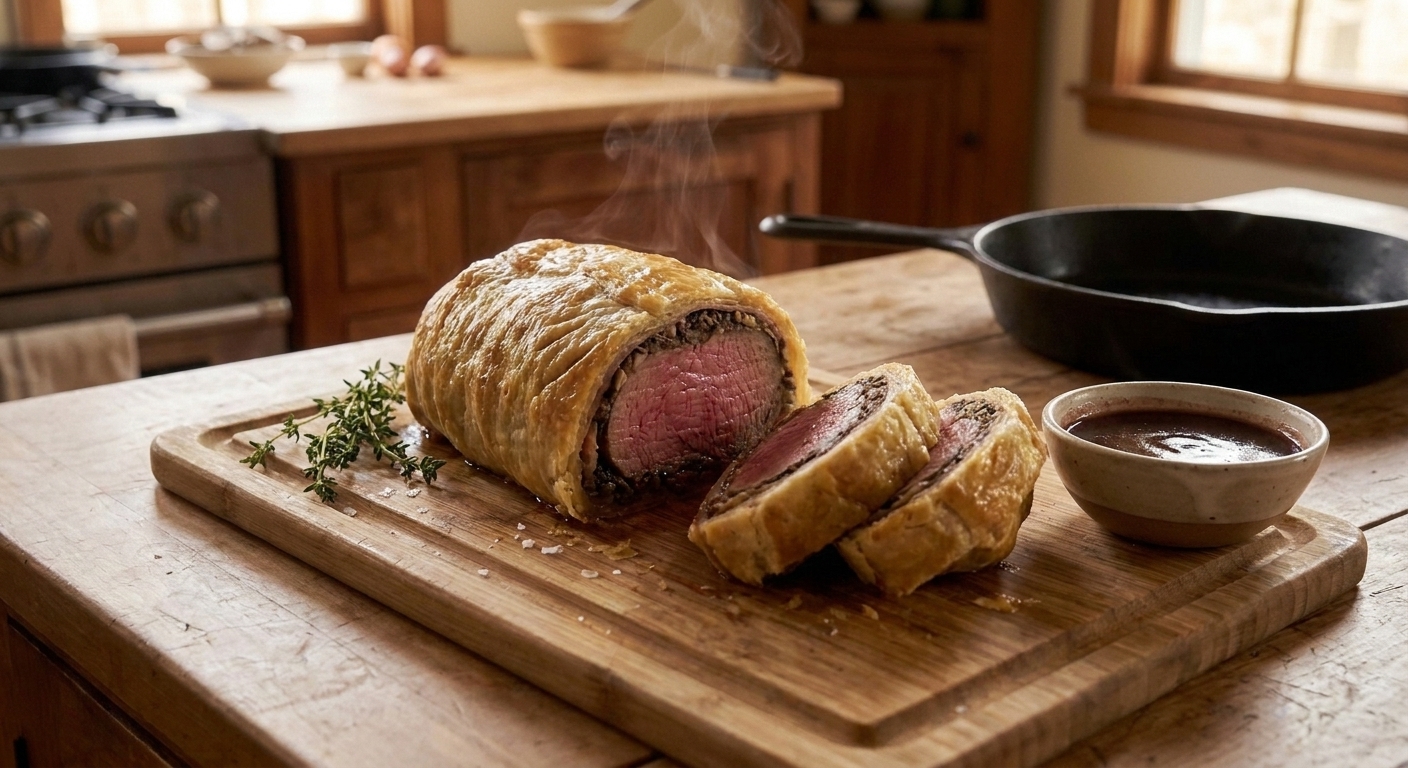
A golden brown Beef Wellington sliced to reveal a rosy medium-rare center, served on a cutting board with a small dish of glossy pan sauce on a warmly lit kitchen counter

Beef Wellington has a reputation. Big holiday energy, high stakes, and the kind of recipe that makes you whisper, “Please do not leak, please do not leak,” at a beautiful little pastry package like it can hear you.

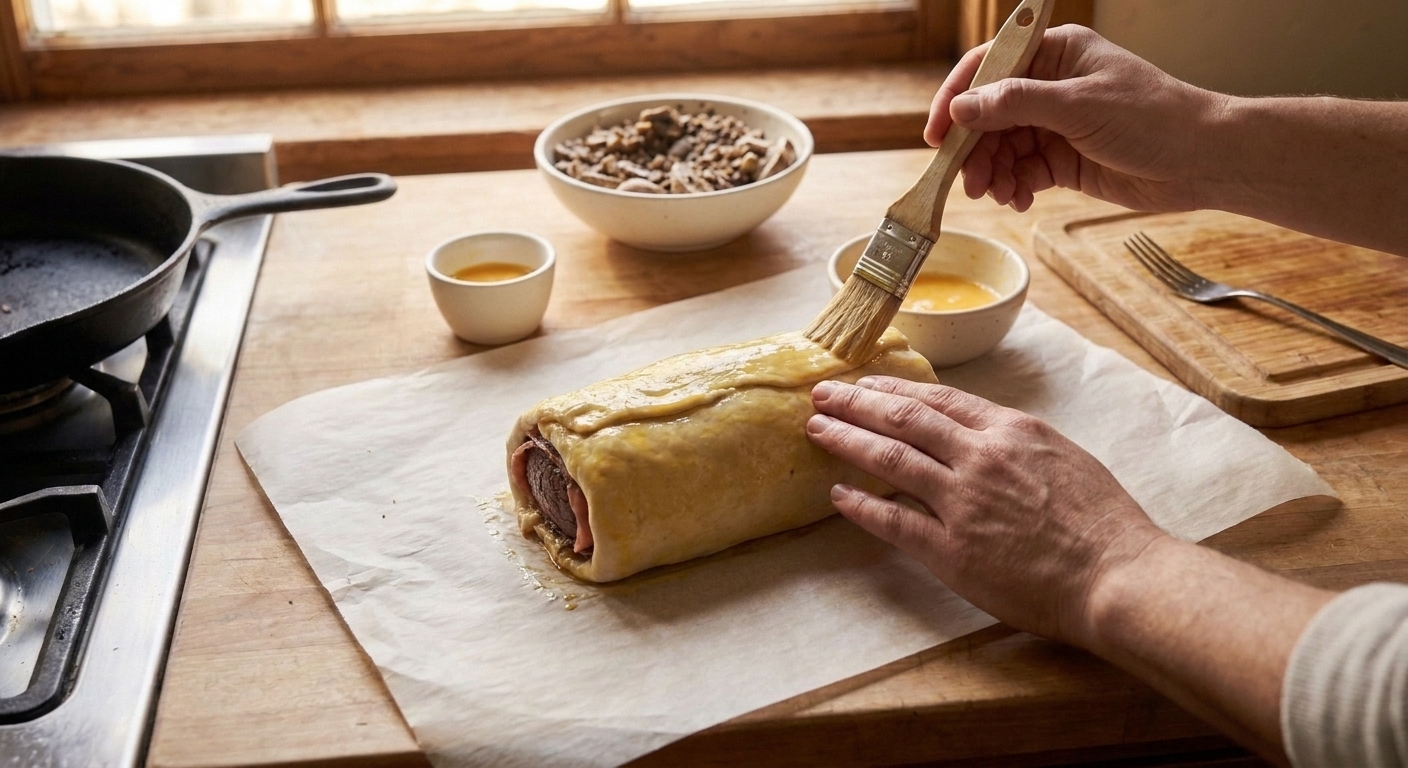
This is my Gordon Ramsay inspired approach, meaning it follows the same general method (seared beef + mustard + duxelles + prosciutto + puff pastry), just simplified for real home kitchens and real humans who would like crisp edges and a tender, blush-pink center without a full-on culinary meltdown.

The key is not secret ingredients. It is dryness, tight wrapping, and temperature control.

Why It Works

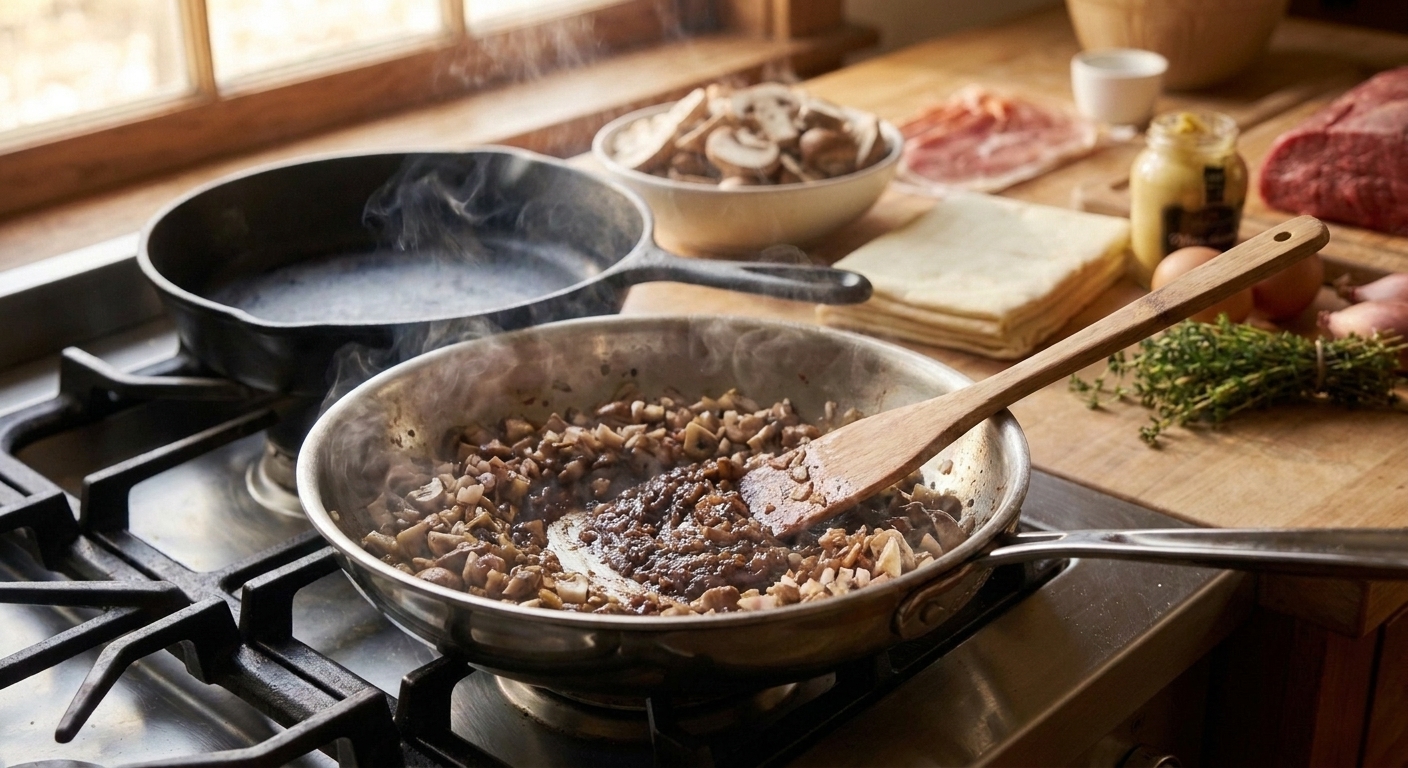
  • Big flavor, not soggy pastry: The duxelles is cooked until dry and paste-like, which keeps the puff pastry crisp instead of steamy.
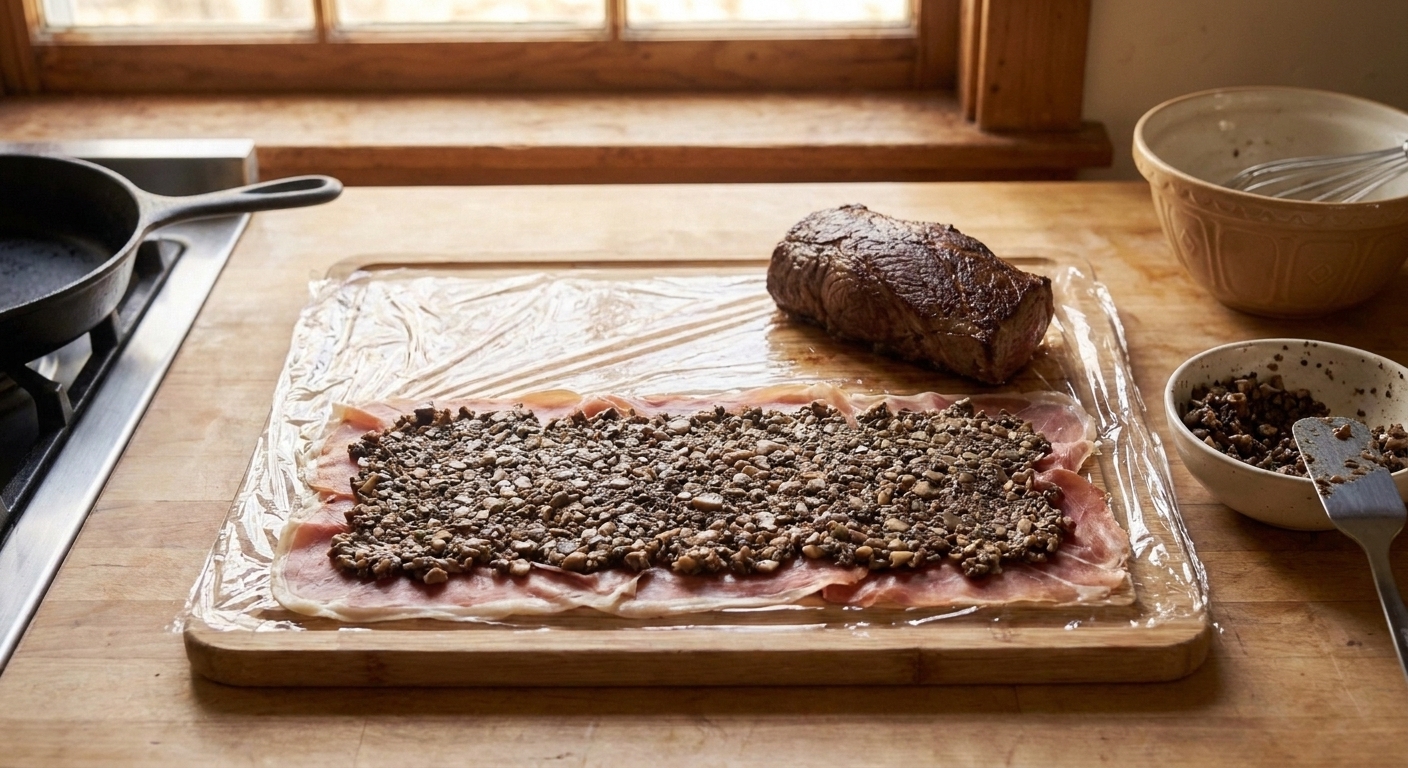
  • Prosciutto as a moisture shield: It adds salt and richness and acts like a very delicious raincoat around the beef.
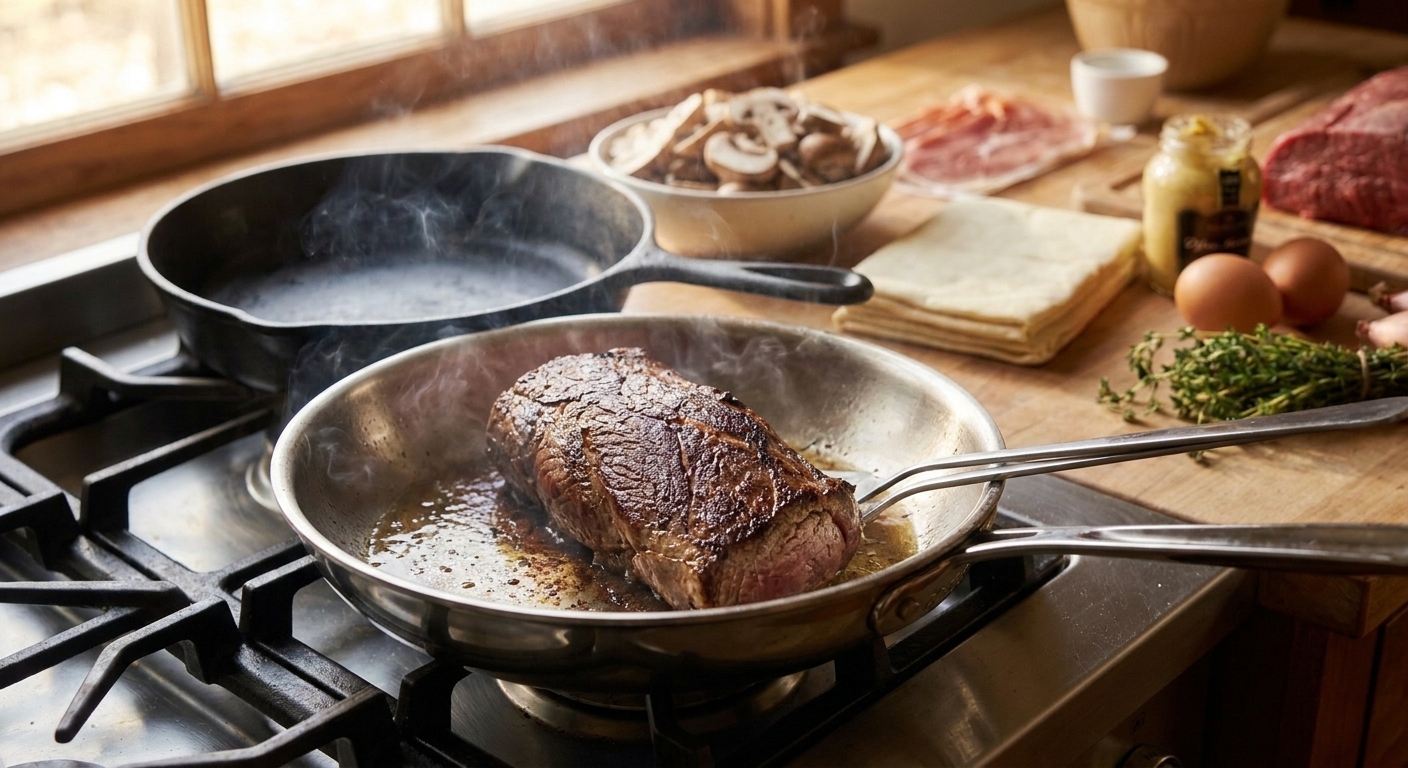
  • Even doneness: A hard sear plus a rest before wrapping keeps juices where they belong. A thermometer finishes the job.
  • Make-ahead friendly: You can build and chill the Wellington before baking, which makes dinner feel suspiciously calm.

Pairs Well With

Storage Tips

Wellington is best the day it is baked, but leftovers can still be great if you reheat them like you respect the pastry.

Refrigerate

  • Cool completely, then wrap slices in foil or place in an airtight container.
  • Refrigerate up to 2 days.

Reheat (best method)

  • Heat oven to 350°F.
  • Place slices on a sheet pan lined with parchment.
  • Warm for 10 to 15 minutes, then add time as needed for thicker slices. If you have one, use a thermometer and pull when the center feels pleasantly hot.
  • If the pastry starts getting too dark, tent loosely with foil.

Freezing

  • Not ideal once baked because the pastry softens and can separate.
  • If you want to freeze, do it unbaked: wrap the assembled Wellington tightly in plastic wrap, then foil, and freeze up to 1 month. Thaw overnight in the fridge before baking.

Common Questions

What cut of beef is used for Gordon Ramsay style Beef Wellington?

Traditionally it is center-cut beef tenderloin (filet). Look for a piece that is evenly thick so it cooks evenly.

How do I keep Beef Wellington from getting soggy?

Three moves: cook the mushrooms until very dry, cool everything before wrapping, and chill the wrapped Wellington before baking so the pastry starts cold and puffs fast.

What internal temperature should Beef Wellington be?

Use these as pull temps (temperature when you take it out). Resting usually brings it up about 5°F-ish (it can vary depending on size and starting temp).

  • Rare (final 125°F to 130°F): pull at 120°F to 125°F
  • Medium-rare (final 130°F to 135°F): pull at 125°F to 130°F
  • Medium (final 140°F to 145°F): pull at 135°F to 140°F

I usually pull mine at 125°F to 128°F, which typically finishes around 130°F to 133°F after resting, depending on thickness.

Where do I put the thermometer?

Insert it into the center of the beef from the side (not straight down through the top) so you do not create a juice highway through your pastry.

Can I make Beef Wellington ahead of time?

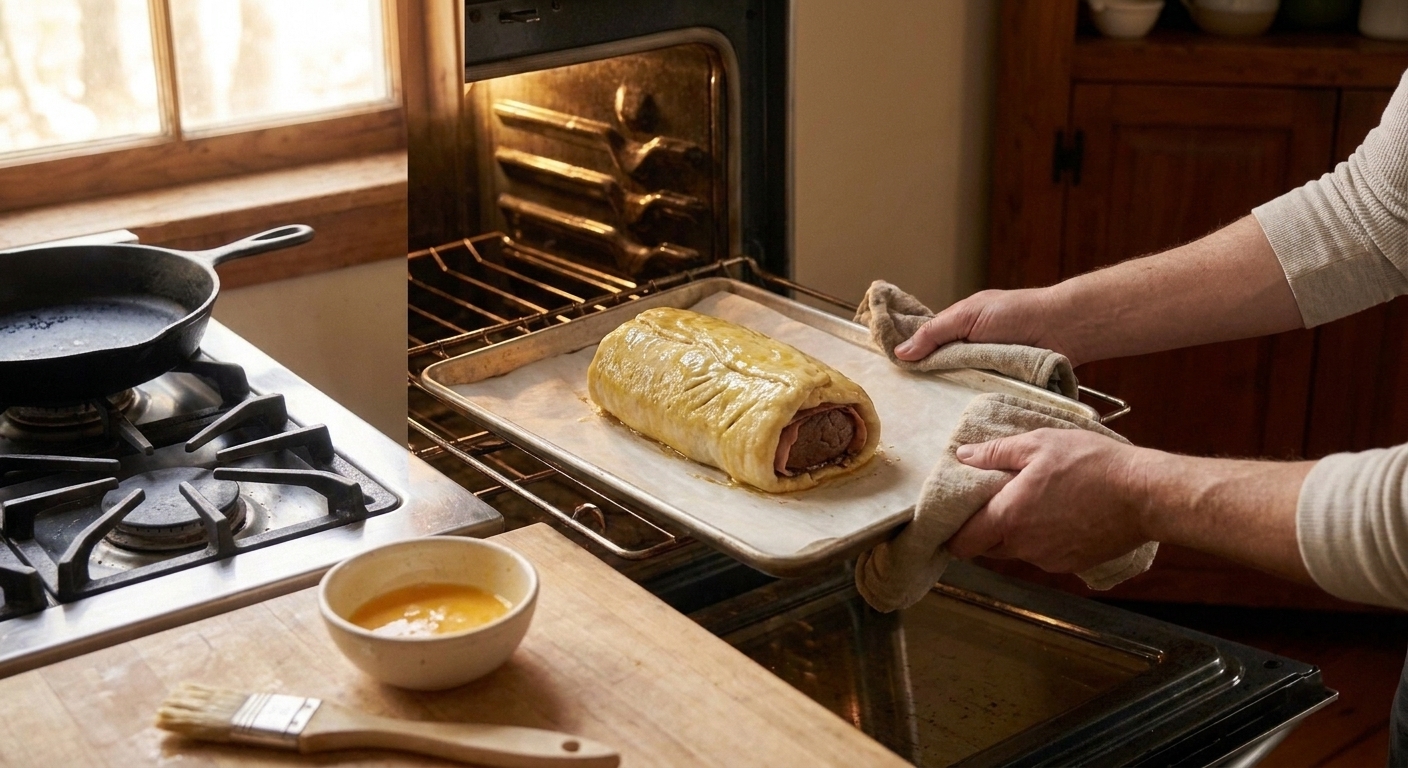
Yes. You can assemble the Wellington through the pastry wrap, then chill it up to 24 hours before baking. Brush with egg wash right before it goes in the oven.

Do I need pâté?

No. Some versions use pâté or foie gras for extra richness, but this recipe sticks to a strong duxelles plus prosciutto for a more accessible build.

Why did my pastry split or leak?

Most common causes are under-chilled pastry, too much moisture in the filling, or seams not sealed. Chill the wrapped Wellington until firm, seal seams with egg wash, and add a couple of small steam vents on top.

The first time I made Beef Wellington, I treated it like a school project and still managed to panic-chill it in the freezer next to a bag of peas. It worked, but barely. What I learned is this: Wellington is not hard, it is just unforgiving about moisture. Once I started cooking the mushrooms until they were basically a savory paste and chilling the whole roll until it felt firm in my hands, the recipe stopped feeling like a stunt and started feeling like a flex I could actually repeat.