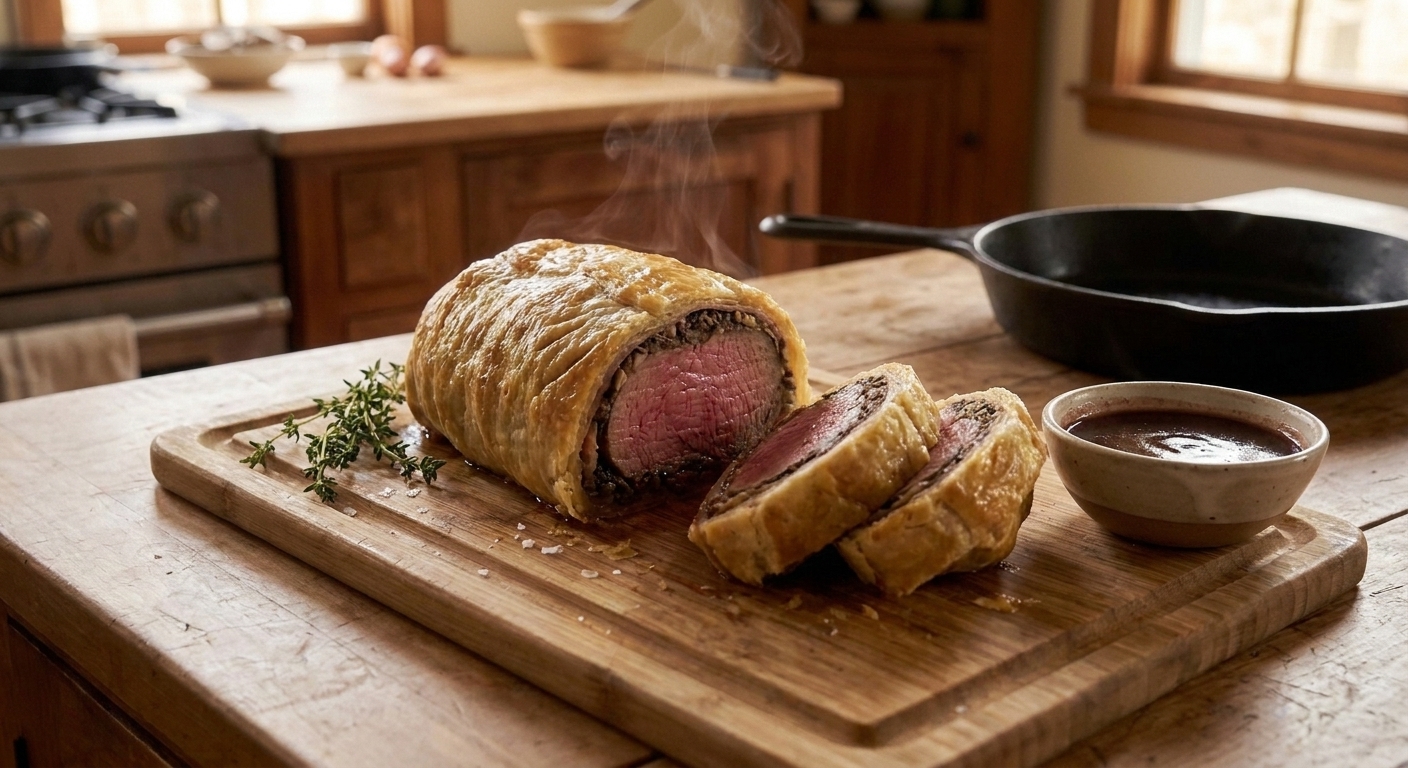
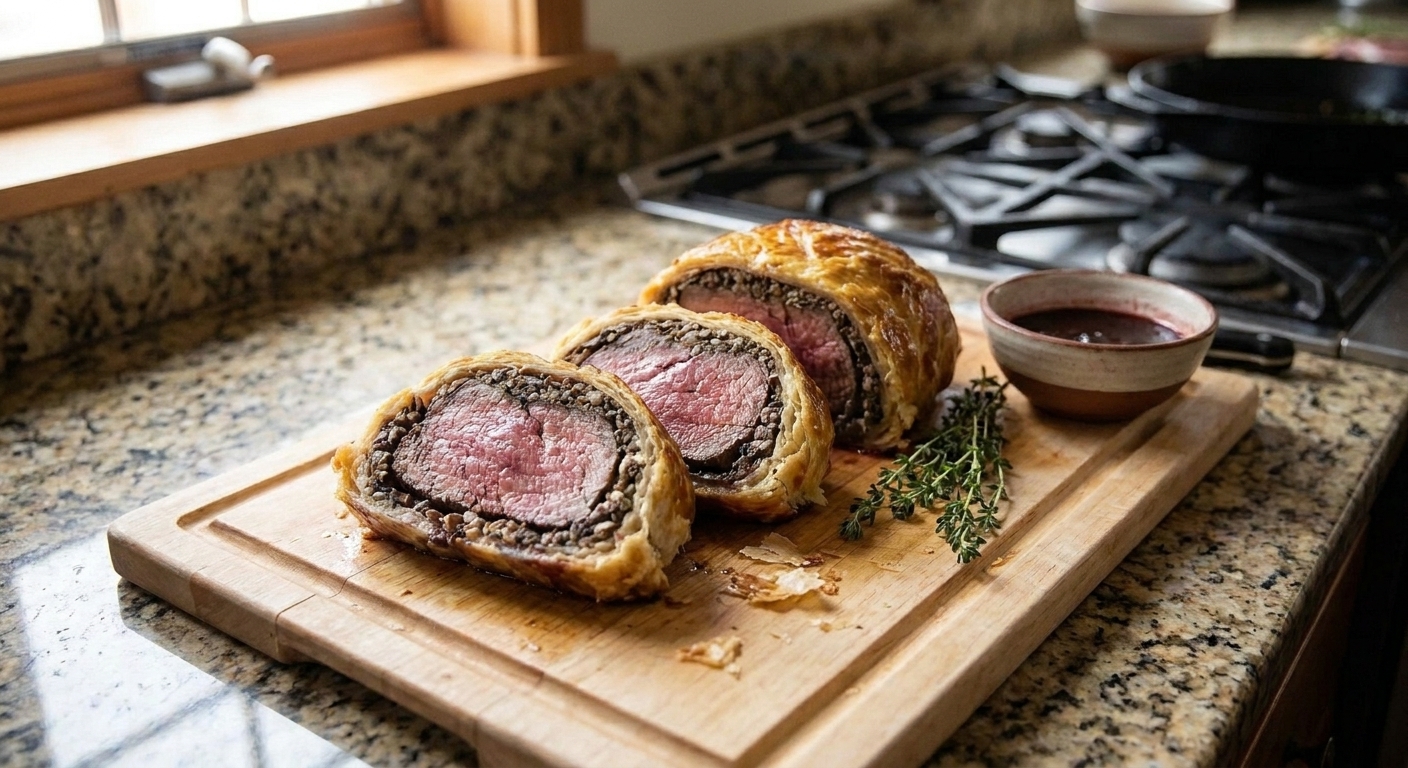
What cut of beef is used for Gordon Ramsay style Beef Wellington?
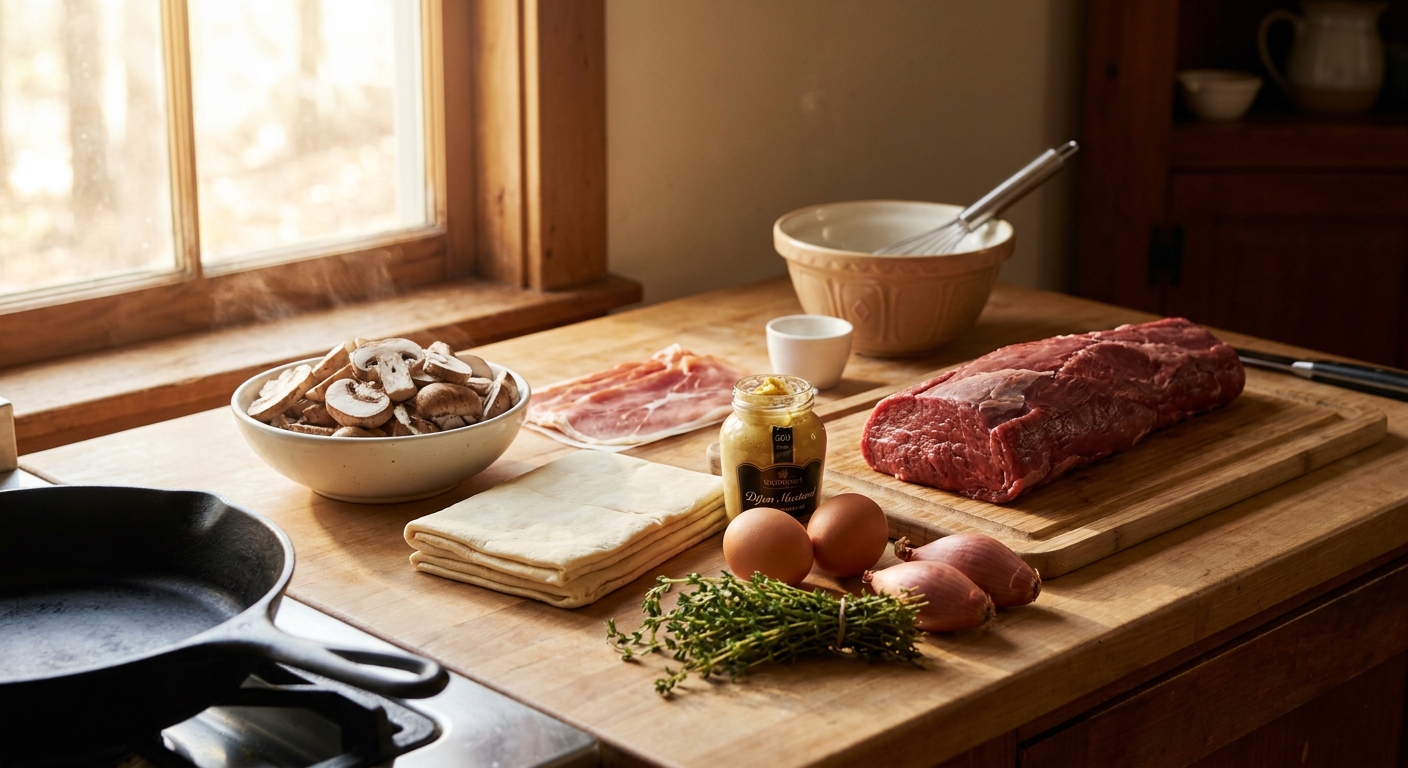
Traditionally it is center-cut beef tenderloin (filet). Look for a piece that is evenly thick so it cooks evenly.
How do I keep Beef Wellington from getting soggy?
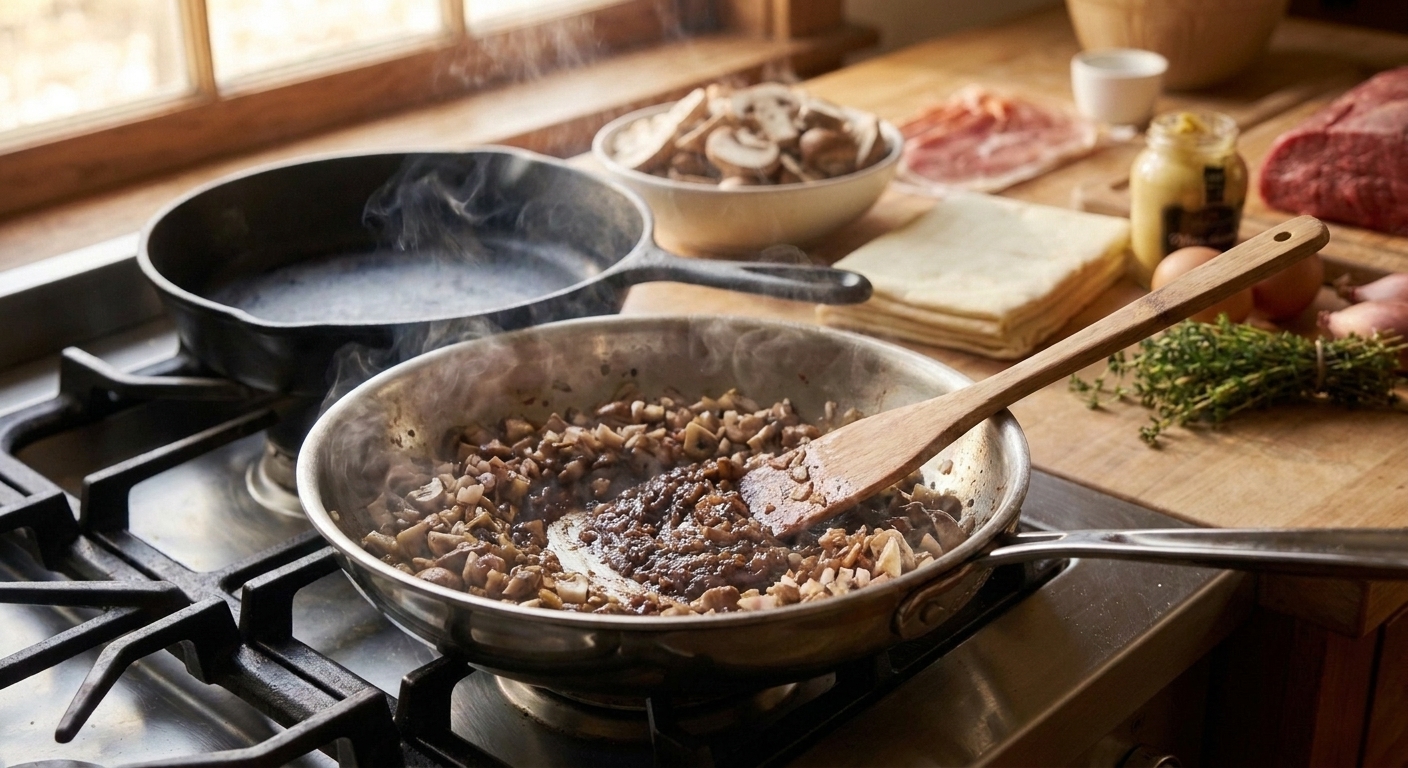
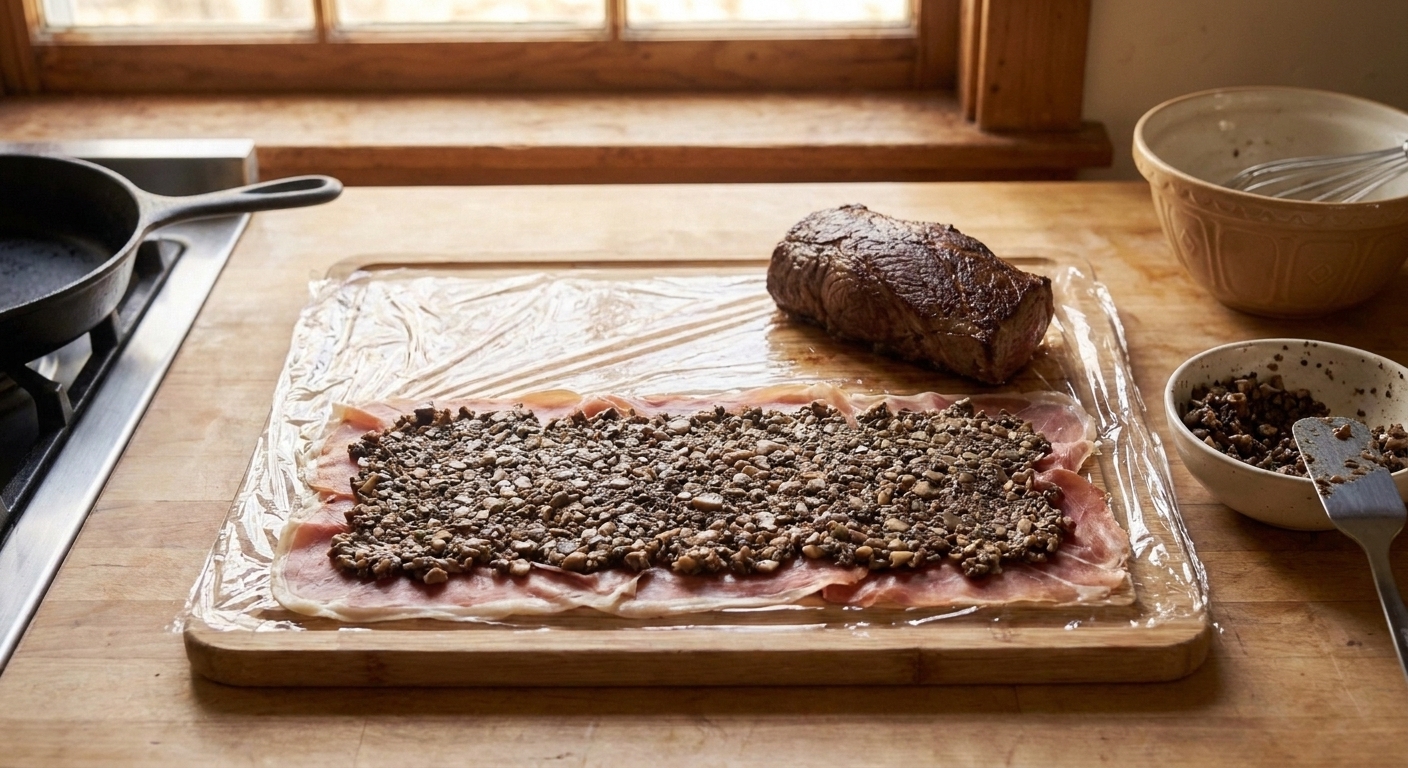
Three moves: cook the mushrooms until very dry, cool everything before wrapping, and chill the wrapped Wellington before baking so the pastry starts cold and puffs fast.
What internal temperature should Beef Wellington be?
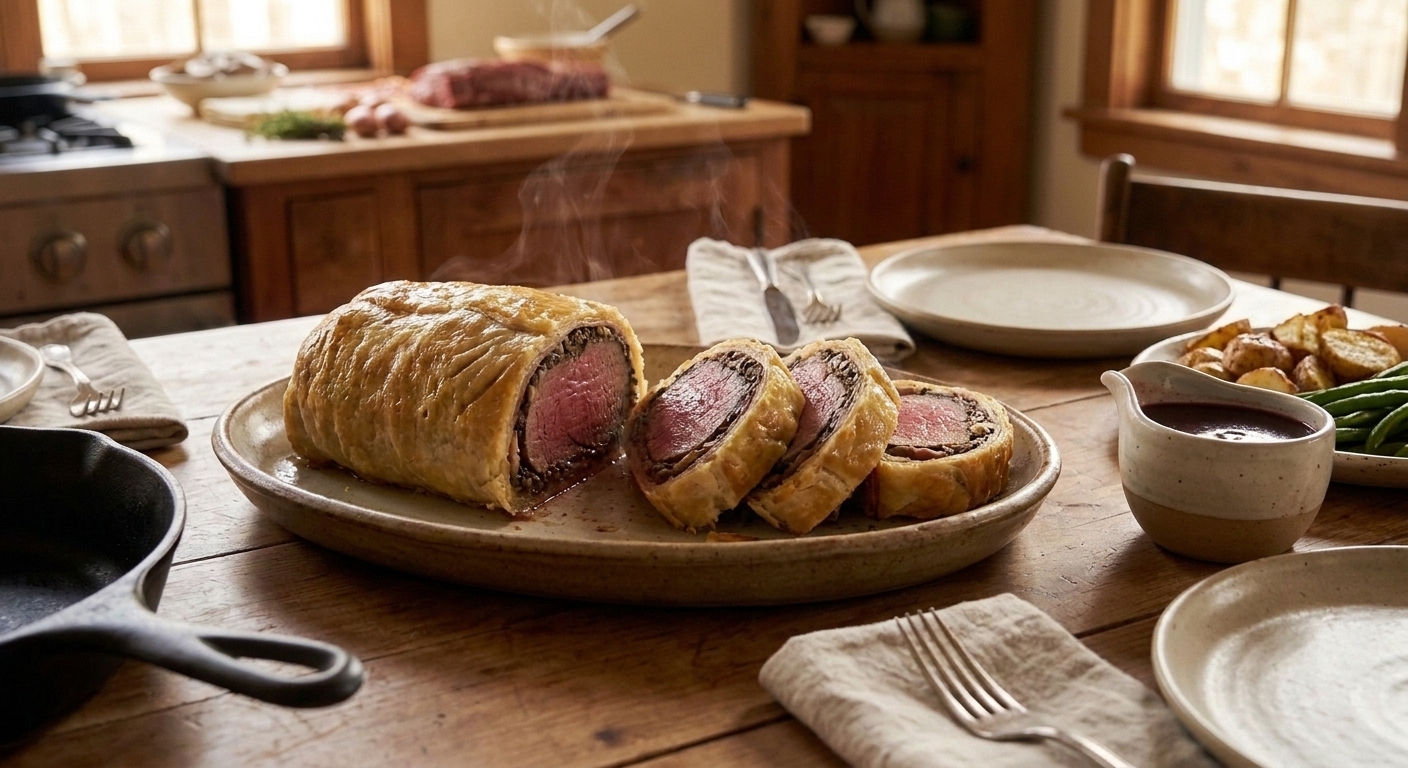
Use these as pull temps (temperature when you take it out). Resting usually brings it up about 5°F-ish (it can vary depending on size and starting temp).
- Rare (final 125°F to 130°F): pull at 120°F to 125°F
- Medium-rare (final 130°F to 135°F): pull at 125°F to 130°F
- Medium (final 140°F to 145°F): pull at 135°F to 140°F
I usually pull mine at 125°F to 128°F, which typically finishes around 130°F to 133°F after resting, depending on thickness.
Where do I put the thermometer?
Insert it into the center of the beef from the side (not straight down through the top) so you do not create a juice highway through your pastry.
Can I make Beef Wellington ahead of time?
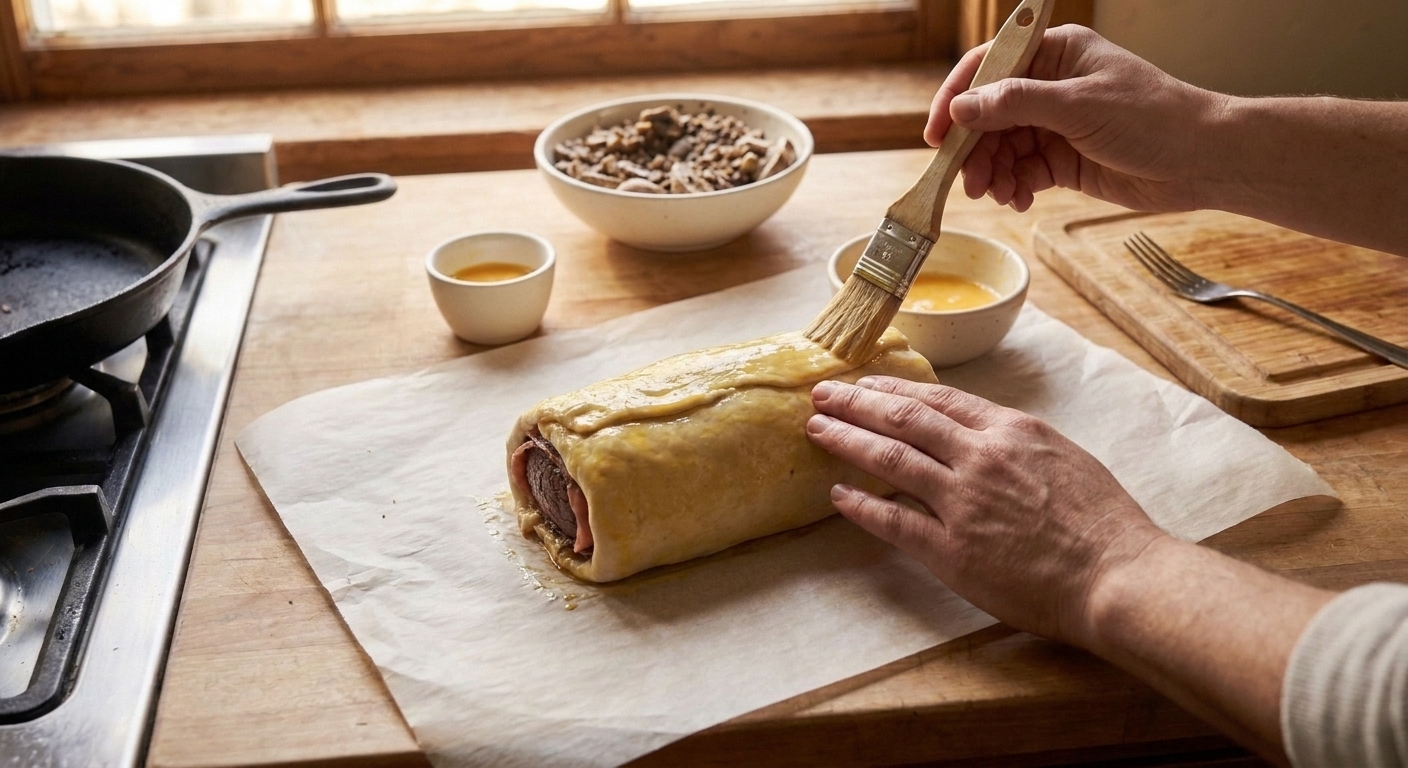
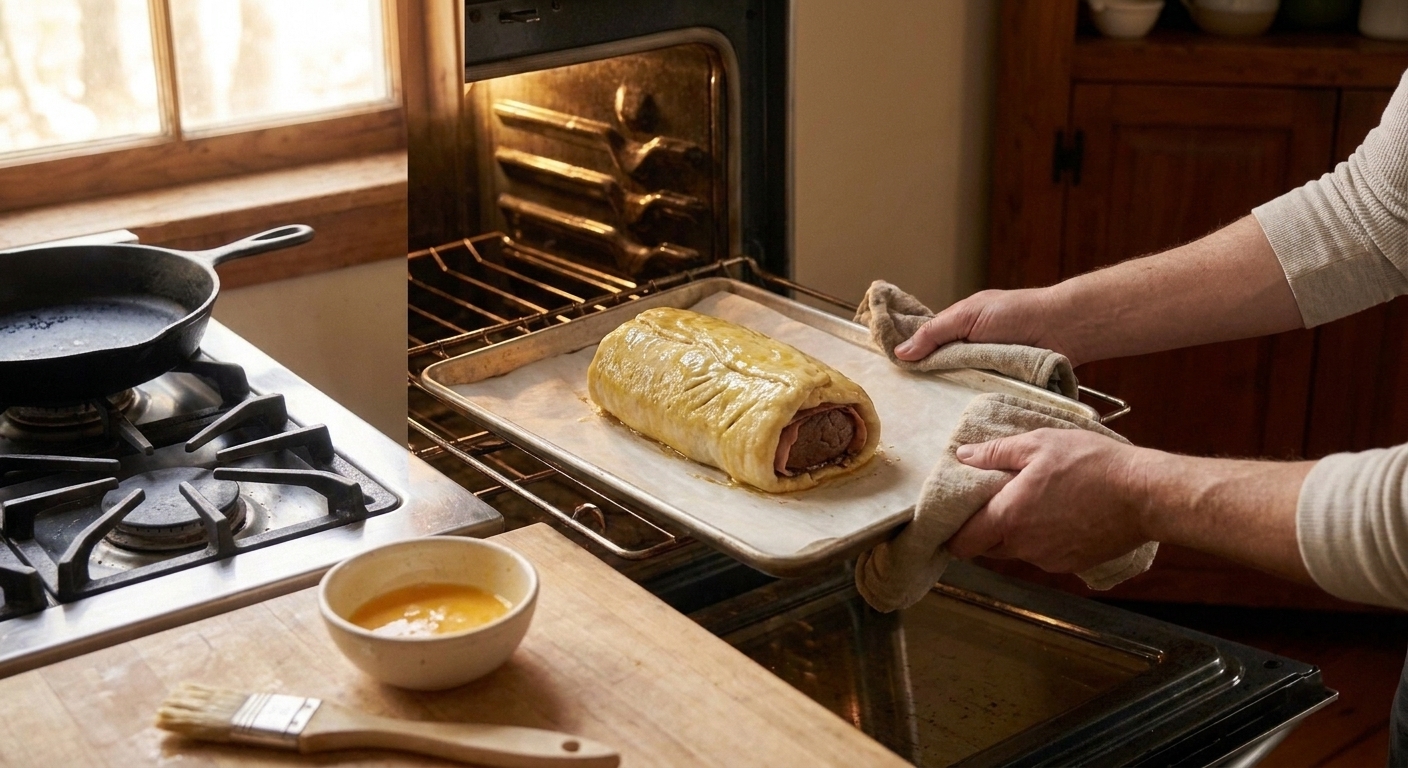
Yes. You can assemble the Wellington through the pastry wrap, then chill it up to 24 hours before baking. Brush with egg wash right before it goes in the oven.
Do I need pâté?
No. Some versions use pâté or foie gras for extra richness, but this recipe sticks to a strong duxelles plus prosciutto for a more accessible build.
Why did my pastry split or leak?
Most common causes are under-chilled pastry, too much moisture in the filling, or seams not sealed. Chill the wrapped Wellington until firm, seal seams with egg wash, and add a couple of small steam vents on top.