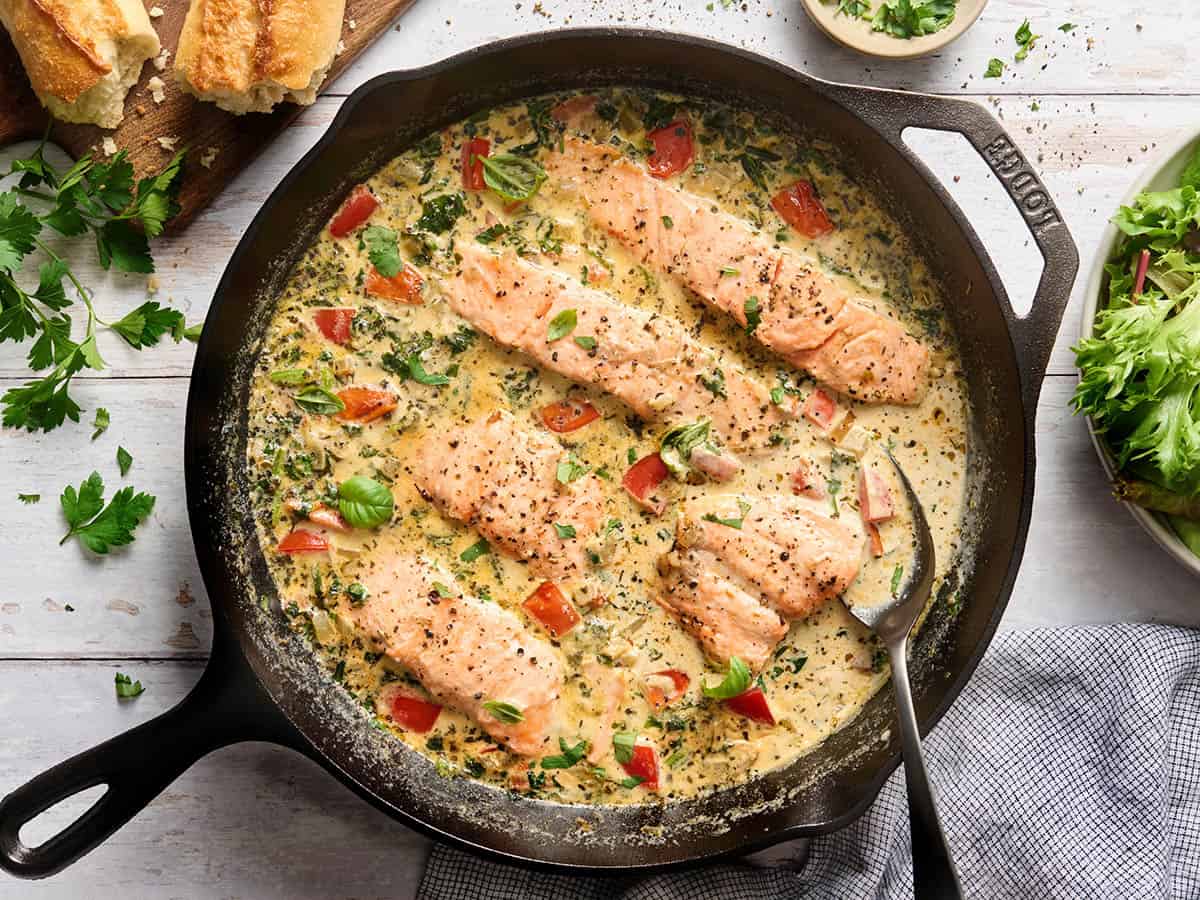
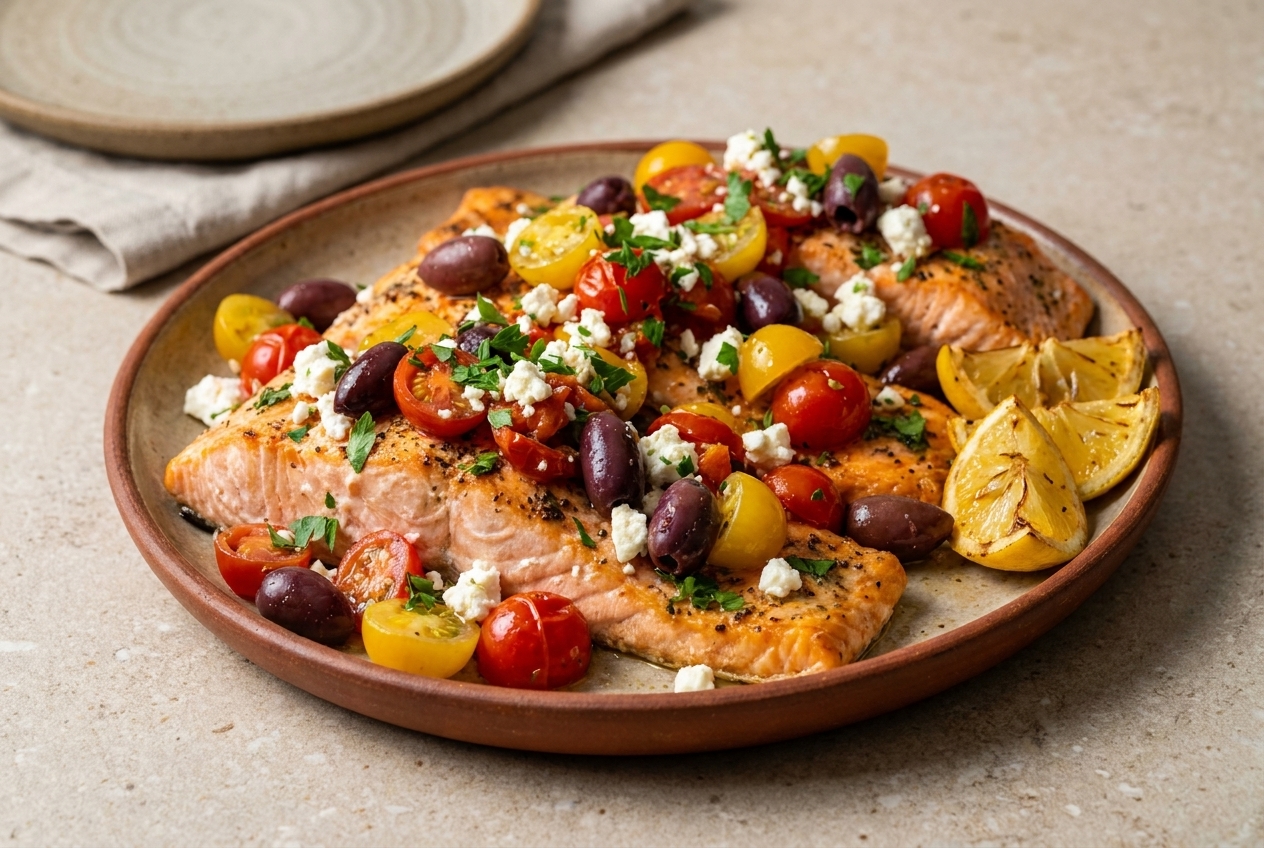
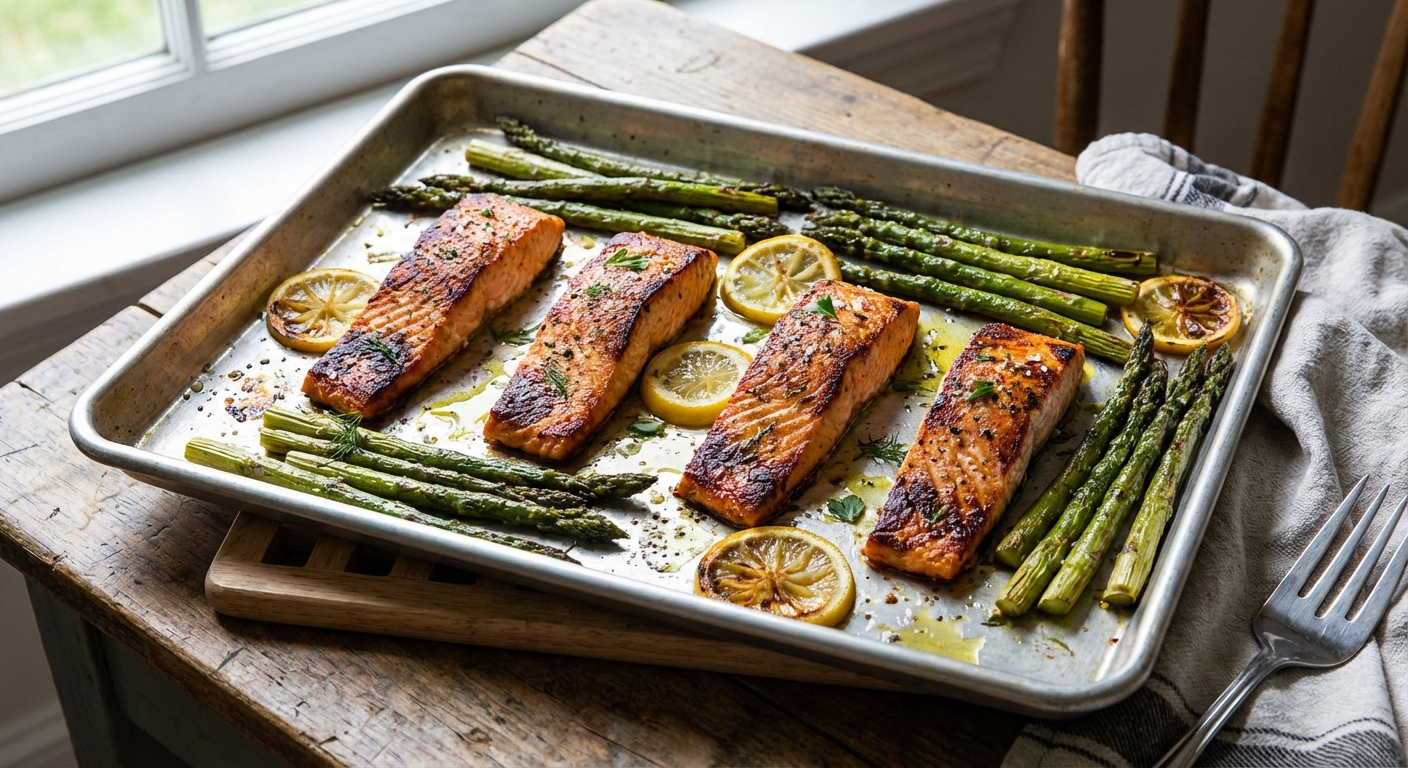
What is the healthiest way to cook salmon?
Baking, grilling, air frying, and pan searing with a small amount of oil are all great. The “healthiest” move is mostly about not overcooking it, so you keep the texture, and you are not tempted to drown it in heavy sauces after the fact.
How do I know when salmon is done?
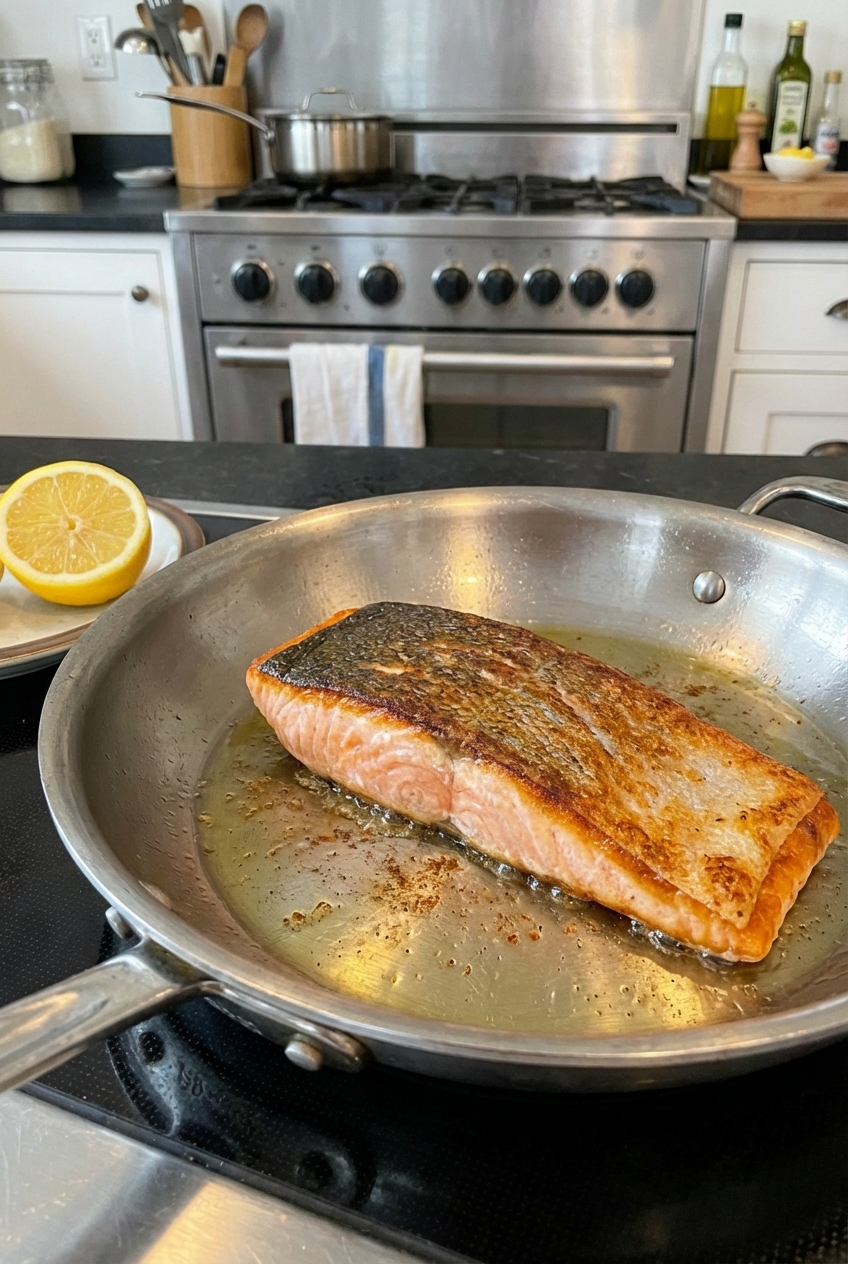
Look for salmon that flakes easily with a fork and turns opaque on the outside while staying slightly translucent in the center. If you like numbers, many cooks aim for 125°F to 130°F in the thickest part for moist, medium salmon, then let carryover heat finish the job. Food safety note: USDA recommends 145°F for cooked fish. Choose the temp that matches your comfort level and the people you are feeding.
Should I keep the skin on?
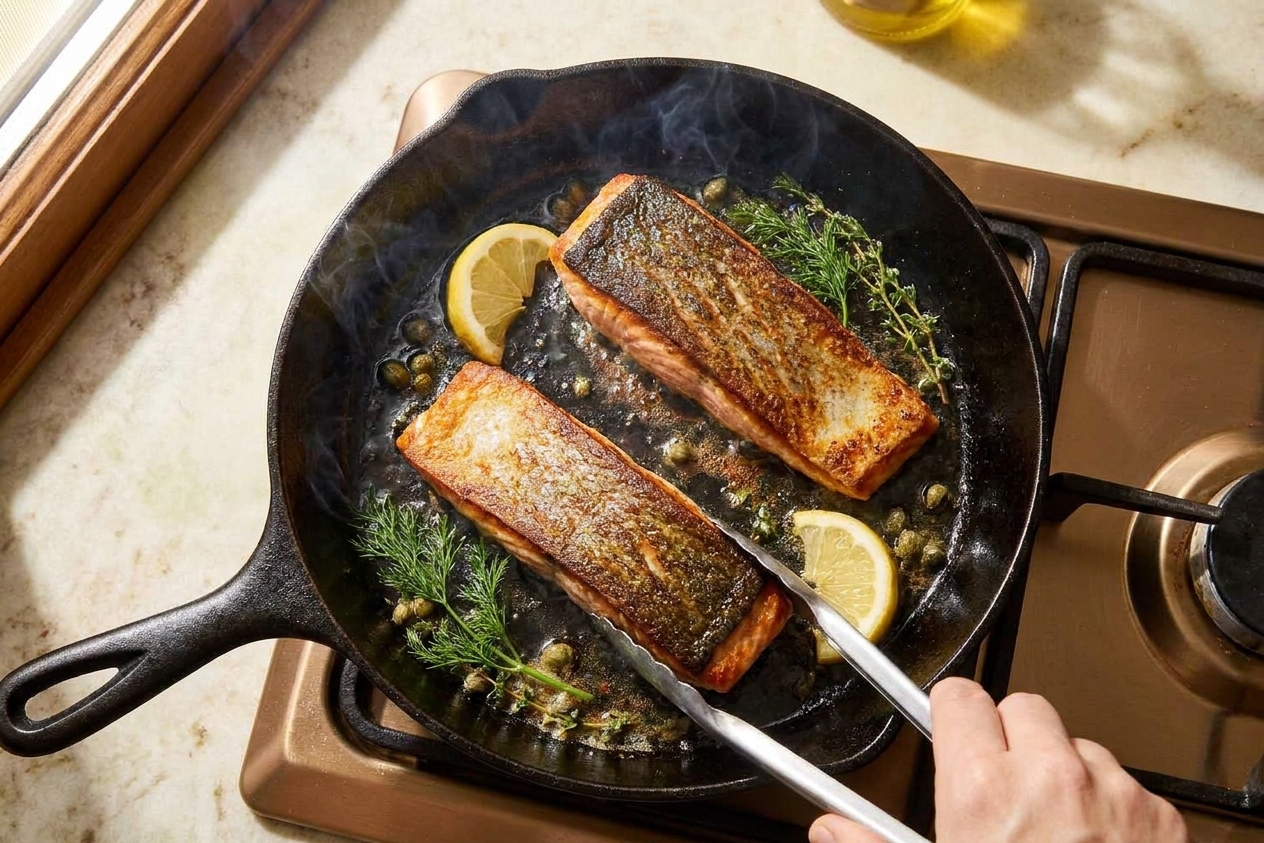
Yes, if you can. Skin protects the fish from drying out and can get crispy. If you do not love eating it, cook with it on, then slide the flesh off after.
Is fresh salmon better than frozen?
Not always. Quality frozen salmon is often frozen quickly and can be excellent. Thaw overnight in the fridge, pat dry well, and you are in business.
What seasonings go best with salmon?
Lemon, garlic, dill, miso, soy sauce, ginger, Dijon, paprika, cumin, and anything herby and green. Salmon likes bold friends.
What kind of salmon should I buy?
Most recipes work with any type, but thickness changes timing. Sockeye tends to be leaner and thinner, so it cooks faster. Atlantic and king are often thicker and a little more forgiving. When in doubt, trust the thermometer and the look of the center.
Do I need to remove pin bones?
If you feel a few thin “needles” running down the center line of the fillet, those are pin bones. Grab them with tweezers and pull in the direction they are pointing. It takes 30 seconds and makes dinner feel more civilized.
Can I air fry these?
Yes. For plain seasoned fillets, air fry at 400°F for about 7 to 10 minutes depending on thickness. For glazed salmon (like miso), line the basket with parchment and start checking early since sugars can brown fast.