Mom's Best Recipes
Recipe

Homemade Turkey Stock

Rich, golden turkey stock made from leftover bones, aromatic vegetables, and herbs. Freezer-friendly and perfect for soup, gravy, and cozy grains.

Author By Matt Campbell
4.8
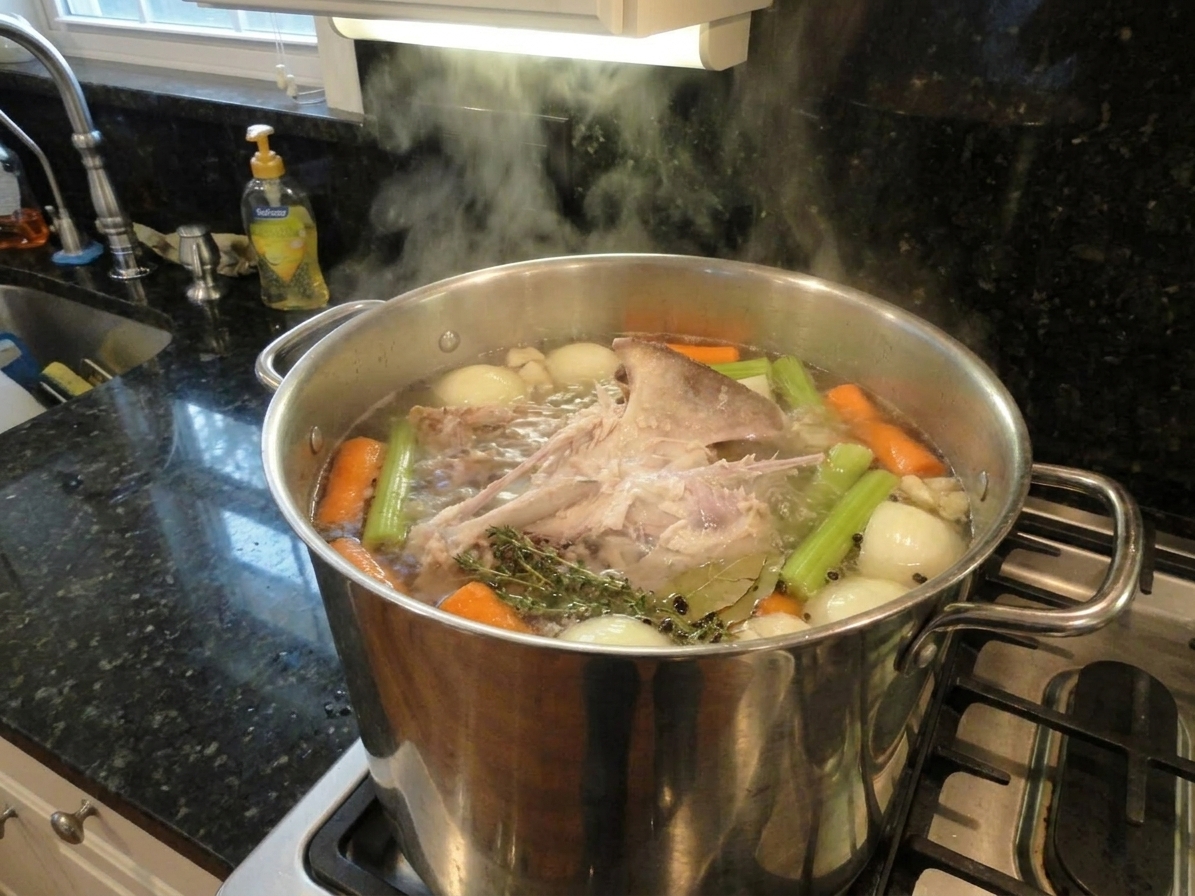
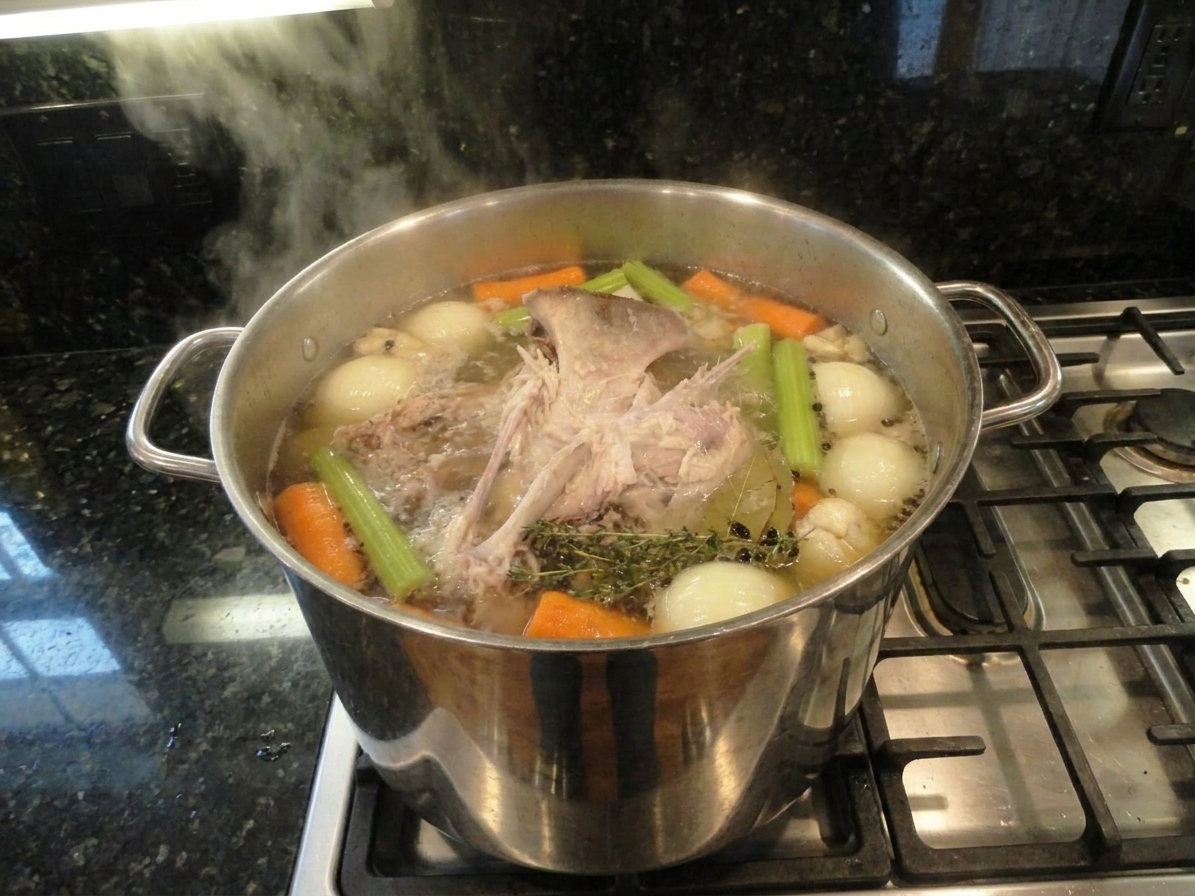
A large stockpot on a stovetop filled with turkey bones, onion, carrots, celery, herbs, and peppercorns in gently simmering water, warm kitchen lighting

Turkey stock is the quiet hero of the post-holiday kitchen. It is how you turn a picked-over carcass into something that tastes like you planned ahead on purpose. And honestly, it is one of the most forgiving things you can make. Toss bones in a pot, add a few everyday aromatics, keep it at a lazy simmer, and let time do the heavy lifting.

This version keeps ingredients accessible and the instructions low drama. You will get a stock that is savory, golden, and clean-tasting, with enough body to make soups feel cozy and gravies taste like the good kind of restaurant-rich. The only real rule is this: do not boil it hard. We want a gentle simmer and a calm kitchen.
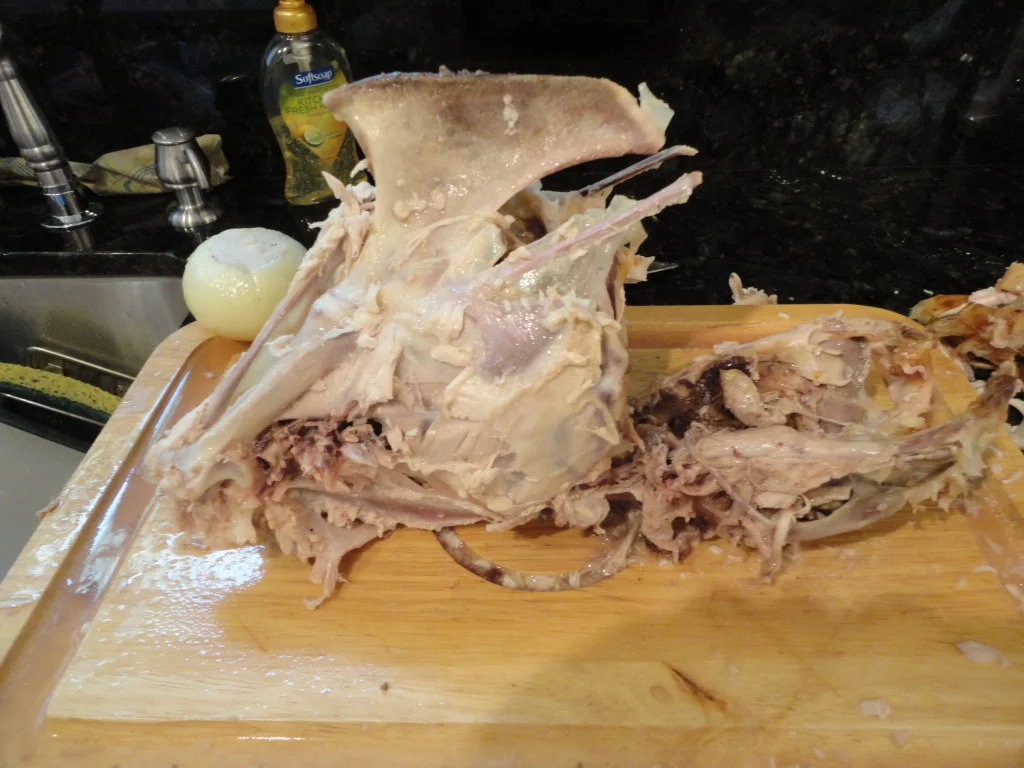
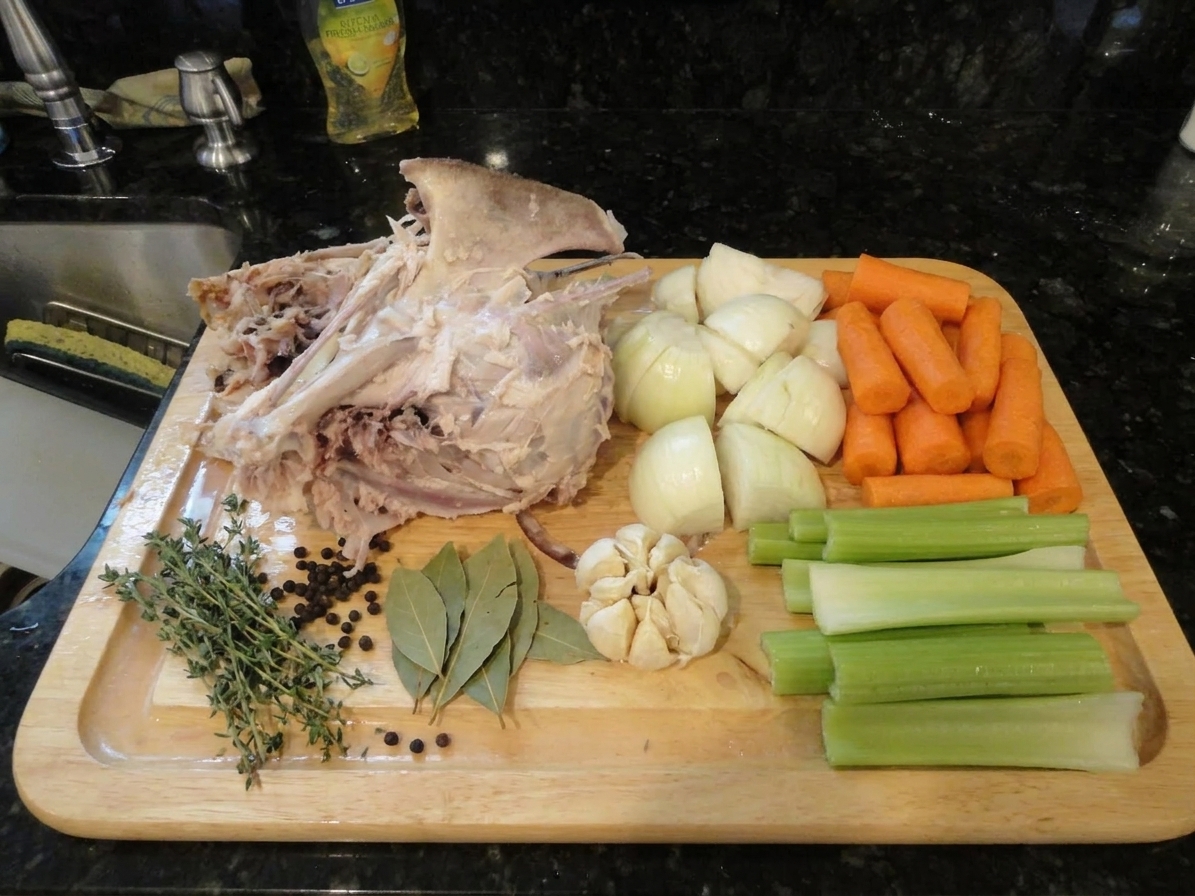
A roasted turkey carcass on a cutting board with picked clean bones and a small pile of skin and scraps nearby on a kitchen counter

Why It Works

  • Deep turkey flavor without extra work: Roasted bones bring instant richness and color.
  • Clear, clean stock: A gentle simmer and quick skim keeps it from turning muddy or bitter.
  • Built-in flexibility: Works with a full carcass or a bag of wings, backs, and necks.
  • Freezer-friendly: Portion it into quarts or cubes so weeknight soups and sauces happen fast.

Pairs Well With

Storage Tips

Cool it fast: Strain the stock, then set the pot in a sink of ice water and stir occasionally until it is no longer hot. Get it into the fridge within 2 hours.

Refrigerator: Store in covered containers for up to 4 days. A fat cap will form on top and that is a good thing. It protects flavor. You can skim it off to cook lean, or stir some back in for richness.

Freezer: Freeze for 4 to 6 months for best flavor. Use:

  • Quart containers for soup nights
  • 2-cup containers for risotto, beans, and braises
  • Ice cube trays for quick pan sauces and reheating leftovers

Pro tip: Label it “Turkey Stock, unsalted” with the date. Unsalted stock is easier to reduce later without turning into a salt lick.

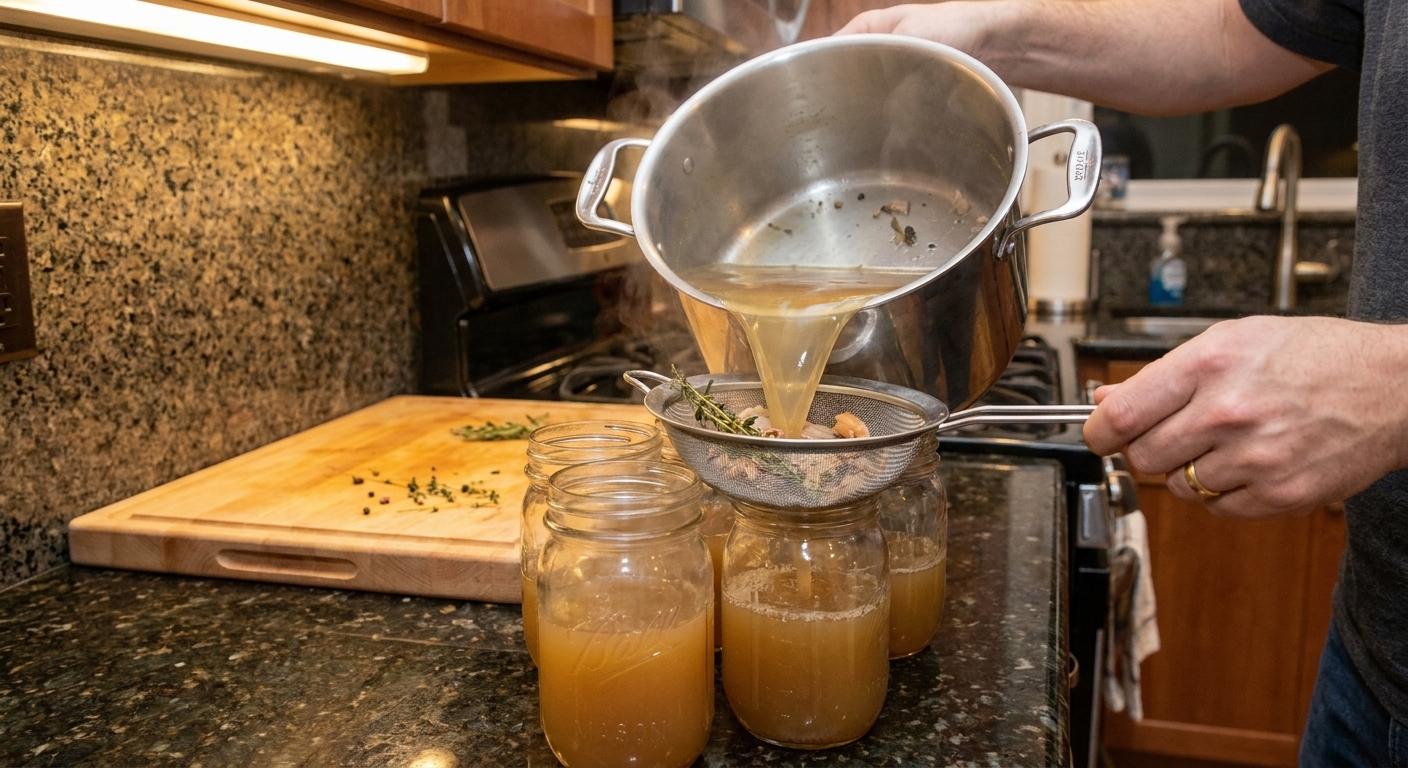
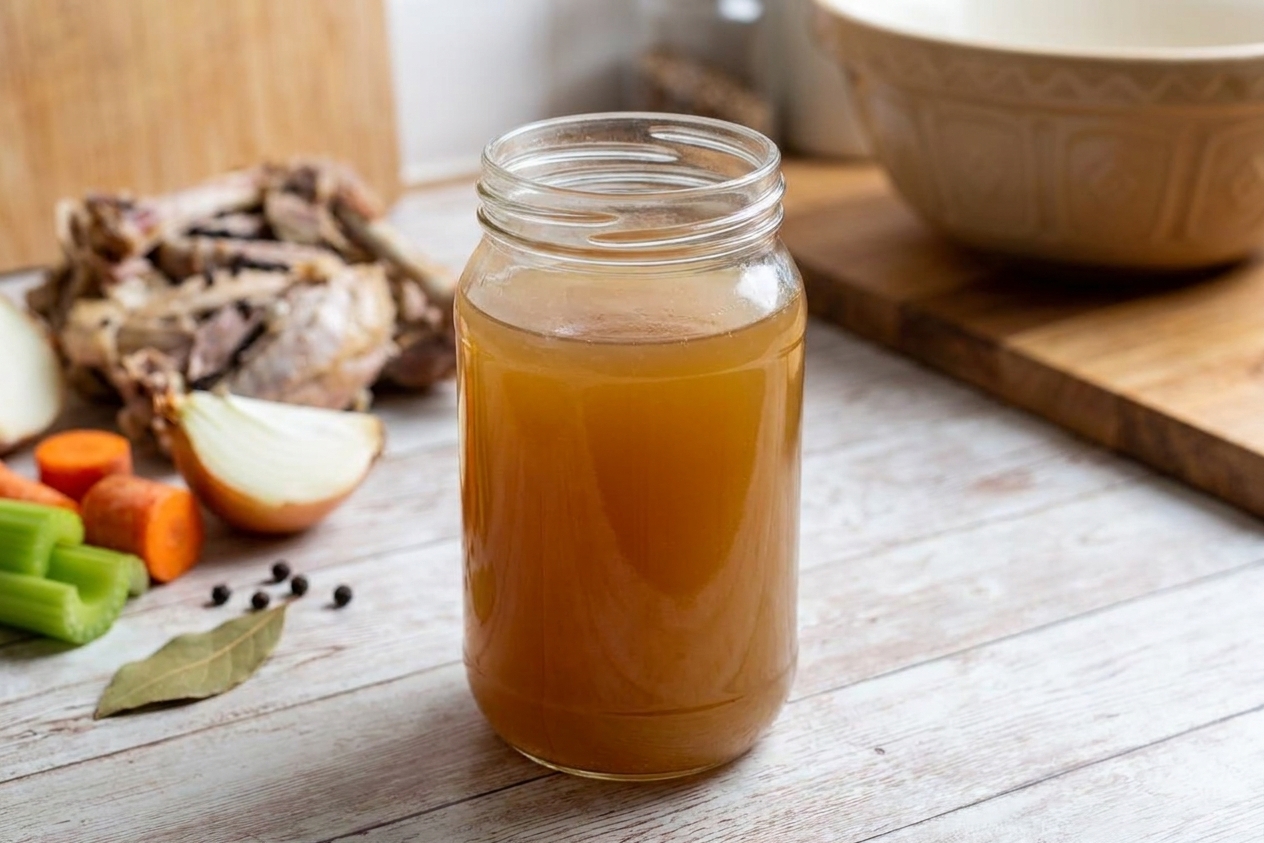
Freshly strained turkey stock being poured through a fine mesh strainer into glass jars on a kitchen counter

Common Questions

Is turkey stock the same as turkey broth?

They are close, but not identical. Stock is typically made with bones and gets more body from collagen, so it feels silky and slightly fuller. Broth is often made with more meat and is usually seasoned to sip. For cooking, I prefer stock and I keep it unsalted.

Why is my turkey stock cloudy?

Cloudiness usually comes from a hard boil or lots of stirring. It still tastes great. Next time, keep it at a gentle simmer where you see only a few lazy bubbles and skim the foamy stuff early on. Straining through a fine mesh sieve helps, and cheesecloth makes it extra clear.

Can I make turkey stock in a slow cooker?

Yes. Cover bones and aromatics with water, cook on low for 10 to 12 hours (or high for 6 to 8), then strain and chill. Keep it on low if you care about clarity.

Can I make turkey stock in a pressure cooker?

Also yes. Cook on high pressure for 45 to 60 minutes with natural release. It is fast and flavorful, but can be a little more emulsified and cloudy, which is totally fine for soups.

Do I need to roast the bones first?

If your turkey was already roasted, you are set. If you are starting with raw turkey parts, roasting them at 425°F for about 35 to 45 minutes until browned will give you a deeper, more “Sunday dinner” stock.

What if my stock tastes bland?

Three easy fixes: reduce it uncovered to concentrate, add a pinch more aromatics (especially onion and celery) during a short simmer, or finish dishes with a little salt and acid like lemon juice or a splash of vinegar. Stock is a foundation, not the final seasoning.

The first time I made turkey stock, I treated it like an afterthought. I boiled it too hard, tossed in every herb I owned, and still felt weirdly proud because it smelled like “real cooking.” Later, I learned the best stock is not loud. It is patient. Gentle simmer, simple aromatics, and just enough seasoning to keep things honest.

Now it is my favorite kind of kitchen win: cozy, practical, and a little chaotic in the best way. There is something deeply satisfying about turning a pile of bones into golden jars that make random Tuesday soup taste like a plan.

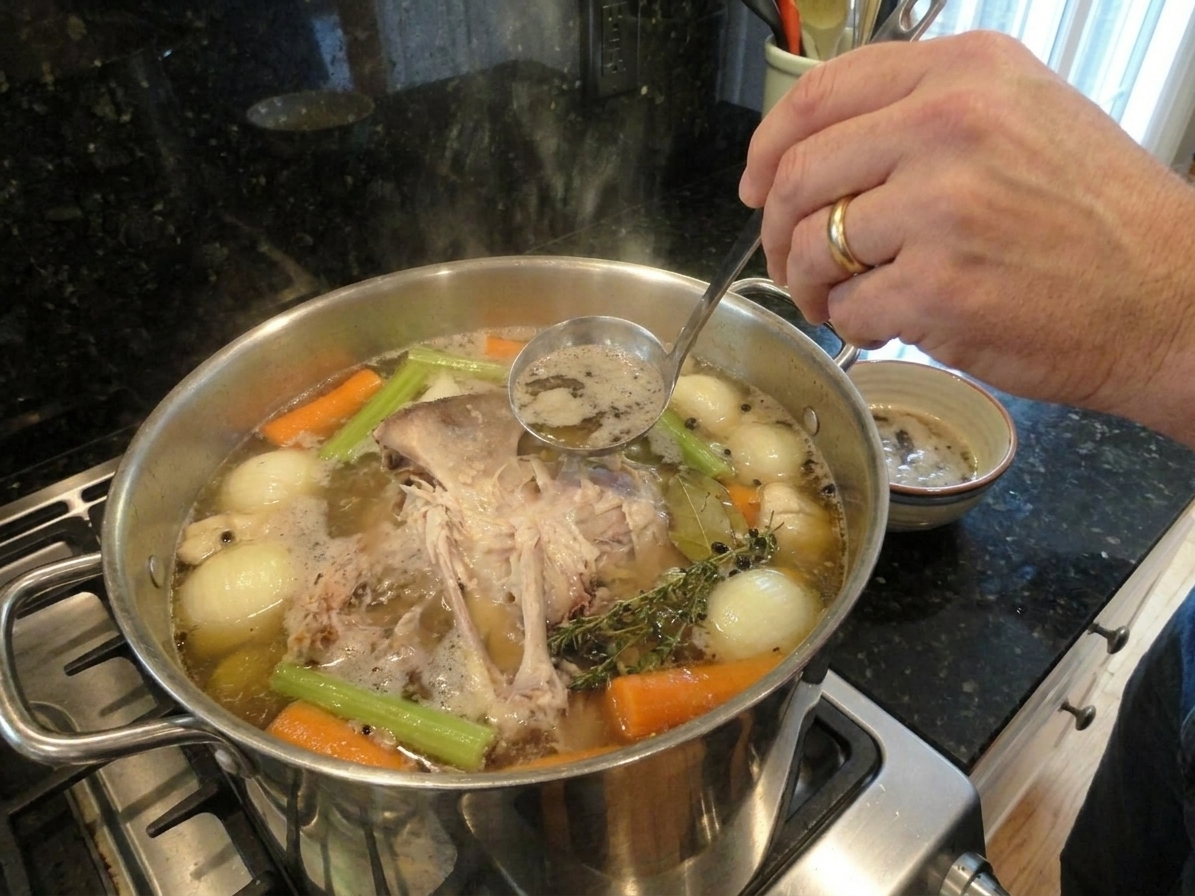
A person using a ladle to skim foam from the top of a gently simmering pot of turkey stock on the stove