Mom's Best Recipes
Recipe

Italian Focaccia Bread

An olive oil-forward focaccia with a fluffy interior, crisp edges, and a dimpled top finished with rosemary and flaky salt.

Author By Matt Campbell
4.8
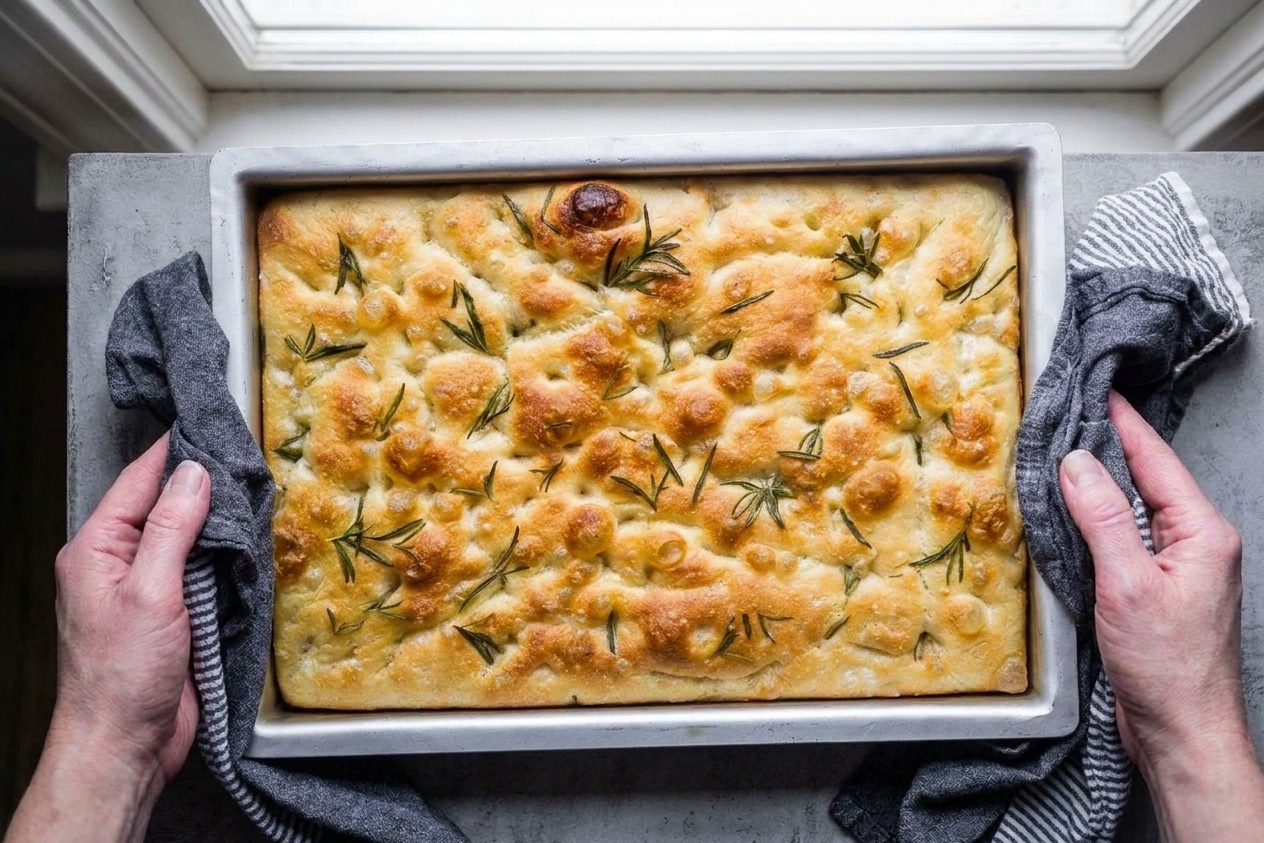
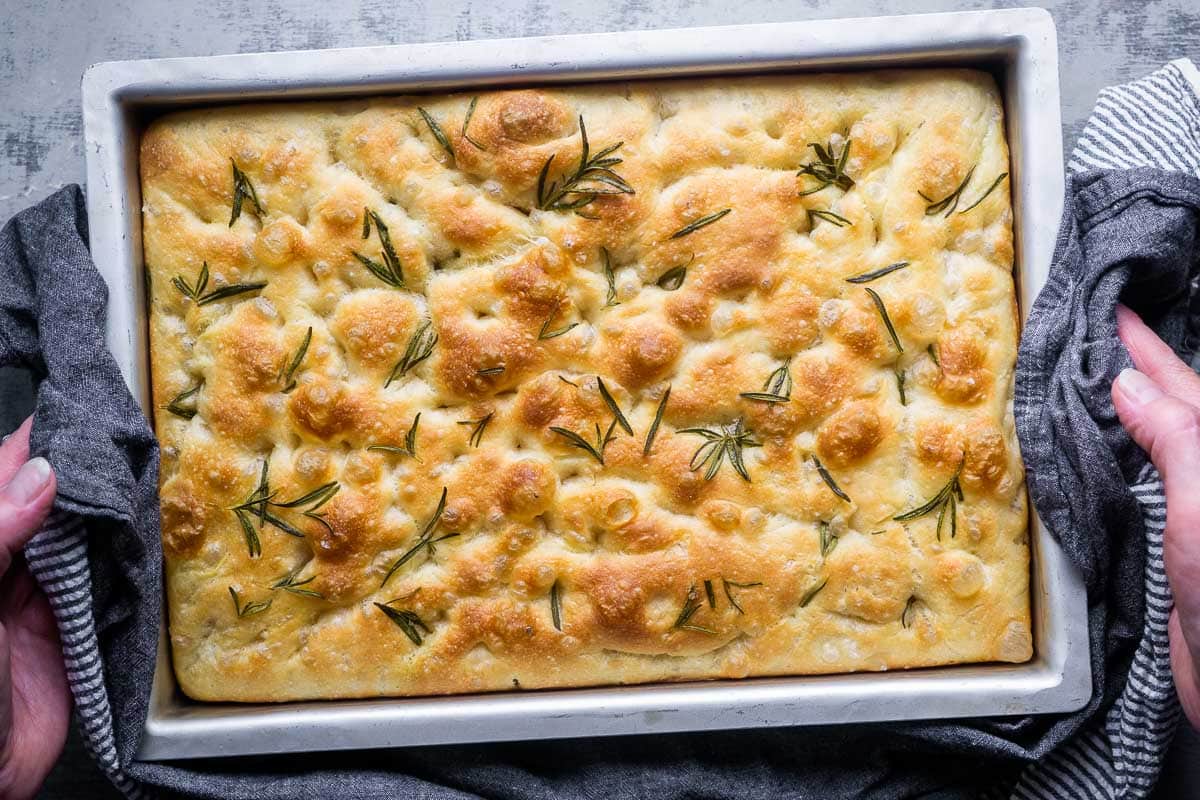
A golden Italian rosemary focaccia baked in a metal pan with a glossy olive oil top, deep dimples, and flaky salt on a warm kitchen counter

Focaccia is the kind of bread that makes your kitchen smell like you have your life together. The reality in my kitchen is usually flour on the shirt, olive oil on the counter, and me poking the dough like it owes me money. Still, this one comes out right almost every time, which is exactly why I keep it in the rotation.

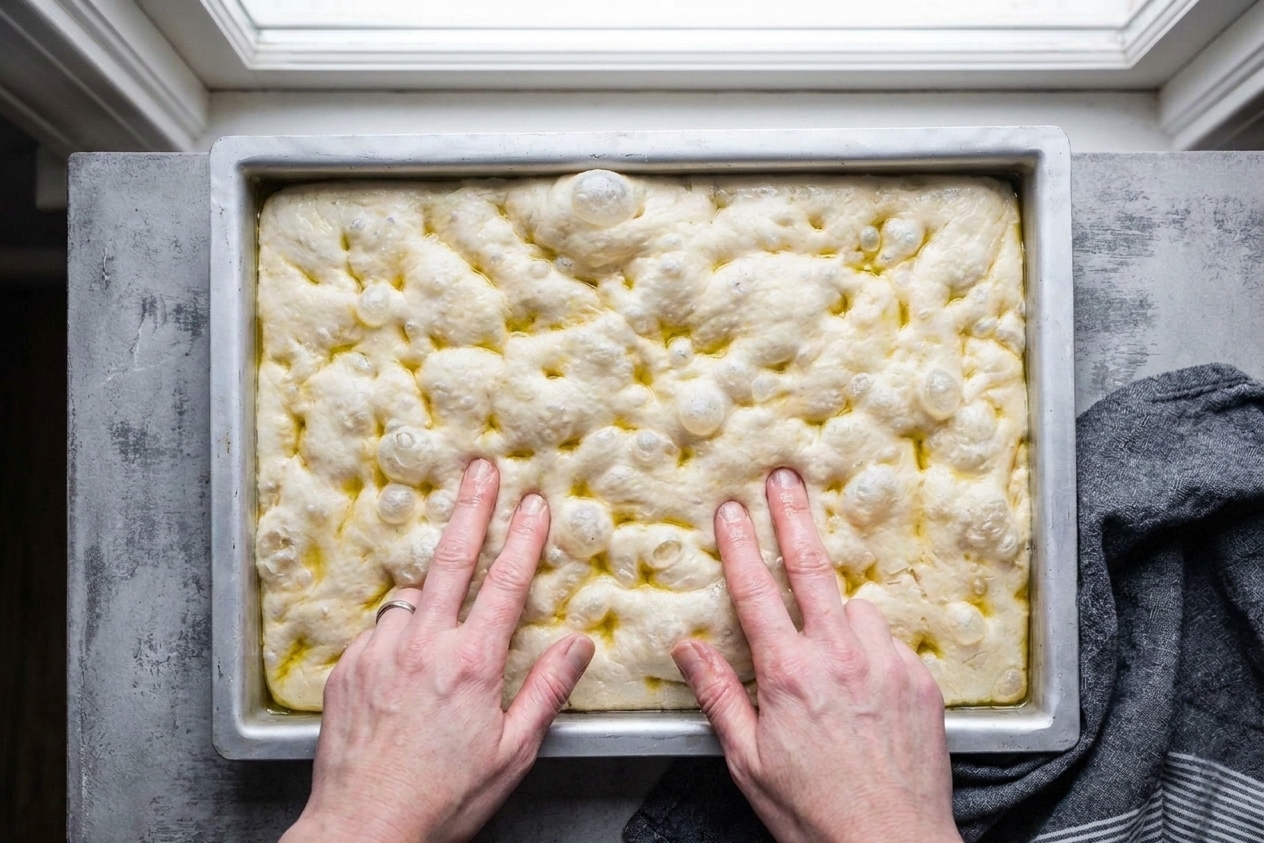
This Italian focaccia is pillowy in the middle, crispy at the edges, and unapologetically glossy from a generous pour of olive oil. The dimples are not just for looks. They trap oil and brine so every bite tastes seasoned, not bland bread with toppings. You can keep it classic with rosemary and flaky salt, or treat it like a canvas for whatever is hanging out in your fridge.
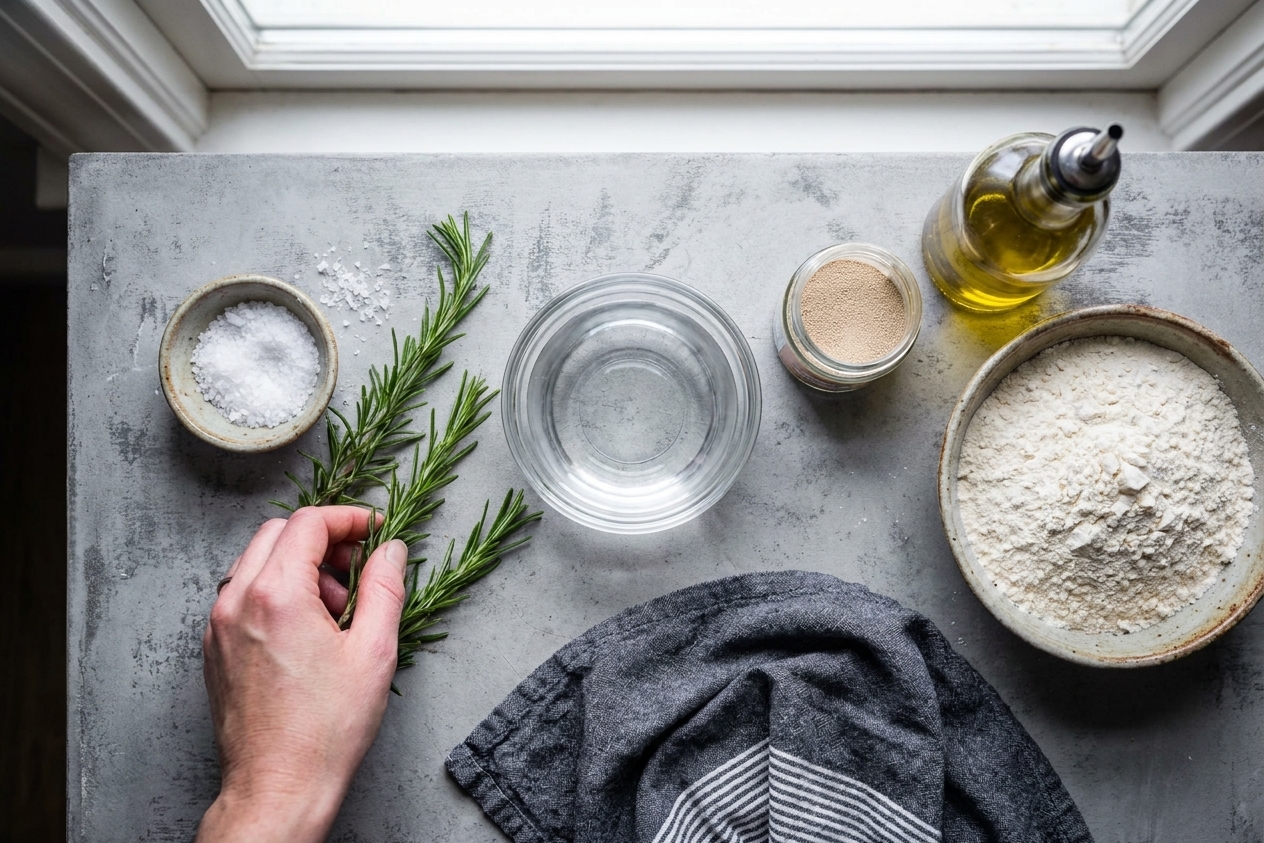
Ingredients for focaccia on a kitchen counter including flour, instant yeast, olive oil, rosemary, flaky salt, and a bowl of warm water

Why It Works

  • High hydration dough (aka a wetter, stickier dough) creates that airy, open crumb without complicated shaping.
  • Two rises build structure for height. For bigger flavor, use the overnight fridge option.
  • Olive oil in the pan basically shallow-fries the bottom and edges for that bakery-style crunch.
  • Salted brine (optional but very worth it) seasons the top all the way through and keeps the crumb tender.

Pairs Well With

Storage Tips

Keep it crisp

Room temperature: Wrap tightly and keep at room temperature for up to 2 days. For best texture, store whole or in large pieces instead of small squares.

Re-crisp: Warm in a 375°F oven for 6 to 10 minutes directly on the rack or on a sheet pan. If it feels dry, brush lightly with olive oil first.

Fridge and freezer

Fridge: You can refrigerate it up to 4 days, but it will firm up. Reheat in the oven to bring it back.

Freeze: Slice, wrap portions in plastic wrap, then foil, and freeze up to 2 months. Thaw at room temperature and reheat at 375°F until hot and crisp at the edges.

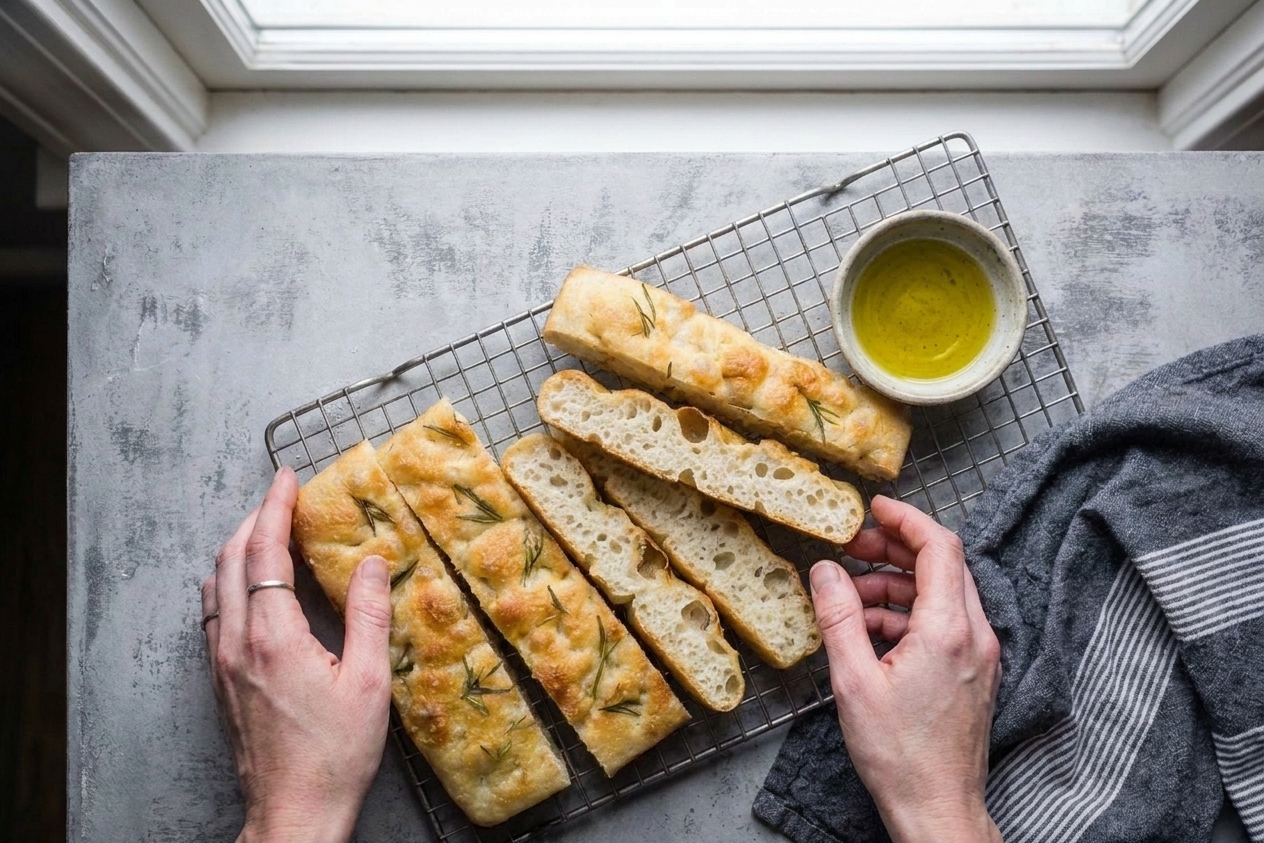
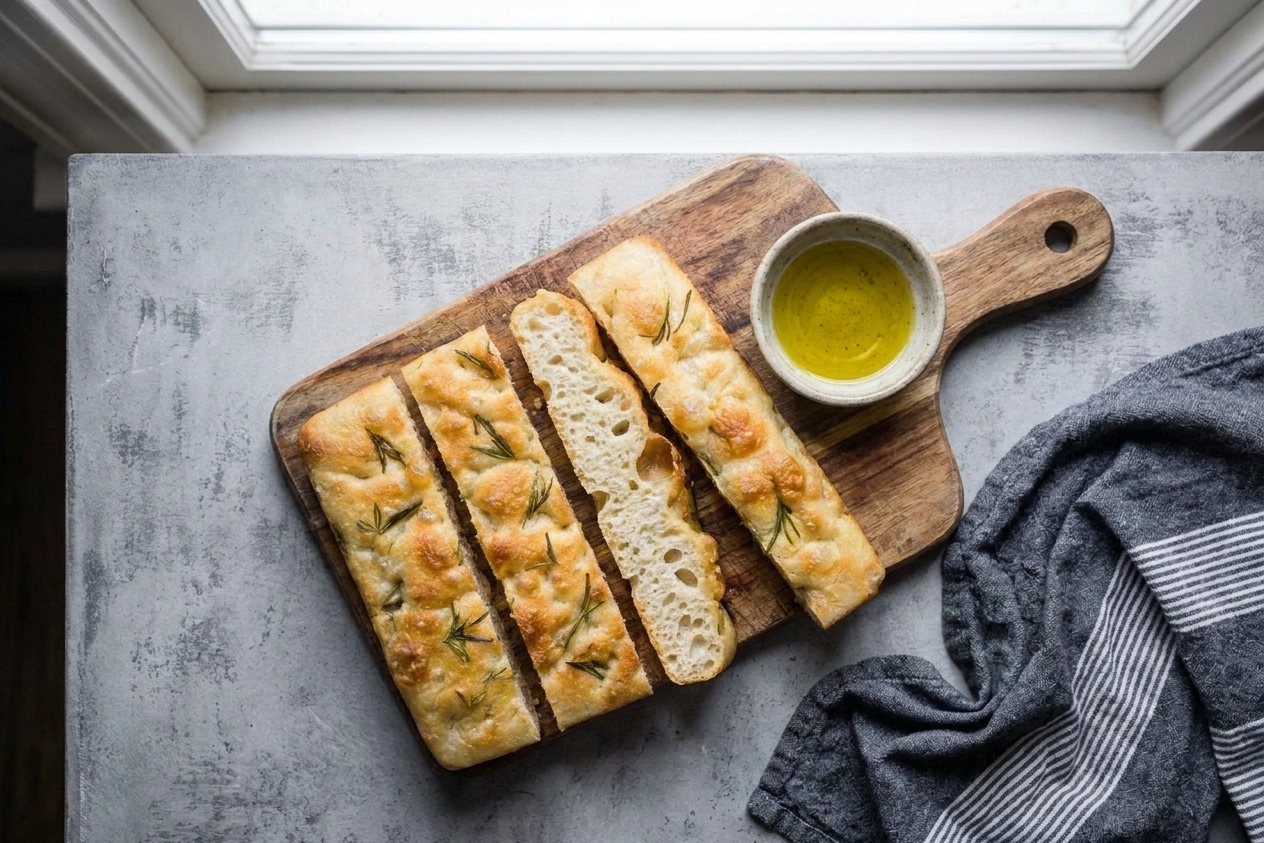
Sliced focaccia cooling on a wire rack with a few pieces stacked and a small dish of olive oil nearby

Common Questions

Why is my focaccia dense?

Usually it is one of three things: the dough did not rise enough, the water was too hot and weakened the yeast, or you added too much flour. This dough should feel sticky and slack. If you can easily knead it like pizza dough, it is probably too dry.

Do I have to use a stand mixer?

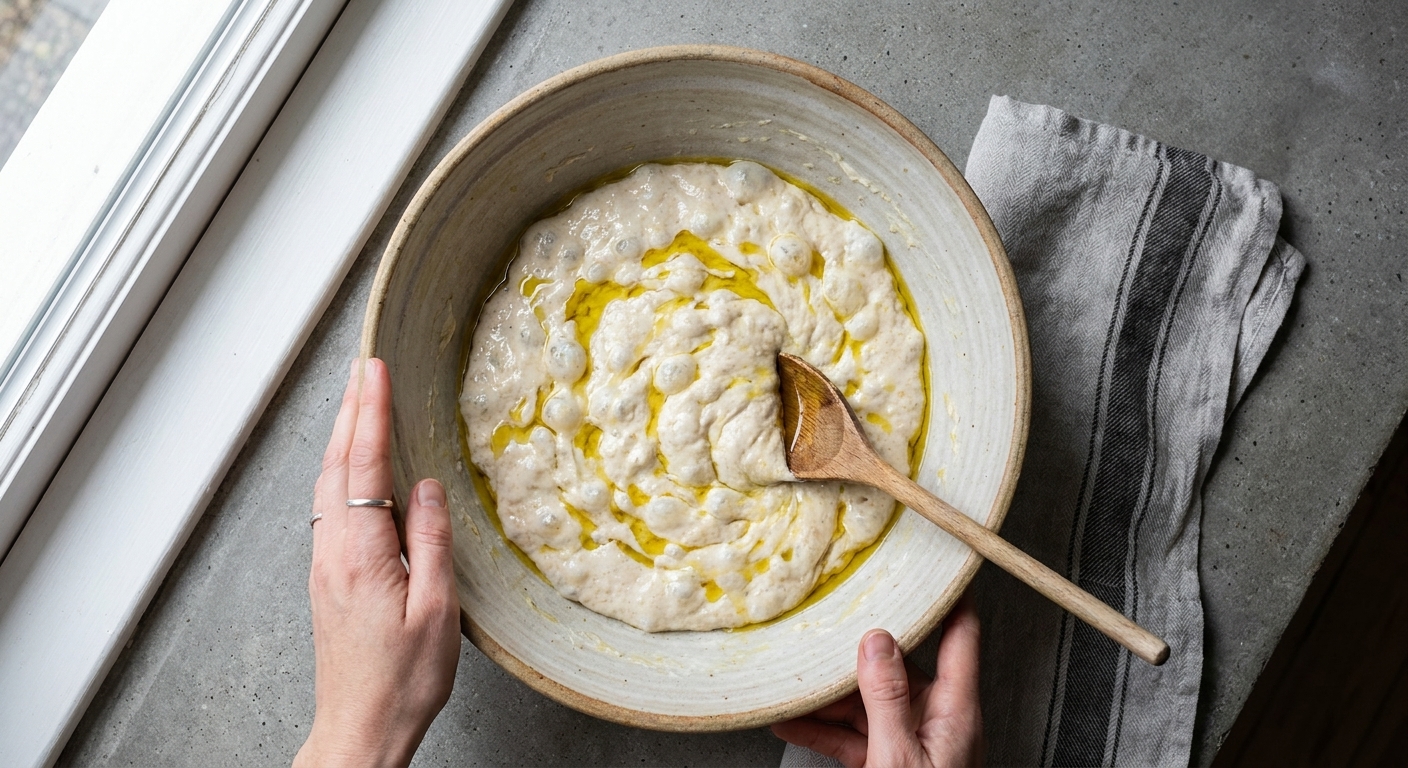
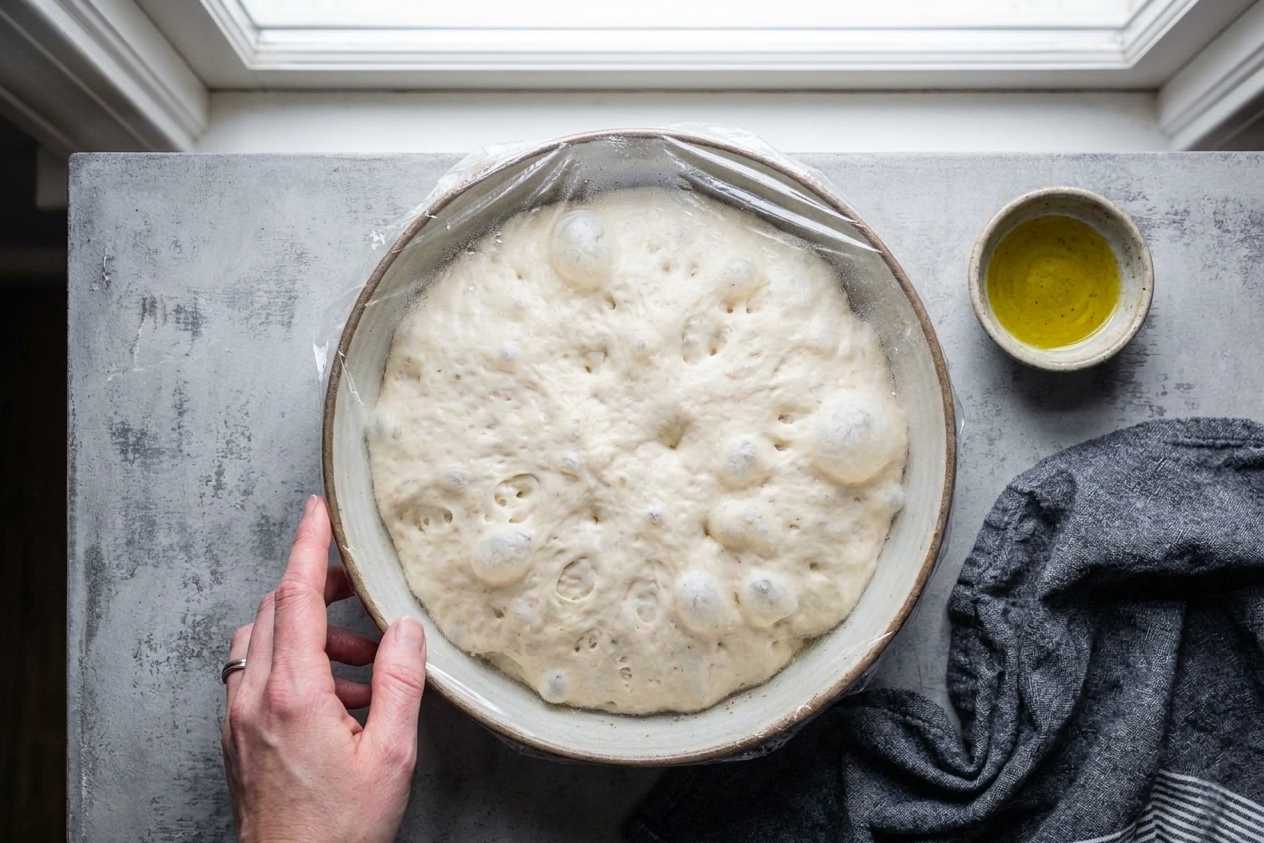
Nope. A bowl and a sturdy spoon work. The dough starts shaggy, then smooths out during the first rise. If you want to build extra strength, do 2 or 3 sets of stretch-and-folds during the first 45 minutes.

What pan is best for focaccia?

A metal 9x13-inch pan gives the crispiest edges. A glass dish works, but it tends to brown a bit differently and can be less crisp.

Sheet pan option: You can also bake this on a rimmed sheet pan for a thinner focaccia. Stretch the dough out a bit more and start checking for doneness around 18 to 22 minutes.

Can I make focaccia dough ahead?

Yes. After the first rise, cover and refrigerate 8 to 24 hours. Let it sit at room temperature for 60 to 90 minutes before stretching into the pan, then proceed with the second rise and bake. This overnight rest is where the flavor really levels up.

What toppings work without sogging it out?

Think thin and not too wet: rosemary, thin sliced onion, olives, cherry tomatoes (halved and seeded if extra juicy), roasted garlic, grated Parmesan. If using fresh mozzarella, add it in the last 5 minutes so it does not flood the top.

Focaccia is my favorite kind of bread confidence. It looks impressive, it tastes like a restaurant, and the process is basically: mix, wait, poke, bake. The poking is the best part. It is oddly therapeutic, like bubble wrap you can eat later. The first time I made it, I used way too little olive oil because I was trying to be responsible. The bread came out fine, but the edges were missing that loud, crunchy magic. Now I pour the oil like I mean it and suddenly the whole pan is a vibe.