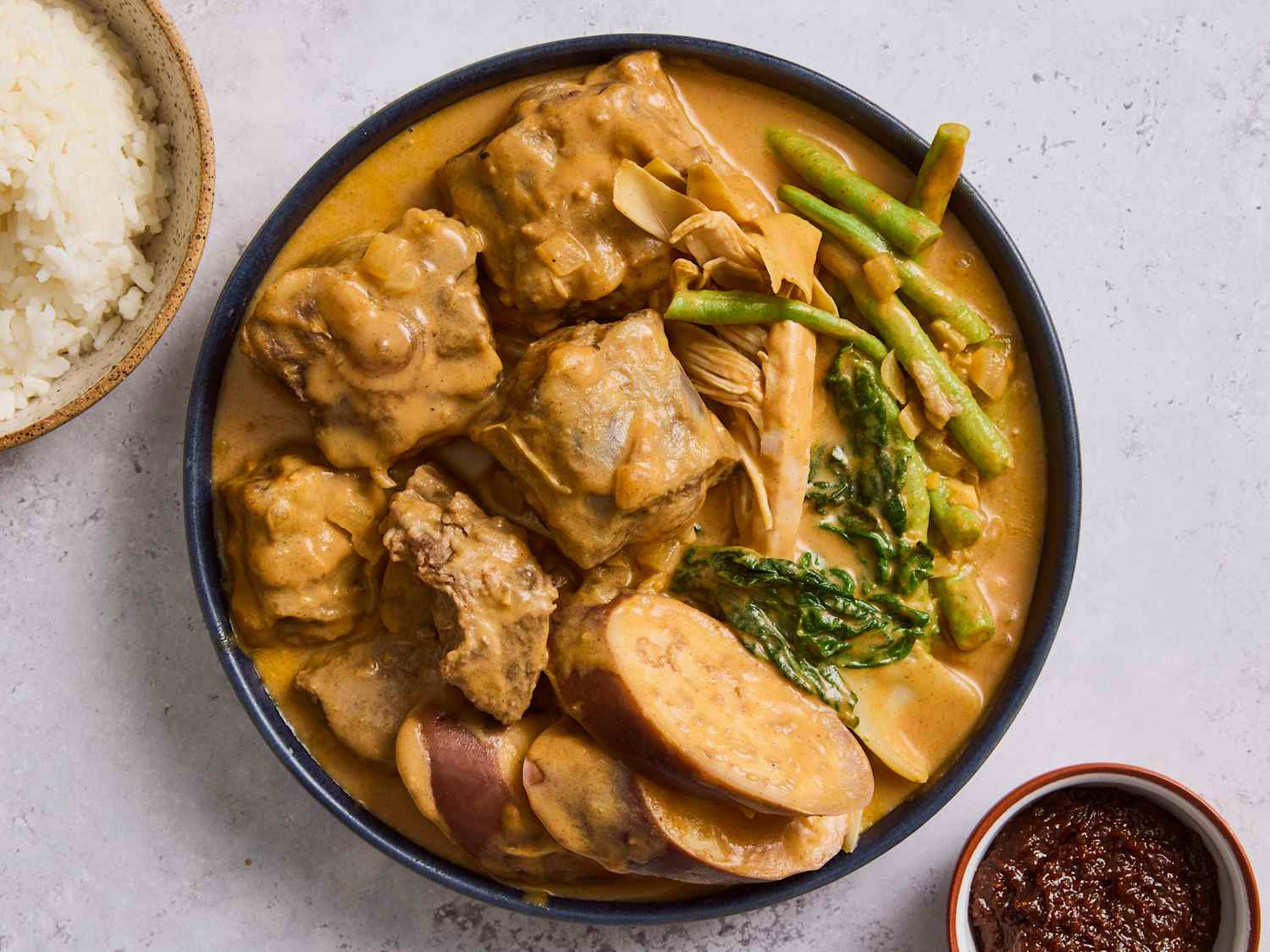
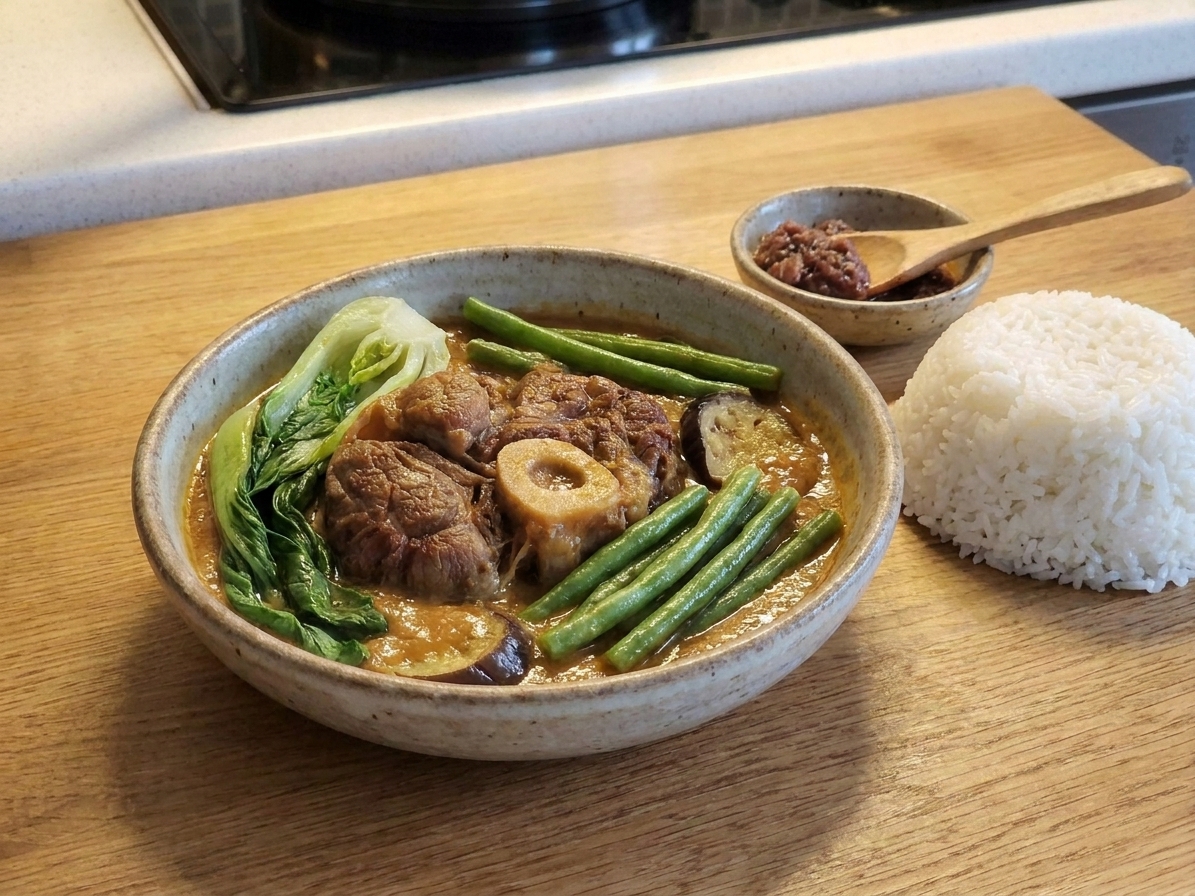
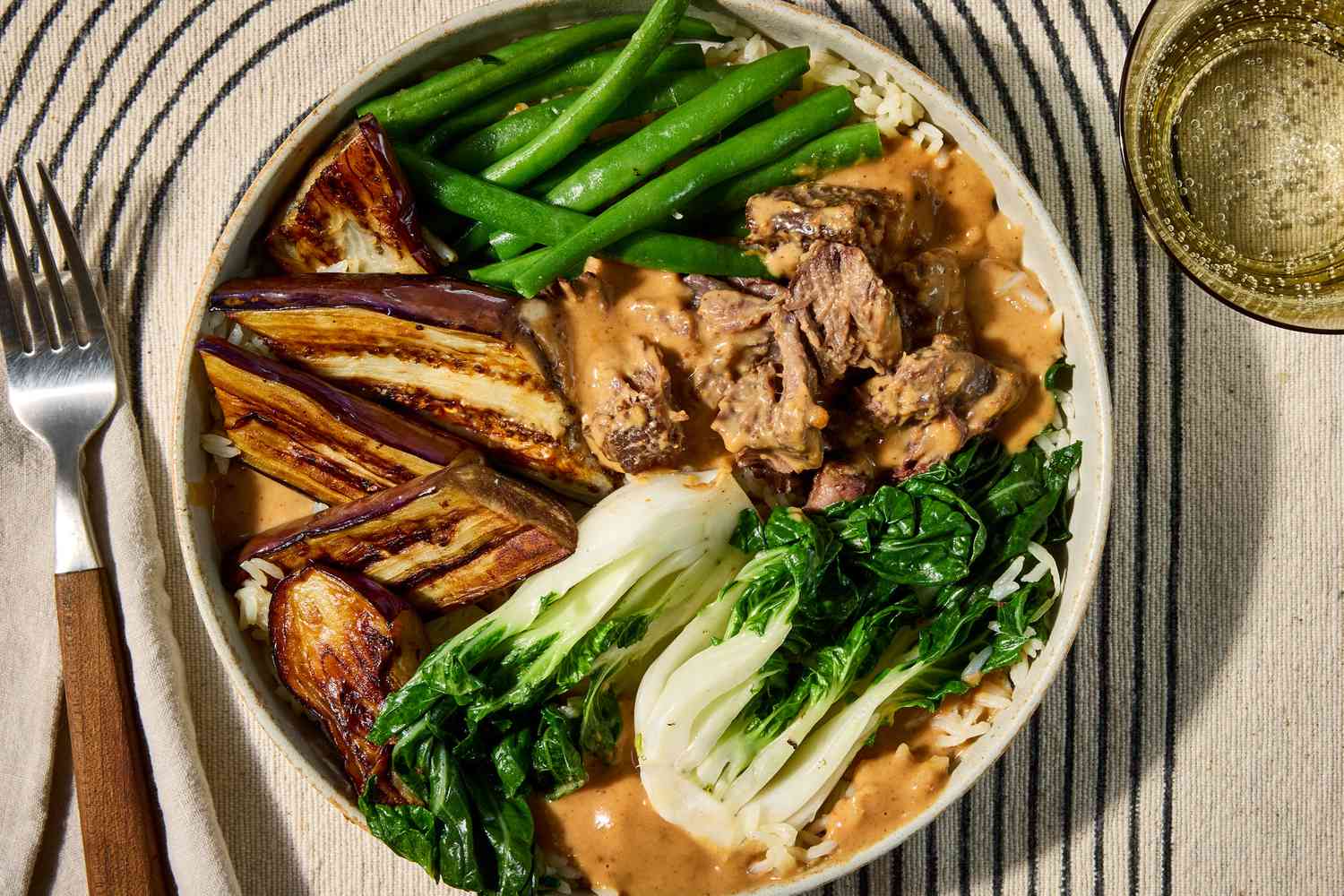
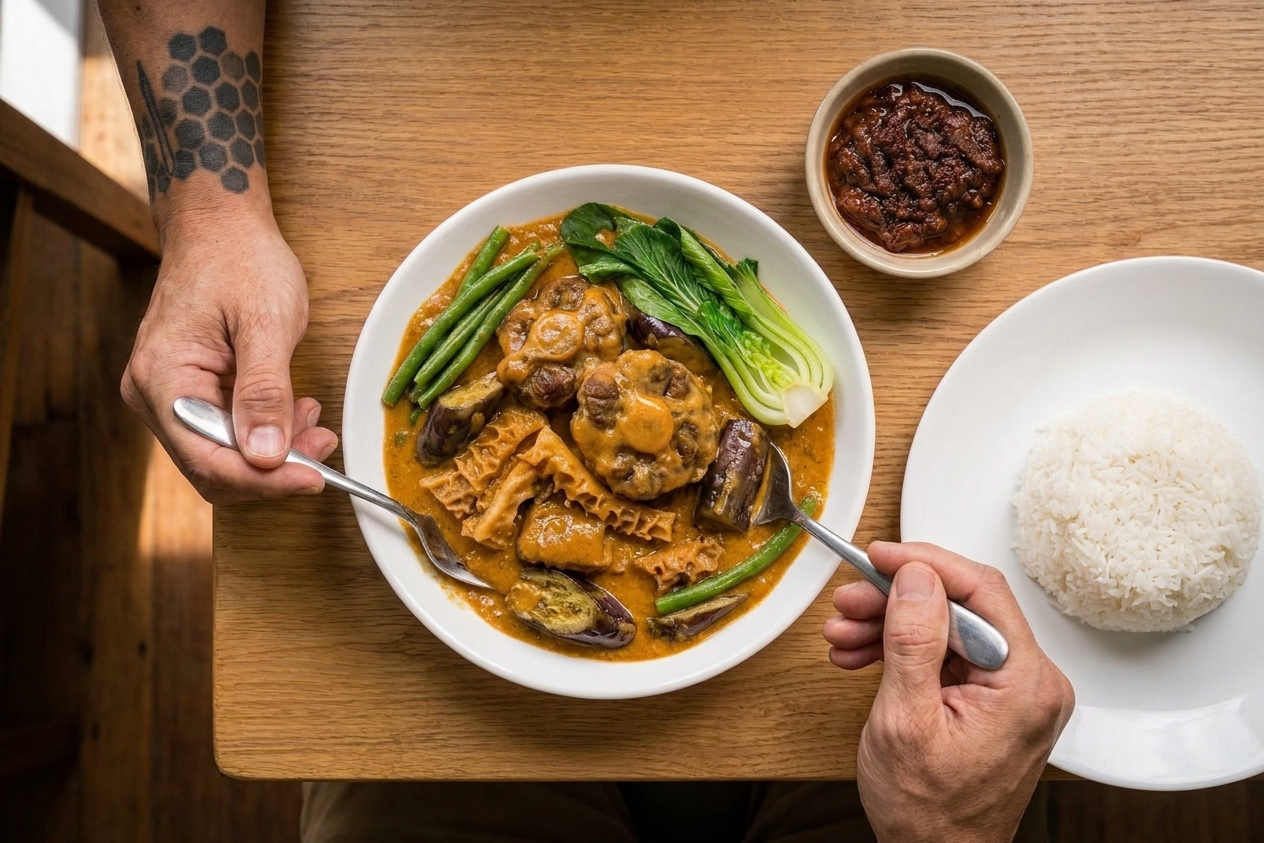
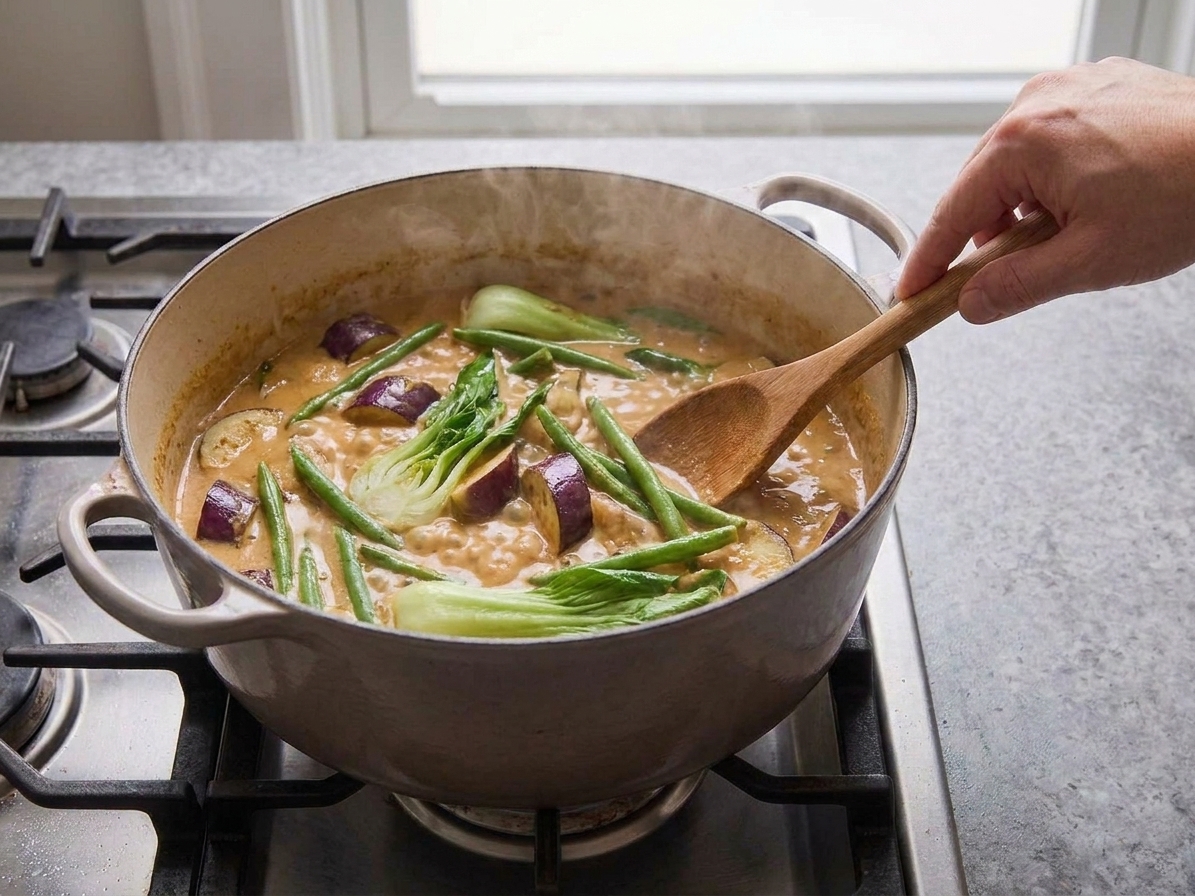
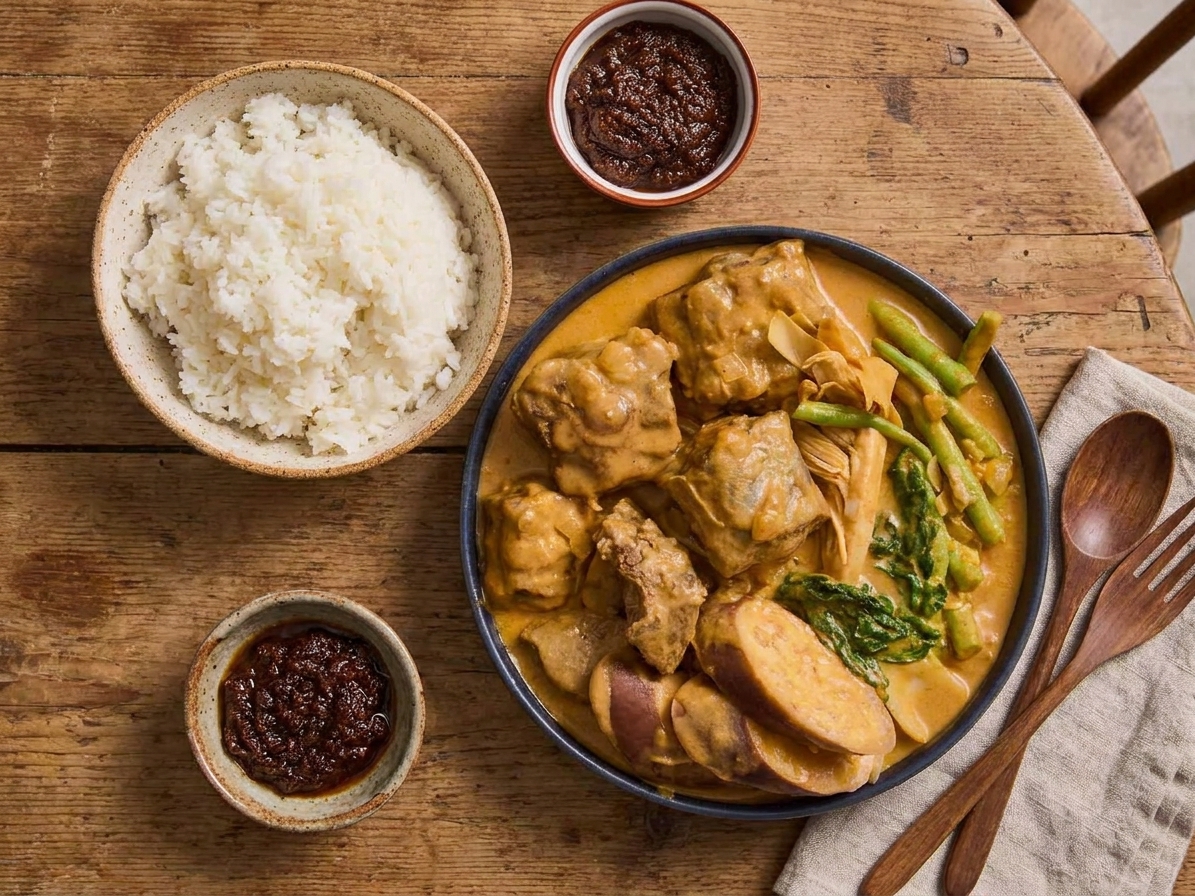
What does kare kare taste like?
It is savory, nutty, and deeply comforting. The peanut flavor is front and center, but it is balanced by aromatics (garlic and onion), beefy broth, and a gentle earthy note from annatto. With bagoong on the side, you get a salty punch that makes the whole bowl feel more complete.
Do I have to use bagoong?
Nope. Kare kare is still delicious without it. If you want a similar salty boost, try a squeeze of calamansi or lemon at the table, or a tiny drizzle of fish sauce in your bowl.
What kind of bagoong should I use?
Look for bagoong alamang (shrimp paste), which is the classic pairing for kare kare. Some people like it straight from the jar; others prefer ginisang bagoong (sautéed) for a rounder, less sharp funk. If you bought a super salty one, start with a little on the side and work your way up.
What can I use instead of oxtail?
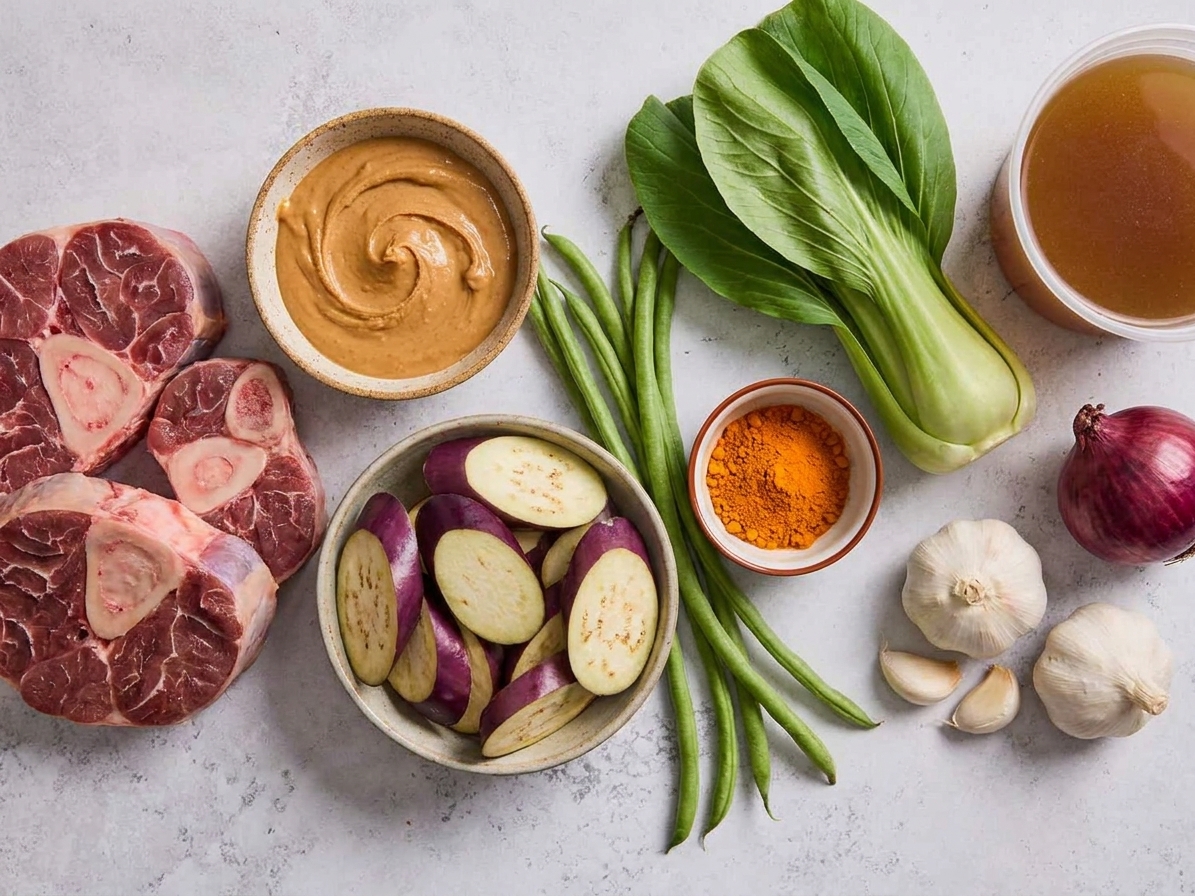
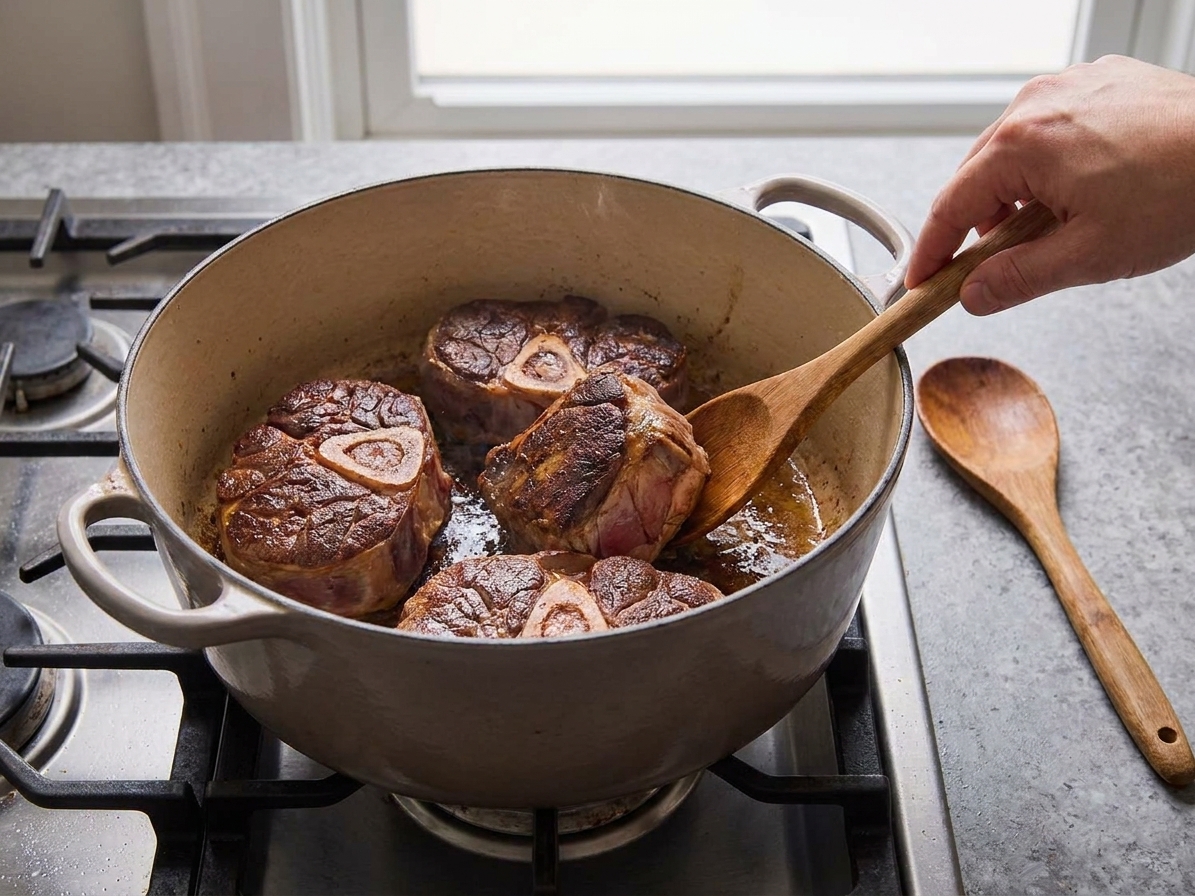
Beef shanks are my go-to for home cooking because they bring great flavor and collagen. You can also use short ribs, chuck roast cut into big chunks, or a mix of shank and short rib.
Why is ground rice used?
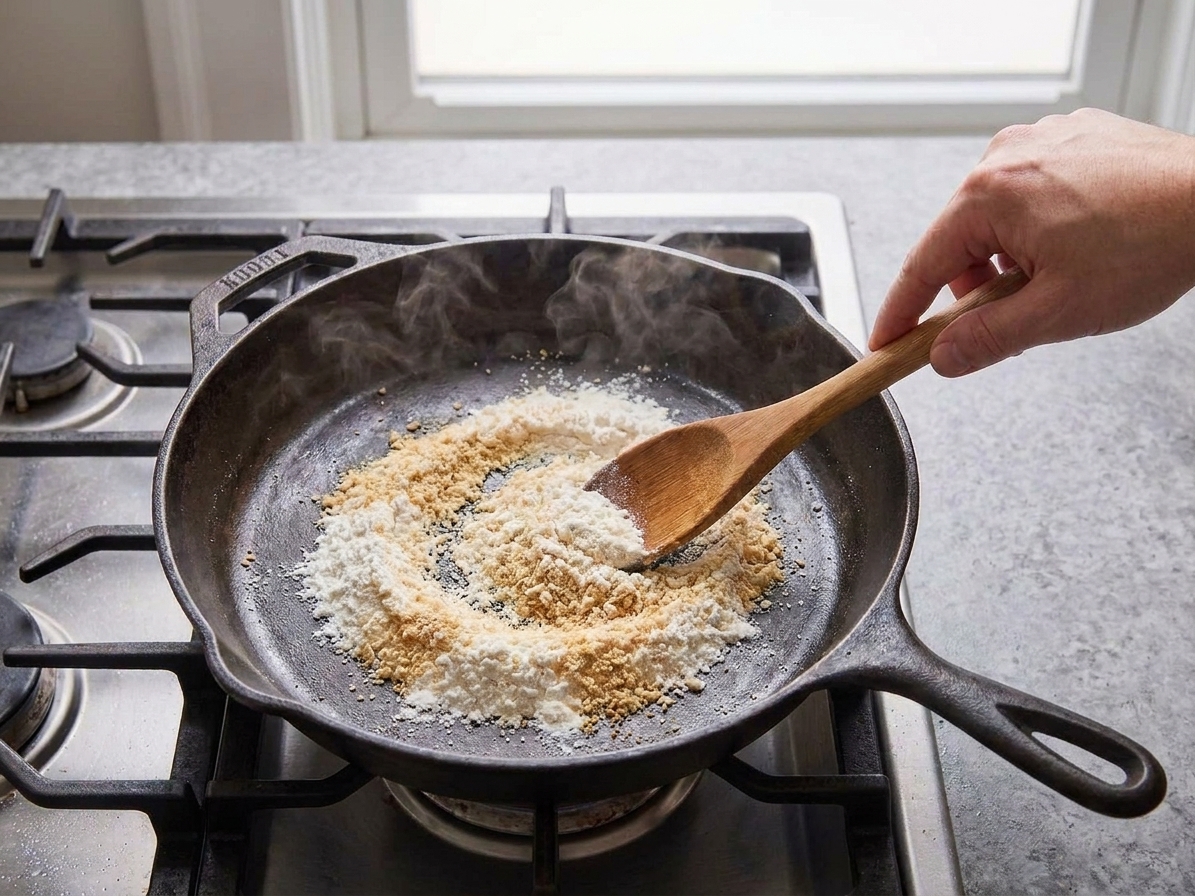
To thicken the sauce and give it that classic velvety texture. If you skip it, you can still thicken with a cornstarch slurry, but ground rice tastes more traditional and feels less “saucy,” more stew-like.
Can I make kare kare with chicken or pork?
Yes. Pork hocks and pork belly are common in some versions. For chicken, use bone-in thighs and reduce simmer time so they stay juicy.
How do I keep the sauce from being too sweet?
Use unsweetened peanut butter, and brown your aromatics well. If it still reads sweet, add a bit more salt, a spoon of bagoong, or a small splash of fish sauce to sharpen the edges.
Can I make kare kare without peanut butter?
You can swap in ground roasted peanuts (or peanut powder) for a more old-school vibe. Start with about 1 cup finely ground peanuts and whisk it in gradually, adding more until the sauce tastes peanutty and looks creamy. Quick allergy note: this dish is very peanut-forward by design.