Mom's Best Recipes
Recipe

Kimchi Stew (Kimchi Jjigae)

A one-pot Korean classic: tangy kimchi, savory pork, silky tofu, and a broth that tastes like you worked way harder than you did.

Author By Matt Campbell
4.8
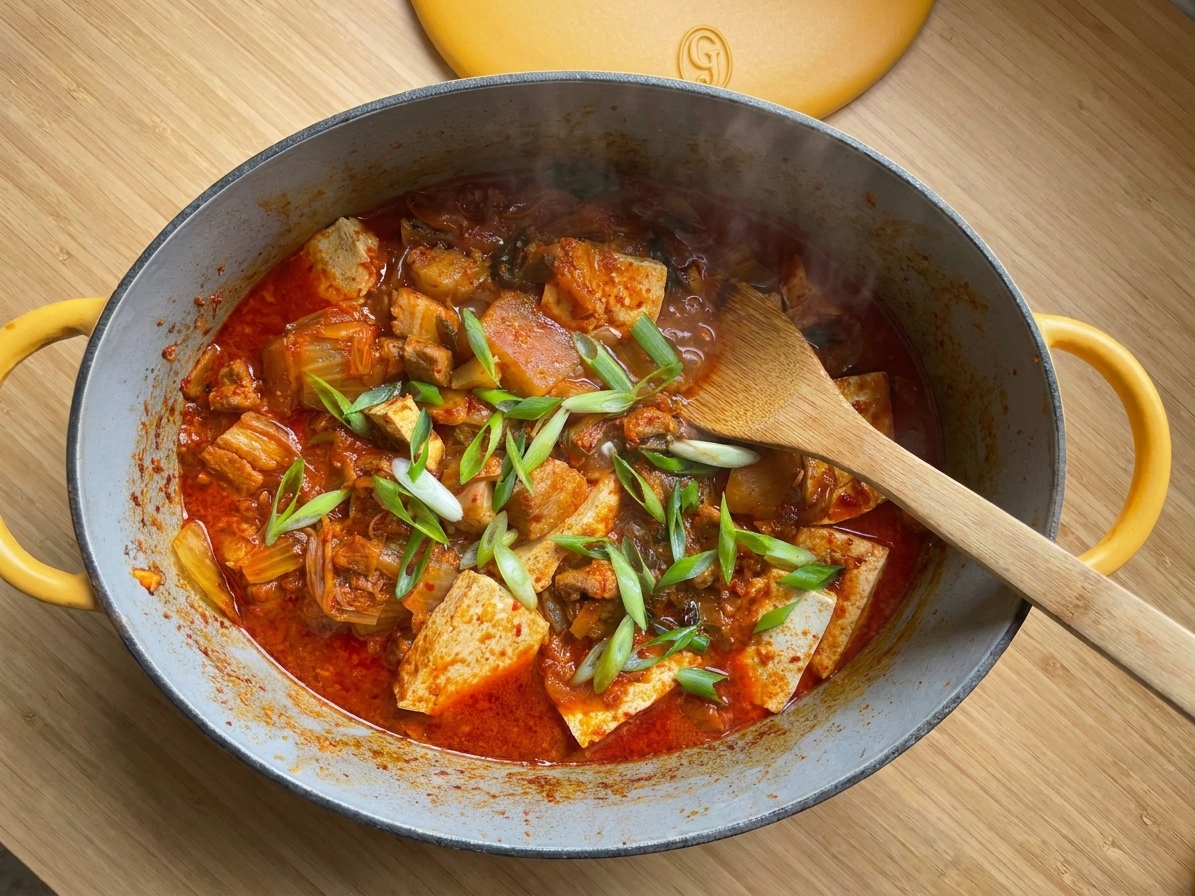
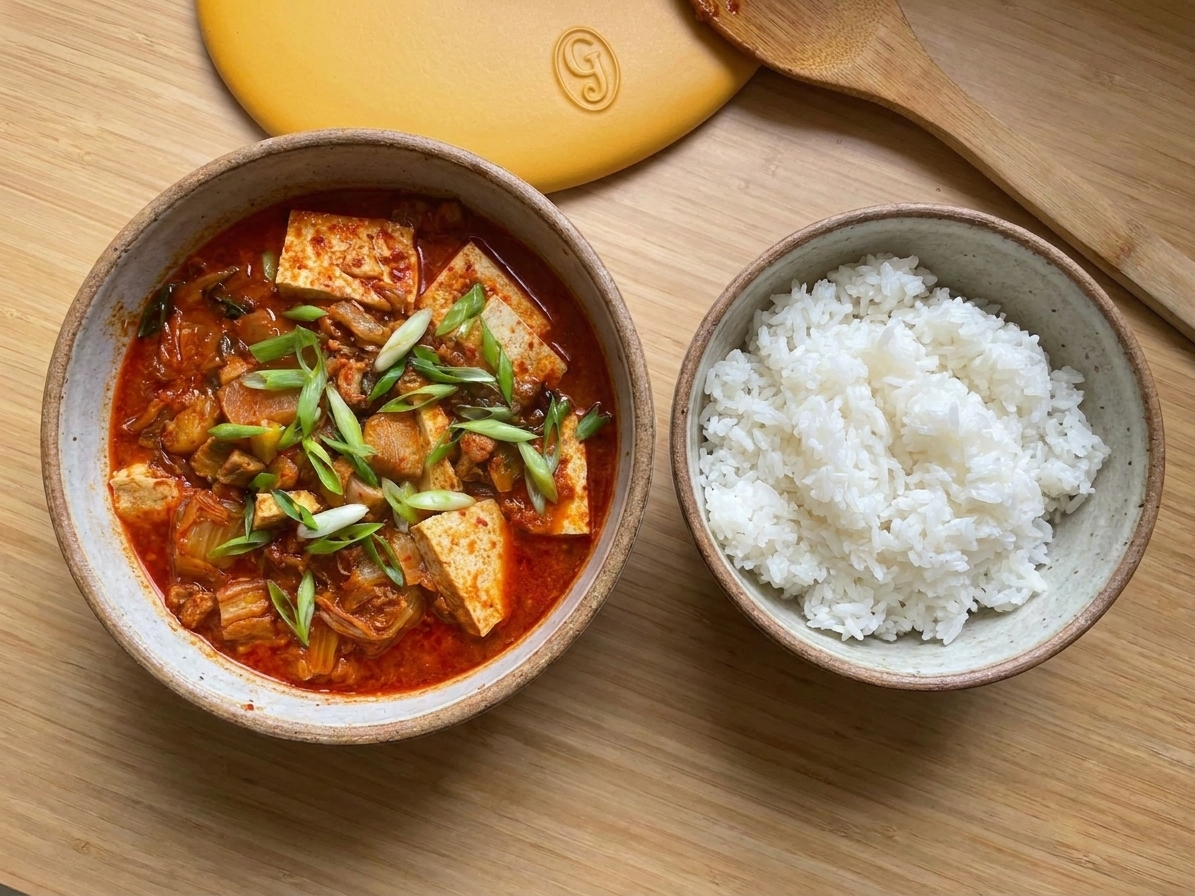
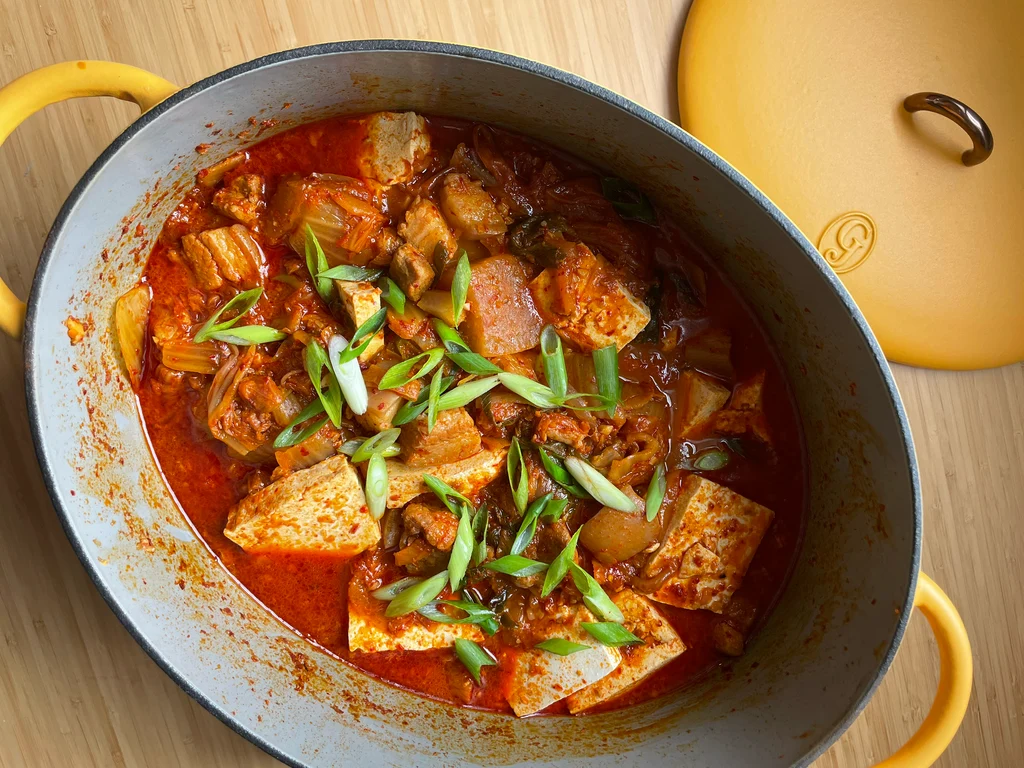
A bubbling pot of kimchi stew with pork and tofu on a stovetop, steam rising, with a bowl of white rice and small side dishes on a warm kitchen table

Kimchi stew is my definition of low-drama comfort food. It is spicy, tangy, and deeply savory, and it somehow tastes even better when you make it with that half-jar of kimchi that has been aging in the back of the fridge getting louder by the day.

This is kimchi jjigae, the cozy Korean stew that turns fermented cabbage, a little pork, and a few pantry staples into a broth you will want to spoon straight from the pot. I keep the ingredients accessible and the steps super clear. You get crisp-edged pork, soft tofu, and a broth that hits salty, sour, spicy, and just a little sweet if you choose to round it out.
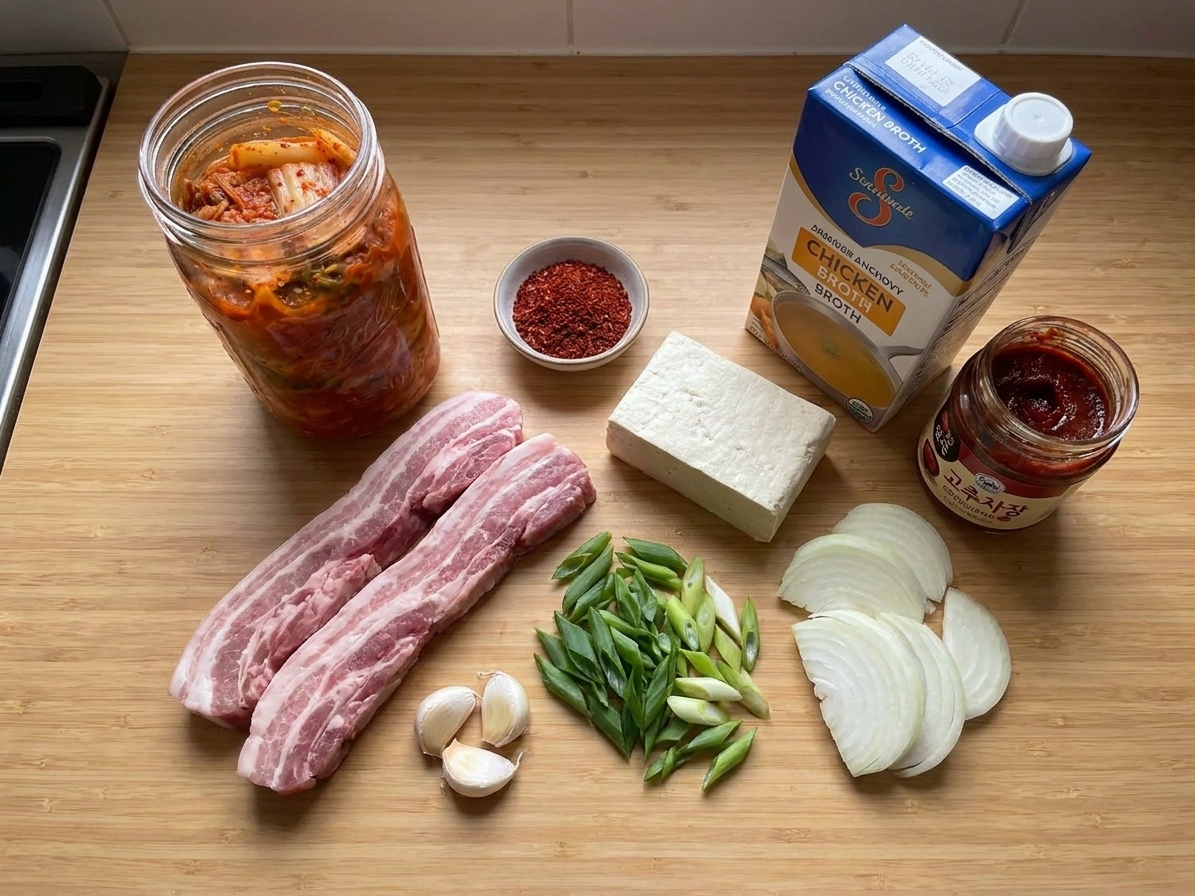
Ingredients for kimchi stew arranged on a kitchen counter, including kimchi, pork belly, tofu, scallions, onion, garlic, gochugaru, gochujang, and a carton of broth

Why It Works

  • Old kimchi does the heavy lifting. The deeper the ferment, the brighter and more complex your broth tastes.
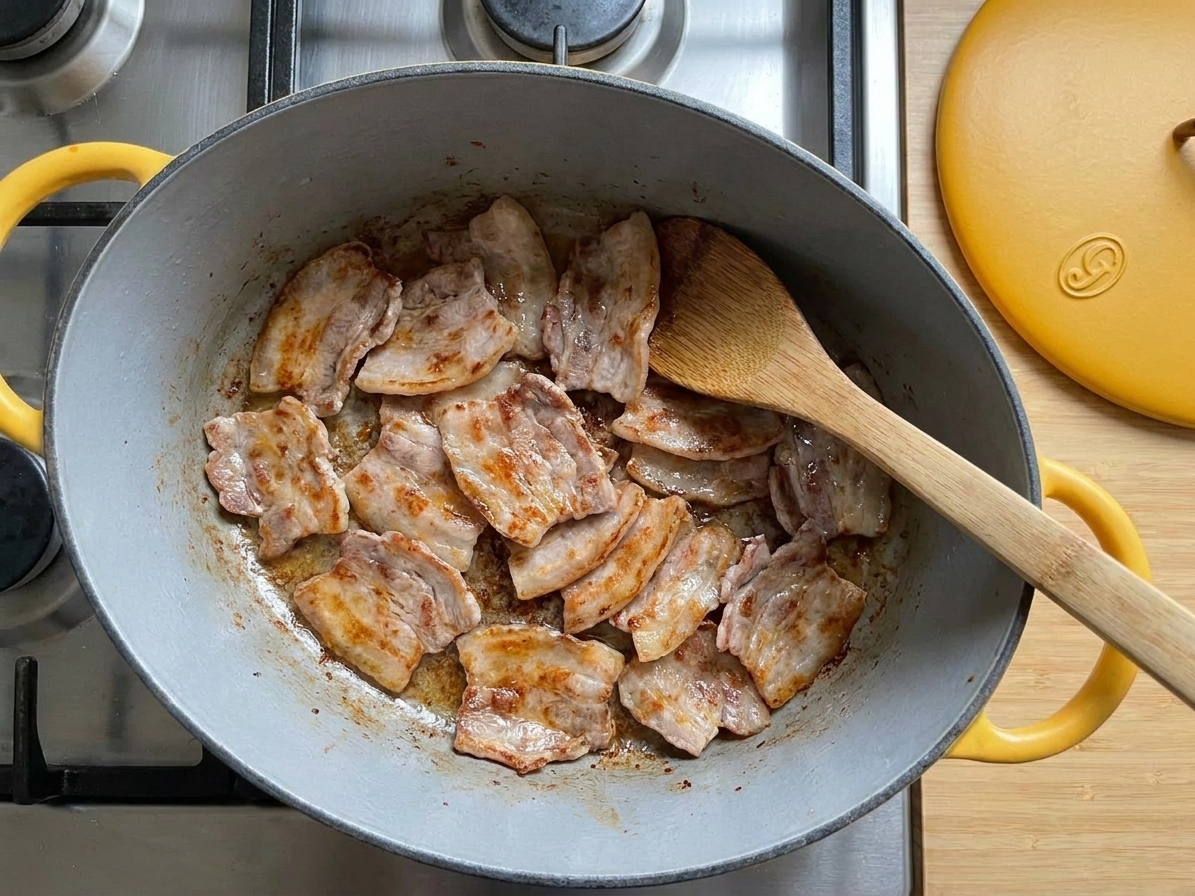
  • Searing the pork builds instant depth. You get browned bits that melt into the stew and make it taste restaurant-level.
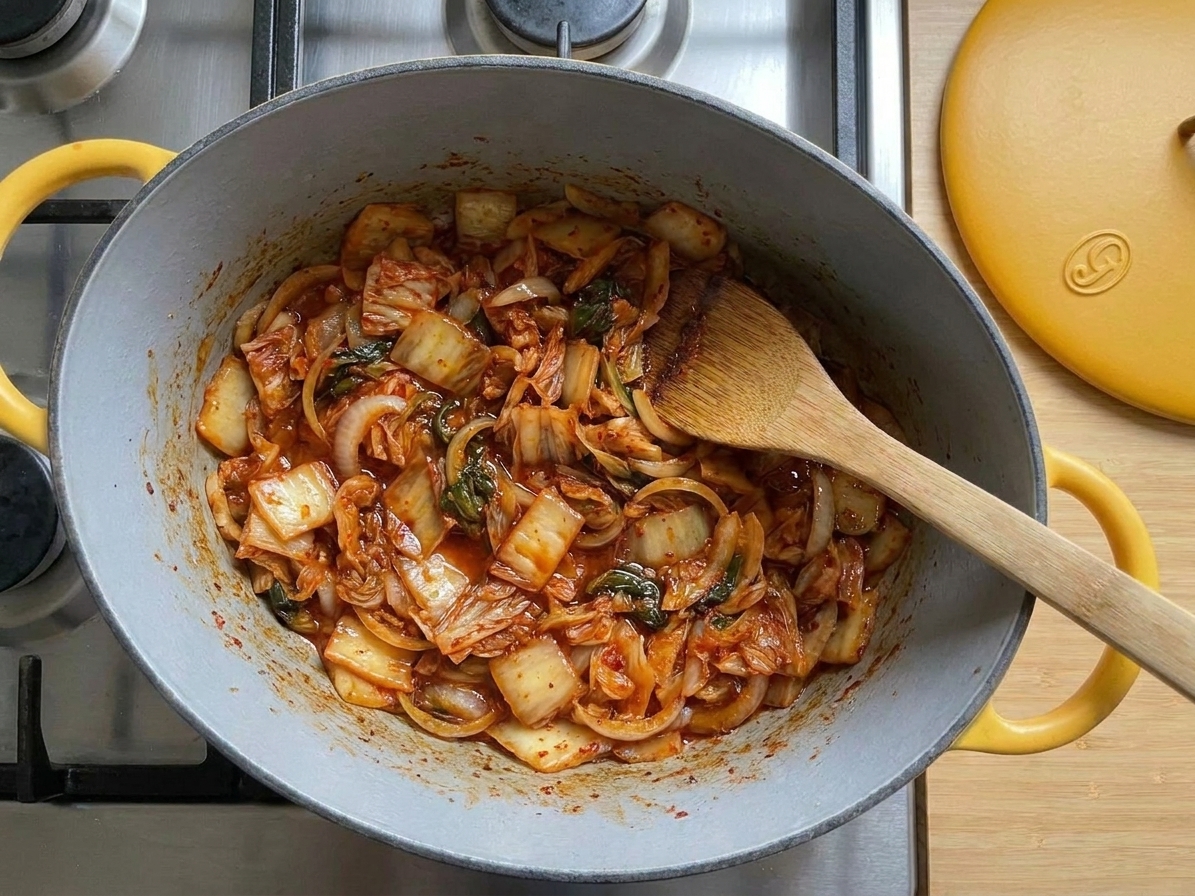
  • Kimchi gets cooked twice. A quick sauté first for sweetness and caramelized edges, then a simmer to infuse the broth.
  • Tofu goes in late. It stays silky and intact instead of breaking into the broth.
  • Flexible salt control. Using broth plus a splash of kimchi juice lets you dial in the punch without over-salting.

Pairs Well With

Storage Tips

Storage and Leftovers

Fridge: Cool the stew, then store in an airtight container for up to 4 days. The flavor gets bolder overnight in a very good way.

Reheat: Warm gently on the stovetop over medium-low until bubbling. Add a splash of water or broth if it has tightened up.

Freezer: You can freeze it, but it is best within 1 to 2 months. Tofu can get a bit spongy after thawing. If that texture bugs you, freeze the stew base and add fresh tofu when reheating.

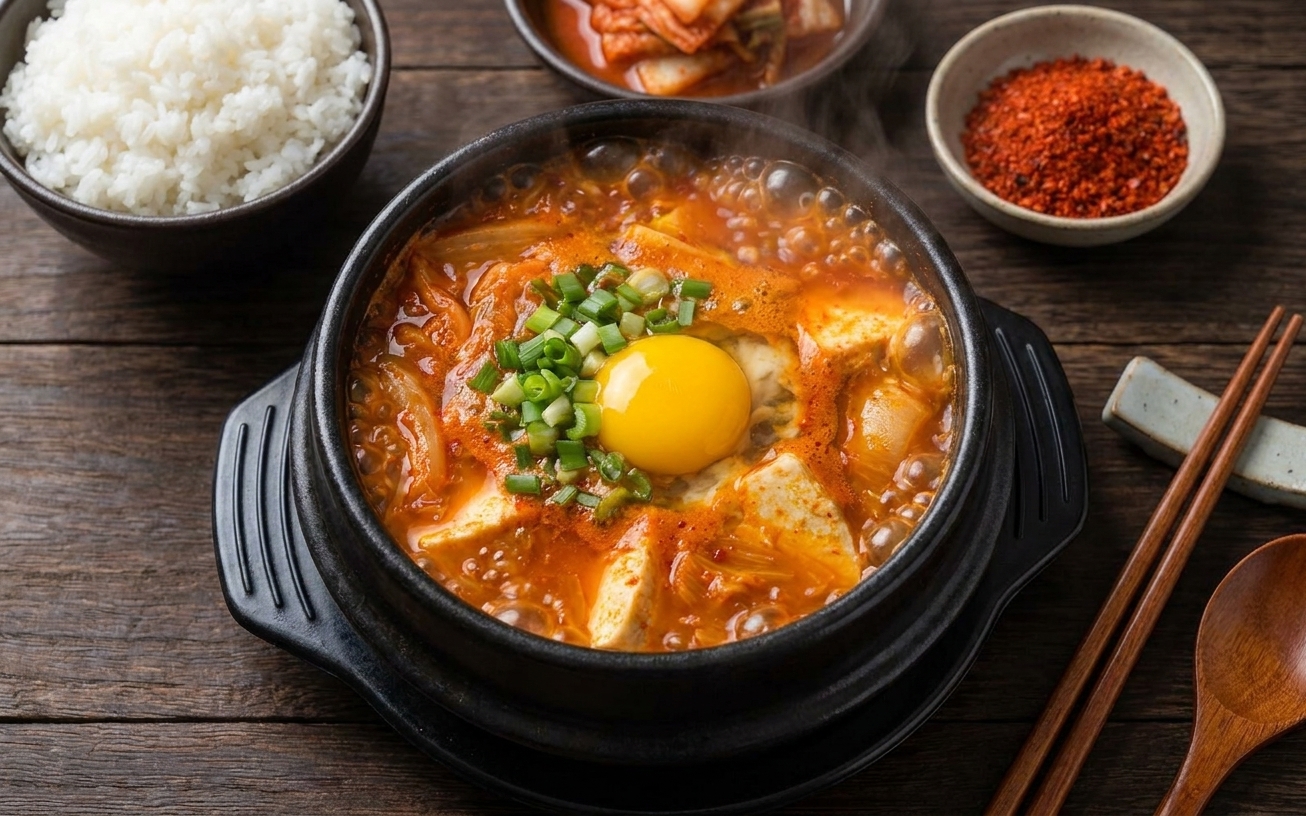
Leftover upgrade: Reheat a bowl and crack in an egg during the last minute. Cover and let it poach right in the broth.

Common Questions

Common Questions

What kind of kimchi is best for kimchi stew?

Well-fermented napa cabbage kimchi is the gold standard. If your kimchi is brand new and mild, the stew can taste flat. Fix it by adding extra kimchi juice, a bit more gochugaru, and letting it simmer a few extra minutes.

Can I make kimchi stew without pork?

Yes. Swap the pork for mushrooms (shiitake or cremini) and use vegetable broth. If you want extra body, add a spoon of gochujang and a drizzle of toasted sesame oil at the end.

Quick heads up: many kimchi brands contain fish sauce, shrimp, or anchovy. If you are going vegetarian, check the label and grab a vegan kimchi.

Is gochujang required?

No, but it helps. Gochugaru brings clean chile heat, while gochujang adds sweetness and depth. If you only have one, use gochugaru and taste for balance.

How spicy is this?

As written, it is medium spicy. For mild, cut the gochugaru in half and skip the optional gochujang. For spicy, add more gochugaru or a sliced fresh chile.

Also, gochugaru heat varies by brand, so start lighter if you are spice-sensitive. You can always add more at the end.

What should I serve with kimchi jjigae?

Steamed white rice is the classic move. If you want extra comfort, add a fried egg or a side of cucumbers tossed with rice vinegar and salt.

Why does my stew taste too sour?

It usually means the kimchi is very mature or you added a lot of juice. Simmer a little longer, then balance with 1/2 to 1 teaspoon sugar or a bit more broth. Taste again and adjust salt at the end.

The first time I made kimchi stew at home, I treated kimchi like a garnish. Cute idea, disappointing bowl. The day it clicked was when I let the kimchi actually cook first, like it had something to say. A quick sauté, a simmer, a couple of taste-as-you-go adjustments, and suddenly the broth tasted like it had a backstory. Now it is my favorite save-the-weeknight move: one pot, one ladle, and a guaranteed “okay, wow” moment halfway through the bowl.