Mom's Best Recipes
Recipe

Mirepoix (Onion, Carrot, Celery Base)

The classic French flavor base you can batch, freeze, and drop into soups, sauces, and braises for instant depth.

Author By Matt Campbell
4.8
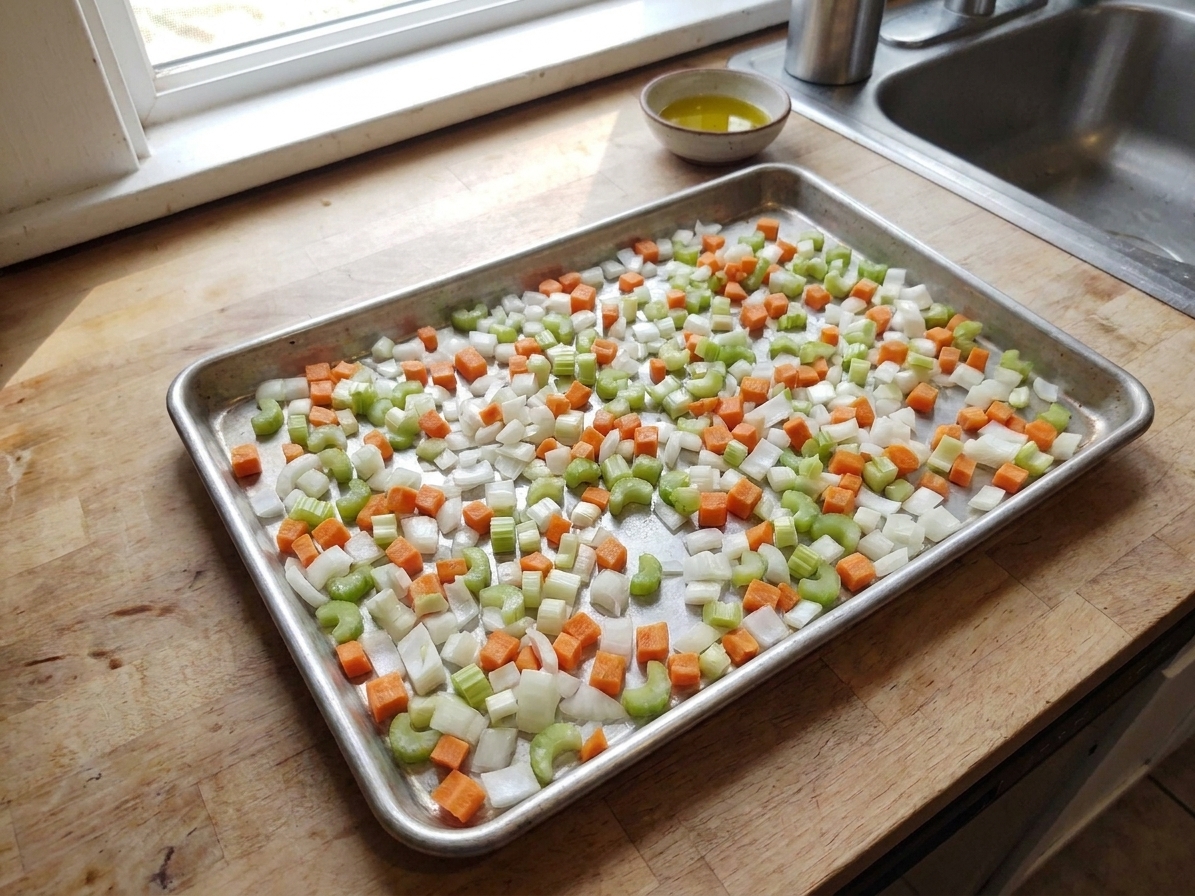
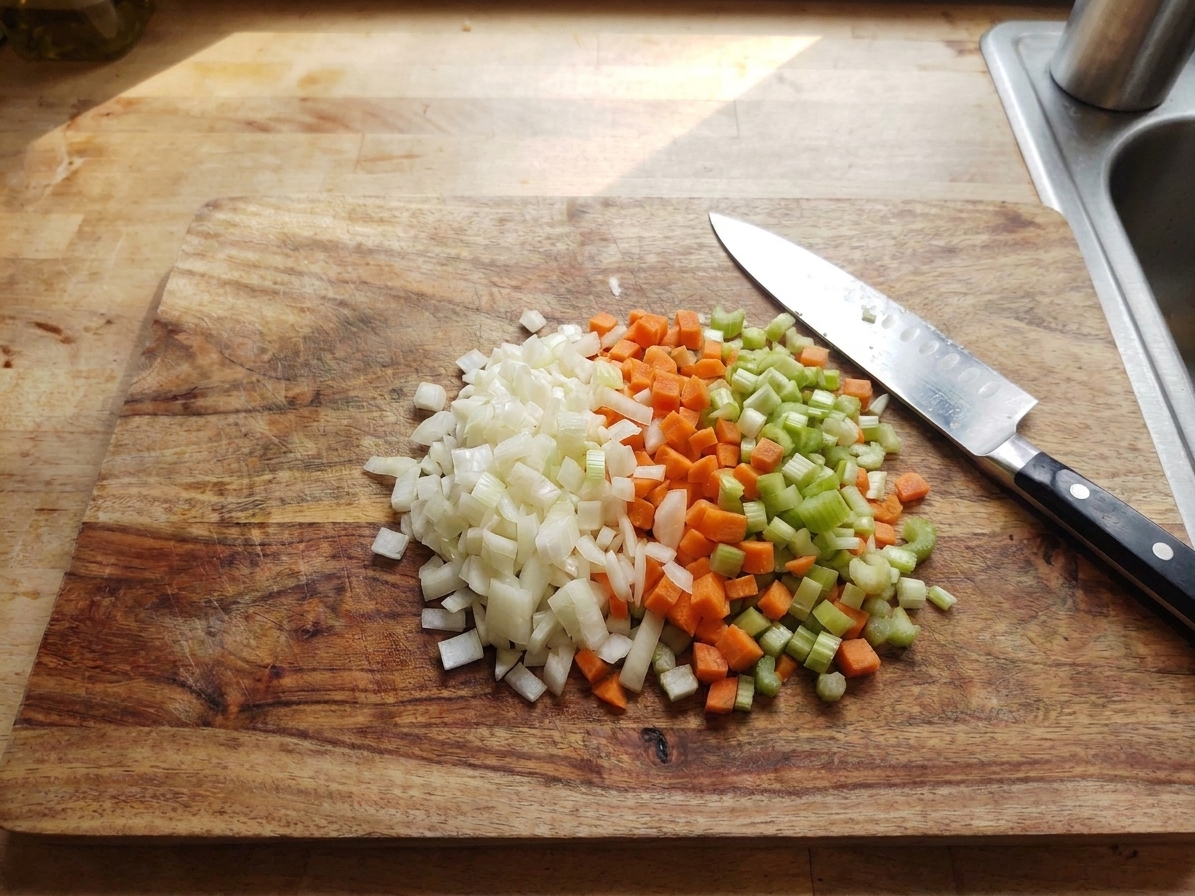
A wooden cutting board on a warm-lit kitchen counter with neatly diced onions, carrots, and celery arranged in small piles next to a chef’s knife

Mirepoix is one of those kitchen things that sounds fancy until you realize it's literally just onion, carrot, and celery doing teamwork. And it's the kind of teamwork that makes soups taste like you fussed for hours, even if you're wearing sweatpants and trying to beat bedtime.

Think of mirepoix as your flavor foundation. You cook it gently in fat until it turns sweet and fragrant, then you build everything else on top. Sauces get rounder. Stews get cozier. Weeknight beans suddenly have a plan.

Below is my go-to way to make it, plus the ratio to remember, the cut that makes sense for what you're cooking, and how to stash it in the freezer so Future You can be a little smug.
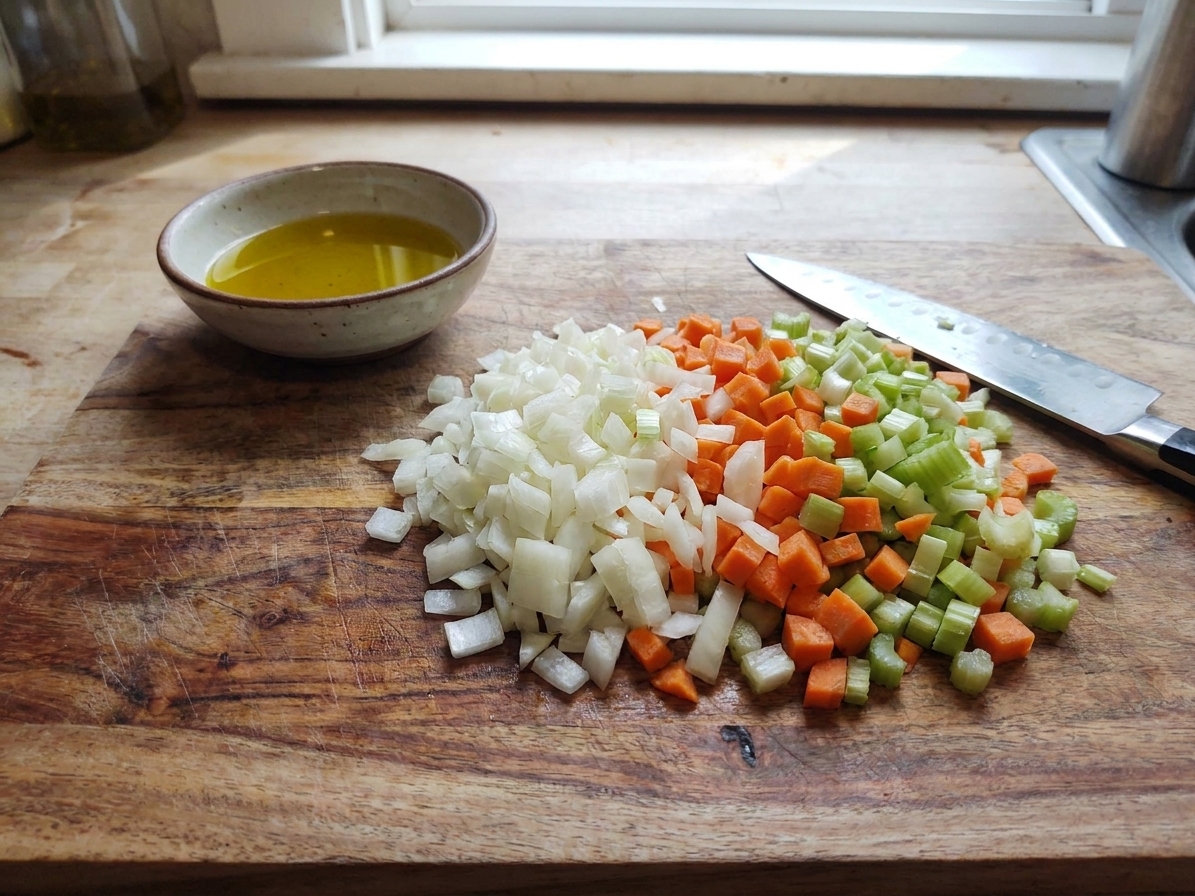
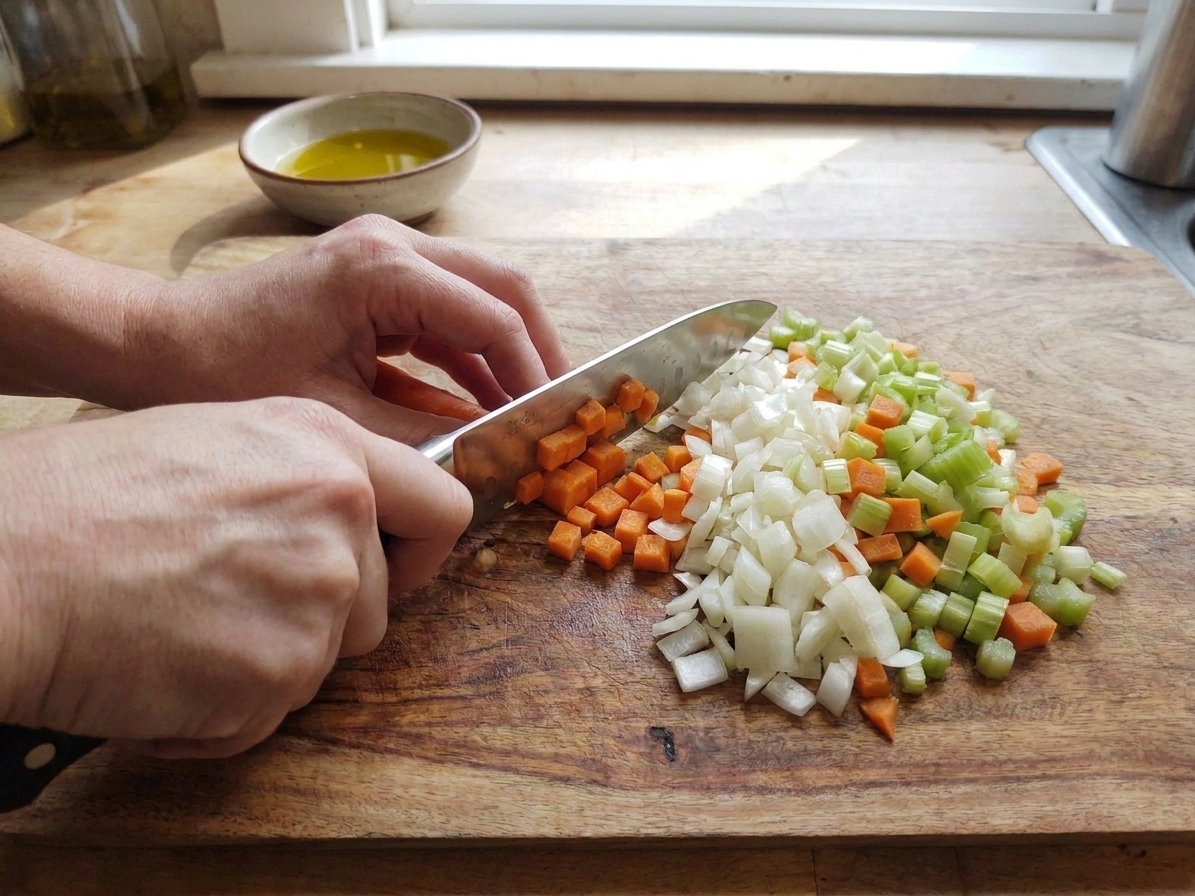
Close-up of diced onion, carrot, and celery on a cutting board with a small bowl of olive oil nearby on a home kitchen counter

Why It Works

  • Classic ratio, repeatable results: 2 parts onion to 1 part carrot to 1 part celery means balanced sweetness and savoriness.
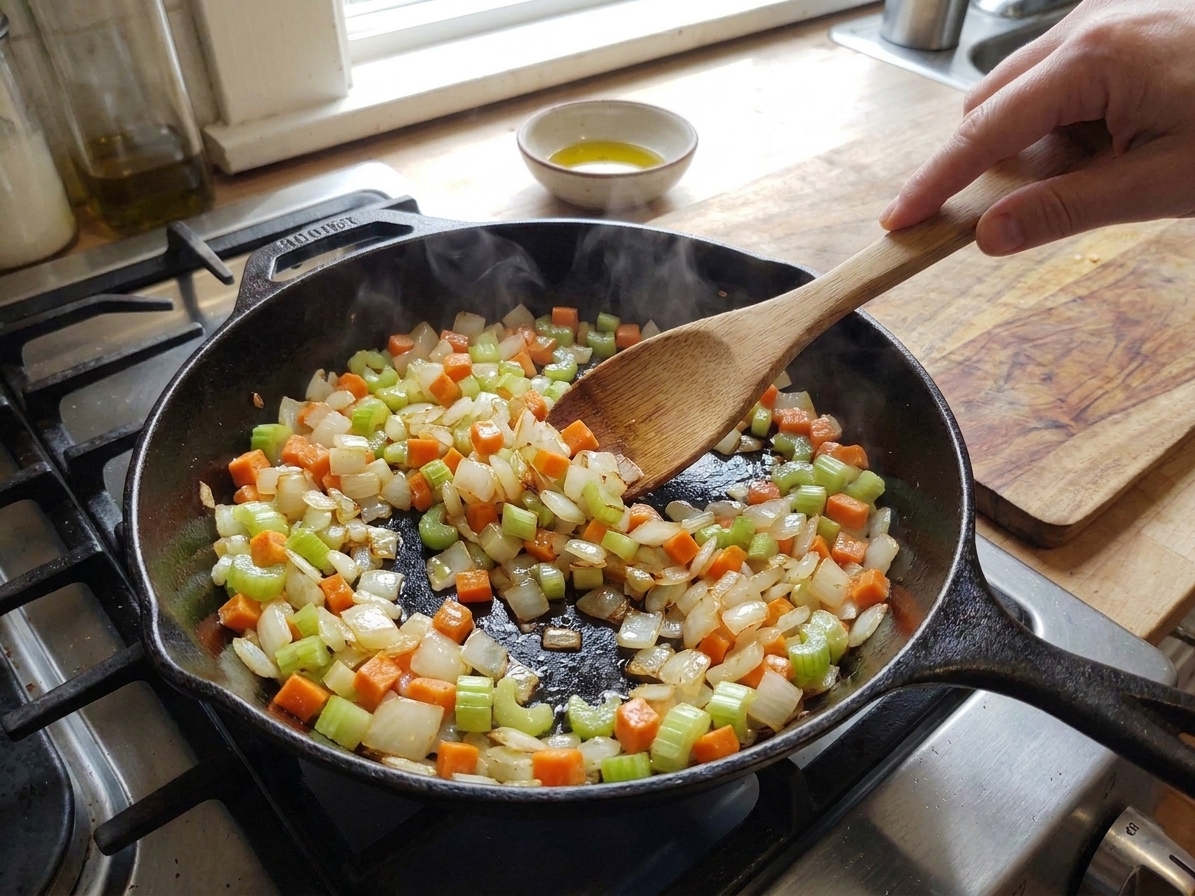
  • Low and slow sauté: cooking gently draws out sweetness without browning, which keeps soups and sauces clean and mellow.
  • Flexible cut sizes: dice small for smooth sauces, bigger for chunky soups, and you're always right.
  • Meal-prep friendly: you can prep a batch once and freeze portions for quick starts all month.

Pairs Well With

Storage Tips

Refrigerator

Store raw chopped mirepoix in an airtight container for 3 to 4 days. Place a paper towel on top to absorb moisture so it stays crisp instead of weepy. If anything smells off or feels slimy, toss it.

Freezer (best for busy weeks)

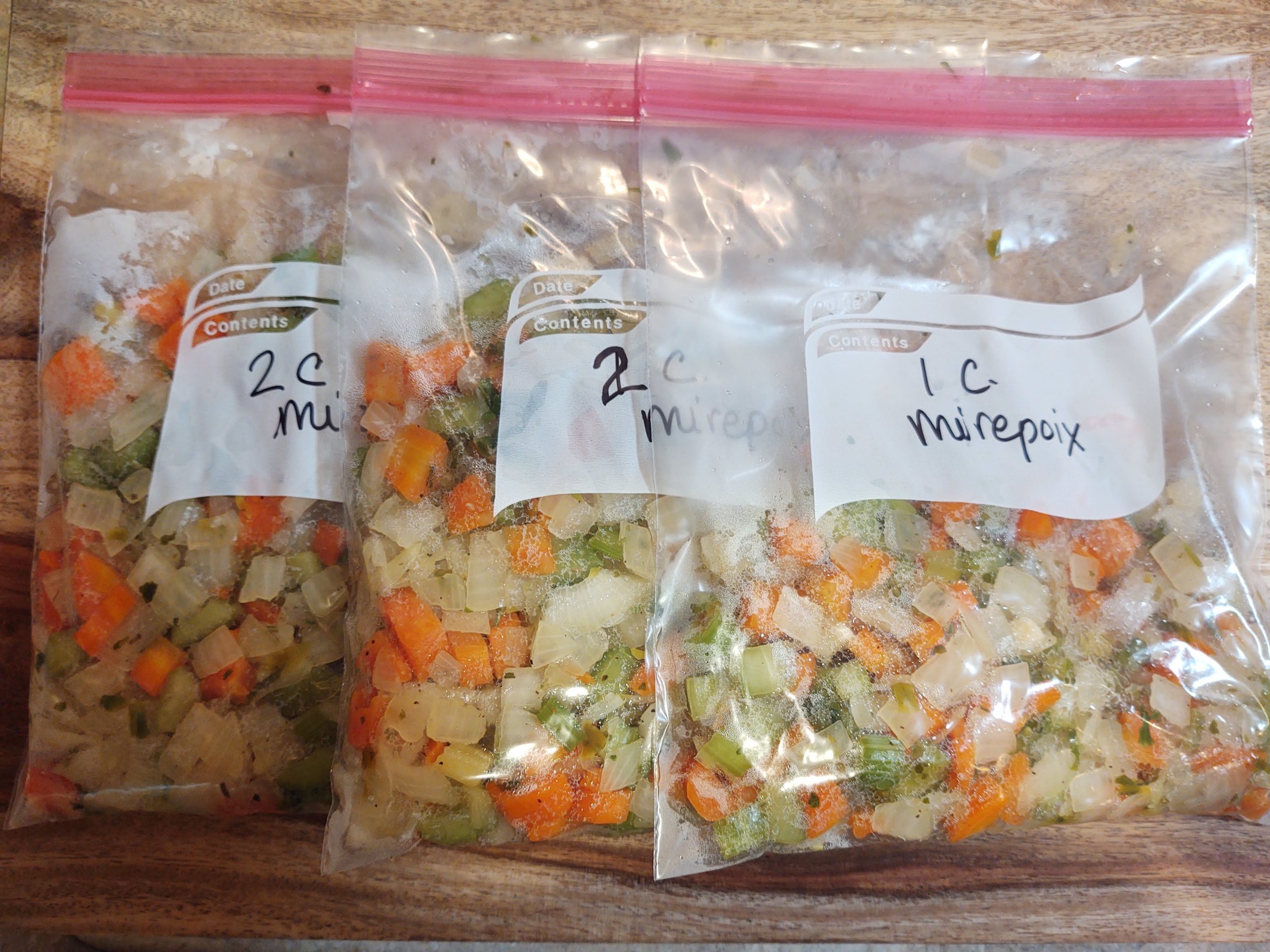
Freeze raw mirepoix in measured portions so you can grab exactly what you need. My favorite move is 1 cup portions in zip-top bags, pressed flat for fast thawing. Keeps best quality for 2 to 3 months.

Freezing in a muffin tin

Pack chopped mirepoix into a lightly oiled muffin tin, freeze until solid, then pop the pucks into a freezer bag. Great for tossing a couple into a pan when you don't want to measure.

Cooked mirepoix

If you already sautéed it, cool completely and refrigerate up to 5 days. It also freezes well for about 2 months for best quality. Rewarm in a pan with a splash of water or broth to loosen it.

A single freezer bag laid flat on a countertop filled with chopped onion, carrot, and celery, ready to be labeled and frozen

Common Questions

What is the classic mirepoix ratio?

The classic ratio is 2:1:1 by volume: 2 parts onion, 1 part carrot, 1 part celery. Example: 1 cup onion, 1/2 cup carrot, 1/2 cup celery.

Do I have to cook mirepoix, or can I add it raw?

You can add it raw to long-cooking soups and braises, but sautéing first gives you a sweeter, deeper base. If you're short on time, even 5 to 8 minutes of sautéing helps.

Should mirepoix be browned?

Classic mirepoix is usually cooked without significant browning to keep flavors gentle and flexible. That said, if you're making a dark gravy, beef stew, or anything that loves roasty notes, a little browning is a good thing.

What is the difference between mirepoix, soffritto, and the “holy trinity”?

  • Mirepoix: onion, carrot, celery (French).
  • Soffritto: often onion, carrot, celery, cooked slowly in olive oil (Italian). Some regions vary.
  • Holy trinity: onion, celery, bell pepper (Cajun and Creole).

Can I use frozen mirepoix from the store?

Absolutely. It's a solid shortcut. It may release more water than fresh, so cook it a little longer to evaporate moisture before adding liquids.

What dishes use mirepoix?

Soups, stews, braises, pot roast, chicken stock, lentils, risotto, bolognese-style sauces, pan sauces, and a lot of “what's for dinner” situations.

Help, mine is browning too fast. What do I do?

Turn the heat down (medium-low is your friend), stir a bit more often, and if the pan looks dry, add a small splash of water or broth. You're going for soft and sweet, not toasted.

I skipped the fancy culinary track and leaned hard into practical kitchen skills, and mirepoix is basically the poster child for that. It's not flashy, but it's the difference between a pot of soup that tastes fine and a pot of soup that makes everyone hover near the stove asking, “What did you put in this?”

It's also my favorite kind of cooking chaos. A pile of chopped veg, some heat, a little fat, and suddenly your kitchen smells like something good is about to happen. That's the energy I want on a random Tuesday.