Can I use chicken breasts instead of thighs?
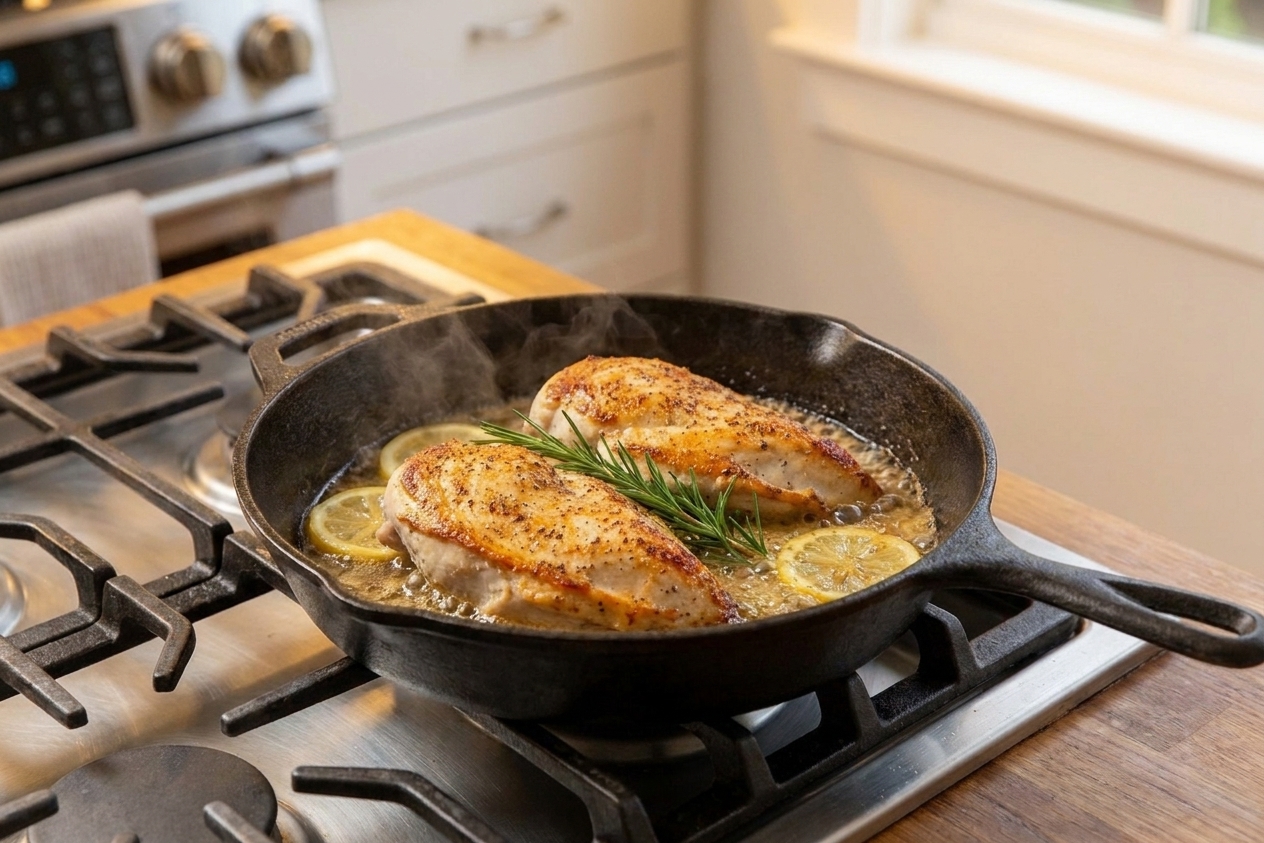
Yes, but they cook faster and dry out easier. If using breasts, sear them quickly, then roast until the thickest part reaches 165°F (the USDA safe endpoint), usually 12 to 18 minutes depending on size. If you pull closer to 160°F, make sure you rest them so carryover cooking can finish the job.
Do I have to sear first?
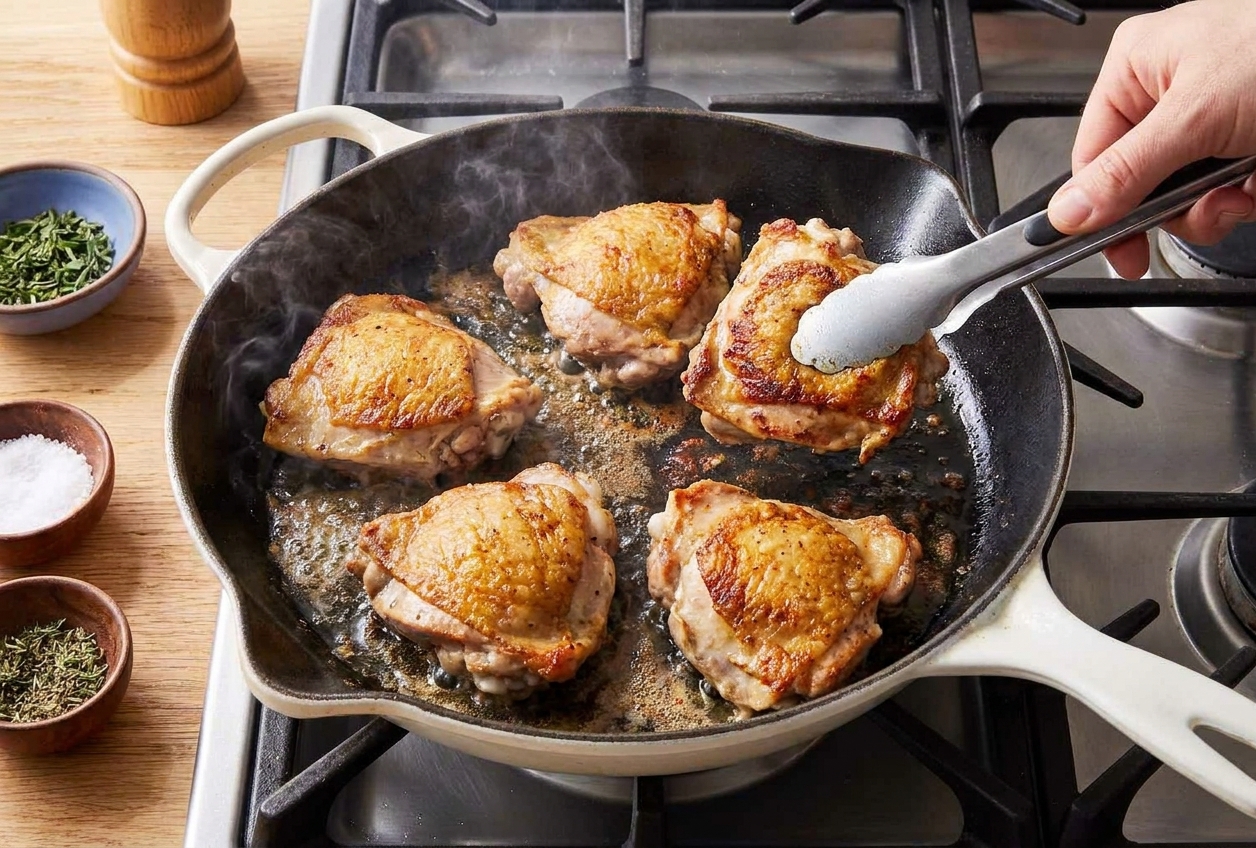
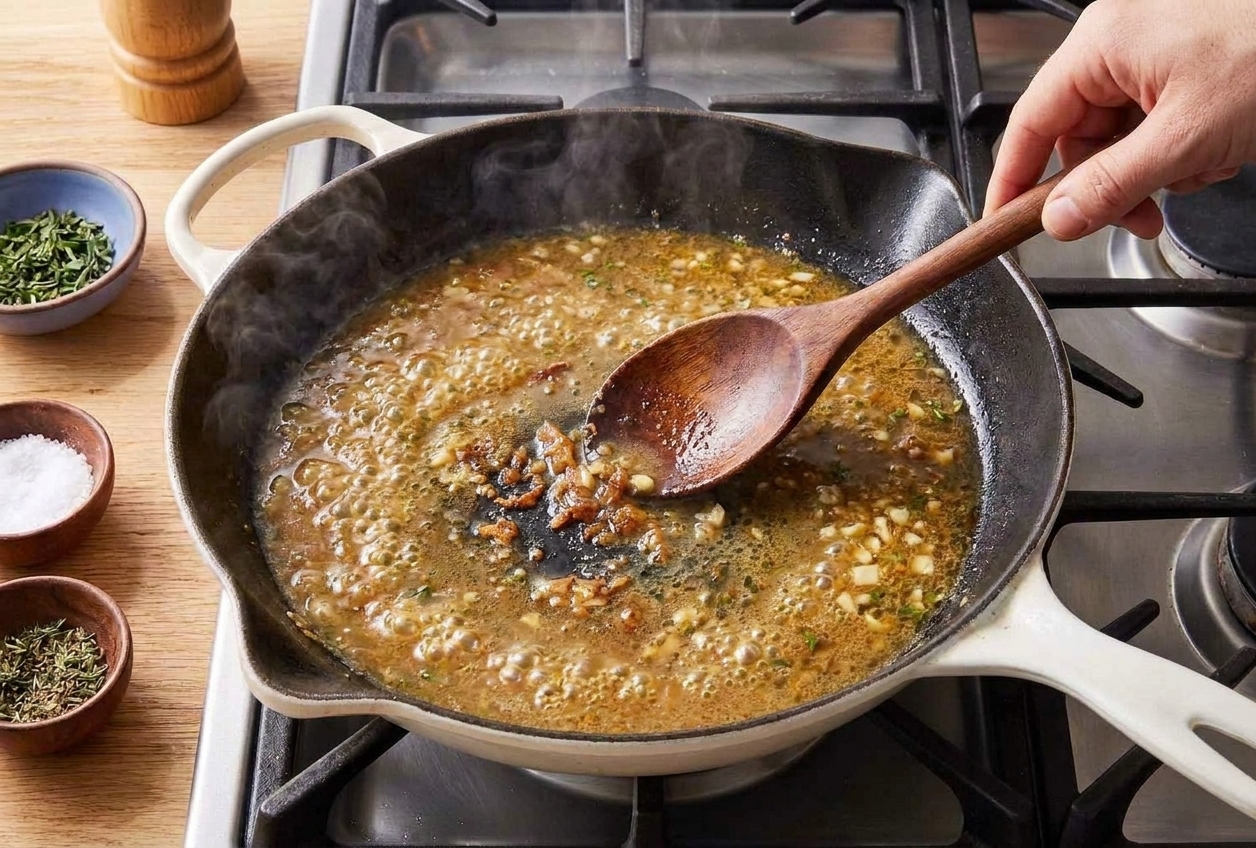
You do not have to, but searing is what gives you crisp skin and those browned bits that make the sauce taste like it came from a bistro.
If you skip it, the dish still works, but it will be less crispy and the sauce will be milder.
What temperature should chicken thighs be?
165°F in the thickest part (without touching bone) is the safe minimum. That said, thighs are very forgiving and often taste even better around 175°F to 190°F because the connective tissue has more time to relax. If you go a little higher, you did not ruin dinner, you probably improved it.
My sauce tastes too sharp or too salty. How do I fix it?
If it is too sharp, whisk in a little more butter, or add a teaspoon of honey to round it out. If it is too salty, add a splash more broth or water, then finish with a squeeze of fresh lemon to bring balance back.
What potatoes work best?
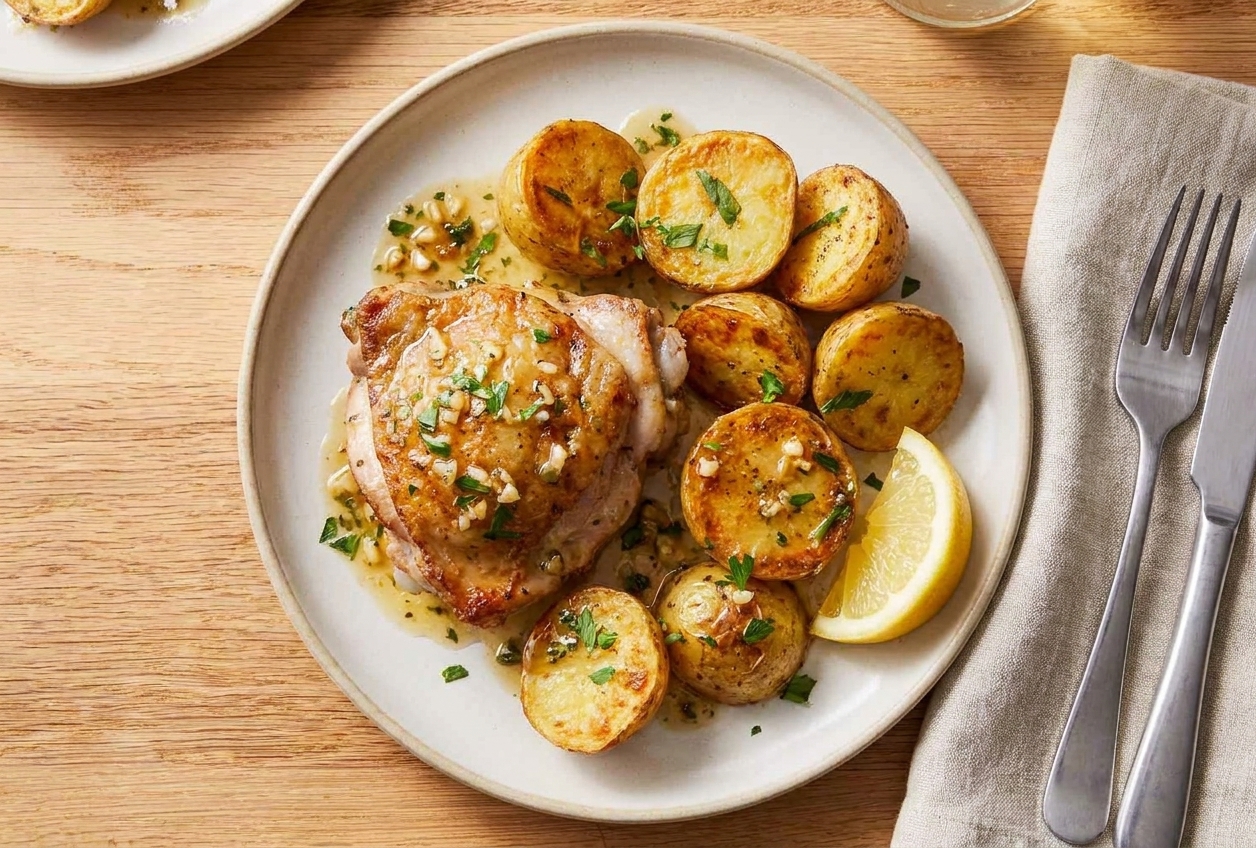
Baby gold potatoes are my favorite because they get creamy inside and crisp outside. Yukon Gold, red potatoes, or even russets work too. Just cut them into even 1-inch chunks so they cook at the same pace.
What if the chicken is done but the potatoes are not?
Pull the chicken to a plate and loosely tent with foil. Give the potatoes another 8 to 12 minutes in the oven until tender, then make the sauce.
Can I add veggies?
Absolutely. Add green beans, asparagus, or broccoli in the last 10 to 12 minutes of roasting so they stay crisp-tender.
You can also toss in sliced onions at the beginning for extra sweetness.