Common Questions
Do I have to brown the oxtails first?
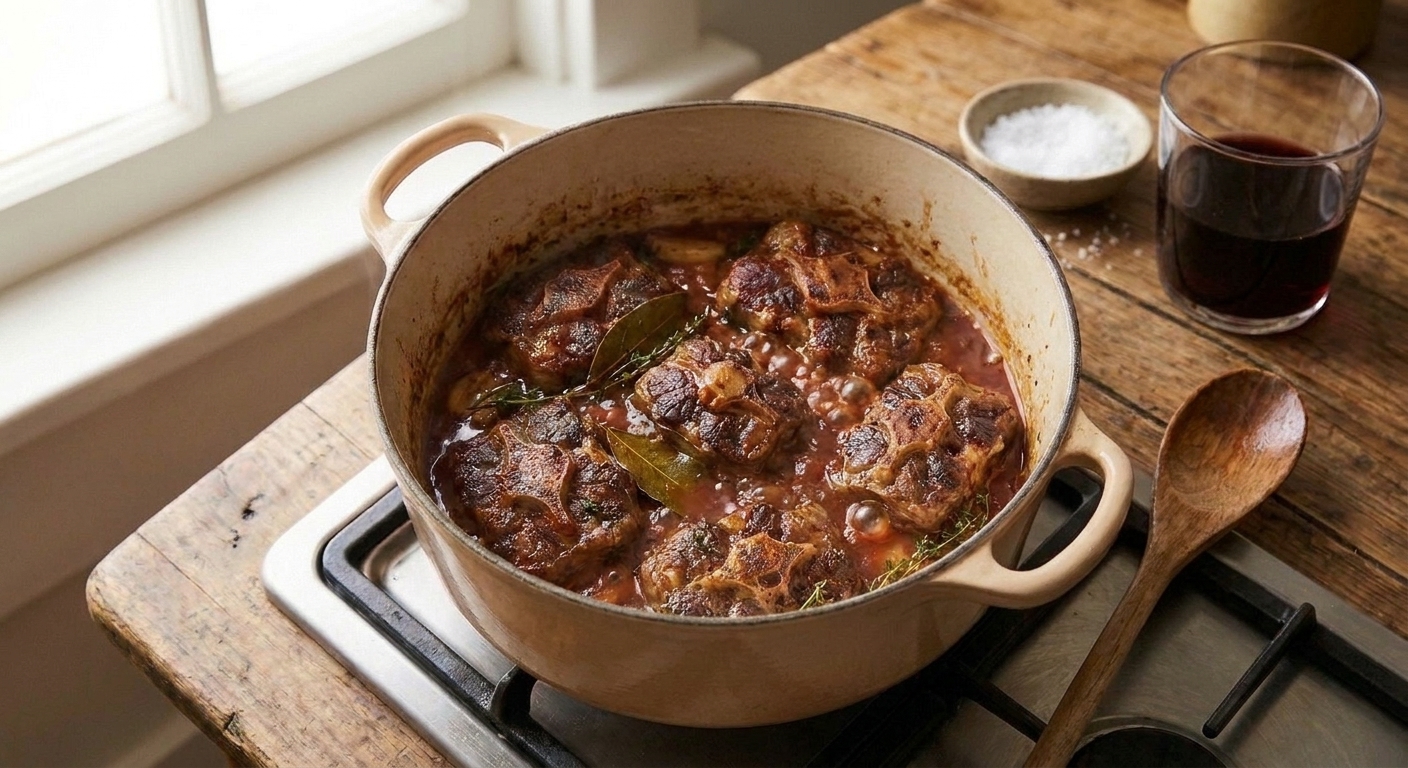
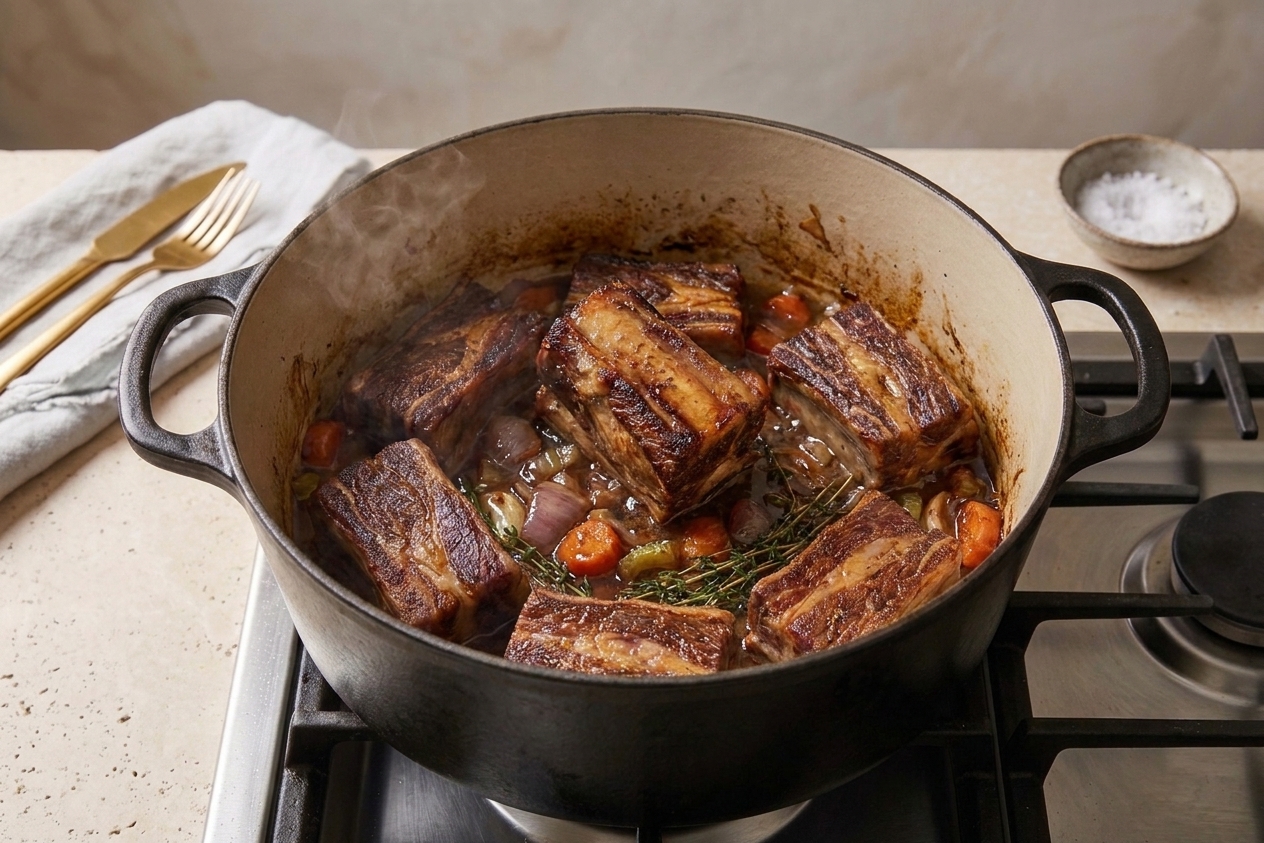
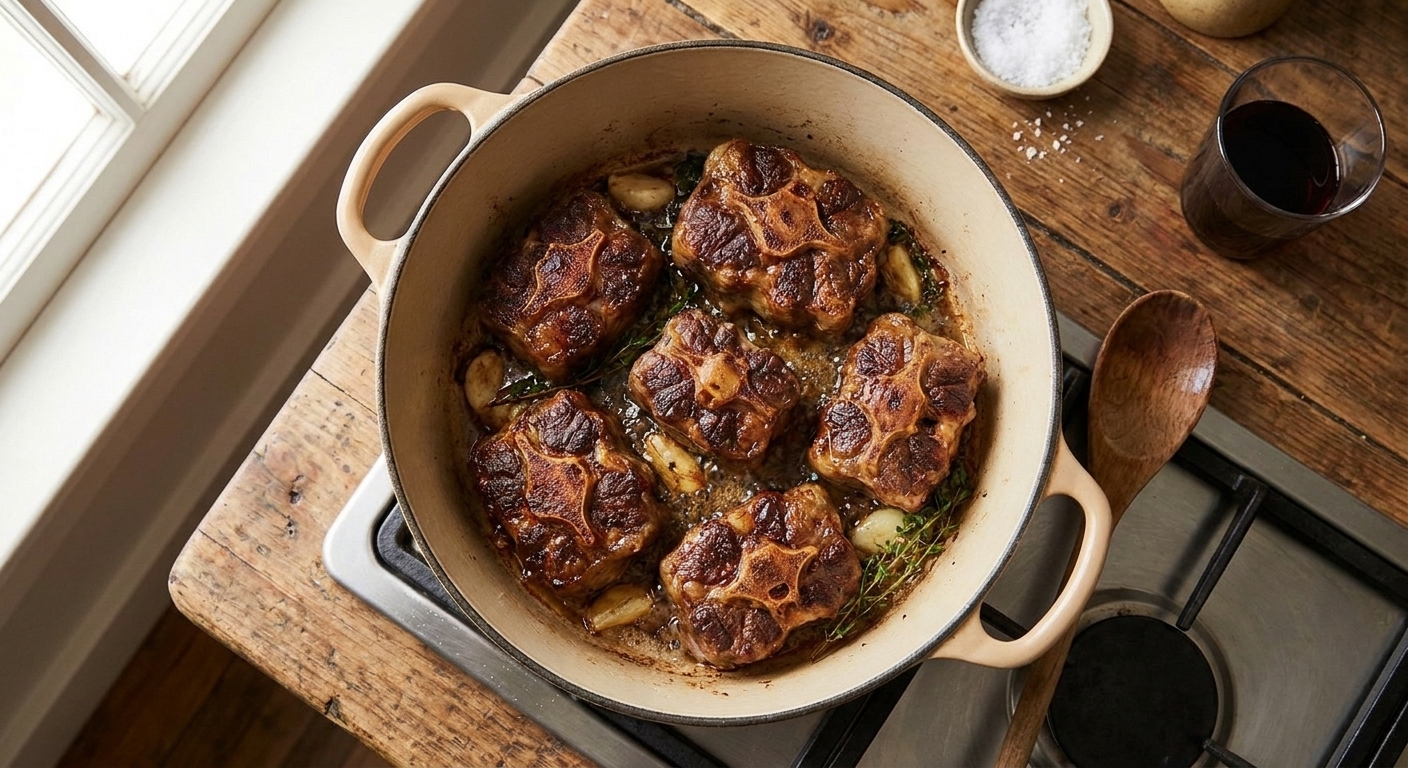
For real ragu flavor, yes. Browning builds fond on the pot, and that fond dissolves into the braising liquid and makes the sauce taste bigger than its ingredient list. Pat the oxtails dry and work in batches so they sear instead of steam.
When should I skim the fat?
There are two easy skimming moments:
- During the braise: around the 1.5 to 2 hour mark, you will often see fat collecting at the edges. Spoon off a little if it looks excessive.
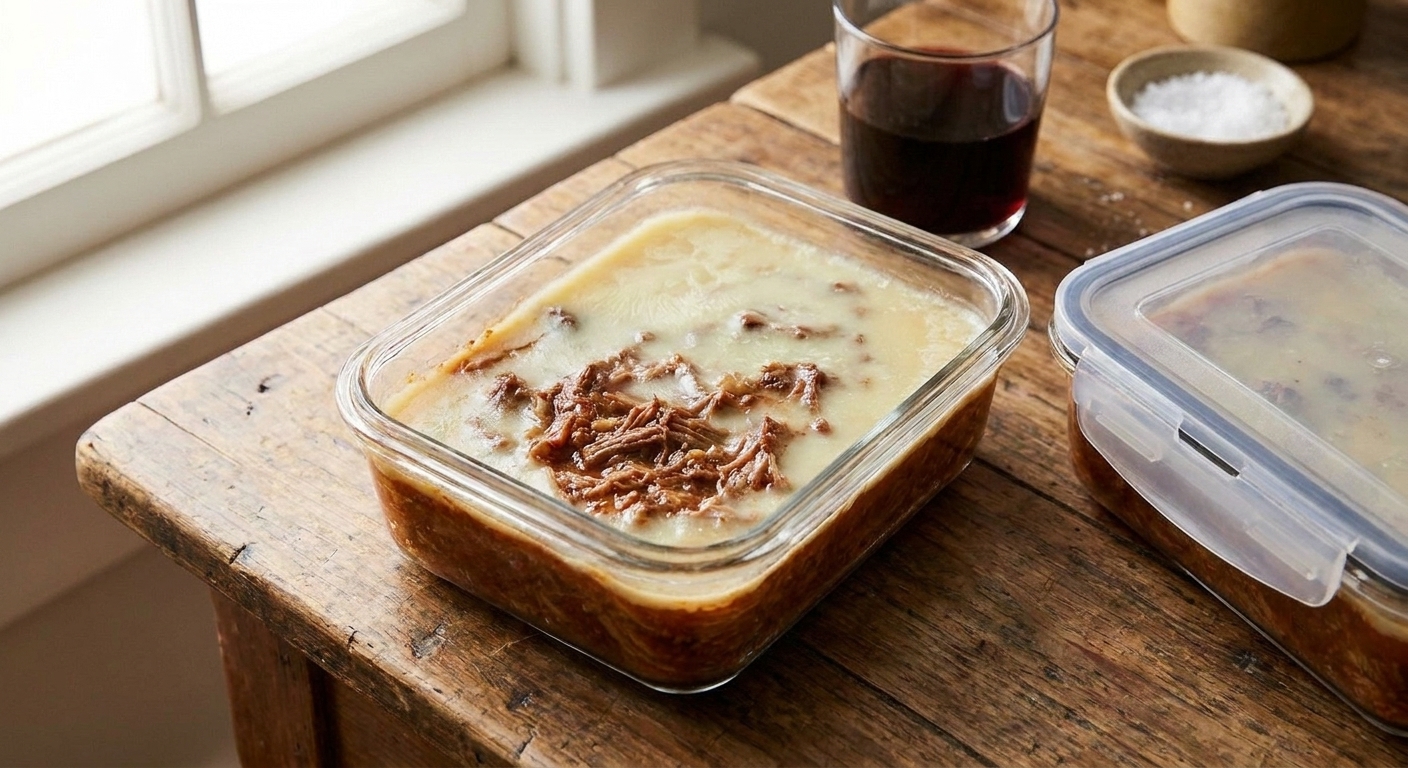
- After chilling: the cleanest method. Refrigerate overnight and lift off the solid fat cap the next day.
How do I know the oxtails are done?
They are ready when the meat is very tender and pulls away from the bone with a fork. At 300°F, this usually takes 3 to 4+ hours depending on the size and how meaty your pieces are. If it is still chewy, it just needs more time.
Can I make this in a slow cooker?
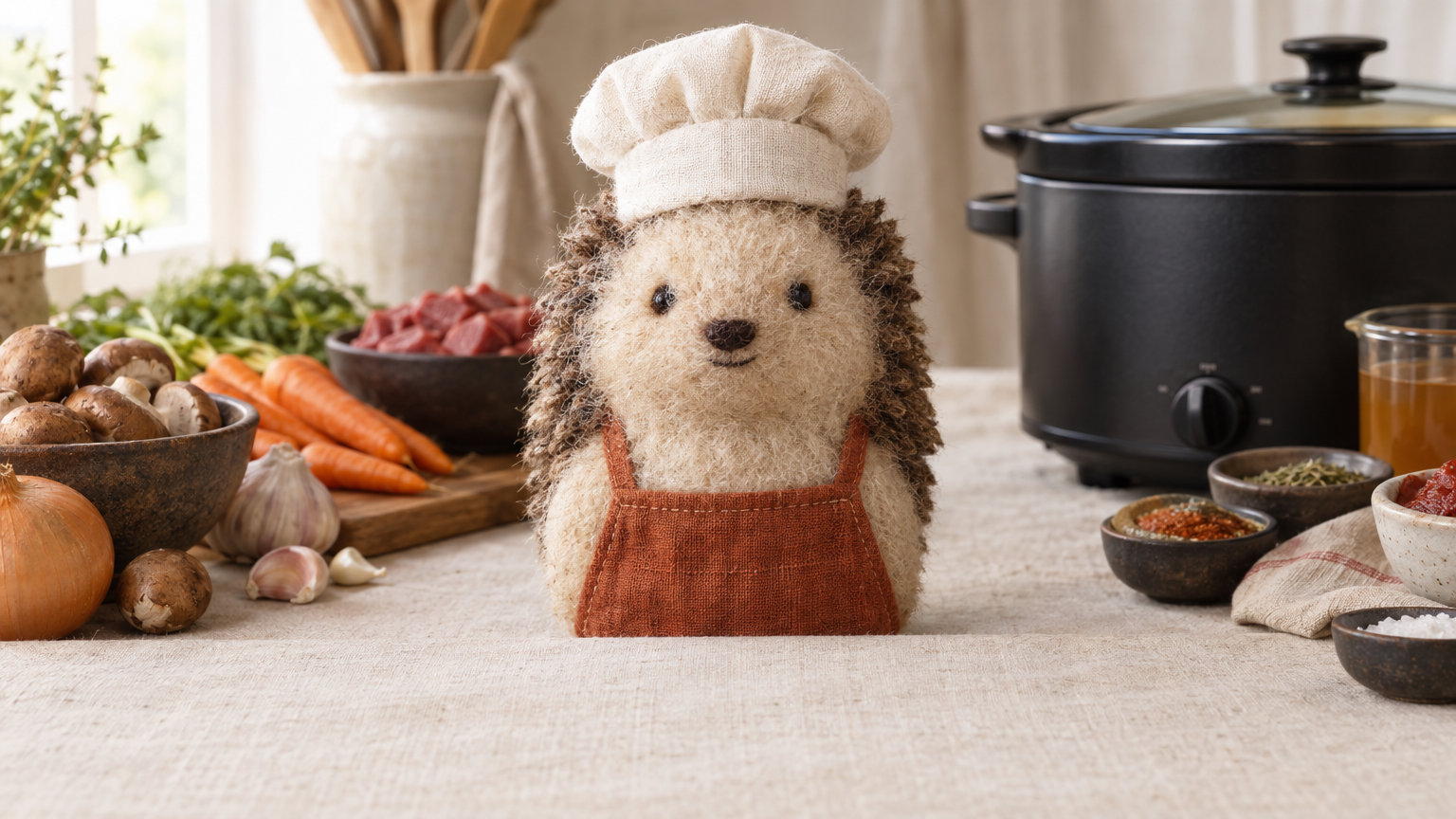
You can, but still brown the oxtails and cook the tomato paste first on the stovetop, then transfer. Cook on low 8 to 10 hours, but start checking around 7 to 8 hours since some slow cookers run hot. Reduce the sauce on the stovetop at the end if it seems thin.
What wine should I use?
A dry red you would happily drink. Chianti, Côtes-du-Rhône, Cabernet, or Merlot all work. Avoid anything very sweet.
Do I need to strain the sauce?
Not required. For a smoother ragu, you can fish out the larger herb stems and bay leaves, then crush the softened vegetables with a spoon or give the sauce a few quick pulses with an immersion blender before adding the shredded meat back in.
What pasta shape is best for oxtail ragu?
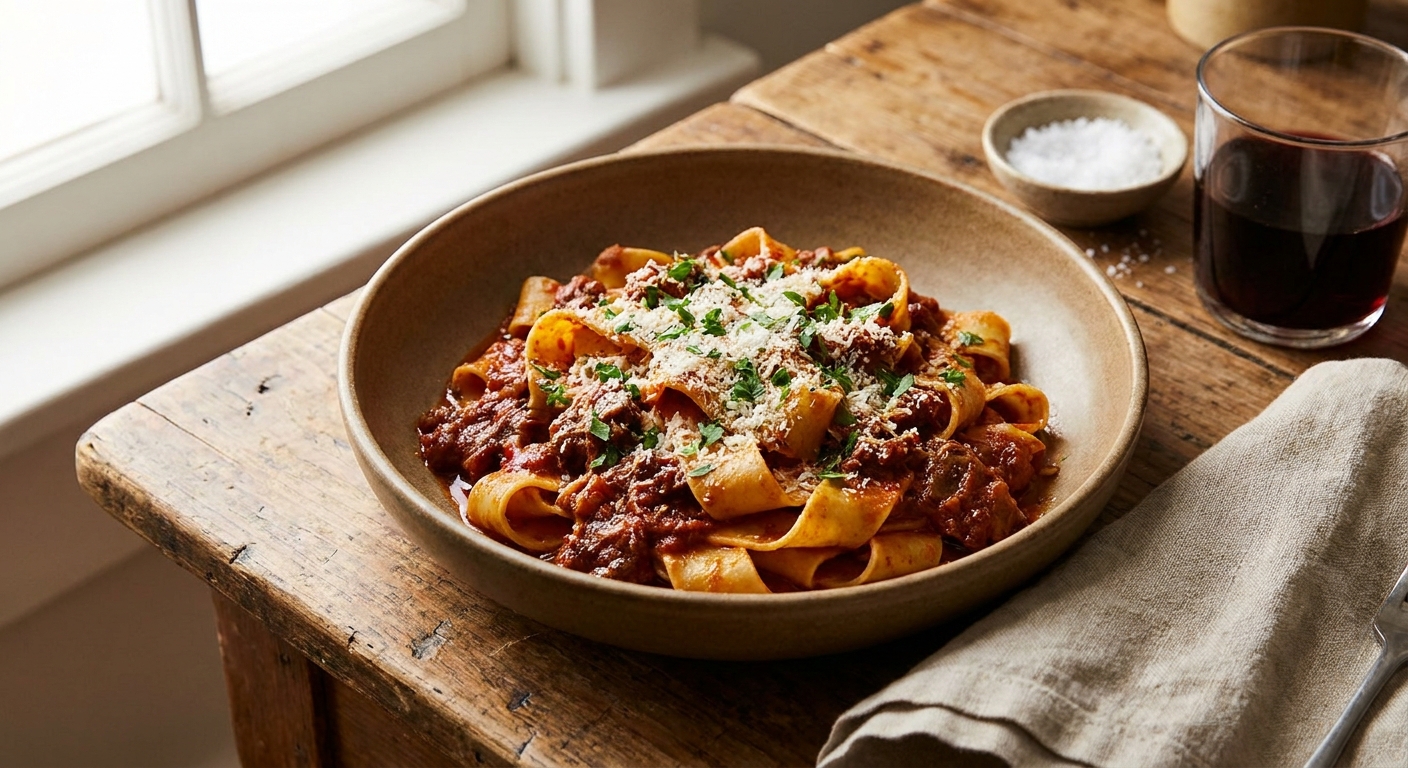
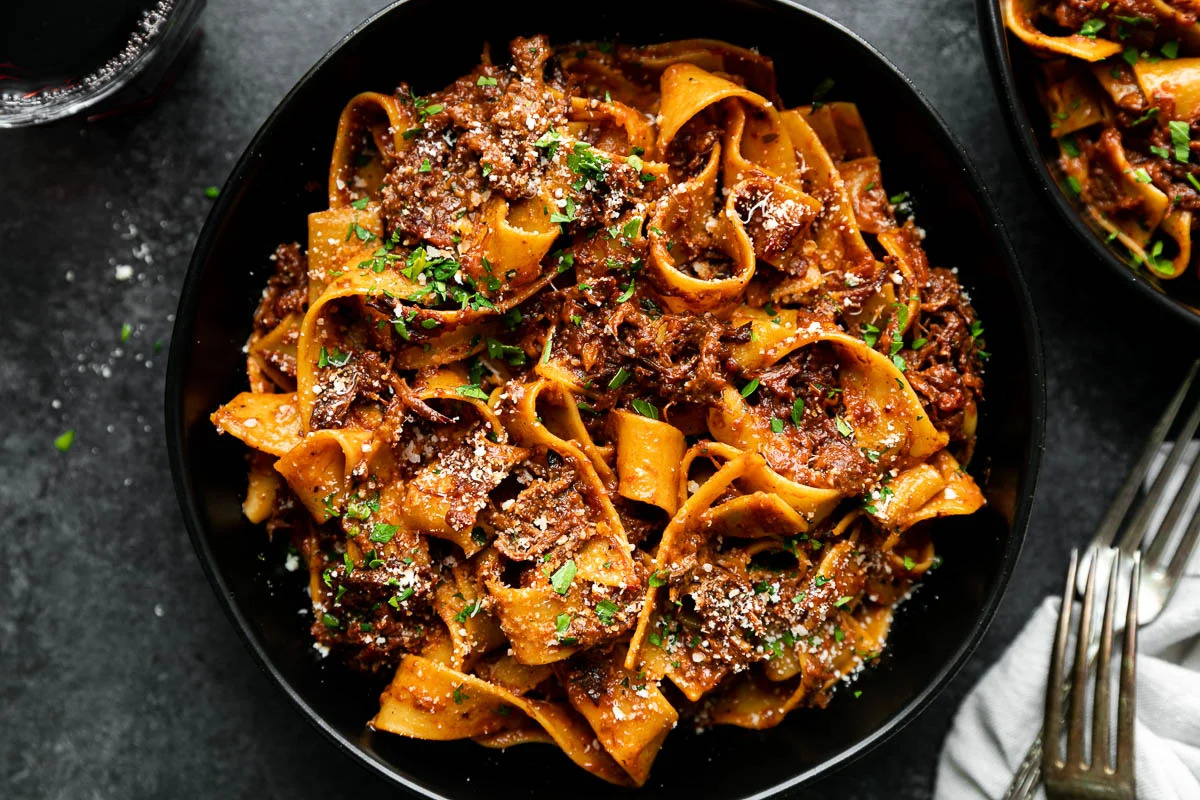
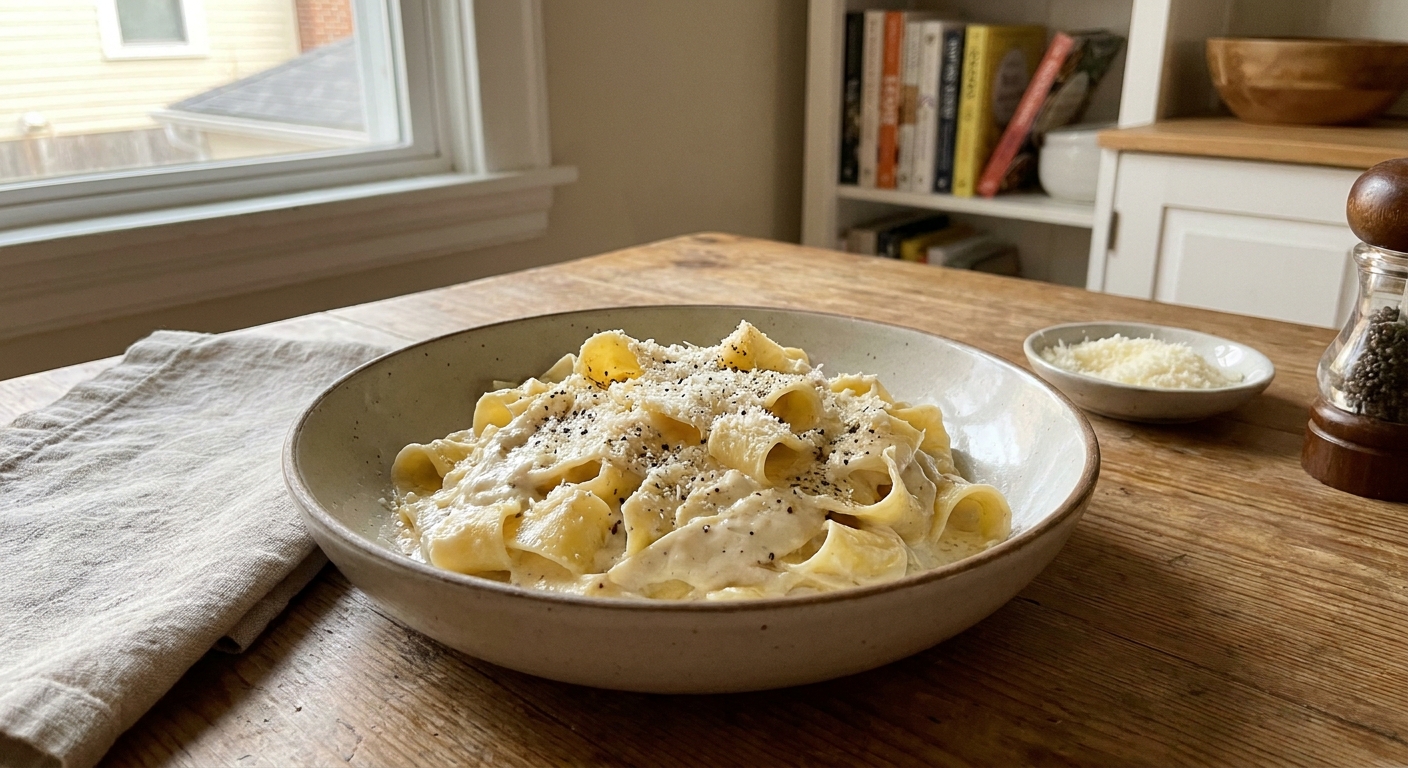
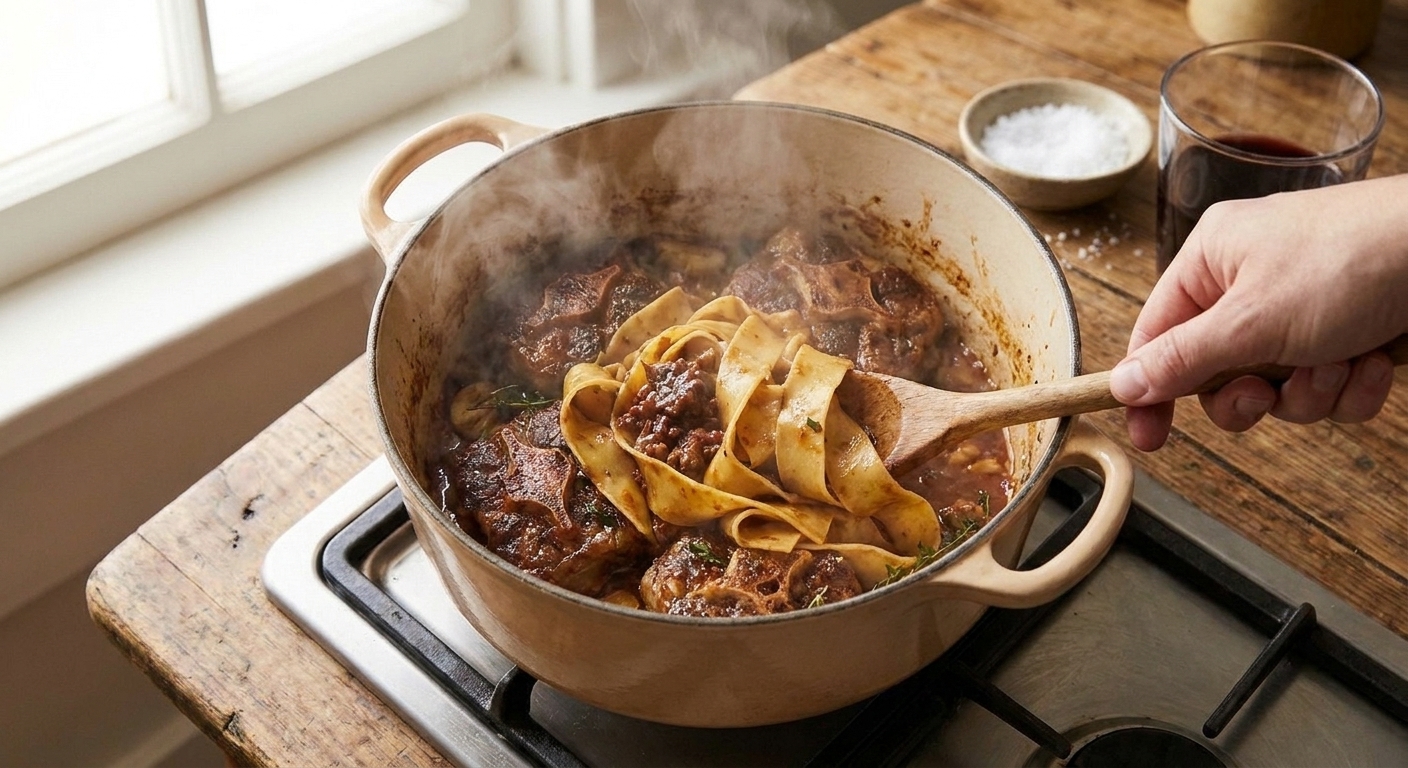
Pappardelle is the classic cozy choice because its wide ribbons catch the shredded meat. Tagliatelle, rigatoni, or even polenta are also excellent.