Mom's Best Recipes
Recipe

Pasta all’Amatriciana

Crispy guanciale, bright tomato, a little heat, and a snowstorm of Pecorino Romano.

Author By Matt Campbell
4.8
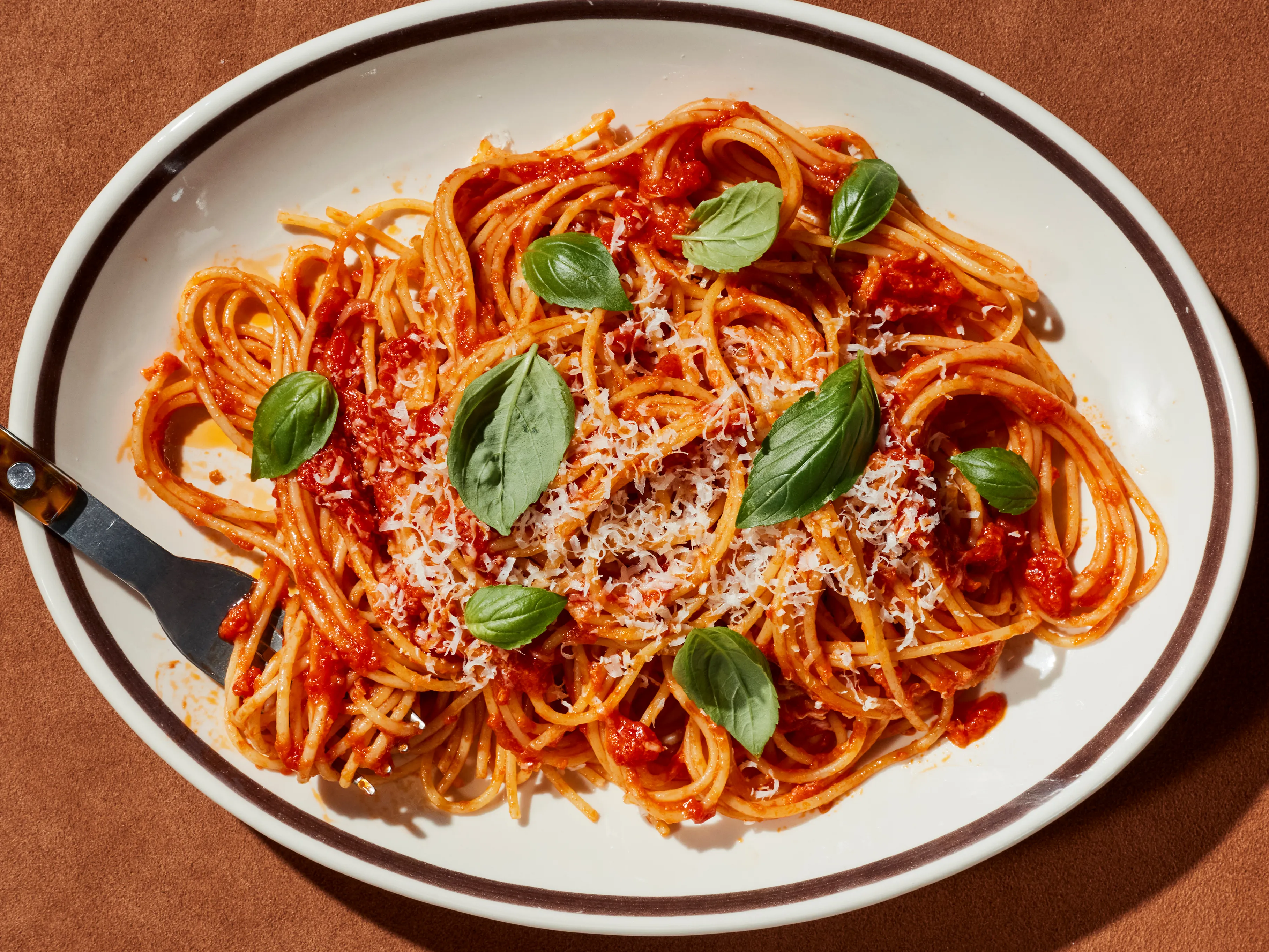
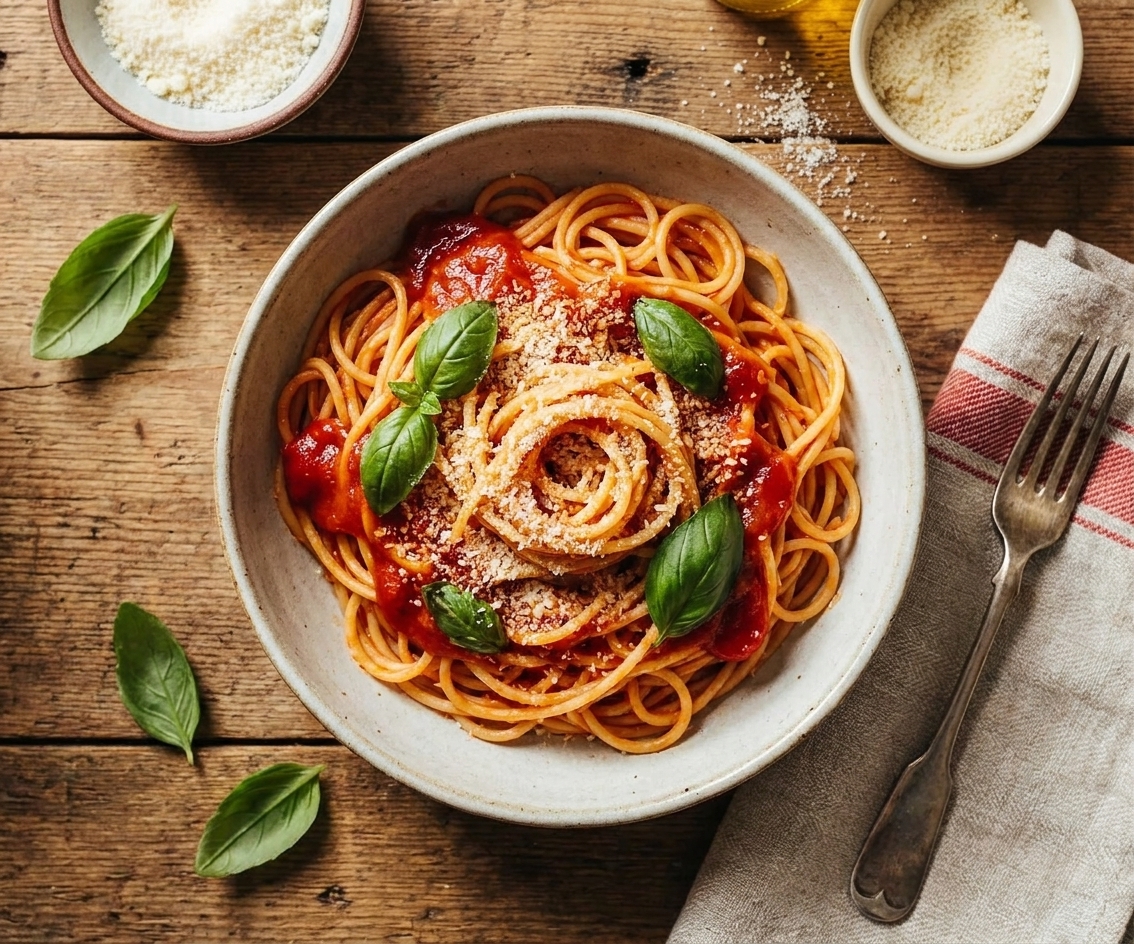
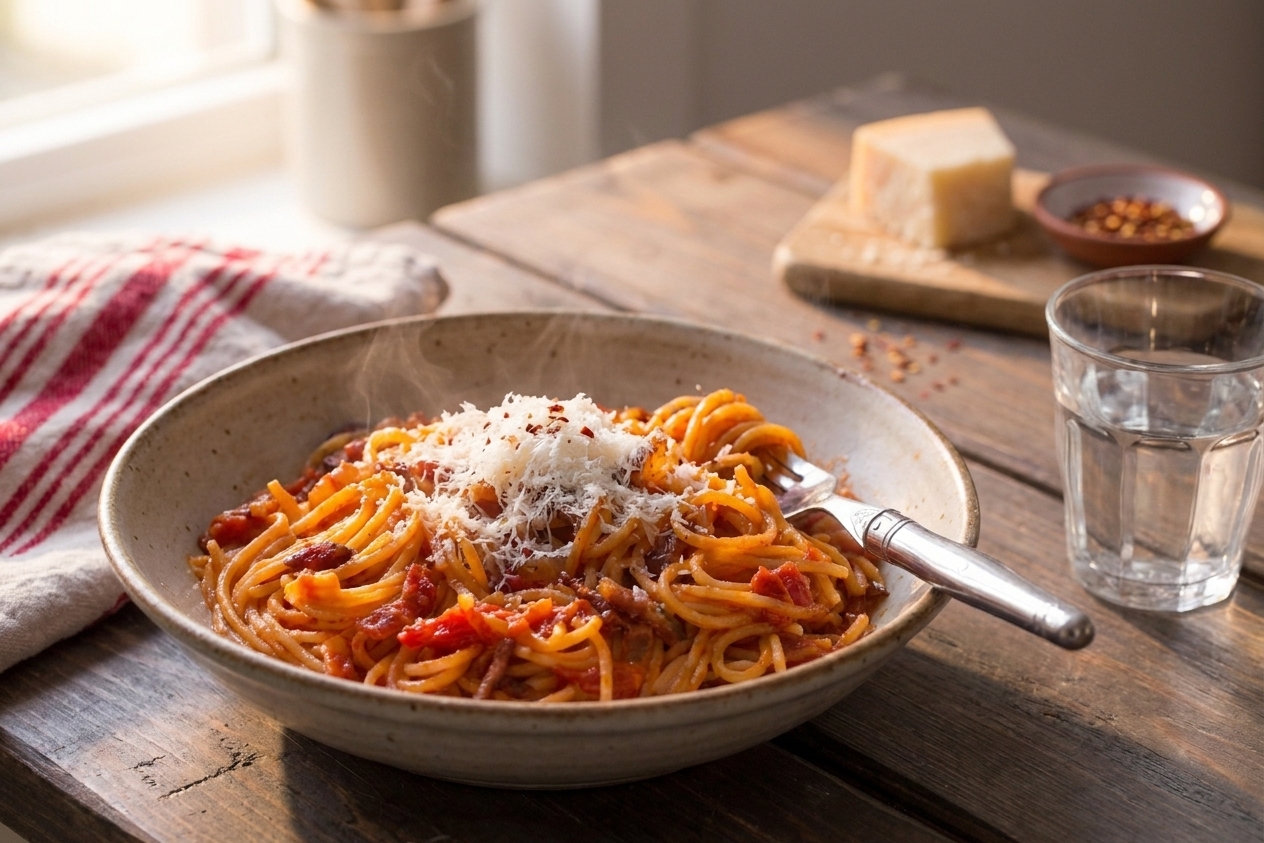
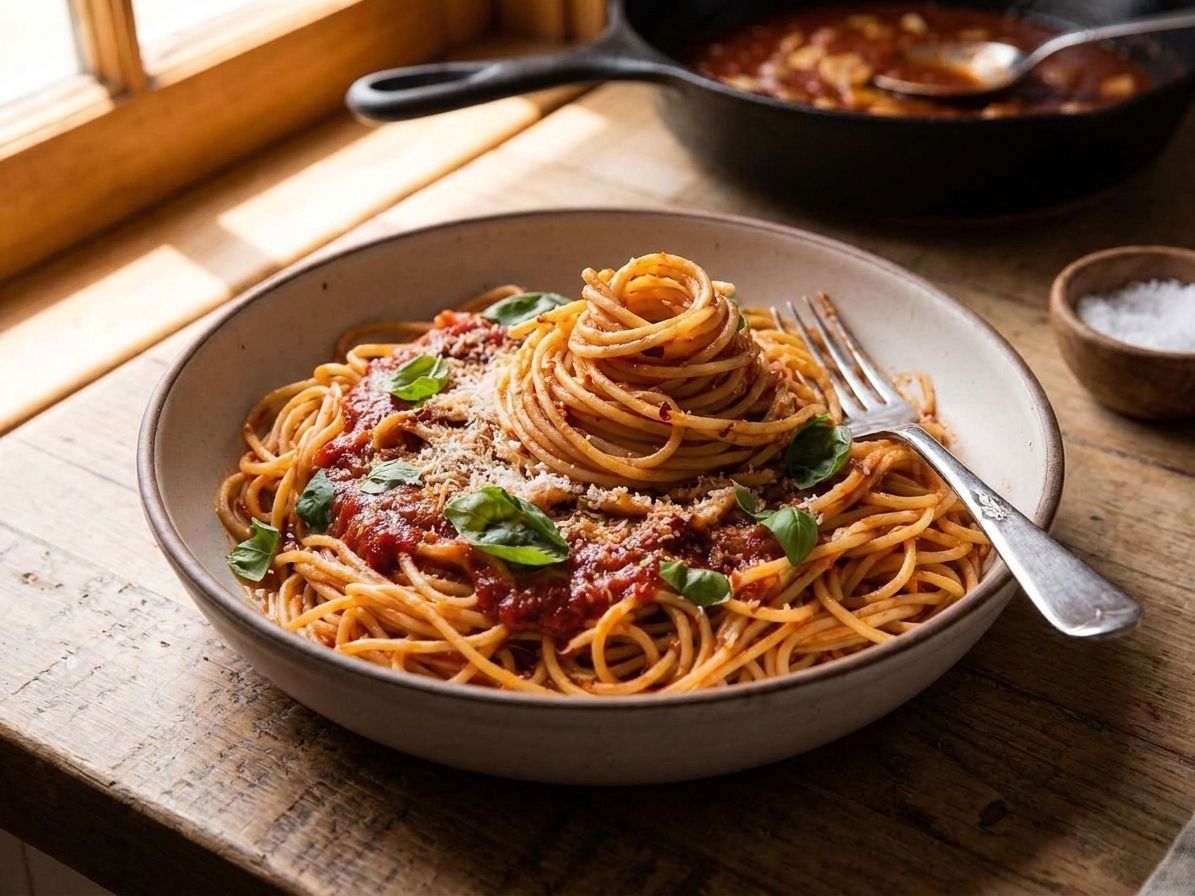
A shallow bowl of pasta all’amatriciana with glossy tomato sauce, crisp guanciale pieces, and freshly grated Pecorino Romano on top, set on a warm kitchen table with soft natural light

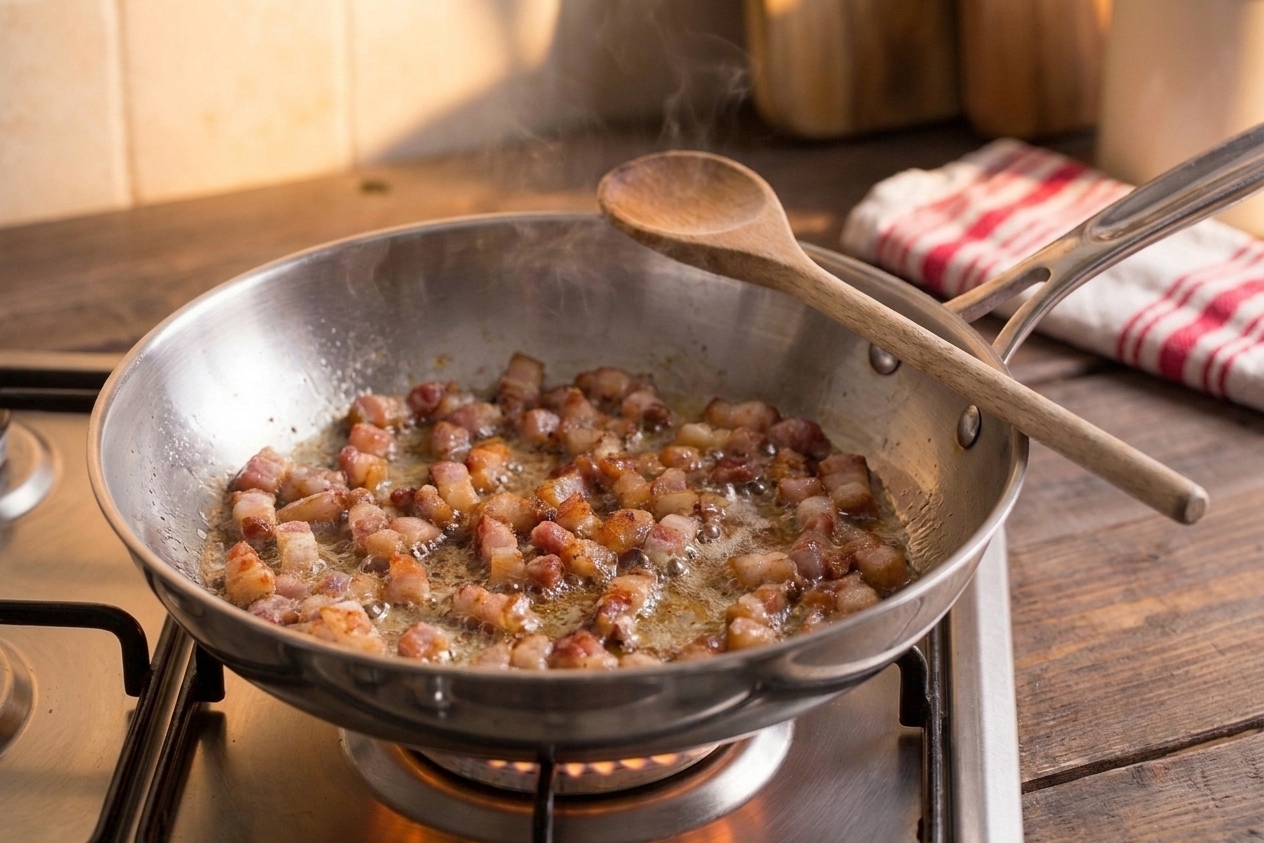
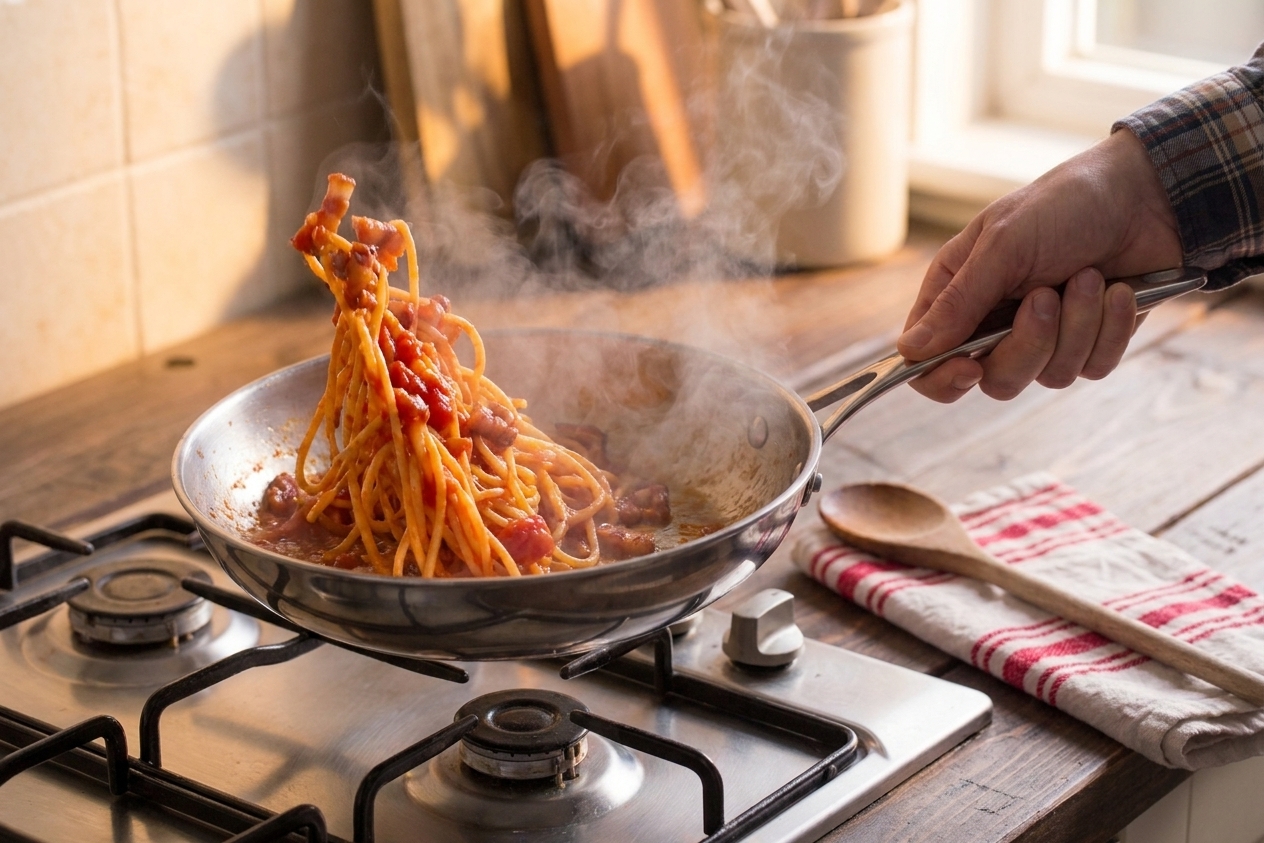
All’amatriciana is one of those deceptively simple pastas that looks easy on paper, then gets a little fussy if you rush it. The good news: once you understand the three moves that matter, it becomes a weeknight power play. Those moves are: render guanciale until crisp, build a tomato sauce in that porky fat, and emulsify everything with pasta water so it clings instead of slumps.

This is a classic Roman-style approach, which typically means no onions, no garlic, and no herbs. Just guanciale, tomatoes, a little chile, Pecorino Romano, and pasta. It is salty, punchy, cozy, and bright all at once. If you have 30 minutes and the ability to taste as you go, you are in very good hands.
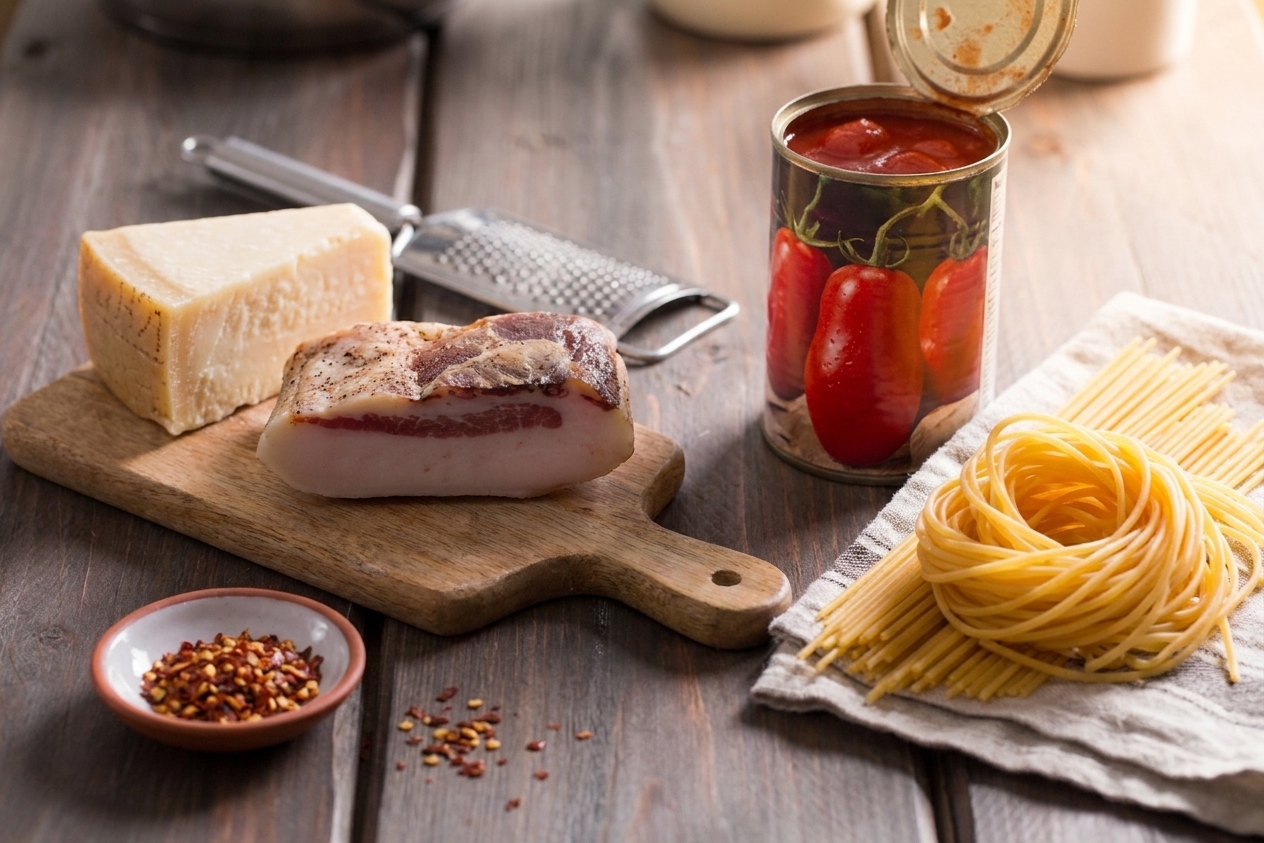
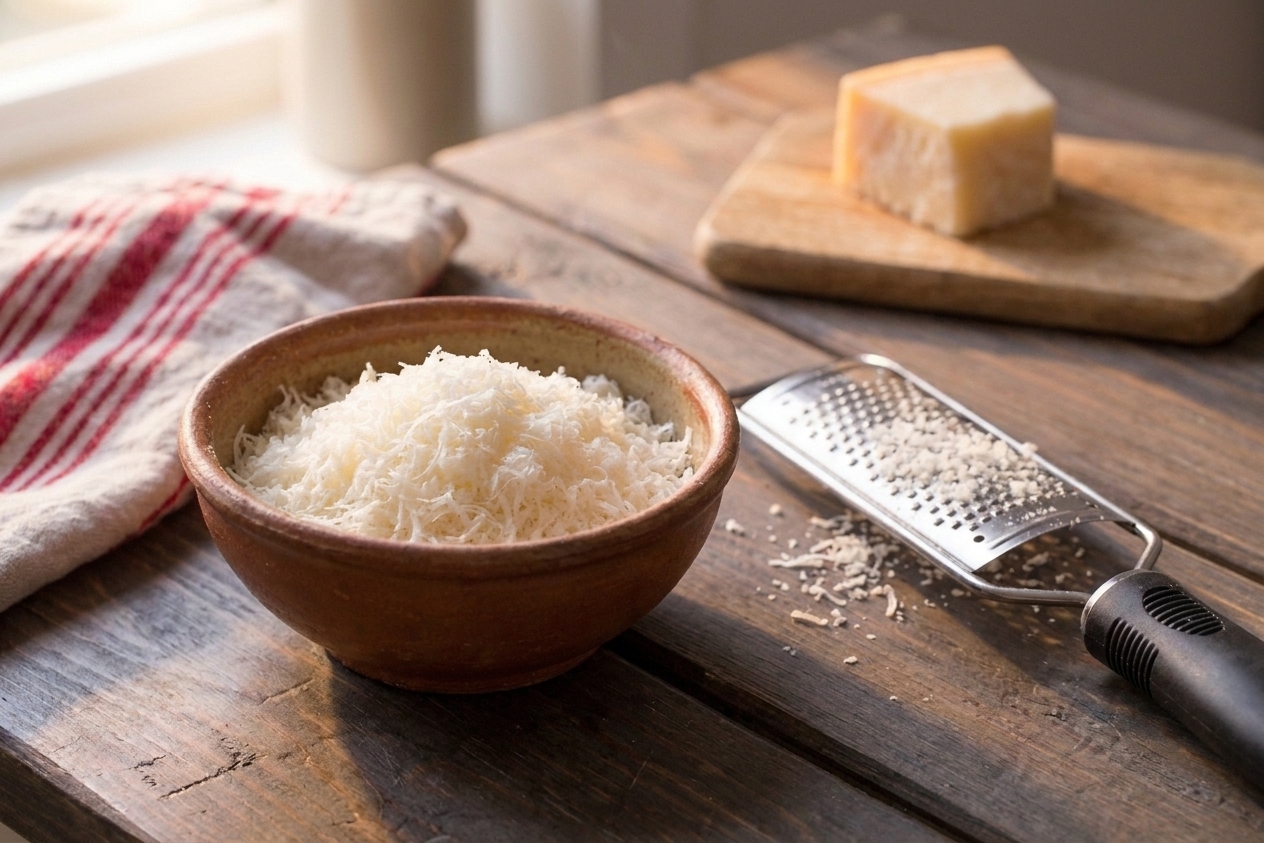
Guanciale, Pecorino Romano, canned whole tomatoes, dried pasta, and a small dish of red pepper flakes arranged on a clean kitchen counter in warm natural light

Why It Works

  • Big flavor from few ingredients: Guanciale fat is the seasoning base, and Pecorino brings the sharp, salty finish.
  • Glossy, clingy sauce: Pasta water plus rendered fat creates that silky coating that makes you go back for another bite.
  • Crisp edges, tender centers: Cooking guanciale slowly lets fat render first, then the outside gets properly crisp.
  • Balanced heat and acidity: A pinch of chile and good tomatoes keep it bright, not heavy.

Pairs Well With

Storage Tips

Amatriciana is best right off the stove, but leftovers still make a very respectable lunch.

Refrigerate

  • Store in an airtight container for up to 3 days.

Reheat (best method)

  • Warm in a skillet over medium-low heat with a splash of water. Stir and toss until the sauce loosens and turns glossy again.
  • Finish with fresh Pecorino. Leftover cheese inside the sauce can tighten it up, so add a little at the end.

Freeze

  • Freezing cooked pasta works, but texture takes a hit. If you want to freeze, freeze the sauce (without cheese) for up to 2 months, then cook fresh pasta later.

Common Questions

What is all’amatriciana?

All’amatriciana is a traditional pasta sauce from Amatrice (and beloved in Rome) made with guanciale, tomatoes, a little chile, and Pecorino Romano. It is simple, salty, and bold.

Do I have to use guanciale?

Classic amatriciana uses guanciale, which is cured pork jowl. If you cannot find it, use pancetta as the closest swap. Bacon works in a pinch, but it is usually smoked and will change the flavor. If using bacon, go easy on salt until the end.

Is there garlic or onion in amatriciana?

Most classic Roman-style versions typically skip garlic and onion. You can add a smashed garlic clove for a minute if you want, but the signature flavor is guanciale plus tomato plus Pecorino.

What pasta shape is best?

Classic choices are bucatini or spaghetti. Bucatini is fun because it traps sauce inside the noodle, but spaghetti is easier to find and just as good.

Why did my sauce turn greasy or split?

Usually it needs more starchy pasta water and more tossing. Add pasta water a splash at a time off heat and toss hard until it turns glossy. Also make sure you are not adding Pecorino over high heat, which can clump and separate.

Can I make it less spicy?

Yes. Use a tiny pinch of red pepper flakes, or skip them entirely. The sauce will still taste bold from the guanciale and Pecorino.

The first time I tried to make all’amatriciana, I treated it like any other red sauce. I simmered it too long, did not respect the pasta water, and ended up with something that tasted fine but looked a little sad. Then I learned the trick: this sauce is not about all-day cooking. It is about timing. Render the guanciale, hit the pan with tomatoes, simmer until it tastes right, then let the pasta finish the job.

Now it is one of my favorite “I want restaurant pasta but I also want to be in sweatpants” dinners. It is a short ingredient list that still feels dramatic, which is exactly my kind of kitchen energy.