Can I use frozen peaches?
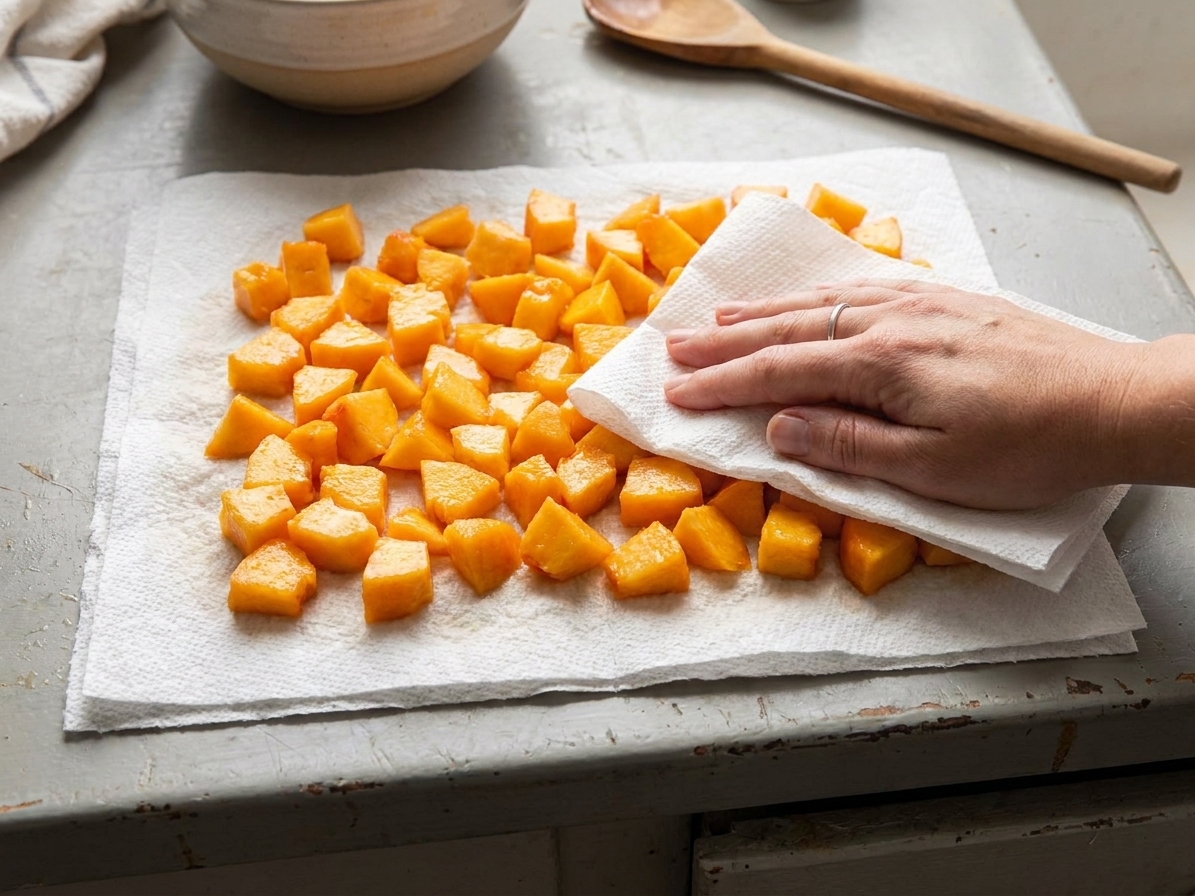
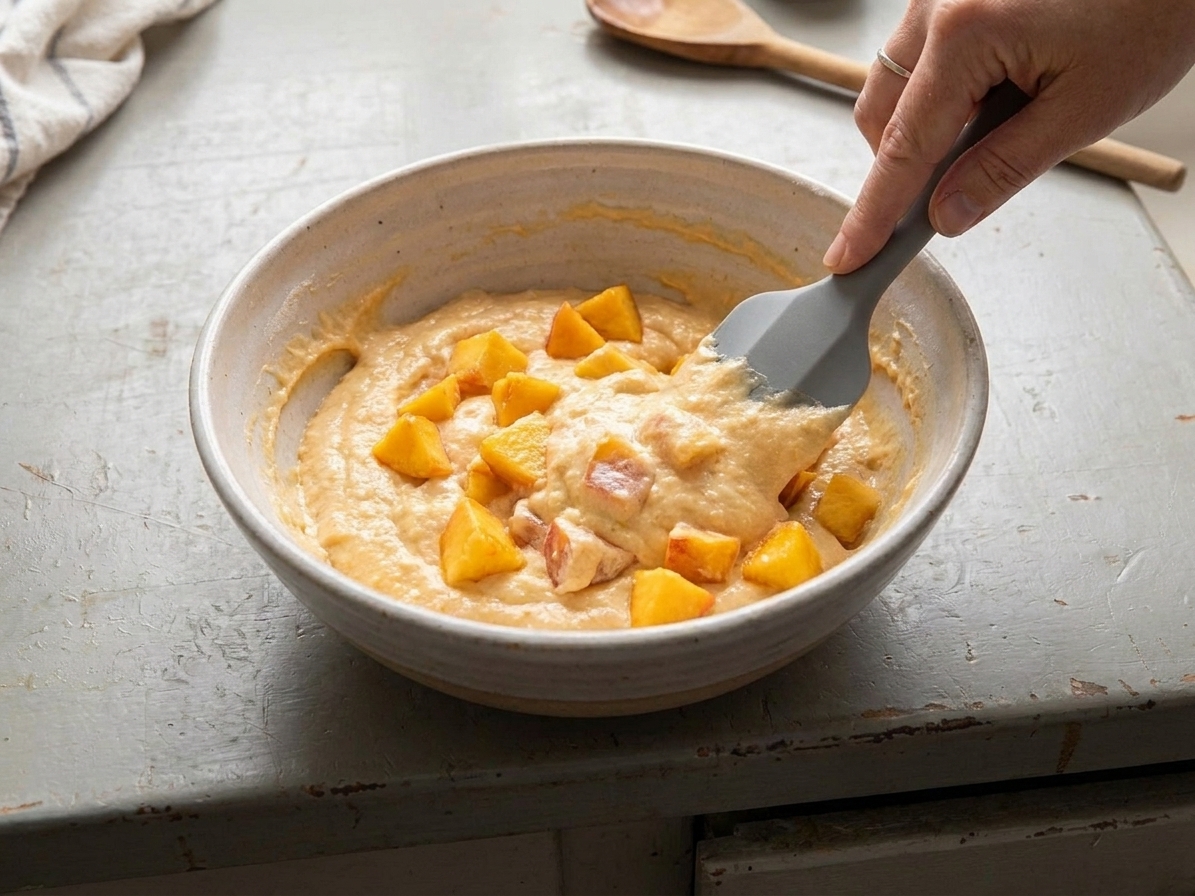
Yes. Thaw completely, then drain very well. I like to chop them, spread them on paper towels, and blot firmly. Toss the drained peaches with a teaspoon or two of flour before folding into the batter. That little flour coat helps trap extra juice.
Why are my fritters raw in the middle?
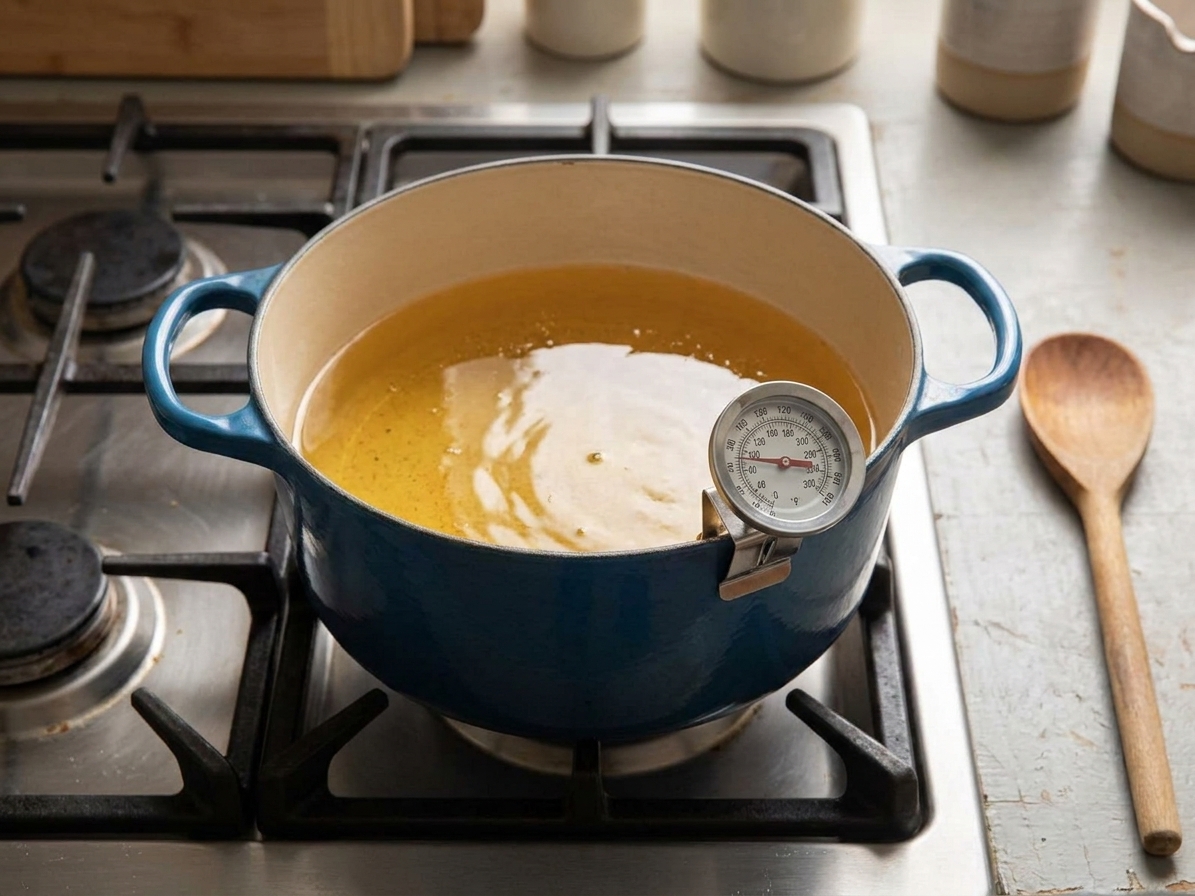
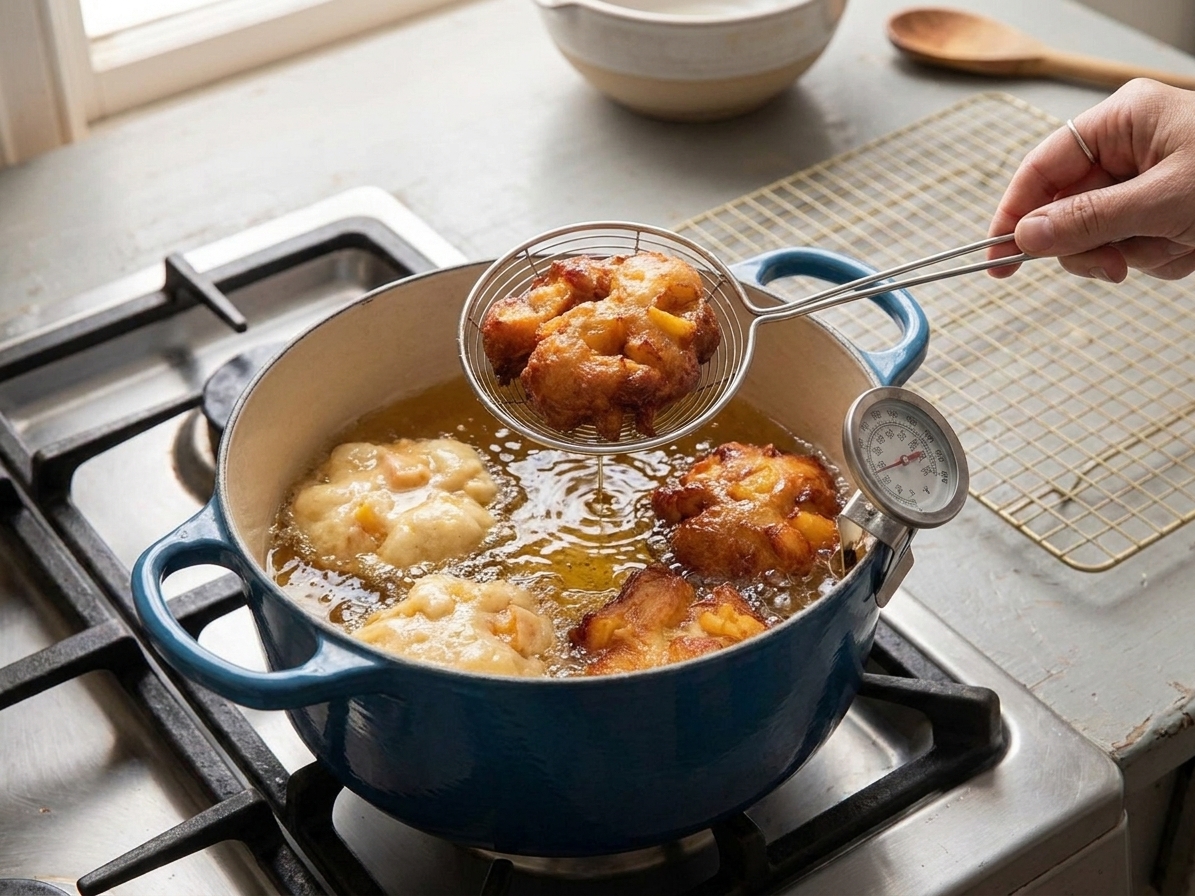
Usually the oil is too hot (outside browns before the inside sets) or the fritters are too large. Aim for 350°F to 360°F and keep each scoop around 2 tablespoons (level scoops cook the most evenly). If they are getting too dark too fast, lower the heat and let the oil come back to target temperature. For extra certainty, you can check doneness with an instant-read thermometer. Look for around 190°F to 200°F in the center (depending on size), or crack one open and make sure there is no wet batter.
What oil temperature is best for fritters?
350°F to 360°F is the sweet spot. Below 340°F, fritters tend to soak up oil and feel heavy. Above 370°F, they often brown too fast and can stay doughy inside.
How do I keep peaches from watering down the batter?
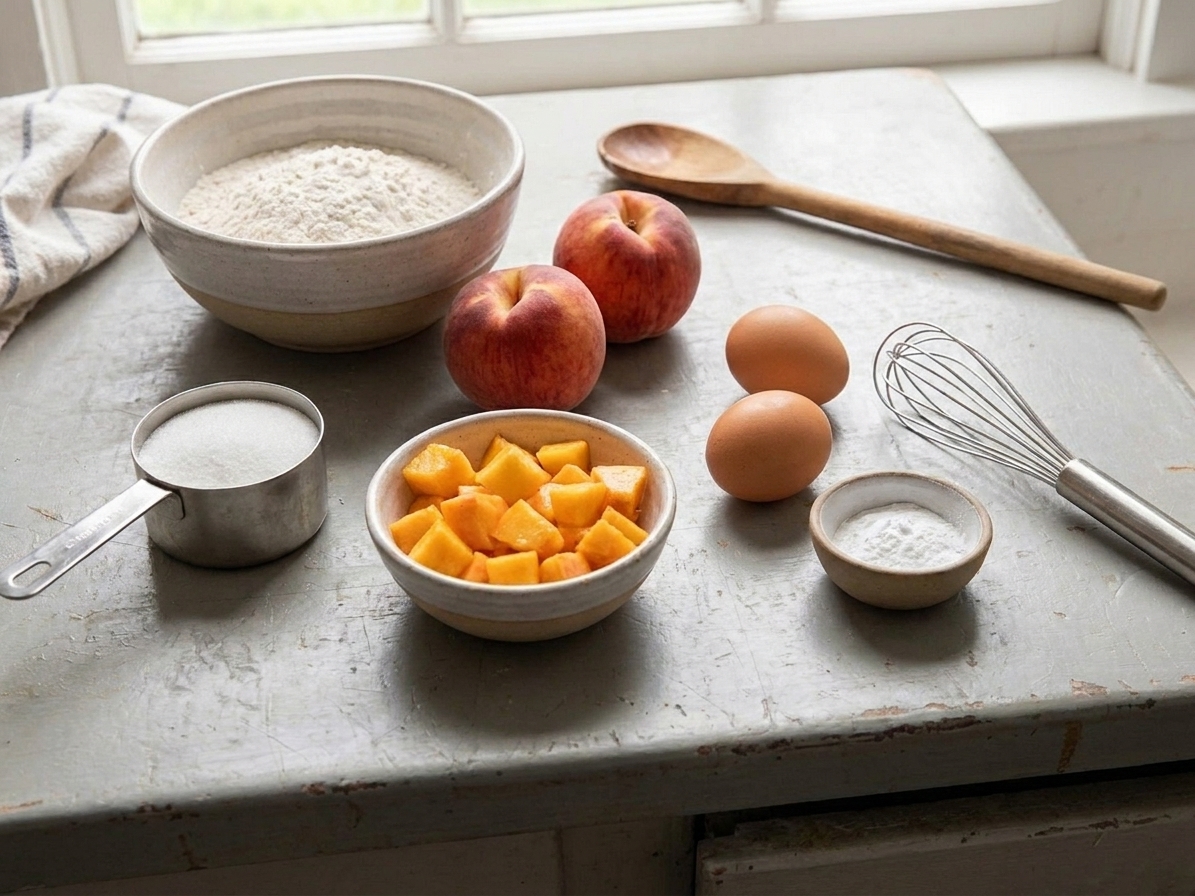
Use firm-ripe peaches (not super soft). Dice them, then either blot with paper towels or let them drain in a sieve for a few minutes. Finally, toss with a bit of flour before adding to the bowl.
When should I glaze peach fritters?
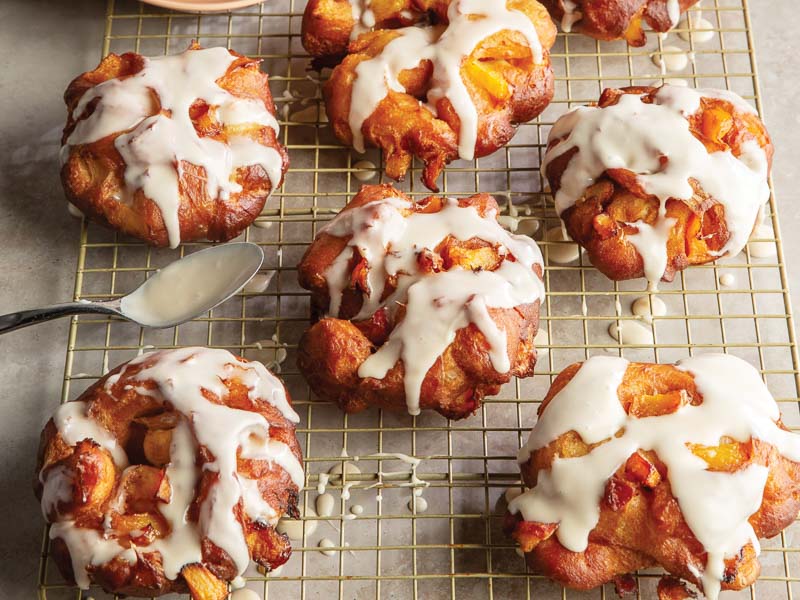
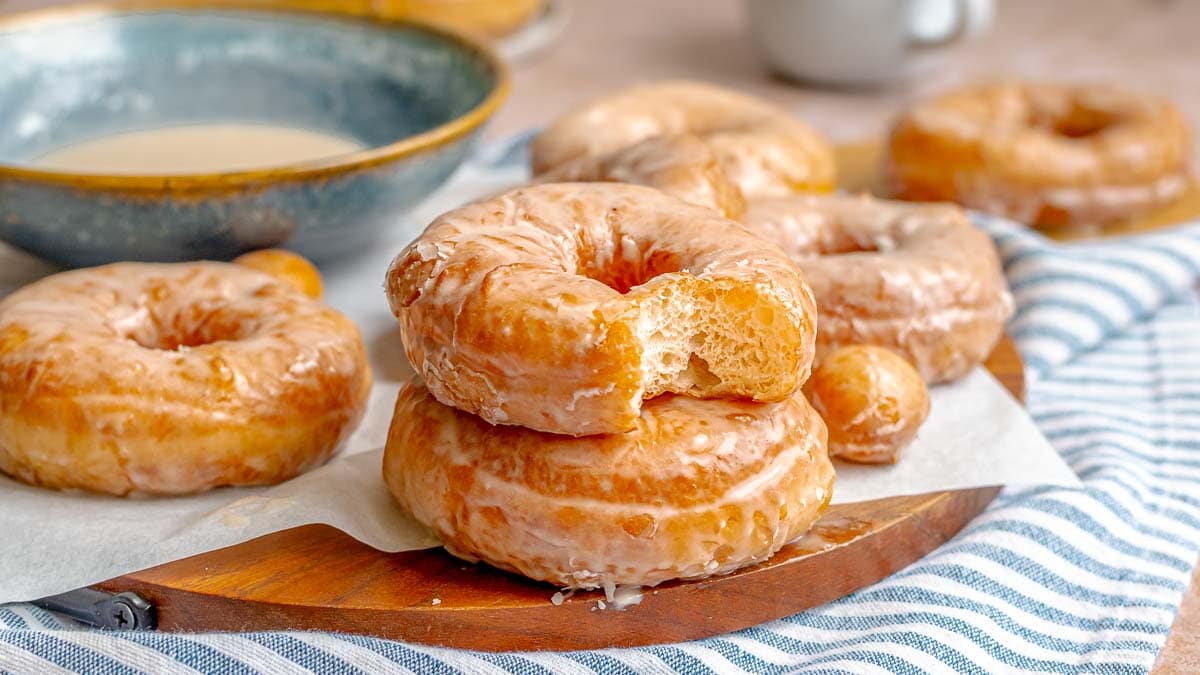
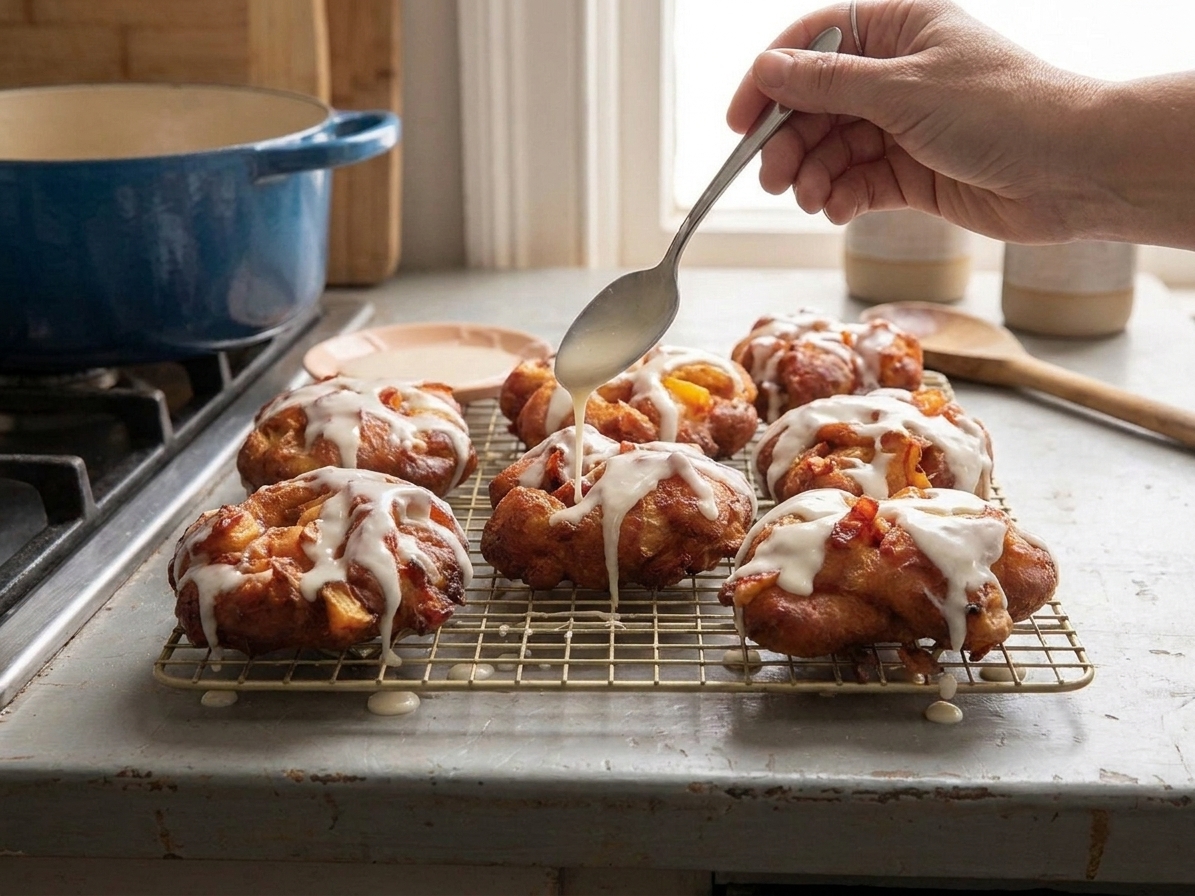
Glaze when fritters are warm but not steaming, about 5 to 10 minutes after frying. Too hot and the glaze melts thin. Too cool and it sits on top like a little cap.
Do I need to cover fritters while they drain?
Nope. Covering traps steam and softens the crust. Drain on a rack and keep them uncovered. If you need to hold a batch while you fry the rest, keep them in a 200°F oven on a rack, uncovered.