Is phat si-io the same as pad see ew?
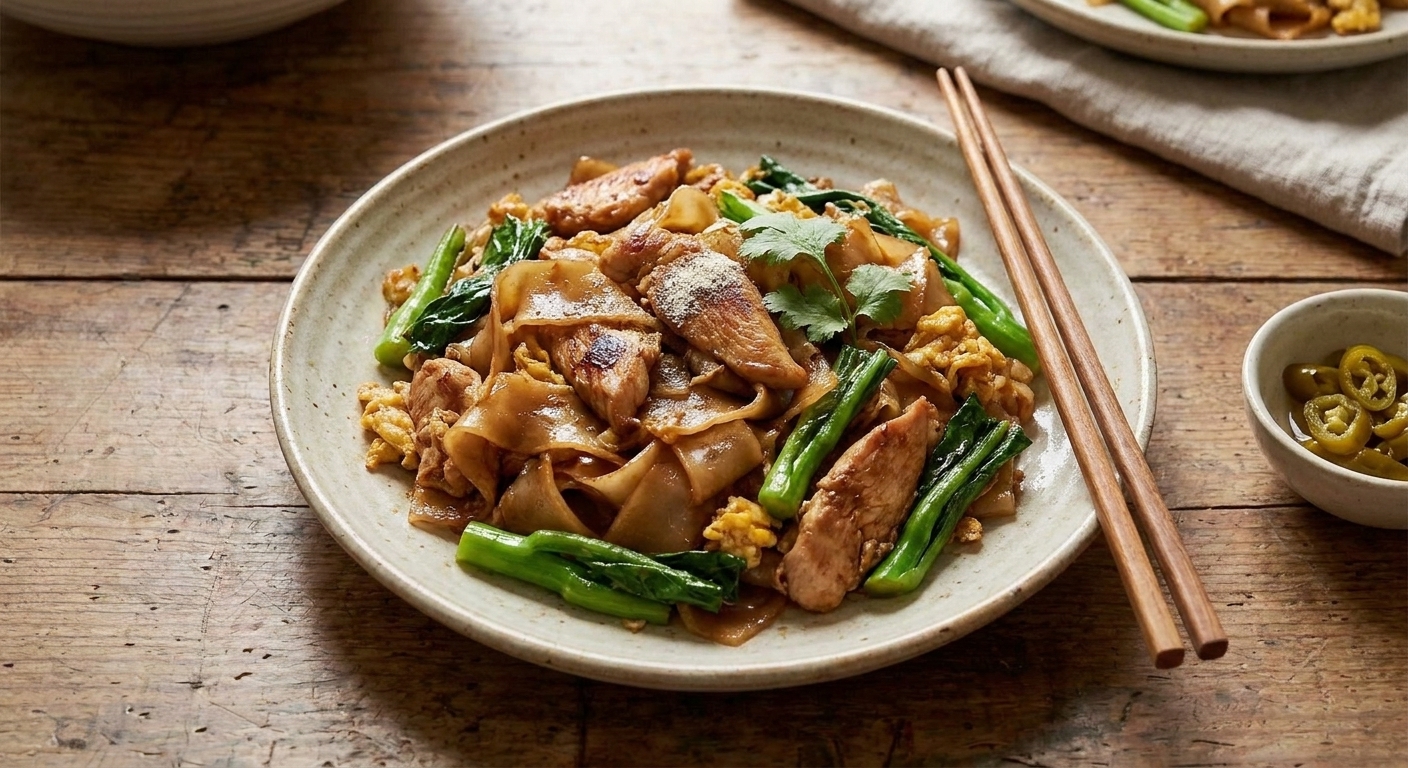
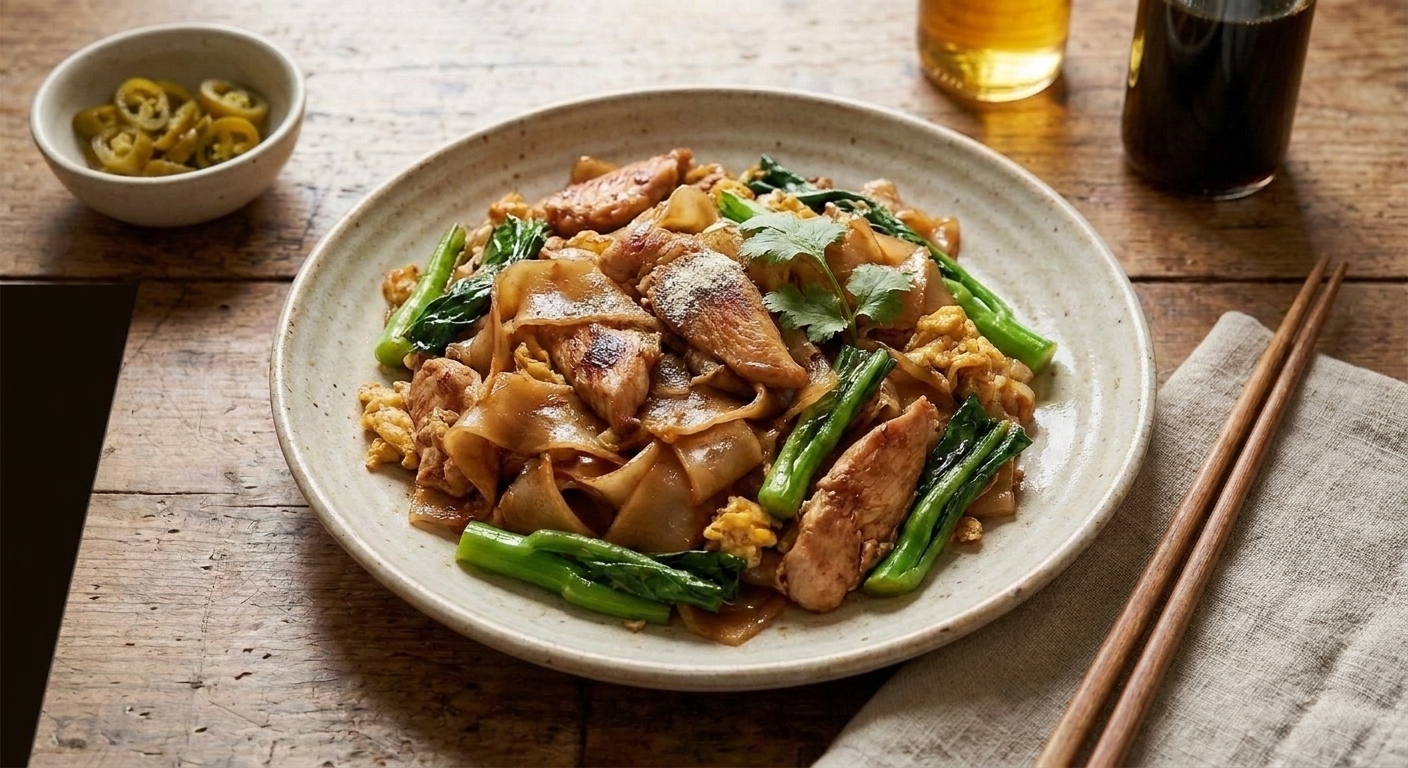
Yes. Pad see ew is the most common English spelling for ผัดซีอิ๊ว. You may also see spellings like phat si-io or phat si ew. They all refer to the same Thai stir-fried wide rice noodle dish with a soy-forward sauce and Chinese broccoli.
What noodles should I use?
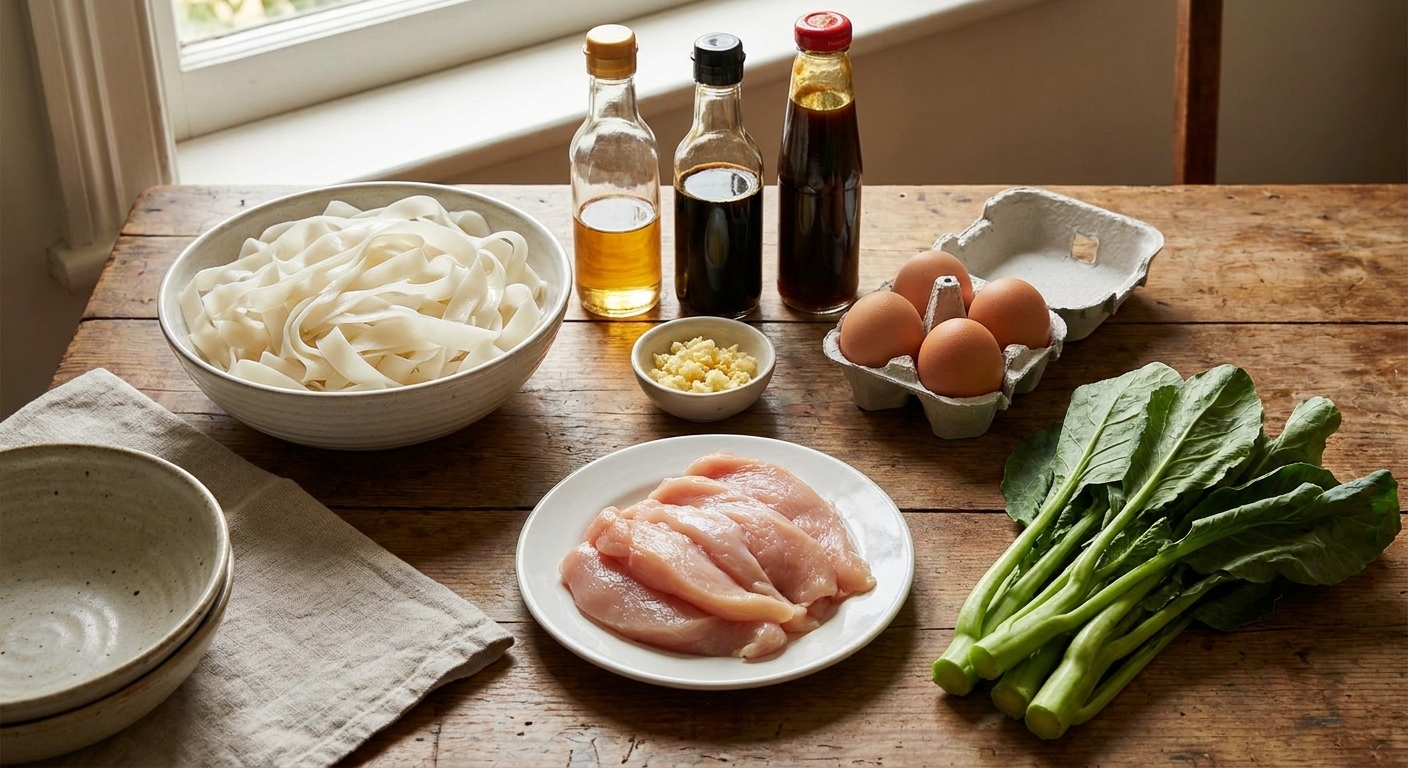
Fresh wide rice noodles (often labeled “sen yai”) are the dream. If you are using dried wide rice noodles, use about 8 oz dried to get roughly the same yield as 12 oz fresh, then soak or boil just until tender. Rinse, drain well, and toss with a tiny drizzle of oil so they do not glue themselves together. If you are unsure, the safest label to follow is: 12 oz cooked wide rice noodles.
Do I rinse fresh rice noodles?
Usually, no. Fresh noodles tend to get waterlogged and more fragile if you rinse them. If they are stuck together from the fridge, warm them briefly (microwave 15 to 20 seconds or steam for a minute), then gently separate with your hands.
My noodles broke or turned mushy. What happened?
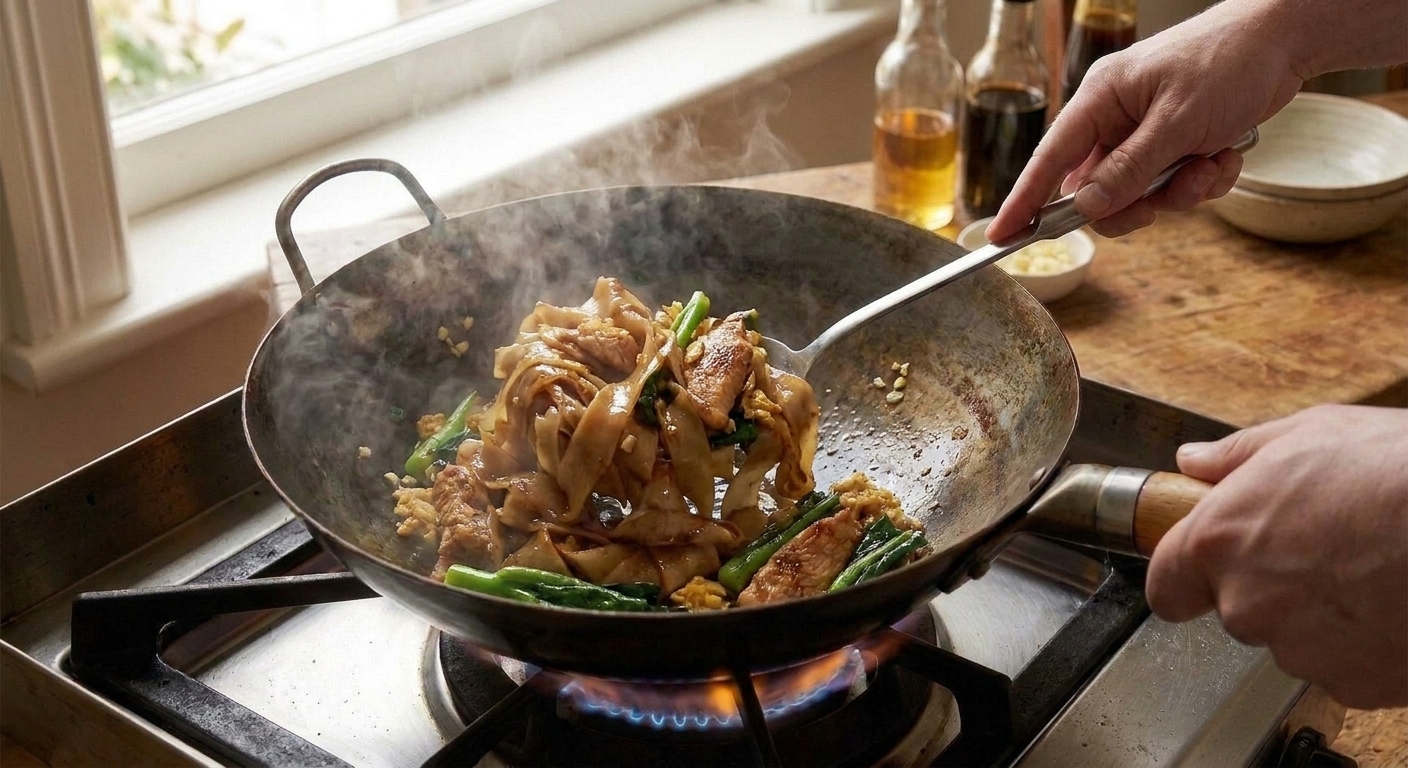
Usually one of three things: the noodles were overcooked, the pan was not hot enough, or you stirred nonstop. Keep the heat high and let the noodles sit for 20 to 30 seconds at a time so they can sear.
Can I make it without oyster sauce?
Yes. Use vegetarian oyster sauce (mushroom-based) or add an extra teaspoon of soy sauce plus a pinch more sugar. The flavor will be slightly less rich, but still very good.
How do I make it spicy?
Phat si-io is usually mild. Add chili flakes, sliced Thai chilies, or serve with chili vinegar (prik nam som) on the side.