Mom's Best Recipes
Recipe

Pork Adobo

Tender pork simmered in soy sauce, vinegar, garlic, bay, and peppercorns, then reduced into a glossy sauce.

Author By Matt Campbell
4.8
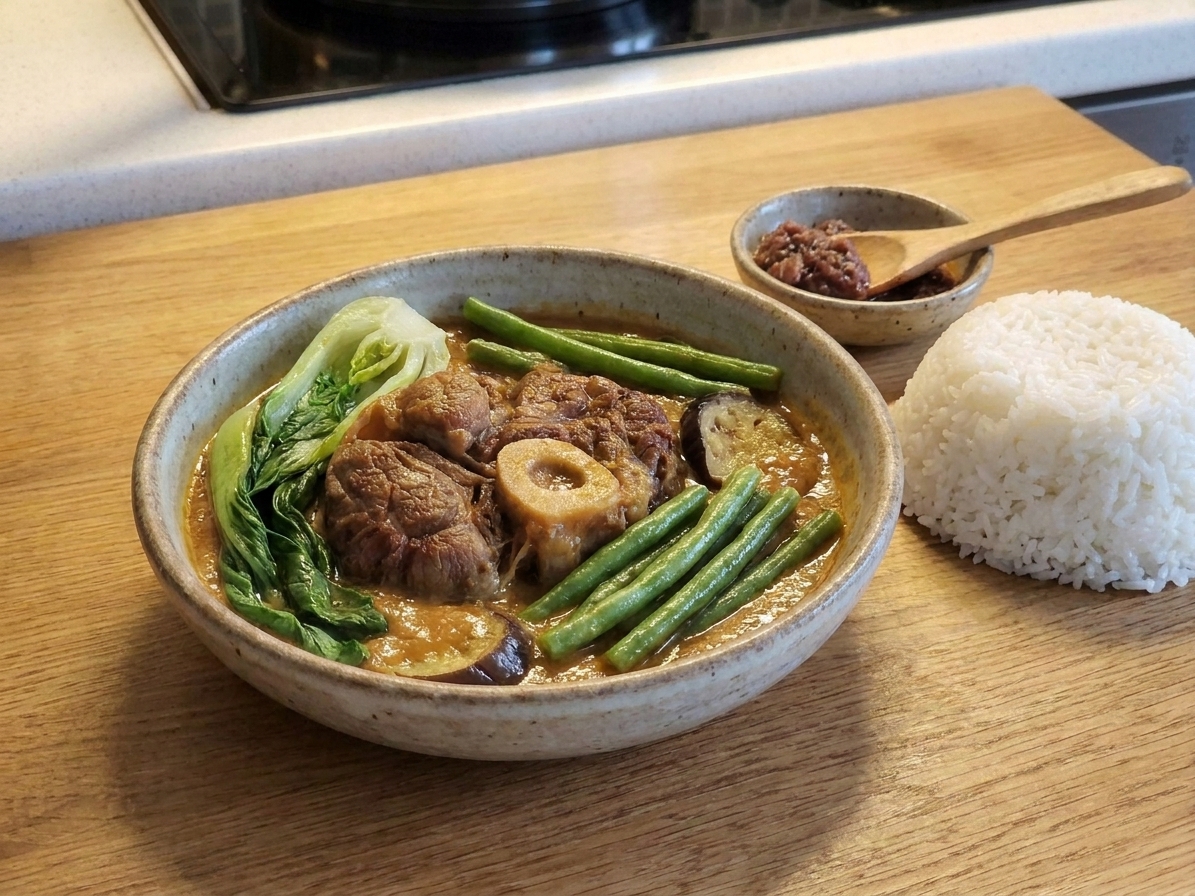
A bowl of pork adobo with glossy dark sauce spooned over steamed white rice, garnished with sliced scallions on a warm-toned kitchen table

Pork adobo is one of those dishes that makes the whole kitchen smell like you know what you are doing, even if you are cooking in sweatpants with one sock missing. It is savory, tangy, and deeply comforting. The magic is in the balance: soy sauce for salt and depth, vinegar for that bright punch, garlic for that deep savory base, and a slow simmer that turns everything silky and rich.

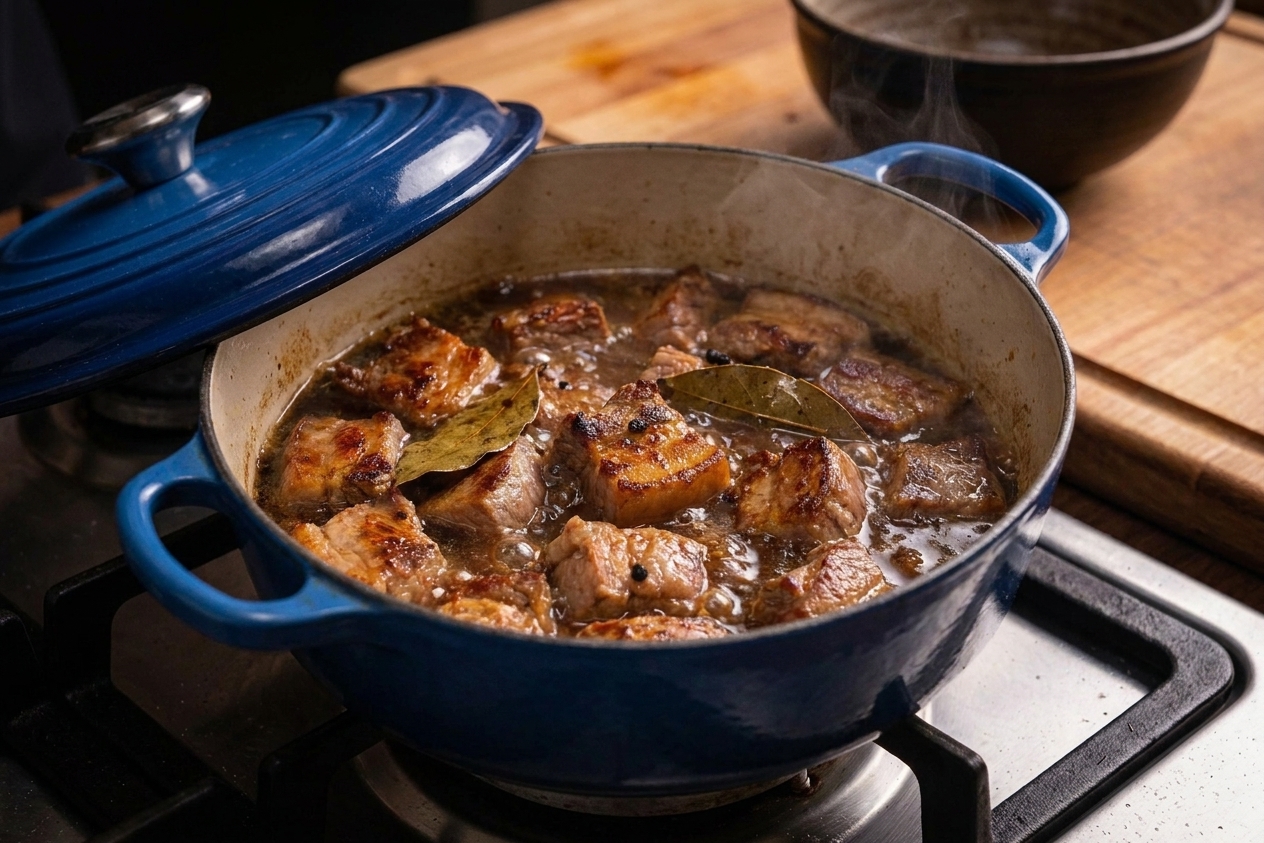
This version keeps ingredients easy to find and steps low-drama. You will sear the pork for those crisp edges, simmer it until tender, then reduce the sauce until it clings. The end result is bold and cozy at the same time, and it might be the best leftovers situation in your fridge all week.

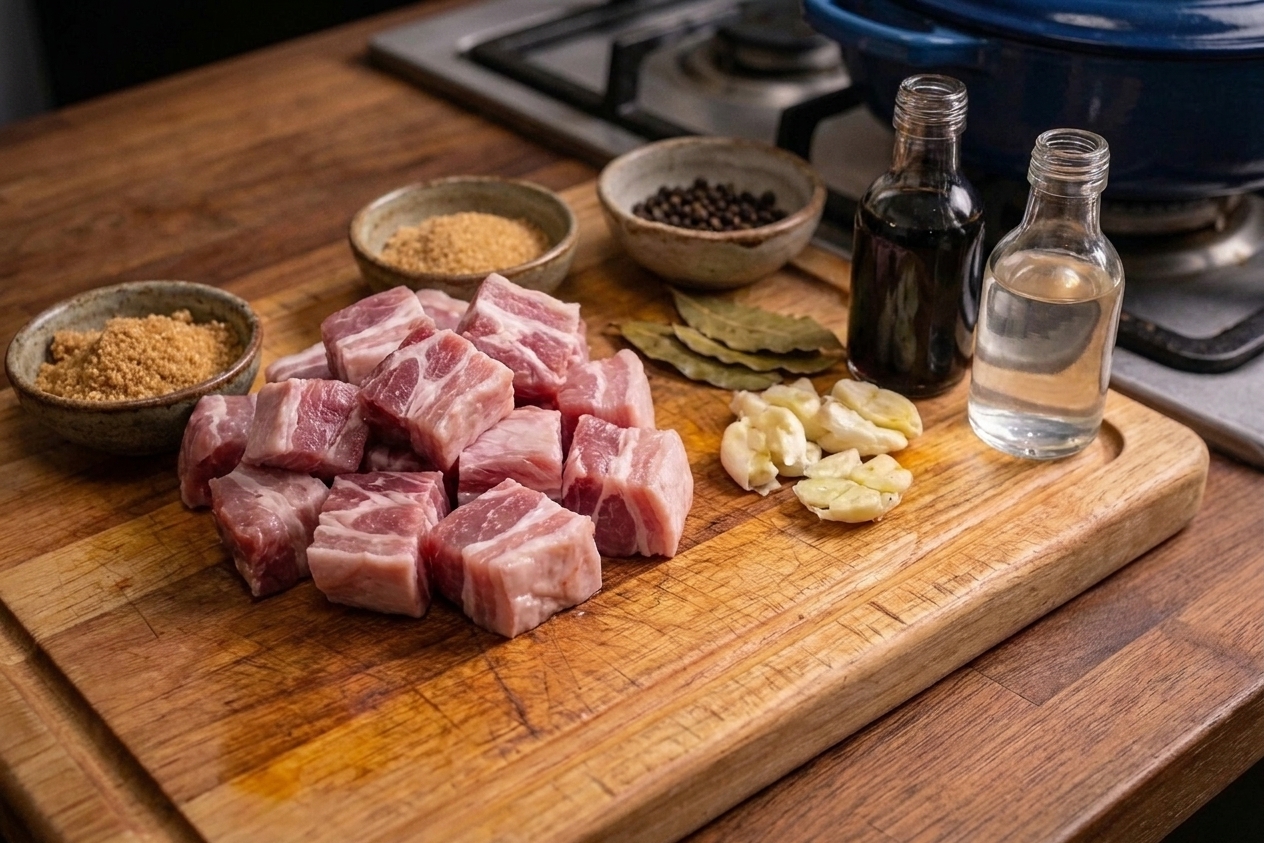
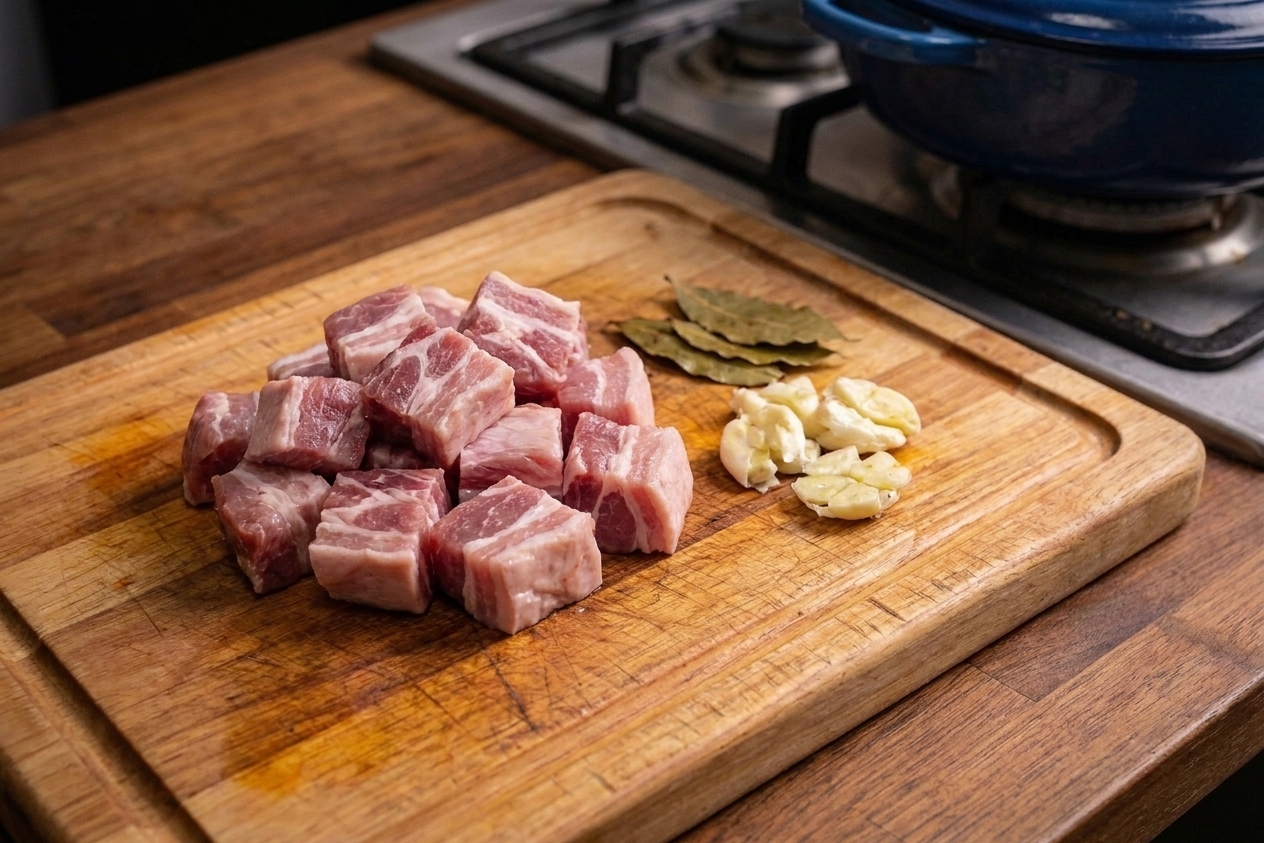
A neatly arranged set of pork adobo ingredients on a kitchen counter including pork shoulder chunks, garlic, soy sauce, cane vinegar, bay leaves, whole peppercorns, and a small bowl of brown sugar

Why It Works

  • Big flavor from simple stuff. Soy sauce plus vinegar is a power couple, and the garlic and bay make it feel slow-cooked even on a weeknight.
  • Glossy sauce you can control. We simmer first for tenderness, then reduce at the end so the sauce turns spoonable and coats the pork.
  • Crisp edges meet tender bites. A quick sear up front builds depth and keeps the pork from tasting flat.
  • Meal-prep champion. Adobo gets better overnight as the flavors settle in. Your future self will be thrilled.

Pairs Well With

Storage Tips

Refrigerate: Cool completely, then store in an airtight container for up to 4 days. Keep the pork and sauce together so nothing dries out.

Freeze: Freeze in a freezer-safe container for up to 2 months for best quality (it can often go a bit longer, but flavor and texture are nicest in that window). Thaw overnight in the fridge.

Reheat: Warm gently in a small saucepan over medium-low heat with a splash of water if the sauce has tightened up. Microwave works too, but stovetop keeps the pork a little happier.

Pro tip: If the sauce tastes extra sharp after chilling, that is normal. Heat mellows vinegar. Taste after reheating before you adjust anything.

Common Questions

Is pork adobo supposed to be sour?

It should be pleasantly tangy, not puckering. If it tastes too sharp, simmer it a little longer uncovered to mellow and round it out, or add a tiny pinch of sugar. Also make sure you are not reducing it too aggressively before the pork is tender.

Do I have to marinate the pork?

Nope. Marinating helps, but it is not required for great adobo. Searing and a steady simmer build plenty of flavor. If you do want to marinate, 30 minutes to overnight in the fridge is great.

Can I use pork belly instead of shoulder?

Yes, and it will be extra rich. Sear it well, skim excess fat if the sauce feels oily, and expect it to get very tender fast. Pork shoulder is my favorite for balance.

What vinegar should I use?

Cane vinegar is classic, but distilled white vinegar works fine. Apple cider vinegar adds a slightly fruitier note. Avoid balsamic here unless you want a totally different vibe.

Do I really need to avoid stirring after adding vinegar?

Some cooks swear by the “do not stir right away” step, and many traditional methods let the vinegar simmer briefly before stirring to soften the raw edge. It is not a hard rule in every household, but it is an easy little move that can help the sauce taste less harsh. Either way, keep it at a gentle simmer.

Can I make it less salty?

Use low-sodium soy sauce, and do not add extra salt until the end. You can also add a splash of water during simmering, then reduce to concentrate flavor without oversalting.

What about the peppercorns?

Whole peppercorns are traditional, but yes, you might bite into one. If that is not your thing, use cracked black pepper, or strain the sauce before serving.


The first time I made pork adobo on my own, I treated the vinegar like it was a suggestion and poured it with confidence I had not earned yet. The good news is adobo is forgiving. A longer simmer and a little patience turned my too-tangy pot into something I kept “taste testing” until half the sauce was gone. Now it is one of my favorite reset dinners. It is bold, it is cozy, and it makes plain rice feel like a plan.