Mom's Best Recipes
Recipe

Saddle of Lamb with Garlic Herb Crust

A crisp, garlicky herb crust over juicy lamb, plus a quick pan sauce that tastes like you worked harder than you did.

Author By Matt Campbell
4.8
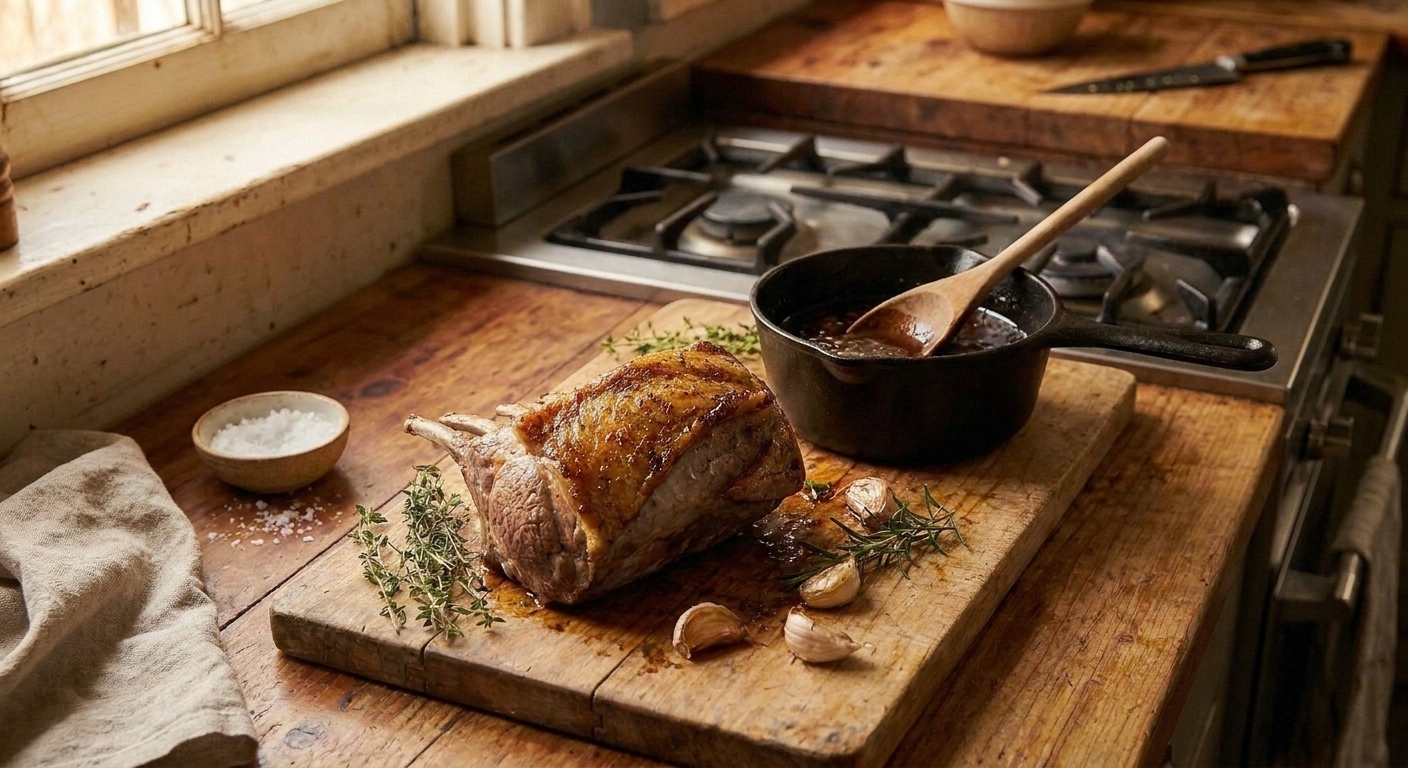
A whole roasted saddle of lamb on a cutting board with a browned garlic herb crust, resting near a small saucepan of pan sauce in a warm home kitchen

Saddle of lamb sounds like the kind of thing you order at a restaurant where the server says “excellent choice” and you instantly sit up straighter. But here is the secret: it is both loins still attached, and it often (usually) includes some of the backbone/spine, depending on how your butcher fabricates it. Translation: you get the tender, rosy slices everyone loves, plus enough surface area for a crust that actually matters.

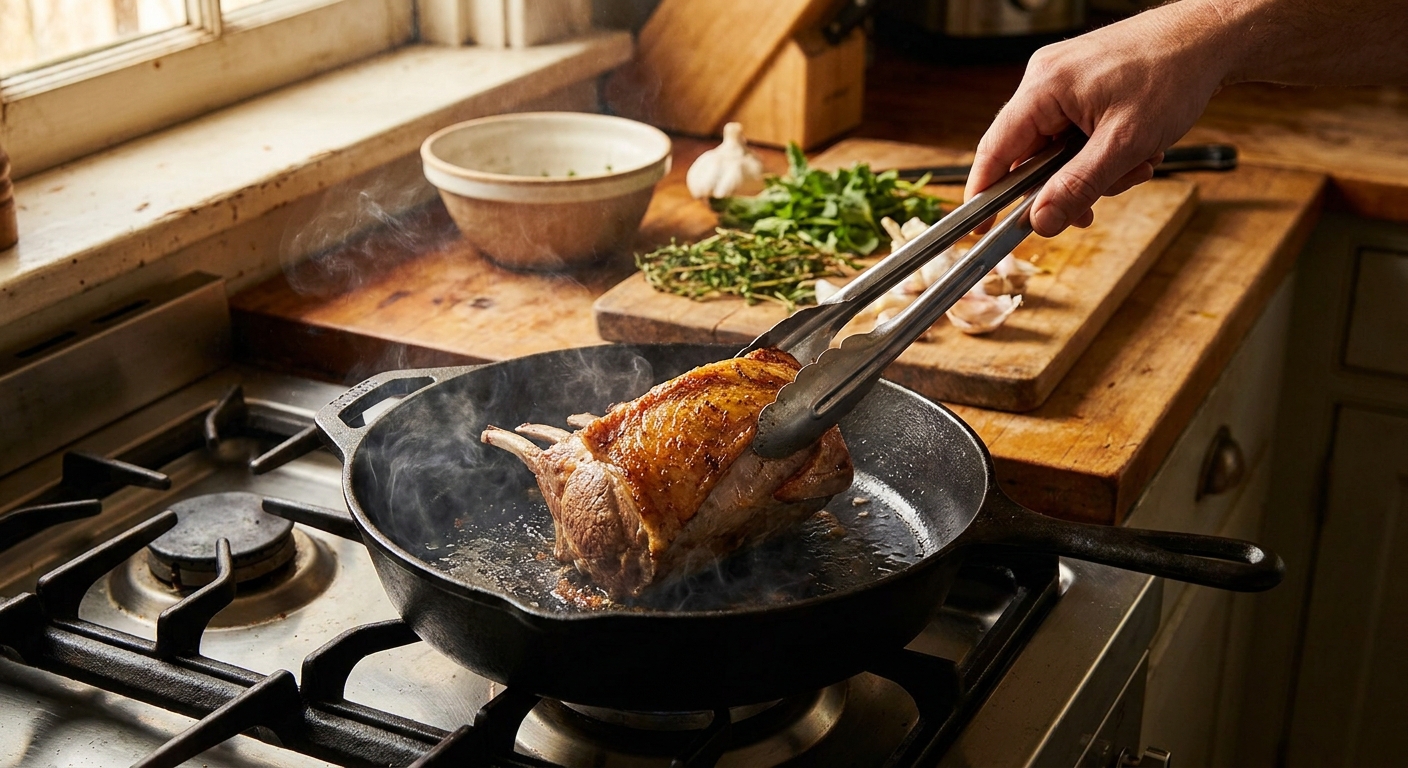
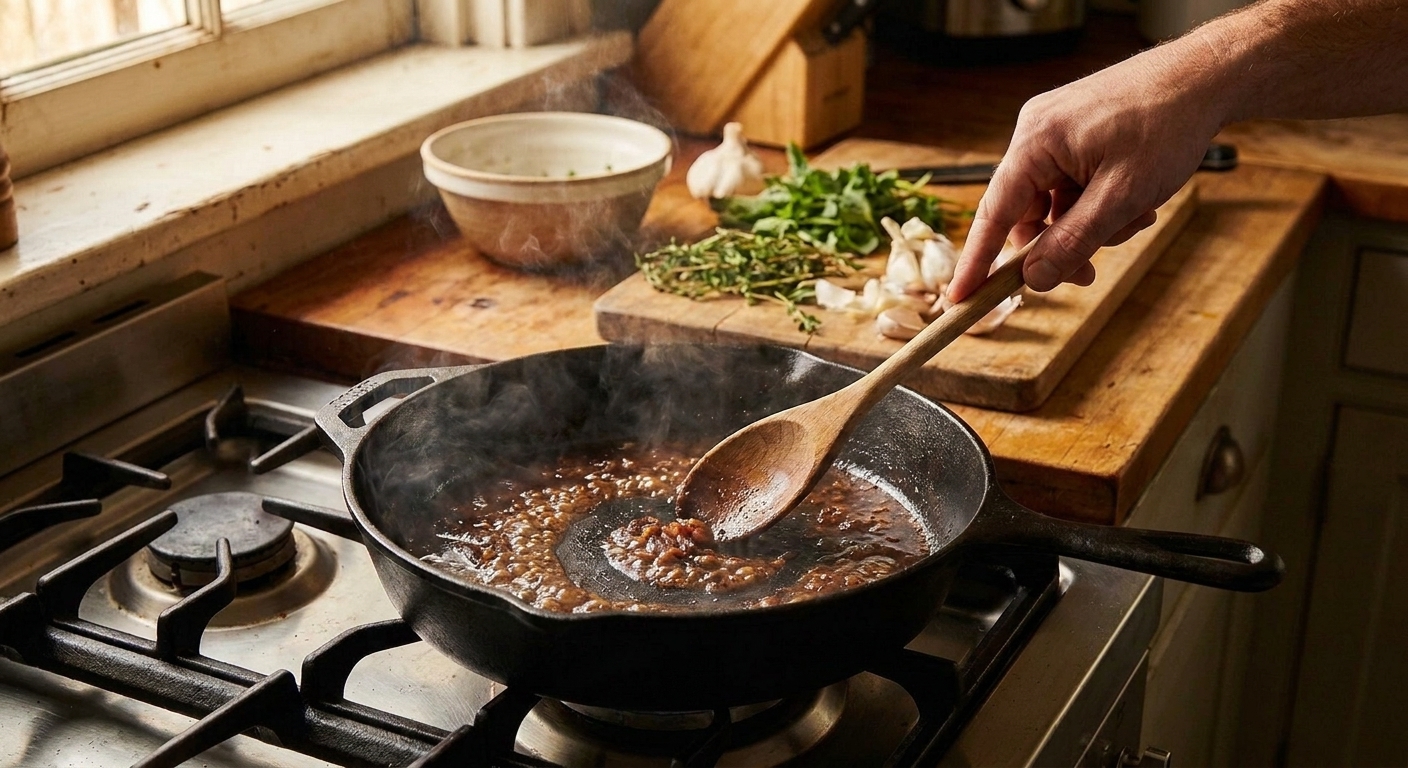
This version is my go-to when I want big flavor with low drama. We do a quick sear for crisp edges, smear on a Dijon, garlic, and herb crust, then roast until the center hits your perfect temp. While it rests, we turn the pan into a simple sauce that tastes bright, savory, and just fancy enough to make you grin.

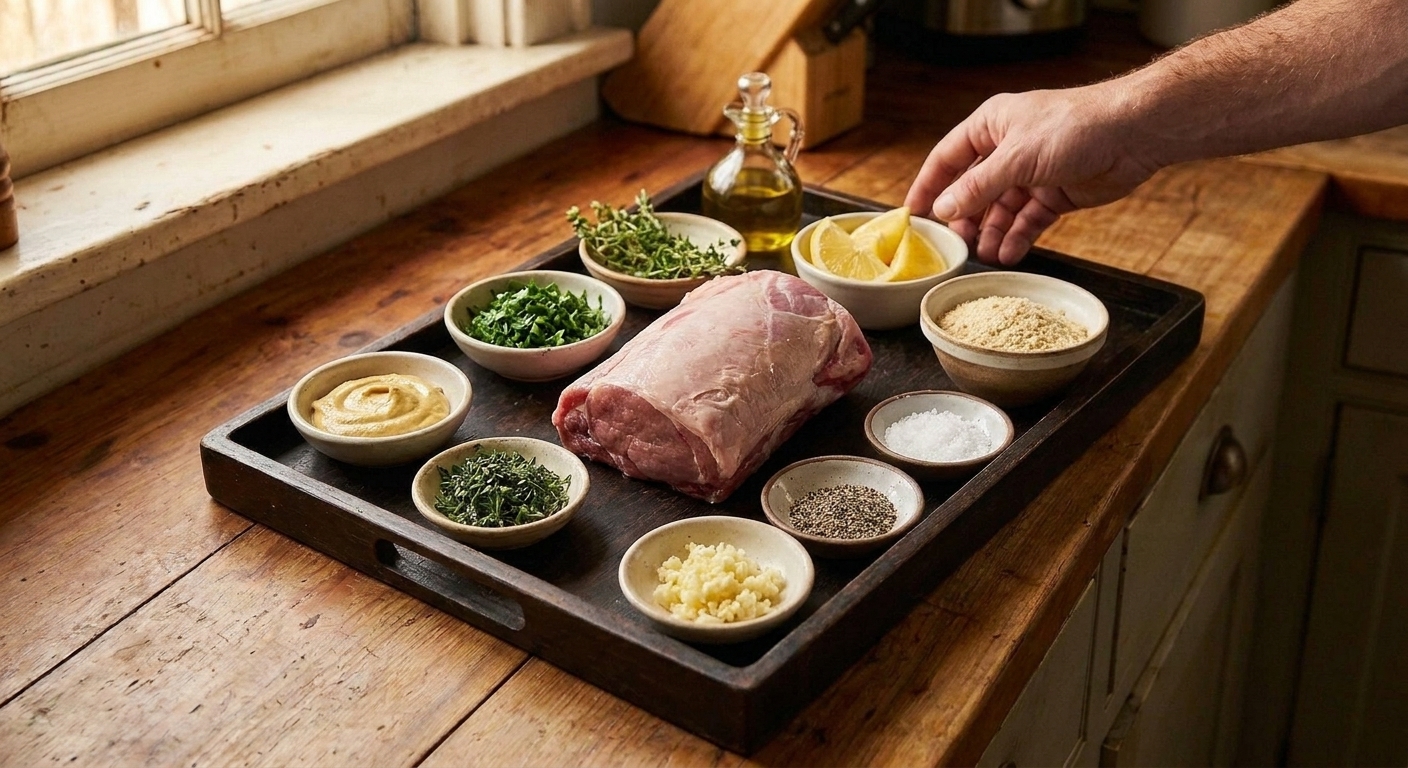
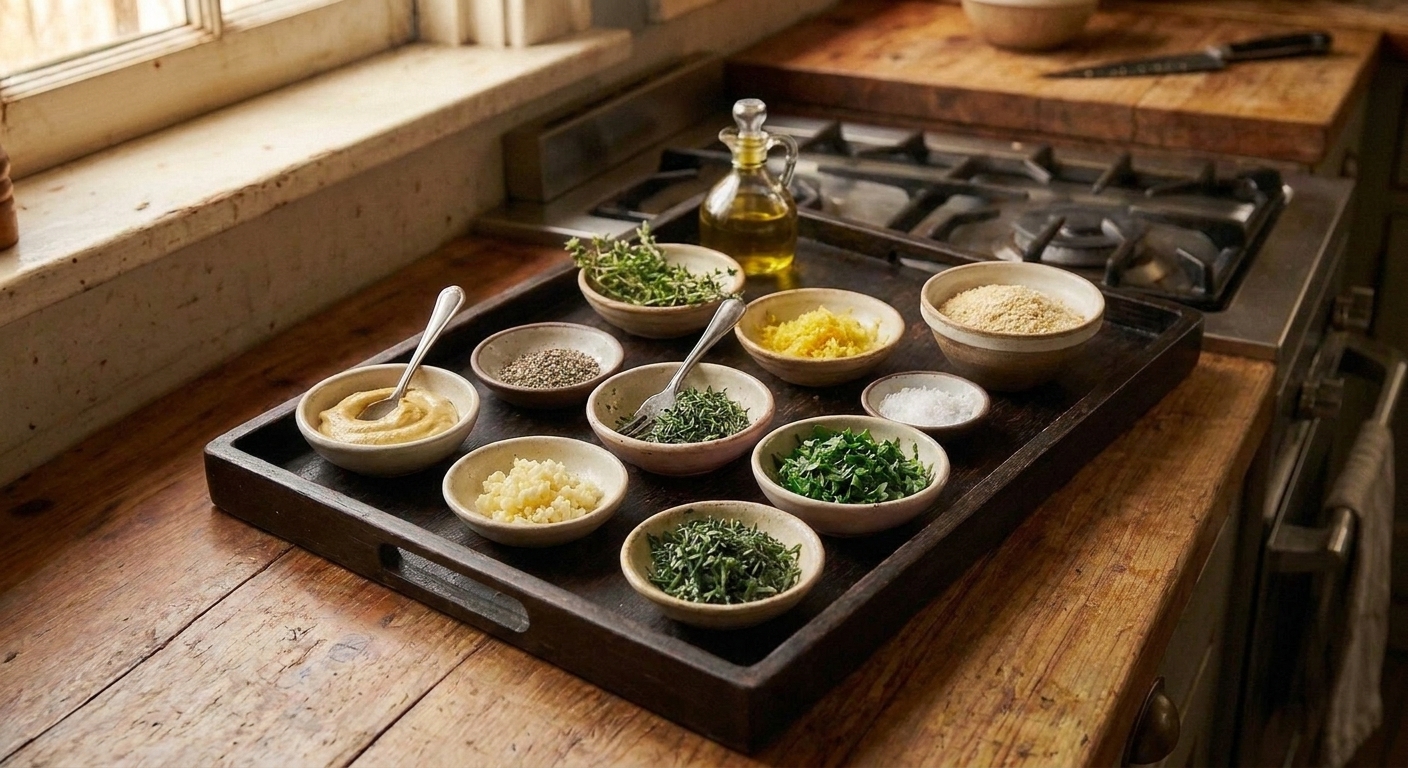
Raw saddle of lamb on a tray surrounded by small bowls of Dijon mustard, chopped herbs, minced garlic, lemon, breadcrumbs, salt, pepper, and olive oil on a clean kitchen counter

Why It Works

  • The crust brings the party. Dijon, garlic, herbs, and breadcrumbs create a savory layer that browns fast and perfumes the whole roast.
  • Sear first, roast after. You get crisp edges and better flavor without overcooking the center.
  • Temperature makes it foolproof. Lamb goes from perfect to past it quickly, so we rely on an instant-read thermometer and pull it early for carryover cooking.
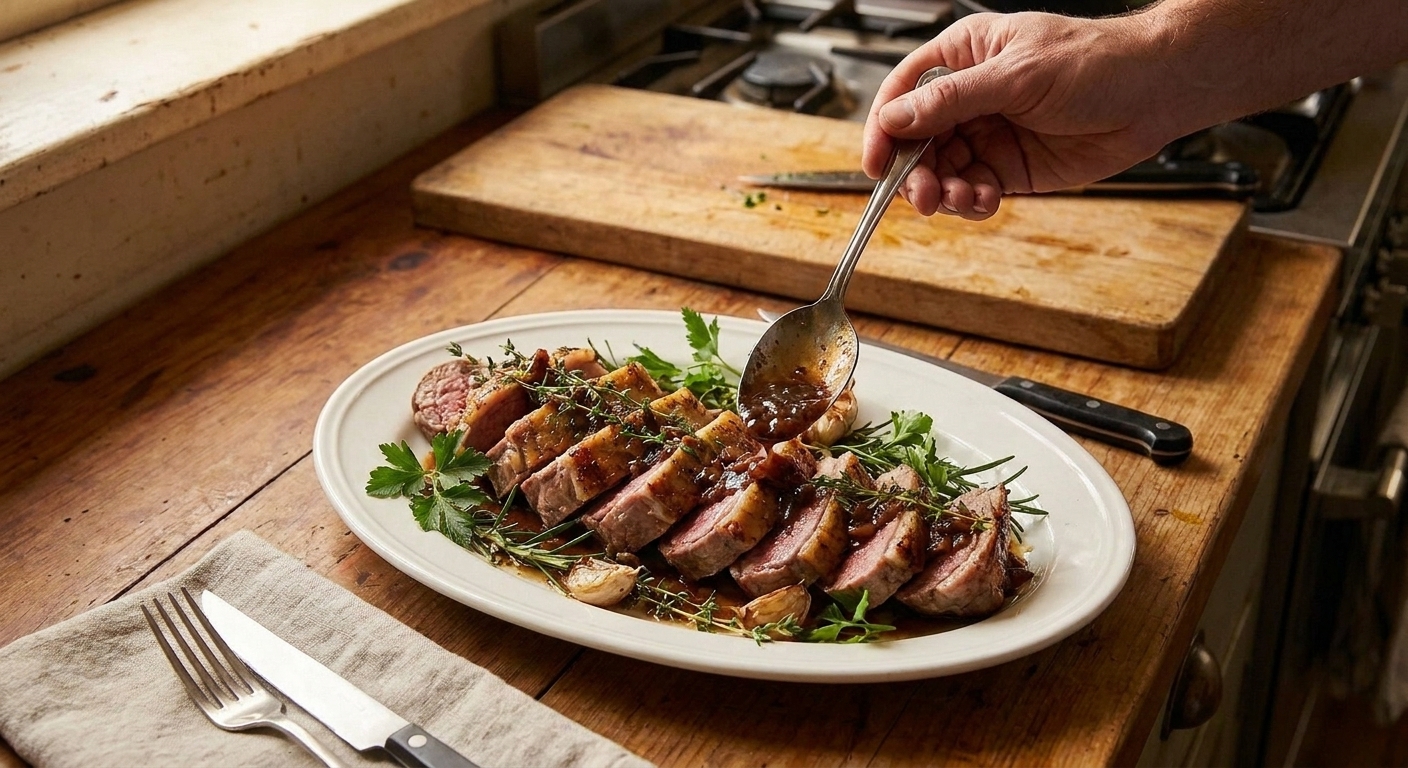
  • The pan sauce is built in. A quick deglaze with wine or broth plus a knob of butter turns the drippings into something you will want to spoon over everything.

Pairs Well With

Storage Tips

Fridge: Cool leftovers, then wrap tightly or store in an airtight container for up to 3 days.

Freezer: Slice the lamb, wrap portions well, and freeze up to 2 months. Thaw overnight in the fridge.

Reheat without drying it out: Place slices in a baking dish with a splash of broth. Cover with foil and warm at 300°F until just heated through, usually 10 to 15 minutes. Or go gently in a skillet with a little butter and cover for a minute.

Leftover move: Thin slices make an elite sandwich with arugula, lemony mayo, and a little pickled onion. Crisp edges encouraged.

Common Questions

What is a saddle of lamb, exactly?

It is a classic roast cut from the lamb’s back that includes both loins still attached, and it usually includes some of the backbone/spine (how much bone and structure you get varies by butcher and region). You might also see it sold as a double loin roast.

Can I make this with a boneless lamb loin roast instead?

Yes. If you can only find a boneless lamb loin roast, use the same crust and method. It will usually cook a little faster than bone-in, so start checking temperature early.

Do I need to tie it with kitchen twine?

Highly recommended. Tying helps it roast evenly and keeps the shape tidy for carving. If your butcher already tied it, you are winning.

Twine tip: If it comes tied, keep the twine on during roasting and resting. Remove it right before slicing.

What internal temperature should I aim for?

For most people, lamb shines at medium-rare. Pull from the oven at 125°F for medium-rare (it should rise to about 130 to 135°F as it rests). For medium, pull at 135°F.

If you like it rare (cool red center), pull at about 120°F. Carryover heat varies with size and bone-in versus boneless, so your finish temp may climb anywhere from 5 to 10°F.

How do I keep the crust from falling off?

Pat the lamb dry, sear it, then brush on Dijon and press the breadcrumb mixture firmly. Also, let it rest after roasting before slicing so juices settle and the crust sets.

What can I use instead of wine in the sauce?

Use chicken broth or lamb stock plus a small squeeze of lemon at the end. You still get a bright finish without alcohol.

Any shopping tips if I cannot find a saddle?

Ask the butcher for a double loin roast or “two loins attached,” either bone-in or boneless. This recipe works for both. Just start checking temperature sooner for boneless.

How do I carve it if there is a backbone?

If your saddle is bone-in, you can first run your knife along the backbone to separate the two loins (your butcher may have already done part of this). Then slice each loin into thick pieces. If it is boneless, just slice across the roast into thick slices.
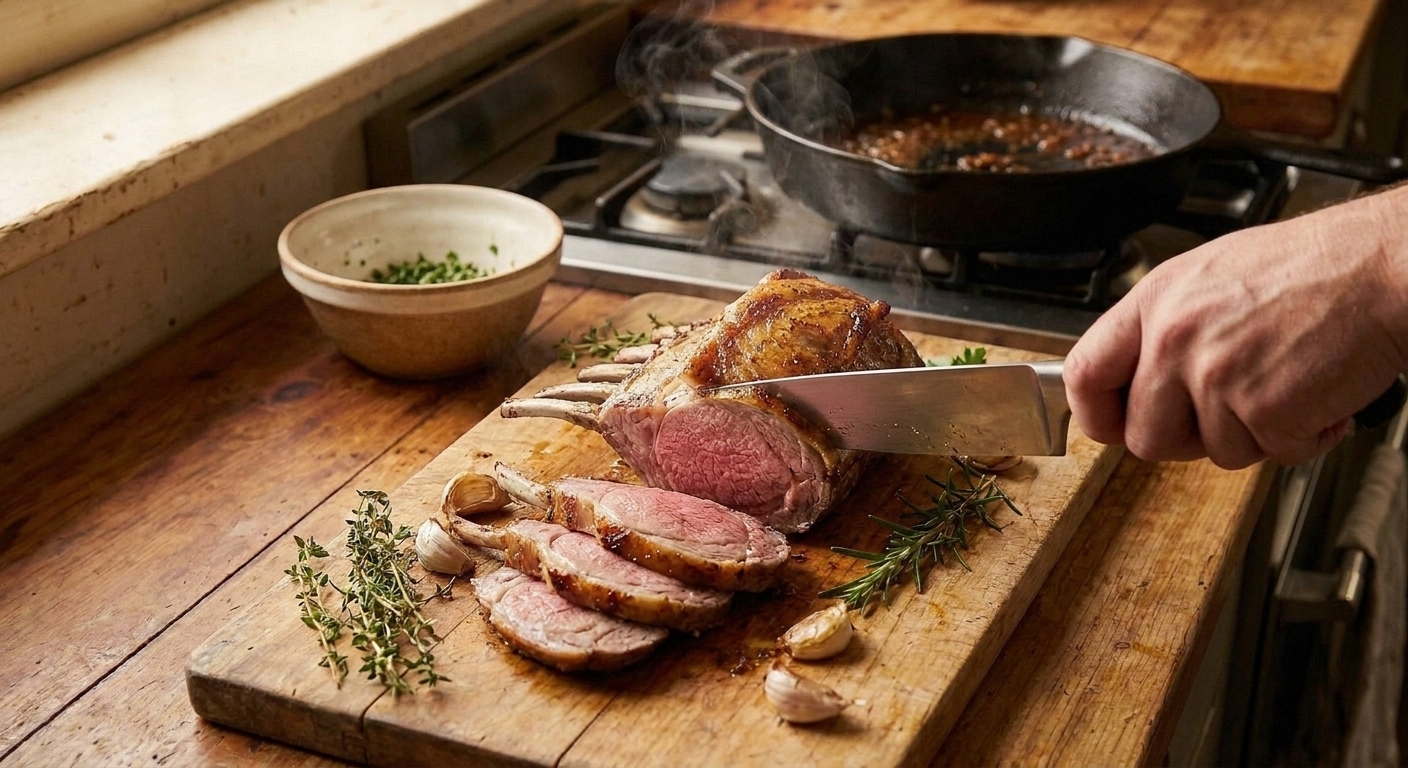

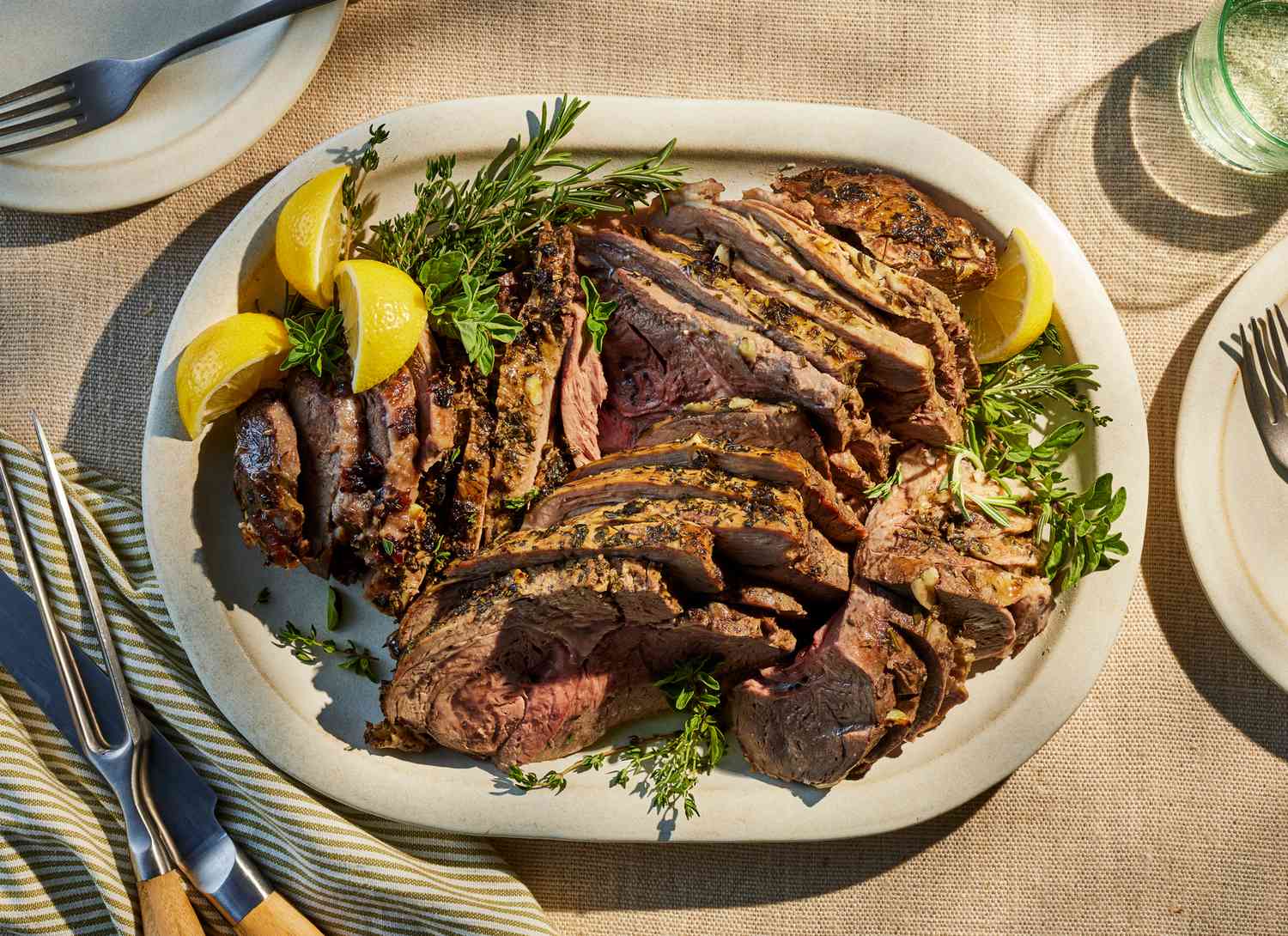
A roasted saddle of lamb being sliced into neat pieces on a wooden cutting board with a chef's knife, showing a rosy center and browned crust

The first time I cooked a saddle of lamb, I treated it like a mysterious fancy cut that could sense fear. Then I realized it wants the same things I want on a weeknight: good seasoning, a hot pan, and clear instructions. Now it’s my favorite “I wonder if…” dinner party move. You sear, you roast, you slice, and suddenly everyone thinks you own matching ramekins and have your life together. I do not. I just taste as I go.