Mom's Best Recipes
Recipe

Saddle Soap Leather Cleaner

A homemade saddle soap style cleaner that lifts grime fast, wipes clean, and buffs leather to a calm, not-greasy finish.

Author By Matt Campbell
4.7
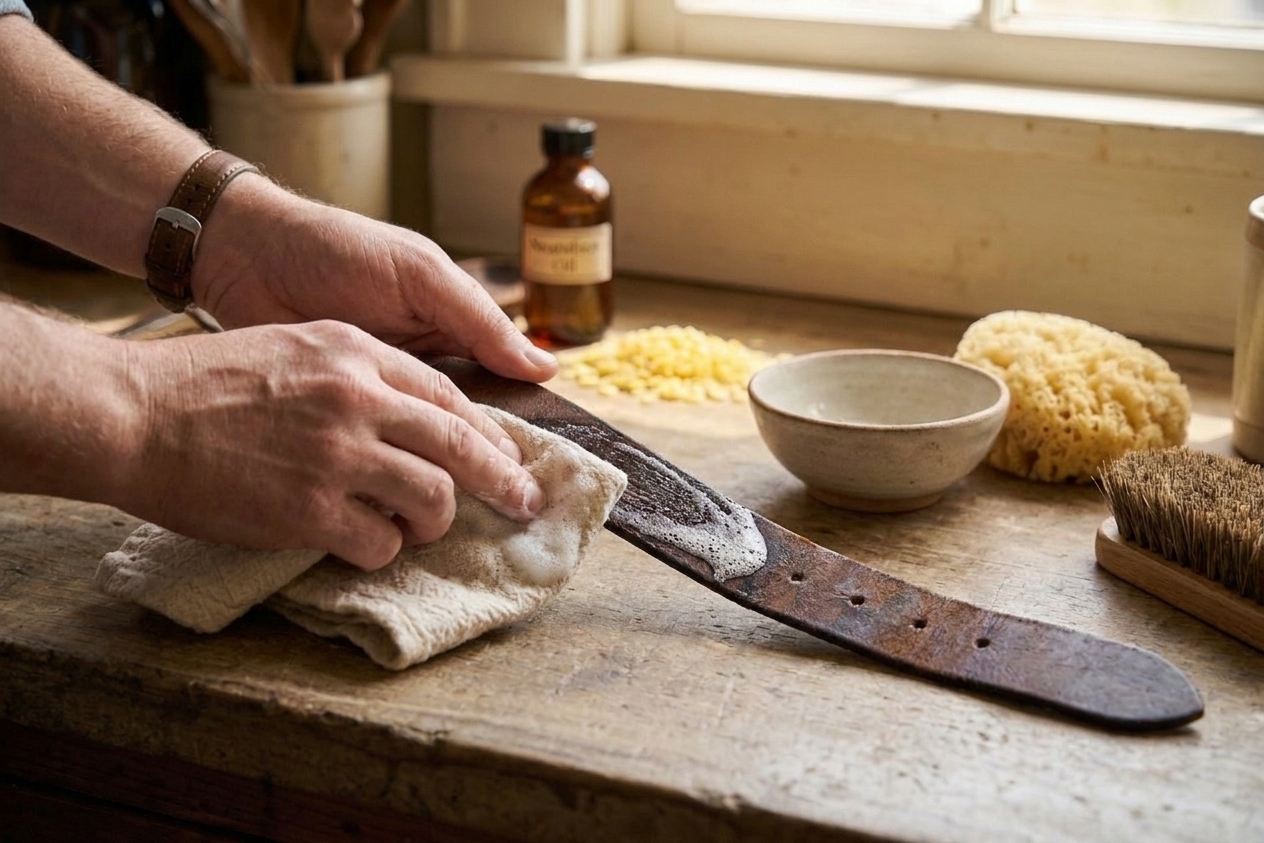
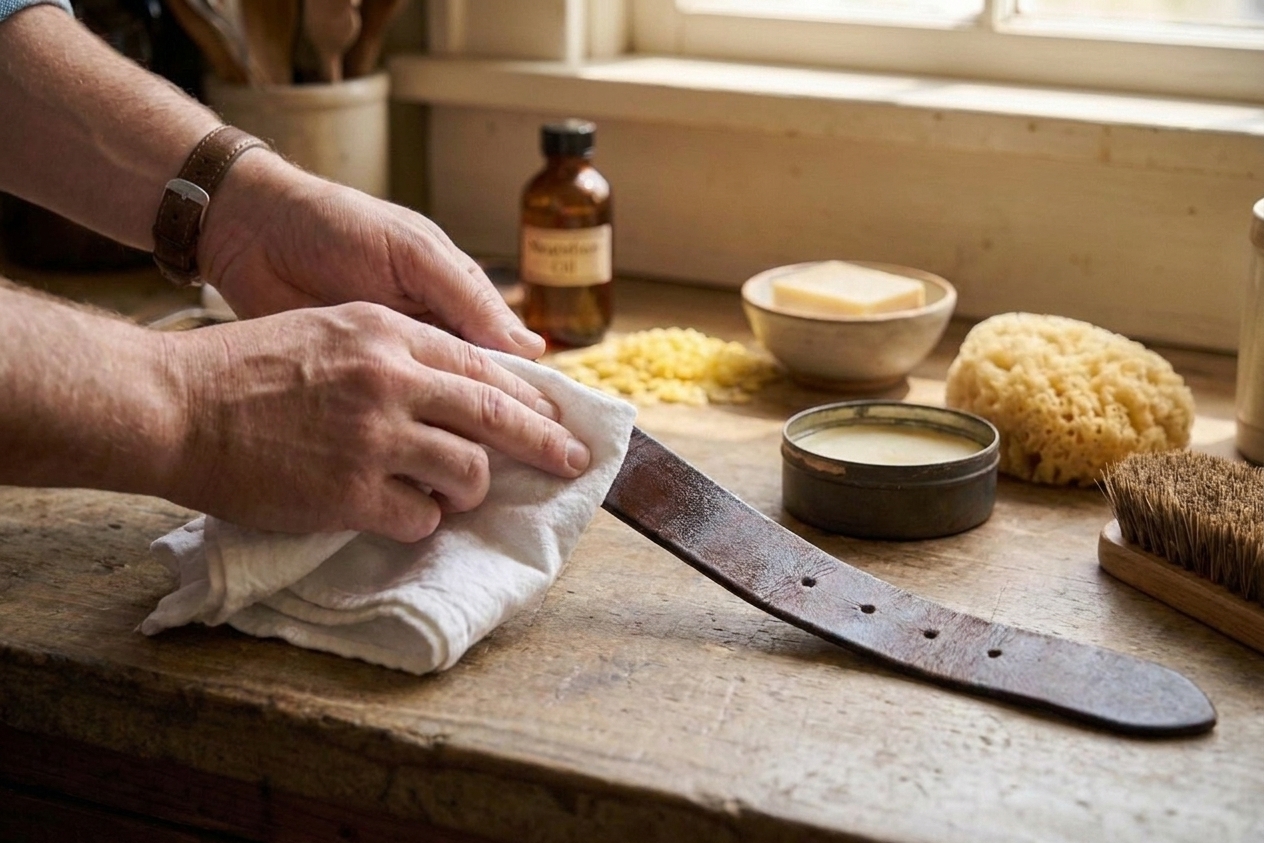
A small open tin of homemade saddle soap style leather cleaner on a warm wood kitchen counter with a soft cloth and a horsehair brush nearby, natural window light

Saddle crafting is one of those worlds where you learn pretty quickly that leather is tough, but not invincible. Dust, sweat, trail grime, and old conditioner buildup can turn a gorgeous hide into something that looks dull and feels sticky. The fix is not blasting it with harsh cleaners or soaking it like a dish sponge. The fix is gentle suds, a light hand, and patience.

This recipe is a saddle soap style leather cleaner you can make at home with accessible ingredients. It is not meant to be a miracle “restore cracked leather overnight” potion. It is meant to be the reliable thing you reach for when you want your leather clean, supple, and ready for conditioning, whether you are maintaining tack for saddle work or cleaning the boots you wear while you do it.

Before you start, brush off loose grit and patch test on a hidden spot, especially on light leather or anything that is unfinished. Leather can be dramatic.

Why It Works

Why it works

  • Gentle surfactants: Mild soap loosens grime without stripping the leather like heavy detergents can.
  • Controlled moisture: You work with damp foam, not a soaking wet rag, which helps reduce stiffness and water spotting.
  • Light finishing: A small amount of oils and wax buffs to a soft finish that can reduce that “dry, papery” feel after cleaning.
  • Saddle crafting friendly: Clean leather accepts edge paint, burnishing compounds, conditioners, and finishes more evenly.

Troubleshooting

  • It separated in the jar: Totally normal with a homemade mix. Set the closed jar in a bowl of warm water for 5 to 10 minutes, then stir until smooth. Separation does not automatically mean spoilage.
  • White haze or streaks: That is usually wax residue. Buff with a dry cloth. If needed, wipe once with a barely damp cloth, then buff again.
  • It feels tacky: You used too much or the leather was already oily. Wipe with a clean damp cloth, then buff dry. Next time, use less product and more buffing.
  • Too much foam: Use less product on the cloth and more plain water on the sponge. Think “whisper of suds.”

Pairs Well With

Storage Tips

Because this recipe contains water and no preservatives, treat it like a short-life homemade mix. Mild soap helps, but soap alone is not a preservative. Store it in a lidded tin or glass jar, use distilled water, and keep your tools clean so you do not introduce microbes into the container.

  • Best practice: Make small batches and use within 2 to 4 weeks.
  • To slow spoilage: Store in the refrigerator and use within 1 to 2 months. Refrigeration slows growth, but it does not make it immortal. Let it come to room temperature before use so it spreads easily.
  • Avoid contaminating the jar: Do not double-dip a wet sponge. Scoop a little product out with a clean spoon or clean fingers, then close the lid.
  • If it separates: Warm the closed container in a bowl of warm water for 5 to 10 minutes, then stir until smooth.
  • If it smells off or looks moldy: Toss it and make a fresh batch. It should smell like mild soap, not like regret.

Common Questions

Is this the same as store-bought saddle soap?

Not exactly. Commercial saddle soaps often use specific soap bases and emulsifiers for stability and long shelf life. This is a homemade saddle soap style cleaner that aims for the same everyday result: gentle cleaning with a light protective finish.

Because it is homemade and does not use a dedicated emulsifier, separation is normal over time. That alone does not mean it is spoiled. Spoilage looks like mold, odd discoloration, or an off smell. When in doubt, toss it and remake a small batch.

Can I use this on a saddle, bridle, or other tack?

Yes, for regular maintenance on finished leather. Use a light amount, work in small sections, and wipe dry. Avoid flooding stitching and edges, since water can swell leather and loosen some finishes. If you rely on maximum grip (like certain seats or reins), use sparingly and buff well so you do not leave a slick, waxy feel.

What leather should I NOT use it on?

  • Suede or nubuck: Use a suede brush and suede-specific cleaner.
  • Very absorbent unfinished veg-tan: Test carefully. It can darken and spot.
  • Unfinished suede interiors (like inside some boots): Keep this on the smooth, finished exterior leather only.
  • Patent leather: Usually just needs a damp cloth and a tiny bit of mild soap.

What about different finishes?

  • Pigmented or finished leather: Usually the easiest and safest. Start with less product.
  • Aniline or oil-tanned leather: Can darken more easily and may show water marks. Use minimal moisture and buff thoroughly.

Will this darken leather?

It can, especially on light, unfinished, or very dry veg-tan. Also note that neatsfoot oil can darken some leathers. Use less product, buff well, and always test in an inconspicuous area first.

Do I still need conditioner after cleaning?

Often, yes. This recipe has a light conditioning effect, but if your leather feels dry or looks thirsty, follow up with a proper leather conditioner after the item is fully dry.

Can I use olive oil?

I do not recommend it for leather care. Olive oil can oxidize and get sticky over time on some items. If you want a traditional option for tack, use neatsfoot oil. For a lighter feel, use jojoba. Many people still prefer a purpose-made leather conditioner to avoid over-oiling or unknown additives.

Is tea tree oil a good idea?

It is optional, and I usually skip it. Essential oils can irritate skin, may not be tack-safe, and some finishes can react. If you do use it, keep it to 1 to 2 drops per batch and patch test both the leather and your own skin contact.

Any allergy notes?

If you use lanolin, know that lanolin can bother some people with sensitivities. You can leave it out entirely and still get a good cleaner.

Is this for food or skin use?

No. This is for leather care only.

I got into the habit of cleaning leather the same way I learned to season a pan. Small maintenance beats big rescues. When I started messing around with saddle crafting techniques, I realized leather responds to the same kitchen logic I love: gentle heat, the right fat, and do not rush it. This little cleaner is my weeknight version of “take care of your tools so your tools take care of you.” It is not flashy, but it is the difference between leather that ages beautifully and leather that slowly gives up.