Common Questions
Can I use chicken breasts instead of thighs?
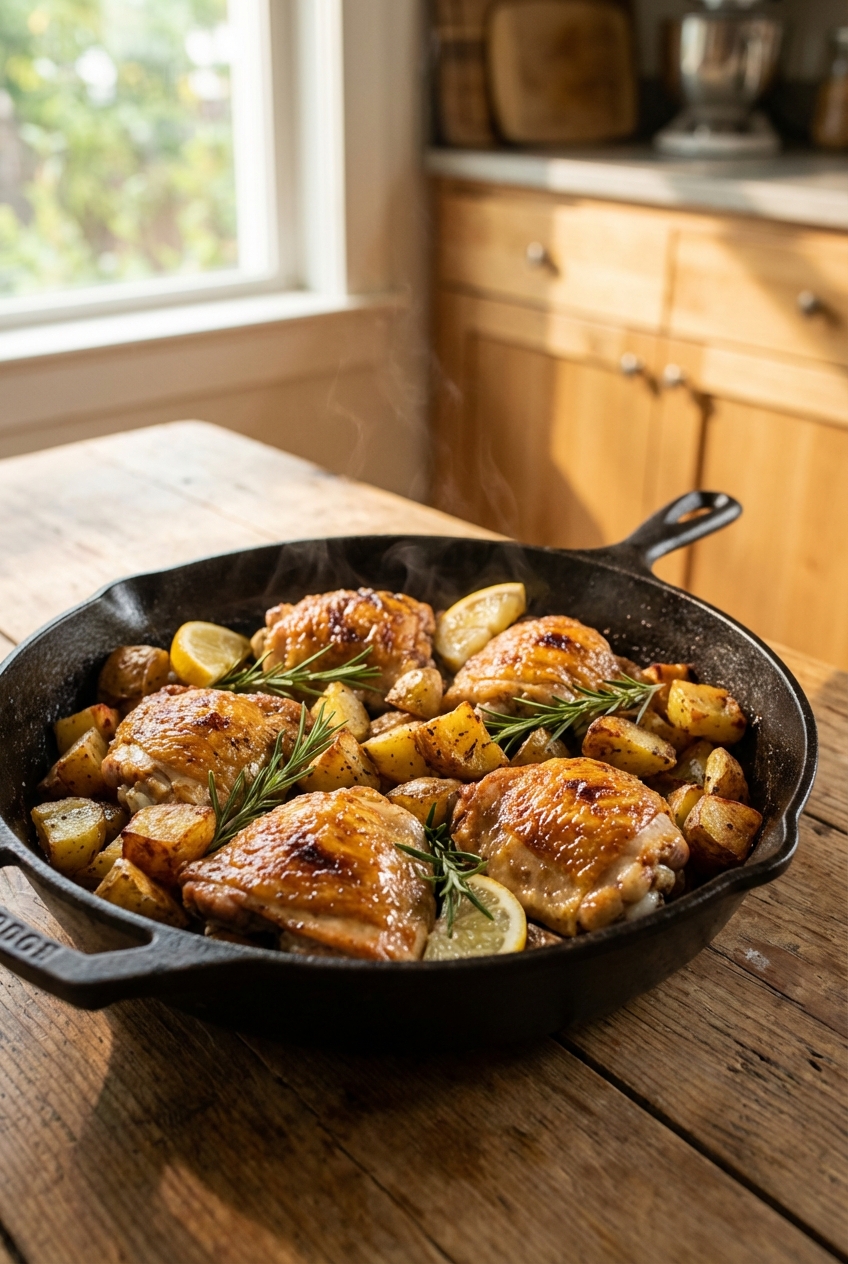
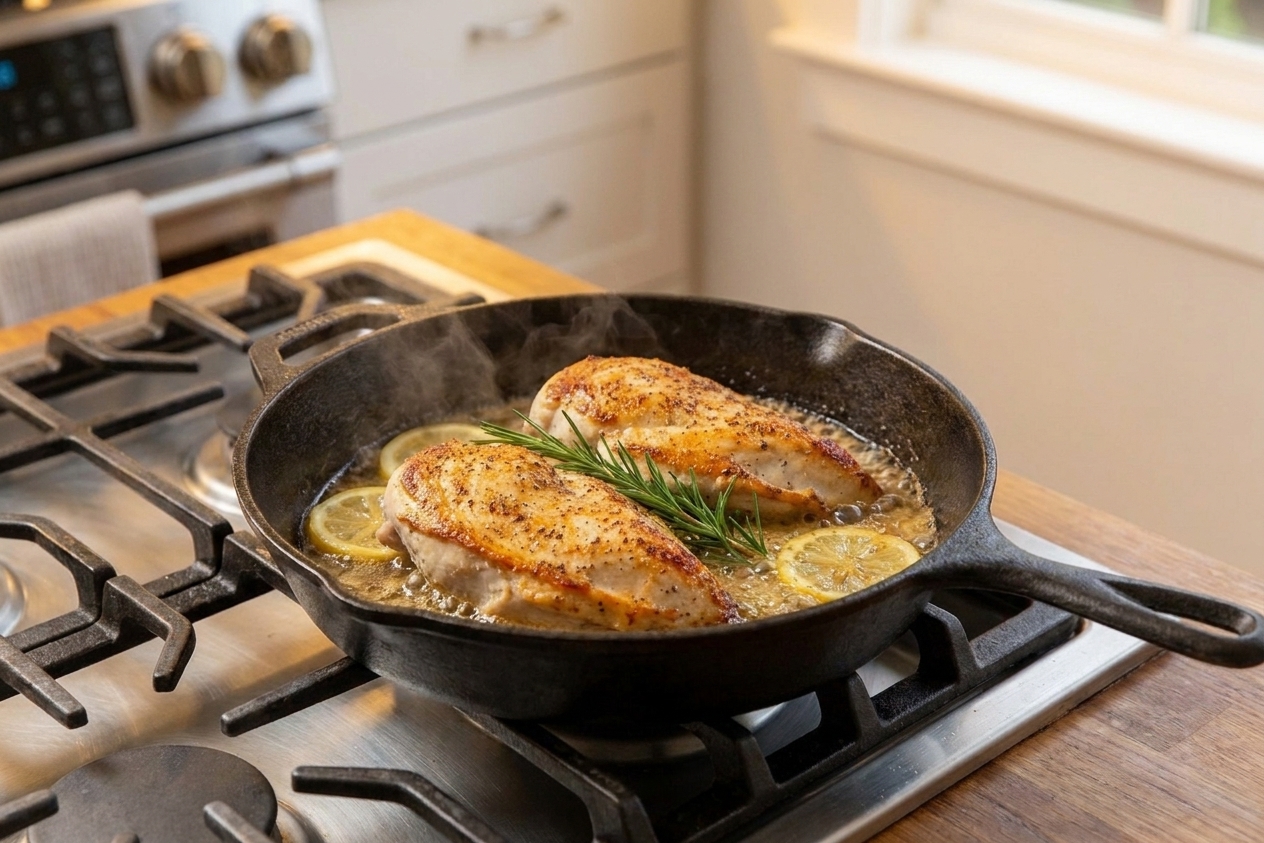
Yes, but they cook faster and can dry out. Use bone-in, skin-on breasts if possible. Roast until the thickest part hits 160°F, then rest to 165°F (carryover cooking depends on size and how long you rest). If using boneless breasts, add them later in the roast so the potatoes still get time to brown.
What potatoes work best?
Yukon Gold are my favorite for creamy insides and great browning. Red potatoes hold their shape well. Russets get very crisp, but can crumble a bit more, which is not a bad problem to have.
My potatoes are not getting crispy. What did I do wrong?
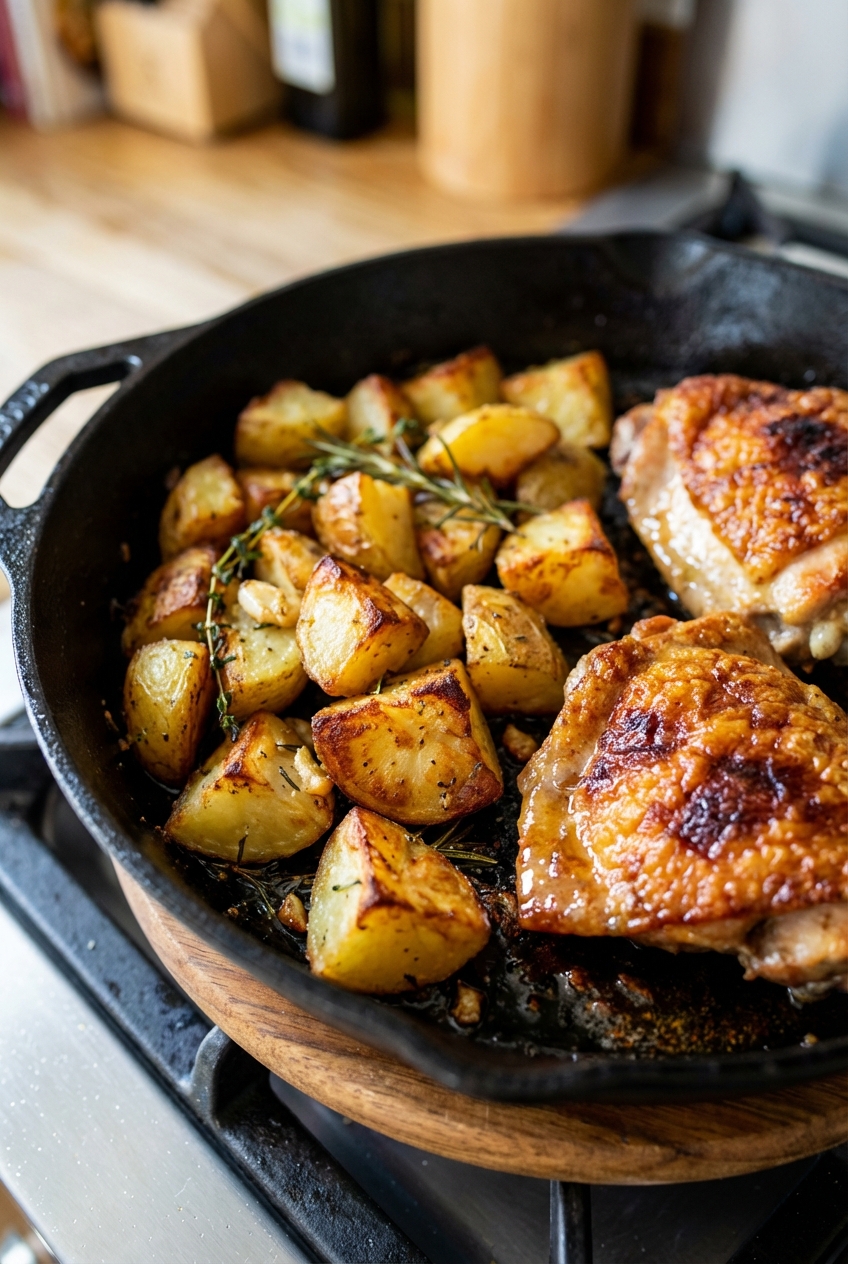
Usually one of three things: the pan is crowded, the oven is not hot enough, or the potatoes have too much moisture. Give them space, roast at 425°F, and pat the potatoes dry after cutting if they look wet.
Do I have to use cast iron?
Nope. Any oven-safe skillet or a roasting pan works. Cast iron just gives you excellent browning and heat retention.
Can I make this dairy-free and gluten-free?
It is naturally gluten-free, but check labels on broth and Dijon since brands vary. For dairy-free, swap butter for olive oil in the sauce finish.
Is 165°F enough for chicken thighs?
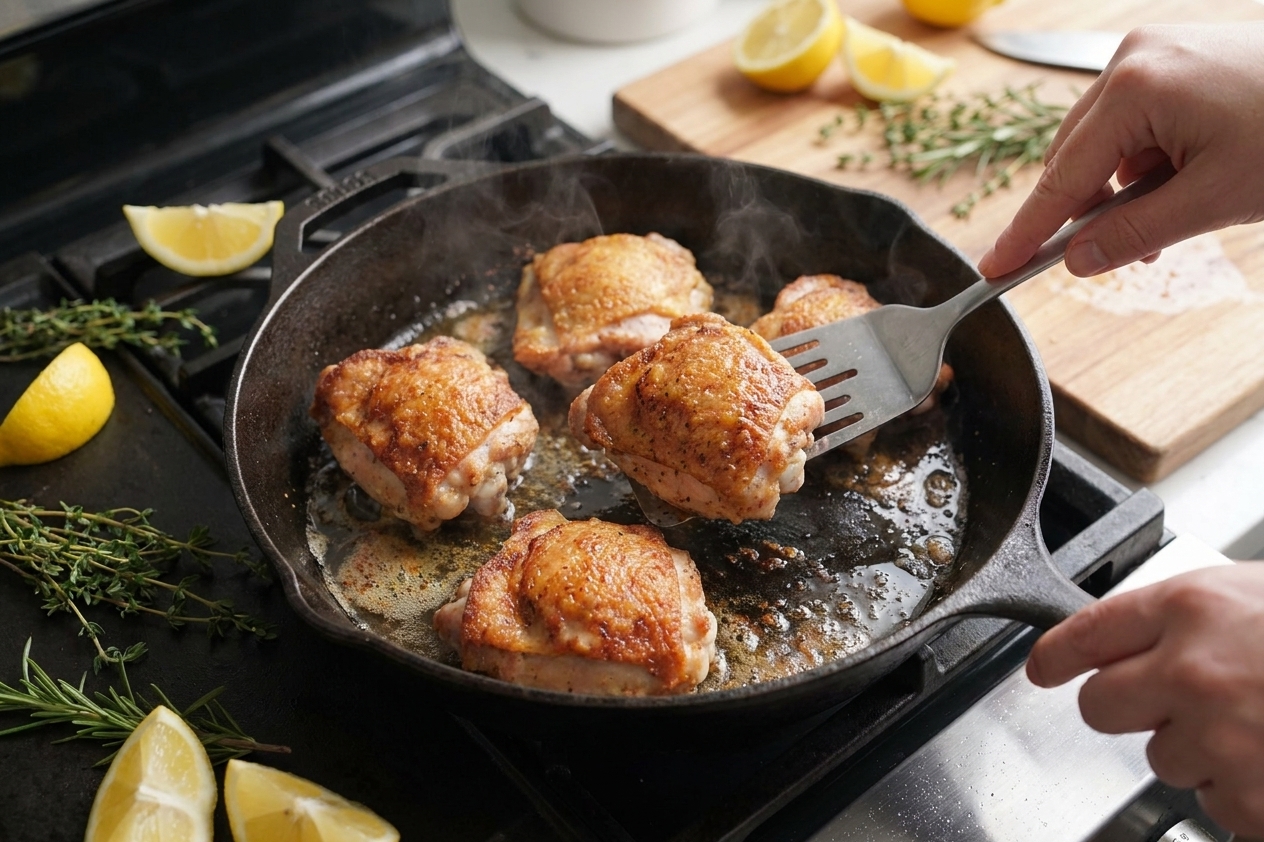
165°F is safe, and you can absolutely stop there. That said, thighs often get even more tender around 175 to 190°F because the connective tissue has more time to relax. If you have a few extra minutes, letting them ride a little higher is a very good idea.