Common Questions
Do I need pectin for peach preserves?
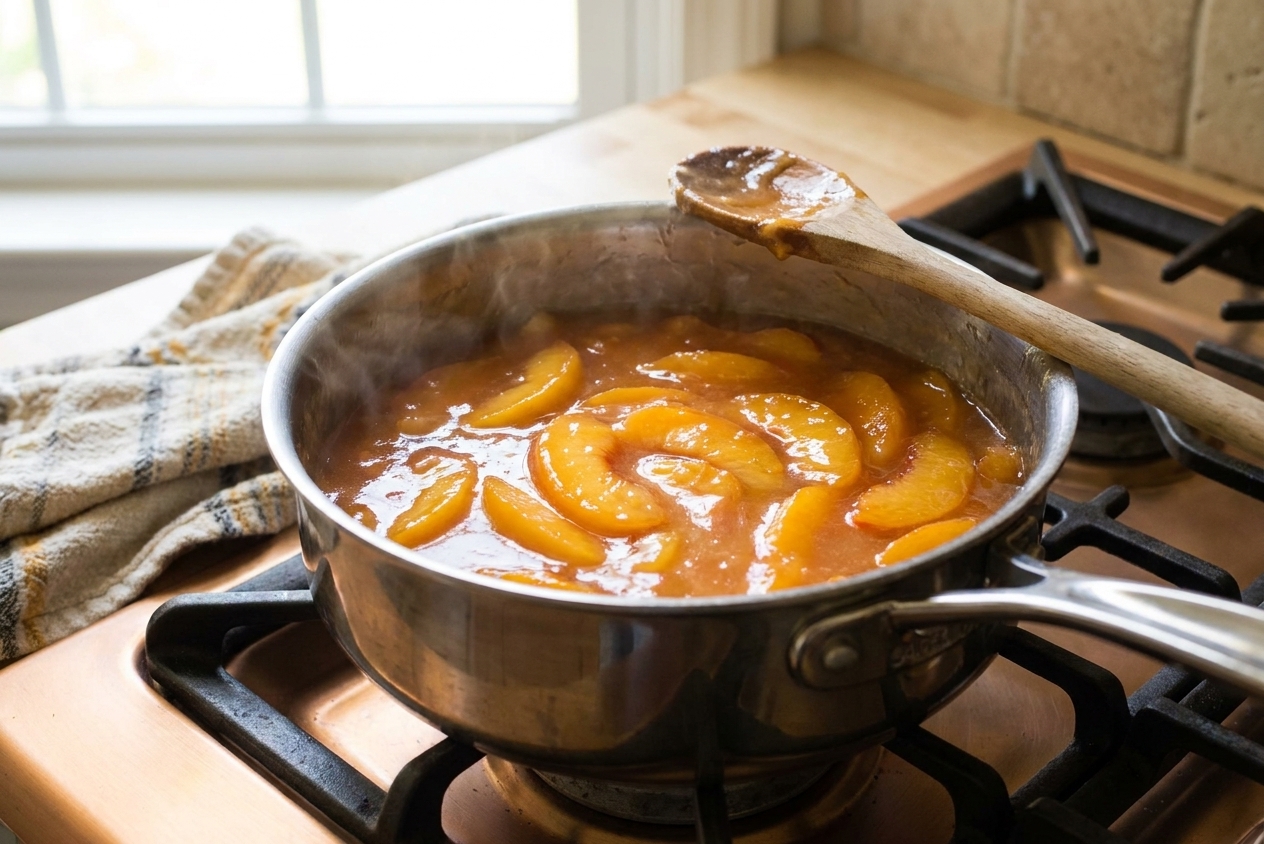
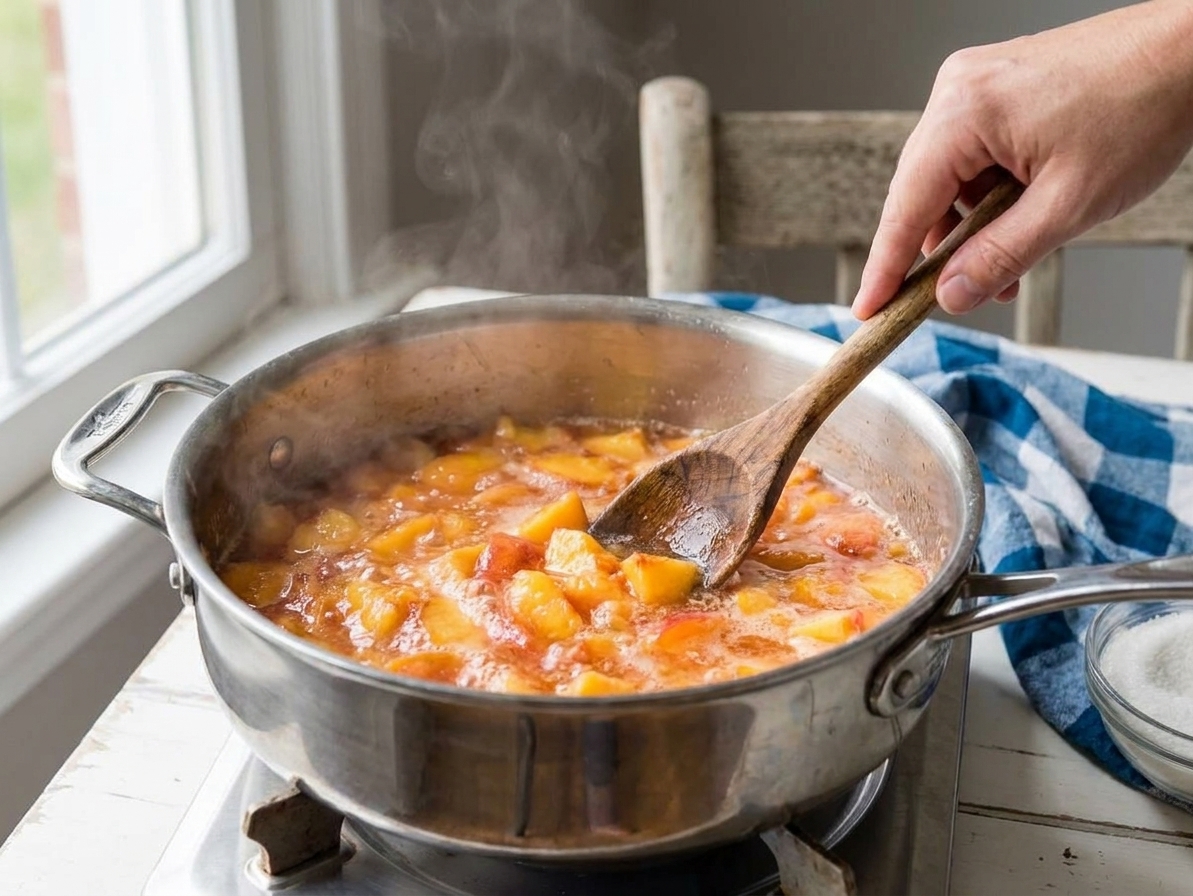
No. Peaches are lower in pectin than some fruits, so we build thickness by cooking down the fruit in a wide pot and using lemon juice plus time. The preserves will continue to thicken as they cool.
How do I know when it is done?
You have two easy options:
- Temperature: A great guide. Aim for around 220°F at sea level, but treat it as a target, not a law. With slightly lower sugar preserves, the cold plate test and visual cues are your best friends. For altitude, go by your local boiling point (a common rule is subtract about 2°F for every 1,000 feet).
- Cold plate test: Chill a small plate in the freezer. Drop a little preserves on it. Wait 30 seconds, then drag your finger through. If it wrinkles slightly and the line holds, you are there.
Can I use frozen peaches?
Yes. Thaw first, include any juices, and expect a slightly longer cook time. Frozen fruit tends to release more juice as it thaws (cell damage), so it may take a bit longer to cook down. Flavor is still great.
Should I peel the peaches?
Totally up to you. Peeled peaches give a smoother, more classic preserve. If you like a rustic vibe, you can leave some peel on. If you do peel, a quick blanch makes it painless.
Why did my preserves turn out runny?
Usually one of these:
- Not cooked long enough, especially in a narrow pot.
- Heat was too low to evaporate water effectively.
- Under-ripe peaches with less natural sugar and weaker texture.
Fix: simmer again for 5 to 15 minutes, then retest.
Why did my preserves get too thick?
It cooked a little past set, or you had a very hot boil. You can stir in 1 to 2 tablespoons warm water at a time while reheating gently until it loosens.