Common Questions
How much sourdough discard should I use in crepes?
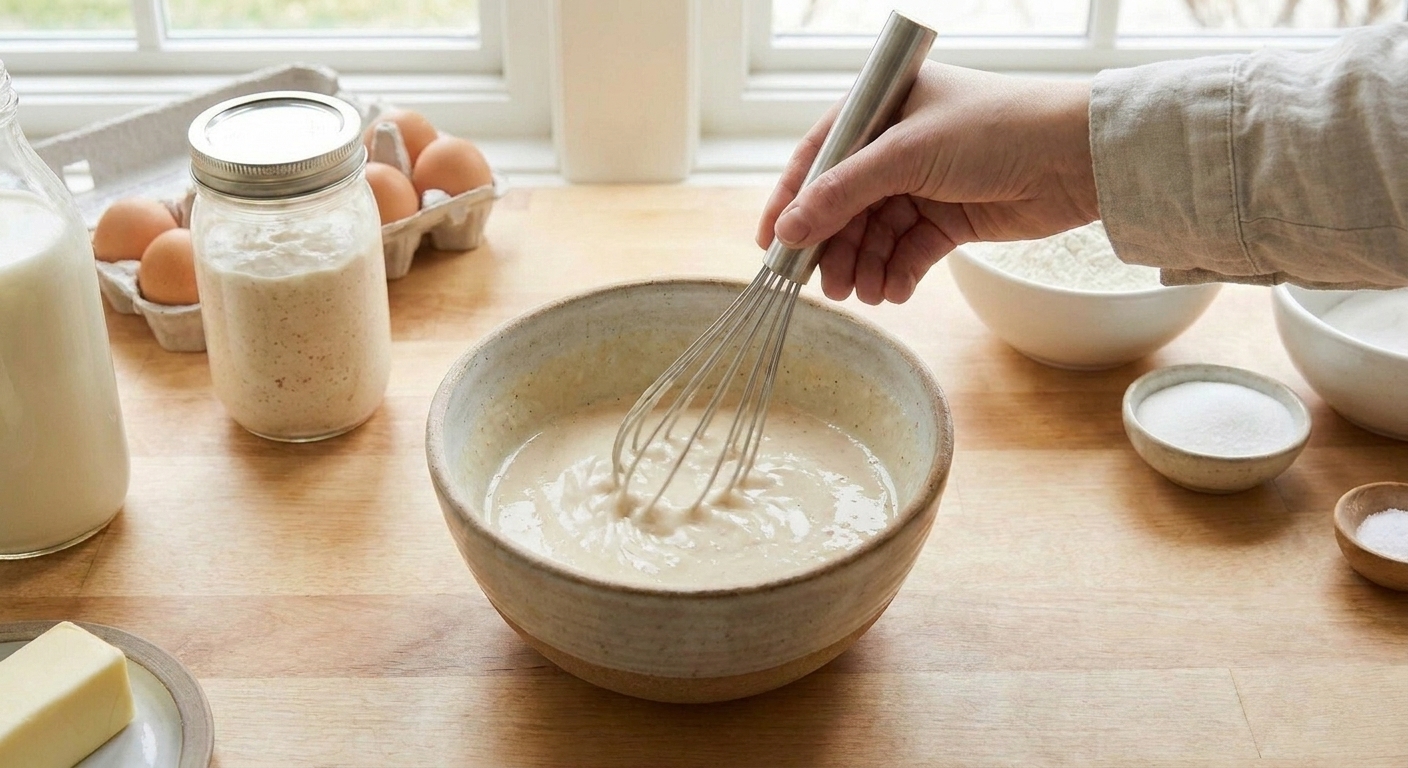
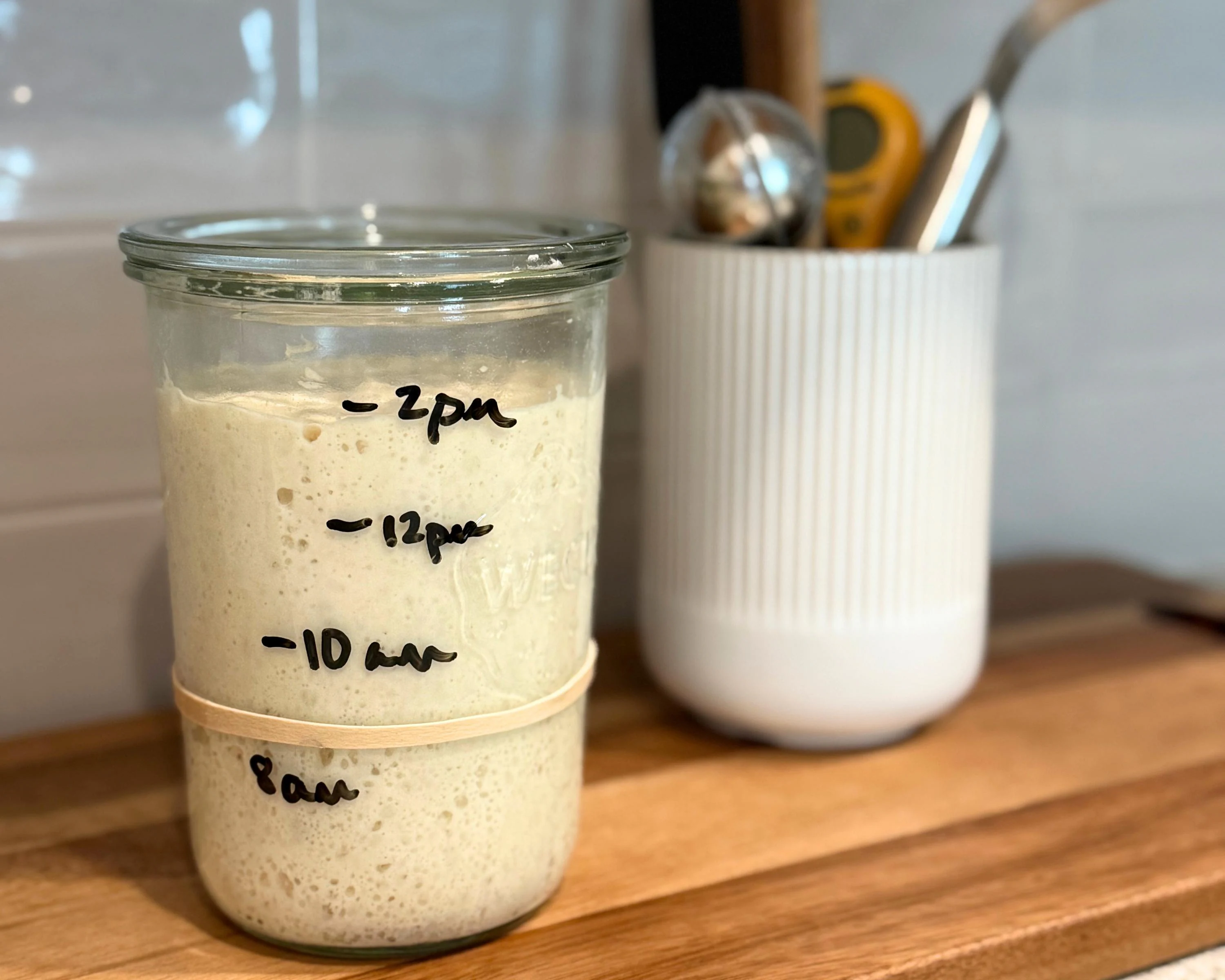
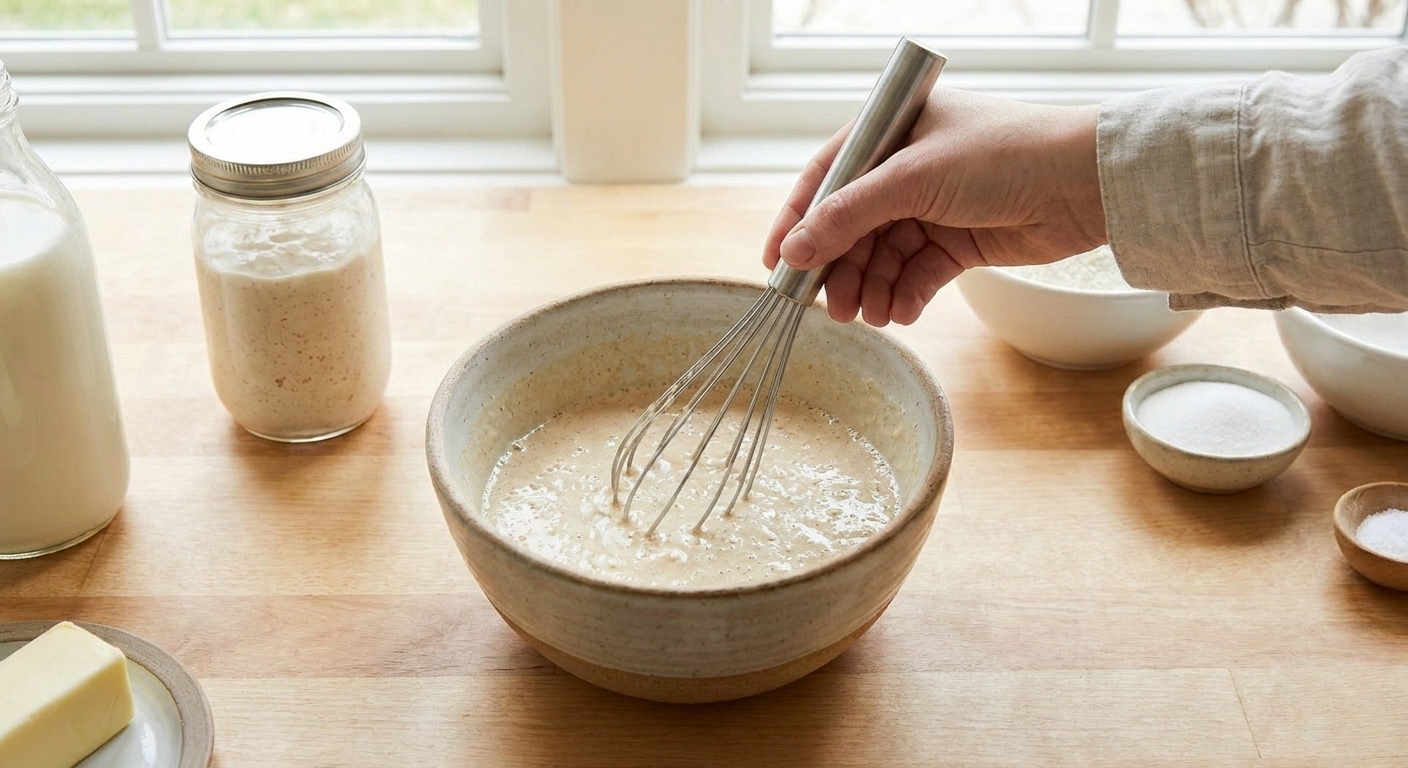
This recipe uses 240 g sourdough discard (about 1 cup). If your discard is 100% hydration (equal weights flour and water), that volume will be very close to 1 cup. If your discard is thicker or thinner, go by the grams and adjust the batter with a splash of milk or a spoonful of flour as needed.
Does discard need to be room temperature?
Not strictly, but room temperature discard blends more smoothly. If your discard is cold and thick, whisk it well and rest the batter so any lumps relax.
How long should crepe batter rest?
Rest for 20 to 30 minutes. This helps the flour hydrate and the gluten relax, which makes thinner, more tender crepes that do not fight you when you spread the batter.
What heat should the pan be for crepes?
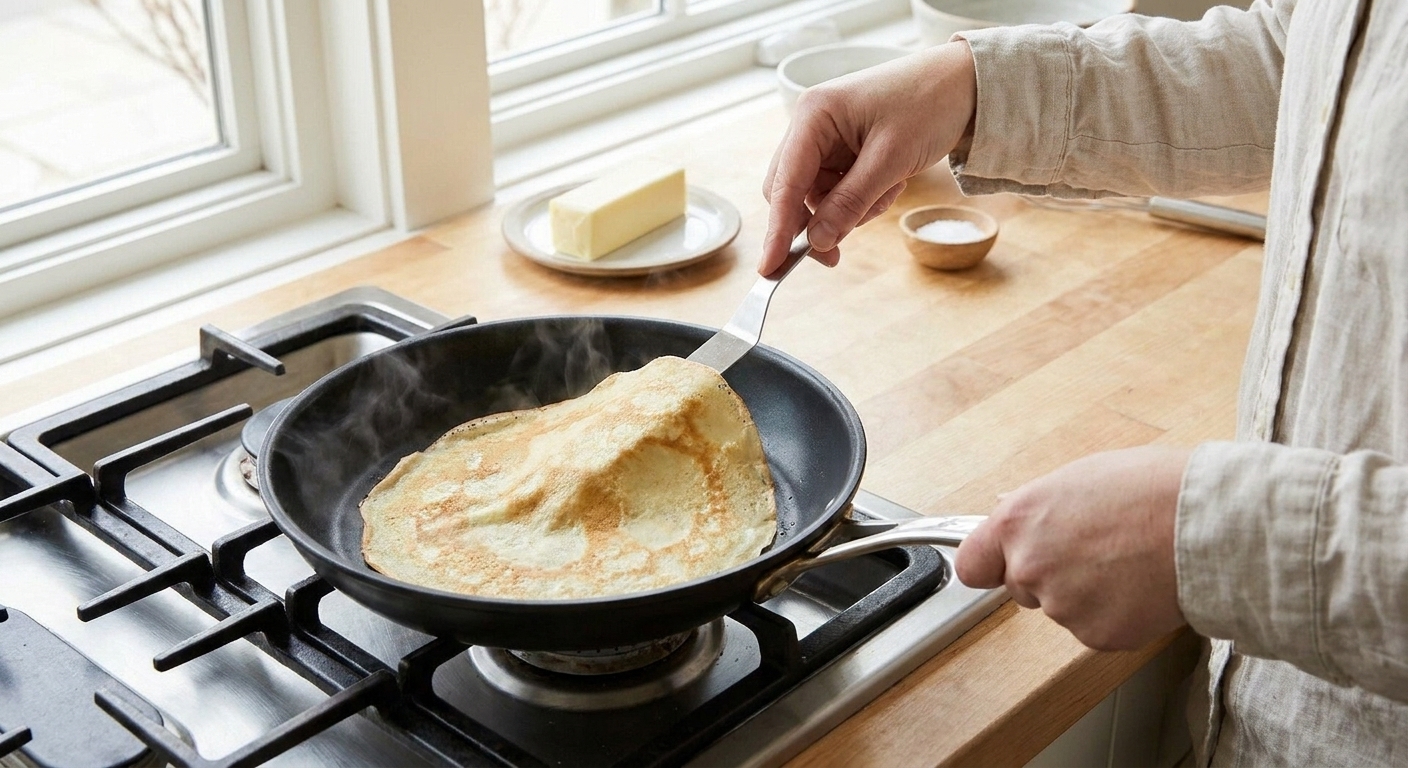
Aim for medium heat (closer to medium low if your stove runs hot). The crepe should set within 20 to 30 seconds, not instantly. If it browns too fast, lower the heat. If it takes forever to set, nudge the heat up.
When do I flip a crepe?
Flip when the edges look dry and start to lift, the top looks mostly set (no wet puddles), and you can slide a thin spatula underneath without tearing. The first side usually takes 60 to 90 seconds, the second side 20 to 40 seconds.
Why is my batter tearing or making holes?
Holes can happen if the batter is a bit thin or the pan is too hot. If the batter seems thin and fragile, whisk in 1 to 2 tablespoons flour and rest for 5 to 10 minutes. Tearing is also common from flipping too early or not enough butter. If the batter seems thick and will not swirl, whisk in milk 1 tablespoon at a time.
Can I make the batter ahead?
Yes. Cover and refrigerate for up to 24 hours. Whisk before cooking and add a splash of milk if it thickened.