Mom's Best Recipes
Recipe

Southern Fried Chicken

A classic buttermilk-brined, skillet-fried chicken with a crunchy, peppery crust and juicy meat, made with accessible ingredients and clear, confidence-boosting steps.

Author By Matt Campbell
4.8
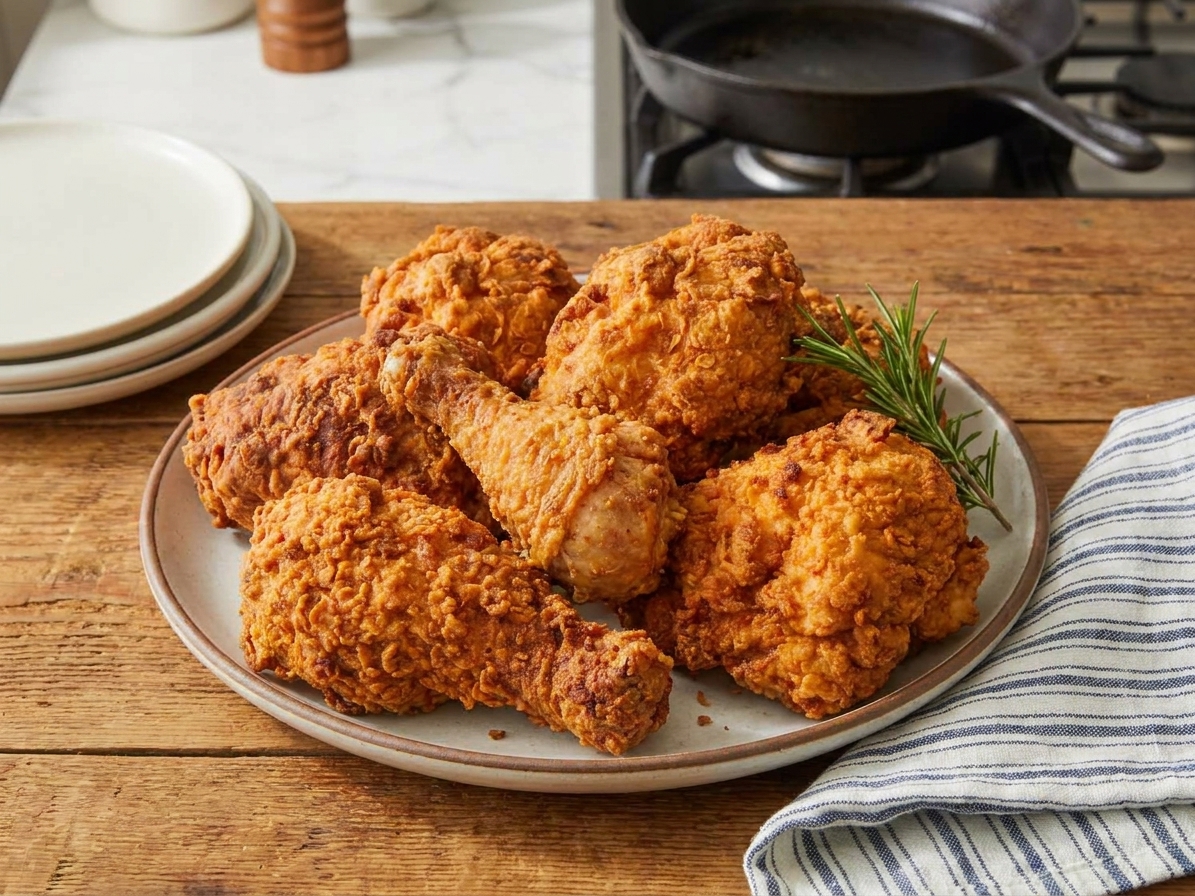
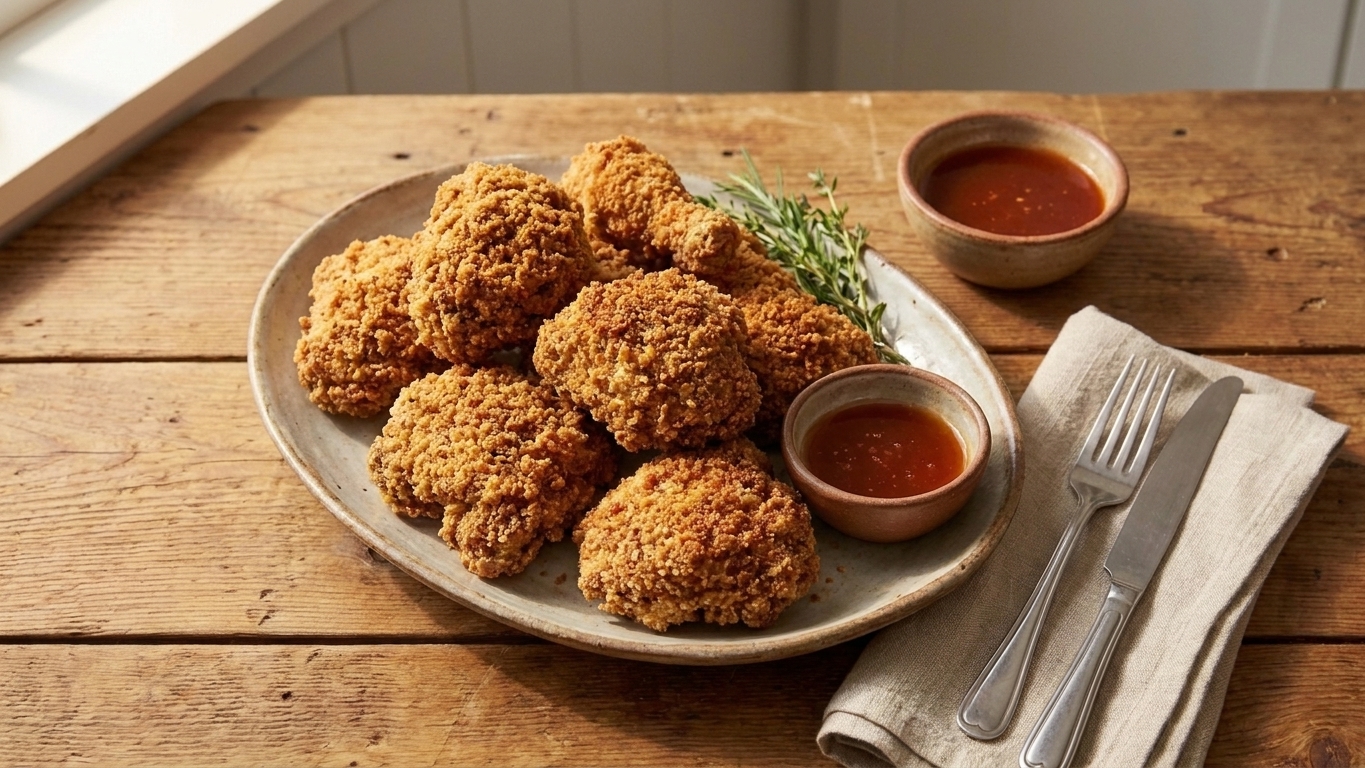
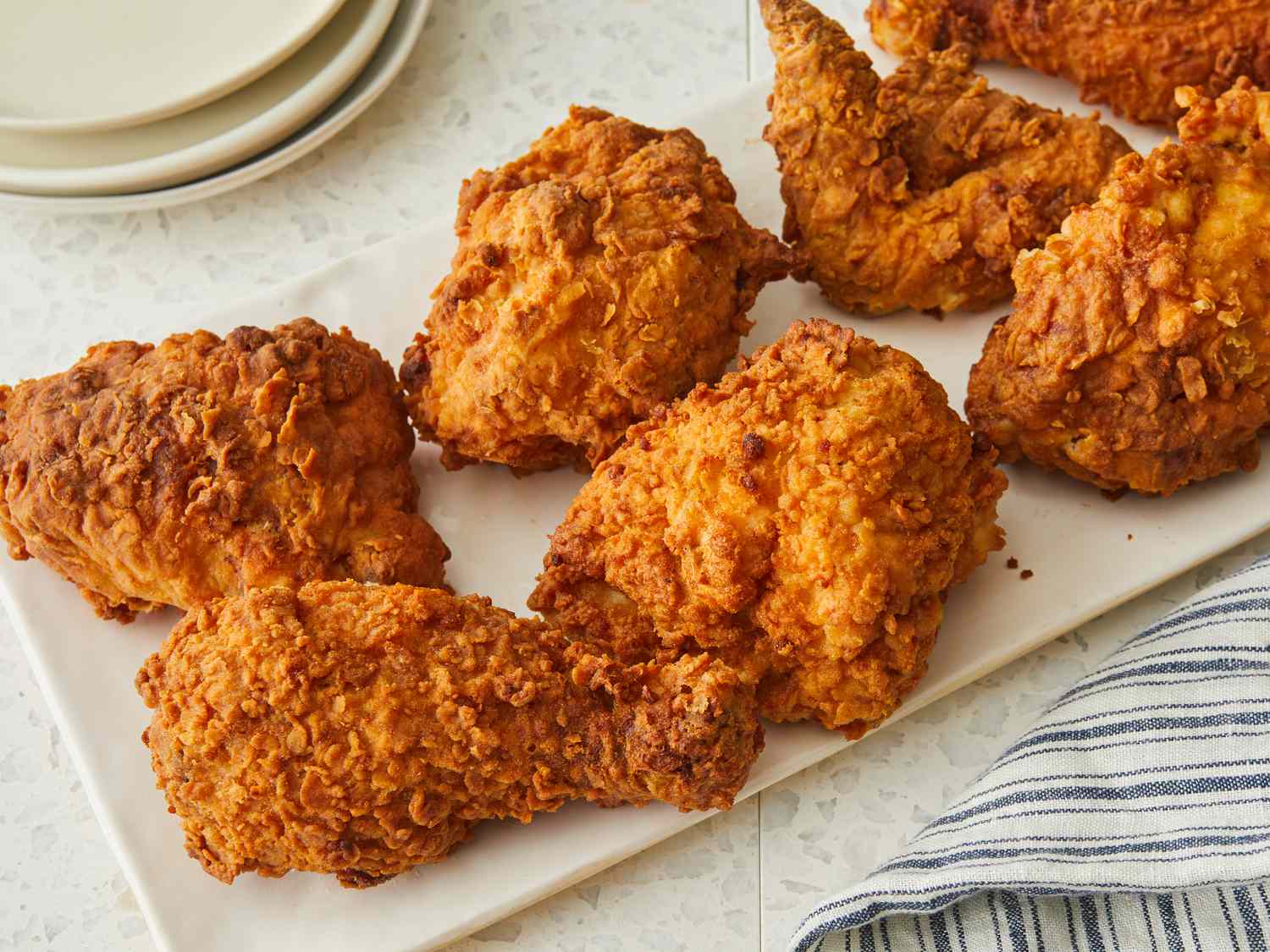
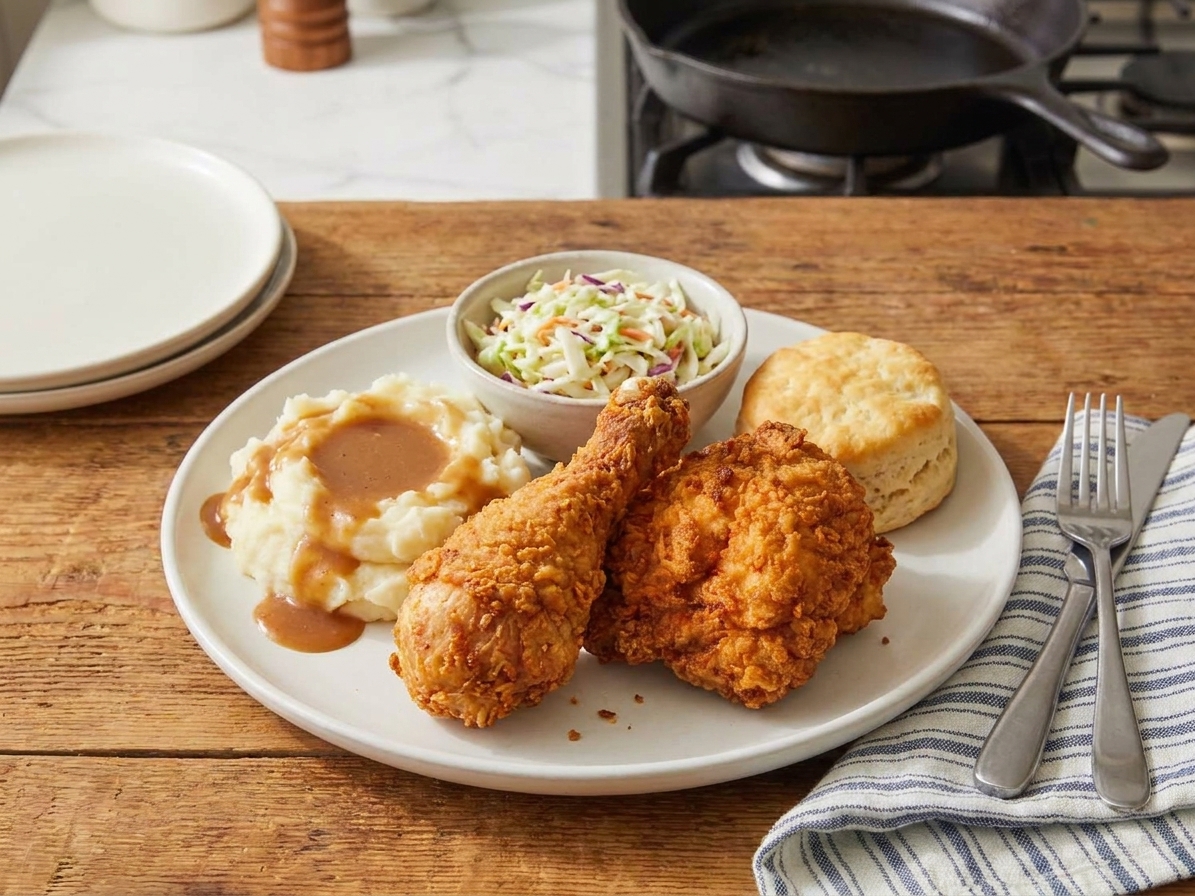
A platter of golden brown Southern fried chicken pieces with a craggy, crisp coating on a wooden table with a simple cloth napkin, warm kitchen lighting

Southern fried chicken is one of those dishes that looks like it belongs to someone else’s kitchen, preferably a person who owns a cast iron skillet that has never known fear. But here’s the truth: if you can keep oil at the right temperature and you believe in seasoning like you mean it, you can absolutely make crispy, juicy fried chicken at home.

My version sticks to the classics: a tangy buttermilk brine for tenderness, a seasoned flour dredge that builds those crunchy ridges, and a calm, steady fry that gets you golden crust without drying out the meat. No mystery steps, no 27-spice situation. Just chicken that crackles when you tap it and makes people hover near the stove “just to check on it.”

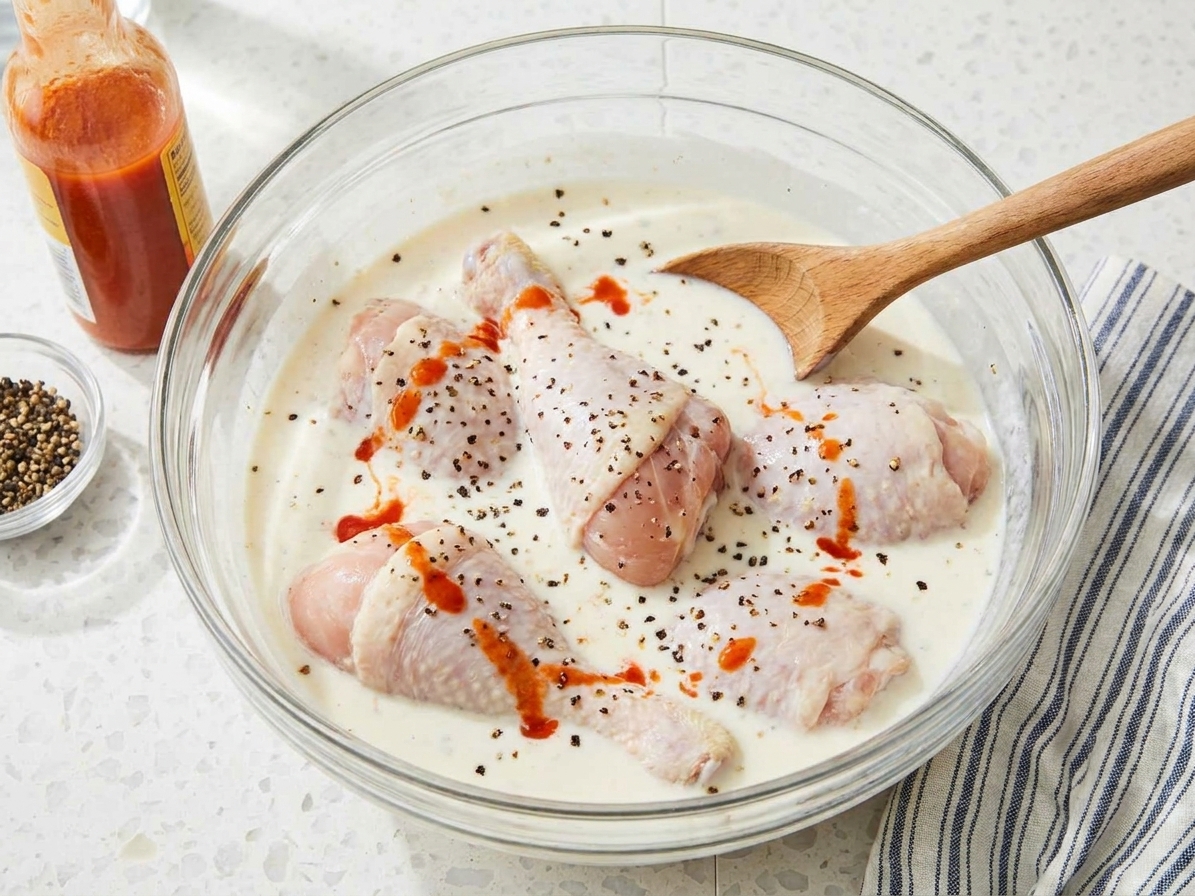
Raw chicken pieces soaking in a bowl of buttermilk with visible black pepper and hot sauce on a kitchen counter

Why It Works

  • Buttermilk does the heavy lifting: It tenderizes and helps the flour cling, so you get a crust that stays put.
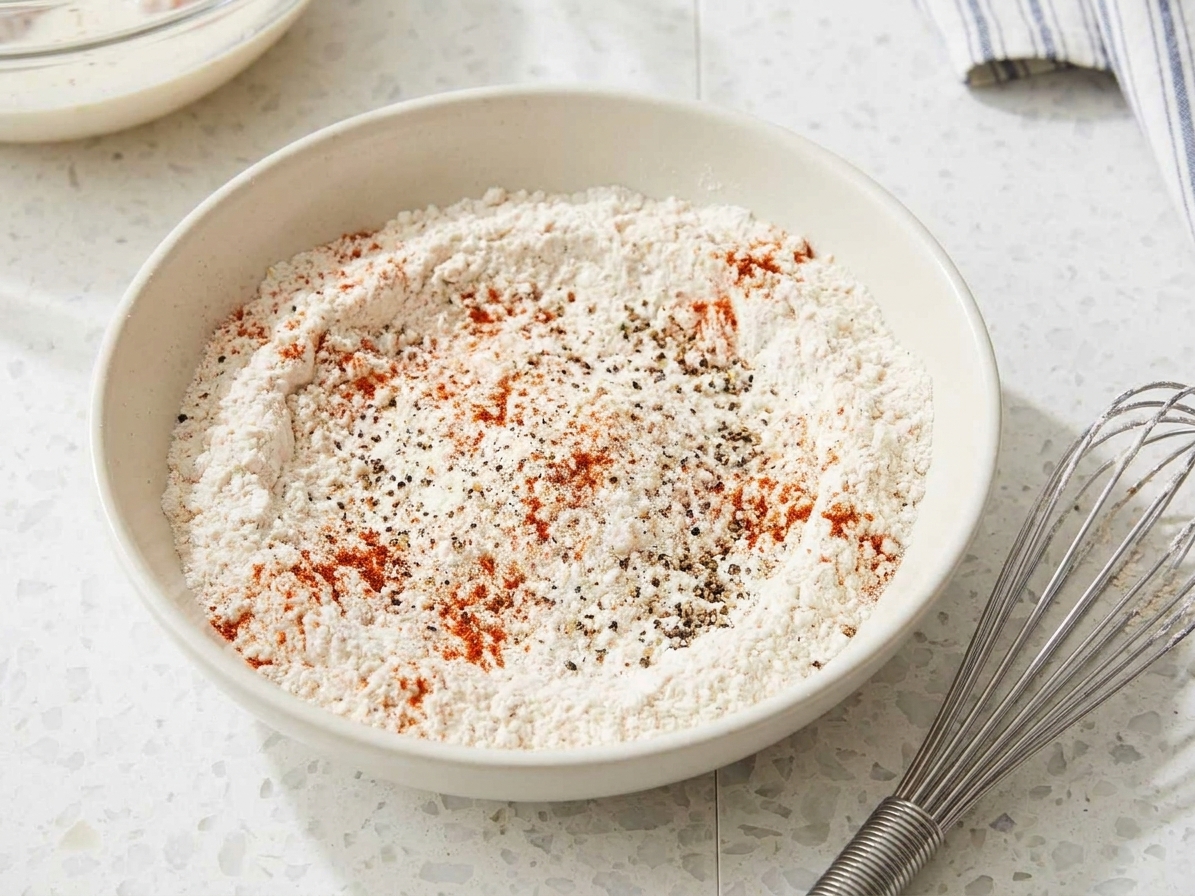
  • Two-stage breading for craggy crunch: A little buttermilk in the flour makes those crispy, nubbly bits that fry up extra crunchy.
  • Temperature control = juicy chicken: Frying at 325°F to 350°F cooks the chicken through while keeping the coating golden, not bitter.
  • Rest before frying: A short rest after dredging sets the coating so it does not slide off in the oil.

Pairs Well With

Storage Tips

Refrigerate: Let chicken cool completely, then store in an airtight container lined with a paper towel. Refrigerate up to 4 days.

Reheat for crispiness (best method): Bake on a wire rack set over a sheet pan at 400°F until hot and crisp, 12 to 18 minutes (thicker pieces may take longer). If you have an air fryer, reheat at 375°F for 6 to 10 minutes.

Avoid the microwave if you can: It turns the crust soft. If you must, microwave briefly to warm the center, then finish in a hot oven or skillet to re-crisp.

Freeze: Wrap each piece tightly, then freeze in a bag up to 2 months. Thaw overnight in the fridge before reheating in the oven.

Common Questions

Do I have to use buttermilk?

Buttermilk is the vibe, but you have options. In a pinch, mix 2 cups milk with 2 tablespoons lemon juice or white vinegar, let it sit 5 to 10 minutes, then use it like buttermilk. It will not be quite as thick or tangy as the real deal, but it still helps tenderize and season. Another good swap: use 1 1/2 cups plain yogurt or kefir thinned with 1/2 cup milk.

Why is my breading falling off?

Usually one of three things: the oil is not hot enough, you moved the chicken too early, or the coating did not have time to set. Let dredged chicken rest 10 to 15 minutes before frying, fry at 325°F to 350°F, and do not flip until the underside is deeply golden and releases easily.

How do I know when fried chicken is done?

Use a thermometer. The USDA safe minimum for poultry is 165°F (including dark meat). That said, thighs and drumsticks get especially tender and juicy when you let them go to 175°F to 185°F. Breasts are best at 165°F. Insert the thermometer into the thickest part without hitting bone, and if you are frying mixed pieces, check more than one piece in each batch.

Can I use boneless chicken?

Yes. Boneless thighs and breasts work, but reduce fry time and watch the oil temperature closely. Boneless pieces can go from juicy to dry fast.

Can I make it less spicy for kids?

Totally. Skip cayenne and hot sauce, keep the paprika and garlic powder for flavor. Serve hot sauce on the side so everyone wins.

Any food safety tips?

Keep raw chicken and the buttermilk brine away from anything you will eat without cooking. Wash hands, knives, boards, and counters well, and discard leftover brine. When you are done frying, cool the oil completely in the pan before straining or storing it.
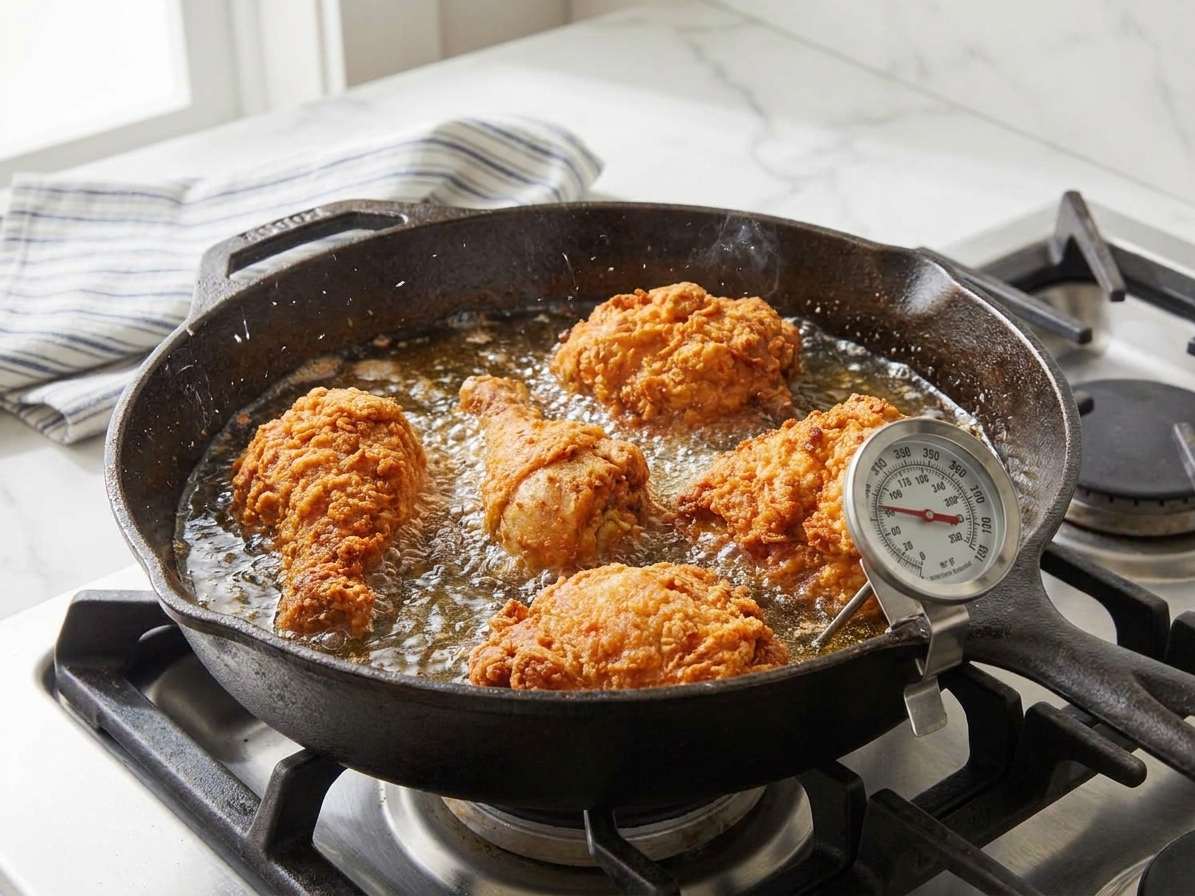

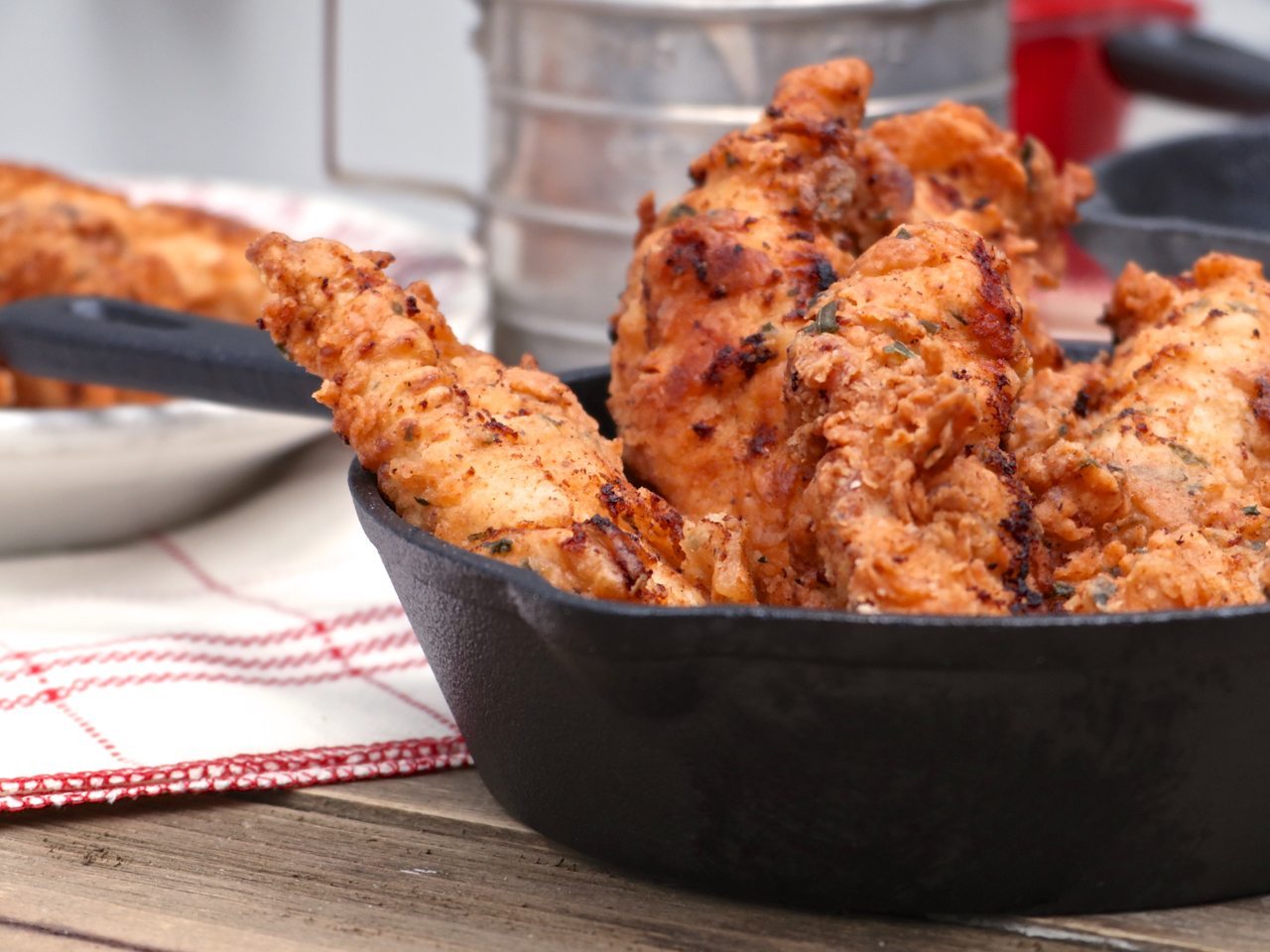
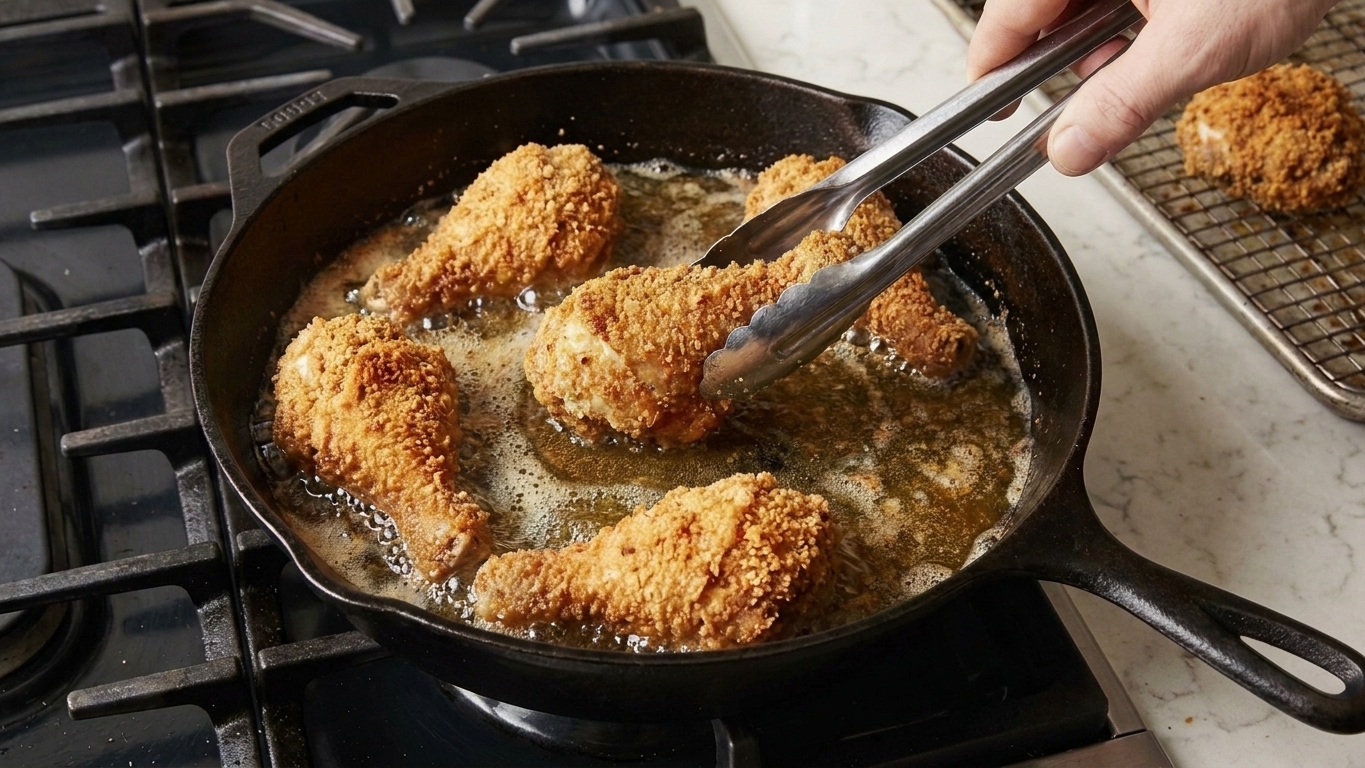
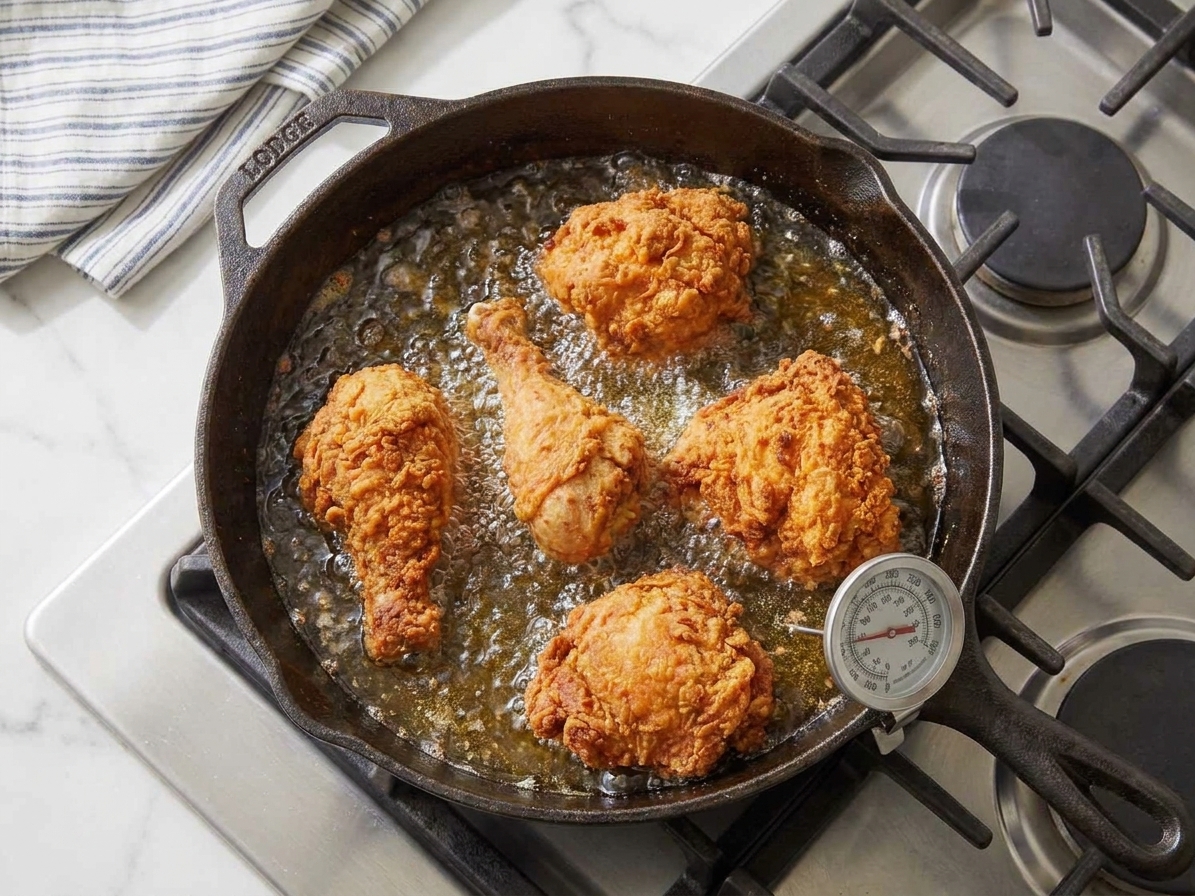
Chicken pieces frying in a cast iron skillet with bubbling oil on a stovetop, with a thermometer clipped to the side

I used to think fried chicken required some secret handshake passed down through generations. Then I started treating it like any other cooking project: control the salt, control the heat, taste what you can, and do not rush the part where patience pays you back.

The first time I nailed it, I remember tapping the crust with my tongs and hearing that little crackle. That was the moment. Now it’s my favorite “I want cozy, I want crunchy, I want dinner to feel like a win” meal, especially when I am cooking for people and I want the kitchen to smell like something wonderful is happening.