Do I have to use buttermilk?
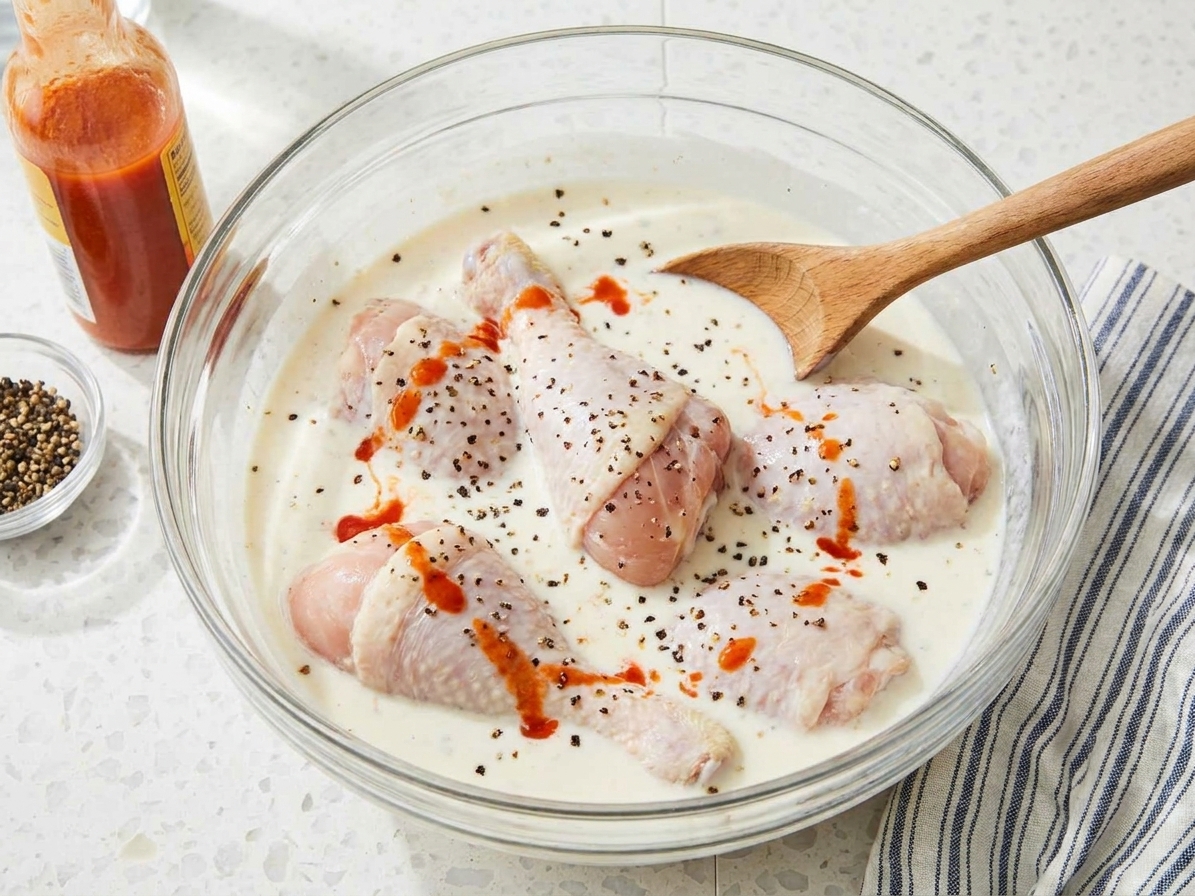
Buttermilk is the vibe, but you have options. In a pinch, mix 2 cups milk with 2 tablespoons lemon juice or white vinegar, let it sit 5 to 10 minutes, then use it like buttermilk. It will not be quite as thick or tangy as the real deal, but it still helps tenderize and season. Another good swap: use 1 1/2 cups plain yogurt or kefir thinned with 1/2 cup milk.
Why is my breading falling off?
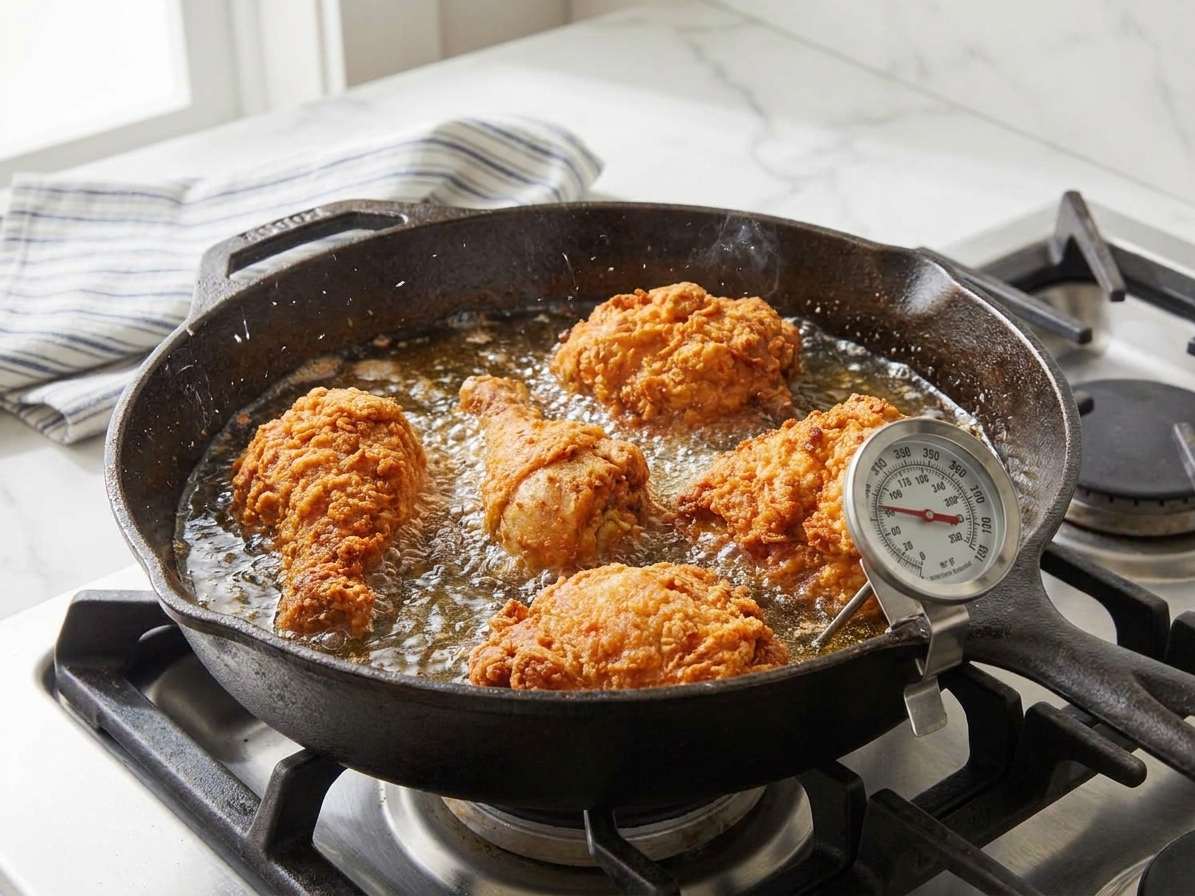
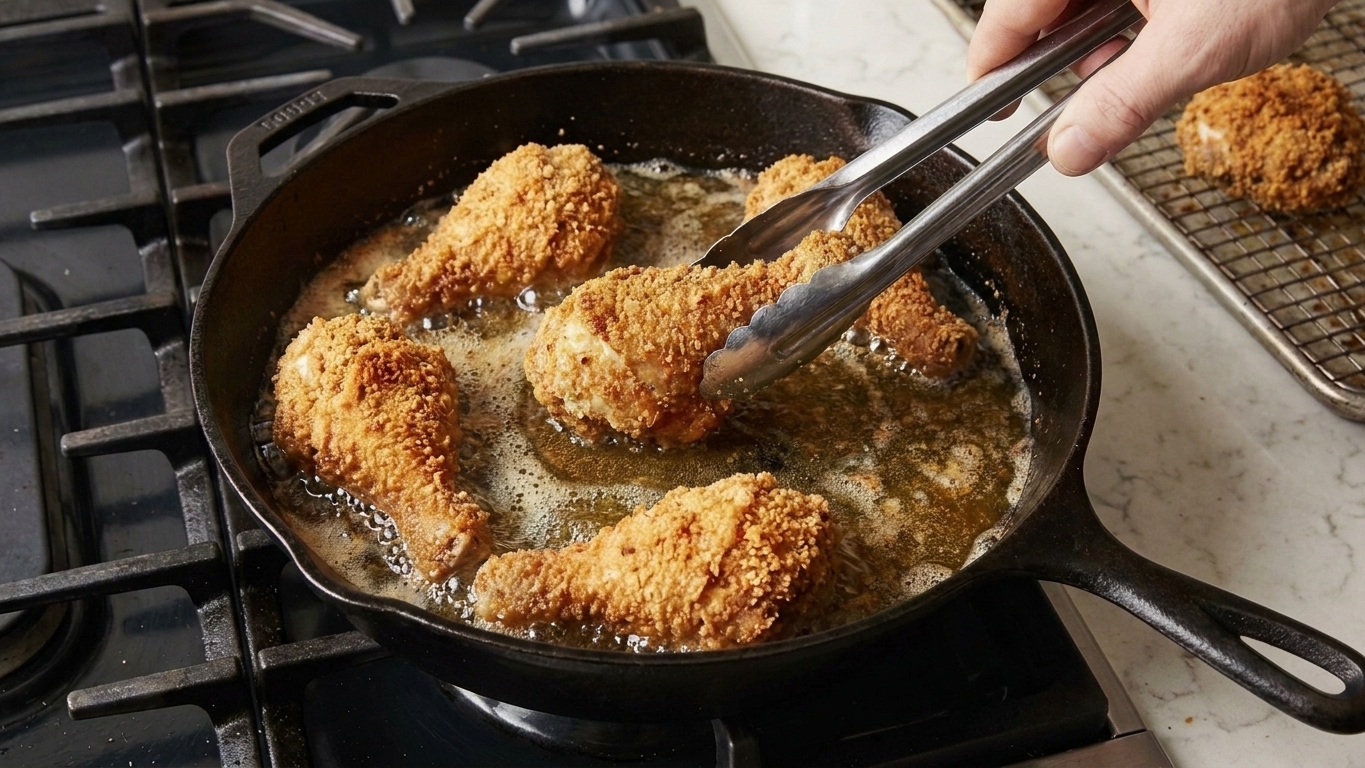
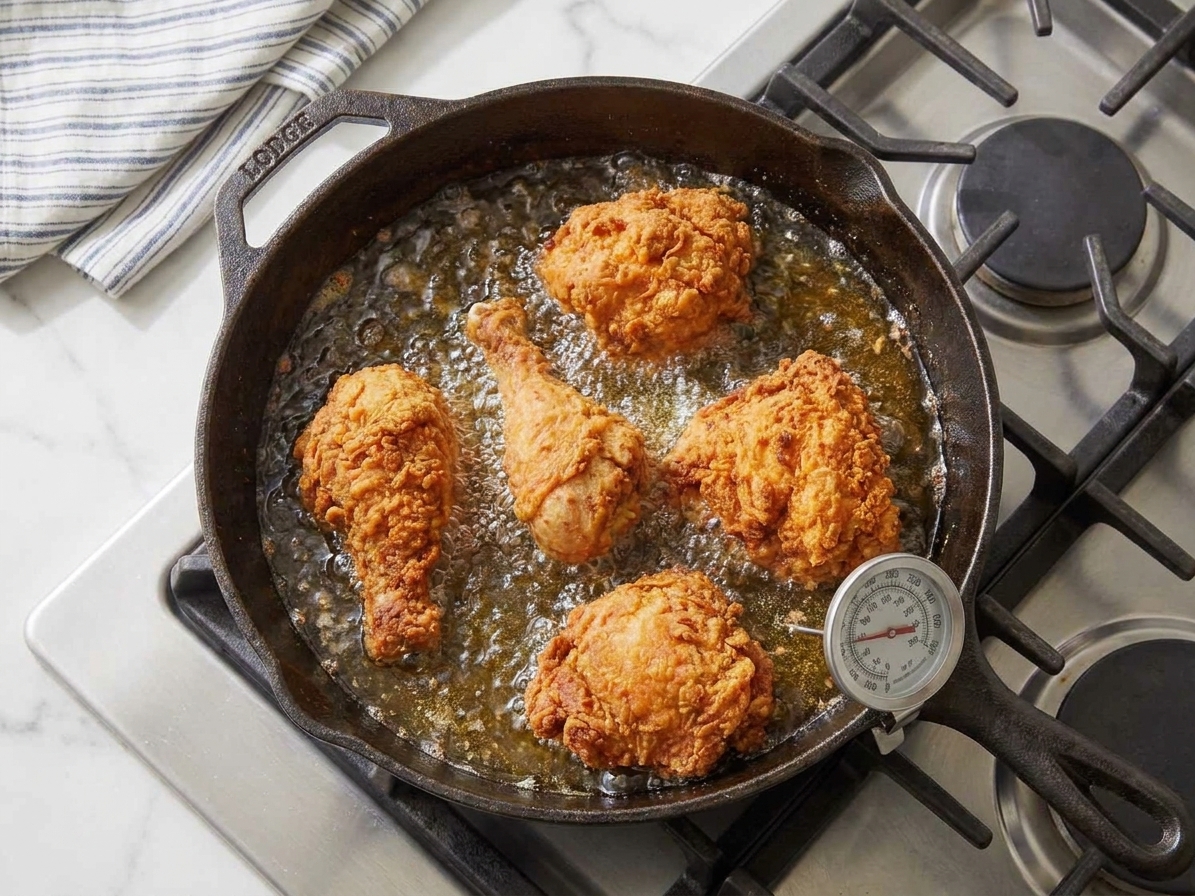
Usually one of three things: the oil is not hot enough, you moved the chicken too early, or the coating did not have time to set. Let dredged chicken rest 10 to 15 minutes before frying, fry at 325°F to 350°F, and do not flip until the underside is deeply golden and releases easily.
How do I know when fried chicken is done?
Use a thermometer. The USDA safe minimum for poultry is 165°F (including dark meat). That said, thighs and drumsticks get especially tender and juicy when you let them go to 175°F to 185°F. Breasts are best at 165°F. Insert the thermometer into the thickest part without hitting bone, and if you are frying mixed pieces, check more than one piece in each batch.
Can I use boneless chicken?
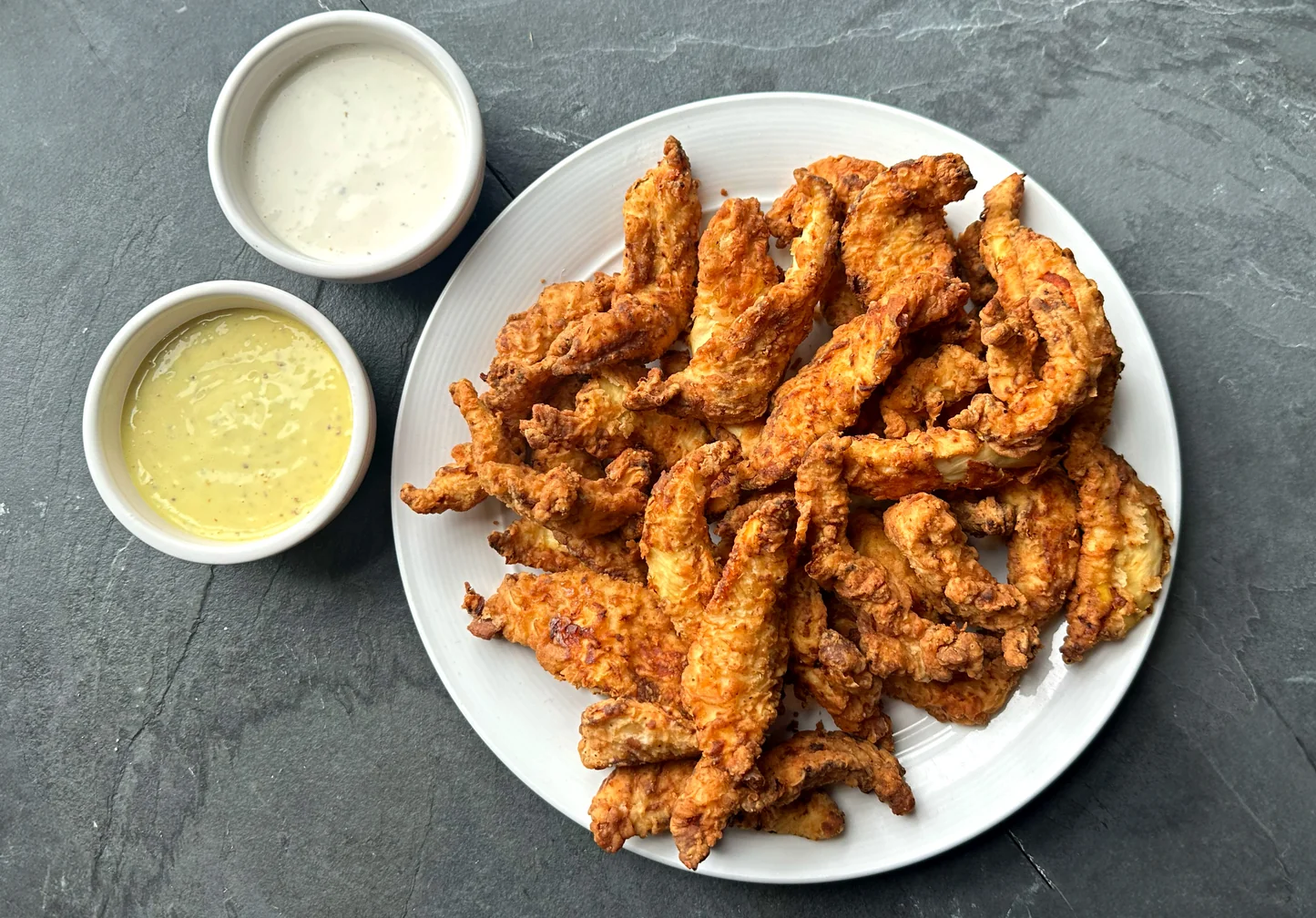
Yes. Boneless thighs and breasts work, but reduce fry time and watch the oil temperature closely. Boneless pieces can go from juicy to dry fast.
Can I make it less spicy for kids?
Totally. Skip cayenne and hot sauce, keep the paprika and garlic powder for flavor. Serve hot sauce on the side so everyone wins.
Any food safety tips?
Keep raw chicken and the buttermilk brine away from anything you will eat without cooking. Wash hands, knives, boards, and counters well, and discard leftover brine. When you are done frying, cool the oil completely in the pan before straining or storing it.