Mom's Best Recipes
Recipe

Struffoli (Italian Honey Balls)

Crispy mini dough balls tossed in a warm honey-citrus glaze and piled into a festive mound with sprinkles and almonds.

Author By Matt Campbell
4.8
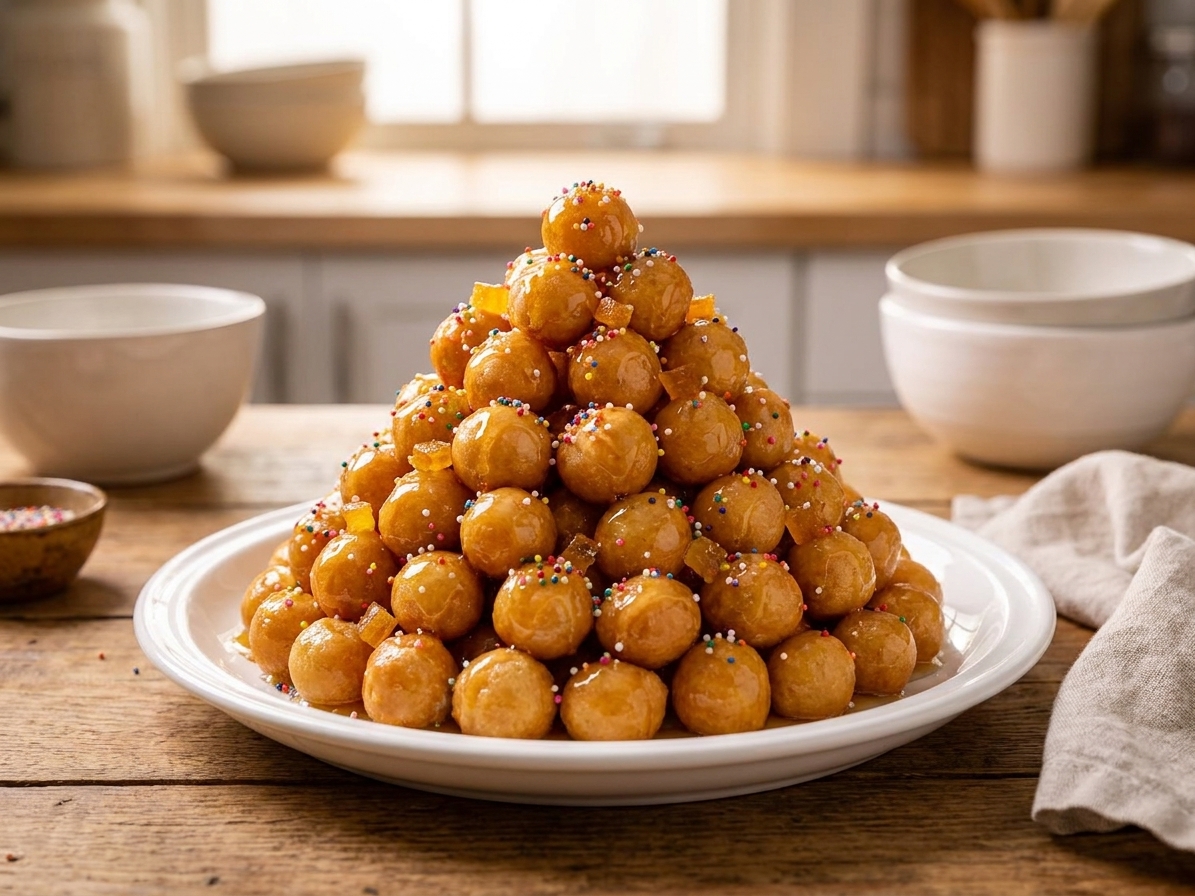
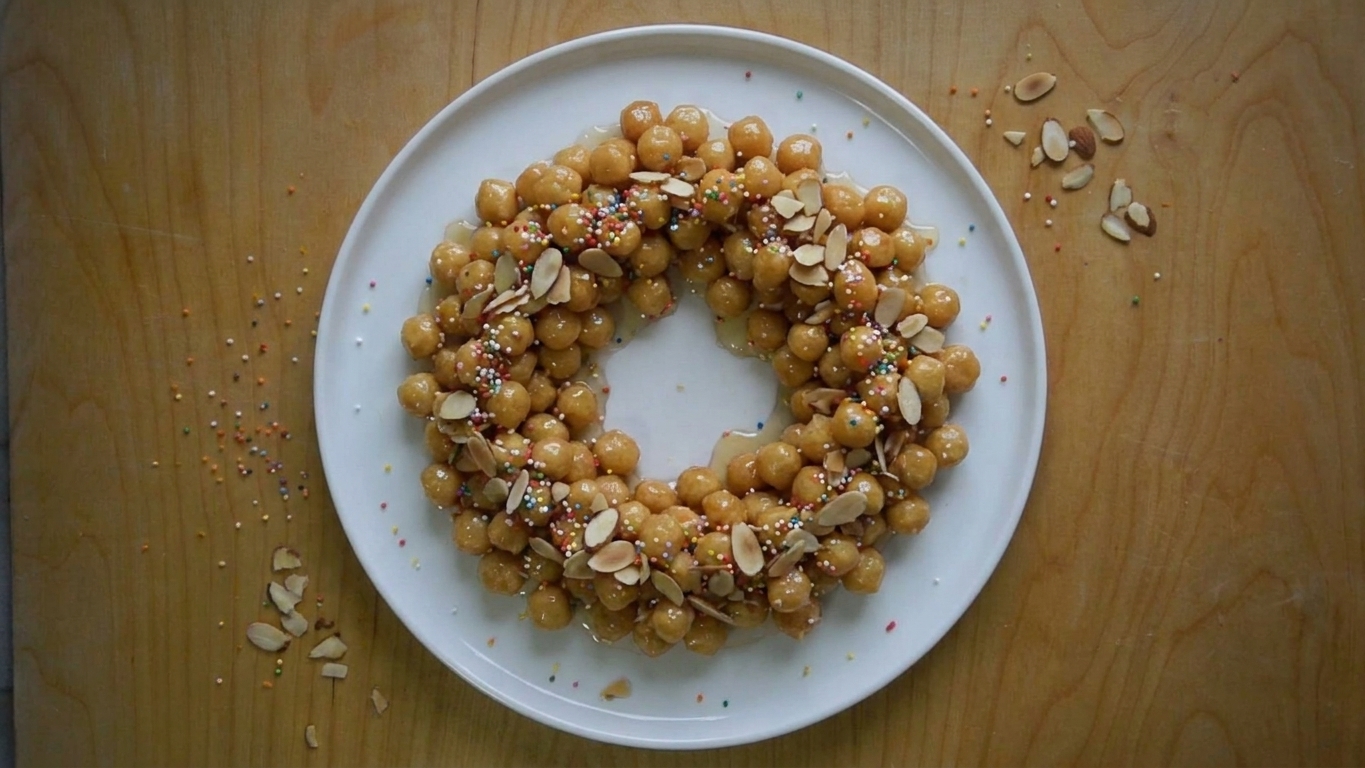
A glossy mound of Italian struffoli (tiny honey-glazed fried dough balls) piled on a white platter with colorful sprinkles and toasted sliced almonds on a warm kitchen table

Struffoli is the kind of dessert that makes people hover near the platter like it is their job. Tiny fried dough balls, crisp on the outside and tender inside, get tossed in warm honey that smells like citrus and holidays. Then you stack the whole thing into a sticky, sparkly mound and somehow it looks fancy even though it is basically the world’s most charming snack pile.

This version keeps things classic and doable. No mystery ingredients, no deep fryer required. Just a sturdy pot, a thermometer if you have one, and the willingness to taste one for quality control as you go. Actually, two. It is tradition.

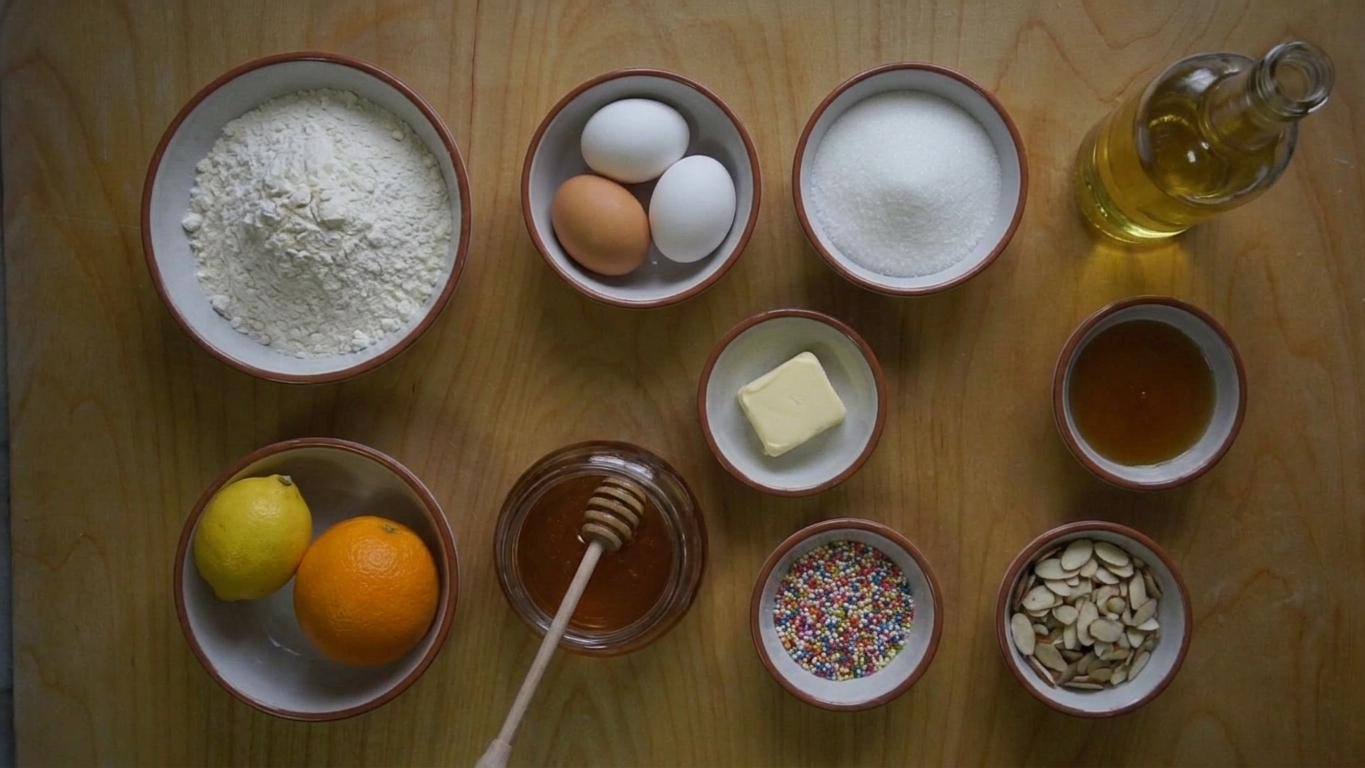
A baking setup on a kitchen counter with flour, eggs, sugar, butter, lemons, orange, honey, sprinkles, and sliced almonds arranged in small bowls

Why It Works

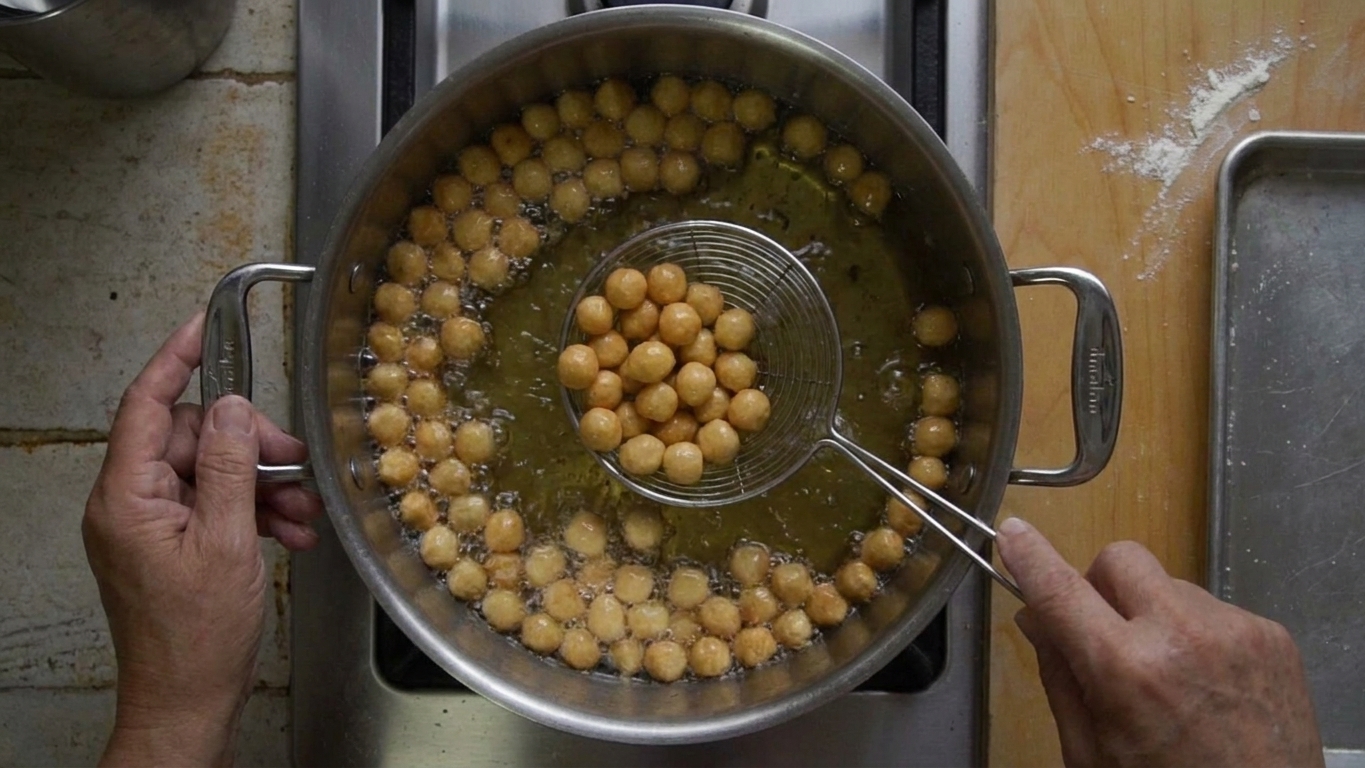
  • Crisp, not greasy: Small dough balls fry quickly and evenly. Keeping the oil around 350°F helps them stay light.
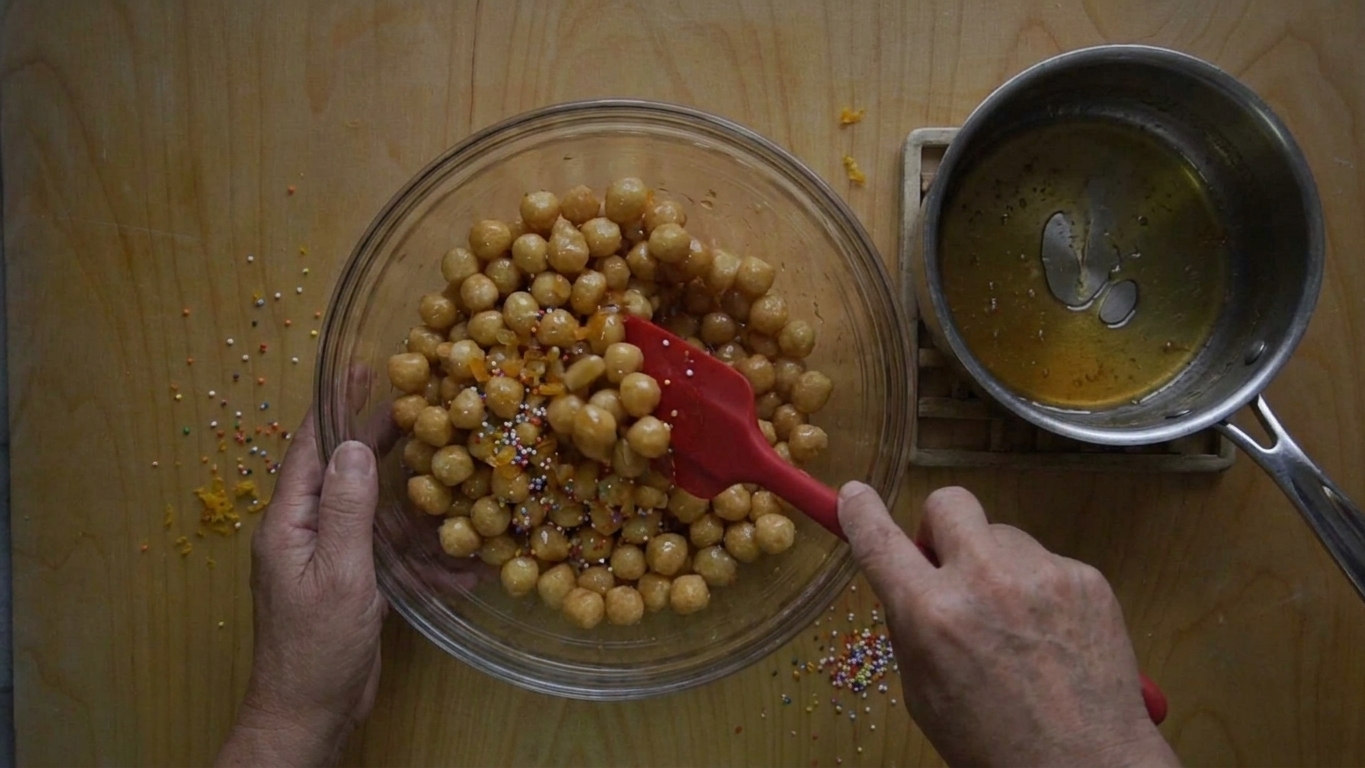
  • Glossy honey coating that sets: Warming honey with a little sugar and citrus gives you a glaze that clings and turns shiny as it cools. (Sugar is optional, but it helps.)
  • Make-ahead friendly: You can fry the dough balls in advance, then glaze and assemble when you are ready to serve.
  • Big holiday energy with low stress: Pile it high, scatter sprinkles, and it looks like you tried extremely hard.

Pairs Well With

Storage Tips

Room temperature (best for texture): Store struffoli in a loosely covered container at cool room temperature for up to 2 days. If you seal it completely airtight, the glaze can soften the crisp edges faster.

Best-quality window: It is typically still enjoyable up to 4 days at room temp, but expect it to get chewier as it sits. If your kitchen is very warm or humid, aim to finish it sooner.

Make-ahead strategy: Fry the dough balls up to 2 days ahead and store them in a container at room temp. Glaze and assemble the day you serve for the best texture.

Freezing: Freeze un-glazed fried dough balls in a zip-top bag for up to 1 month for best quality. Thaw at room temp, crisp for 5 to 7 minutes in a 325°F oven, then glaze. Do not freeze the honey-coated mound. It gets weird.

Common Questions

Do I have to use a thermometer?

No, but it makes life easier. Aim for about 350°F. Without one, test a single dough ball: it should bubble steadily and turn golden in about 1 to 2 minutes depending on size and how steady your heat is. If it goes dark in 20 seconds, the oil is too hot. If it is still pale after 2 minutes, the oil is too cool.

Why did my struffoli soak up oil?

Usually the oil was too cool, or the pot got crowded and the temperature dropped. Fry in small batches and let the oil return to temp between rounds. Also keep the pieces small. Bigger nuggets need longer fry time and can get oily.

Can I bake struffoli instead of frying?

You can, but it will be more like crisp little cookies than classic struffoli. If you want to try it, bake at 375°F until golden, about 10 to 14 minutes, then glaze as usual. Frying gives the signature texture.

What oil should I use for frying?

Go with a neutral, high-heat oil like canola, vegetable, or peanut. Save olive oil for the salad. You want something with a higher smoke point and a clean flavor so the honey and citrus can do their thing.

What honey should I use?

Any good honey works. Mild clover is classic and kid-friendly. Orange blossom is incredible here if you have it. If your honey is super dark and intense, it can dominate, so add extra citrus zest to balance.

Is the sugar in the glaze traditional?

Some families use just honey. I add a little sugar because it helps the coating set up shiny and clingy. If you want to keep it extra classic, you can skip it and simply warm the honey with the citrus and salt.

What are the traditional toppings?

Rainbow sprinkles are the most common. Italian confetti sprinkles (tiny nonpareils) are also classic. Candied citrus, candied citron, toasted almonds, or tiny dragees show up depending on family and region.

Can I make it gluten-free?

It is tricky because the dough relies on gluten for structure in small pieces. A good 1:1 gluten-free baking blend can work, but expect a more delicate dough and slightly different crunch. Chill the dough well and handle gently. If your blend does not include a binder, add a small amount of xanthan (follow the blend or package guidance) to help it hold together.

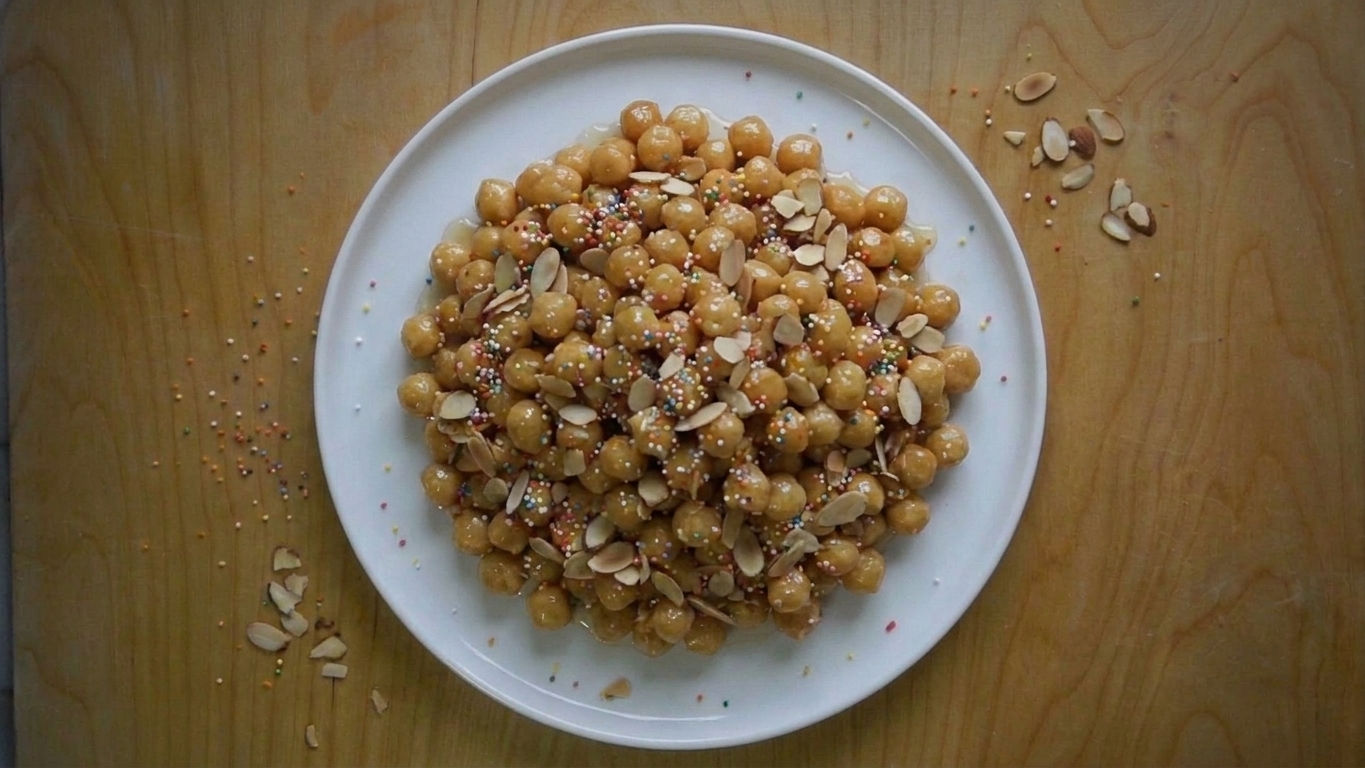
The first time I made struffoli, I thought, “These are just tiny dough balls. How chaotic can this get?” Very. Flour on the counter, honey on the spoon, sprinkles migrating like they pay rent. But once you toss those warm bites into the citrusy honey and you see that glossy pile come together, it feels like kitchen magic you can actually pull off on a random weekend. Also, I learned an important truth: if you do not sample one during frying, someone in your house will. Protect your quality control.