Mom's Best Recipes
Recipe

Tom Yum Thai Soup

Hot, sour, and wildly comforting with shrimp, mushrooms, and an aromatic lemongrass broth. Includes a creamy option and simple grocery store swaps.

Author By Matt Campbell
4.8
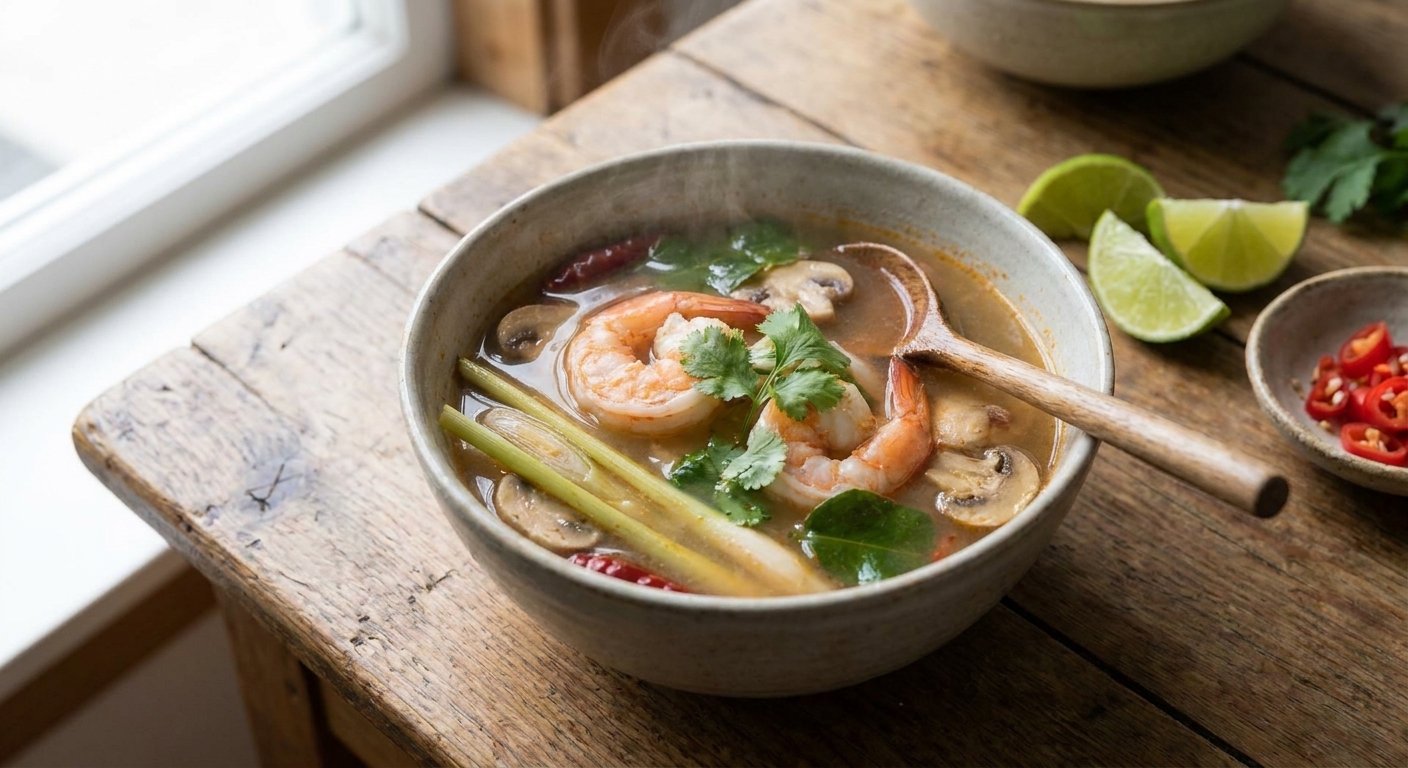
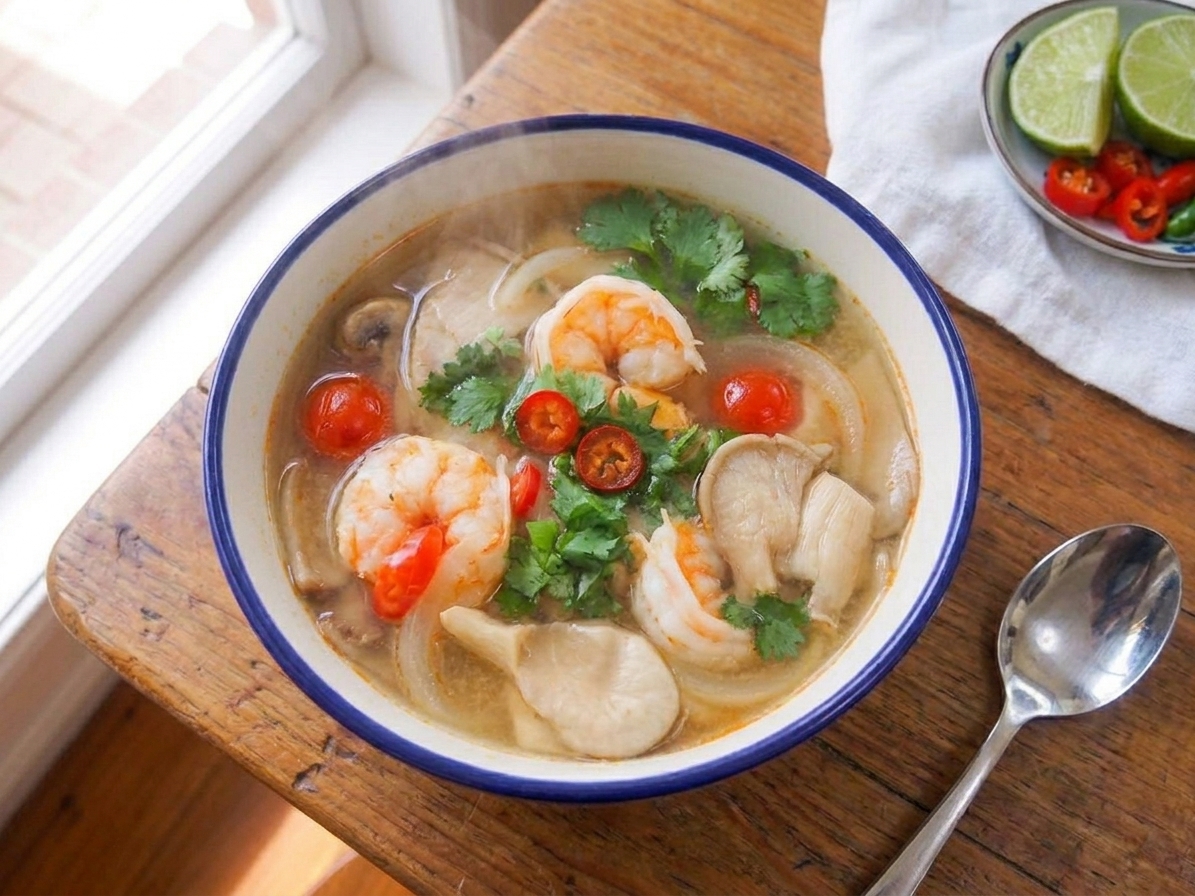
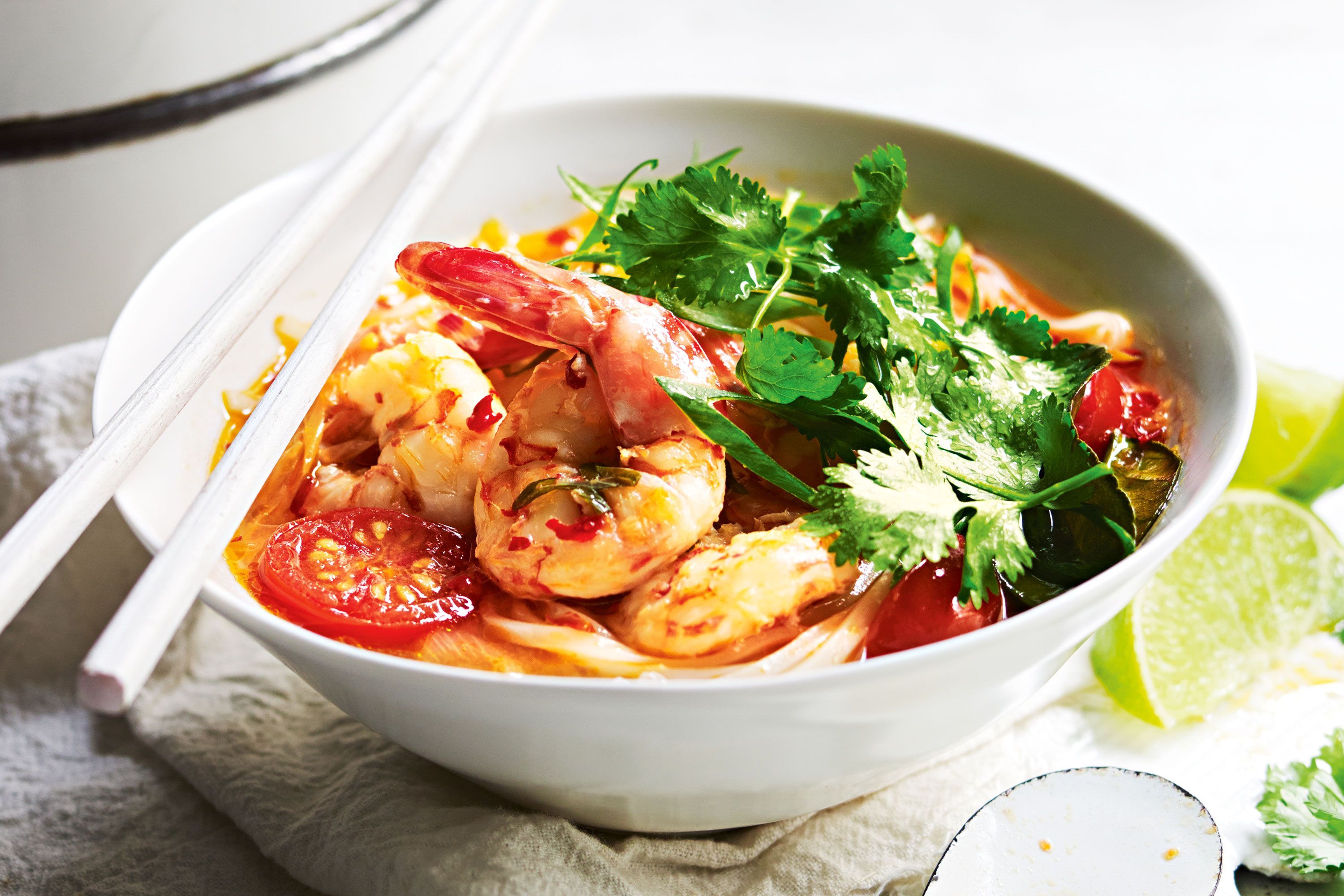
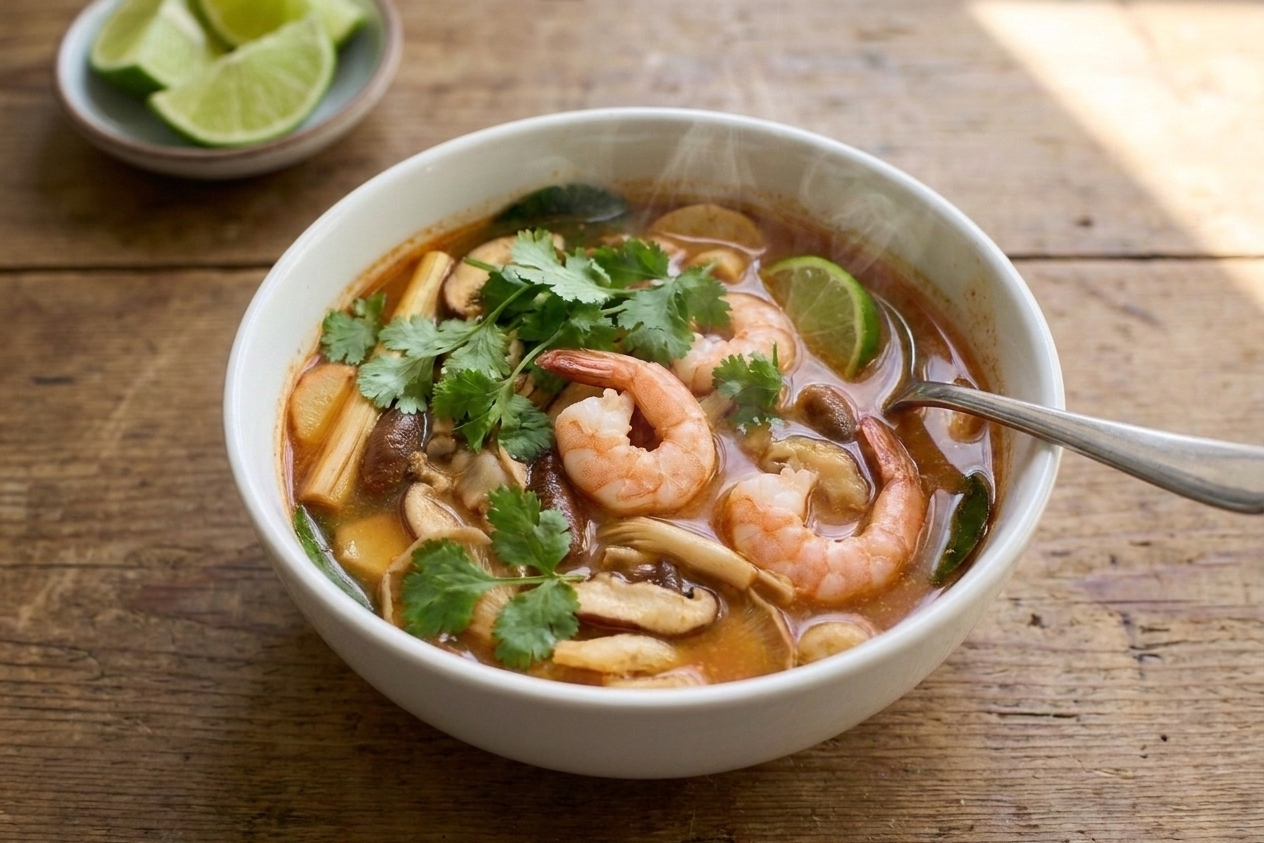
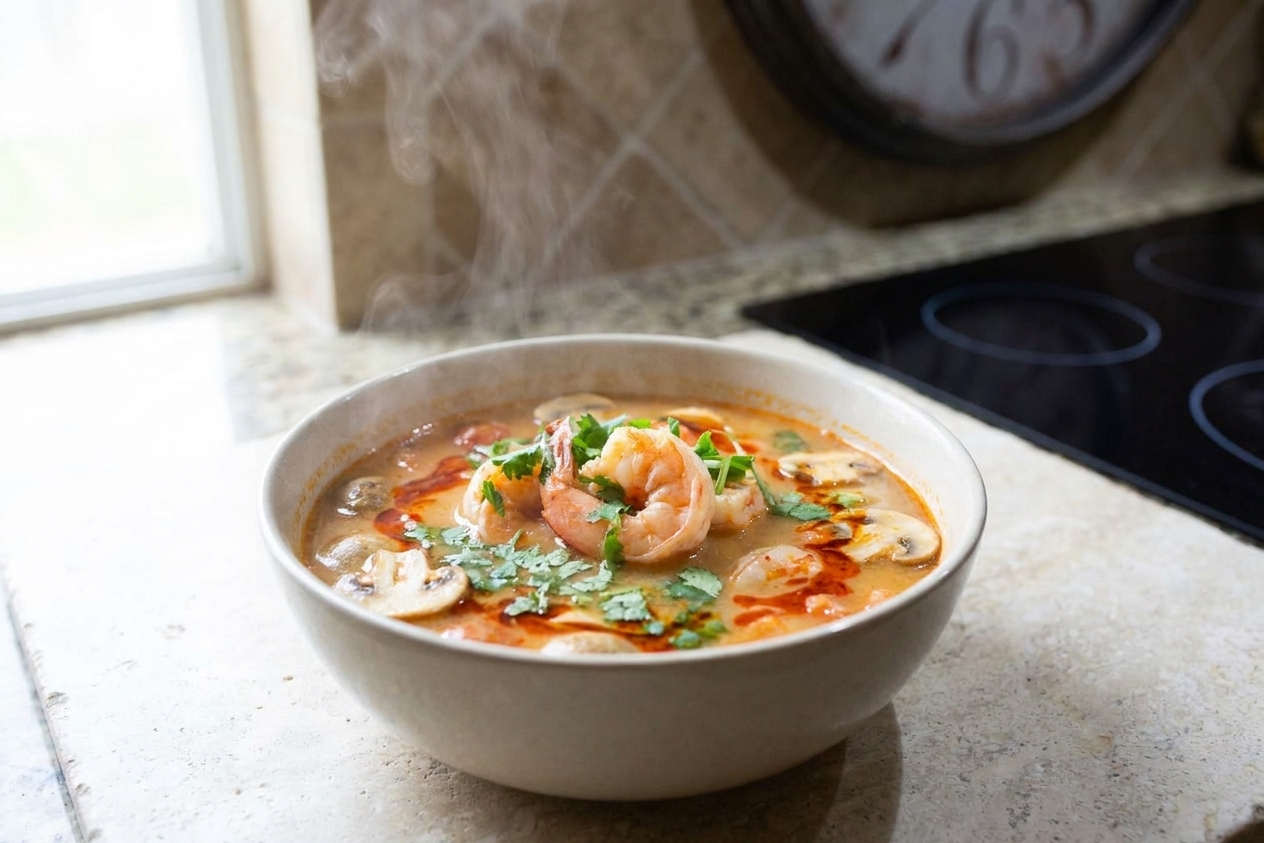
A steaming bowl of tom yum soup with shrimp, mushrooms, cilantro, and red chili slices on a rustic table with lime wedges, natural kitchen lighting

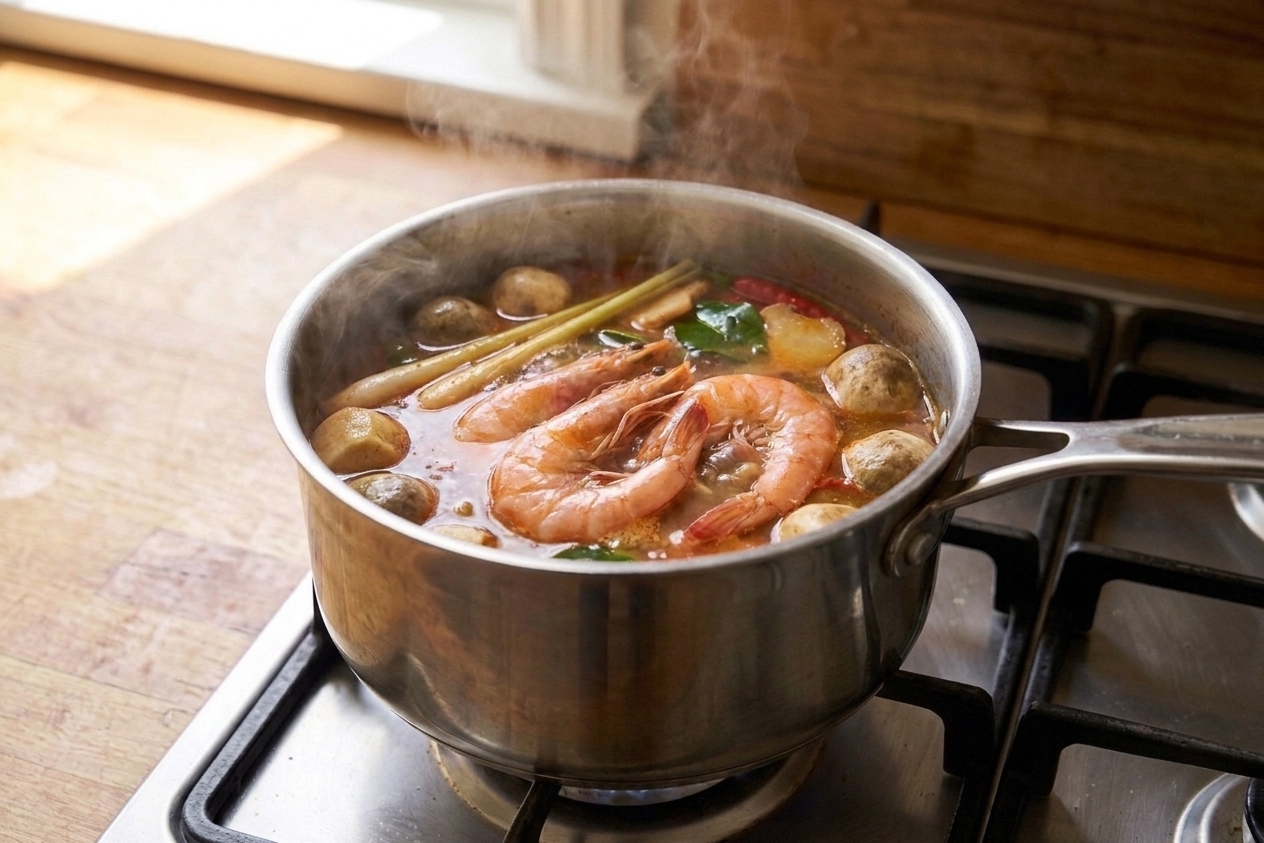
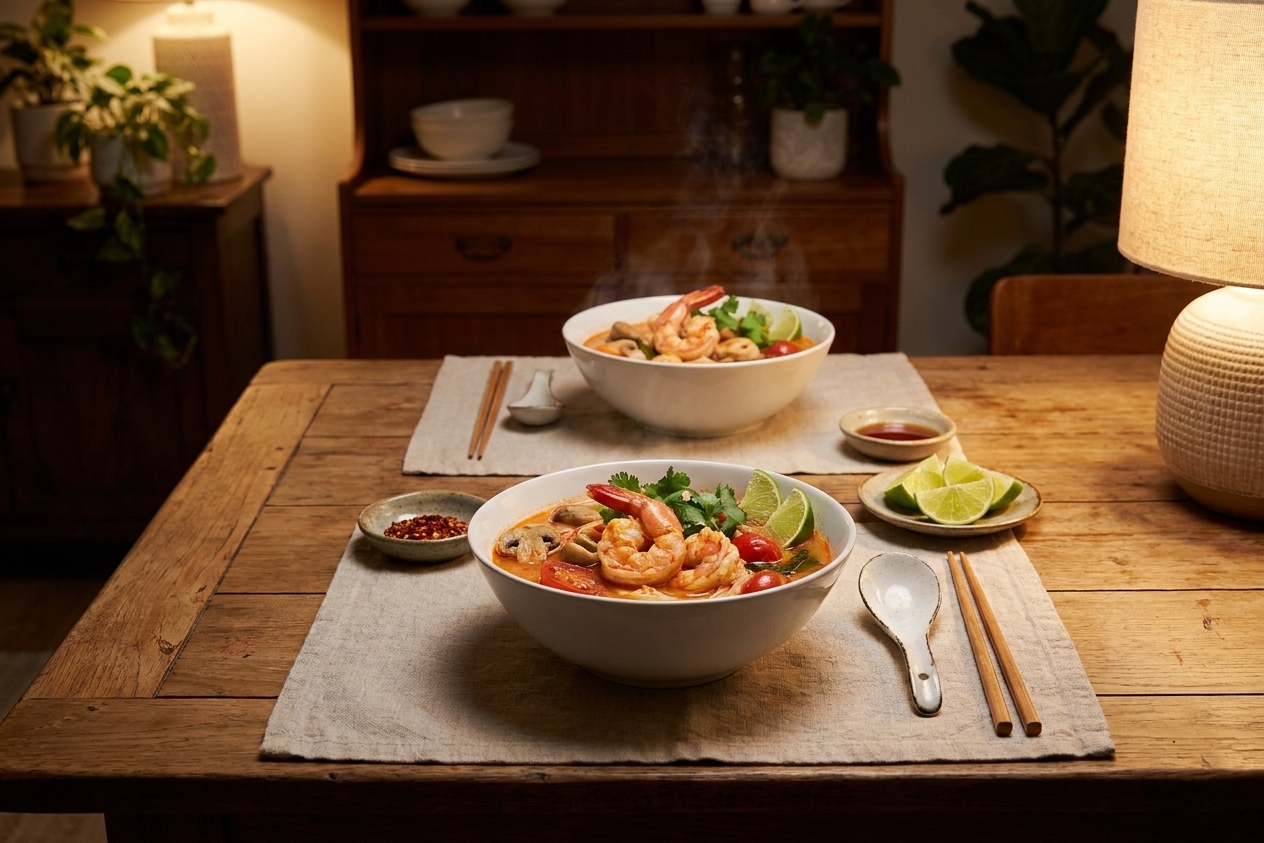
Tom Yum is the soup I make when I want my dinner to wake up. It is bright and citrusy, spicy but light on its feet, and built on that classic Thai balance of salty, sour, spicy, and a little sweet. The broth smells like lemongrass and lime leaves, and the whole thing comes together fast enough for a weeknight, but tastes like you tried harder than you did.

My version keeps the ingredients accessible without flattening the flavor. If you have access to real galangal and makrut lime leaves, amazing. If not, I will show you the swaps that still get you a legit, craveable bowl. You can keep it clear and punchy or add a splash of evaporated milk for the creamy Tom Yum Nam Khon vibe. Coconut milk also works if that is what you love or have on hand.
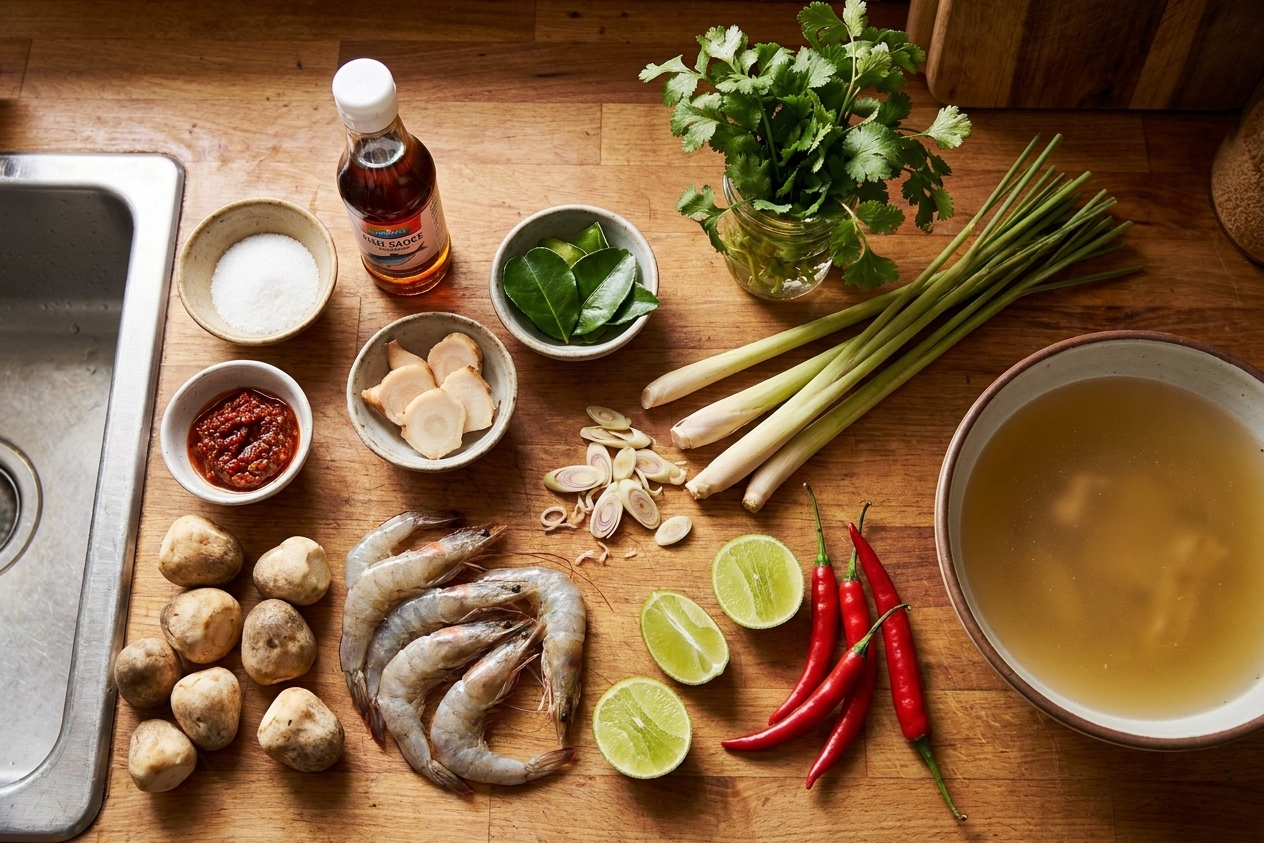
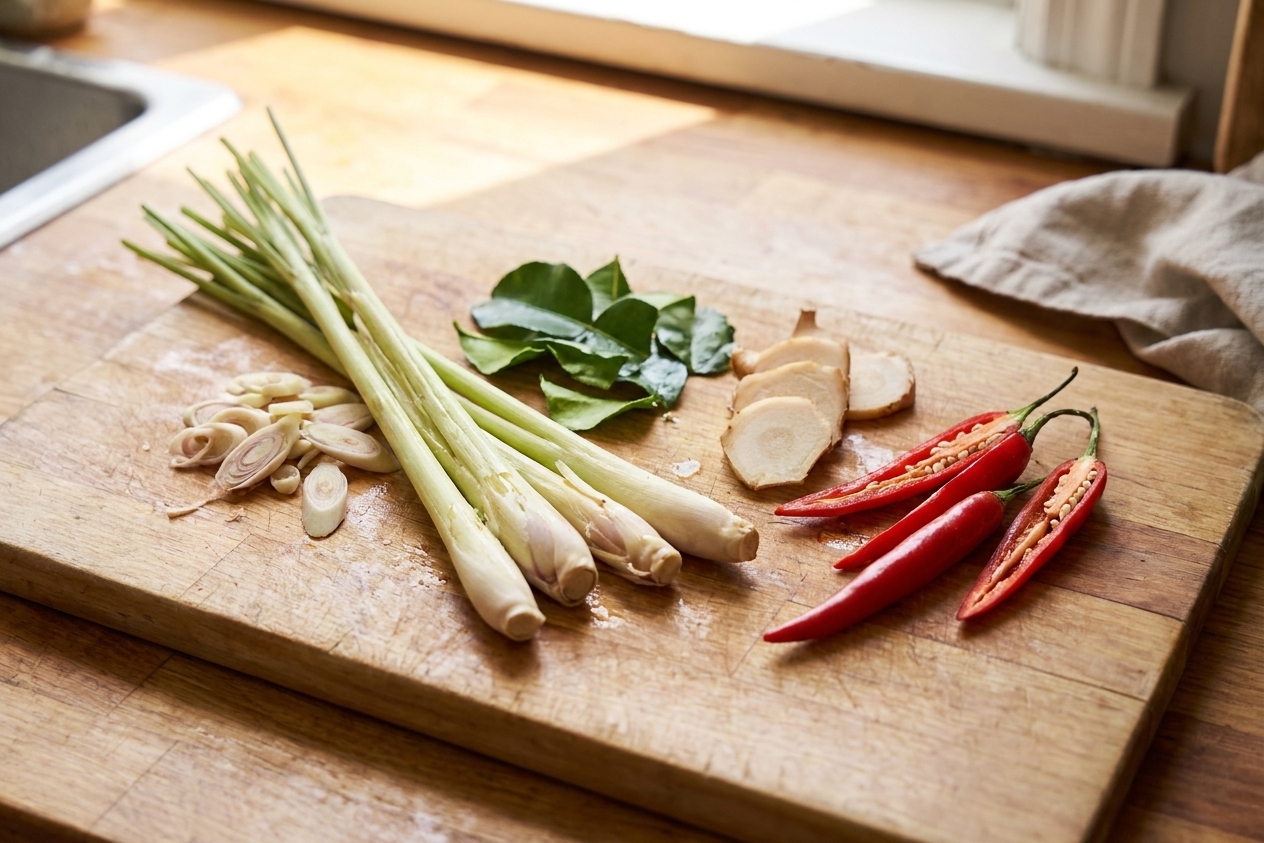
Tom yum ingredients arranged on a kitchen counter including shrimp, mushrooms, lemongrass, lime, chili, fish sauce, cilantro, and broth ingredients in small bowls, warm overhead lighting

Why It Works

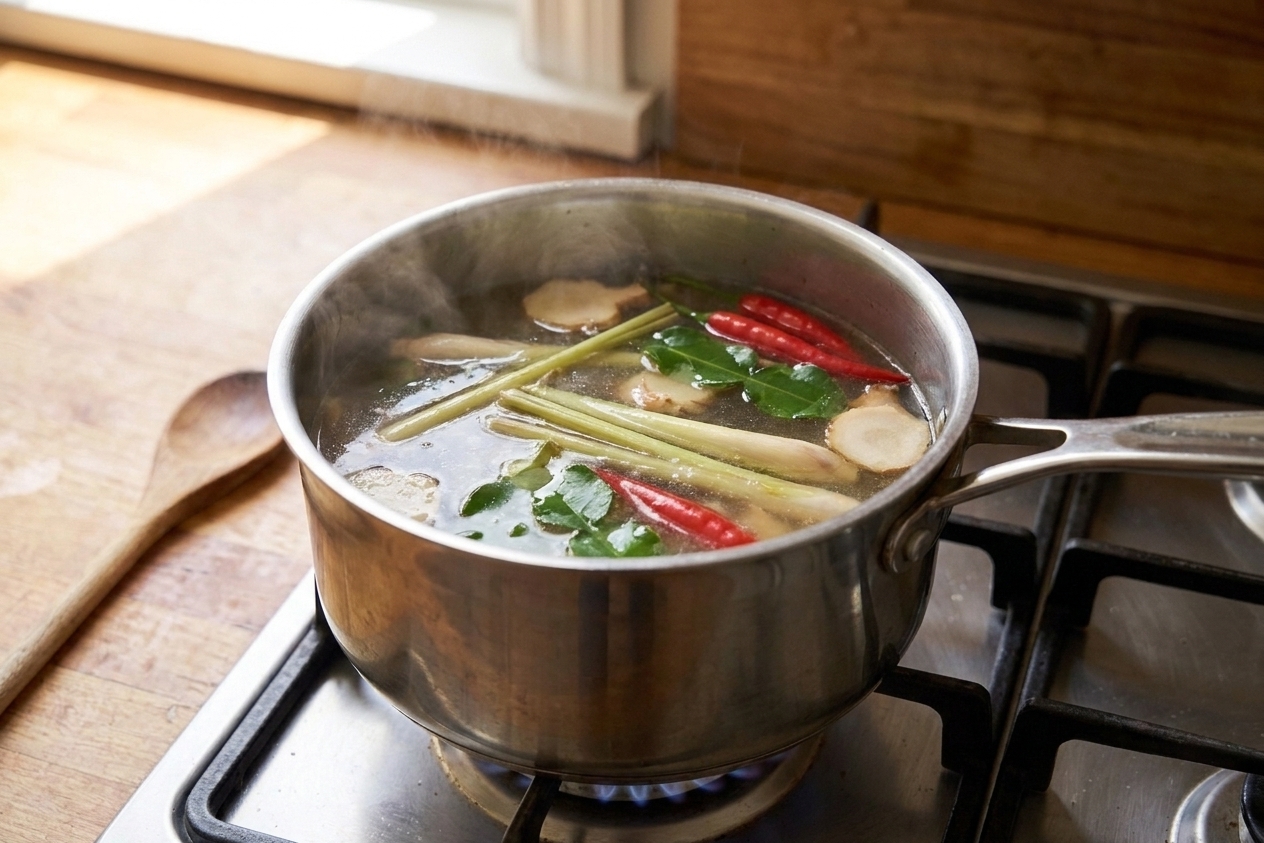
  • Aromatics do the heavy lifting: lemongrass, lime leaves, and ginger or galangal infuse the broth quickly so you get big flavor without hours of simmering.
  • Balance, then balance again: you will adjust fish sauce (salty) and lime juice (sour) at the end so it tastes lively, not flat.
  • Fast cooking proteins: shrimp goes in last so it stays tender instead of rubbery.
  • Clear or creamy, your call: the base is classic and sharp; the creamy option rounds the edges without losing that Tom Yum punch.

Pairs Well With

Storage Tips

Fridge: Store leftovers in an airtight container for up to 2 days. Tom Yum is best fresh because the lime and herbs fade, and shrimp can overcook when reheated.

Reheat gently: Warm on the stove over low to medium heat until just hot. Avoid a hard boil.

Smart move for meal prep: If you know you will have leftovers, pull out the portion you want to store before adding shrimp. Add fresh shrimp when reheating and let it poach for 2 to 3 minutes.

Freezing: I do not love freezing Tom Yum once it has lime juice and herbs in it. If you must, freeze the strained broth base (without mushrooms, shrimp, or lime juice) up to 2 months. Thaw, reheat, then add fresh mushrooms, shrimp, and lime juice.

Common Questions

Is Tom Yum spicy?

It can be, but you control it. Start with 1 to 2 Thai chiles (or a small spoon of chile paste), then taste. You want heat that supports the sour broth, not heat that nukes your taste buds.

What is the difference between Tom Yum and Tom Kha?

Tom Yum is hot and sour, usually clear or lightly creamy. Tom Kha is coconut milk forward and gentler, with galangal as a main character. Both are aromatic, but Tom Kha is richer and sweeter.

Can I make Tom Yum without fish sauce?

Yes. Swap in soy sauce or tamari for saltiness, and add a little extra lime plus a tiny pinch of sugar to round it out. It will taste different, but still delicious.

What can I use instead of galangal and makrut lime leaves?

For galangal, use ginger (a little less, since it is sharper). For lime leaves, use 1 to 2 tsp lime zest plus a few thin strips of lime peel (no white pith) added while simmering, then remove before serving. It is not a perfect match, but it gets you in the right neighborhood.

Do you eat the lemongrass and lime leaves?

Nope. Lemongrass stalks, lime leaves, and galangal slices are there to perfume the broth. They are not meant to be eaten. Fish them out with tongs or strain the broth before serving if you want a smoother, restaurant-style bowl.

Why does my Tom Yum taste flat?

Usually it needs one of these: more lime juice for brightness, more fish sauce for savory depth and salt, or a tiny pinch of sugar to smooth the edges. Add in small amounts and taste after each change.

The first time I made Tom Yum at home, I treated it like a regular soup. I simmered too long, I dumped everything in at once, and I wondered why the shrimp tasted like erasers. The fix was simple and kind of empowering: build an aromatic broth fast, keep the simmer gentle, and add the delicate stuff at the end. Now it is one of my favorite “I want takeout, but I also want to be proud of myself” dinners. Loud flavors, low drama, lots of slurping.