Common Questions
What is the difference between tomato soup and tomato bisque?
Tomato soup can be chunky or smooth and often stays lighter. Tomato bisque (in home cooking) usually means smooth and creamy blended tomato soup, with a richer mouthfeel from cream, butter, or sometimes a thickener. Classic French-style bisque is traditionally shellfish-based, but tomato “bisque” has become the cozy, creamy tomato version most of us mean.
Can I make tomato bisque without cream?
Yes. Swap the heavy cream for full-fat coconut milk or leave it out and finish with a drizzle of olive oil. The soup will be a little less plush, but still very good.
Do I have to strain the soup?
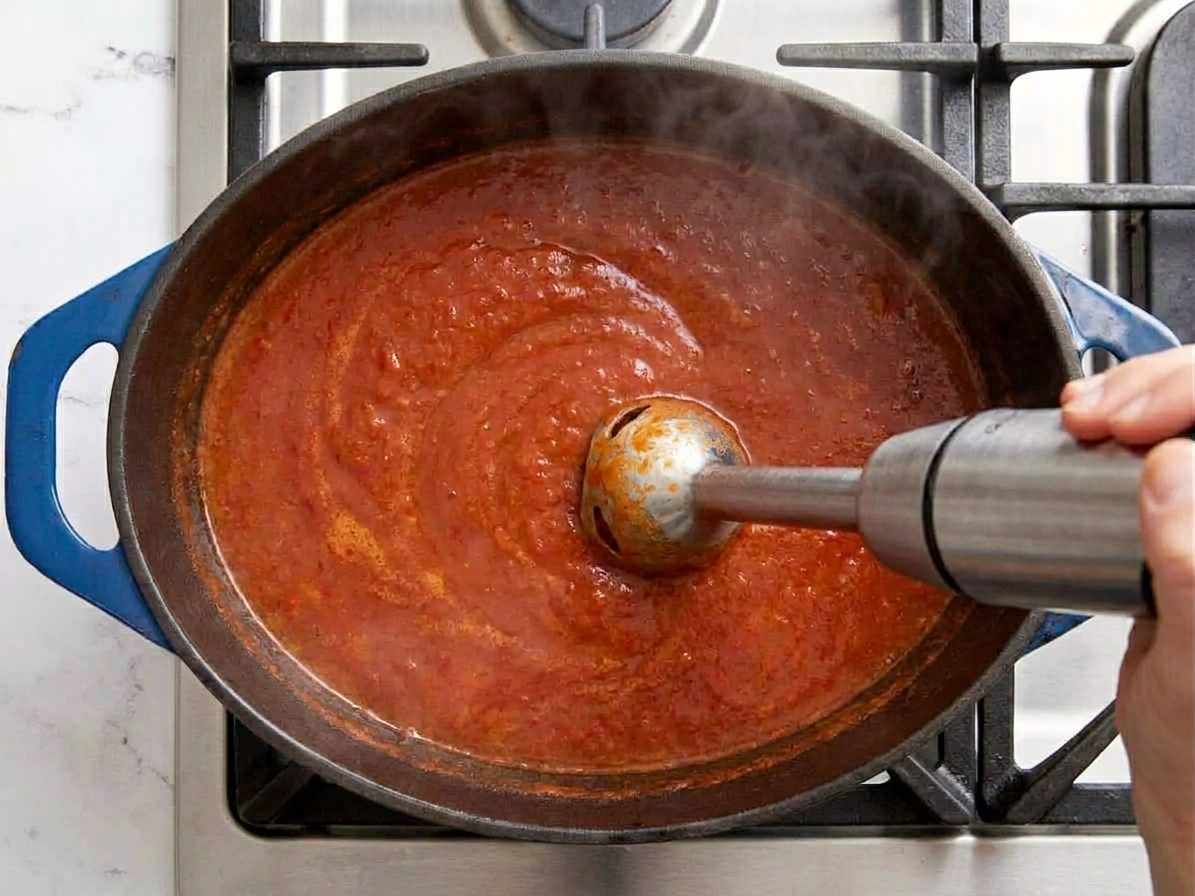
No. If you blend well, it is already smooth. If you want ultra-silky, strain through a fine-mesh sieve, especially if your tomatoes are extra seedy.
What if my bisque tastes too acidic?
First, add a small pinch of salt. Then try 1 to 2 teaspoons sugar or a small knob of butter. If it still feels sharp, a bit more cream can mellow it out. The balsamic vinegar or lemon juice at the end is only for brightness, so go easy or skip it if your soup already tastes sharp.
Can I use fresh tomatoes?
You can, but canned tomatoes give more consistent flavor year-round. If using fresh, roast them first for better depth, then proceed with the recipe.
Do the tomatoes matter?
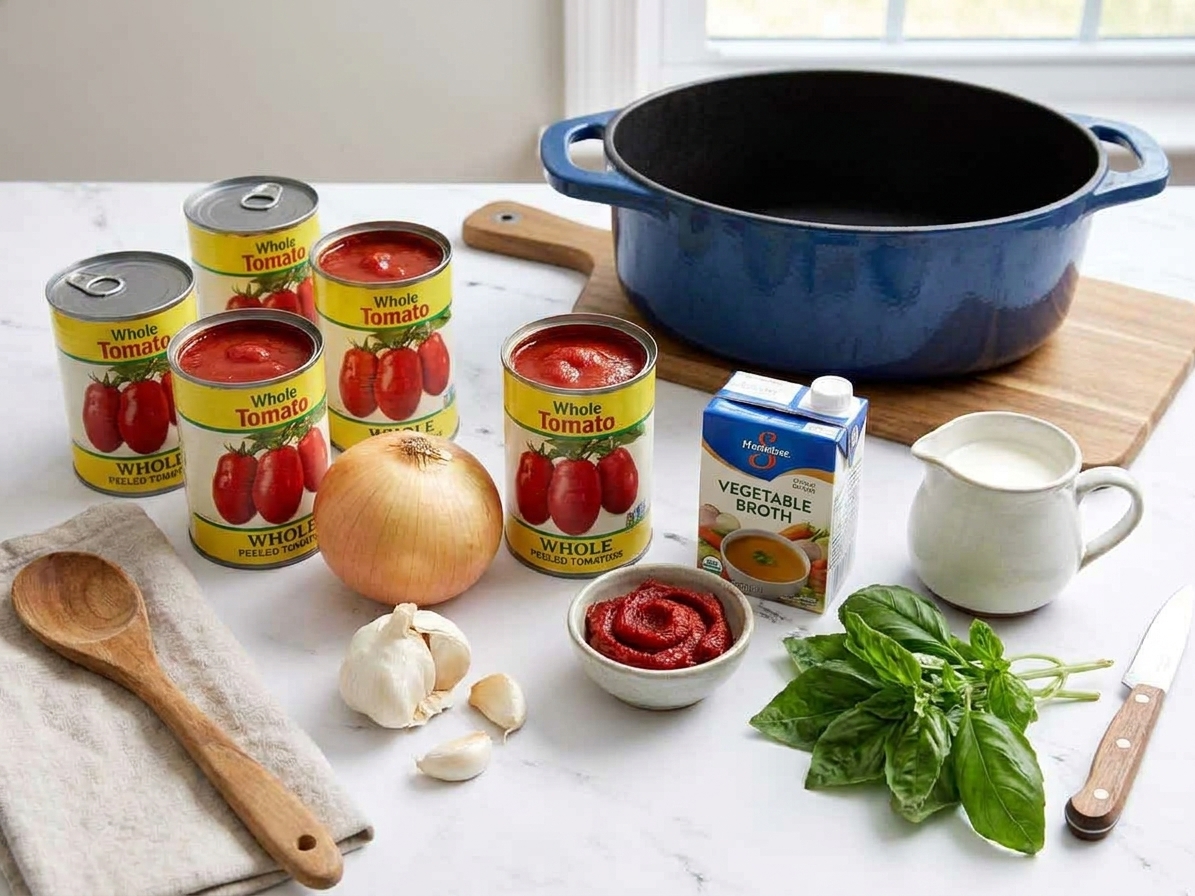
They do. If you want a sweeter, smoother soup, look for San Marzano-style whole peeled tomatoes. Any good-quality whole peeled tomatoes work, but the better the can, the better the bowl.