Mom's Best Recipes
Recipe

Air Fryer Salmon

Crisp edges, juicy center, and a lemony finish, all with weeknight-level effort.

Author By Matt Campbell
4.8
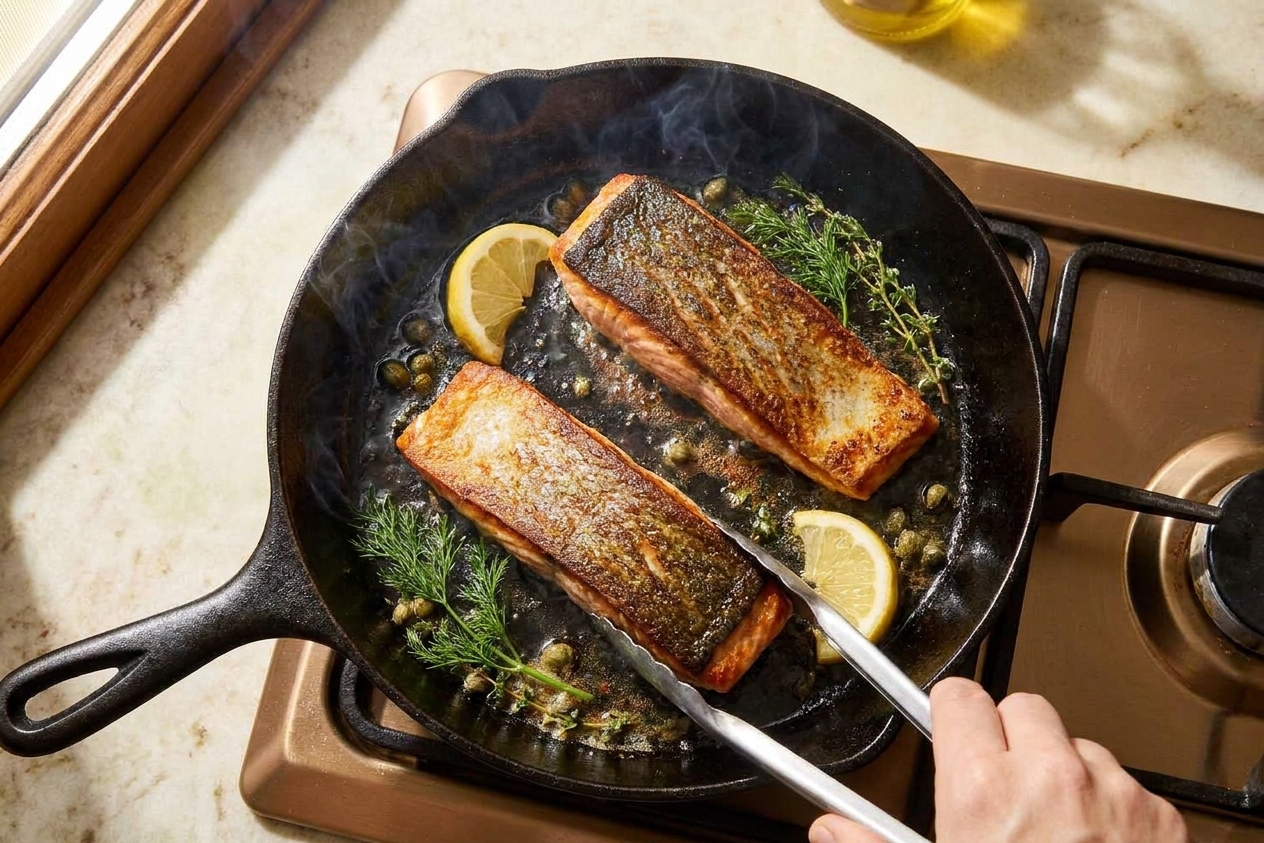
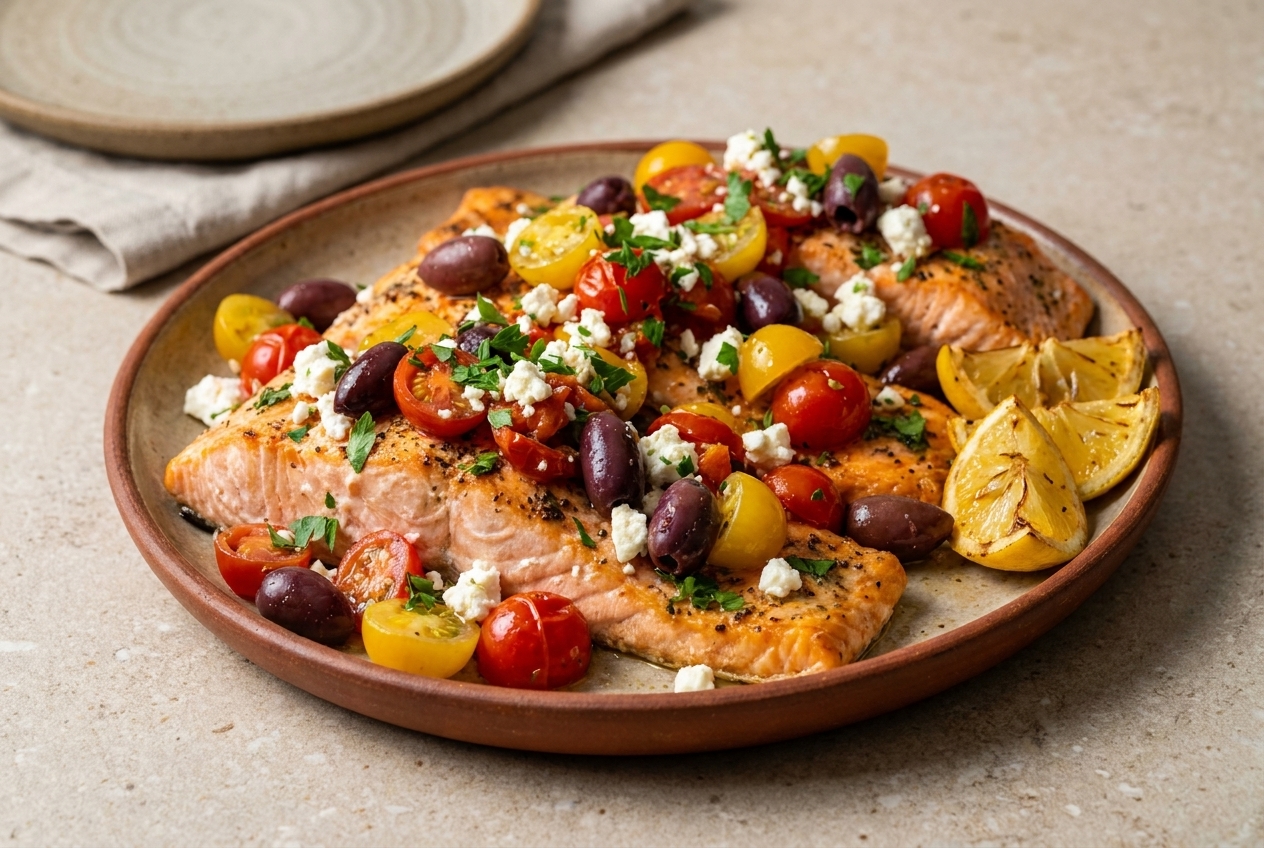
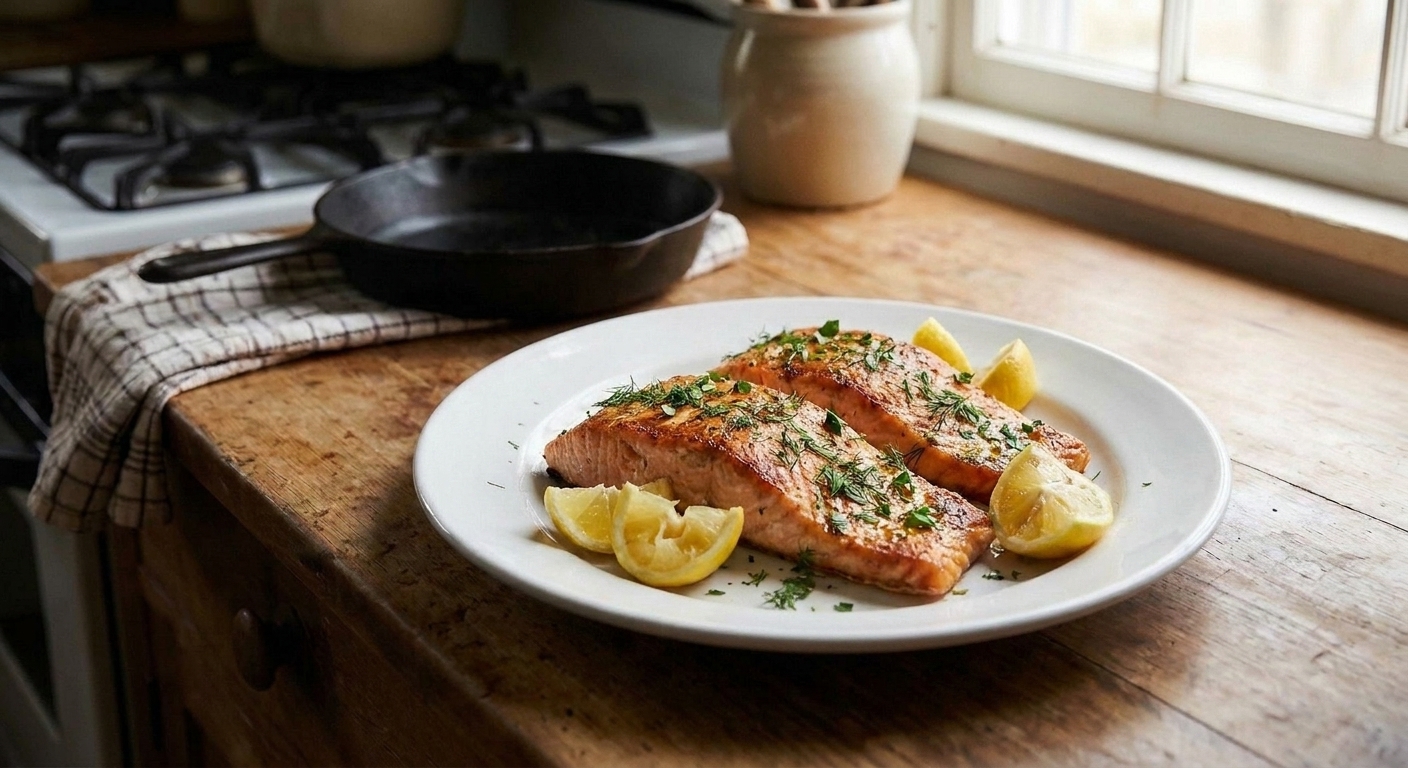
A plated air fryer salmon fillet with crisp edges, lemon wedges, and fresh herbs on a white plate on a wooden table

If you have ever stared into your fridge, seen a salmon fillet, and thought, “I want something impressive but I do not want to babysit a pan,” welcome. Air fryer salmon is my favorite kind of kitchen magic: quick, reliable, and just fancy enough to make a Tuesday feel like you have your life together.

The goal here is simple. We season boldly, cook hot, and pull it at the exact moment it turns flaky but still juicy. Then we hit it with lemon and a quick drizzle that tastes like you tried harder than you did.

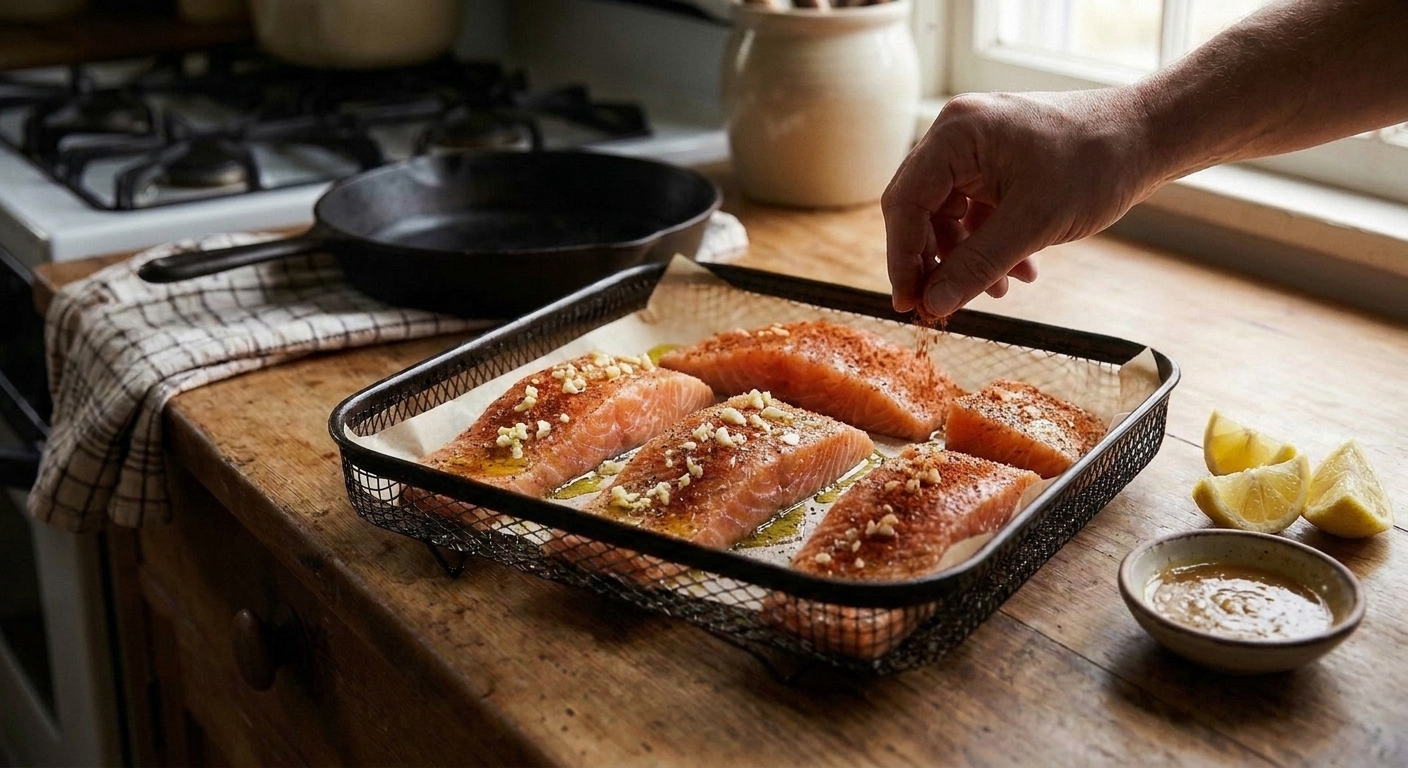
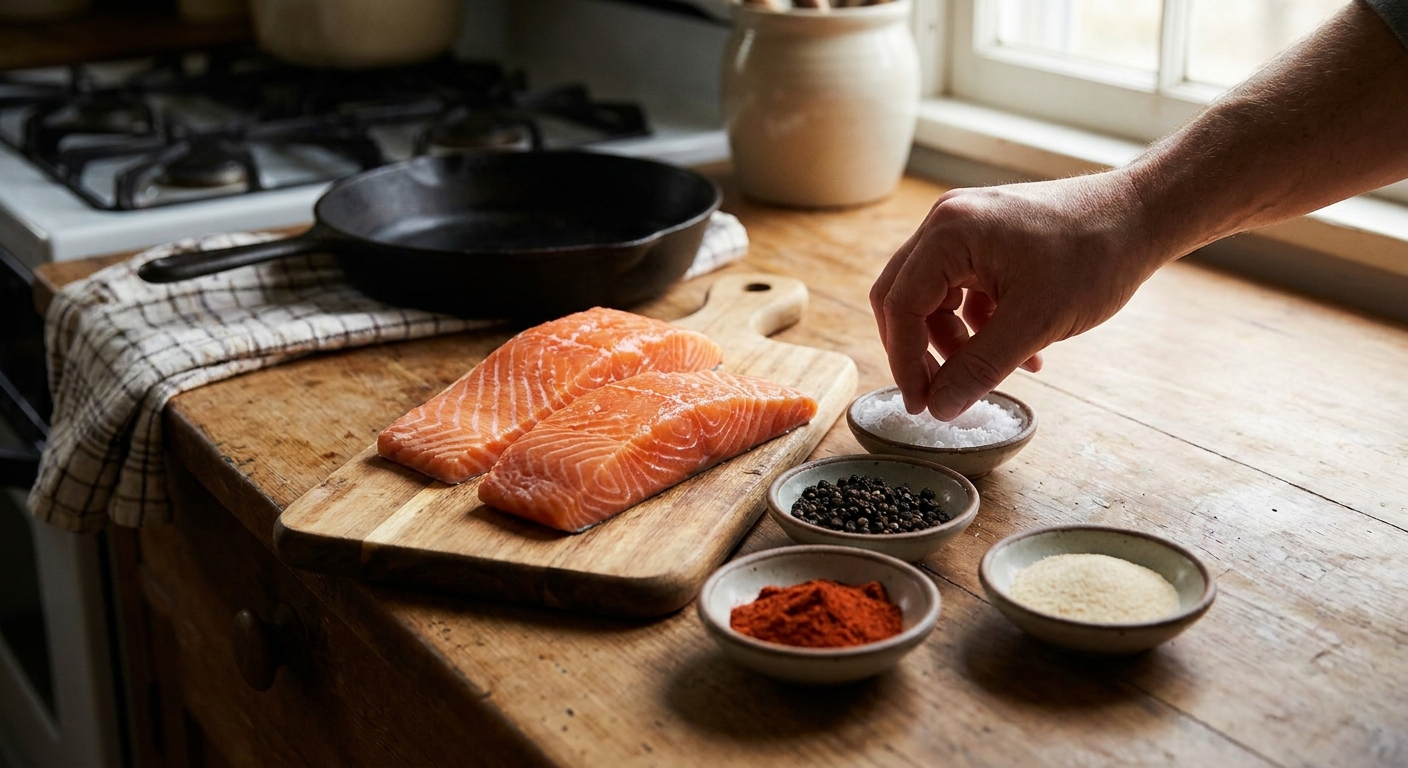
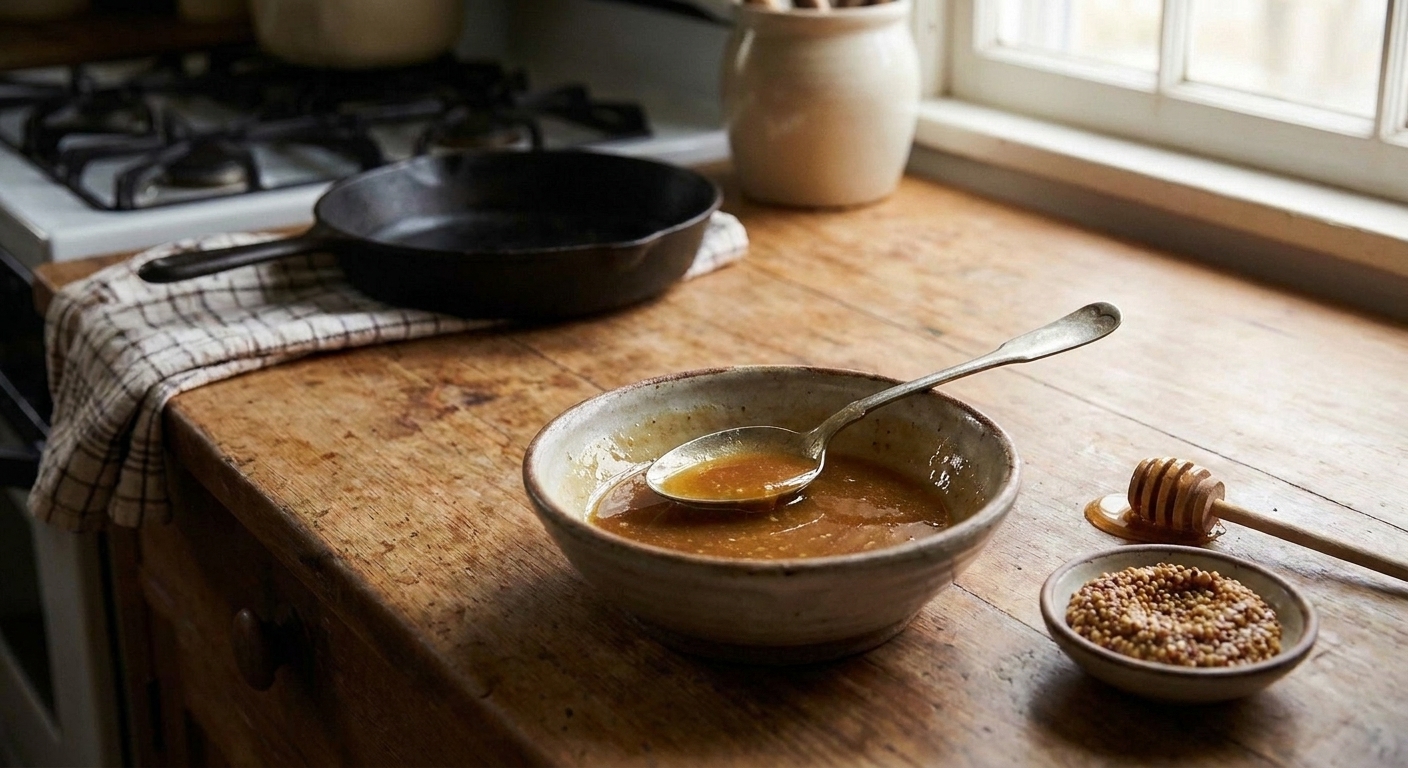
Salmon fillets on parchment with olive oil, lemon, garlic, paprika, salt, pepper, and a small bowl of honey mustard on a wooden counter

Why It Works

  • High heat gives you crisp edges without drying out the middle, especially if you start with a quick oil rub.
  • A short rest finishes the job. Salmon keeps cooking for a couple minutes after it leaves the basket, so you get flaky texture instead of chalk.
  • Built-in flexibility: this seasoning works plain, with a glaze, or with a sauce at the end, so you can match whatever sides you have.
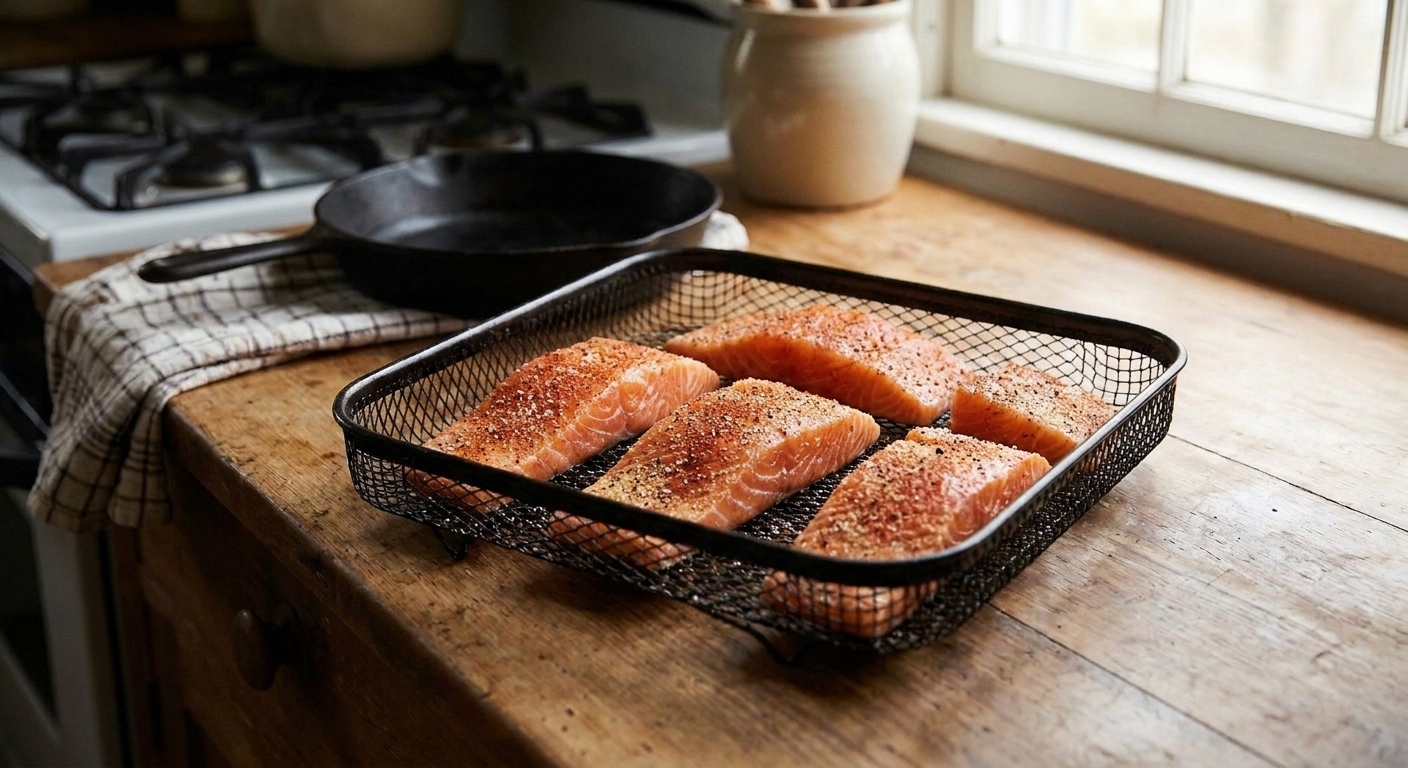
  • Minimal mess: a parchment liner or a light oil mist keeps cleanup calm. (Tip: some nonstick baskets do not love aerosol sprays, so an oil mister is a great alternative.)

Pairs Well With

Storage Tips

How to Store and Reheat

Fridge: Cool salmon to room temp (about 20 to 30 minutes), then store in an airtight container for up to 3 days.

Freezer: Wrap tightly and freeze up to 2 months. Thaw overnight in the fridge for best texture.

Reheat (best method): Air fry at 350°F for 3 to 5 minutes until just warmed through. Add a squeeze of lemon after reheating to wake it back up.

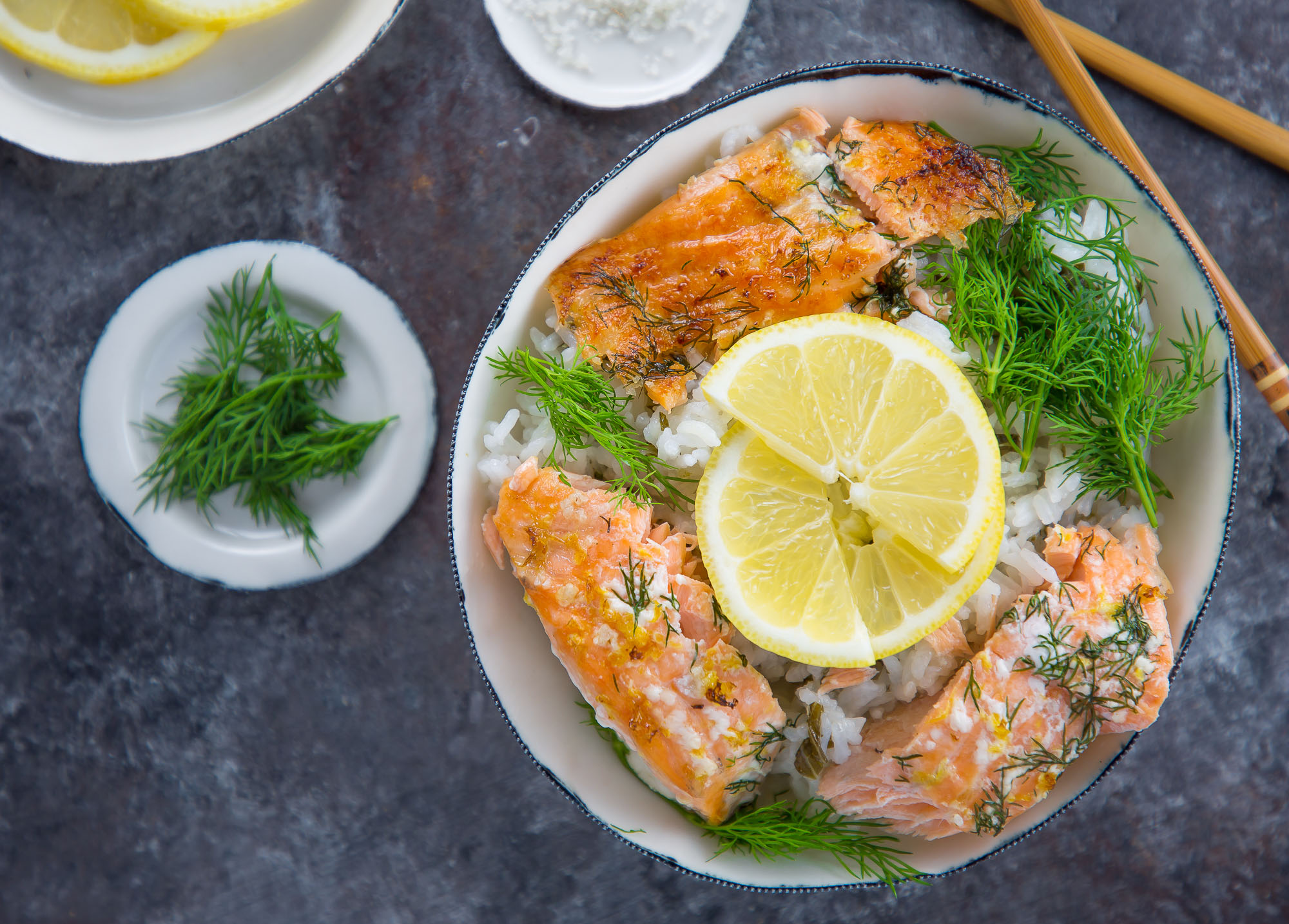
Cold leftover move: Flake it into a salad, rice bowl, or wrap with a little mayo or Greek yogurt, dill, and lemon.

Common Questions

Common Questions

If you are new to air fryer salmon, you are in good company. These are the little details that make it feel easy.

What temperature should salmon be cooked to?

For food safety, the FDA recommends 145°F in the thickest part. For a juicier, slightly translucent center, many home cooks pull it around 125 to 135°F and let it rest 2 to 3 minutes. If you are pregnant, immunocompromised, elderly, or serving young kids, sticking with 145°F is the safer move.

Do I need to flip salmon in the air fryer?

Usually no. Air circulation cooks it evenly. If your air fryer runs unevenly or your fillets are thicker on one side, rotate the basket or tray halfway through.

Skin on or skin off?

Both work. Skin-on helps protect the flesh and can get lightly crisp. Skin-off is simpler to eat and takes seasoning all over. If you keep the skin, cook skin-side down.

Can I cook frozen salmon in the air fryer?

Yes. It works best when the pieces are separate (not frozen into one solid block). If they are stuck together, rinse briefly under cold water until you can separate them, then pat dry. Timing also depends a lot on thickness, so use the thermometer and expect thick fillets to take a few extra minutes.

Why is my salmon white and gummy on top?

That is albumin, a protein that can seep out when salmon cooks at higher heat or is overcooked. It is harmless. To reduce it, pat the fish dry, avoid overcooking, and consider a quick 10 minute salt rest.

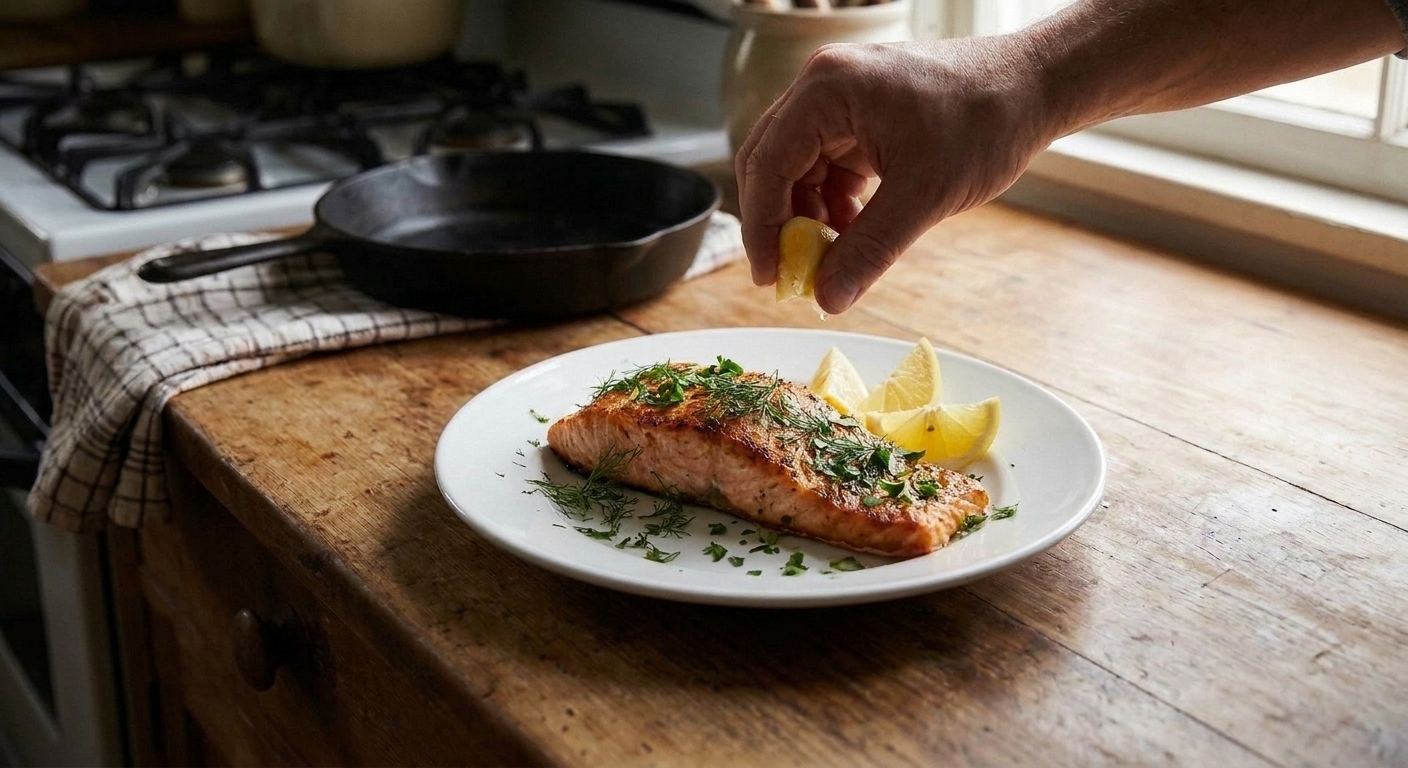
Salmon used to feel like “company food” to me, which is funny because the best salmon nights are the low-key ones. I started air frying it when I was chasing practical skills over perfect kitchen vibes, and it stuck because it is basically chaos-proof. You season, you cook, you taste, you adjust. The air fryer does the heavy lifting while you pretend you are casually brilliant.

Also, this recipe makes 4 generous 6-ounce fillets, which in my house is either “serves 4” or “serves 2 to 3 with enthusiastic seconds,” depending on the day.