Common Questions
What makes beef daube different from American beef stew?
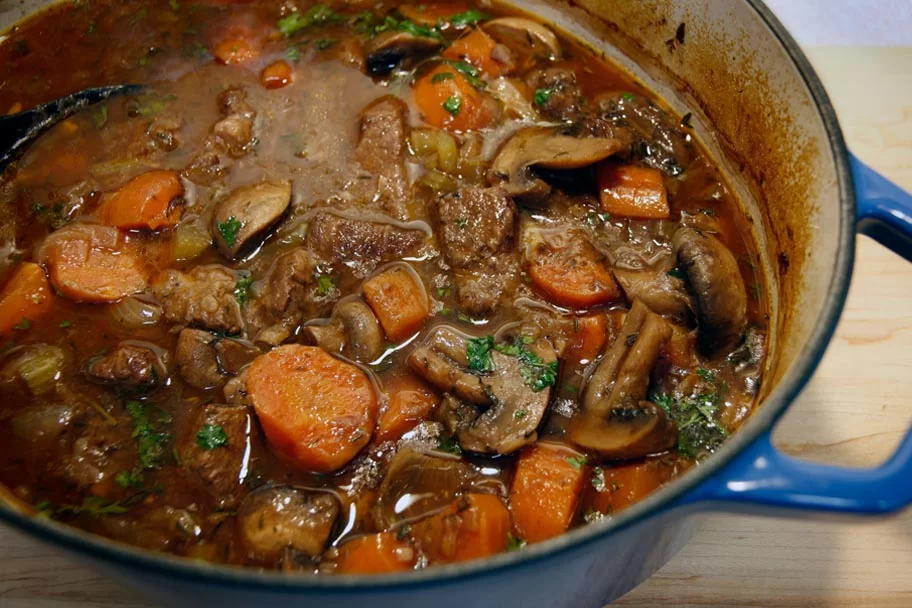
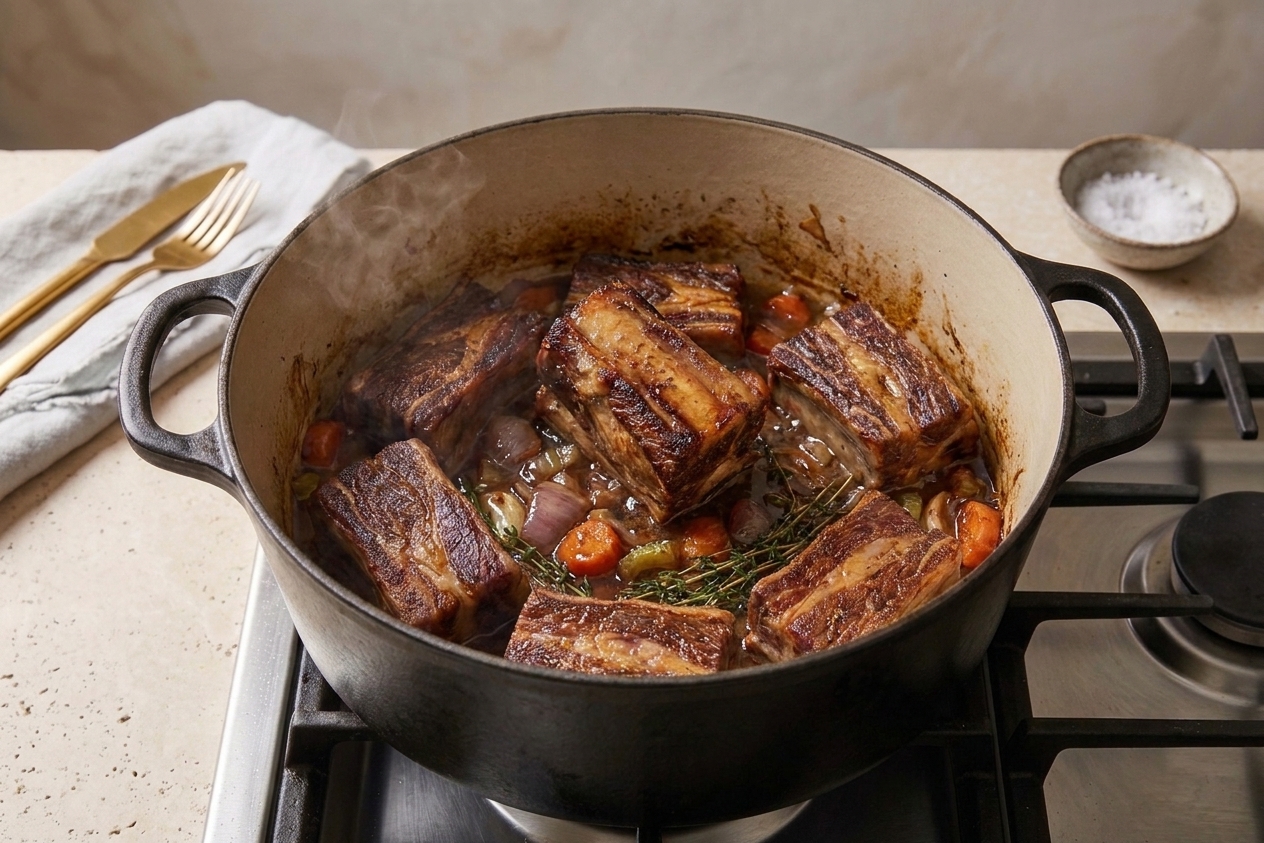
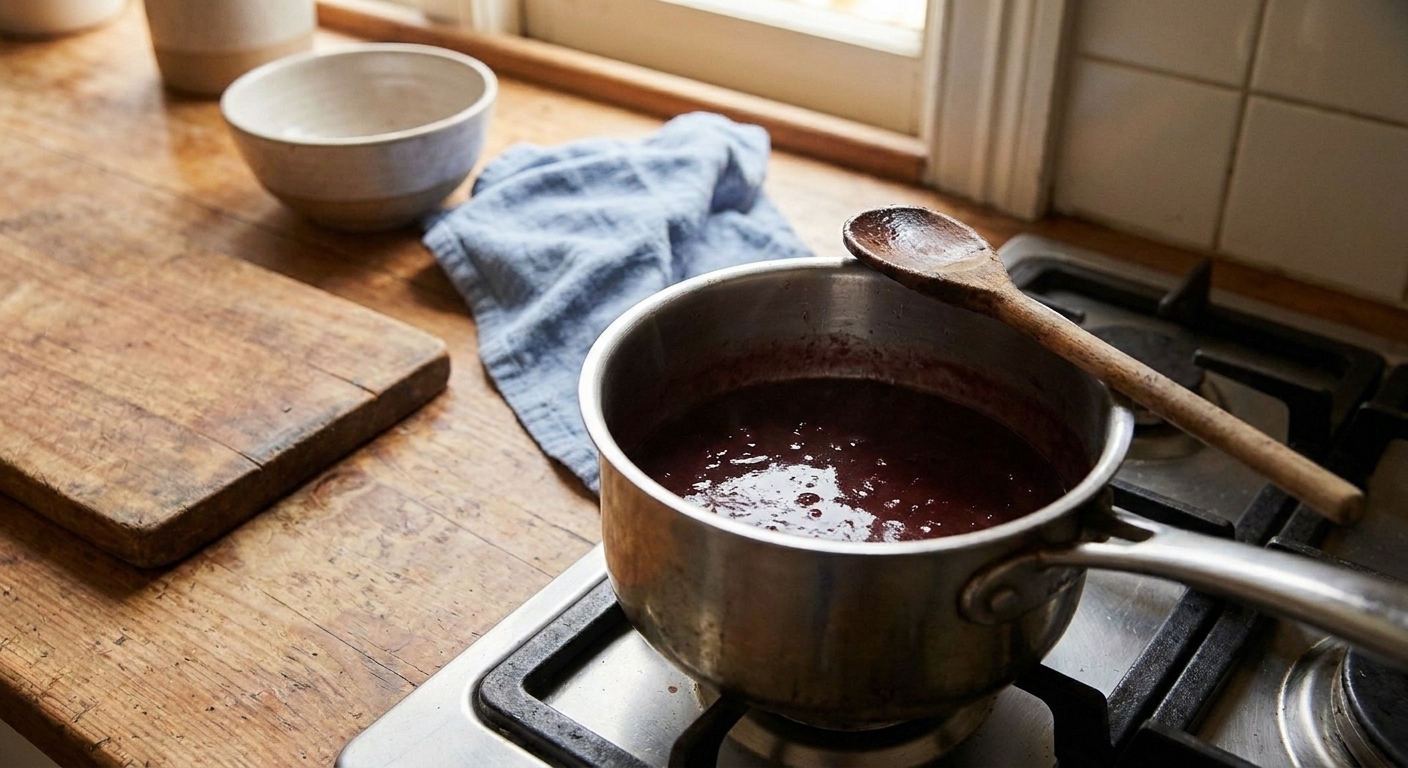
Daube is a wine braise cooked low and slow, traditionally in a tightly covered pot. Many versions rely on reduction and the natural gelatin released from chuck for a glossy sauce, rather than a stew like gravy. That said, some regional and family daube recipes do use a little flour, bread, or a longer marinade. American beef stew often has more broth, more vegetables, and a roux or flour slurry for a thicker, gravy style finish.
Do I have to marinate the beef overnight?
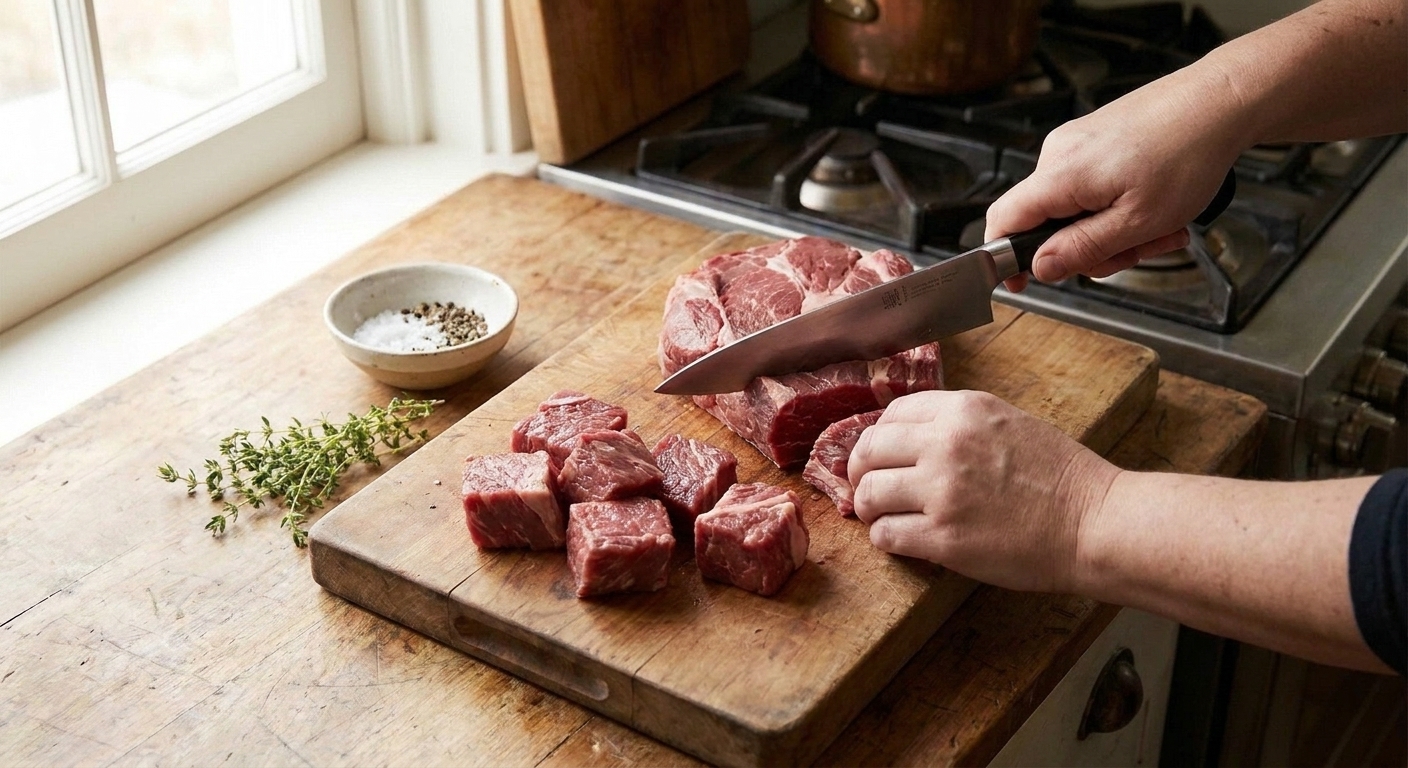
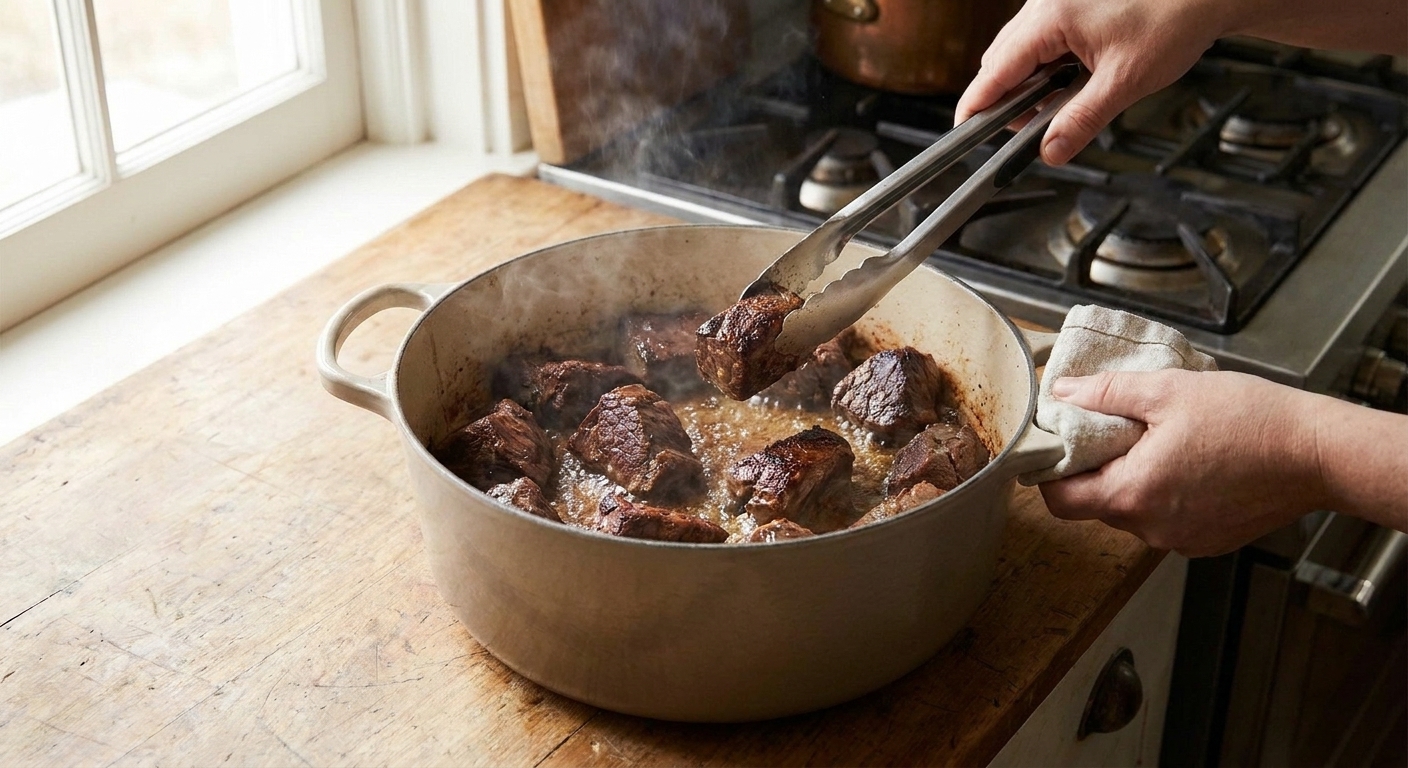
Some traditional recipes do, but you do not have to. This recipe builds flavor with a strong browning step and a long braise. If you want to prep ahead, you can salt the beef and refrigerate it uncovered overnight for better browning.
When should I add the olives?
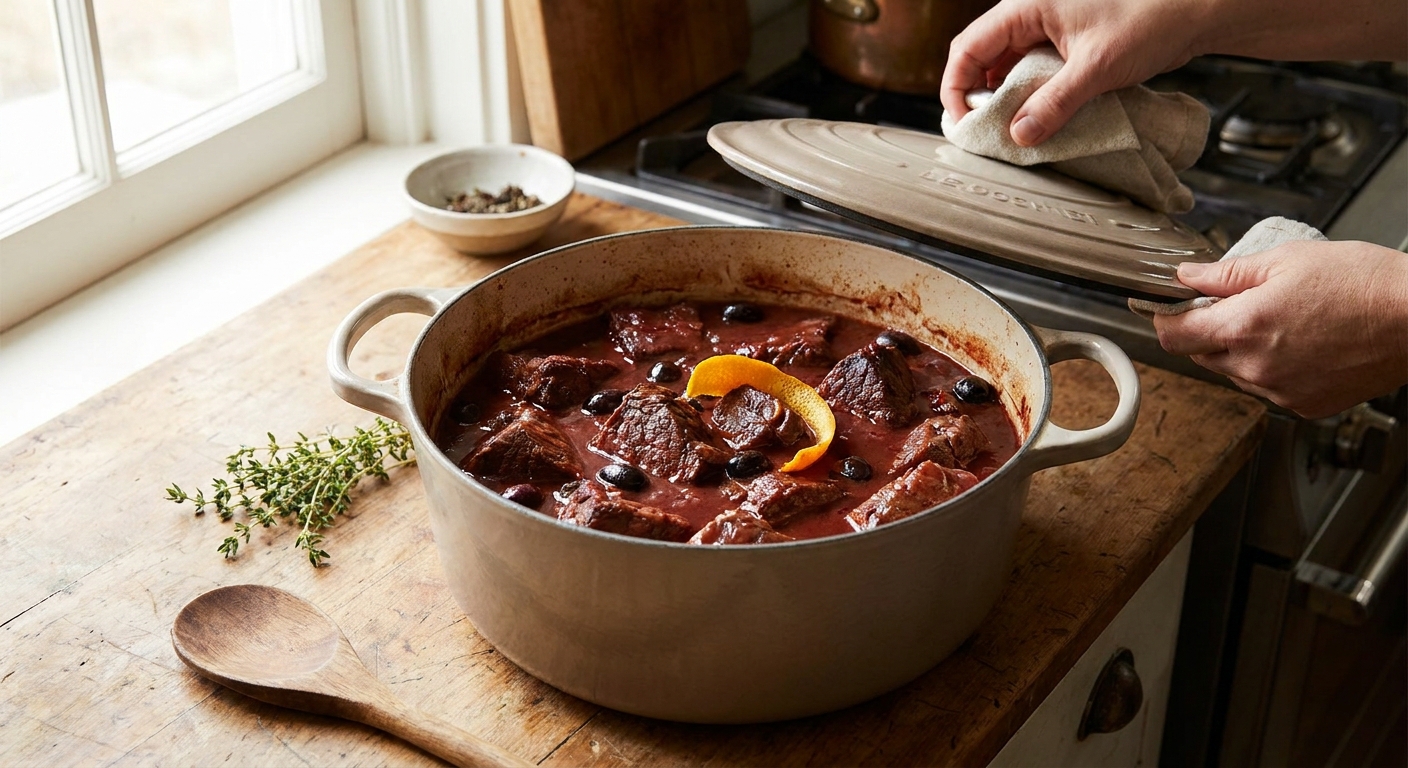
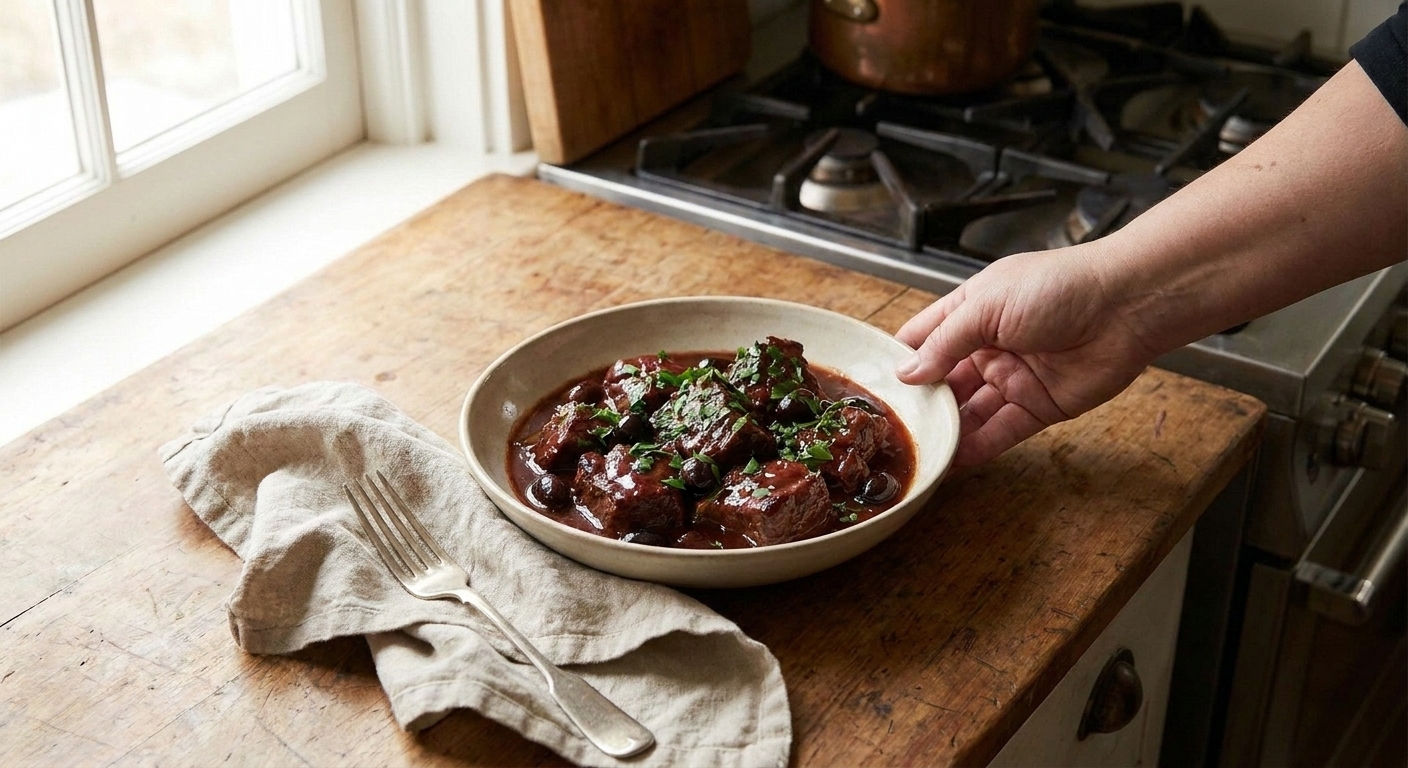
Add them in the last 30 to 45 minutes of braising. If they cook for hours, they can turn overly soft and dominate the sauce. Late addition keeps them plump and pleasantly briny.
What kind of olives should I use?
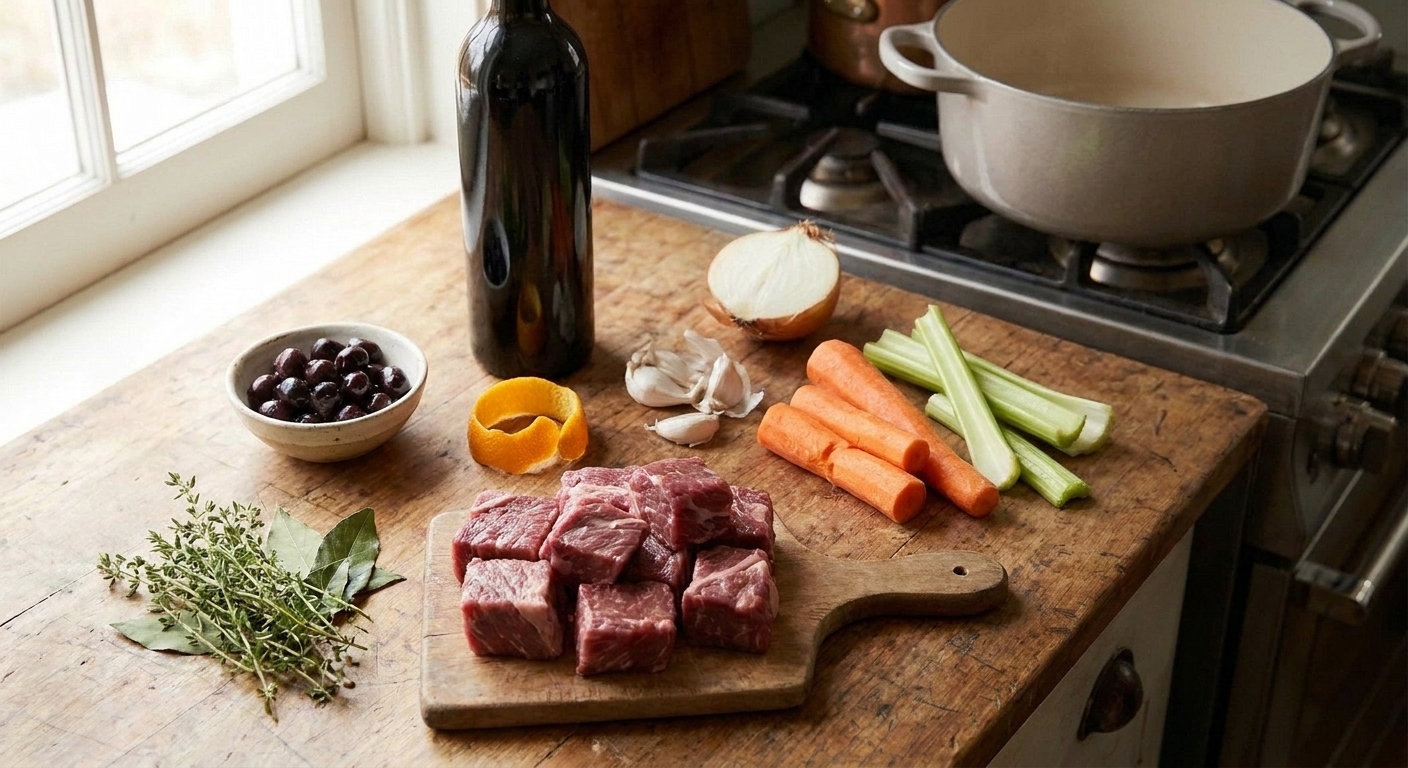
Niçoise olives are the classic Provençal move if you can find them. Kalamata work beautifully too, just know they are bolder and a bit more briny. Either way, a quick rinse helps keep the sauce balanced.
What kind of red wine works best?
Use a dry red you would happily drink. Côtes du Rhône style blends are a great match, but any medium bodied dry red works. Avoid very sweet wines.
Why seal the pot so tightly?
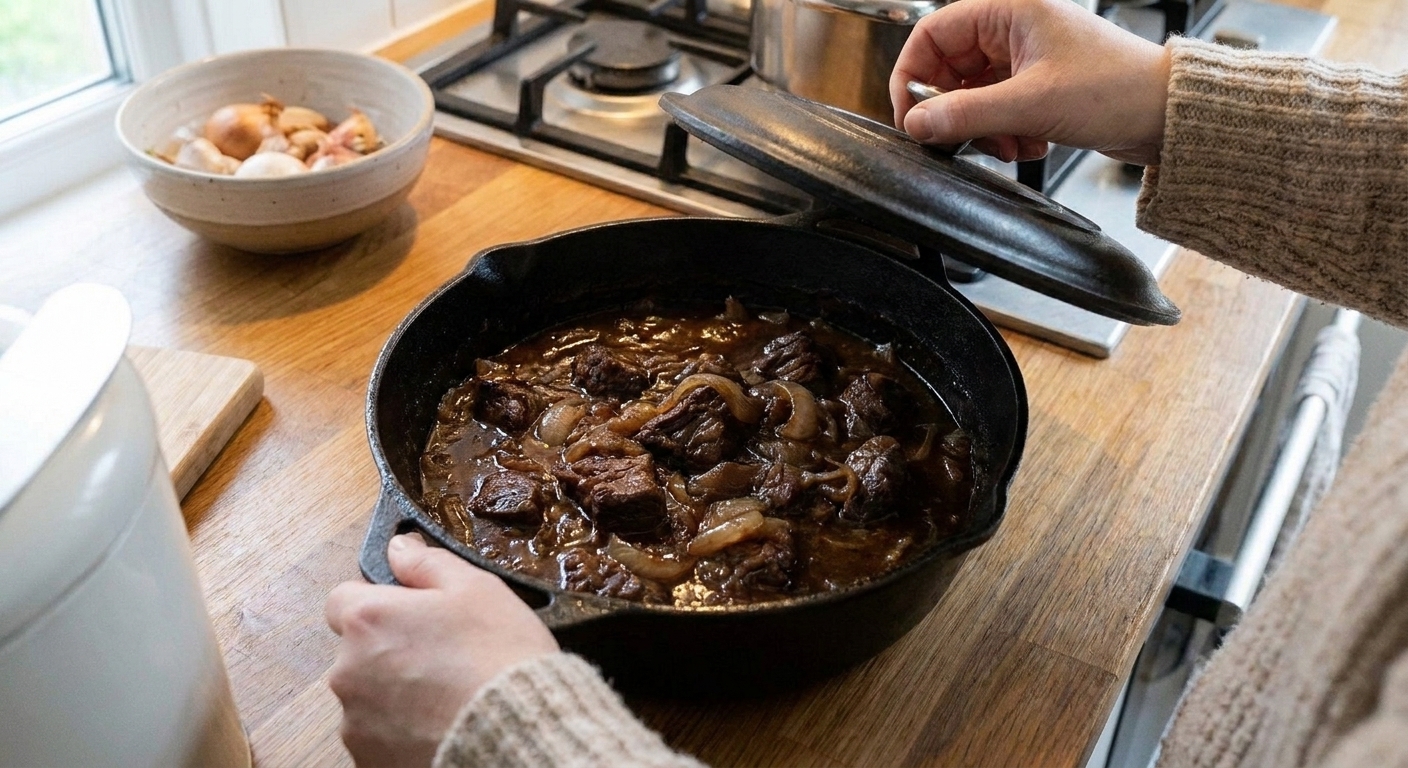
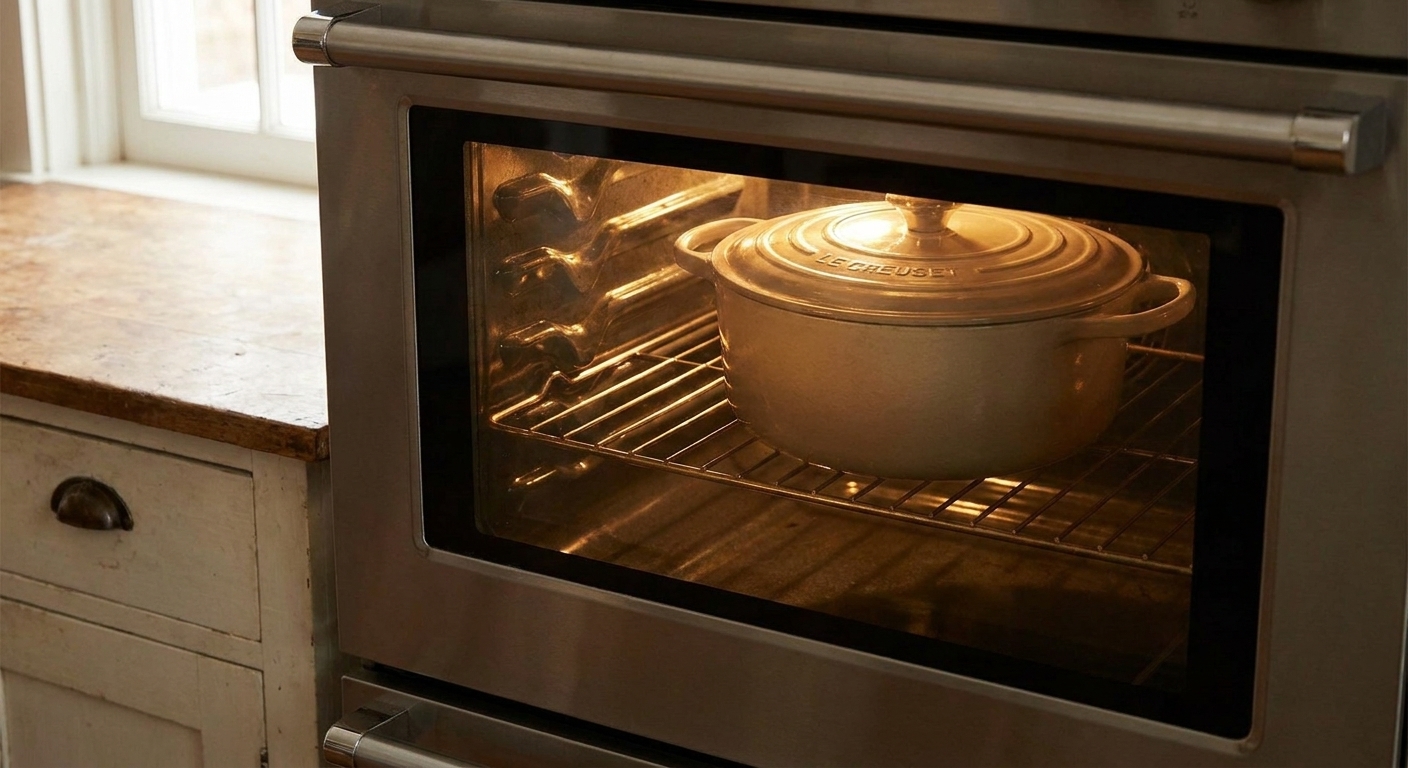
A tight seal keeps moisture in, limits evaporation, and encourages gentle, even cooking. In classic daube, the idea is a calm, steady braise that tenderizes beef without drying it out.
How do I know when the beef is done?
You are looking for fork tender beef that gives in easily. If it is still tight after the listed time, keep braising and check every 20 to 30 minutes. Chuck has opinions and sometimes needs a little longer to fully relax.
Can I make it on the stovetop instead of the oven?
You can, but the oven is easier for steady heat. If using the stovetop, keep it at the barest simmer and stir occasionally to prevent scorching.