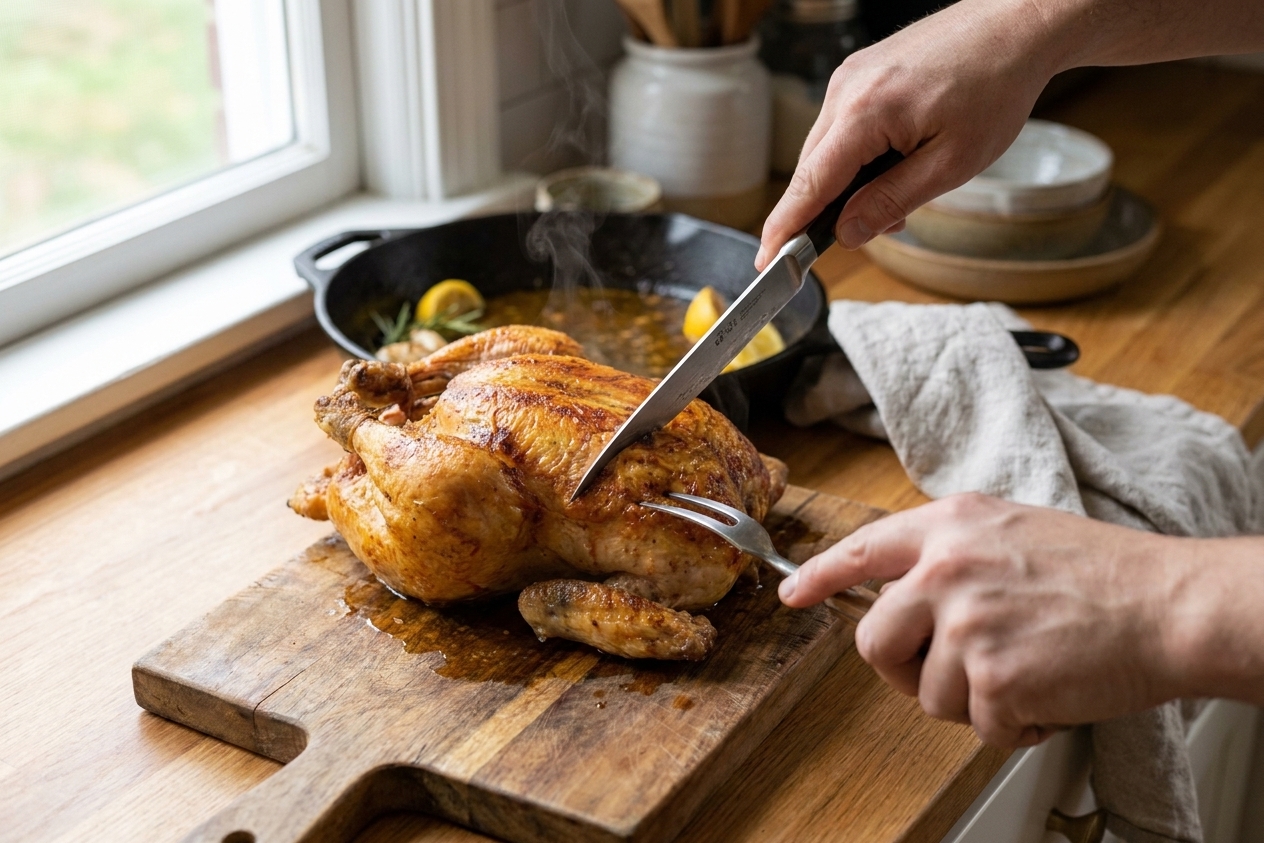
Why is it called Camera Roast Chicken?
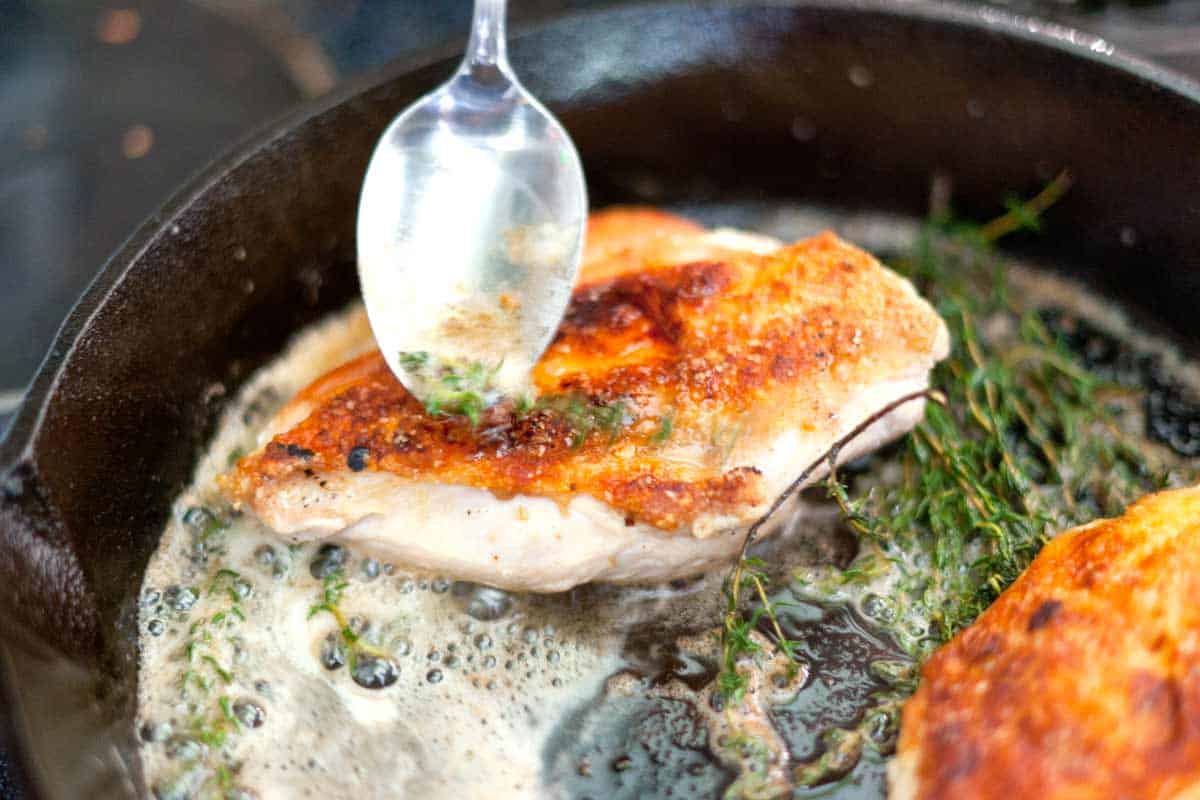
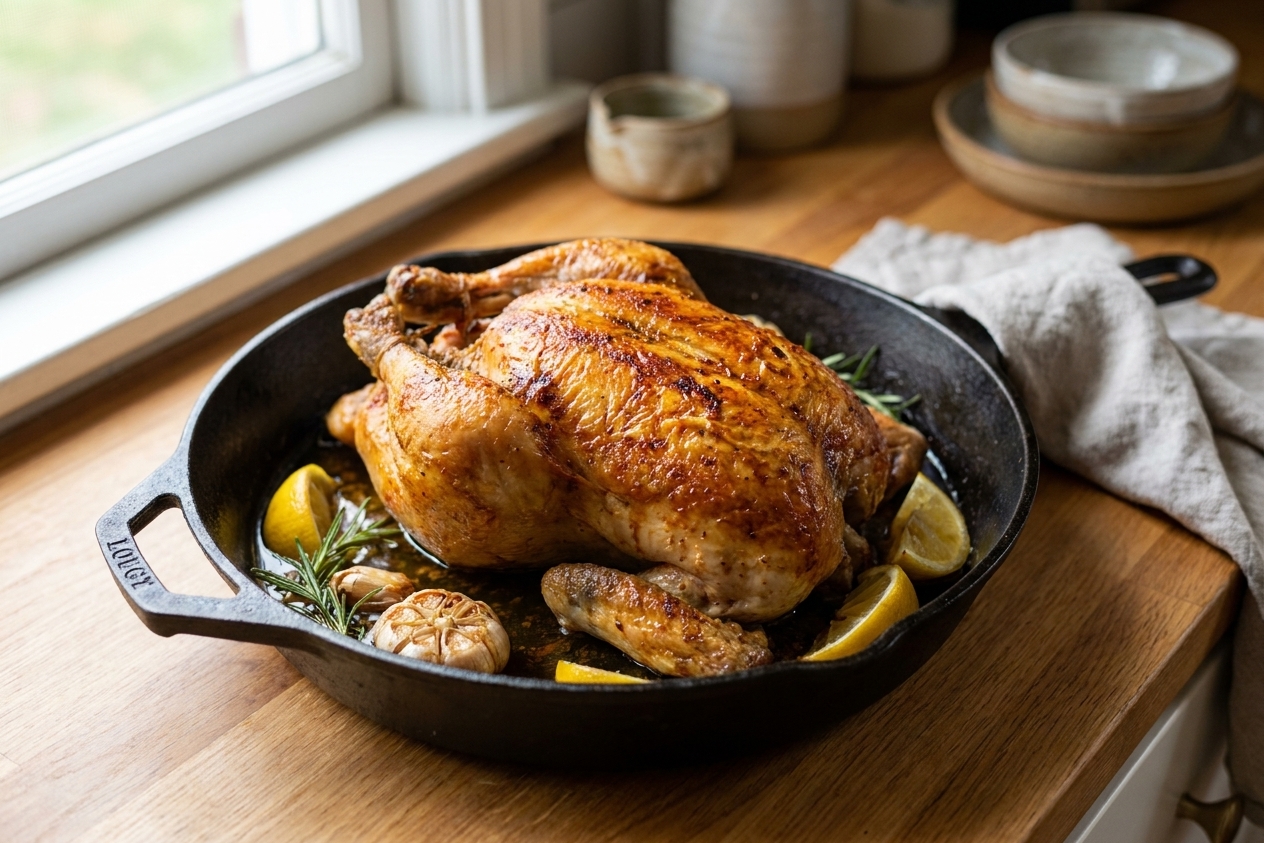
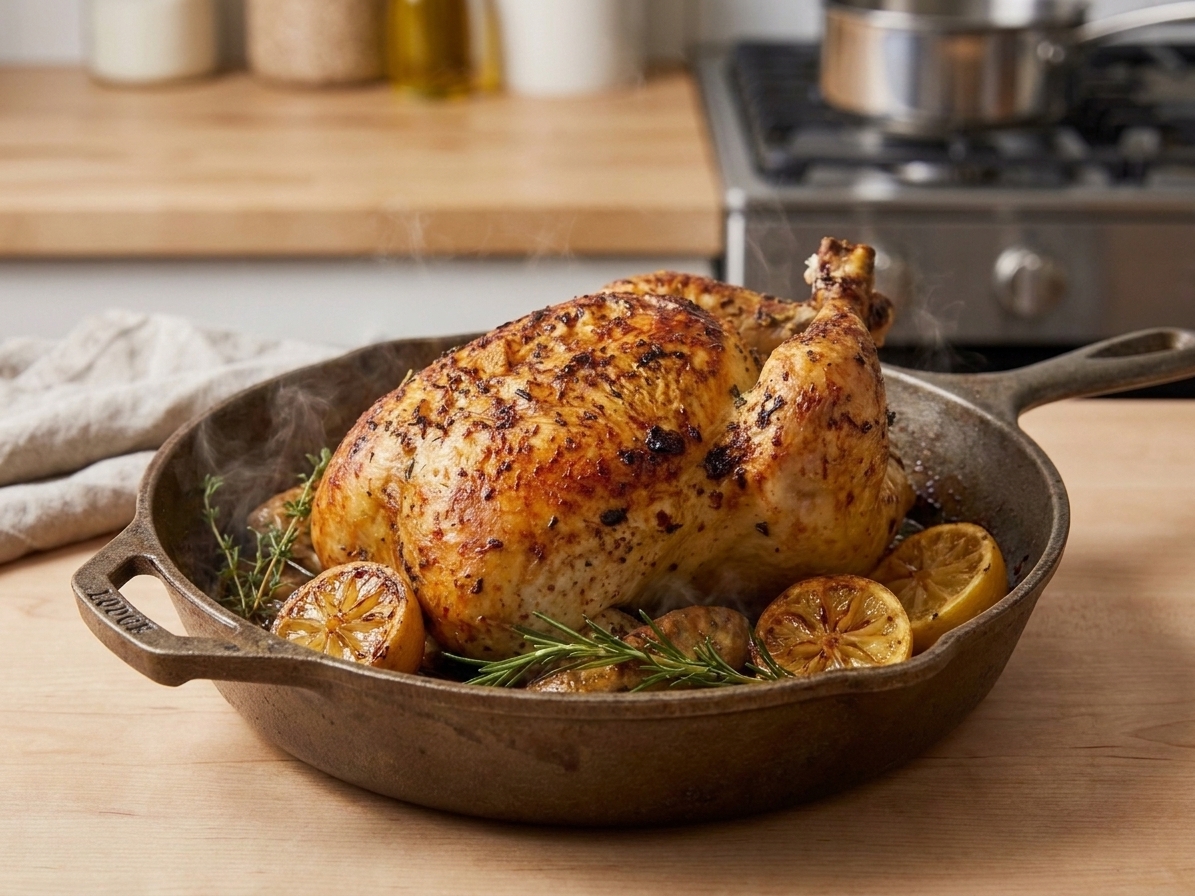
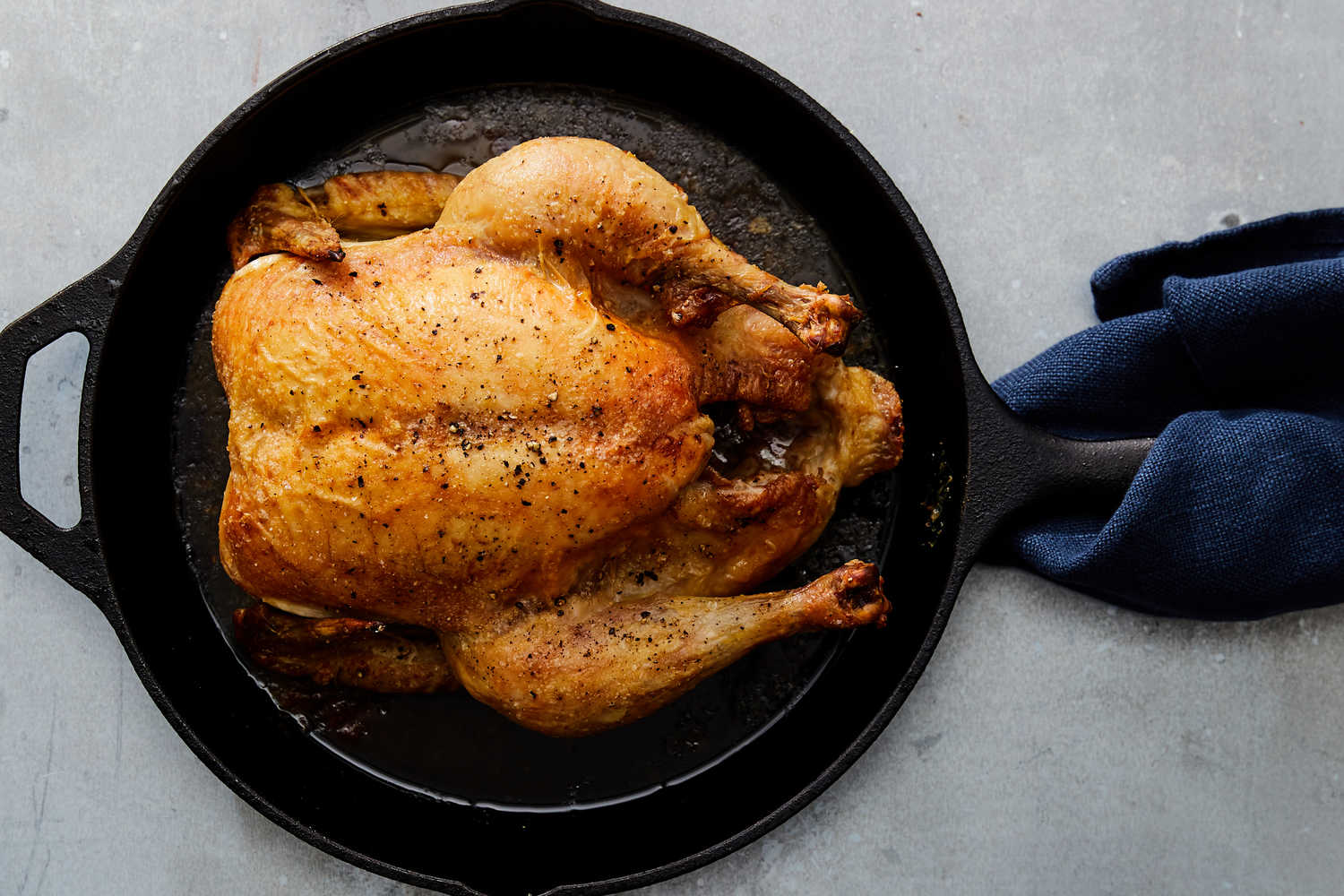
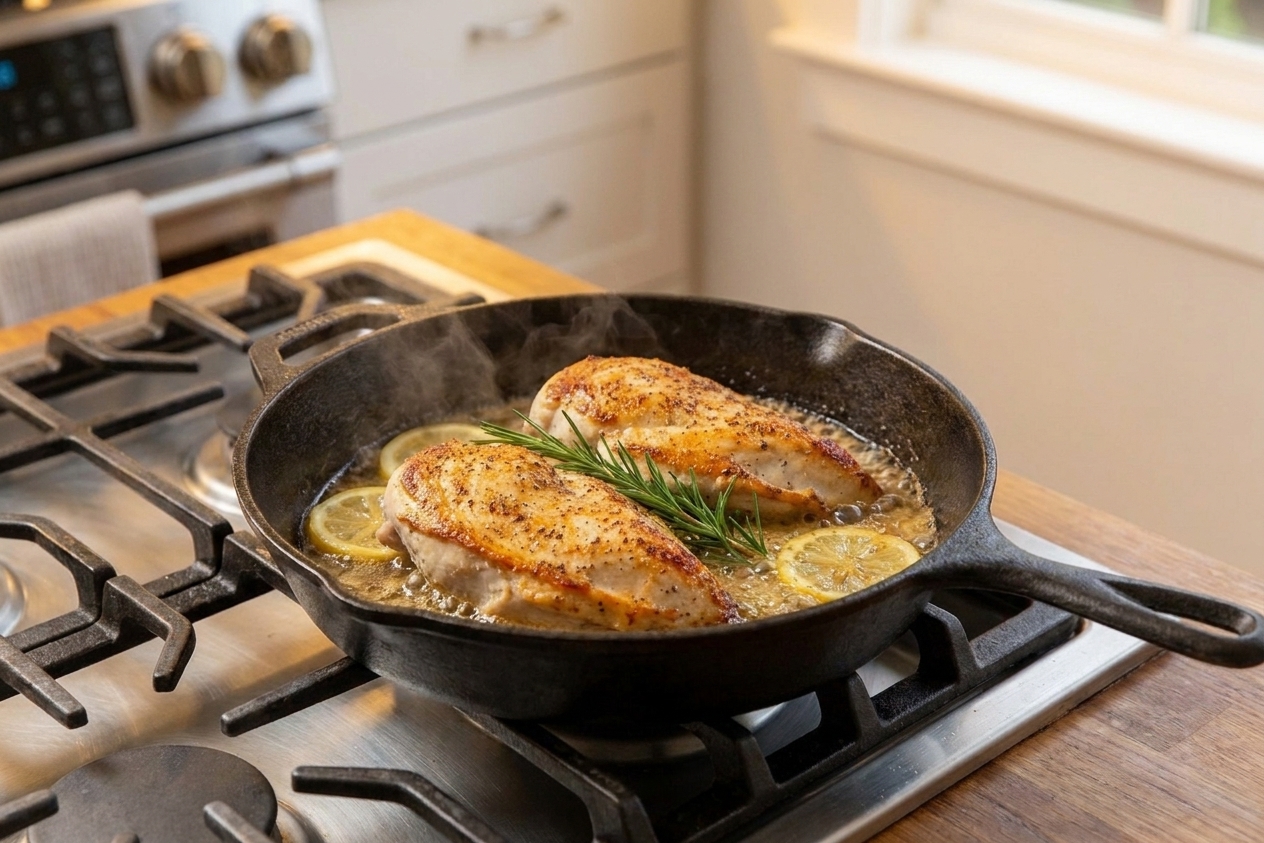
Because it is the kind of roast chicken that looks and tastes like it should be photographed. Crisp skin, shiny sauce, and that golden skillet vibe.
Do I have to use a cast iron skillet?
No, but it helps. Any heavy oven-safe skillet works too. If you use a small roasting pan, set the chicken on thick onion slices so it is lifted slightly and roasts evenly. Just make sure whatever you use is fully oven-safe (no plastic or silicone bits).
How do I know the chicken is done?
Use an instant-read thermometer. I like to pull it when the breast is 160°F and the thigh is 175°F, then rest. For food safety, the final temperature should reach 165°F in the breast after resting.
My skin never gets crispy. What am I doing wrong?
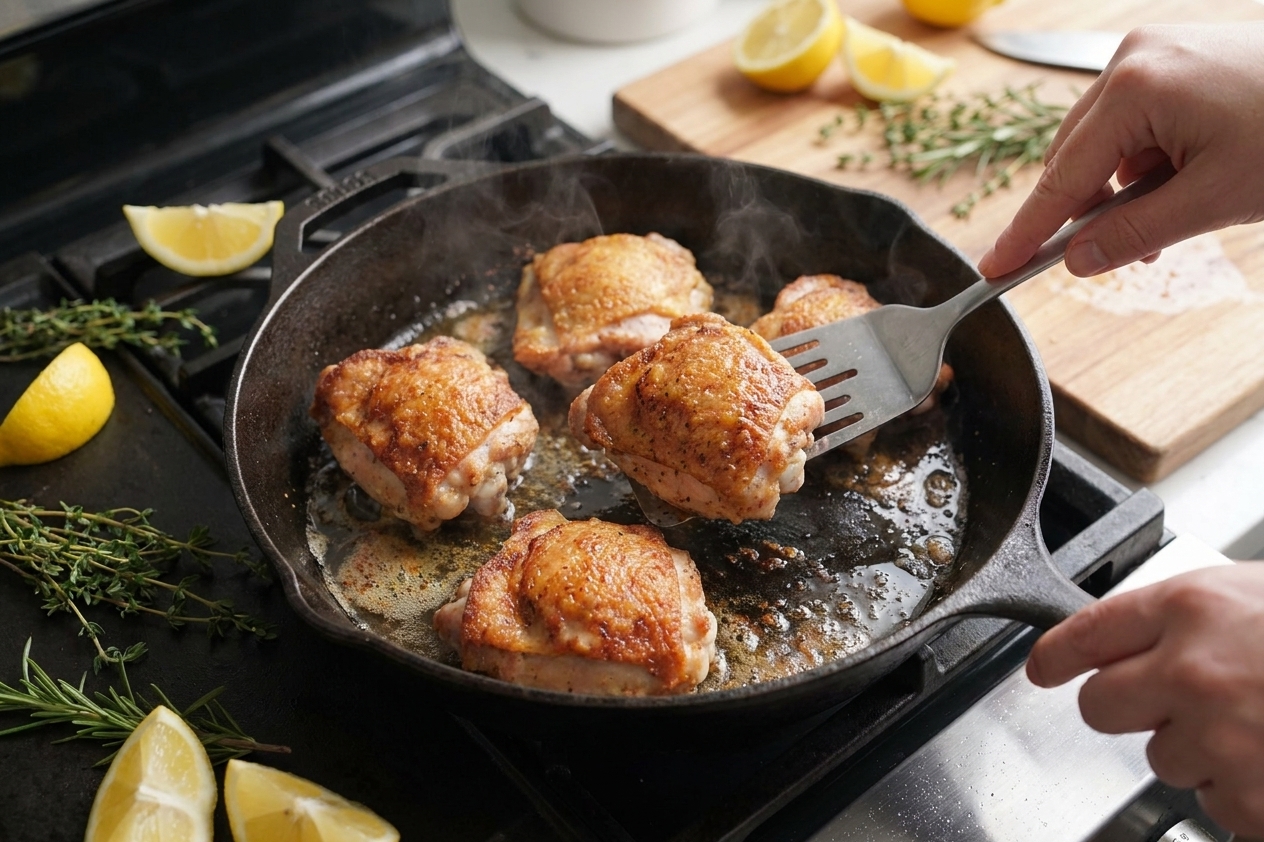
Usually one of three things: the skin is wet, the oven is not hot enough, or the pan is crowded. Pat the chicken very dry, roast at 425°F, and do not surround it with too many vegetables that steam.
Can I add vegetables to the skillet?
Yes, but keep it strategic. Add hearty veg like baby potatoes, carrots, or onions. Cut them into similar sizes and toss with oil and salt. If you overload the pan, you will steam instead of roast.
Should I truss it or do anything with the wings?
If you want a simple upgrade, tuck the wing tips behind the shoulders so they do not burn. You can also tie the legs together with kitchen twine for slightly more even cooking, but it is not required.
Can I salt it ahead?
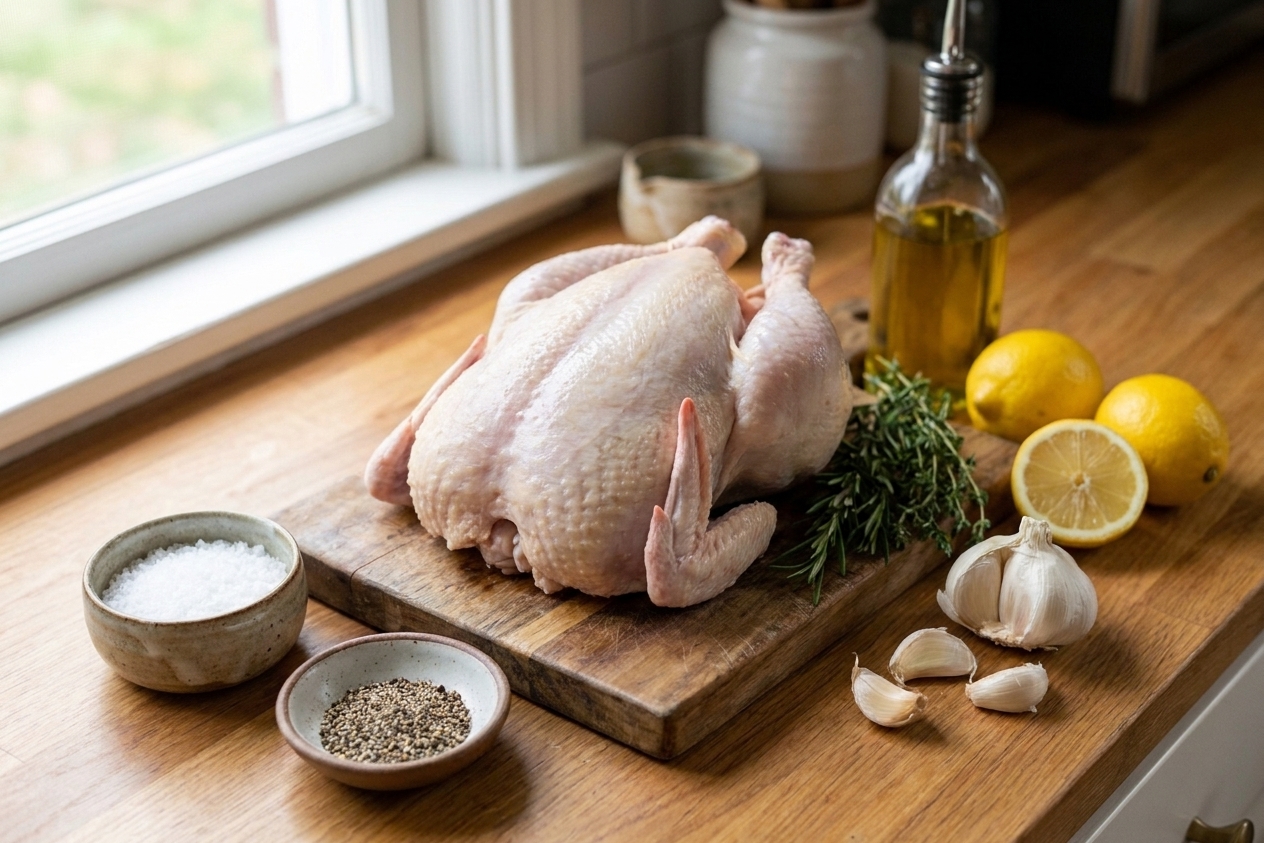
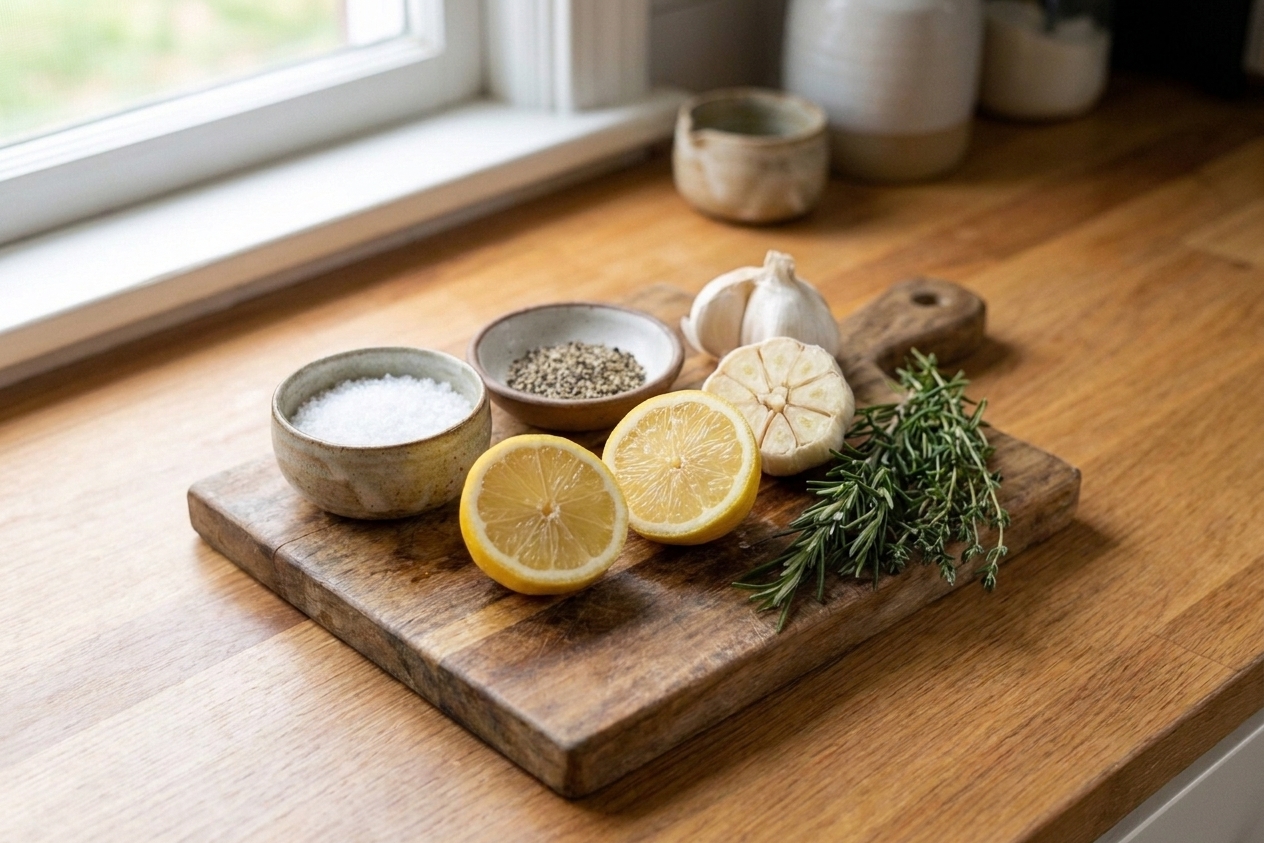
Yes, and it is a cheat code. Salt the chicken and refrigerate uncovered for at least 30 minutes and up to overnight. Drier skin, better seasoning, crispier results.