What apples are best for tarte Tatin?
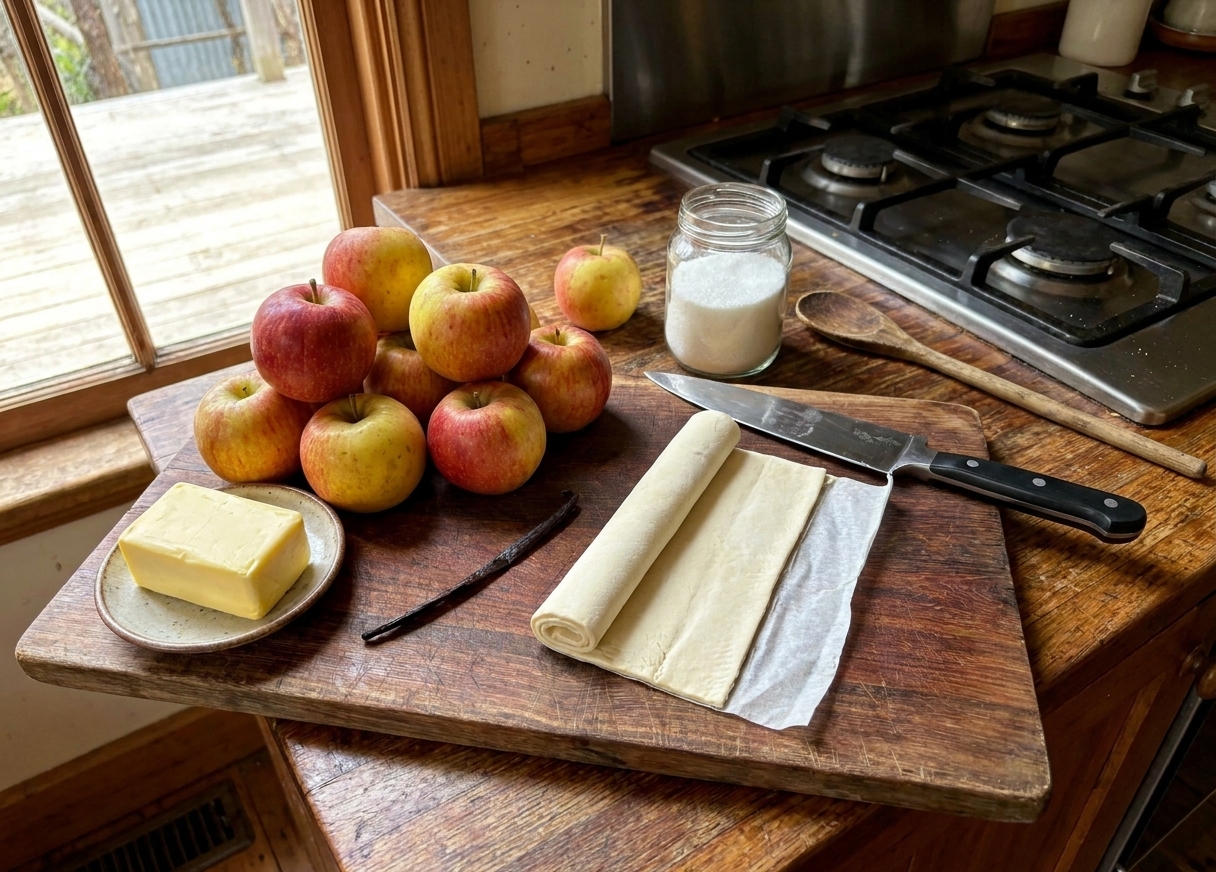
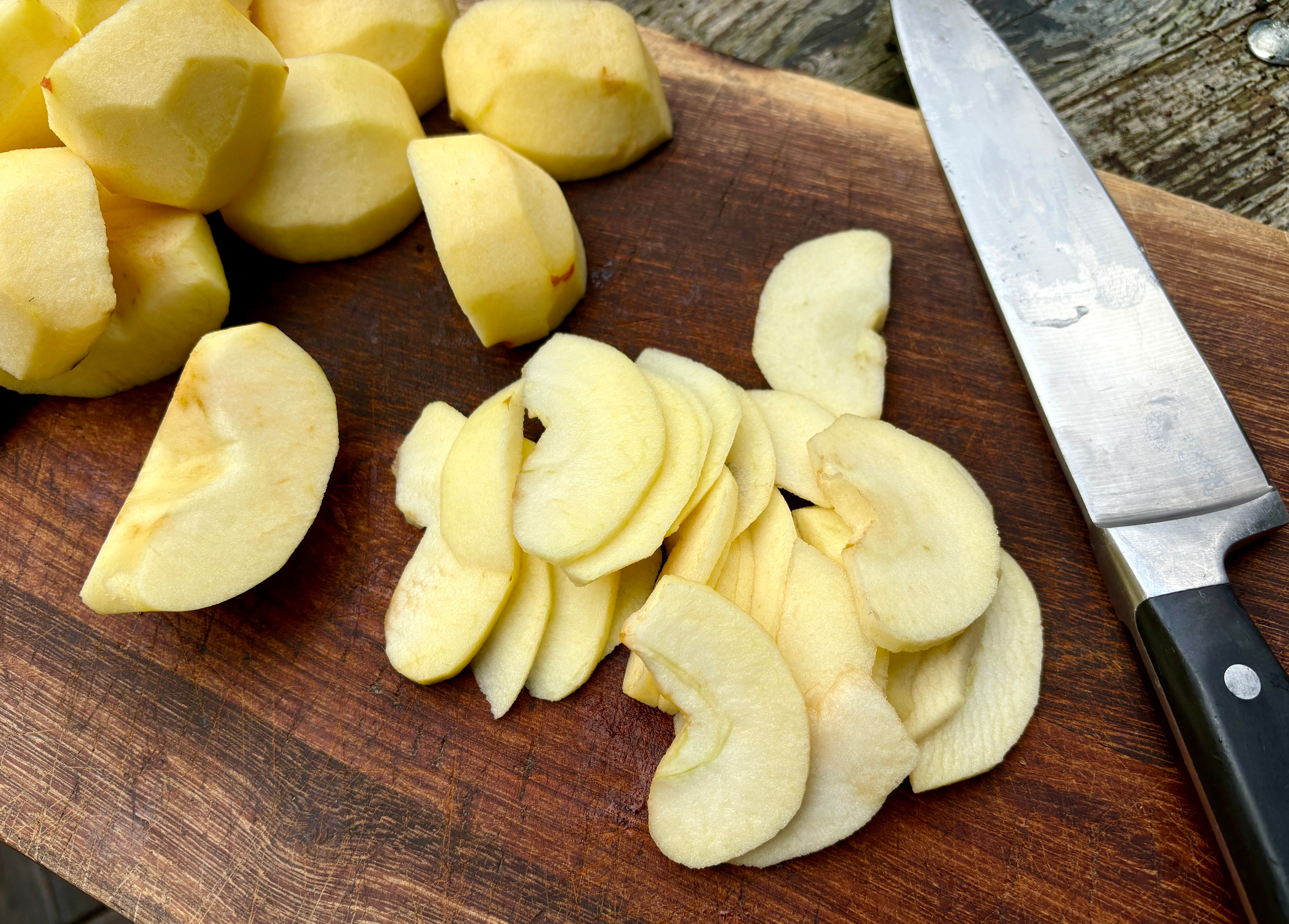
Go for firm, tart-leaning baking apples that keep their shape: Granny Smith, Honeycrisp, Pink Lady, Braeburn, or Jonagold. I love a mix of Granny Smith plus Honeycrisp for balanced sweet-tart flavor.
Do I have to use a cast iron skillet?
No. Any oven-safe skillet works, ideally 9 to 10 inches. Stainless steel is great for caramel because you can see the color clearly. Nonstick is only OK if it is truly oven-safe to the temperature you need and you use non-scratching utensils. Avoid pans with plastic handles.
How do I know when the caramel is the right color?
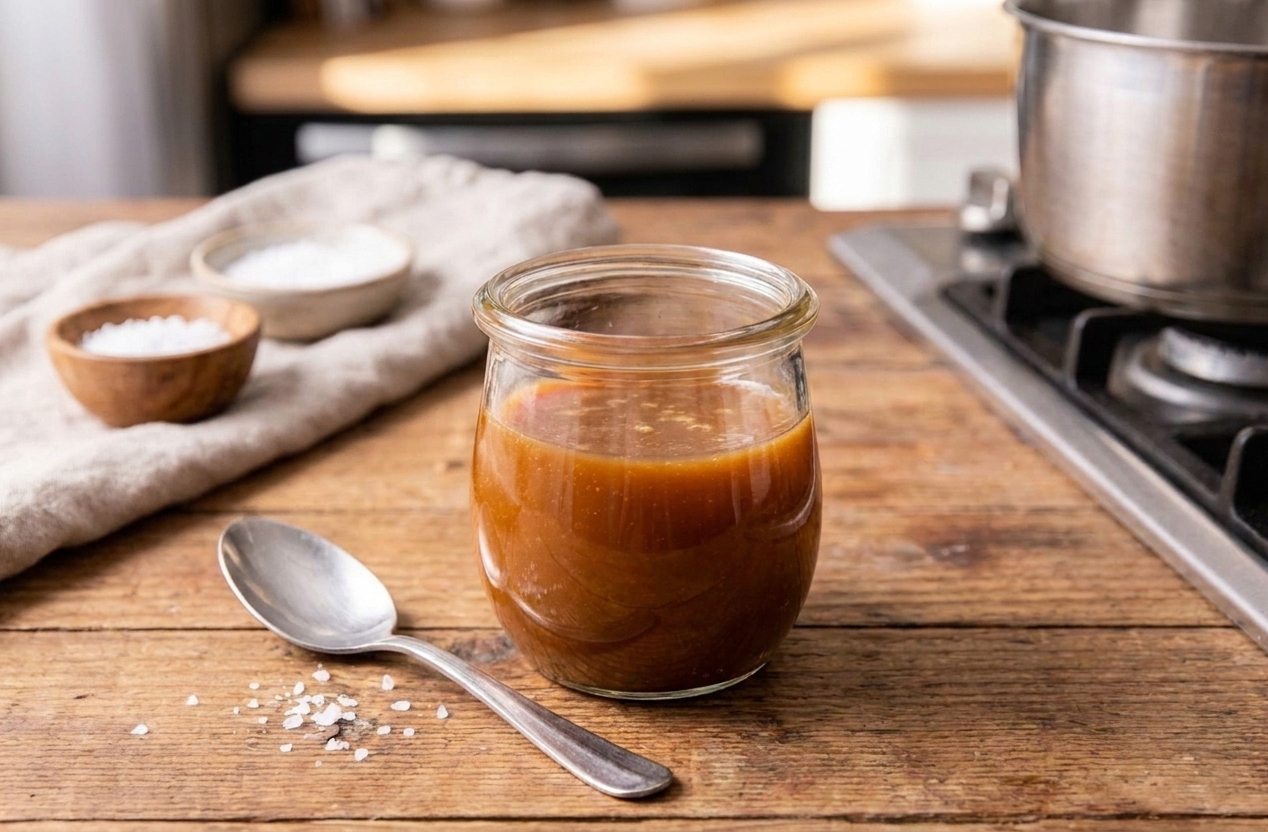
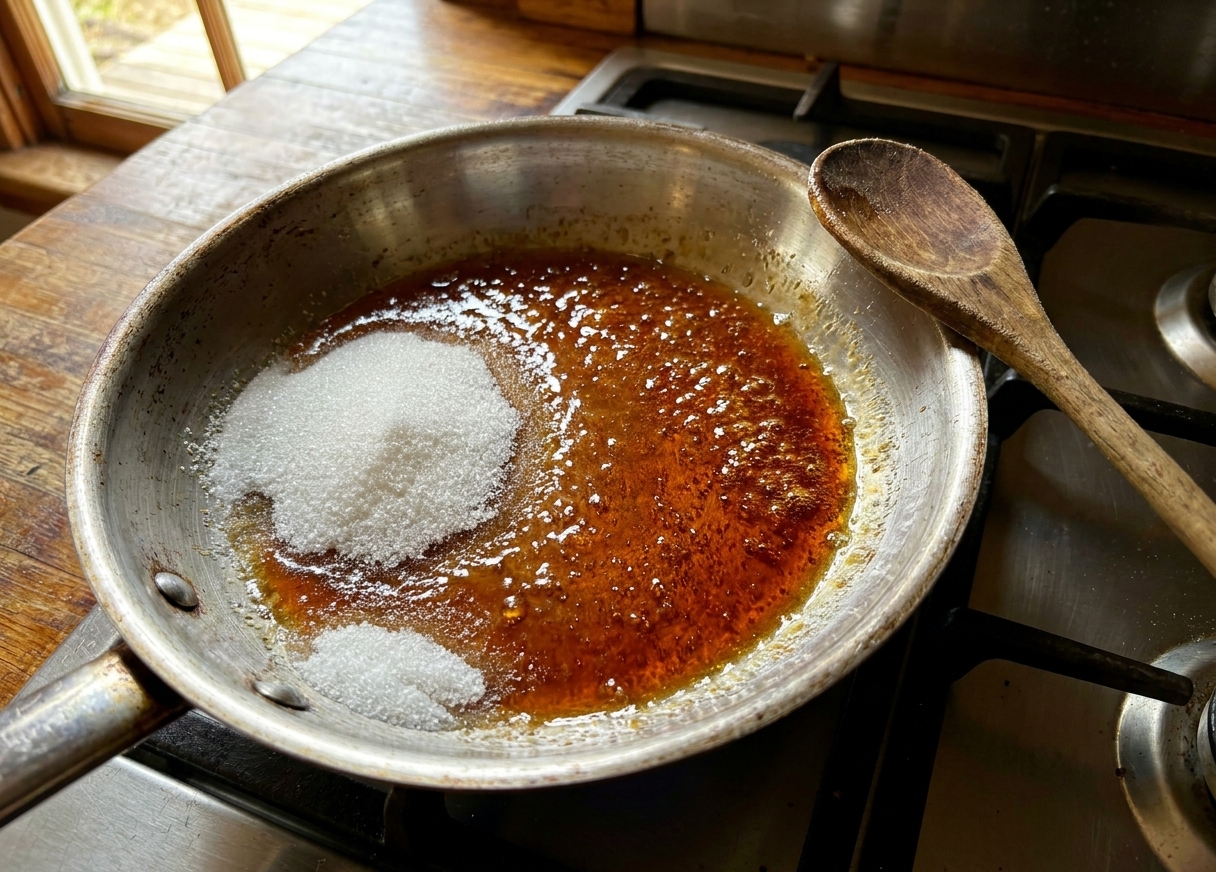
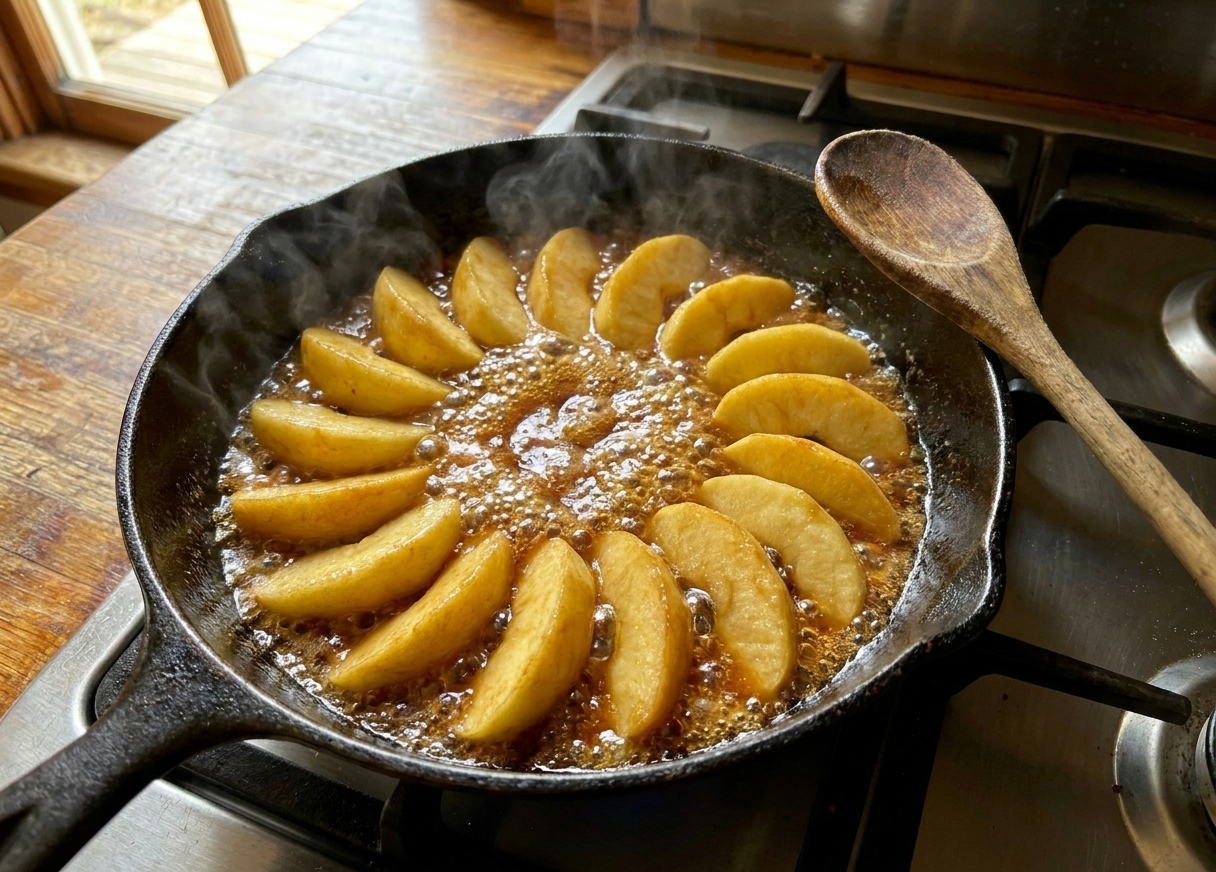
Look for a deep amber, like a copper penny, but stop just shy of “whoa” if you are nervous. Caramel can go from perfect to bitter fast, and it keeps darkening from residual heat. It also deepens quickly once the butter goes in, so do not chase the darkest color on the stove.
When do I flip tarte Tatin?
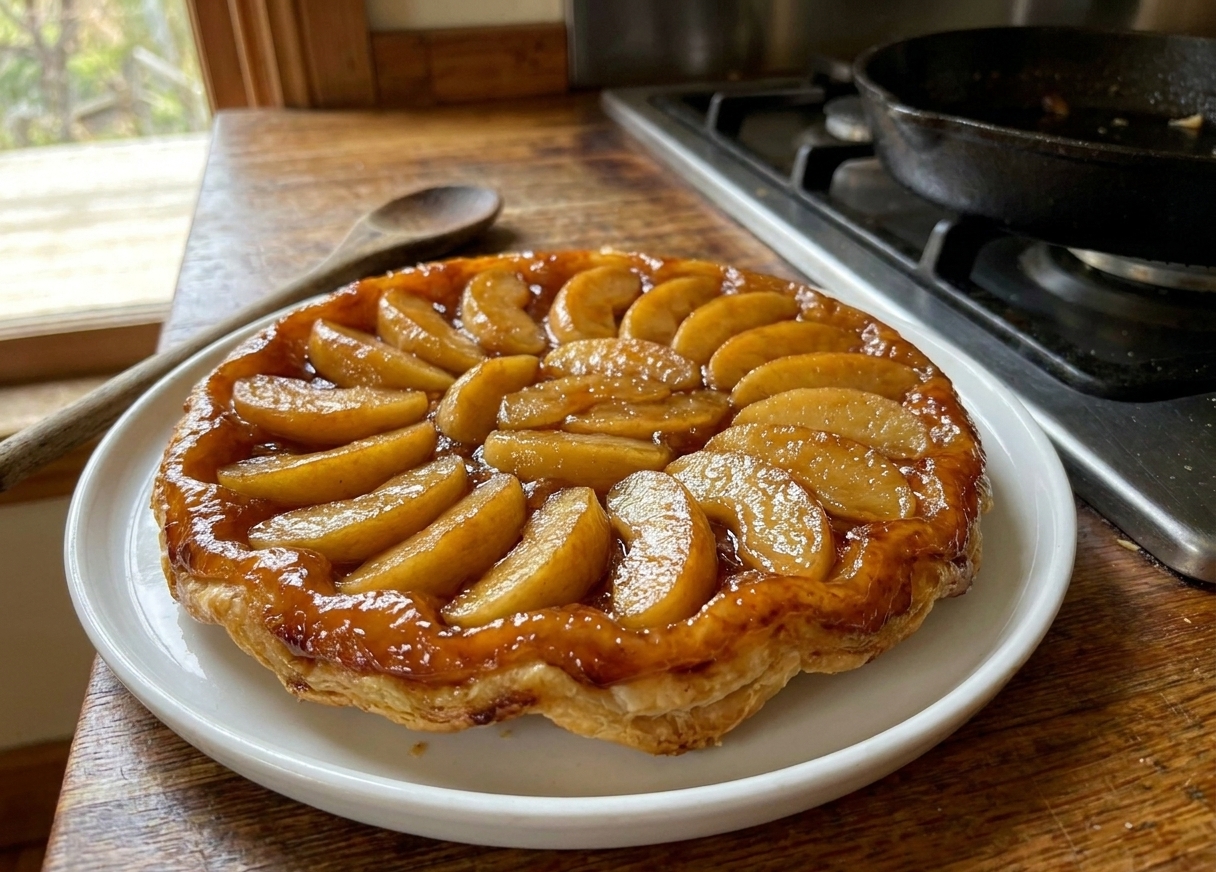
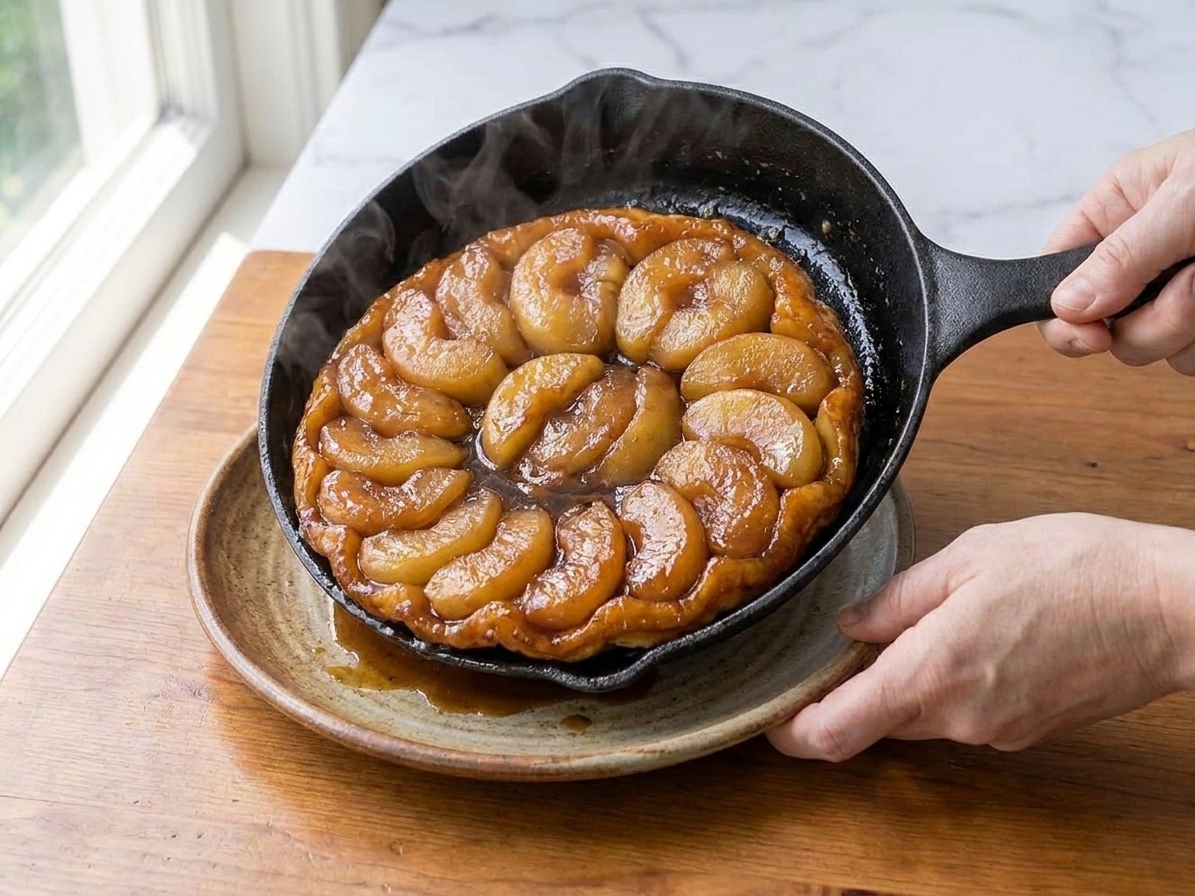
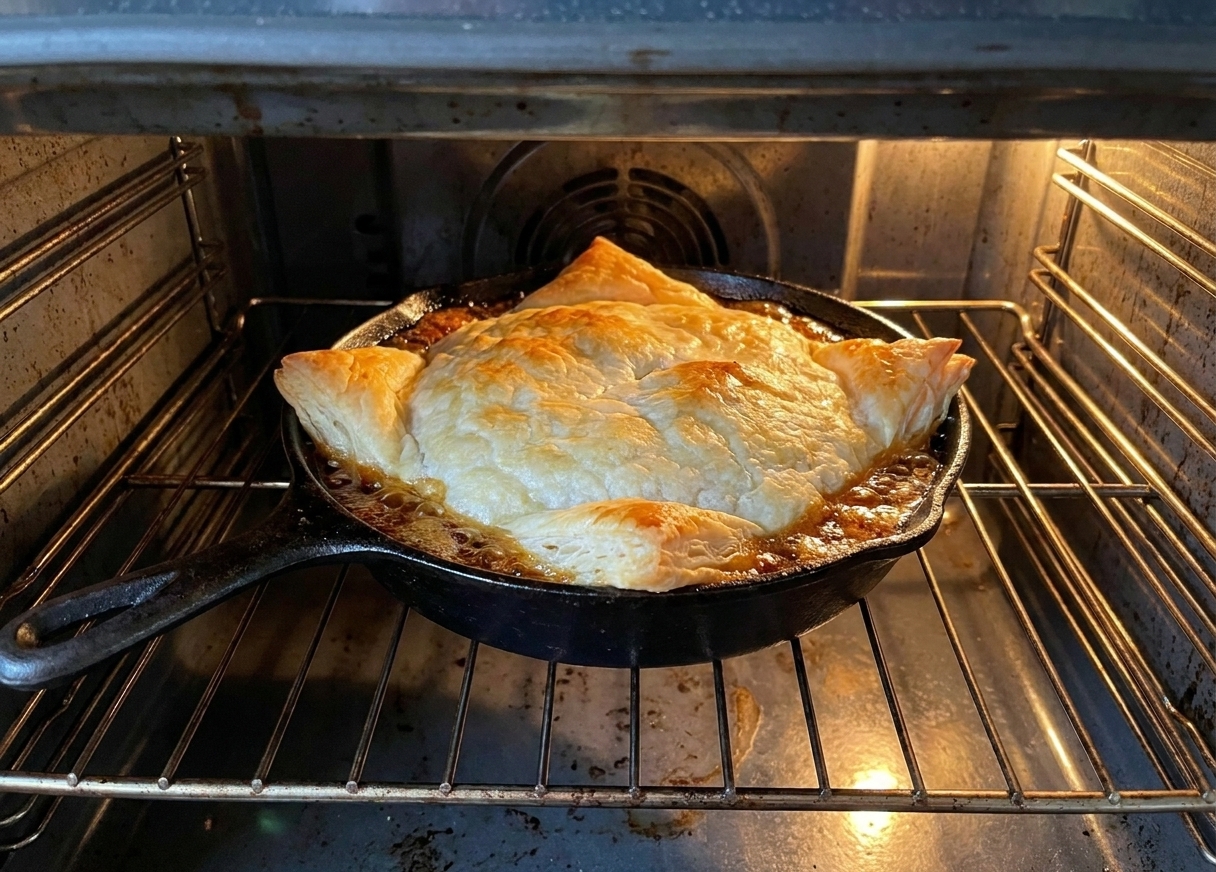
Flip it while it is still hot and bubbly, about 5 minutes out of the oven. If you wait until it cools, the caramel sets and the apples can stick.
Help, my apples stuck to the pan. What now?
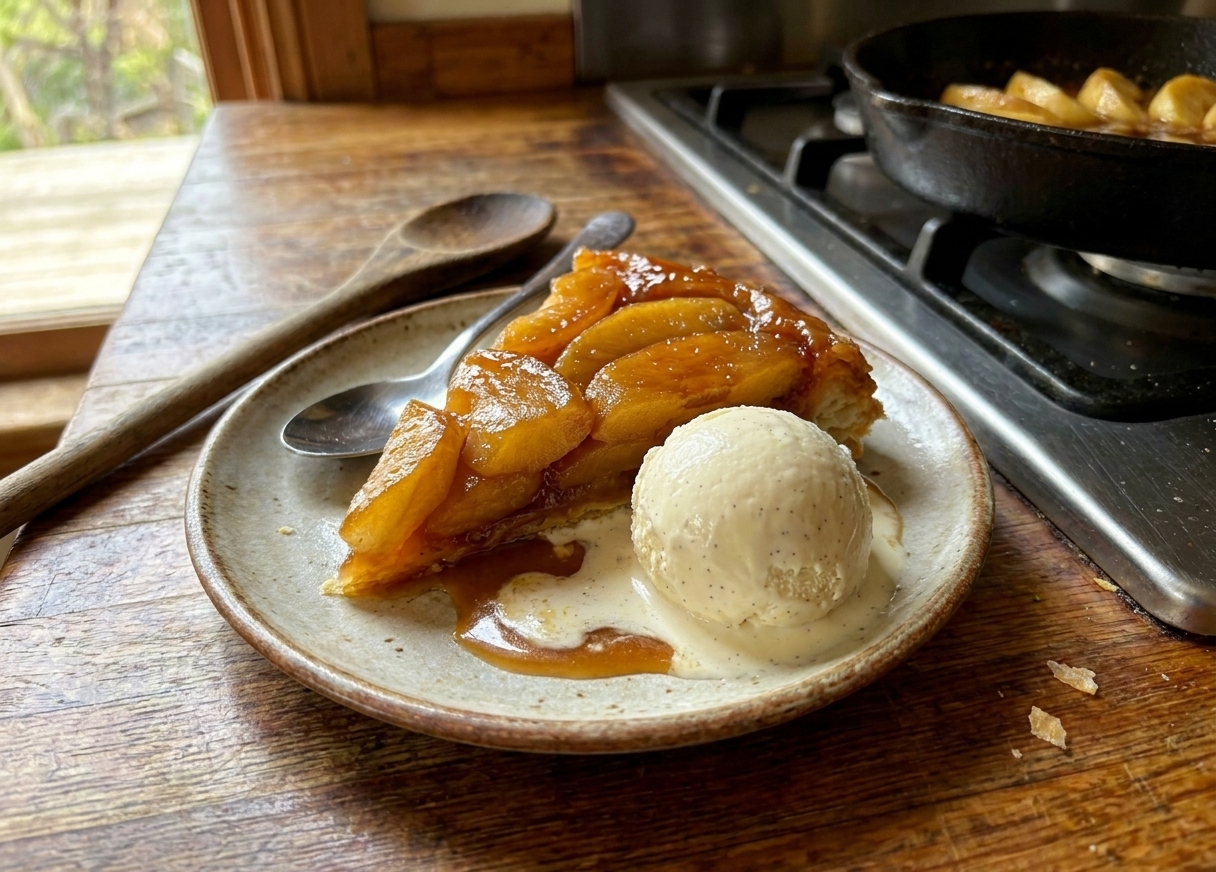
No shame. Put the pan back over low heat for 30 to 60 seconds to loosen the caramel, then try again. If a few apples stay behind, just lift them out with a spatula and patch the top. It is rustic. We love rustic.
Can I make tarte Tatin ahead?
You can make it earlier the same day and rewarm in a 300°F oven for about 10 minutes. For the crispiest pastry, bake and serve the same day.