Mom's Best Recipes
Recipe

Filipino Pinakbet

A classic Filipino vegetable stew with squash, eggplant, okra, and a savory shrimp paste sauce that begs for hot rice.

Author By Matt Campbell
4.8
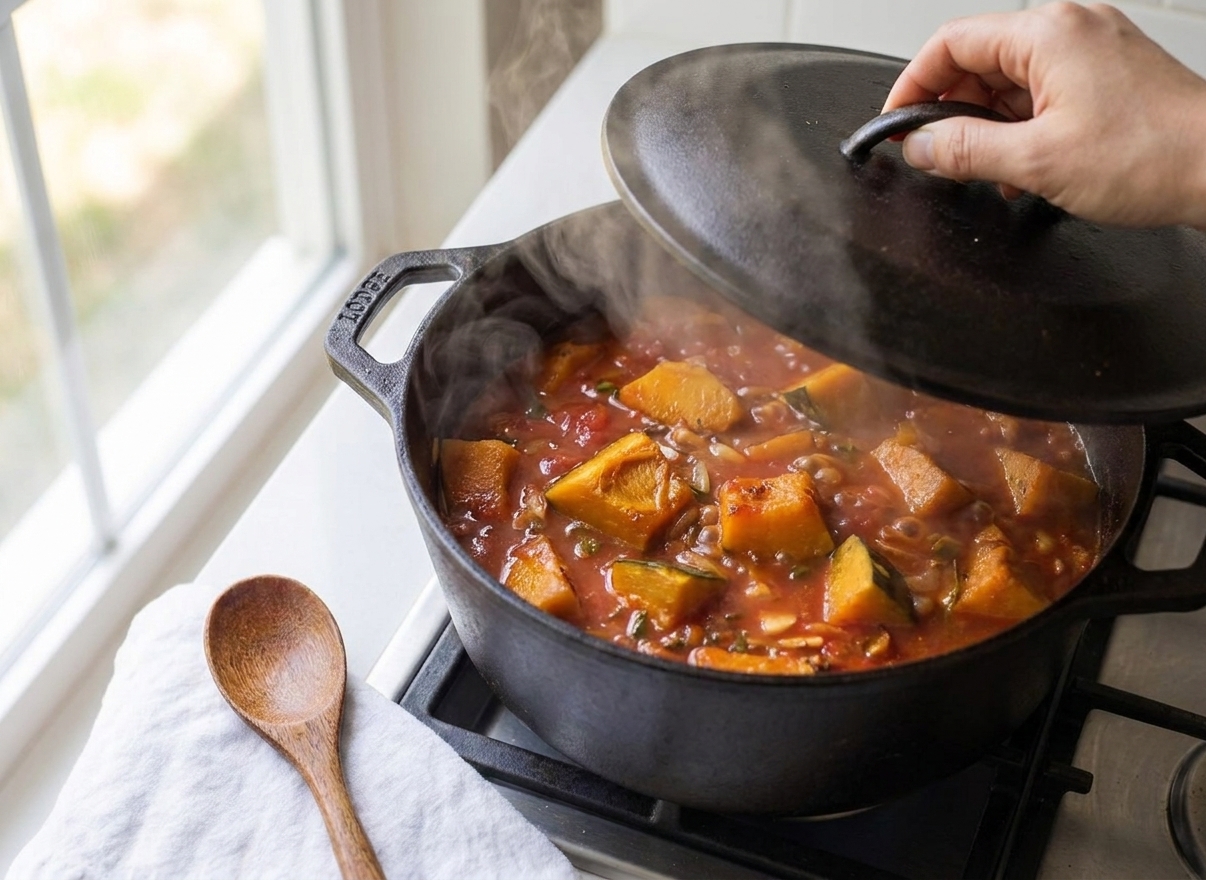
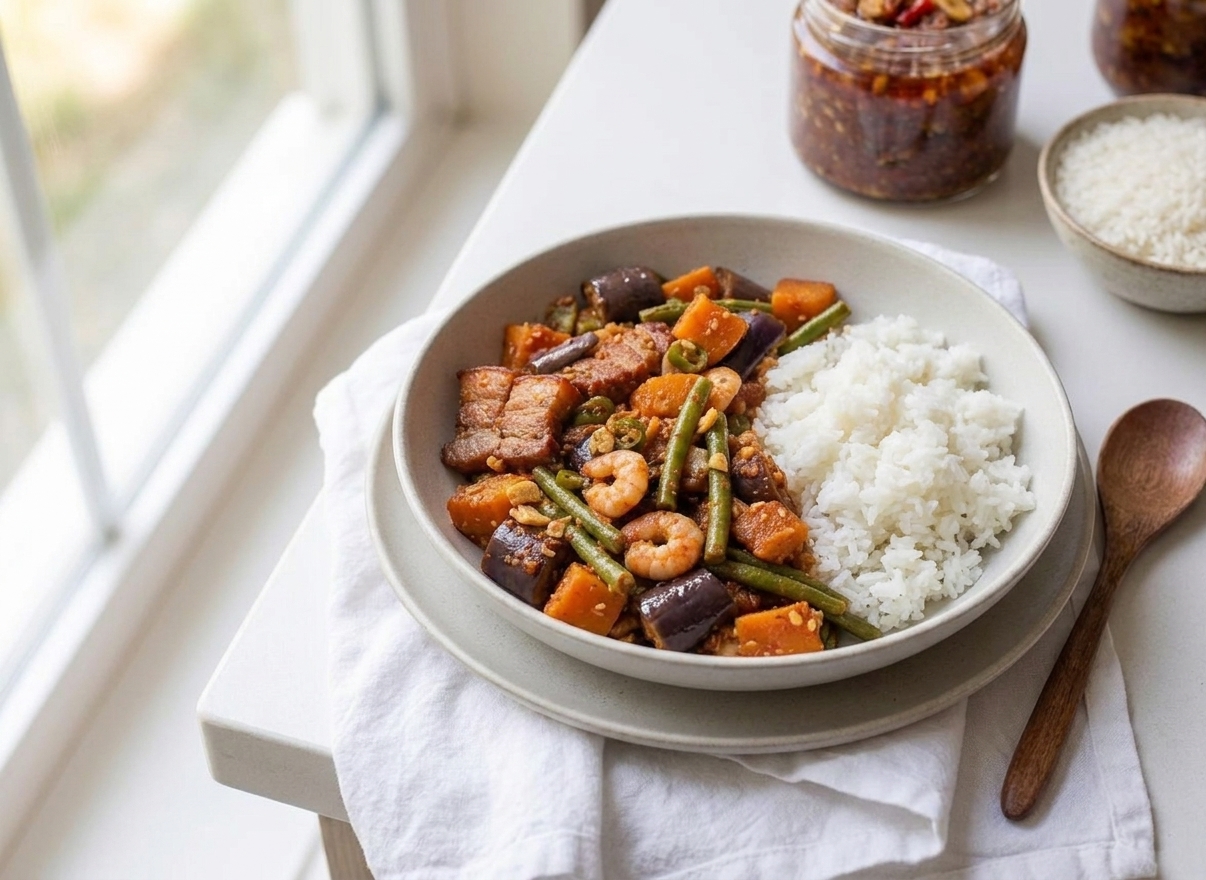
A steaming bowl of Filipino pinakbet with squash, eggplant, okra, and long beans in a glossy savory sauce, served with white rice on a warm-toned wooden table

Pinakbet is one of those dishes that feels like it has your back. It’s vegetable-forward, deeply savory, and the kind of meal that makes plain rice feel like it’s doing something important.

Pinakbet has roots in the North (Ilocos), but the version I’m sharing here is closer to the widely loved Pinakbet Tagalog, made with bagoong alamang (fermented shrimp paste) and squash. Many Ilocano versions are seasoned with bagoong isda (fermented fish paste) and often skip squash, though it can vary from kitchen to kitchen. This one leans a little sweeter and silkier thanks to the squash, with that same salty-savory bagoong backbone.

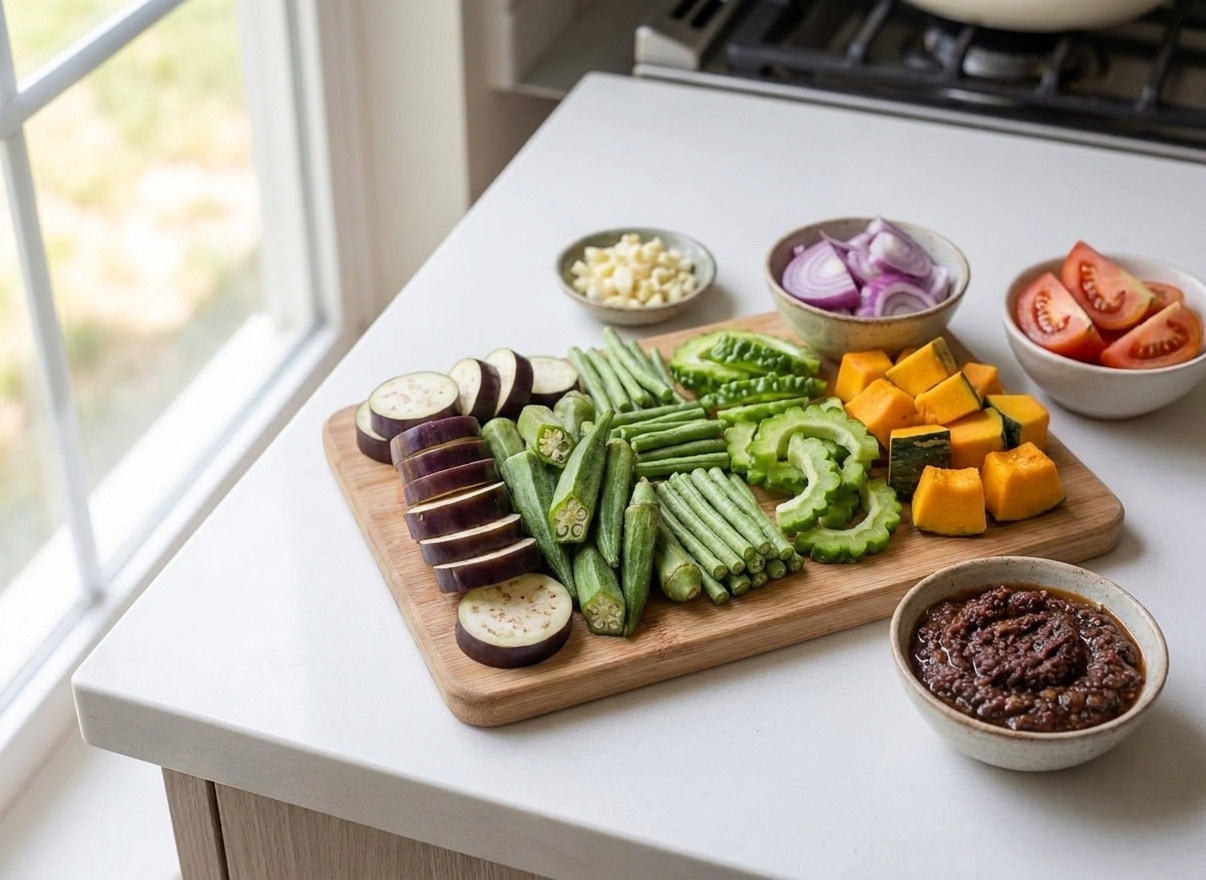
A kitchen counter with prepped pinakbet vegetables including sliced eggplant, okra, long beans, bitter melon, and cubed kabocha squash alongside garlic, onion, tomato, and a small bowl of bagoong

This version keeps the ingredient list realistic for a typical grocery run, with options for the more traditional add-ins if you can find them. It’s relaxed cooking with a big payoff, which is basically my favorite genre.

Why It Works

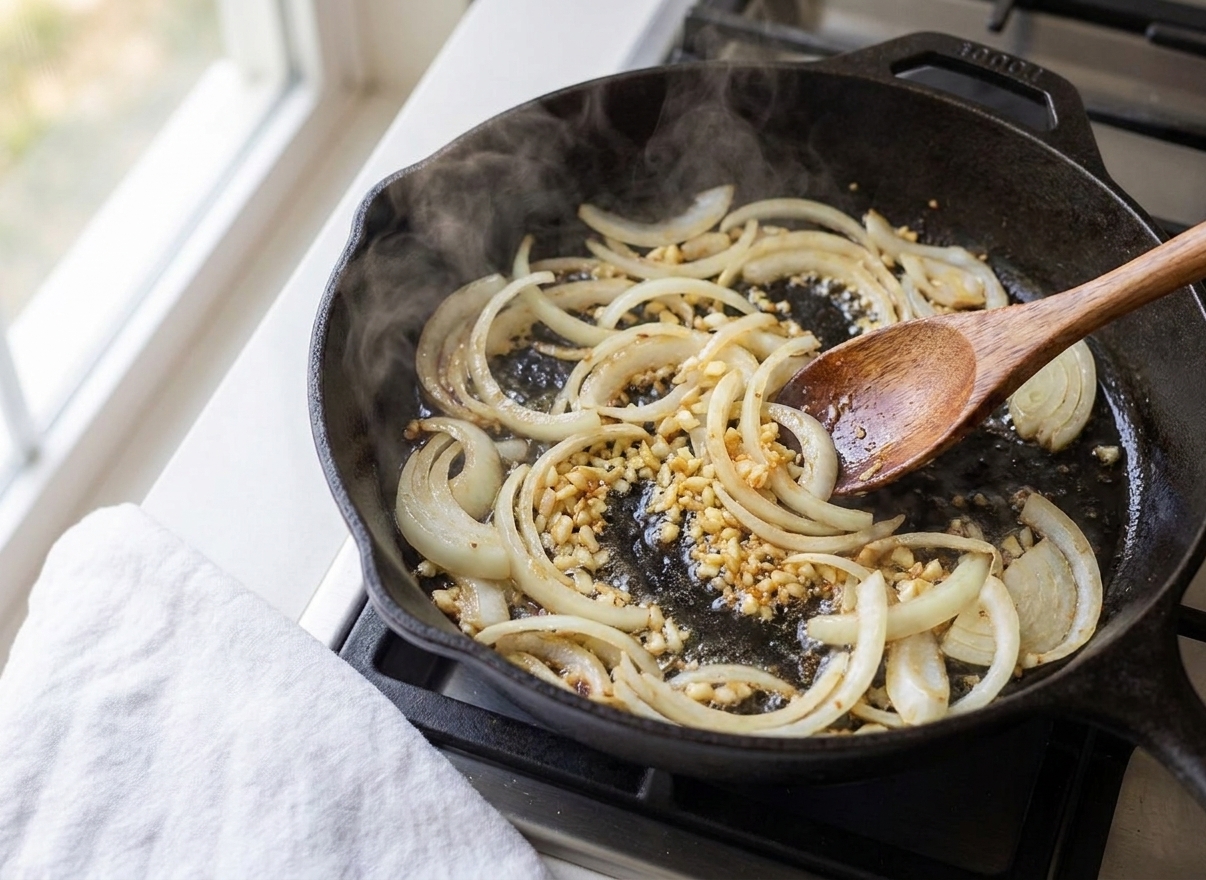
  • Big flavor, simple method: the sauce builds fast from sautéed aromatics, tomato, and bagoong, then the vegetables steam until tender.
  • Vegetables cook in layers: firmer veg (squash) goes first, delicate veg (okra) goes last so nothing turns to mush.
  • Balanced salt and funk: a small amount of bagoong brings depth, while a little sugar and tomato round it out.
  • Weeknight flexible: use what you can find. Pinakbet is forgiving as long as you keep the timing and don’t drown it in liquid.

Pairs Well With

Storage Tips

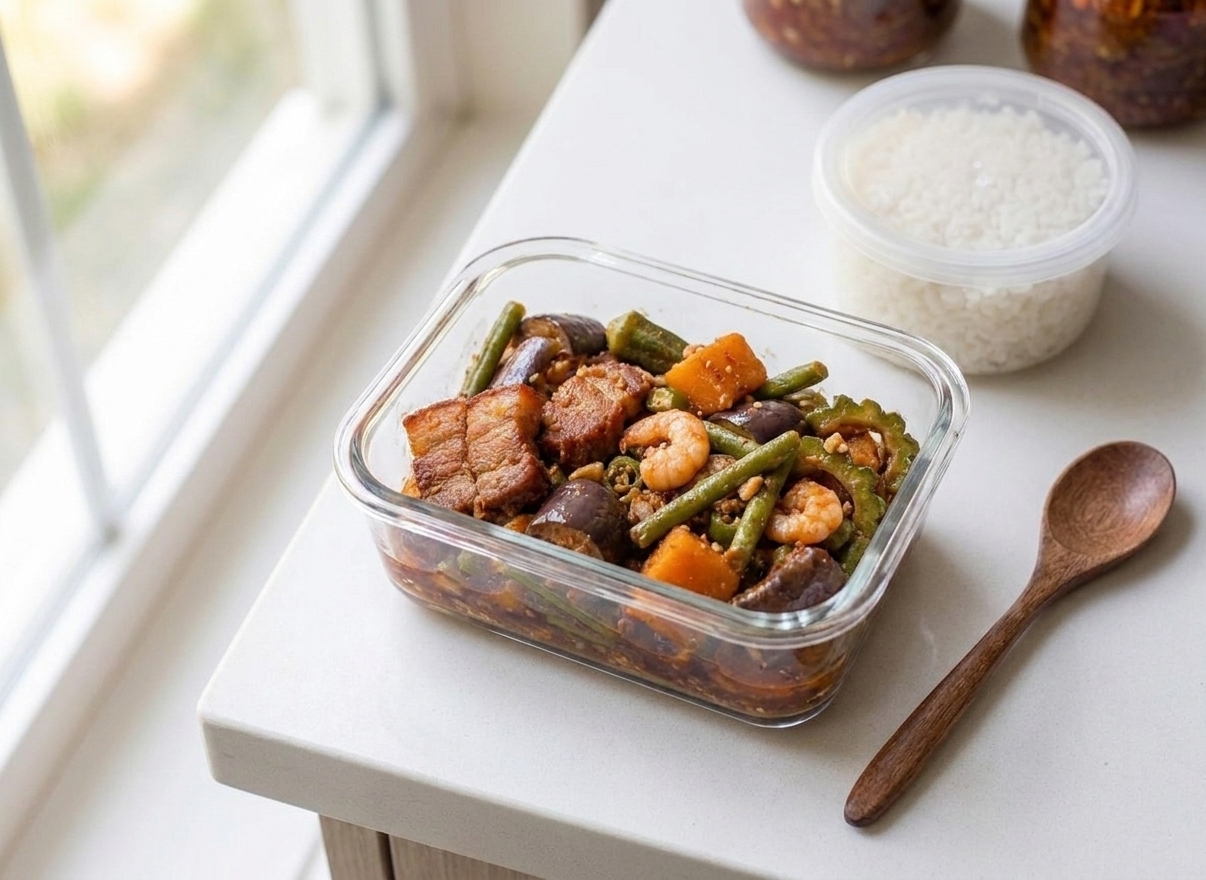
Refrigerate: Cool completely, then store in an airtight container for up to 3 to 4 days.

Reheat: Warm gently in a saucepan over medium-low with a splash of water if needed. Try not to boil hard or the vegetables can get overly soft.

Freeze: You can freeze pinakbet, but the texture will soften, especially the okra and eggplant. For best quality, use within 1 to 2 months. If you’re meal prepping for the freezer, consider freezing without the okra and adding fresh okra when reheating.

A glass meal prep container filled with leftover pinakbet with vegetables visible through the sides, sitting on a kitchen counter next to a lidded container of rice

Common Questions

What is pinakbet made of?

Pinakbet is made with a mix of vegetables like squash (in many versions), eggplant, okra, long beans, and often bitter melon, cooked with aromatics and seasoned with bagoong (fermented paste). Some versions include pork or shrimp, but a lot of home cooks keep it mostly vegetables.

Is this Ilocano pinakbet?

This recipe is closer to Pinakbet Tagalog, the popular adaptation you’ll see in many Filipino homes and restaurants. Traditional Ilocano pinakbet (from the North) is often seasoned with bagoong isda (fermented fish paste) and many versions skip squash, though household and regional variations definitely exist. Think of this as a weeknight-friendly, widely loved take with bagoong alamang and squash for a sweeter, silkier pot.

Does pinakbet taste fishy?

Not when it’s used correctly. Bagoong is salty and funky, but in pinakbet it acts more like an umami paste that deepens the sauce. Start with a small amount, taste, then add more if you want.

Any tips for using bagoong?

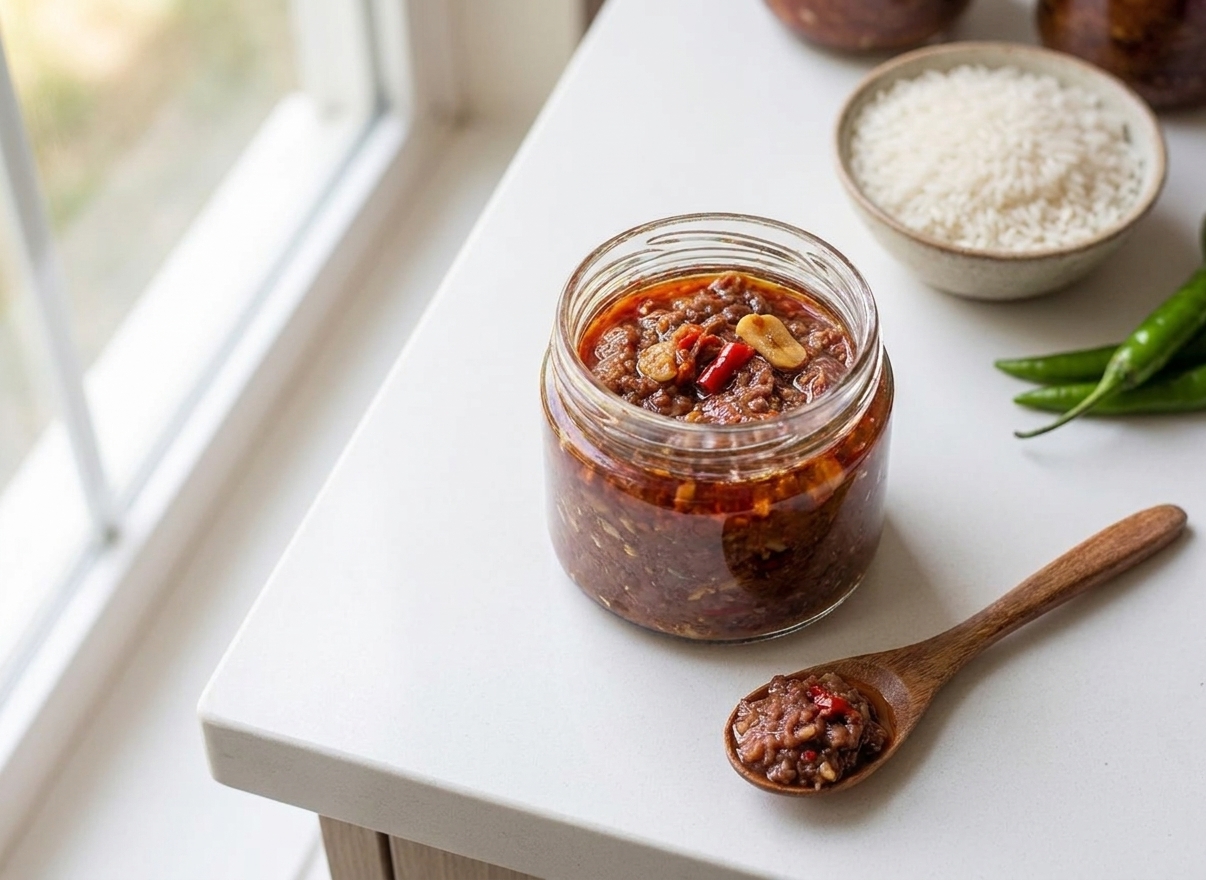
Brands vary a lot. Some bagoong alamang is saltier, some is a little sweetened, and some is chunkier than others. I treat it like seasoning paste: start with 1 tablespoon, cook it briefly, then adjust at the end 1 teaspoon at a time until it tastes right to you.

Can I make pinakbet without bagoong?

You can, but it won’t be the same dish. If you need a substitute, try fish sauce plus a tiny bit of miso for depth. Use a light hand and taste as you go.

Why is my pinakbet watery?

Usually it’s too much added water, or the pot was stirred a lot and cooked uncovered. Keep the liquid modest, cover while the squash softens, and let the vegetables steam in their own moisture. Tomatoes release plenty of juice too.

How do I keep eggplant from getting mushy (or brown)?

Add it after the squash has started to soften, and avoid aggressive stirring. Pinakbet is more of a gentle simmer-and-steam situation than a stir-fry. If you’re prepping ahead, you can also hold cut eggplant in a bowl of water to slow browning, then drain well before adding.

Is pinakbet spicy?

Some versions include chilies, but it doesn’t have to be spicy. Add Thai chilies or serrano if you want heat, or keep it mild and let the bagoong do the talking.

How can I tone down ampalaya bitterness?

If you’re using bitter melon and want it milder, toss the slices with a pinch of salt, let them sit 10 minutes, then squeeze and rinse quickly before cooking. Or simply use less and let the other vegetables balance it out.


I love dishes that make vegetables feel like the main event without pretending they’re something they’re not. Pinakbet does that. It’s honest, cozy, and kind of magic with rice. The first time I made it, I went a little heavy on the bagoong and got a quick lesson in humility. Now I treat it like anchovy paste in Italian cooking: start small, build, taste, and suddenly the whole pot tastes like it’s been simmering all day.