Common Questions
What potatoes are best for fluffy and creamy mashed potatoes?
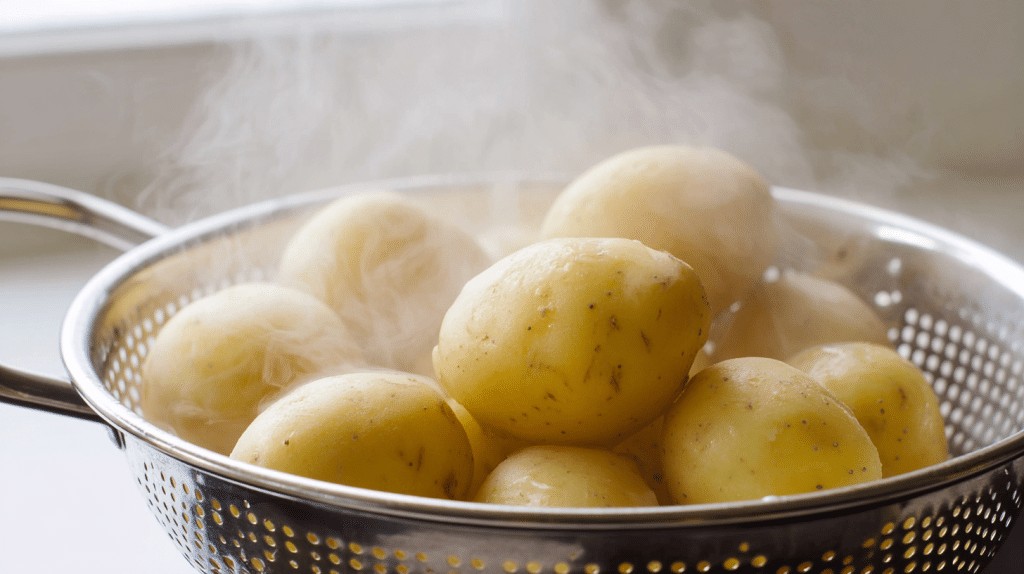
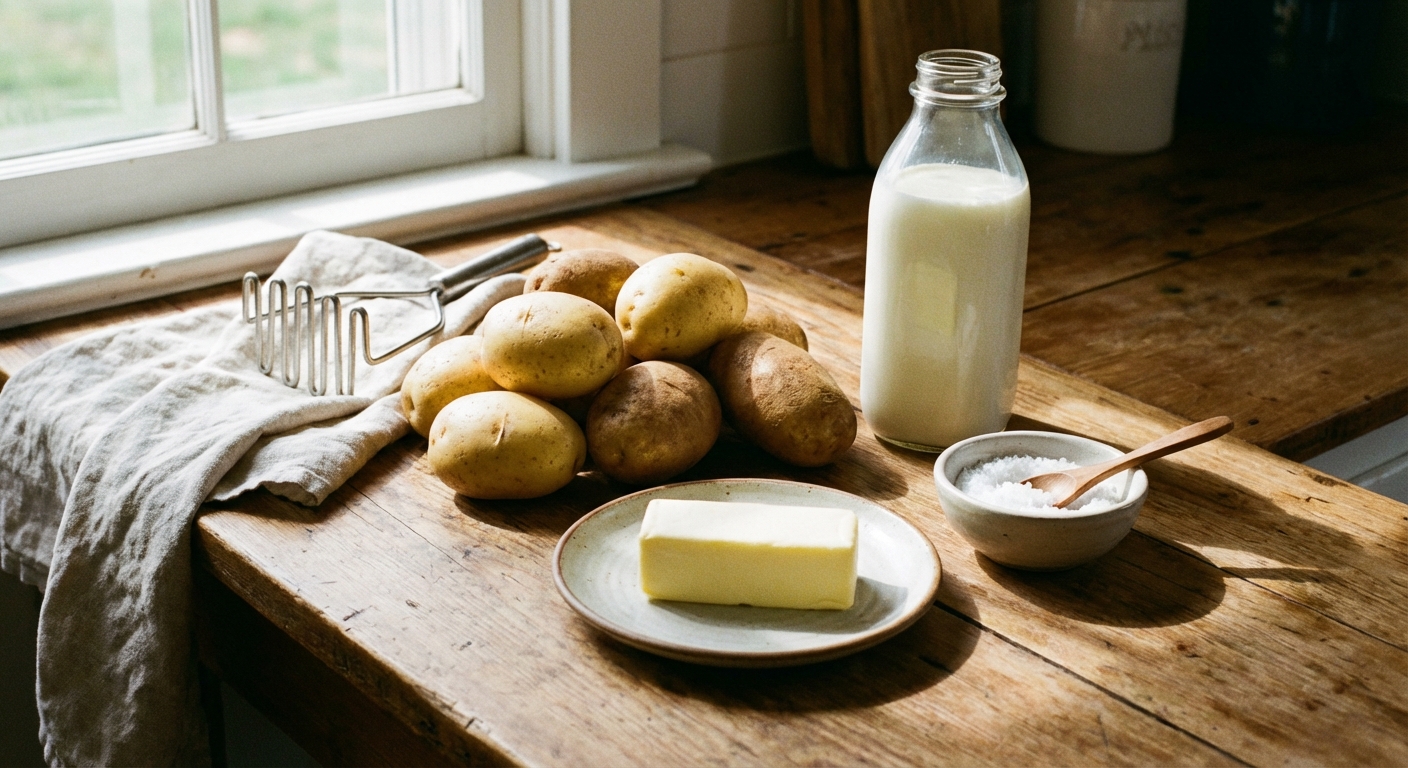
Russets are the fluff champions. Yukon Golds are naturally buttery and creamy. For the best of both worlds, use a mix: half Russet, half Yukon Gold.
Why did my mashed potatoes turn gummy?
Usually one of three things: you over-mashed, you used a blender or food processor, or you used a waxier potato and then mixed it hard. Reds and other waxy potatoes can absolutely be mashed, they just tend to go denser and can turn gluey faster if you overwork them.
Do I have to peel the potatoes?
Nope. For the fluffiest, smoothest mash, peel them. For a rustic vibe, leave some skin on and use a hand masher. If you want totally smooth potatoes, a ricer plus peeled potatoes is the move.
Should I start potatoes in cold water?
Yes. Starting in cold, salted water helps the potatoes cook evenly. If you drop them into boiling water, the outside can overcook while the inside plays hard to get.
How do I make them extra creamy without making them heavy?
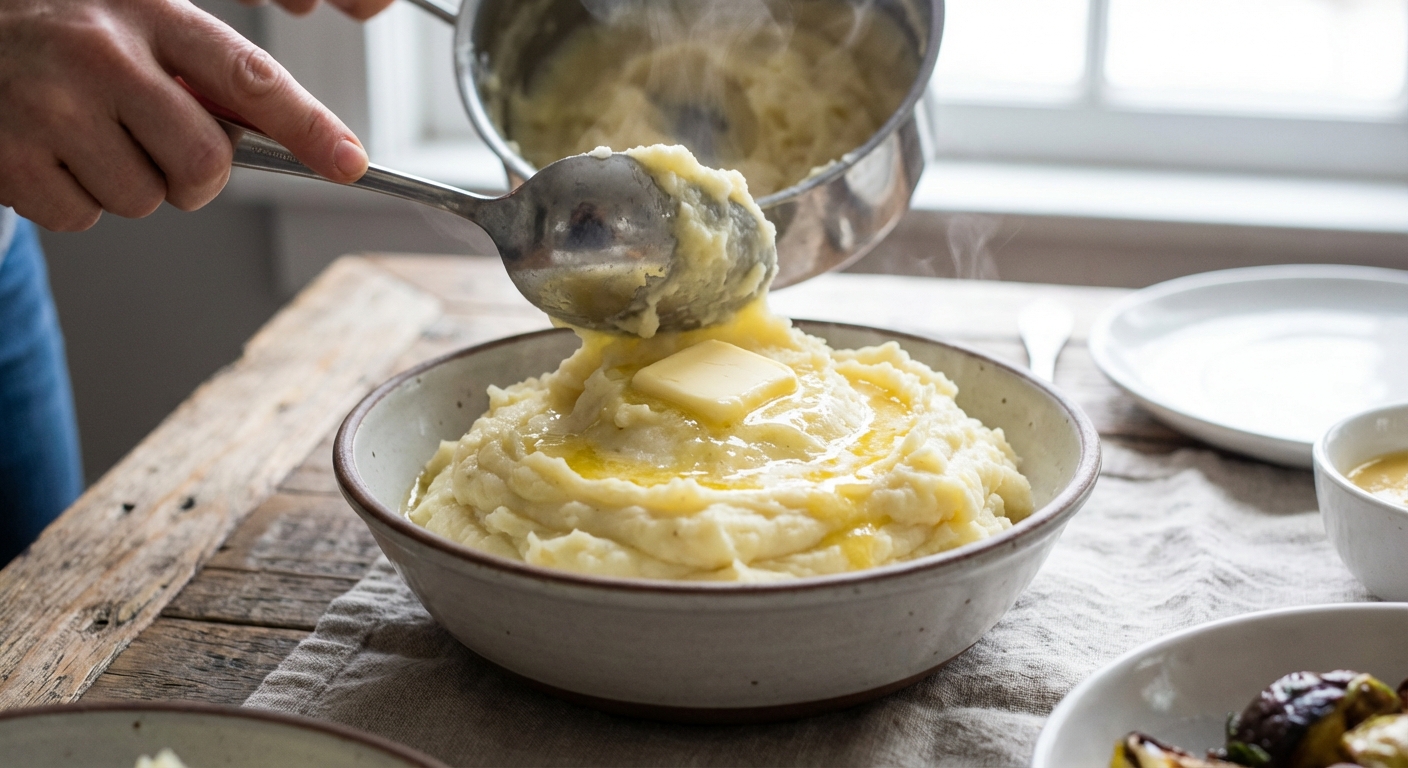
Warm your dairy, add it gradually, and stop mixing as soon as they are smooth. A spoonful of crème fraîche or sour cream adds a little tang and creaminess without requiring a gallon of heavy cream.
Can I make mashed potatoes ahead of time?
Yes. Make them, then keep warm in a slow cooker on low or warm with extra butter on top. For best texture, hold up to 2 to 3 hours and give them a gentle stir about once an hour to prevent the edges from drying. You can also store in the fridge and reheat gently with a splash of dairy. They are surprisingly forgiving if you treat them kindly.