Mom's Best Recipes
Recipe

Fried Bread

Golden, crisp-edged skillet fried bread finished with butter, garlic, and salt. Fast comfort, big flavor, minimal drama.

Author By Matt Campbell
4.8
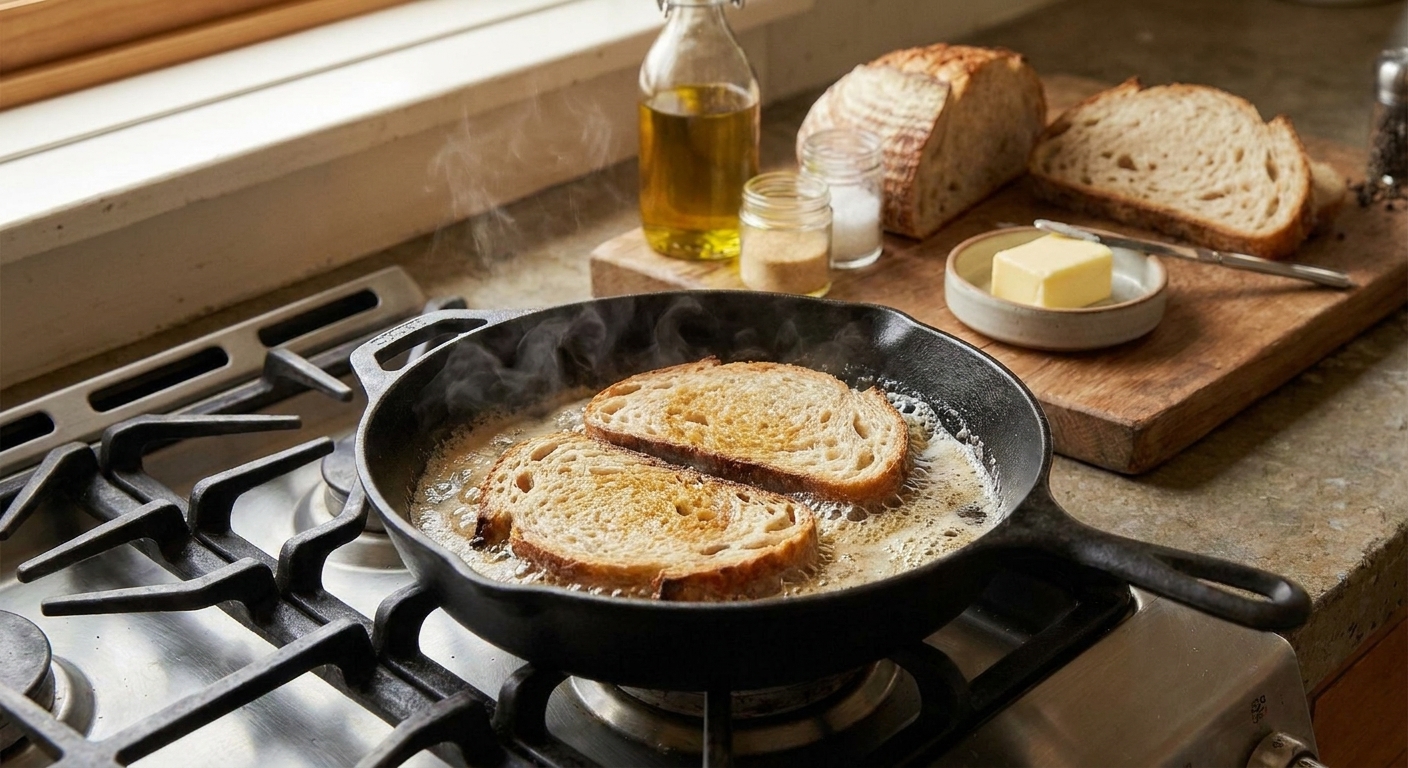
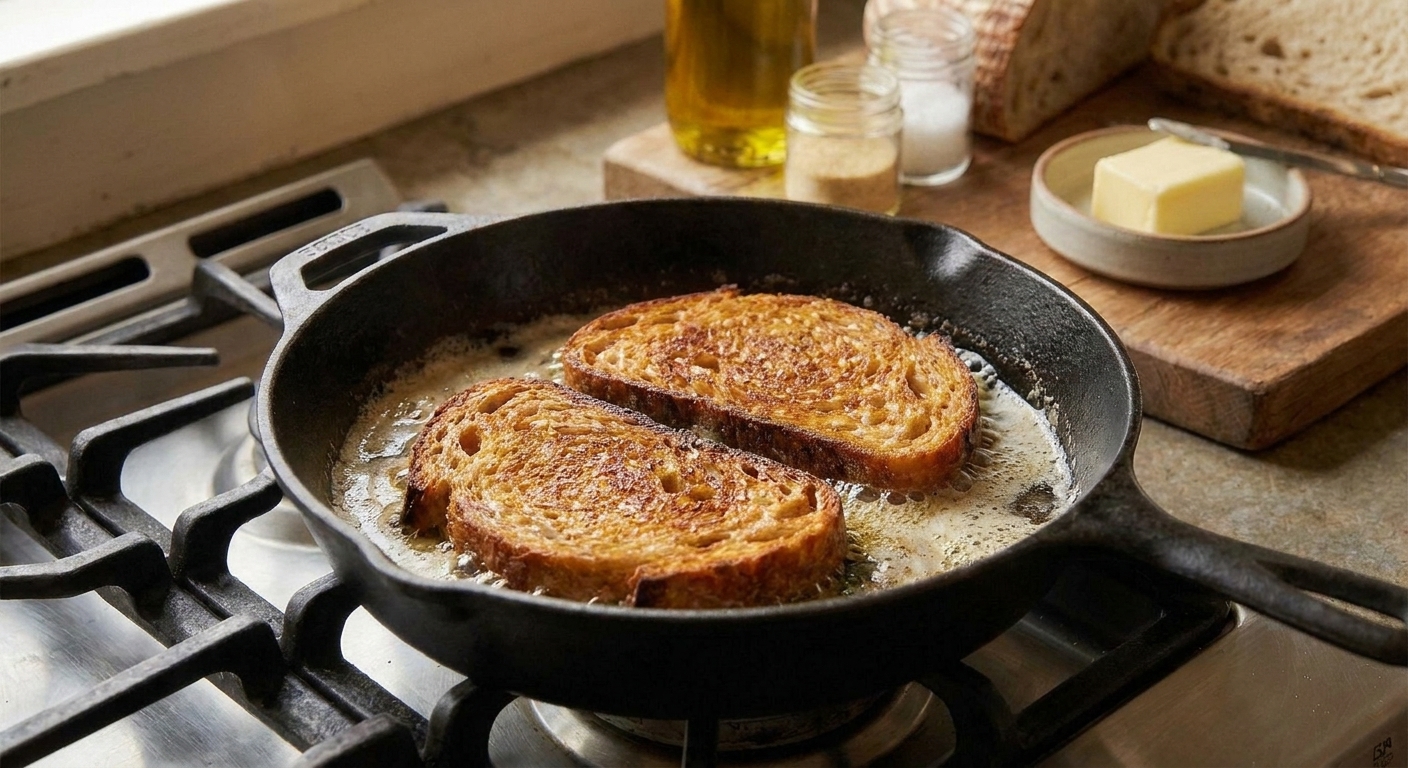
A cast iron skillet on a stove with two thick slices of bread frying to a deep golden brown with crisp edges in warm kitchen lighting

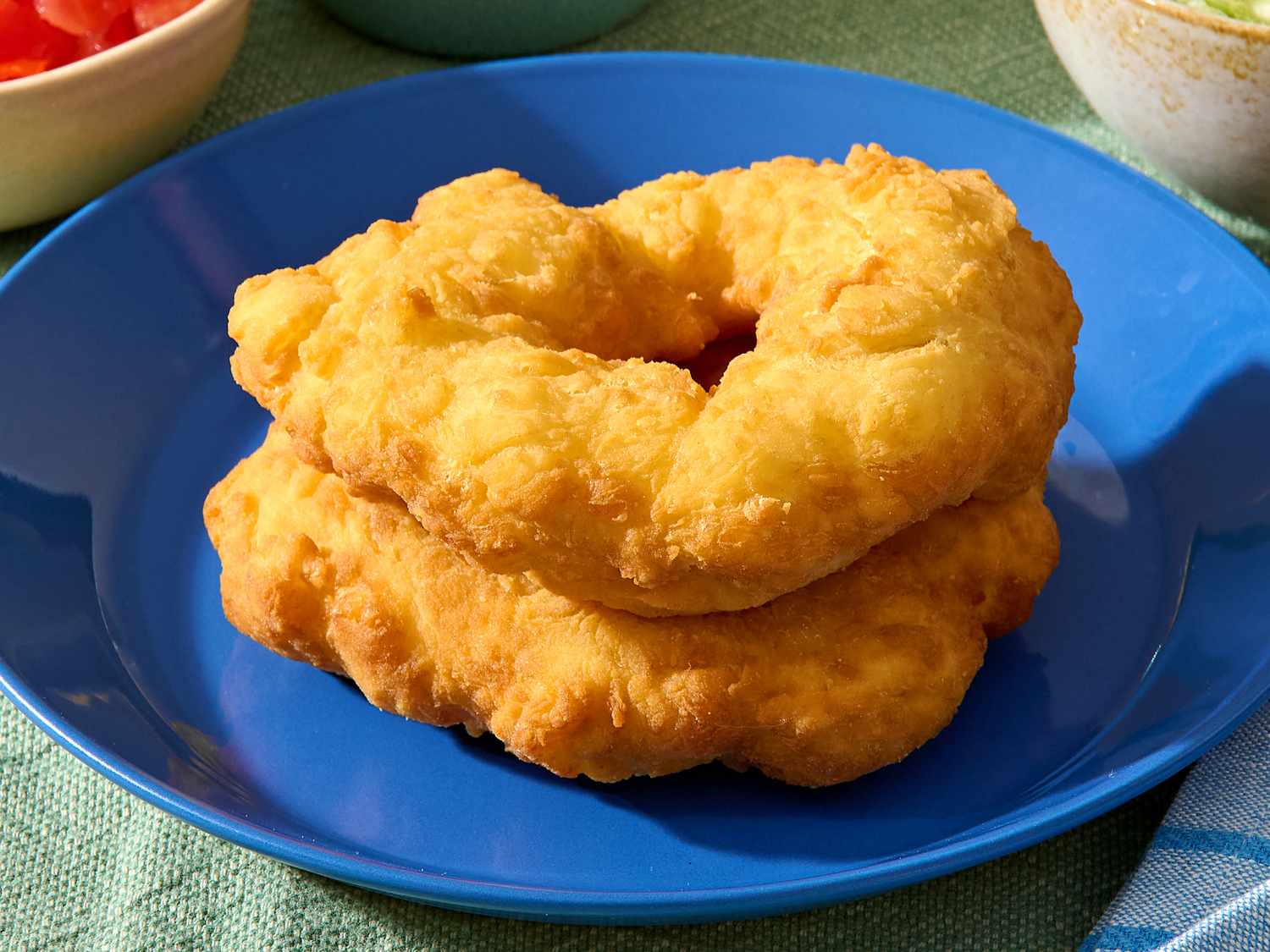
Fried bread is what happens when toast decides to put on a leather jacket and start a band. You get crisp edges, a tender middle, and that unmistakable buttery, savory aroma that makes people wander into the kitchen asking, “What are you making?”

This is my go-to skillet version, the one I make when the bread is a day or two past its prime and I want something that feels like effort without actually being effort. We are talking pan, butter, oil, bread, and a finish that can swing savory (garlic, herbs, Parmesan) or sweet (cinnamon sugar, honey, jam). Taste as you go. You are in charge here.
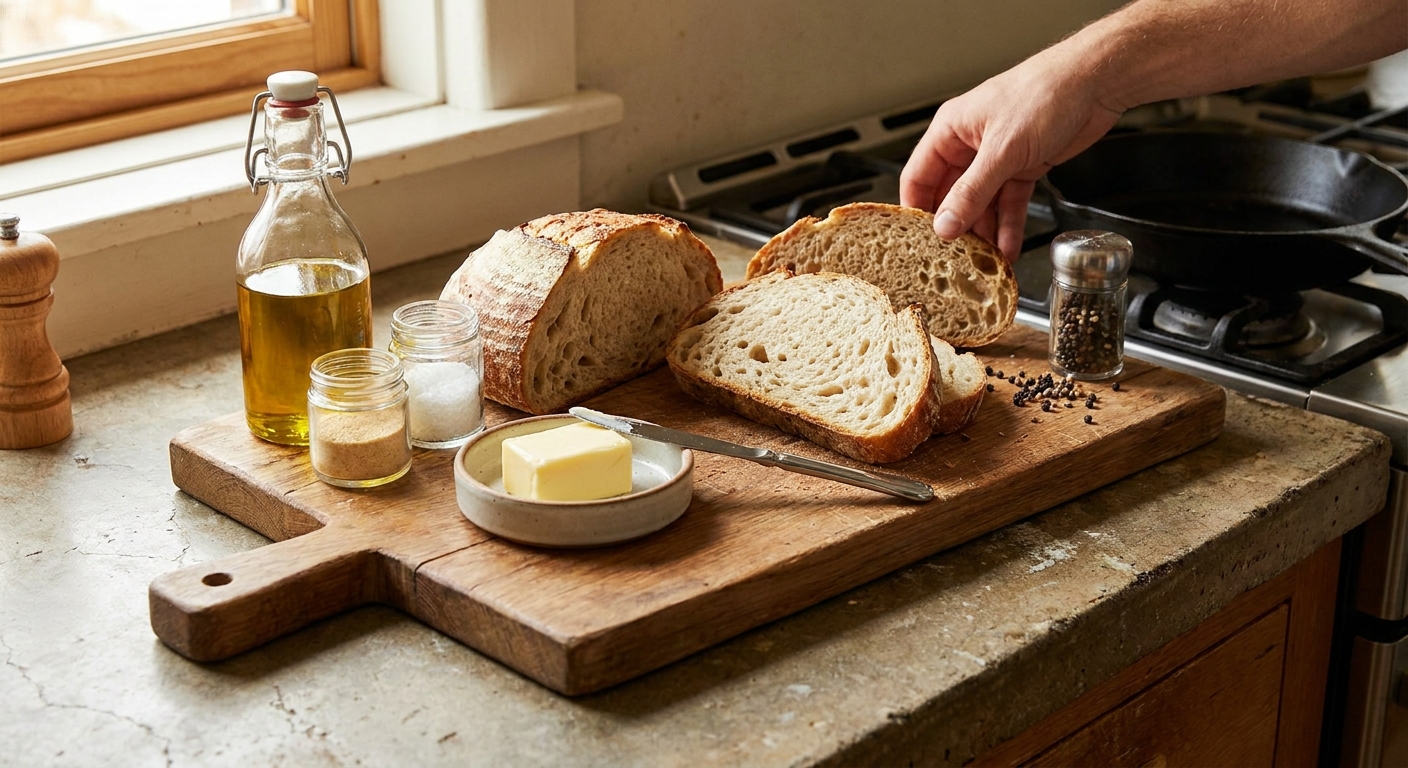
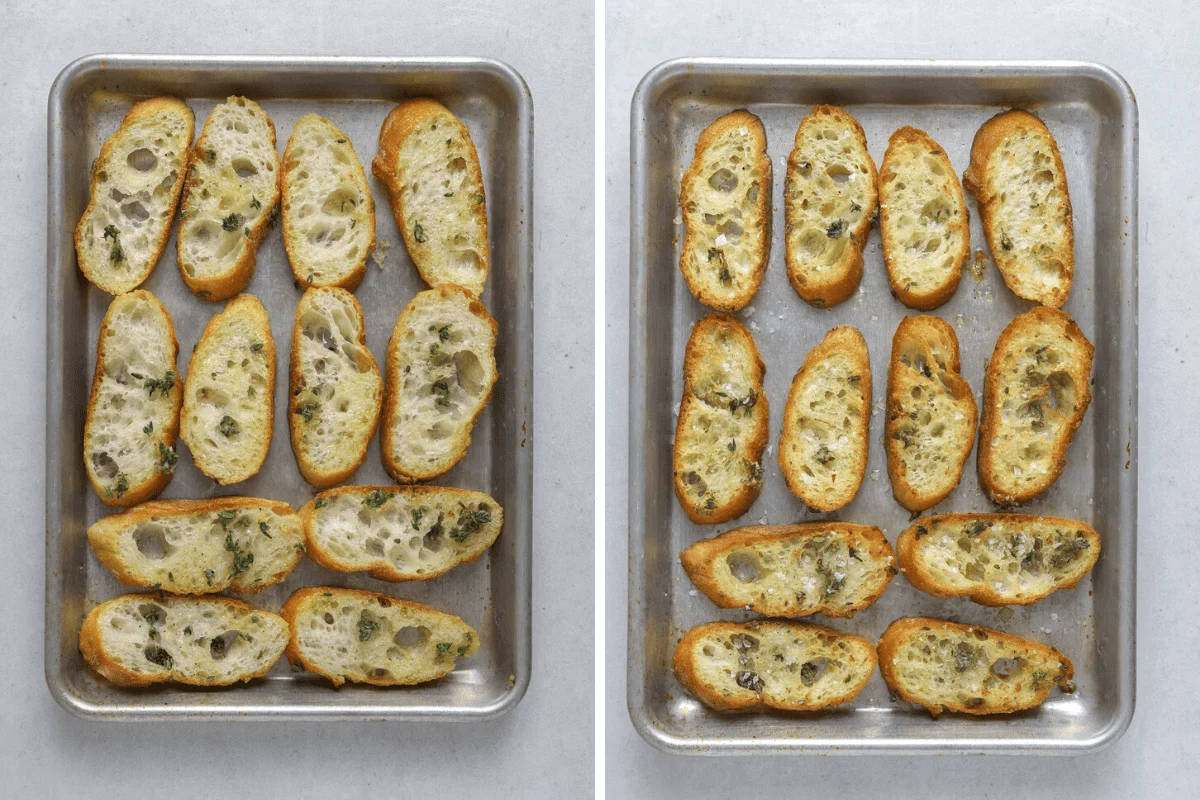
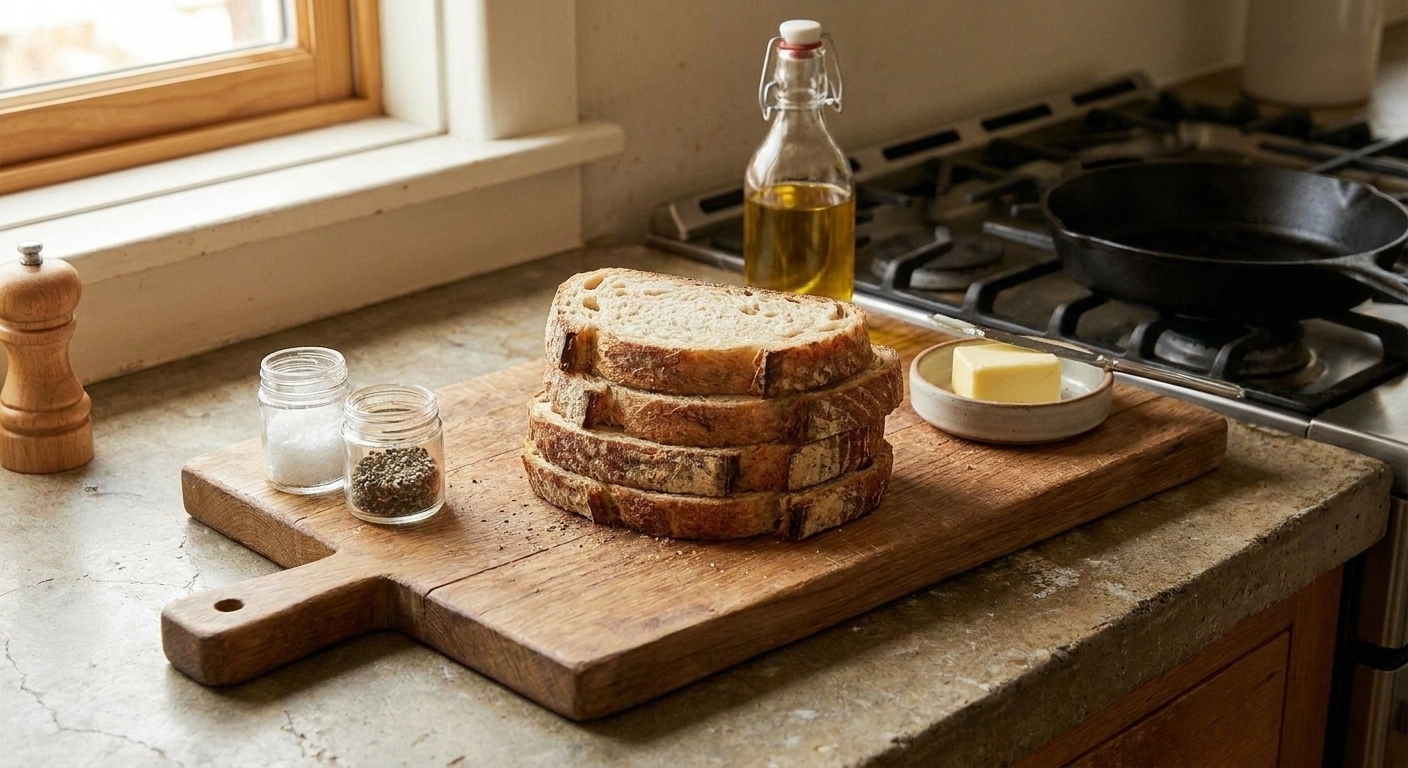
A wooden cutting board on a kitchen counter with sliced bread, butter, olive oil, garlic powder, flaky salt, and black pepper arranged neatly

Why It Works

  • Crisp without being greasy: a mix of butter and oil brings butter flavor and helps reduce scorching risk, so the bread browns instead of burning.
  • Better texture: slightly stale bread fries up with a crunchy surface and a soft center that stays plush.
  • Fast flavor build: seasoning hits while the bread is hot, so it sticks and blooms.
  • Flexible: serve it with eggs, soups, salads, or turn it sweet with a quick sprinkle and drizzle.

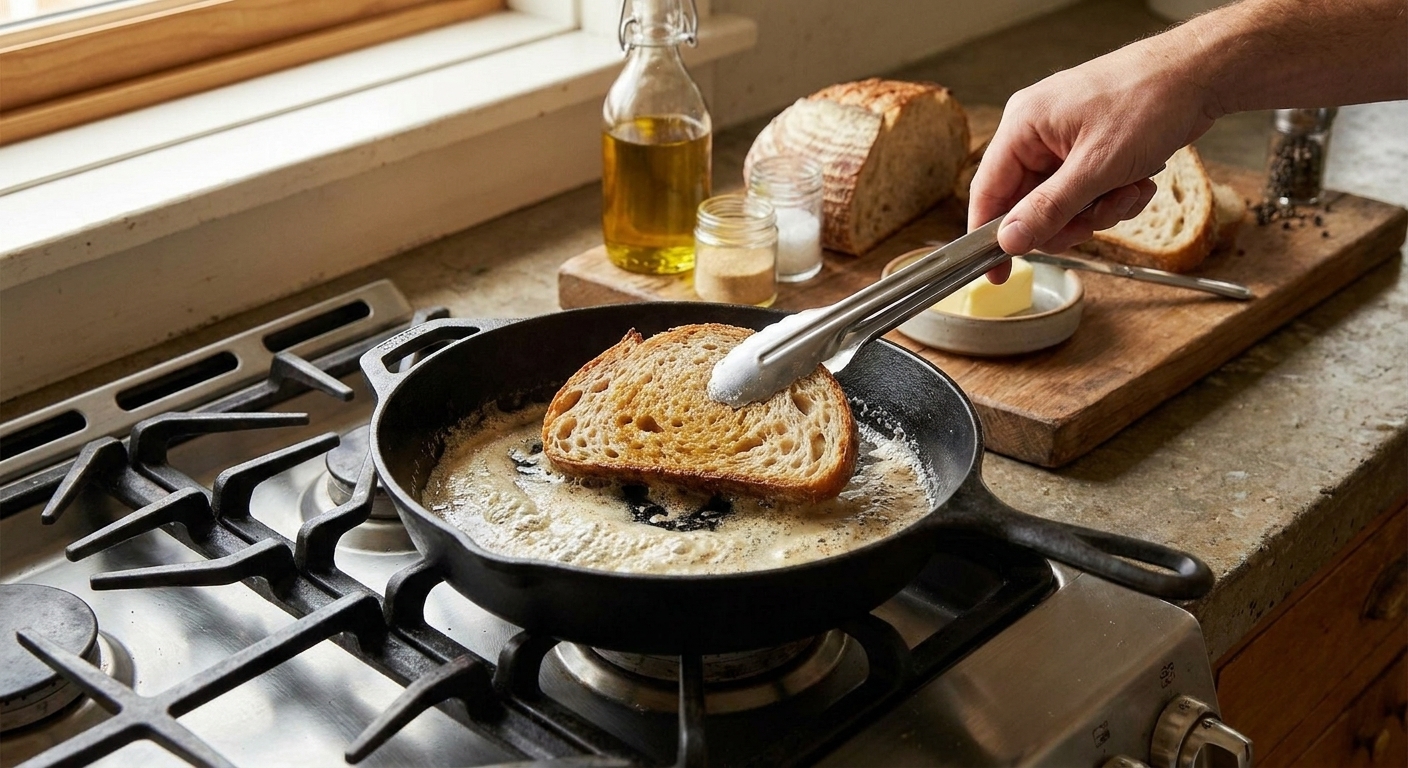
A hand holding tongs flipping a slice of bread in a buttered skillet with foaming butter bubbling around the edges

Pairs Well With

Storage Tips

Fried bread is best right away, but leftovers can still be useful if you reheat them the right way.

Fridge

  • Cool completely, then store in an airtight container for up to 2 days.
  • To reheat: use a dry skillet over medium heat for 1 to 2 minutes per side, or a toaster oven at 375°F for 4 to 6 minutes, depending on thickness.

Freezer

  • Freeze in a single layer, then transfer to a freezer bag for up to 1 month.
  • Reheat from frozen in a toaster oven at 375°F for 8 to 10 minutes, flipping once. (Again, thickness and toaster oven quirks apply.)

What not to do

  • Avoid the microwave if you want crunch. It will turn the crust soft and a little sad.

Common Questions

Why is my fried bread greasy?

Usually the pan is not hot enough. If the fat is lukewarm, bread acts like a sponge. Preheat the skillet for a full minute, then add the butter and oil. You want a steady sizzle as soon as the bread hits.

What bread works best?

Thicker slices win. Try Texas toast, sourdough, Italian loaf, brioche for a richer bite, or leftover sandwich bread that is slightly stale. Super fresh, super soft bread can tear and soak up too much fat.

Can I make it without butter?

Yes. Use all olive oil or a neutral oil for frying, then finish with a pinch of salt and a squeeze of lemon, or rub the hot bread with a cut garlic clove for big flavor without butter.

Can I make sweet fried bread with this?

Absolutely. Skip garlic, add 1 teaspoon sugar to the salt, then finish with cinnamon sugar. Or go simple: butter, a pinch of salt, and honey.

How do I keep it warm for a crowd?

Hold fried bread on a wire rack set over a sheet pan in a 200°F oven. The rack matters because it keeps steam from softening the crust.

Cast iron or nonstick, does it matter?

Cast iron holds heat and browns fast. Nonstick can brown a little slower, so you may need an extra 30 to 60 seconds per side. Either way, if the butter starts browning too quickly, turn the heat down to medium-low and keep going.

I started making fried bread when I realized “being practical” in the kitchen does not mean “being boring.” This is one of those scrappy, skill-building moves: take basic bread, use heat and fat correctly, and suddenly you have something that tastes like you planned it. When I cook with friends, this is the snack that magically disappears while we are still arguing about what the main dish should be.