What noodles do I need for japchae?
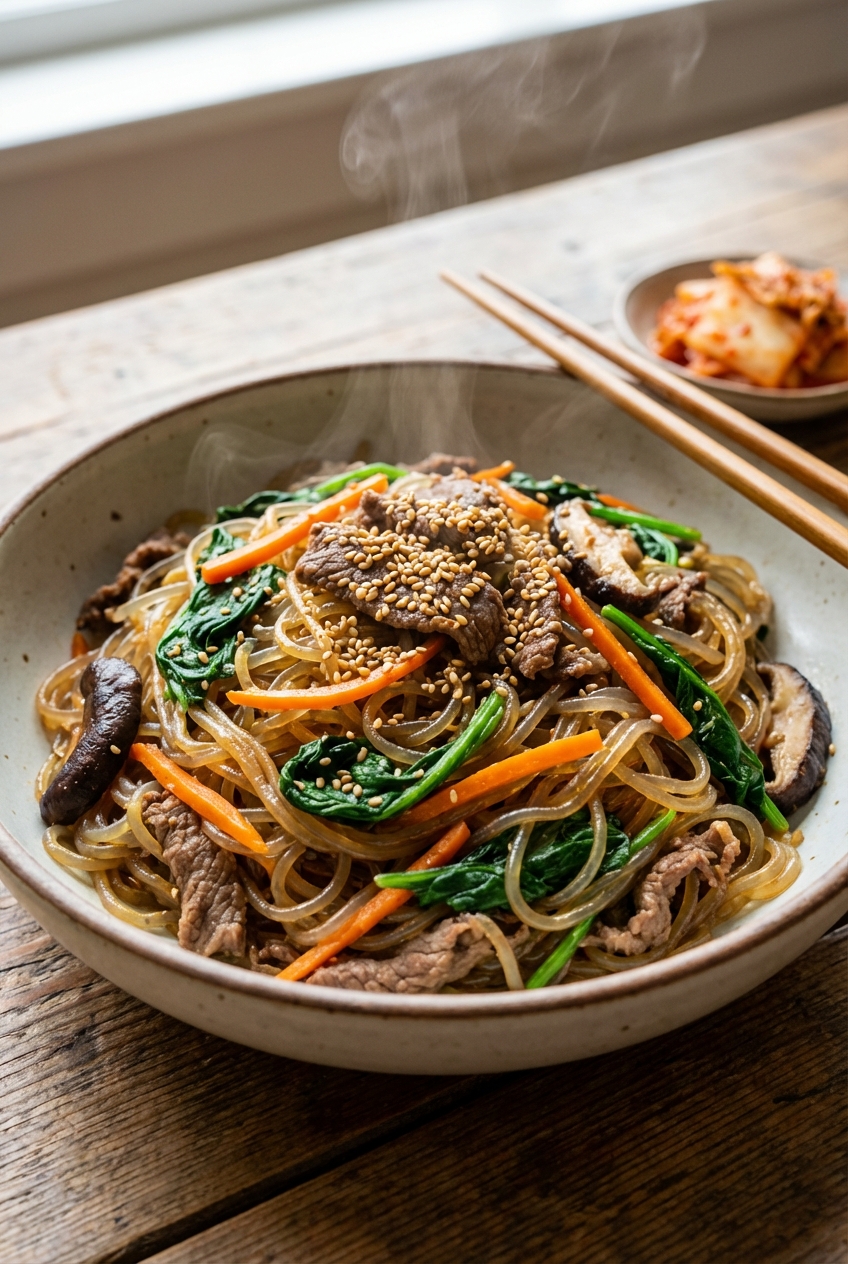
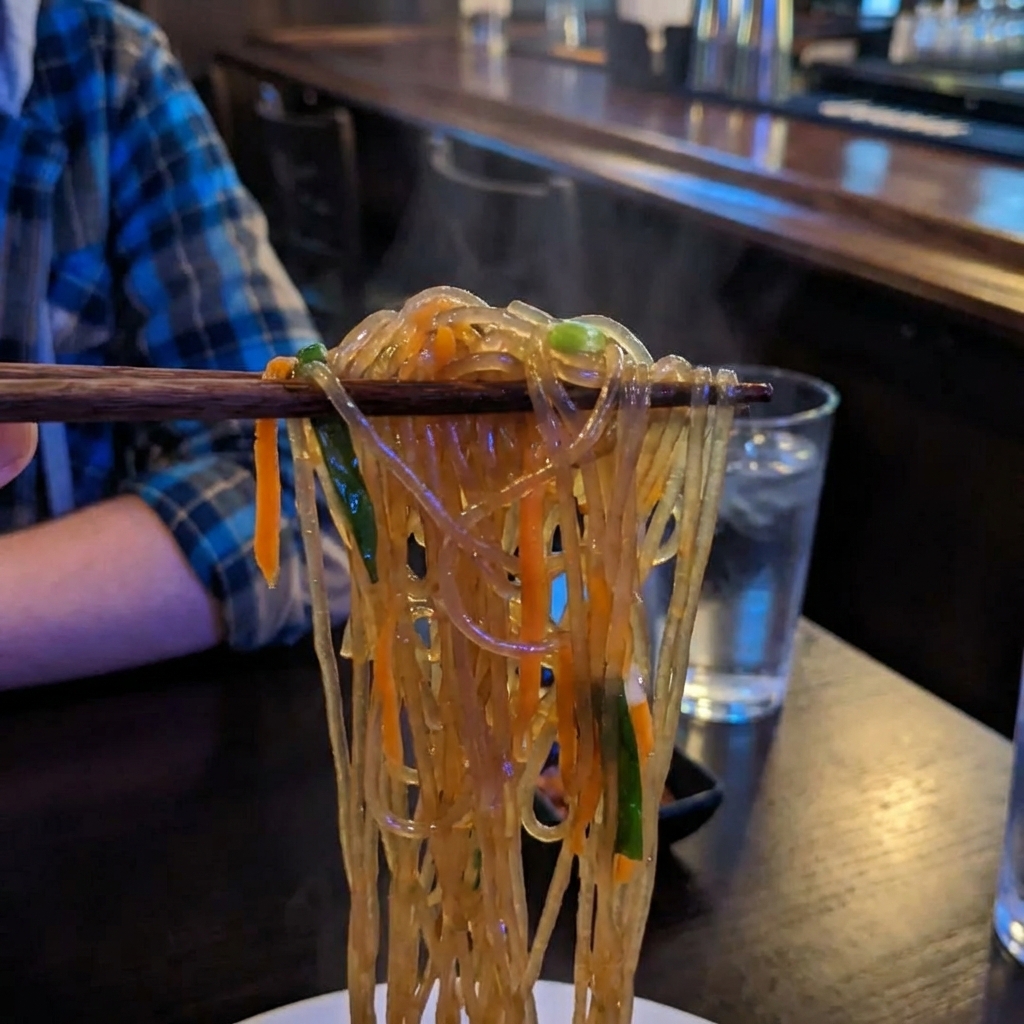
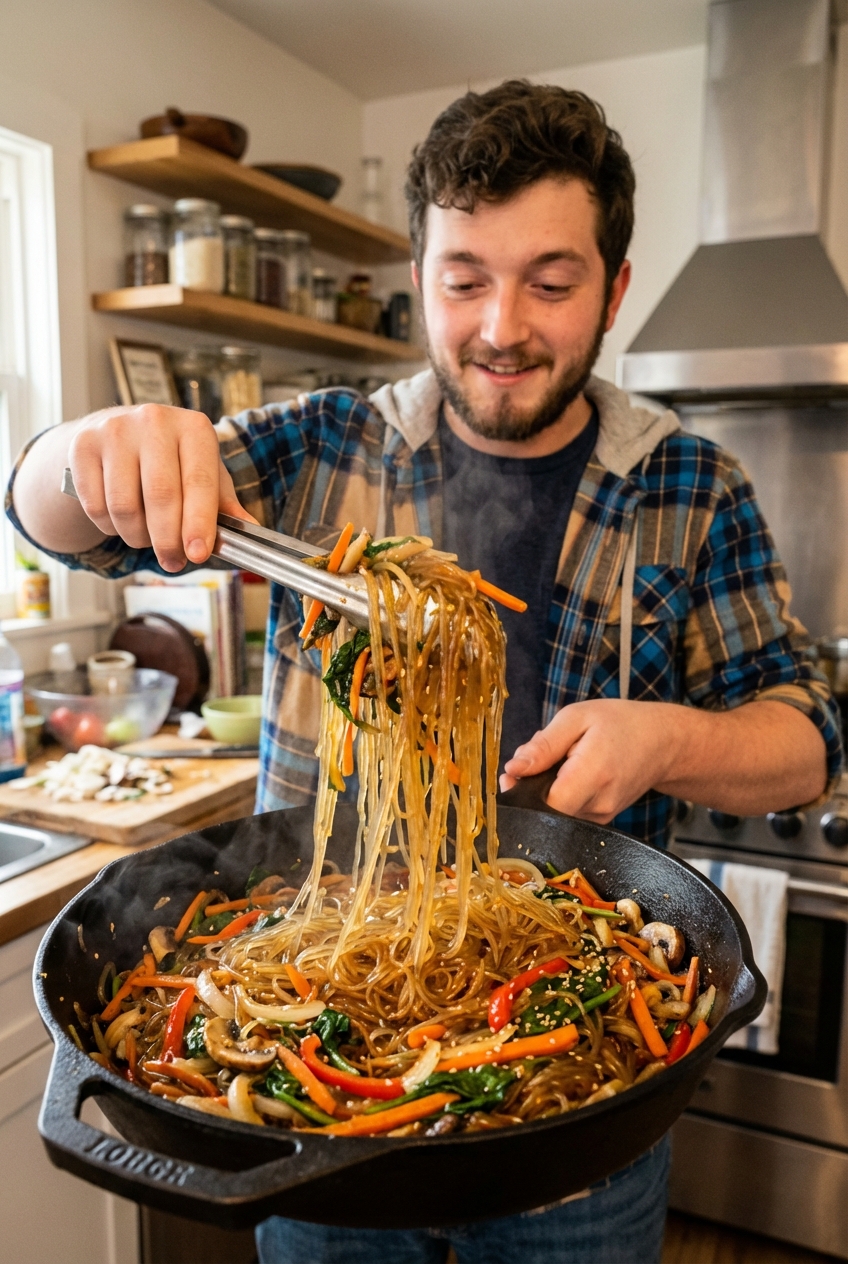
Look for Korean sweet potato starch noodles labeled dangmyeon. They are clear to grayish when dry and turn glossy and translucent when cooked.
Why did my noodles clump together?
Usually it is one of two things: they were overcooked, or they sat without oil. Drain well, then toss with a little sesame oil while they are still warm. A quick snip with kitchen shears also helps keep them from tangling.
Do I have to rinse the noodles?
Nope. A brief rinse is optional. Rinsing stops the cooking fast and helps prevent sticking, but it can wash off some surface starch, which means slightly less sauce cling. If you skip the rinse, just drain very well and toss with sesame oil right away.
Can I make japchae vegetarian?
Absolutely. Swap beef for extra mushrooms (aim for about 10 to 12 ounces total mushrooms) or use 6 to 8 ounces firm tofu. You may want an extra pinch of salt or a splash of soy sauce to taste since beef brings seasoning of its own.
Is japchae served hot or cold?
Both. It is great warm, room temp, or straight from the fridge if you are in your “cold noodle” era. For best texture, I like it warm or room temp.
Can I use regular soy sauce?
Yes. Standard low sodium soy sauce is the easiest, most consistent option. Korean soup soy sauce is much saltier and can be more pungent, so it is not a straight swap. If it is all you have, start with about half the amount and adjust at the end.
Is rice vinegar traditional in japchae?
Not really. I keep it optional because a tiny splash brightens the sauce, but you can skip it for a more classic vibe.