Mom's Best Recipes
Recipe

King Arthur Sourdough Bread

A dependable country-style sourdough loaf inspired by King Arthur Baking methods: simple ingredients, clear timing, crackly crust, and a chewy, flavorful crumb.

Author By Matt Campbell
4.8
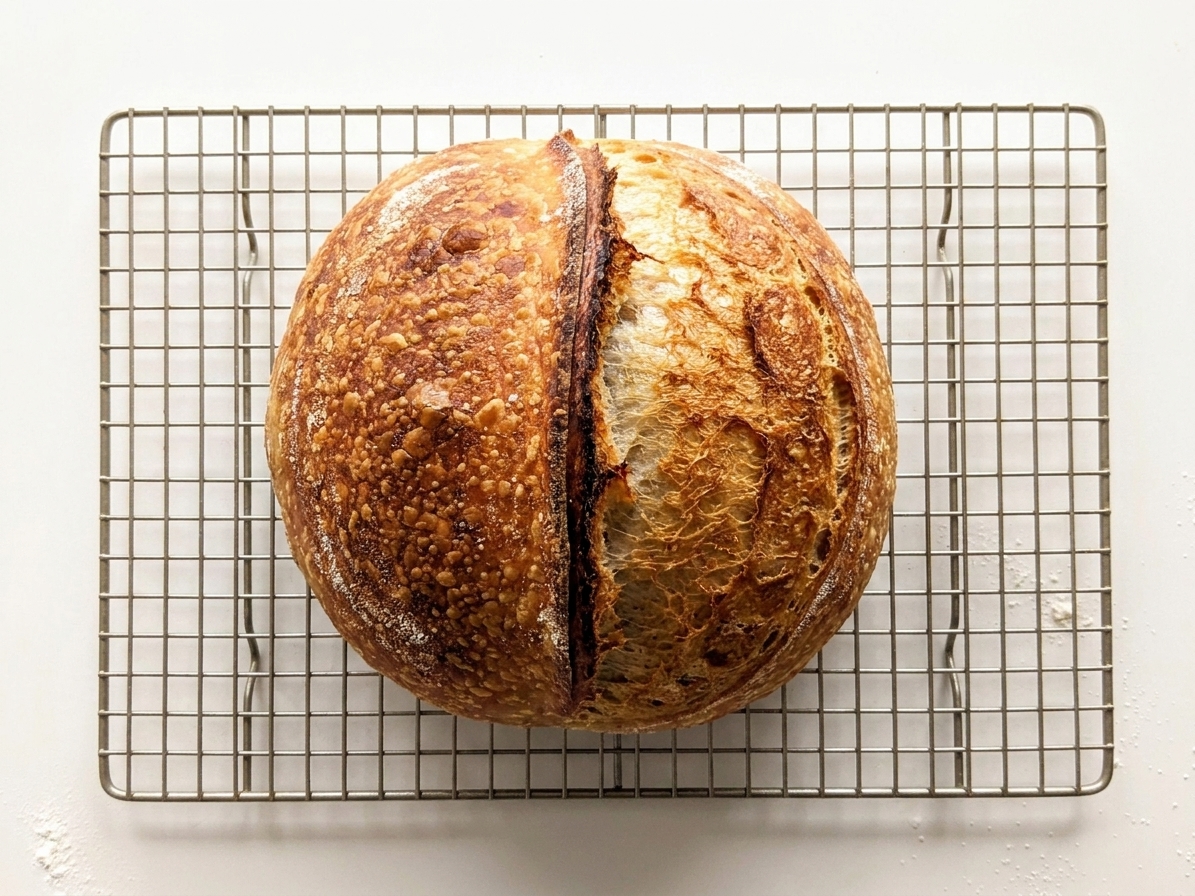
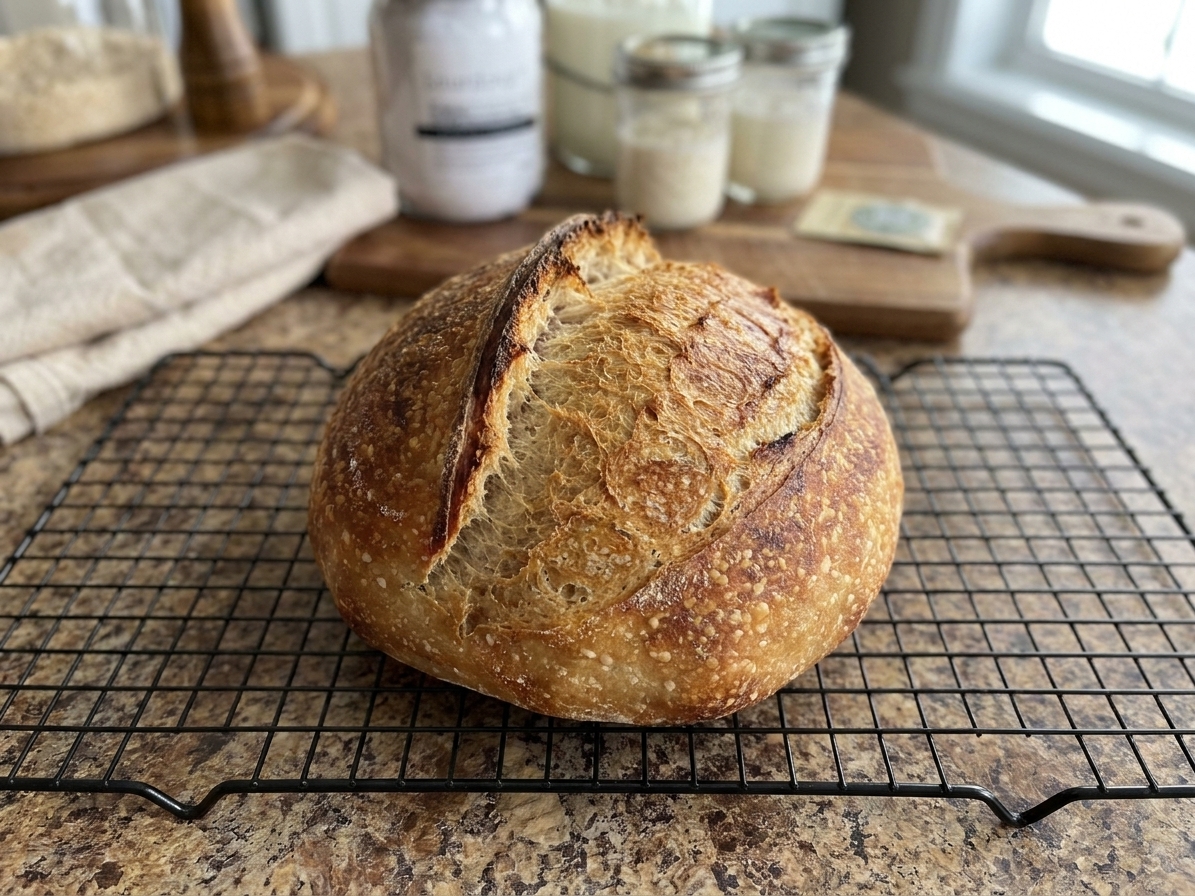
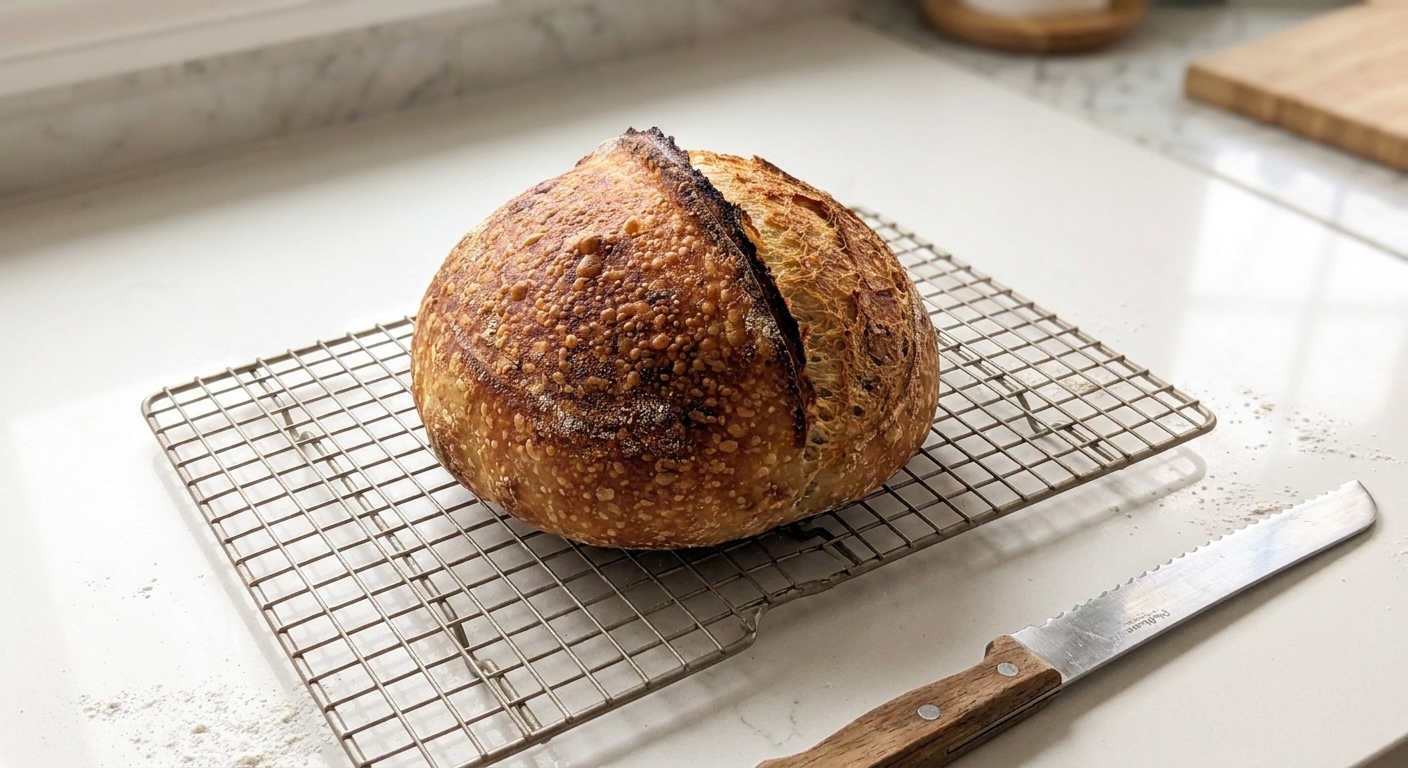
A golden brown sourdough boule with a bold ear and blistered crust cooling on a wire rack on a bright kitchen counter

Sourdough has a reputation for being high-maintenance. Like it needs a special playlist, a proofing altar, and a full-time starter babysitter. This loaf is not that. This is the King Arthur-style, reliable, home-kitchen sourdough I keep coming back to: a crackly crust you can actually hear, a chewy crumb that stays tender, and flavor that tastes like you tried way harder than you did.

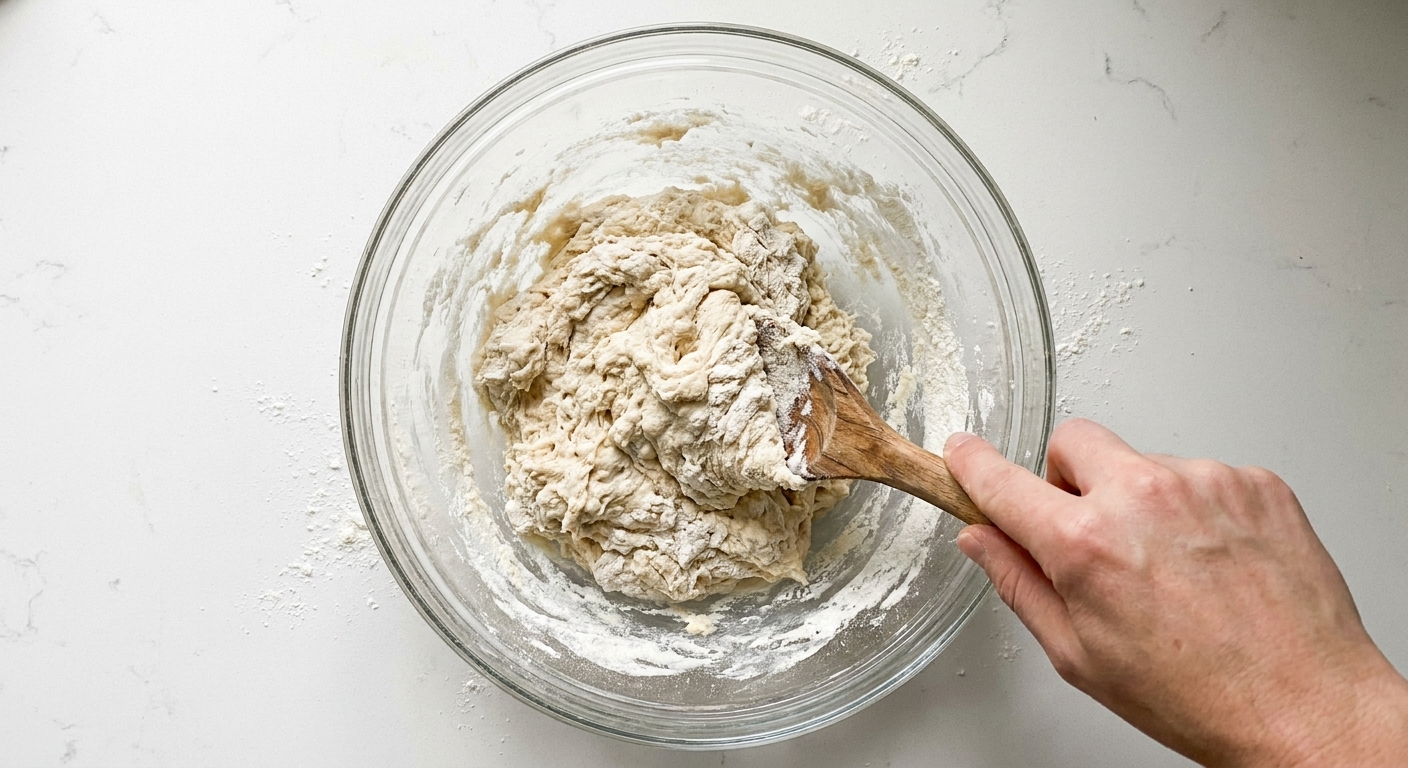
We are using the classic King Arthur approach: build strength with folds, let time do the heavy lifting, and bake hot in a covered Dutch oven for maximum oven spring. If you can stir, fold, and wait, you can make this bread.

Timing note: The schedule below assumes a dough temperature around 75 to 78°F. If your kitchen runs cooler, expect a longer bulk. If it runs warm, things move faster. Watch the dough, not the clock.

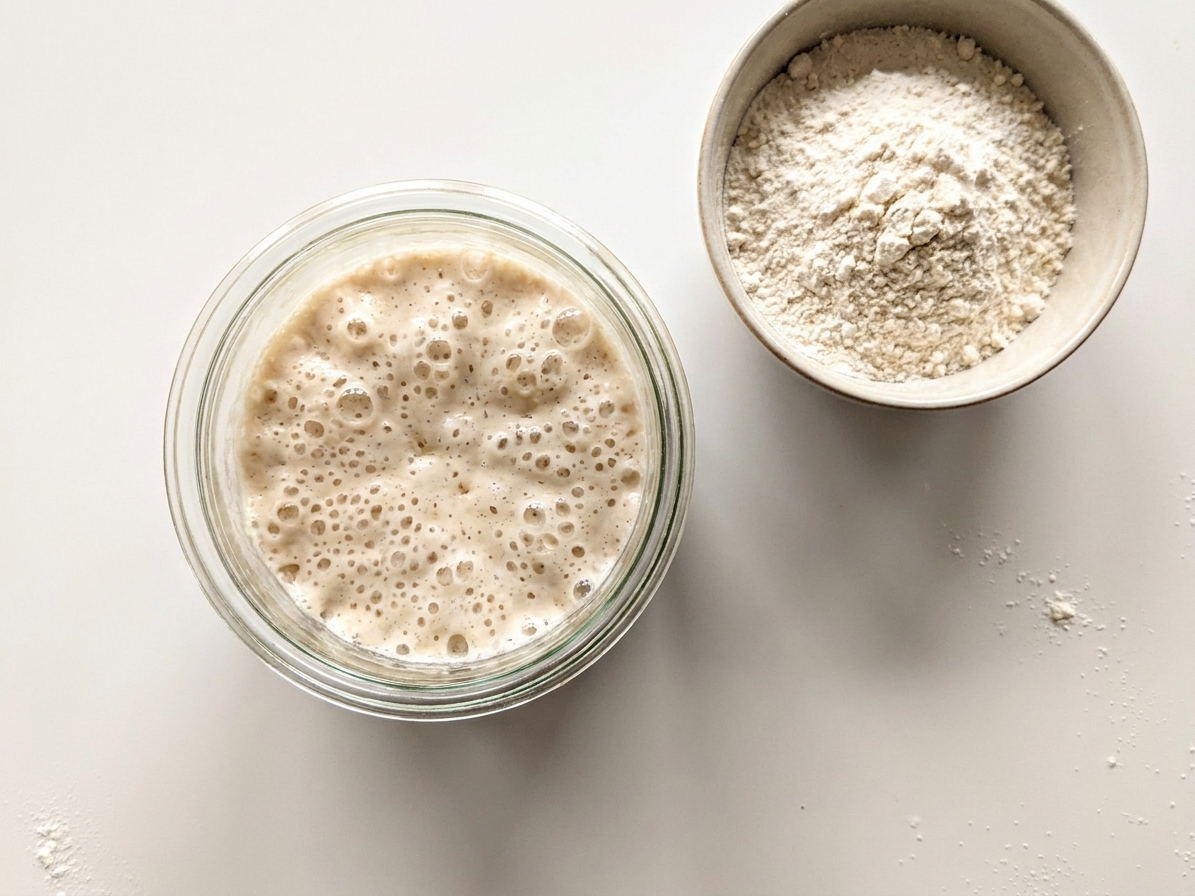
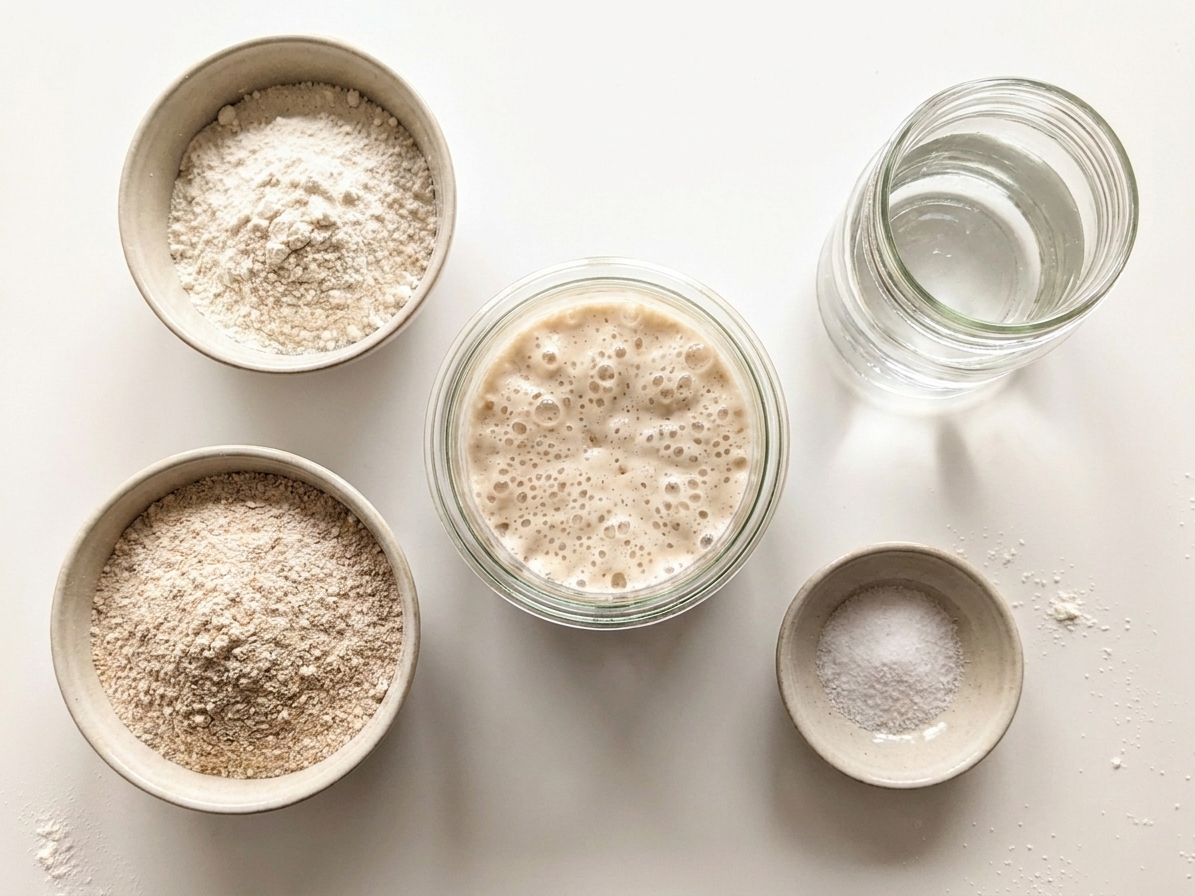
A glass jar of active sourdough starter with bubbles on the surface sitting on a clean kitchen counter next to a small bowl of flour

Why It Works

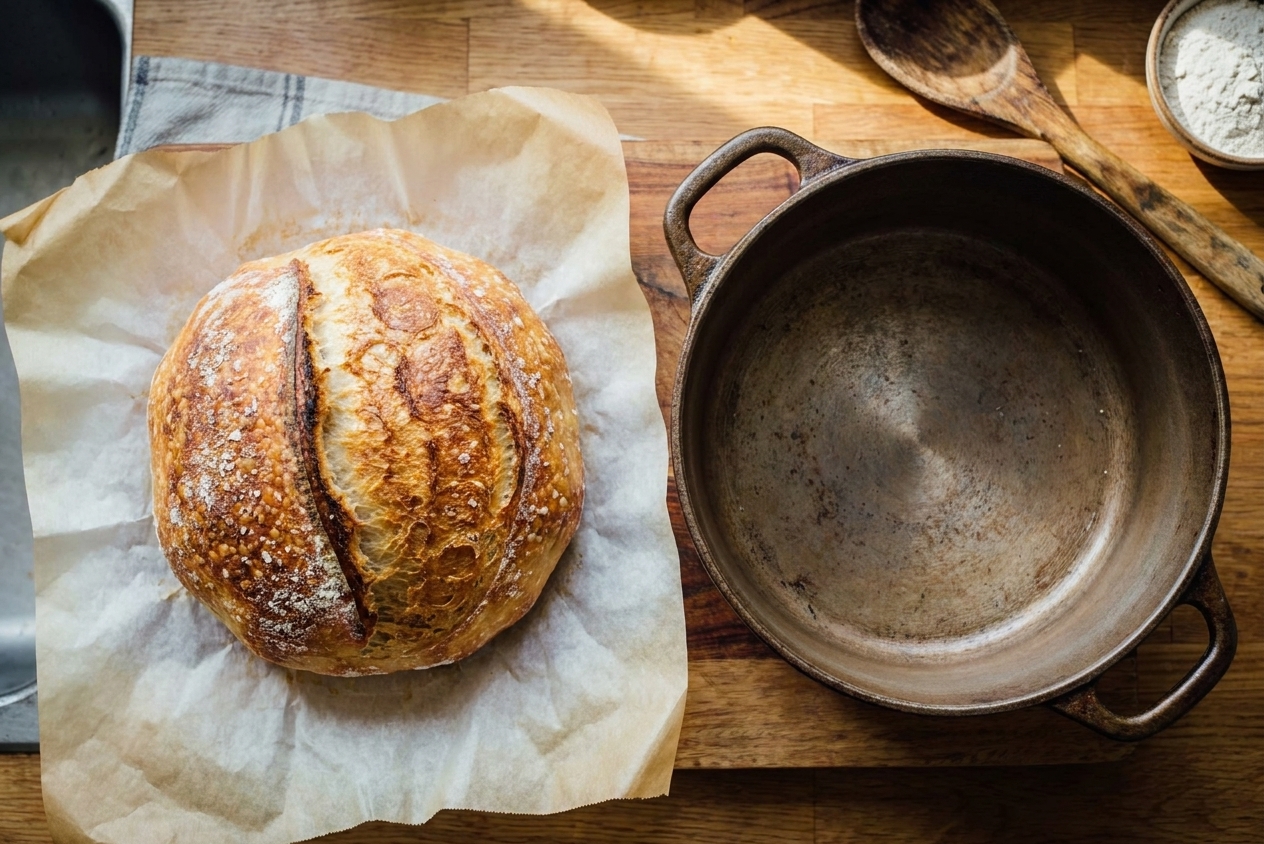
  • Crunchy, crisp crust: A covered bake traps steam like a mini bread sauna, which helps the loaf expand before the crust sets.
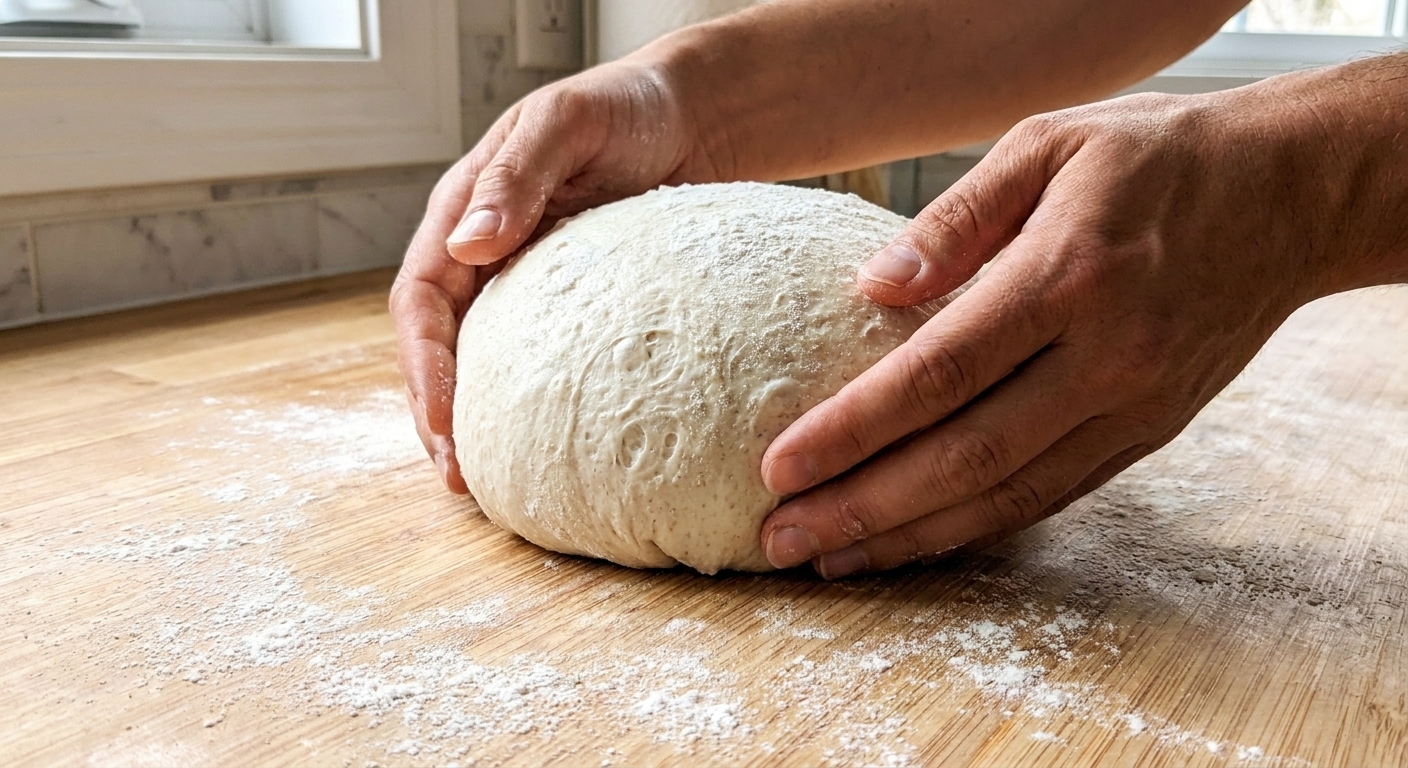
  • Chewy, open crumb without drama: Stretch-and-folds build structure so you get lift and air pockets without intense kneading.
  • Big sourdough flavor: A long, cool rest in the fridge deepens flavor and makes scoring easier.
  • Accessible ingredients: This leans on King Arthur bread flour for strength, plus whole wheat for a little nutty depth.

Pairs Well With

Storage Tips

Same day: Let the loaf cool fully, then store cut-side down on a cutting board for up to 12 hours. This keeps the crust crisp.

Next 2 to 3 days: Wrap in a clean kitchen towel or place in a paper bag, then into a loosely closed plastic bag. Paper protects the crust, plastic slows staling.

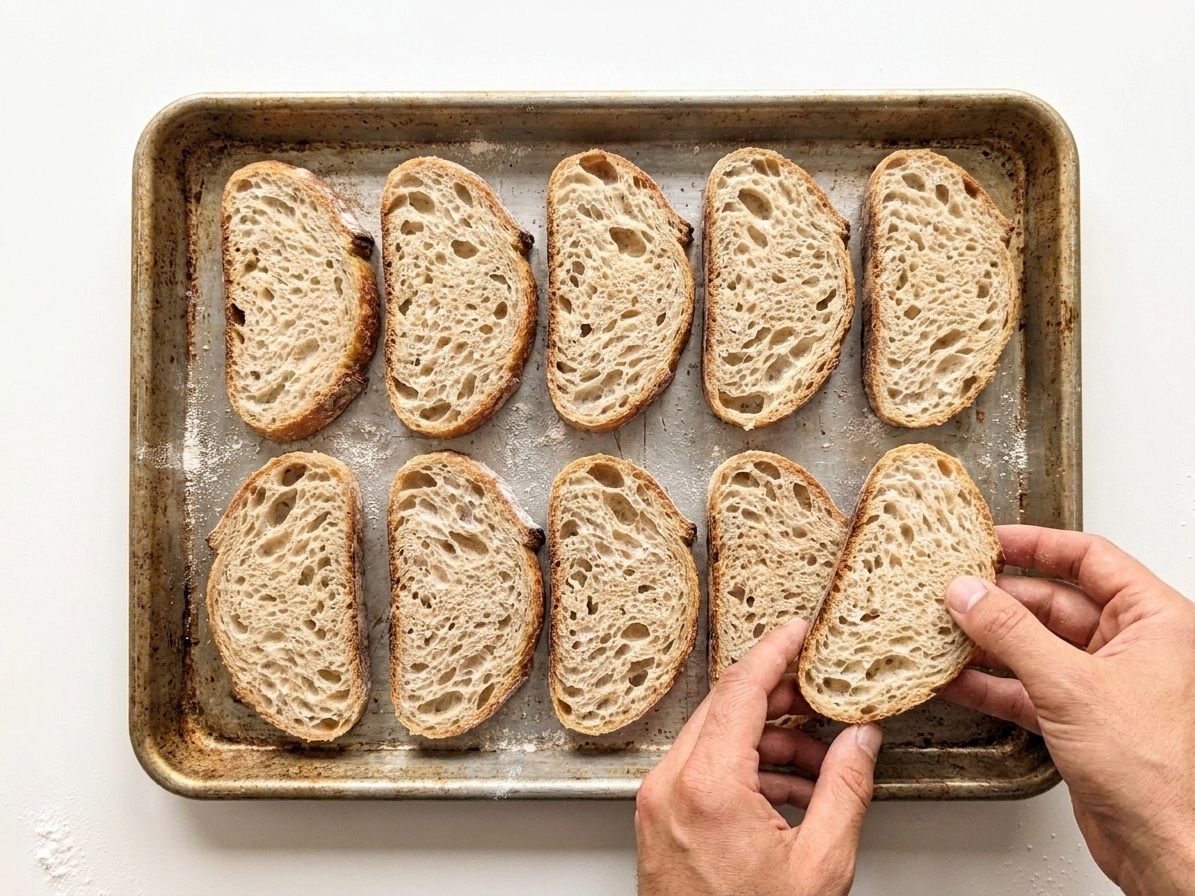
Freezing: Slice the cooled loaf, freeze slices on a sheet pan, then transfer to a freezer bag for up to 2 months. Toast from frozen for best texture.

Revive a tired loaf: Spritz the crust lightly with water, bake at 350°F for 8 to 12 minutes. It comes back to life like magic.

Slices of sourdough bread laid in a single layer on a baking sheet ready to be frozen

Common Questions

Common Questions

Do I have to use King Arthur flour?

No, but bread flour with higher protein makes the dough easier to handle and helps the loaf hold its shape. King Arthur Bread Flour is consistent, which is why it is such a go-to for sourdough.

What hydration starter does this recipe assume?

This recipe assumes a 100% hydration starter, meaning it is fed with equal weights flour and water (for example, 50 g flour + 50 g water). If your starter is stiffer or looser, the dough will feel different and the timing can shift. Use the dough cues (rise, bubbles, strength) as your boss.

My dough is sticky. Did I mess up?

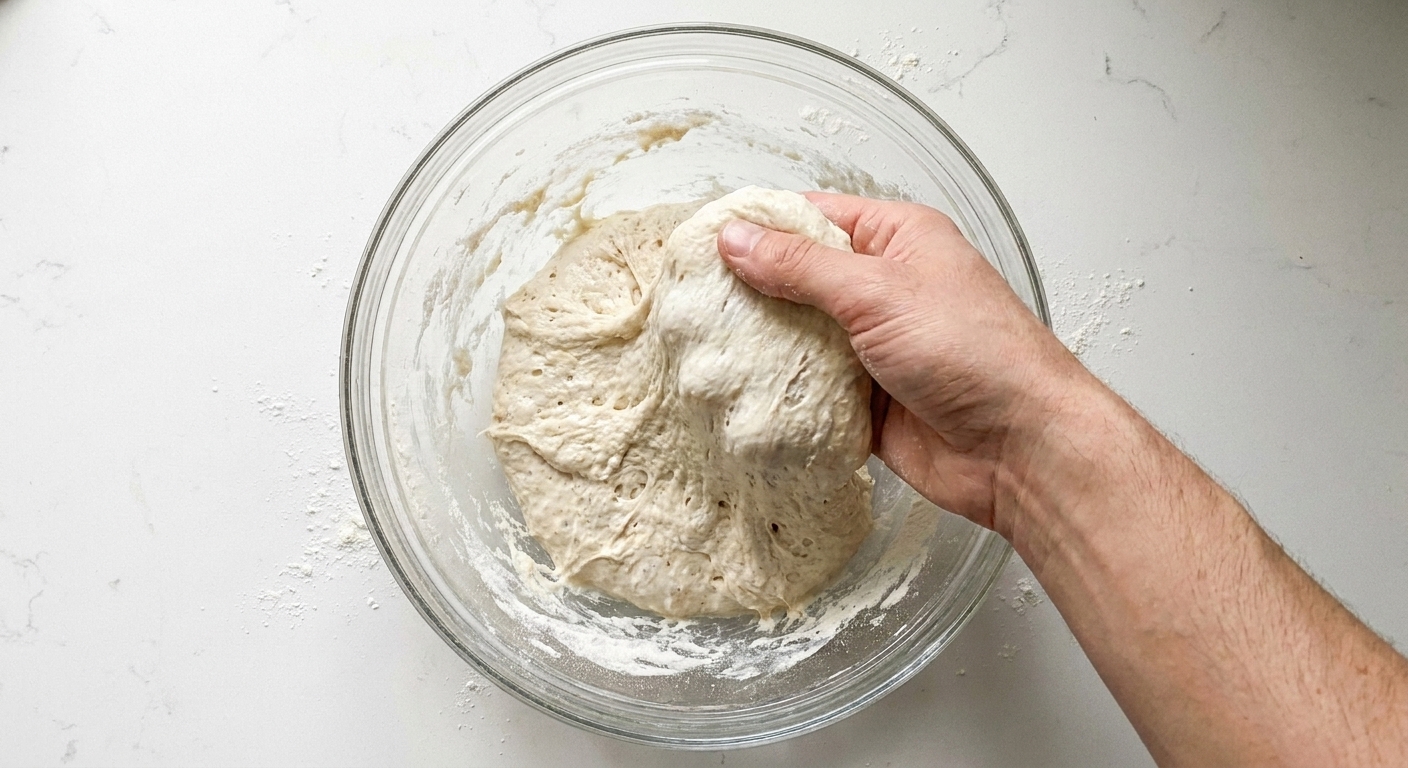
Probably not. Sourdough is supposed to feel tacky. If it is soupy, your flour might be absorbing less (humidity, measuring, brand). Next time, hold back 25 to 50 grams of water and add only if the dough feels strong after the first mix. For now, use wet hands for folds and keep going.

How do I know bulk fermentation is done?

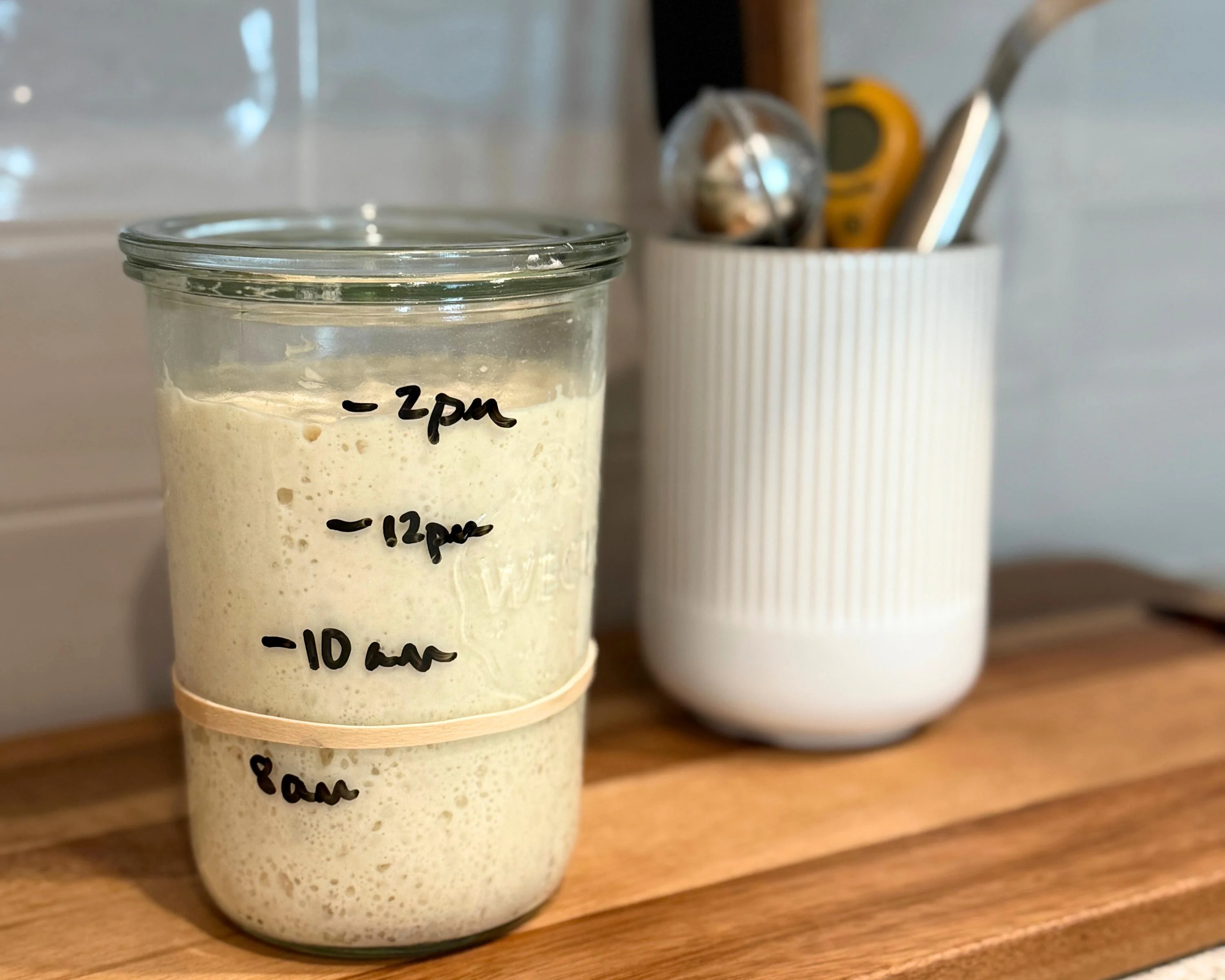
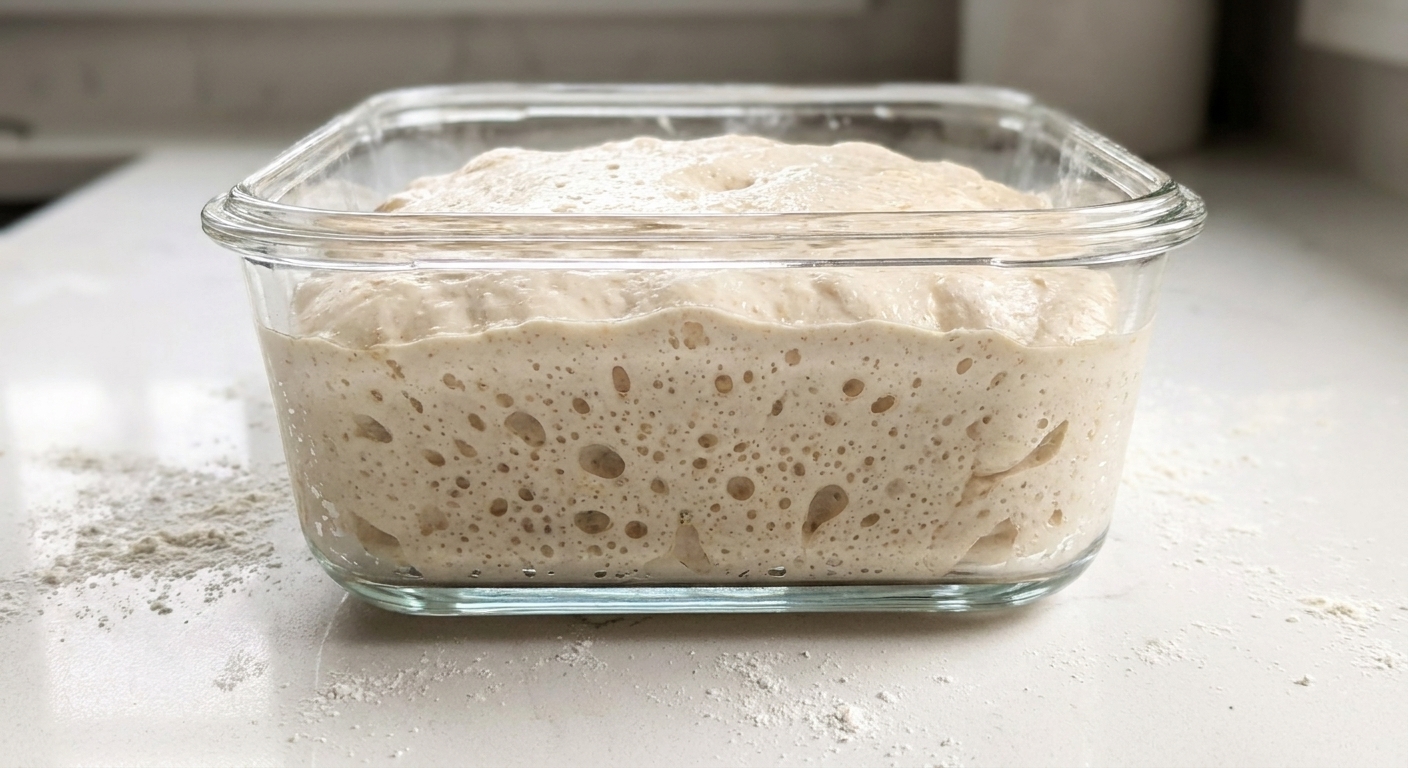
In bulk, rely mostly on rise and structure: look for a 30 to 60% increase in volume, bubbles along the sides and top, and a dough that feels lighter, smoother, and a bit jiggly. The poke test is more useful for the final proof, but during bulk you can still use a gentle press as a clue. If it feels tight and snaps back fast, it likely needs more time. If it feels very fragile and collapses easily, it may be heading toward over-proofed.

When you say “bulk ferment 2 to 5 hours,” is that total time?

That 2 to 5 hours starts after the last fold. Since you are doing folds for about 2 hours, your total bulk time is often closer to 4 to 7 hours from mixing, depending on dough temperature, starter strength, and your kitchen.

Can I skip the overnight fridge proof?

You can, but the loaf is easier to score and usually tastes better with the cold proof. If you need same-day bread, let it proof at room temp until the dough passes the poke test, usually 1 to 3 hours depending on your kitchen.

Why didn’t I get an “ear” on my score?

Usually one of three things: the dough was a little under-proofed or over-proofed, your oven or Dutch oven was not hot enough, or your scoring angle was too straight. Aim for a shallow 30 to 45 degree angle and commit to the slash.

How do I know the loaf is fully baked?

The crust should be deep golden brown and the loaf should feel light for its size. If you want a simple check, an instant-read thermometer in the center should read about 205 to 210°F.
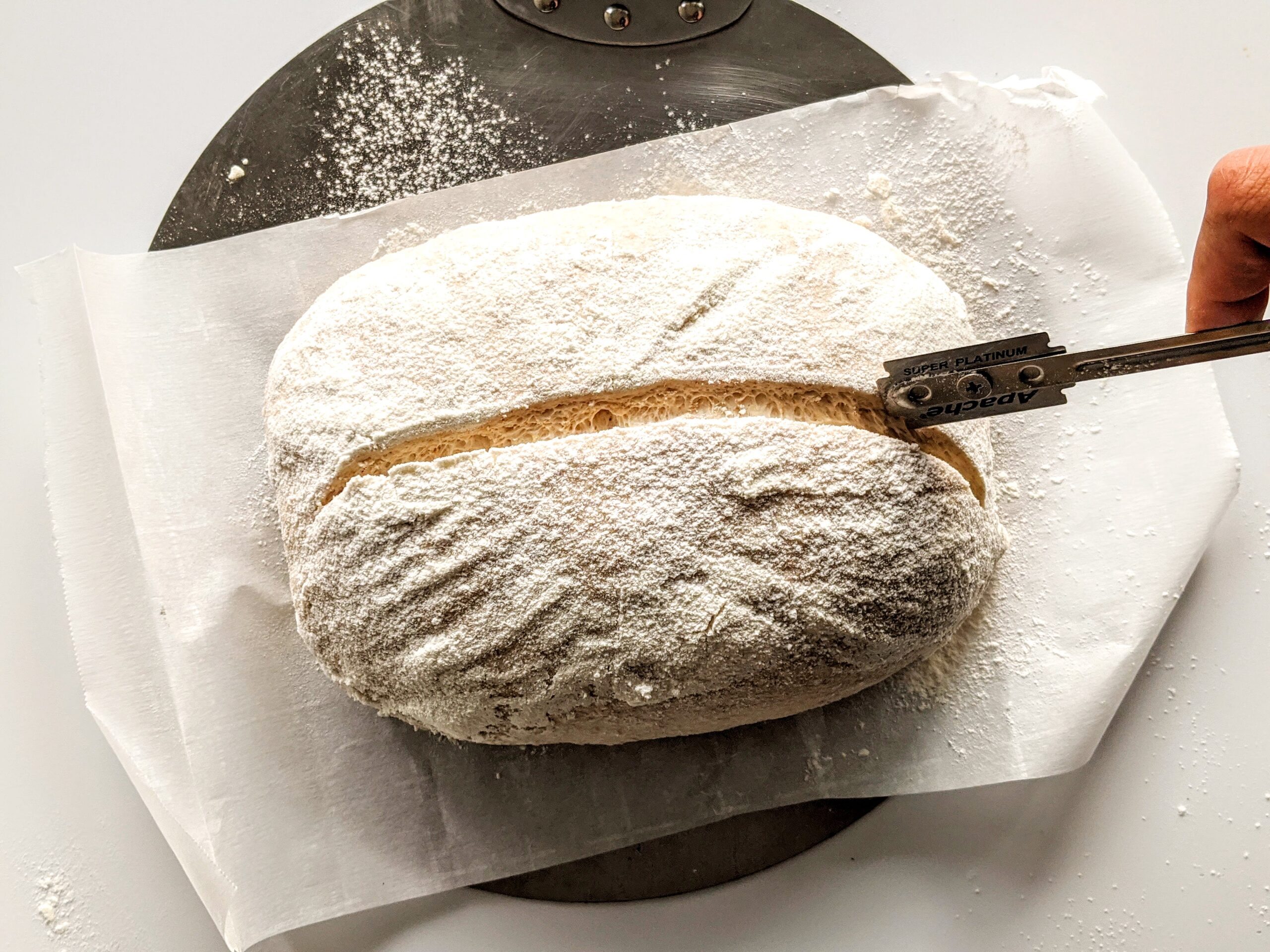

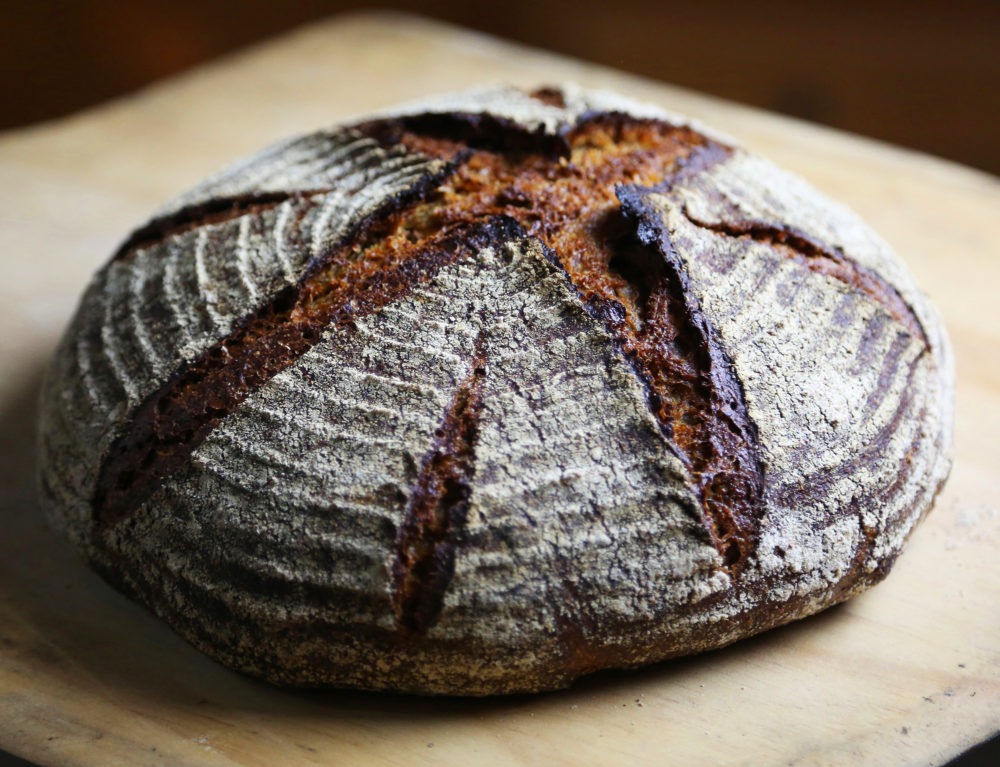
Hands holding a bread lame scoring a proofed sourdough loaf on parchment paper on a wooden counter

I first chased sourdough the way a lot of us do: equal parts curiosity and stubbornness. I wanted that bakery crust at home, but I also wanted a recipe that let me live my life, not hover over a bowl like it was a science experiment with feelings. King Arthur’s sourdough philosophy is basically my favorite kind of kitchen energy: practical, methodical, and still very much about joy. This loaf is what I make when I want something impressive but not precious. It is the bread I slice thick for butter, toast hard for eggs, and tear into while standing at the counter pretending I am just “checking the crumb.”