Do I need to remove the membrane?
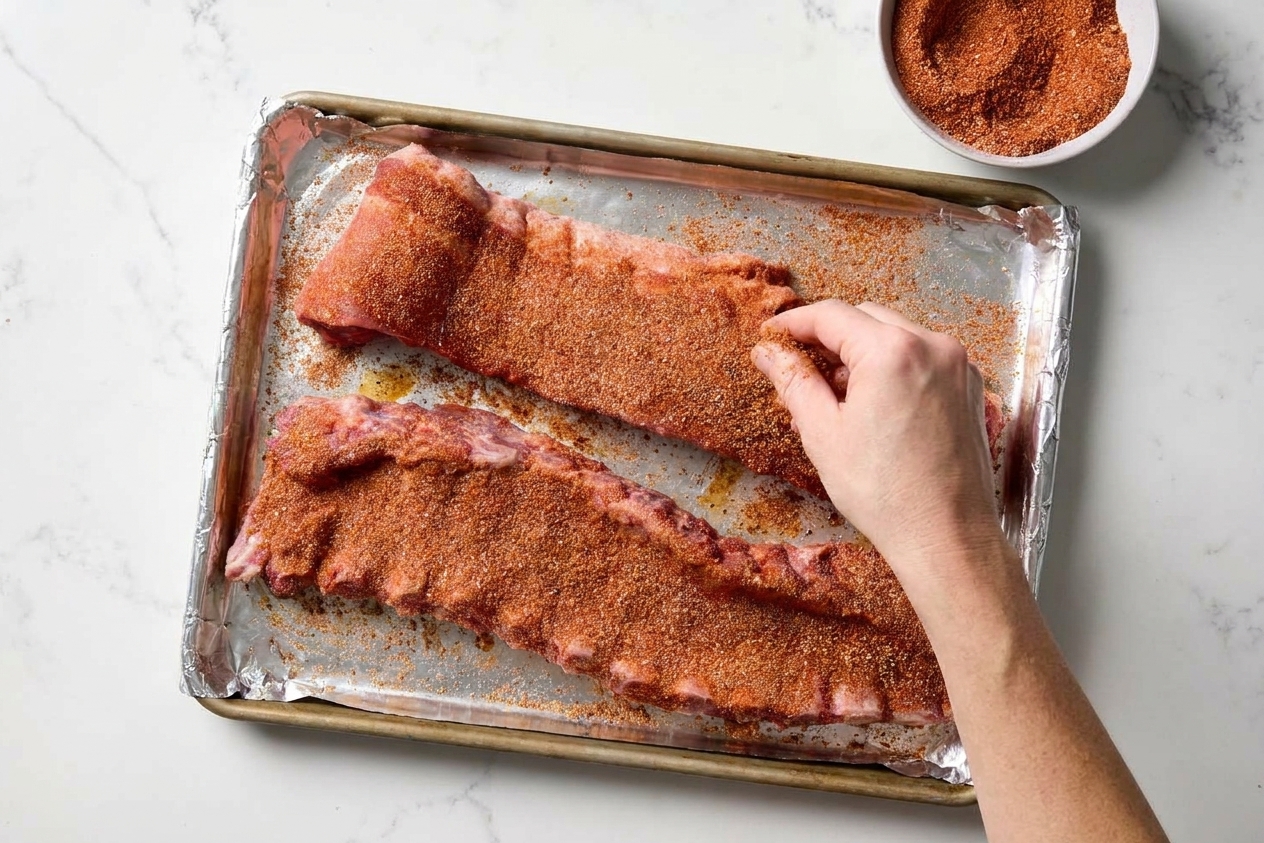
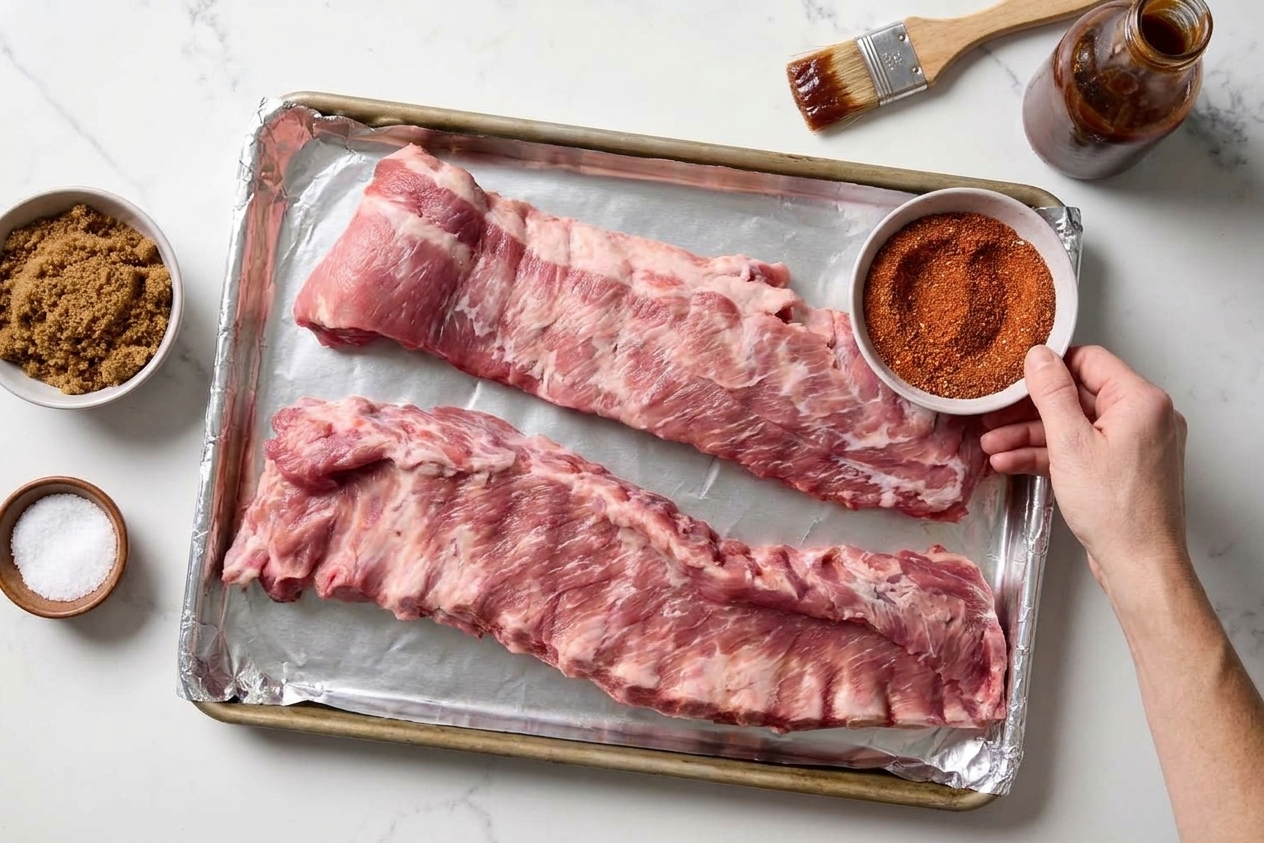
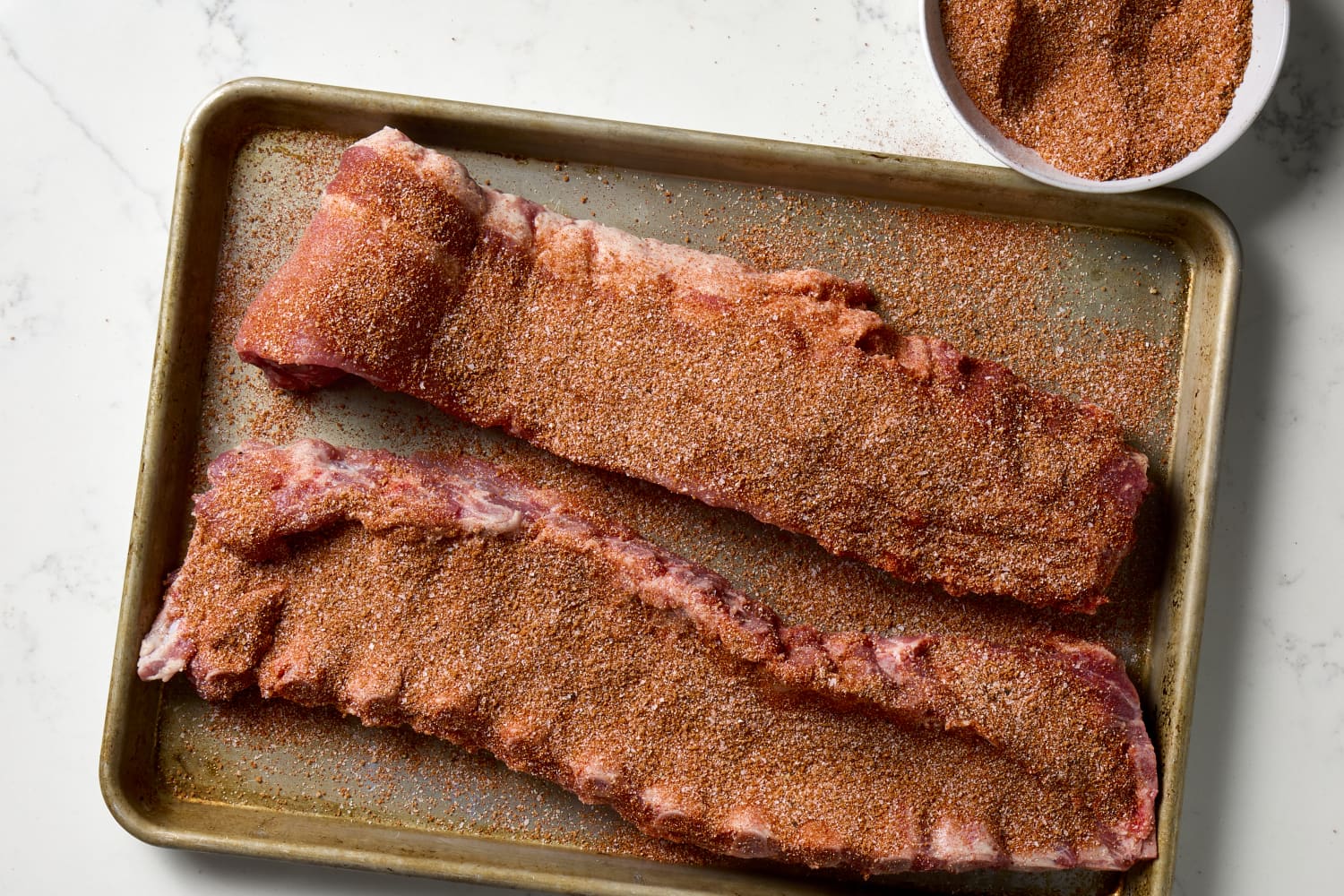
Strongly recommended, if you can. That thin silvery skin on the bone side can turn chewy and it blocks seasoning. Slide a butter knife under it near a bone, grab with a paper towel, and pull. If it tears, keep going in sections.
What temperature should ribs be when they are done?
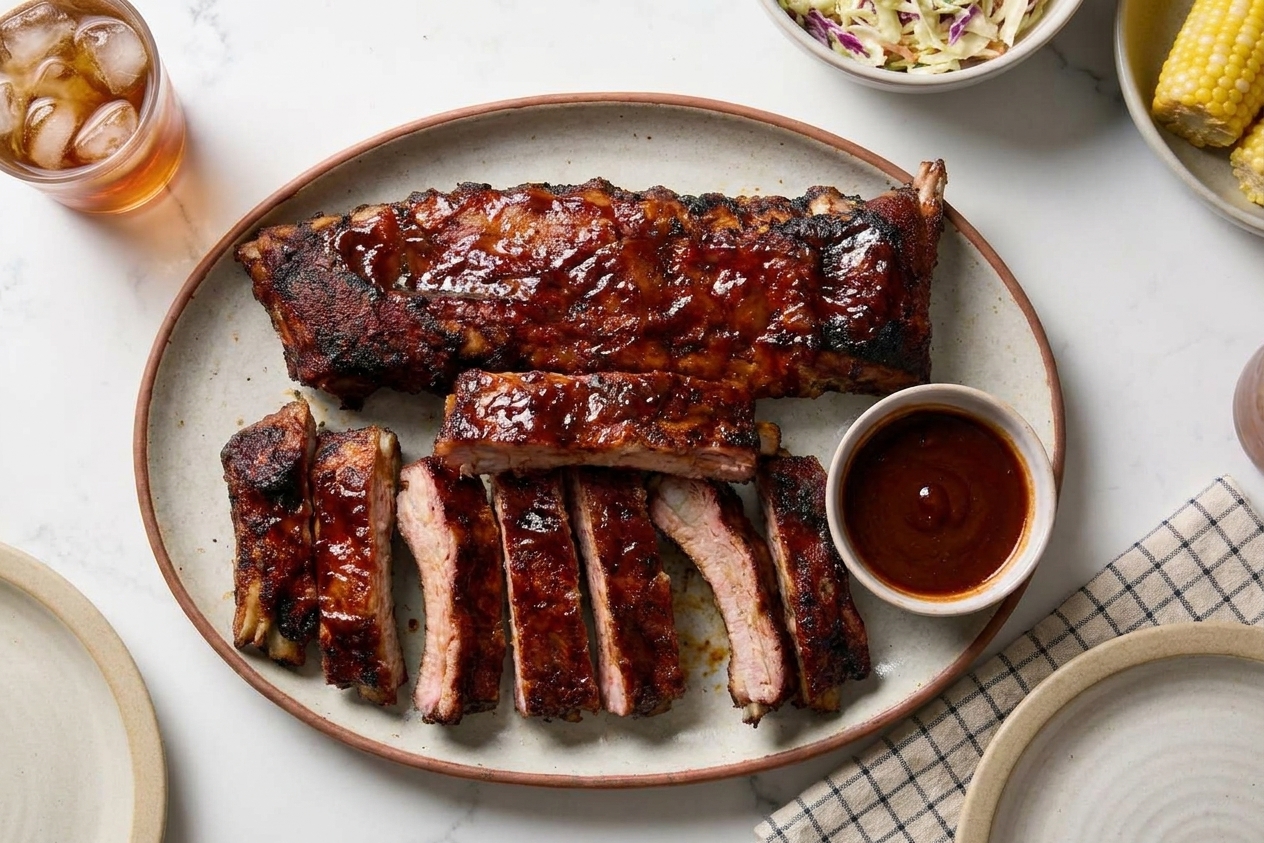
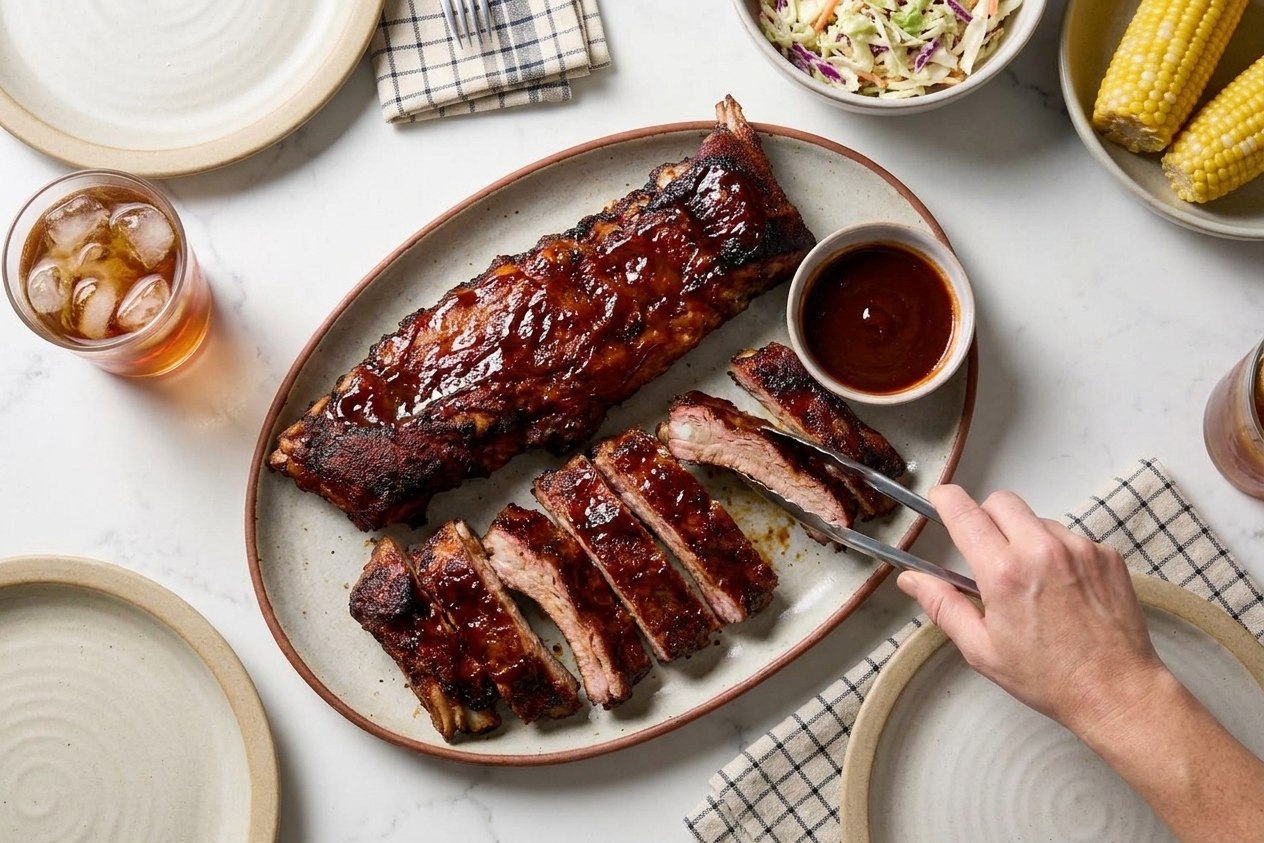
For ribs, tenderness is the real finish line. Use the bend test and texture cues first, and think of temperature as optional backup. If you want to check with a thermometer, many cooks aim for roughly 190°F to 203°F in the thickest meaty area for collagen breakdown, but ribs are thin and readings can be finicky. The best signs are: a toothpick slides into the meat with little resistance, the rack bends easily when lifted with tongs, and the bones start to peek out about 1/4 inch.
Should I bake ribs covered or uncovered?
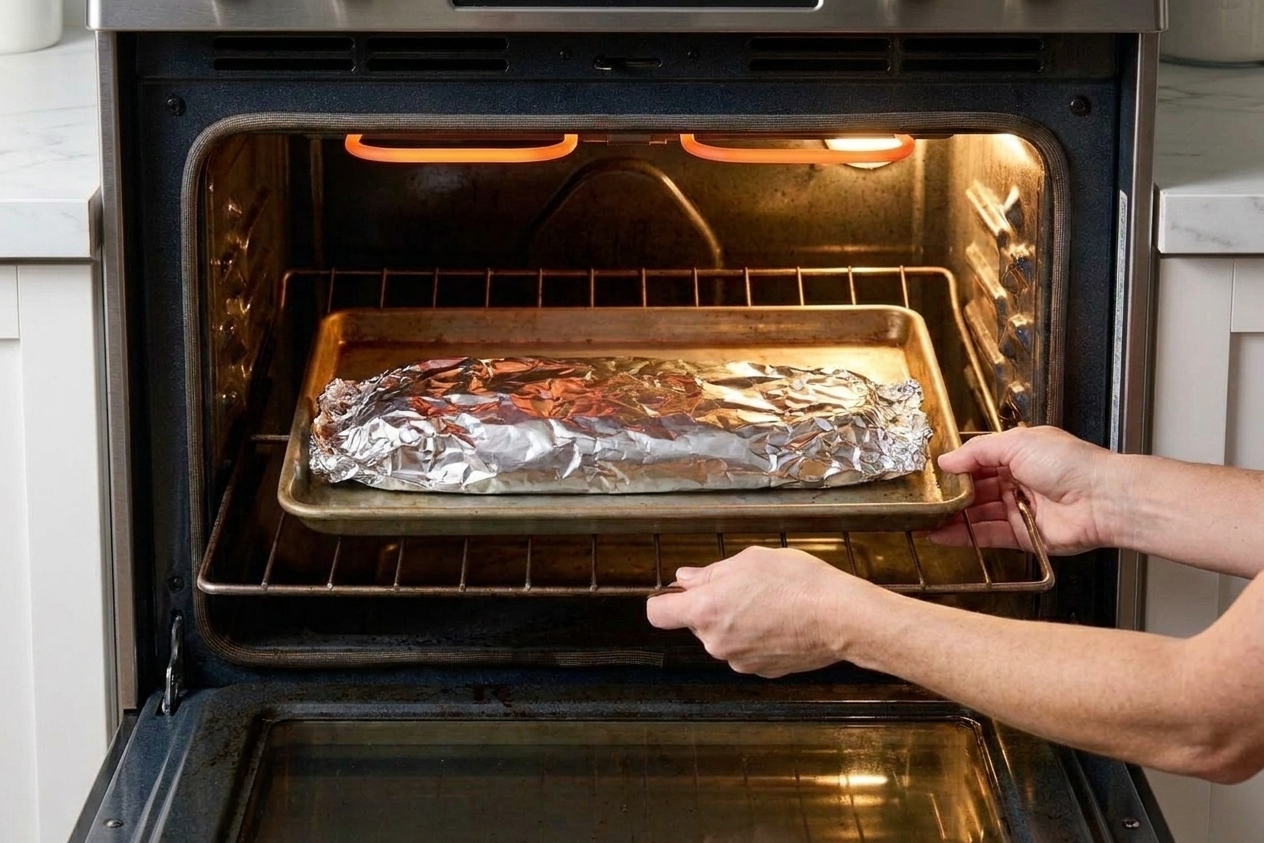
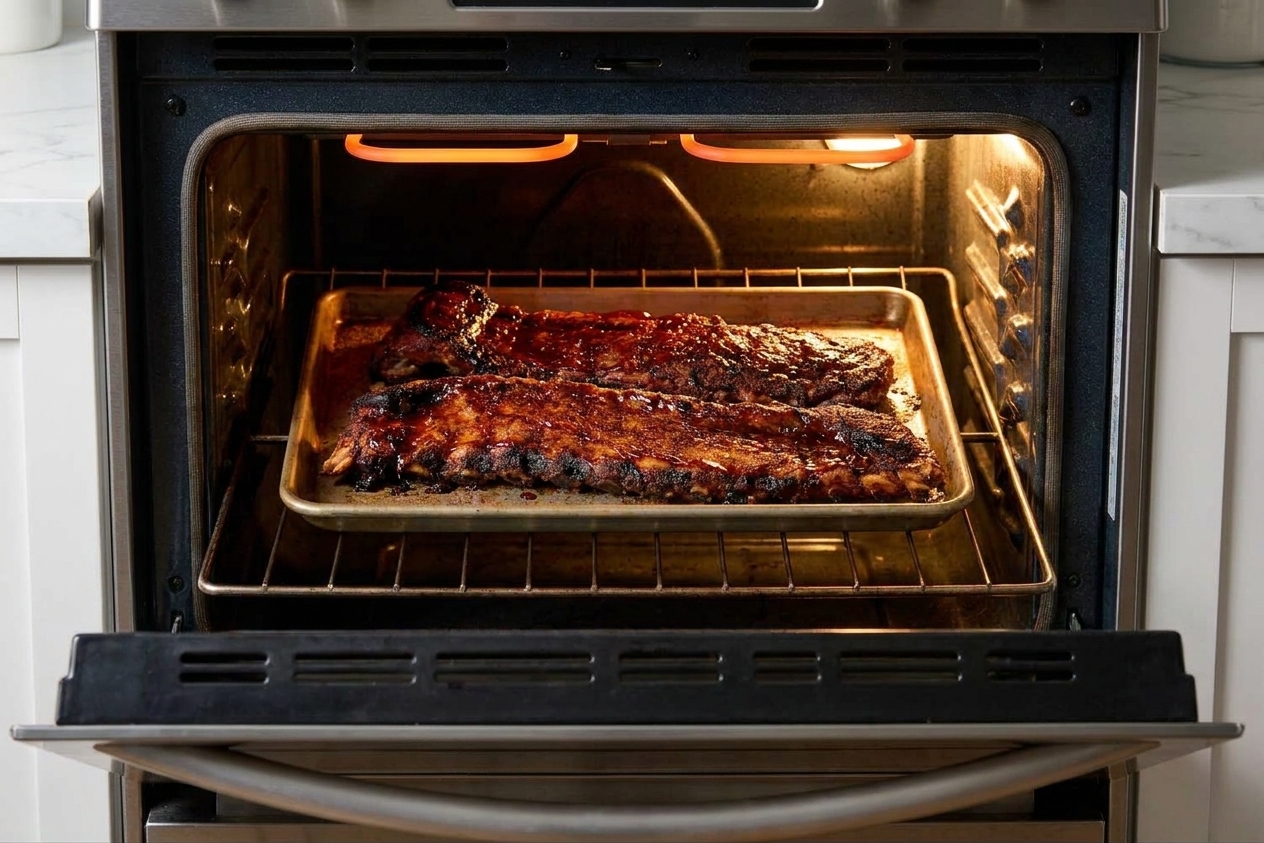
Covered for the low-and-slow bake, uncovered for the broil finish. The foil stage gives you tender. The uncovered stage gives you sticky and crisp.
Can I use spare ribs instead of baby backs?
You can, but they are bigger and fattier, so plan on a longer bake. Start checking around 3 hours at 275°F and go until they are tender.
How do I keep the sauce from burning under the broiler?
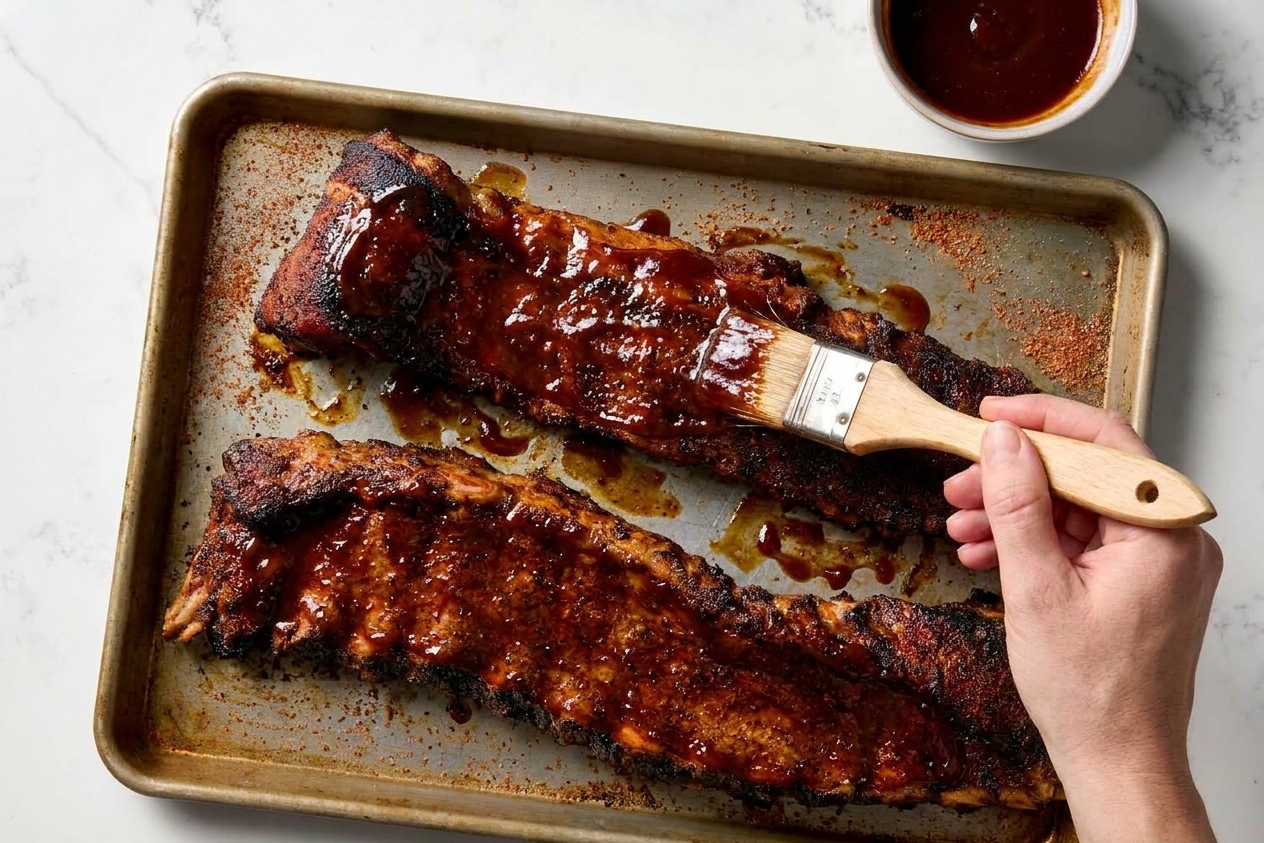
Broil on the middle rack, watch closely, and rotate the pan if your broiler has hot spots. Use a generous layer, but not a swamp. Two to four minutes is usually enough.