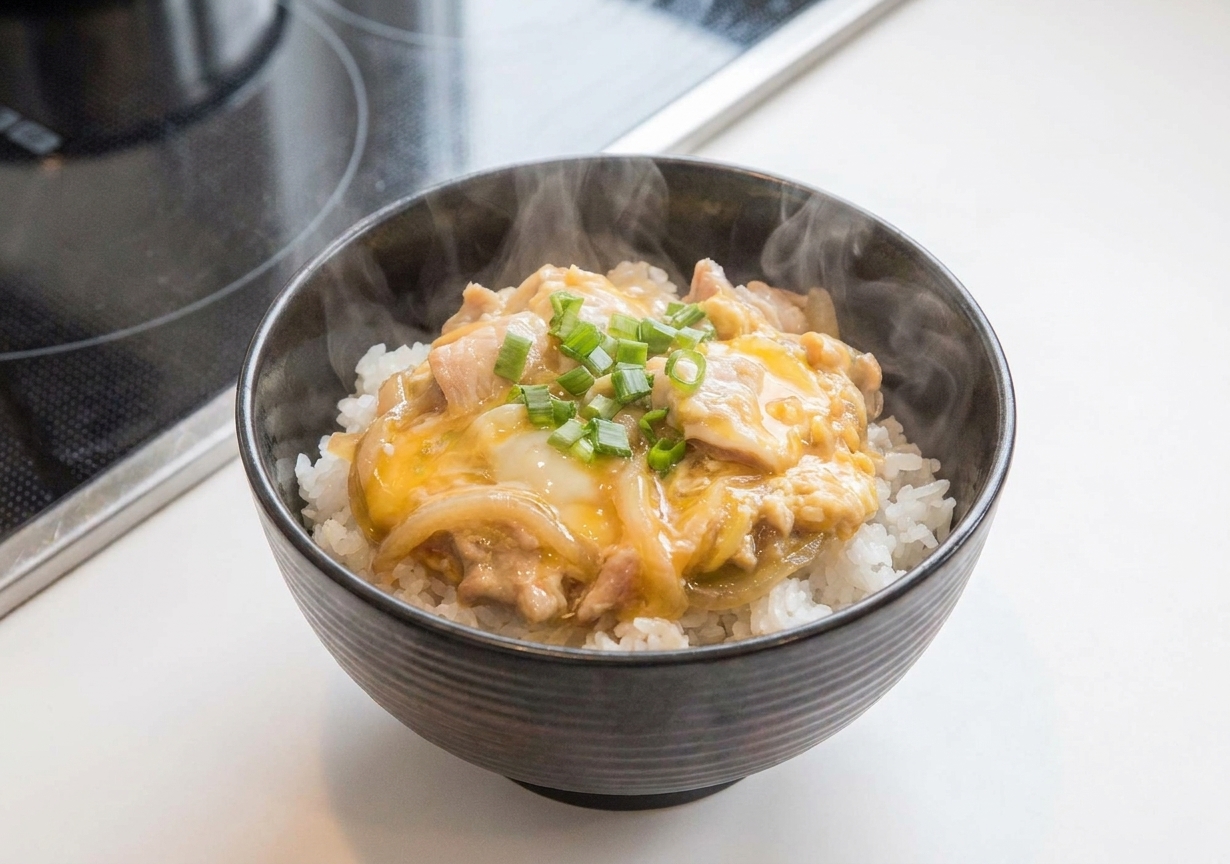
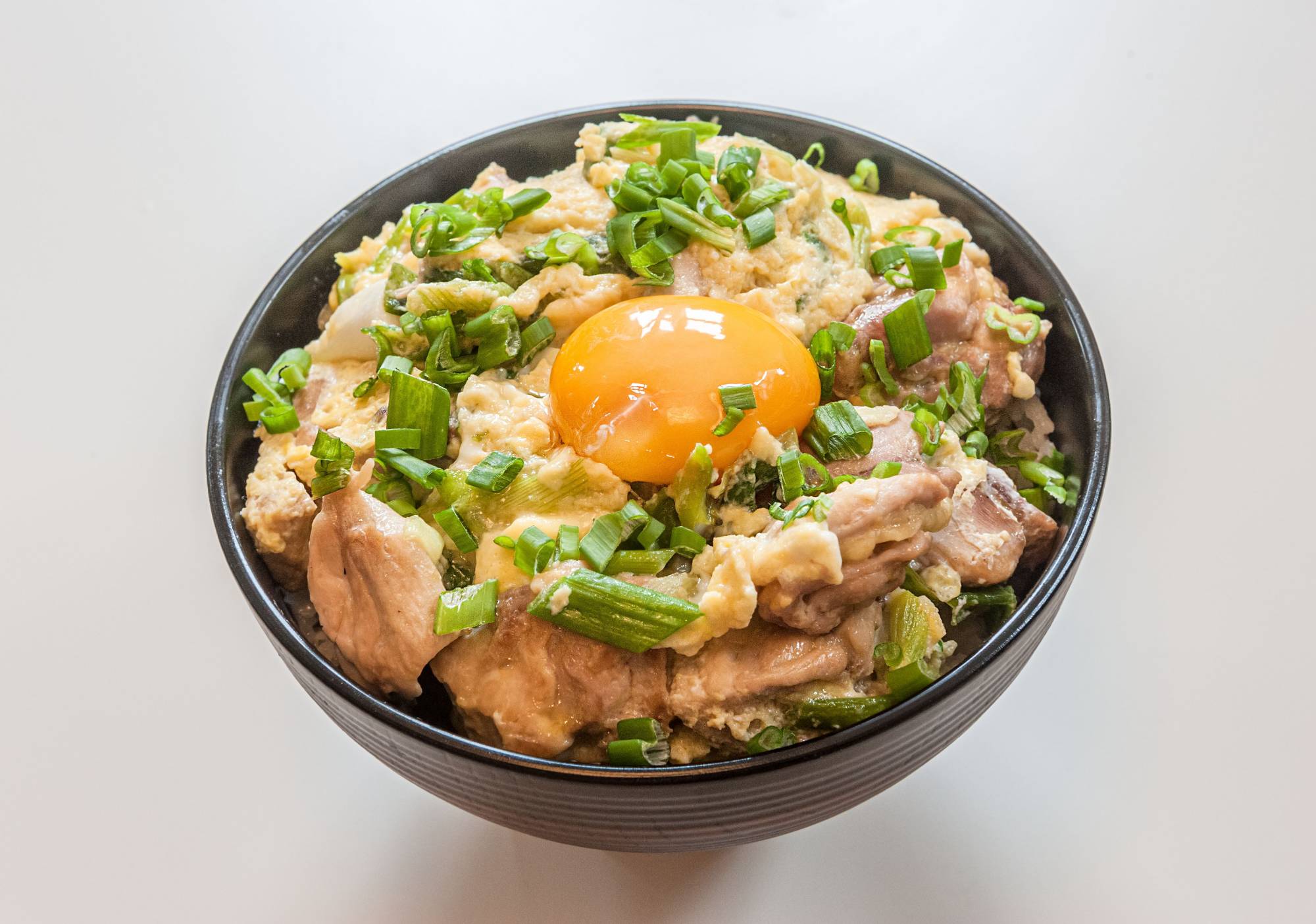
What does oyakodon mean?
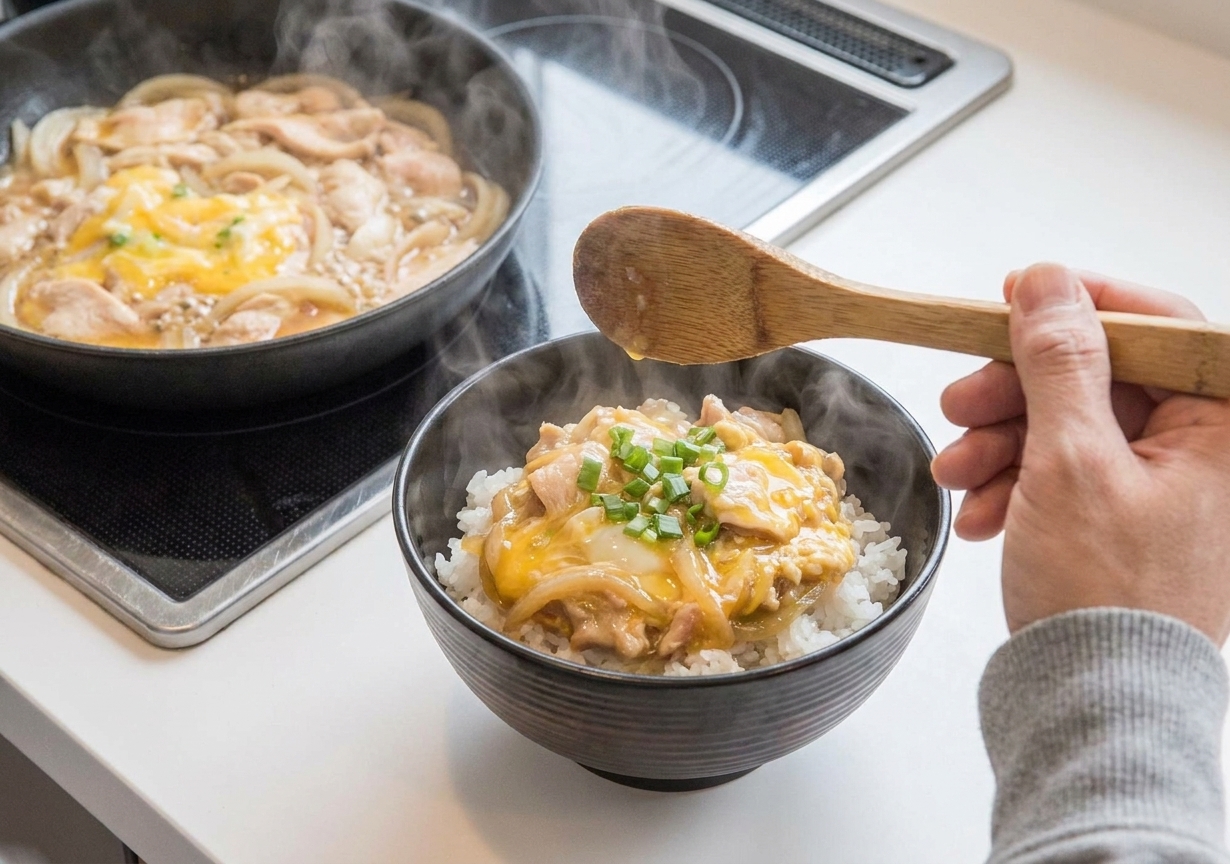
It translates to “parent and child bowl,” because it is chicken and egg served together over rice. Cozy, a little funny, and very on the nose.
Can I make oyakodon without dashi?
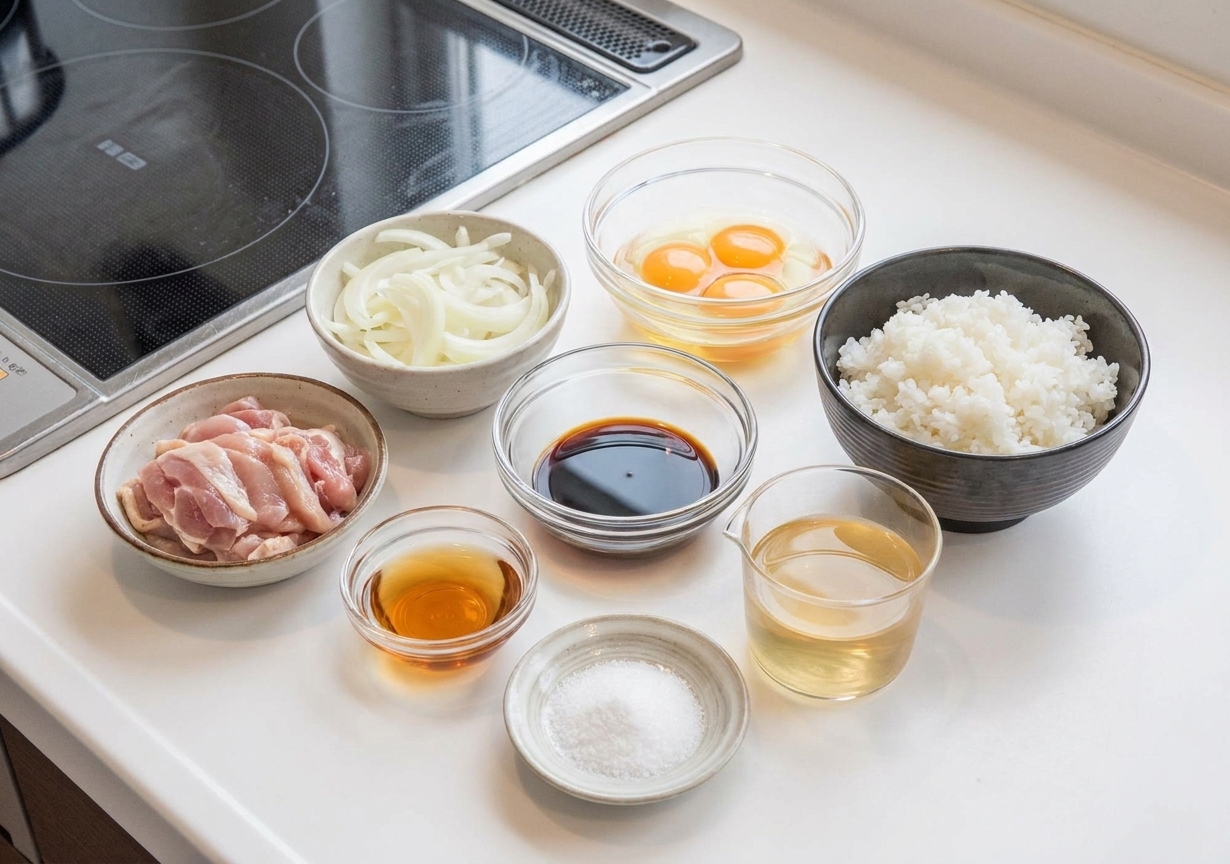
Yes. The most accessible swap is low-sodium chicken broth. If you have it, add a small piece of kombu while heating the broth for extra depth, then remove it before cooking. It will not be identical, but it will still be delicious. Also, instant dashi granules are a great pantry shortcut. Just prepare according to the package.
Is mirin required?
Mirin gives sweetness and that signature glossy finish. If you do not have it, use 2 tablespoons water plus 1 tablespoon sugar for every 3 tablespoons mirin in the recipe. Aji-mirin (the common grocery store kind) is usually sweeter than hon-mirin, so taste the sauce and adjust the sugar as needed. A small splash of rice vinegar can help, but keep it subtle.
Why did my eggs turn into scrambled eggs?
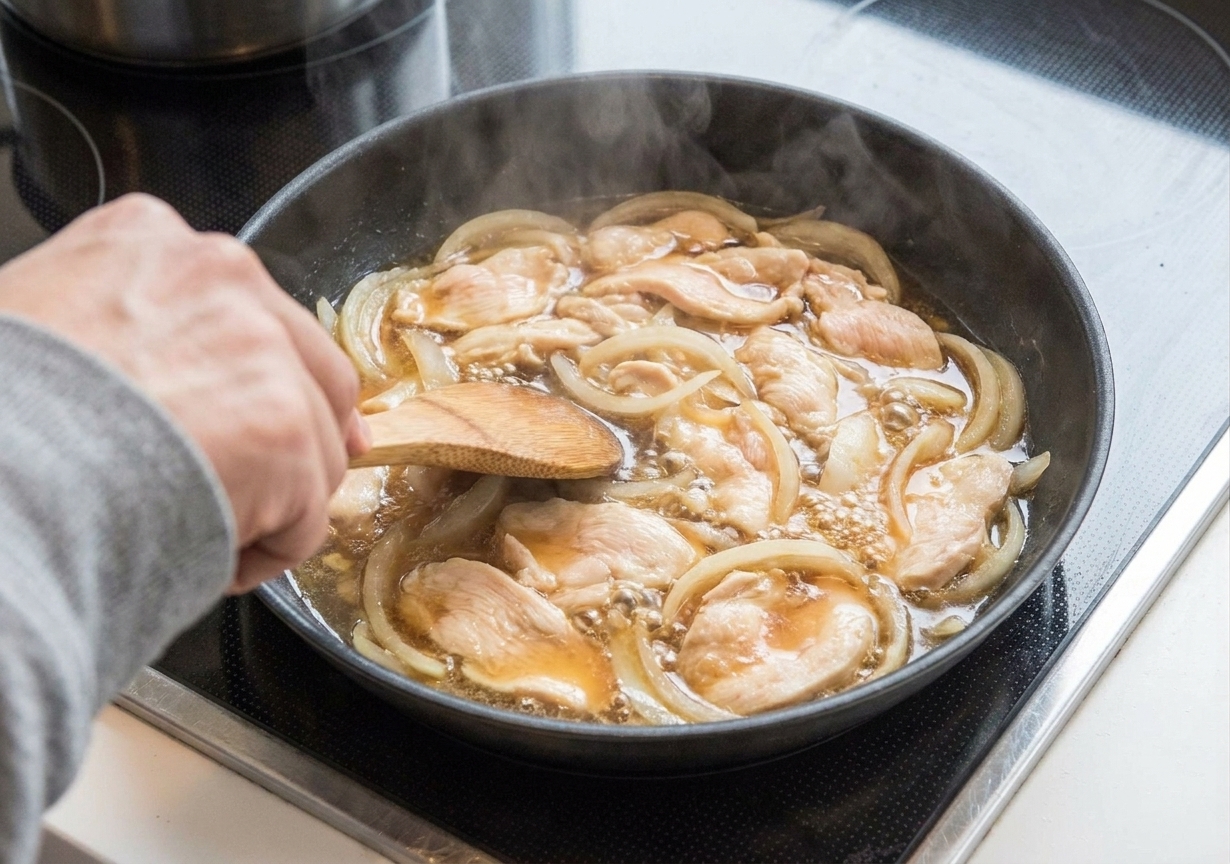
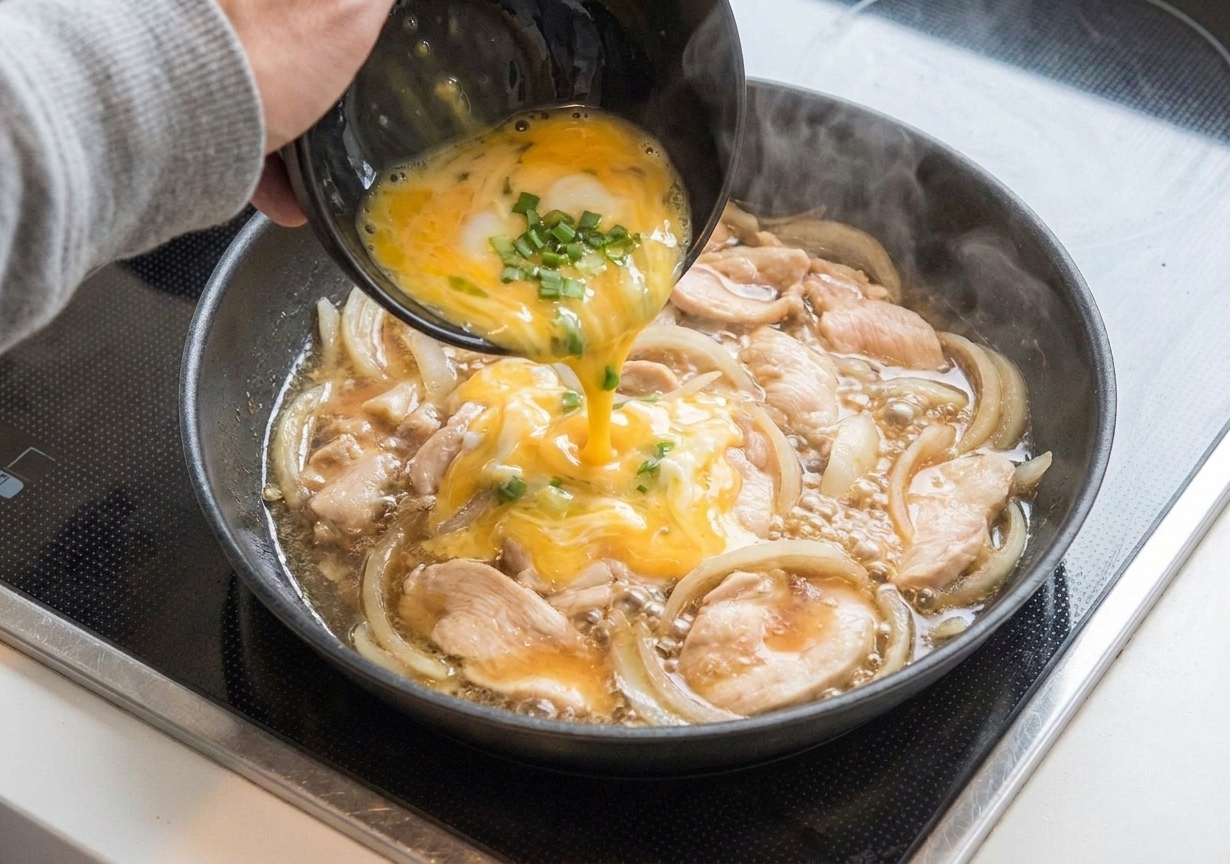
Usually the heat was too high or you stirred too much. Keep the sauce at a gentle simmer, drizzle the egg, and let it set with minimal movement. Covering the pan helps the top set without overcooking the bottom.
Can I use chicken breast instead of thighs?
You can, but thighs stay juicier. If using breast, slice it thin and do not over-simmer. Once it is just cooked through, move to the egg step quickly.
What rice is best for donburi?
Japanese short-grain rice is the classic. Medium-grain works great too. In a pinch, use any rice you like, but the sauce clings best to stickier rice.
How much uncooked rice do I need for 2 servings?
A good target is about 1 cup uncooked Japanese short-grain rice, which yields roughly 2 to 3 cups cooked. If you like bigger bowls, bump it to 1 1/4 cups uncooked.