What is pancit bihon?
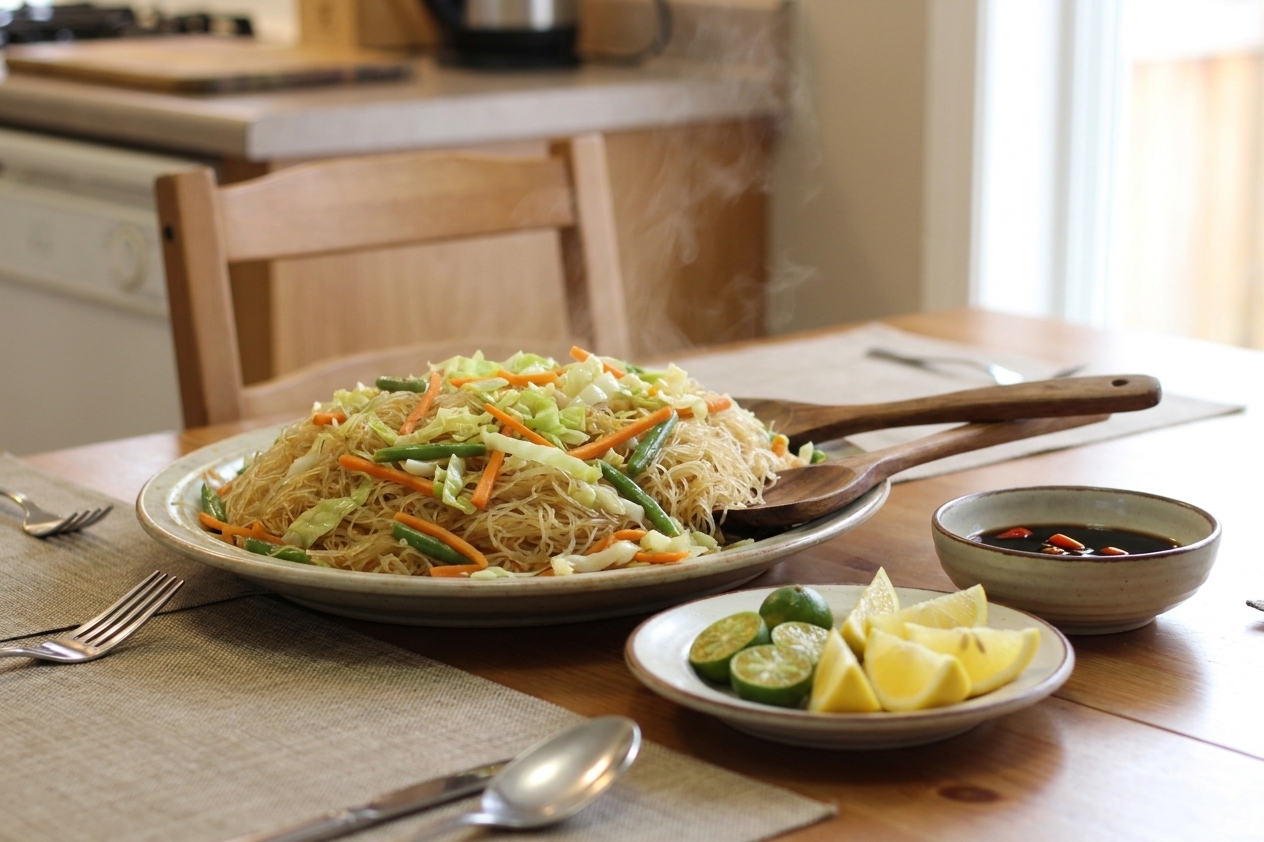
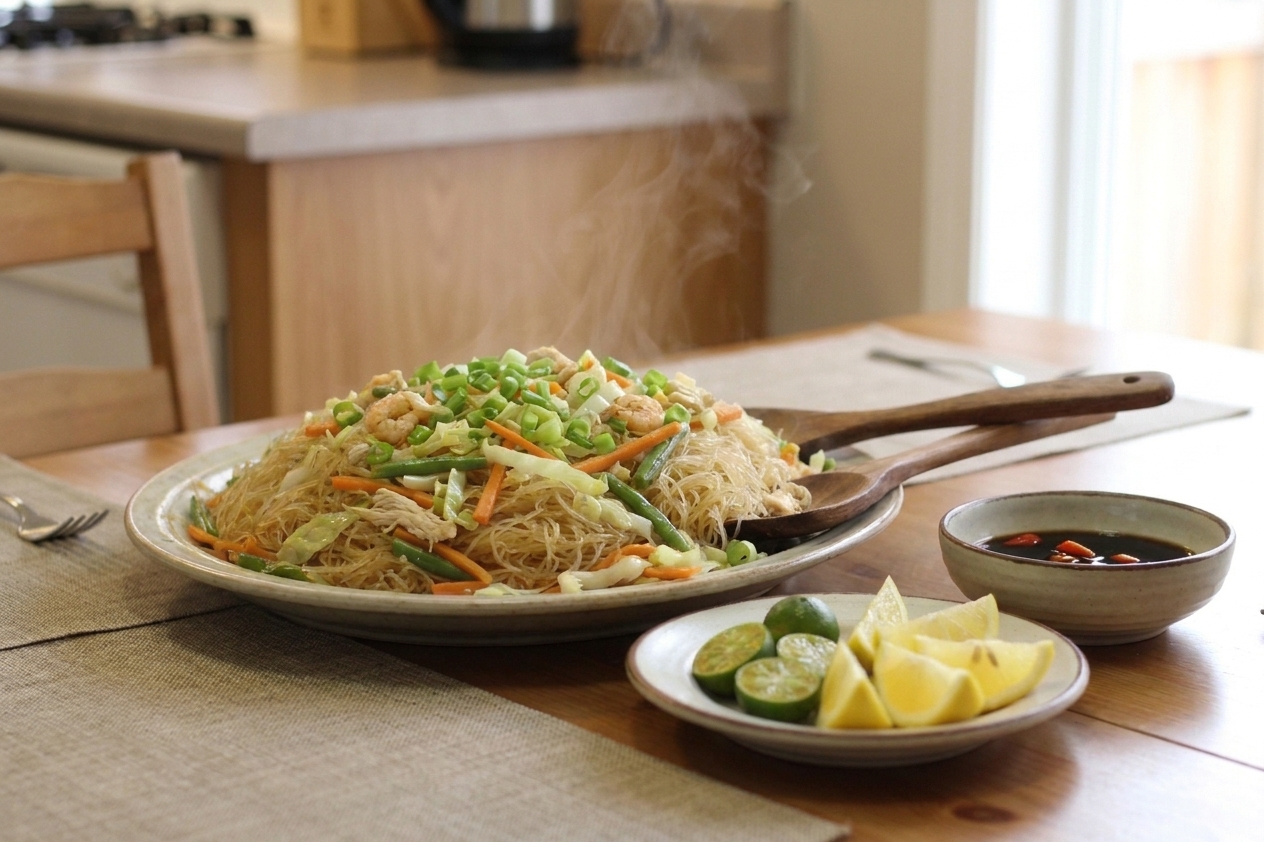
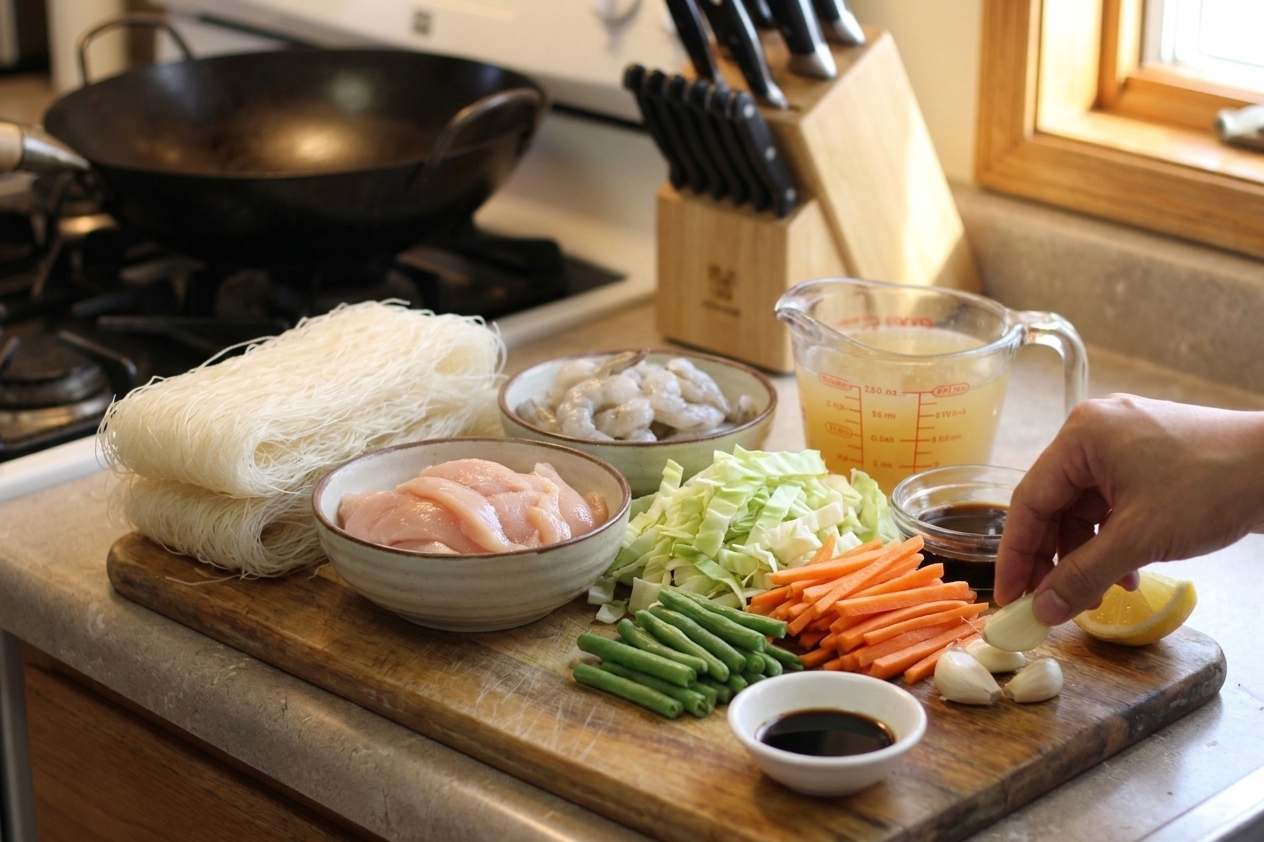
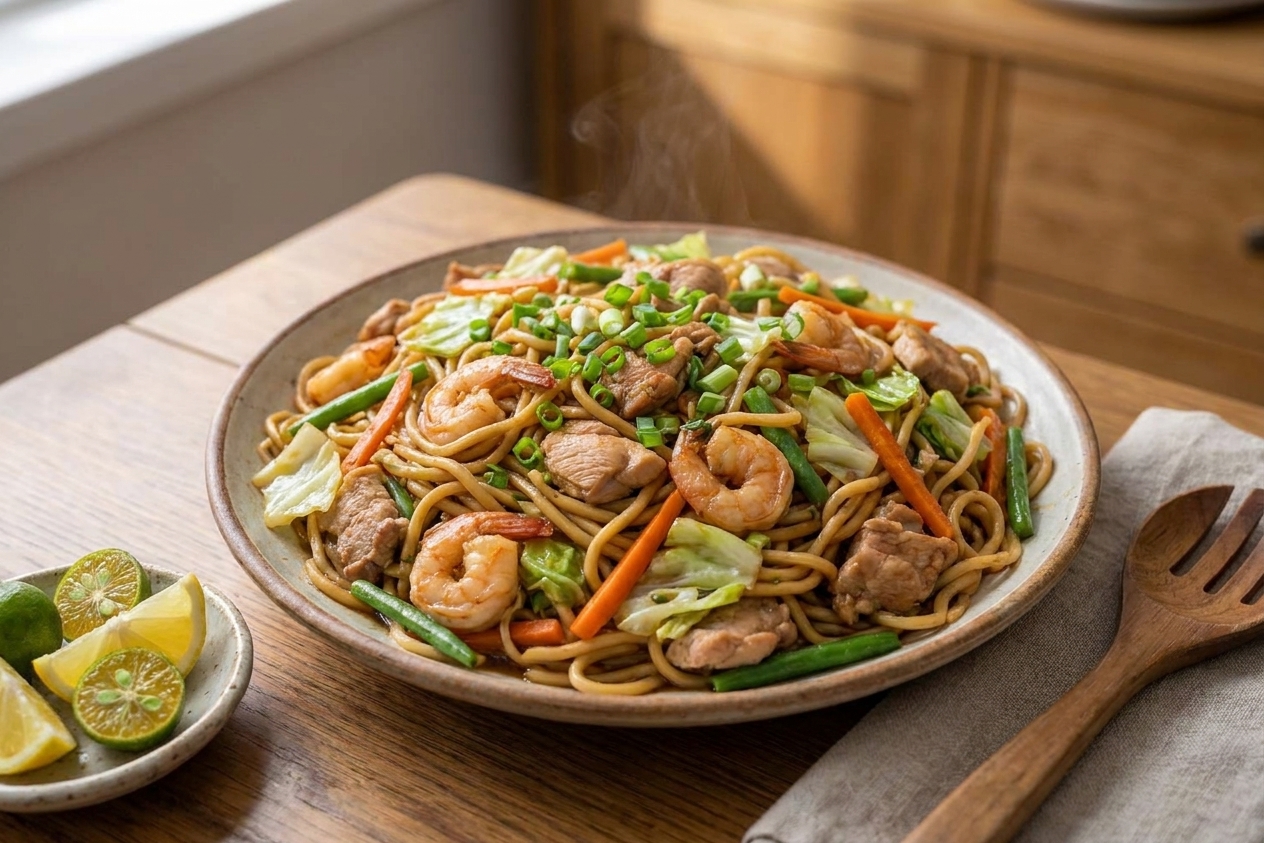
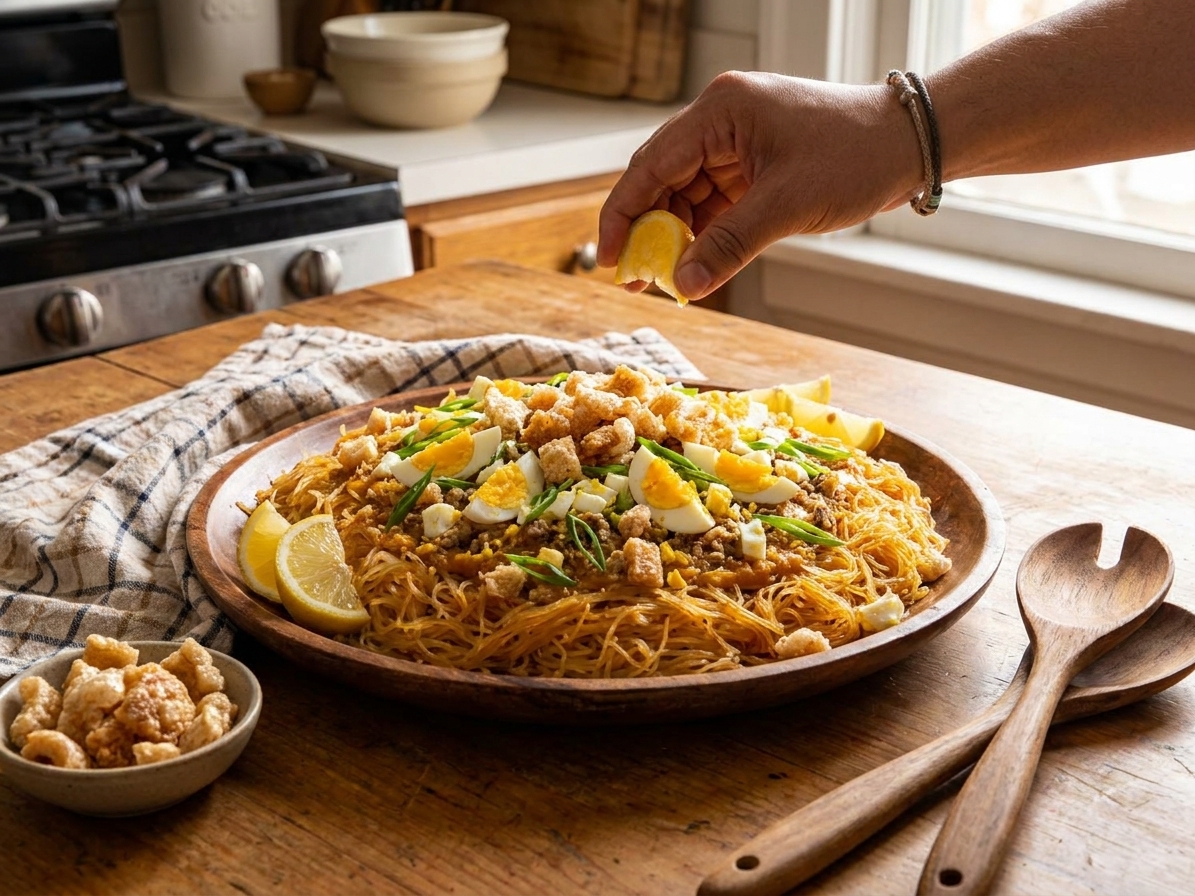
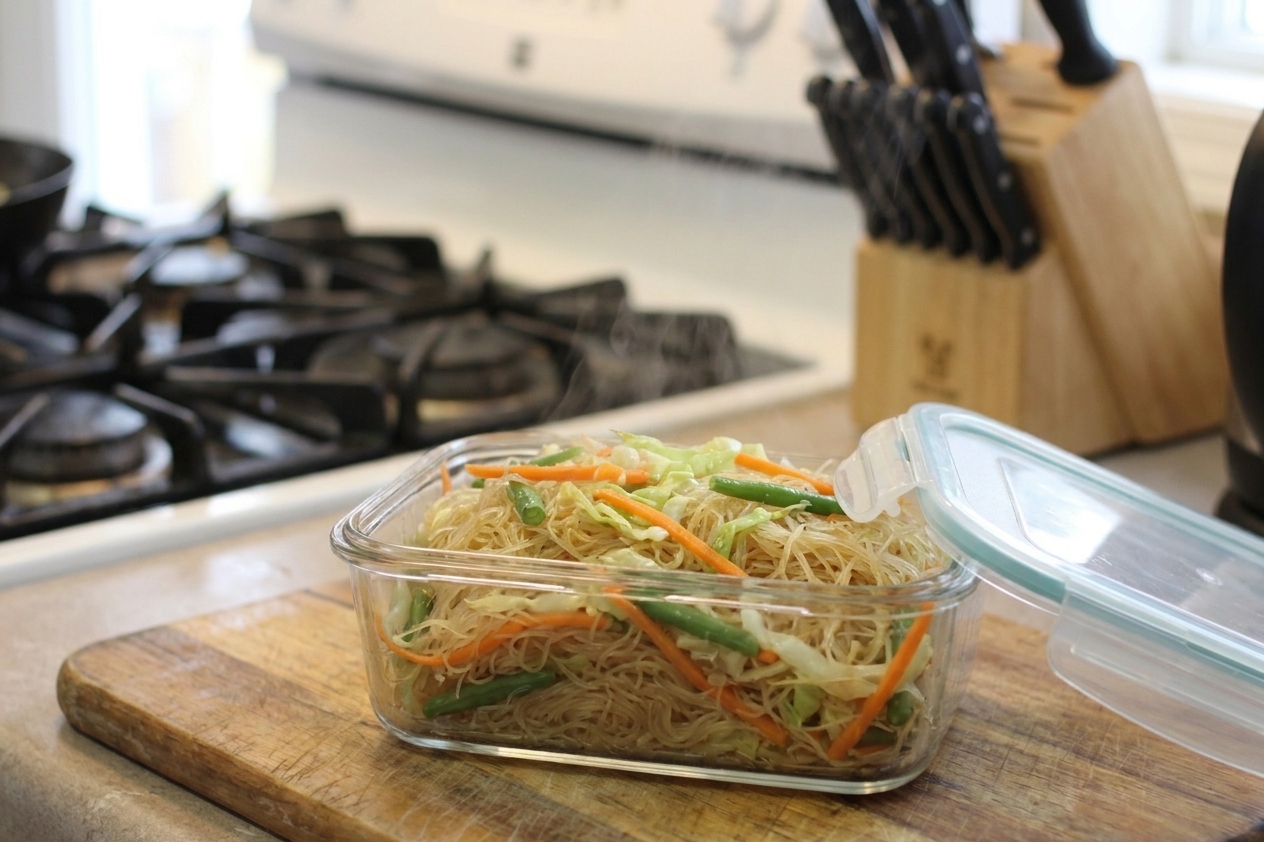
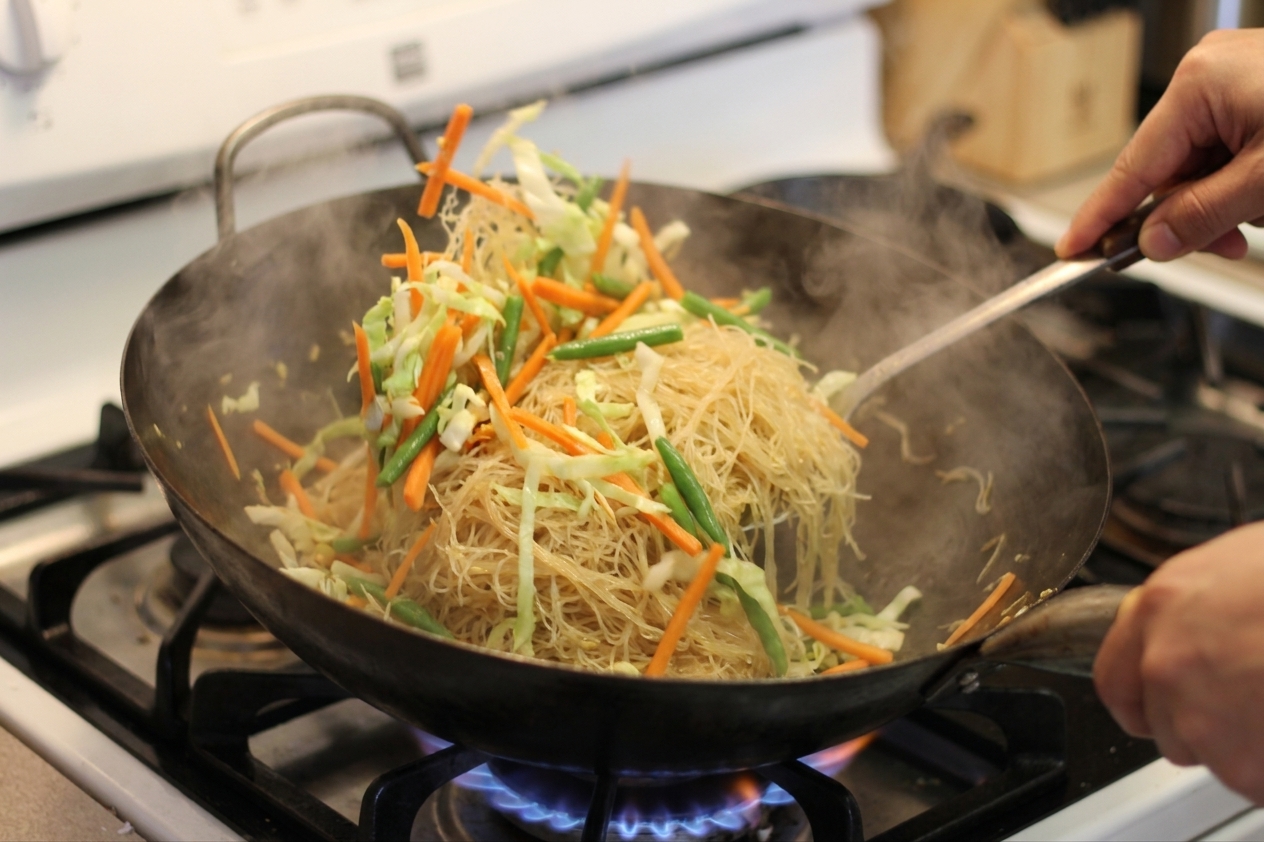
Pancit bihon is a Filipino noodle dish made with thin rice vermicelli (bihon) stir-fried with aromatics, vegetables, and usually a protein like chicken, pork, or shrimp. It is savory, a little garlicky, and typically served with calamansi or lemon on the side for squeezing.
Is pancit bihon gluten-free?
The noodles are usually rice-based and naturally gluten-free, but it is still smart to check the label. Some brands use starch blends or are produced in shared facilities. Also, soy sauce often contains wheat. Swap in tamari or a labeled gluten-free soy sauce to keep the dish gluten-free. Check any bouillon or broth you use too.
Why did my bihon noodles turn mushy?
Usually it is one of three things: (1) soaking too long, (2) too much liquid in the pan, or (3) overcooking once the noodles are tender. Soak just until pliable, then finish them in the wok with only enough broth to hydrate them. Keep the pan at a steady simmer and stop cooking when the noodles are tender but still springy.
Do different bihon brands soak differently?
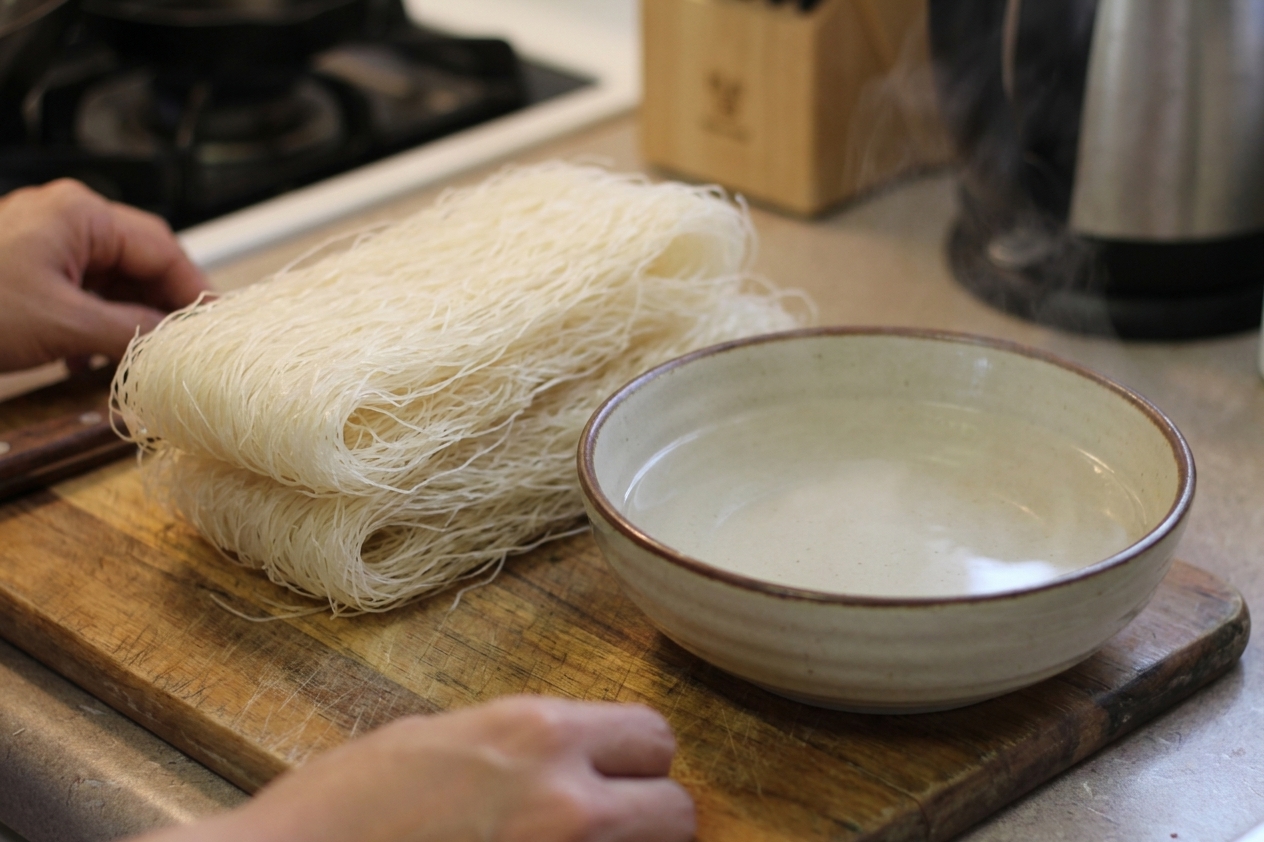
Yes, and it matters. Some very thin bihon softens fast. Start checking at 3 to 5 minutes, and drain as soon as the noodles bend easily. If you soak until fully soft, they are more likely to go soggy in the pan.
Can I make pancit bihon ahead for a party?
Yes. Make it a few hours ahead, then reheat in a large skillet or wok with a splash of broth. Keep calamansi or lemon wedges for serving so the flavor stays bright.
What can I use instead of calamansi?
Lemon is the easiest swap. Lime also works. The goal is a sharp, fresh squeeze right before eating.
Can I swap the proteins or make it vegetarian?
Absolutely. Pork, shredded rotisserie chicken, or tofu all work. For vegetarian pancit bihon, use vegetable broth and skip the oyster sauce (or use a vegetarian oyster sauce).