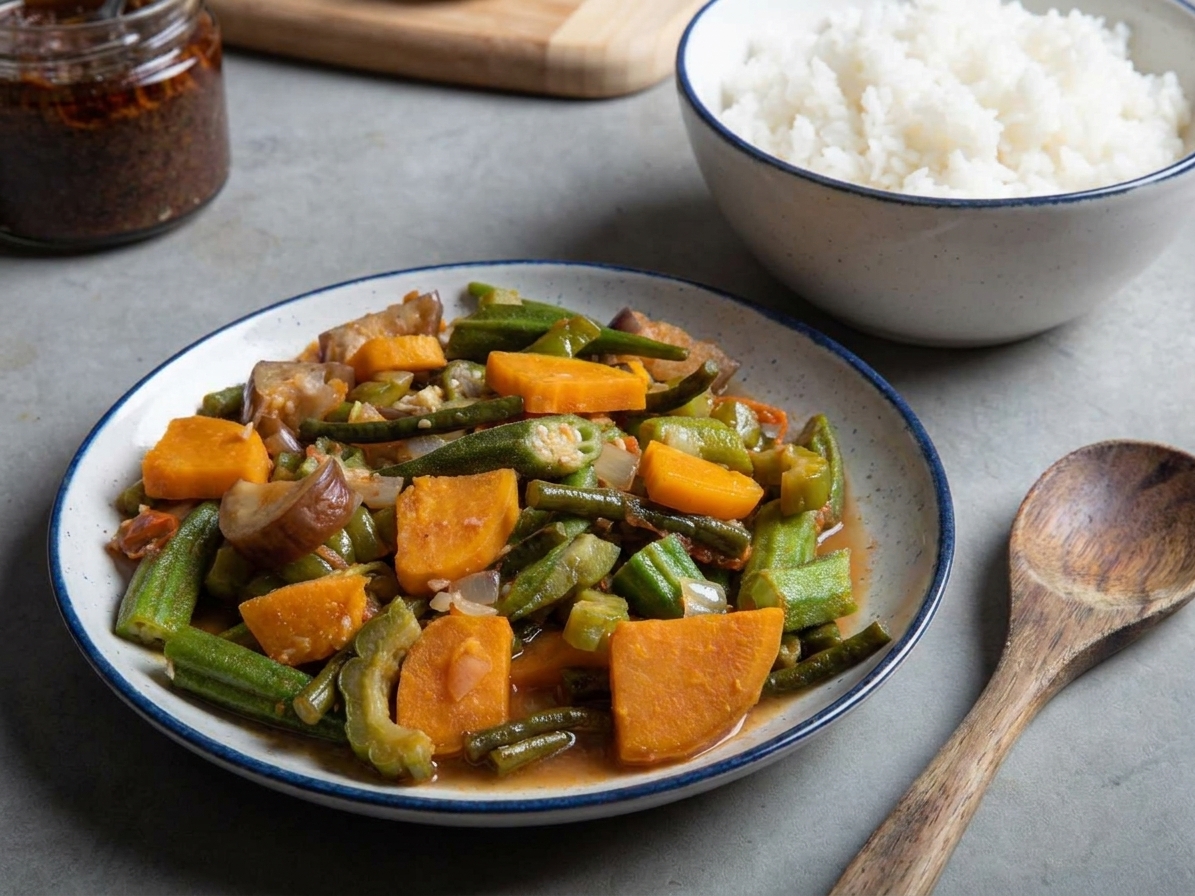
What is bagoong, and can I substitute it?
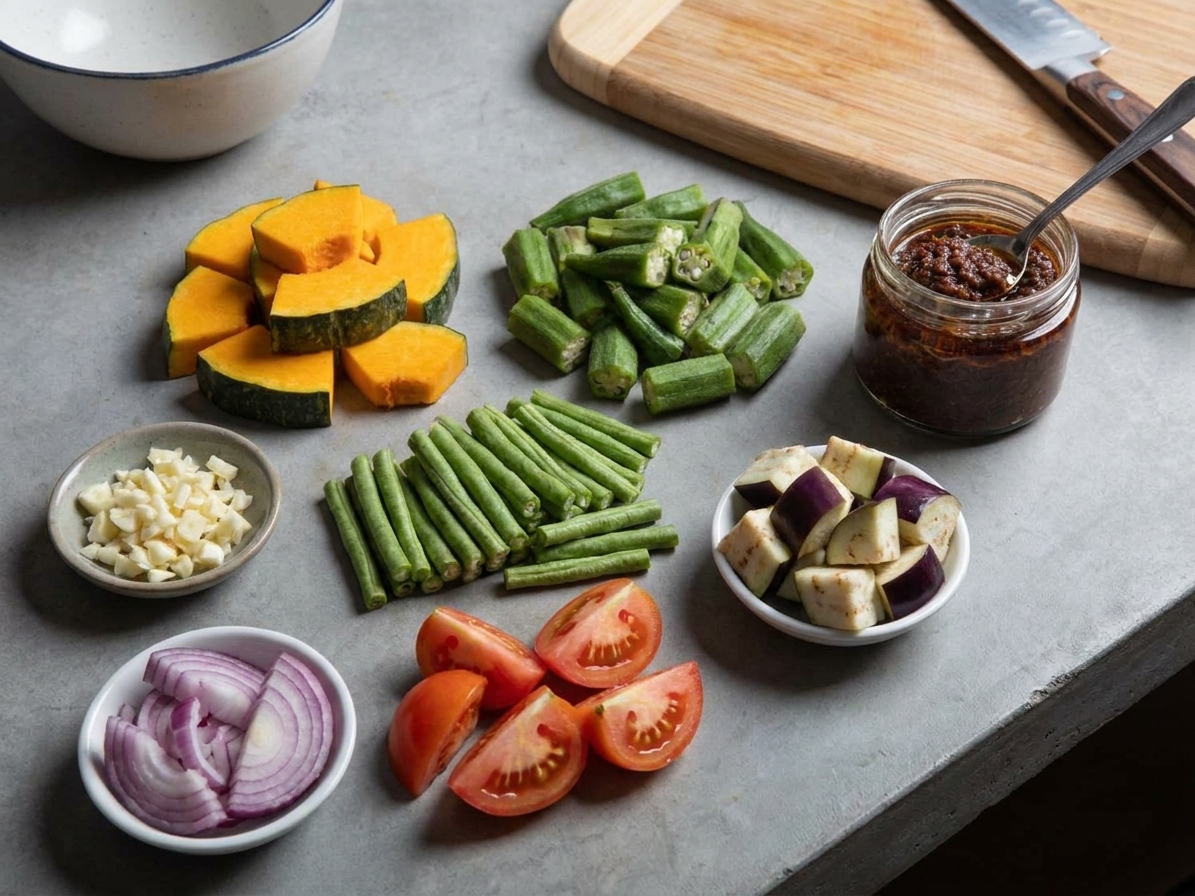
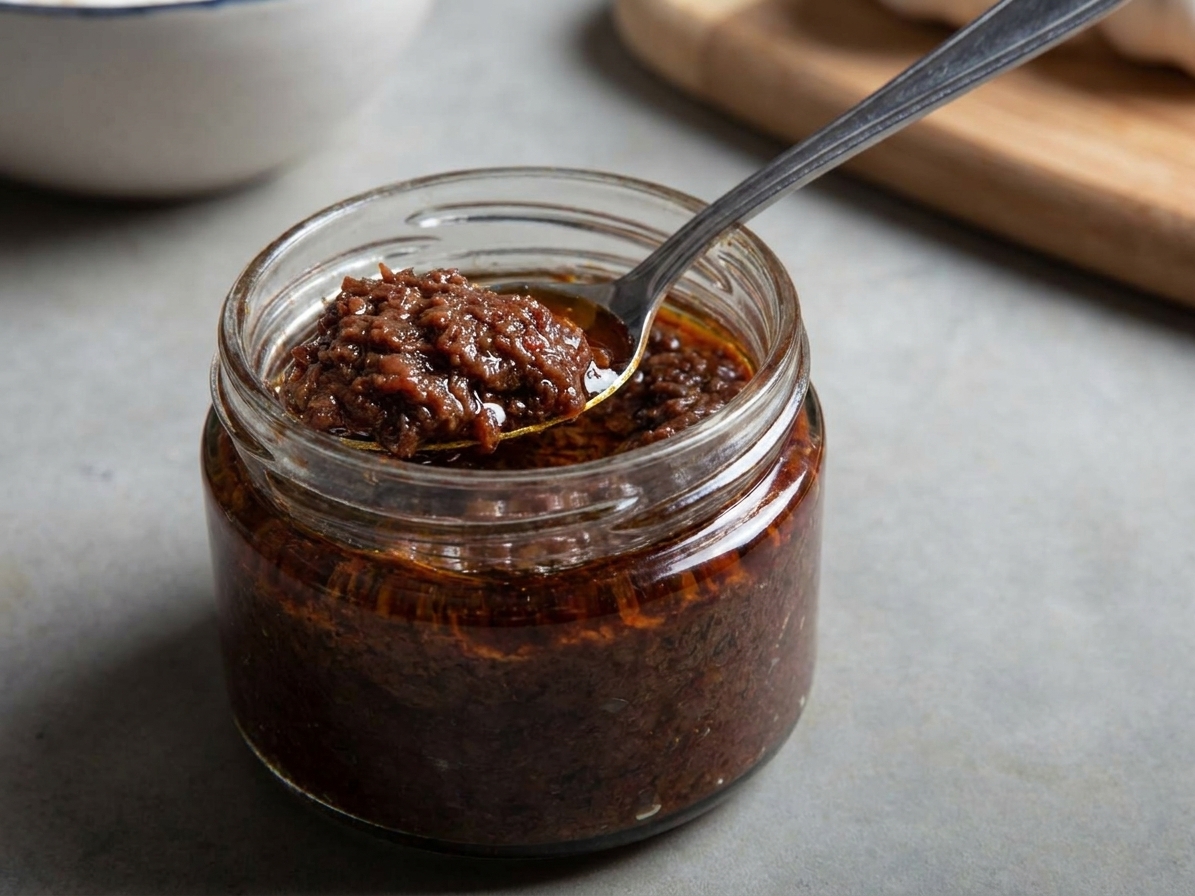
Bagoong is a broad term for Filipino fermented seafood pastes. This recipe uses bagoong alamang, which is fermented shrimp paste. Some Ilocano versions of pinakbet use bagoong isda (fermented fish) instead, so if that is what you grew up with, it is a totally valid swap.
Since brands vary a lot in saltiness, start with 1 to 2 tablespoons, simmer, then add more to taste. If you cannot find bagoong, you can substitute fish sauce (start with 1 tablespoon, then adjust). The dish will still be tasty, but it will not have the same fermented depth.
Is pinakbet supposed to be watery?
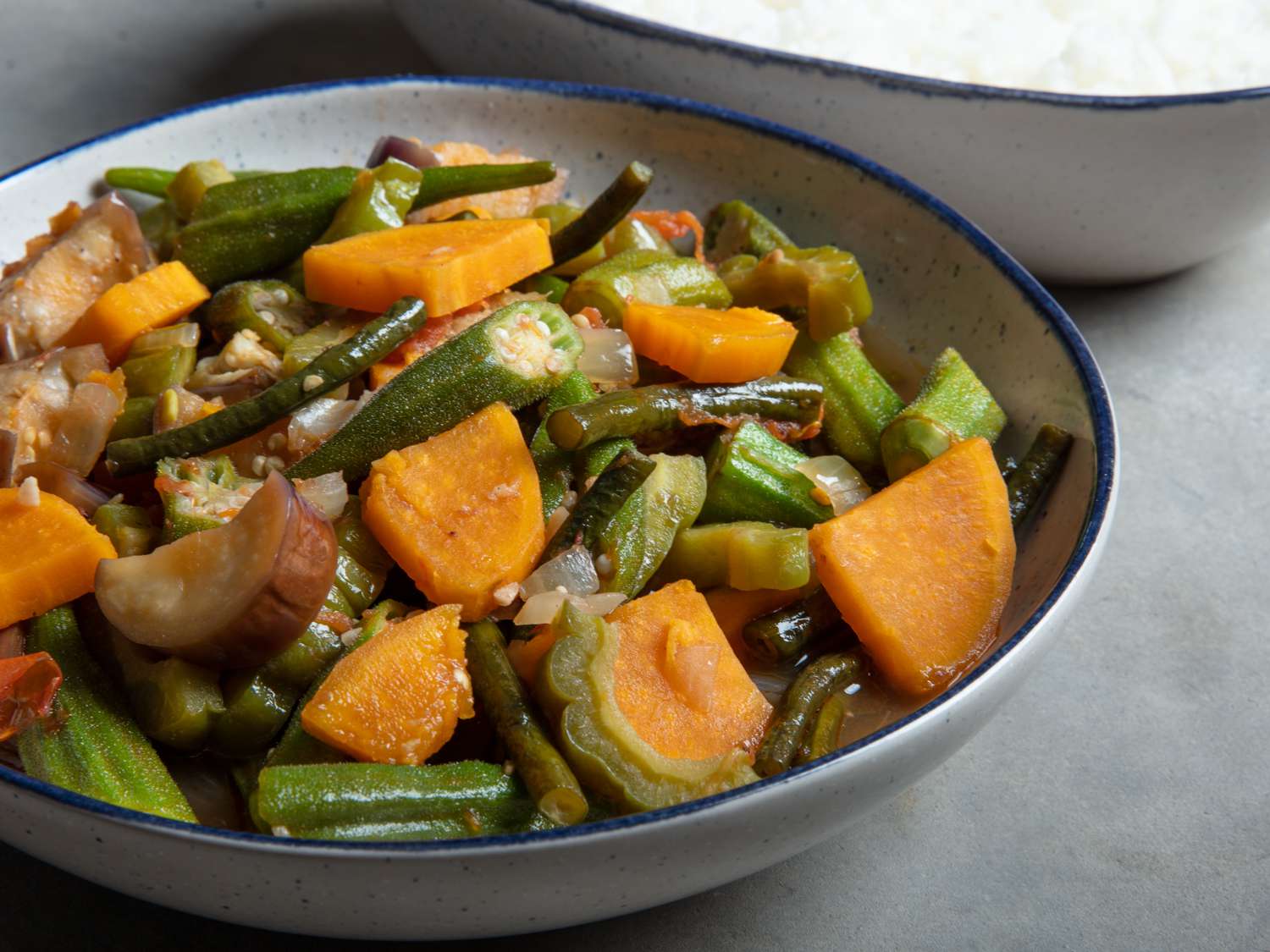
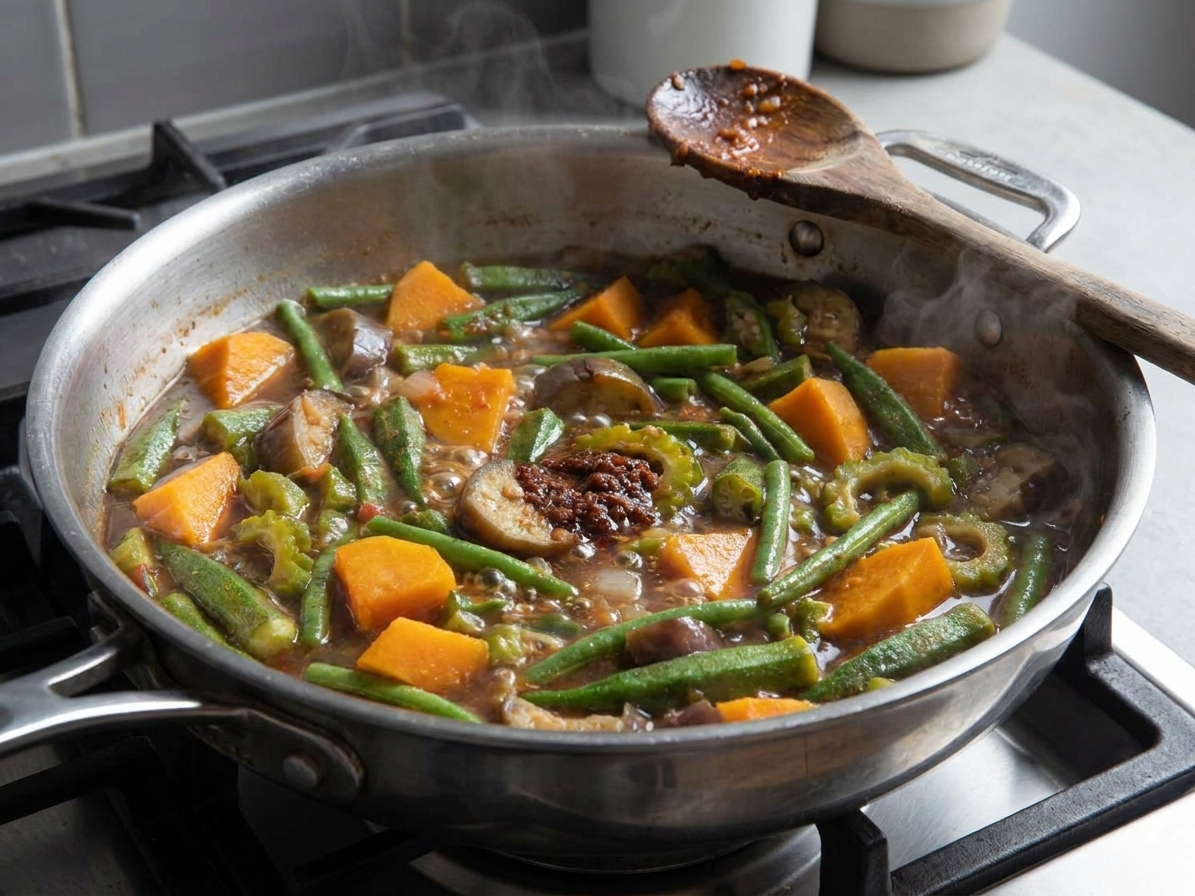
Not really. It should be saucy, not soupy. Tomatoes and a little water or broth make a light sauce that clings to the vegetables. If yours looks thin, simmer uncovered for a few minutes to reduce.
Do I have to use bitter melon (ampalaya)?
No. Traditional versions often include it, but it is not required for a satisfying home version. If you want to mellow the bitterness, toss sliced ampalaya with a pinch of salt, let it sit 10 minutes, then squeeze and rinse before adding it near the end.
How do I keep eggplant from turning to mush?
Two things: do not over-stir, and add eggplant after the squash has started to soften. Eggplant cooks quickly and loves falling apart if you stir aggressively.
What if I do not like okra’s texture?
Okra naturally thickens the sauce a bit. If you are not a fan, you can reduce the amount or skip it and add extra green beans or another quick-cooking vegetable instead. The flavor will still be great.
Can I make it vegetarian?
Yes. Skip the pork, use a neutral oil, and swap bagoong for a vegetarian-friendly option like miso mixed with a little soy sauce. It becomes a different dish, but still deeply savory and cozy.